

Clint Eastwood directs this new crime film inspired by a true story, and plays a 90-year-old man who becomes a drug mule for the Mexican cartel.
As an actor and director, Clint Eastwood has been influencing generations of cinema for over half a decade, and he’s still staying strong in his career, having released 2 movies this year, and also starring in the leading role in this one. His performance is the standout of the film, as expected from him, and he carries the film with the force he always brings to the screen, making a complex character who isn’t always likable but you are interested to watch him throughout the events of the film anyway. Eastwood’s direction is also top-notch and reminds us why he’s one of the master filmmakers of our time. The overall plot is sometimes well written but also gets slow and repetitive at times, and at the end, a bit predictable. Like I said, Eastwood’s role really is great, but other known cast members such as Bradley Cooper, Laurence Fishburne, and Michael Peña should have been given more to do in the film. The movie tackles some relevant issues like the stereotypes of certain races, but it only does so briefly and not very subtly when it is addressed. It’s got some good themes by the end as well as some good tension that Eastwood crafts well, like two men on opposite sides of the law sitting next to each other in a restaurant, which is intriguing when both talk as they don’t know who the other is. However, it often falls into familiar crime drama tropes and under-uses some of its best aspects. The Mule can be enjoyed for what it is and Eastwood brings the energy he always does to the film, but it doesn’t quite go above what one would expect from an average true crime drama, even though Eastwood’s directing touch is there and those who have been following his career should definitely check it out. But in the end it isn’t as memorable as other films he’s starred and directed in recent years like Million Dollar Baby and Gran Torino.
![]()

Based on a true friendship between Tony Lip, a working-class Italian-American bouncer, and Don Shirley, an African-American classical pianist. In the 1960’s, Lip becomes Shirley’s driver on a concert tour through the American South.
We have received a lot of movies in recent years that focus on race and segregation through true stories, and it’s nice to have one on a very small scale that only focuses on a friendship between two people but still carries its point across as effectively. Viggo Mortensen stands out as Tony Lip, a somewhat selfish character who has a heart but also acts however he ants and isn’t afraid to use violence on whoever he deems needs to learn a lesson. Mahershala Ali is also great, as he clearly spent lots of training to learn how to become such a great pianist like his character, but his role is also sophisticated and caring despite facing racism in such a time in the Deep South. The chemistry between the two makes the film so interesting; Mortensen’s character has a narrow view of those outside of his poor Italian neighborhood in New York but learns to become good friends with those he never though he’d meet and become a friendlier person. The contrast between the two is also excellent — not just between race but also between social class — Tony Lip has a more uncultured manner, also having grown up in a poor neighborhood, while Don Shirley is a very elegant and honest man, and this contrast makes scenes like the two sharing a bucket of fried chicken come off as very entertaining. Shirley is a character who seems like he’s in a higher class and given more opportunity to perform than other black artists at this time due to segregation, but even though he never sees himself as any lesser than the white audiences he performs to, he feels that he’s treated as “just another black man” to the moment he steps off stage, as he explains in a powerful monologue that’s definitely the best scene in the film. This breaking of stereotype, a wealthy black man teaching a poor white man life lessons like kindness (and he even helps him write poetic letters to his wife), but maintaining of realism makes the film even more thought-provoking, and the dynamic between the two main characters while delivering themes about interactions between race and social class in the ’60s makes the film a worthy watch, that I’m sure won’t be ignored in awards categories like Picture and Actor.
![]()

Adonis Creed, after winning the World Bodyweight Championship, is challenged to a boxing match by Viktor Drago, the son of Ivan Drago, who killed Adonis’ father Apollo Creed in the ring three decades earlier.
Creed was the Rocky spin-off that blew the world away like nobody expected, and this franchise continues its winning streak with an emotional and exciting sequel. Michael B. Jordan can deliver one hell of a punch, both in the sport but also with the emotion he brings to Adonis, trying to isolate himself from his father’s legacy but getting lost in the fight to preserve his own. This is Jordan’s defining character in his career at the moment, as he adds so much humanity to the role from his love for his fiancee to his relationship with his mentor Rocky. Jordan delivers the determination but also the love and pain of the character with energy and you’ll always be rooting for him. As for the rest of the cast, Rocky has been played with such iconic force by Sylvester Stallone for so many years that it’s hard to imagine these movies without him. He’s a great father figure to Creed but it’s hard to forget the times when he was the leading man of the saga because he still carries the films like he is. Tessa Thompson has been everywhere this past year — from Marvel to films like Annihilation and Sorry to Bother You — and deservedly so. Her character Bianca is not just there to support Creed but also helps guide his emotional journey through the film and pursues dreams of her own by singing, though her character deals with a hearing impairment. Bianca is a memorable character because she’s got a strong voice as well and often helps Creed pick himself up.
What I loved in this sequel is that everyone has a potent and believable emotional arc throughout the film. Even the “villains”, Ivan and Viktor Drago, are fighting rough because Ivan is determined to escape the shame he brought to his family when he lost to Rocky, by pushing his son very far to defeat Creed. The main character Adonis is also dealing with a lot, like starting a family while deciding whether or not he wants to be seen as “Apollo’s son” and if the fight to “rewrite history” is worth losing it all. Rocky also has his own journey, and not just when he’s guiding Adonis. He’s also mourning the loss of his wife Adrian and trying to reconnect with his estranged son and grandson, and become a family man again like the one Adonis is becoming throughout the film. The fight scenes are very engaging and the direction isn’t as memorable as Ryan Coogler’s who delivered sequences like the long-take fight in the first Creed movie, but he’ll still make you keep your eyes on the screen and embark on this journey with Michael B. Jordan’s titular character. There’s also an awesome training montage keeping the spirit of classic training sequences like from the older Rocky films. Even though the runtime flies by quite quick and it’s still got that boxing movie formula you know from the other films, Creed II is a passionate installment that stays true to the characters the first Creed movie made us love and will make audiences have a blast, sports fan or not.
![]()

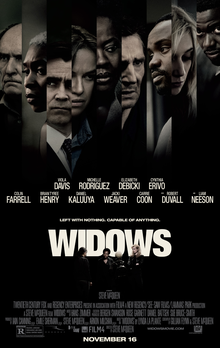
After four thieves are killed during a heist gone wrong, their widows step up to finish the job.
Widows is a heist film that chooses to focus more on the serious aspect of the genre, similar to films like Michael Mann’s Heat. Instead of quick montages of prepping for the heist or focusing solely on the main heist, Widows is a film about grief, corruption, and injustices that relate to country-wide issues. Steve McQueen creates a frightening look at the corrupt and dangerous crime in modern Chicago, led by a stellar cast. It’s no surprise Viola Davis can bring an audience to feel invested in the film with her strong emotion and passion in every one of her characters. Veronica Rawlins, a woman willing to go far lengths to protect herself after suffering from a loss, is no exception. Also great are Elizabeth Debicki and Michelle Rodriguez as two other widows who join Davis to pull off the heist their husbands failed to. Another standout is Daniel Kaluuya as a menacing henchman for a gangster who will not think twice to use brutality in order to get what he wants. Other popular names headlining the film include Colin Farrell, Liam Neeson, and Robert Duvall, who are pleasing to watch even though some of the British actors’ American accents are questionable. Widows does not hold back on strong violence that not only feels brutal but scarily real, and excellent direction and cinematography that shines in many scenes. The script also has a strong focus on many different issues that could make you fear the world today even more — though it’s a heist film, there isn’t much action, rather violence because the intention of it isn’t to entertain but to provoke themes and often suspense. Even though it sometimes won’t subvert any expectations until the second half, some scenes will have your heart racing and the final act feels very unsafe for every character. I was never sure who would survive and who would die because Steve McQueen crafts a space where anything can happen. Unfortunately, there should have been more closure in the final few minutes for some important characters, but in the end, Widows is a mature crime drama that does not disappoint.


Based on the true story of Garrard Conley (named Jared Eamons in the film), who was forced to join a gay conversion therapy program after being outed to his parents. While there, Jared comes into conflict with its leader and begins his journey to finding his own voice and accepting his true self.
Boy Erased is the second directorial effort of Joel Edgerton, who also writes and stars in the film, and I’ve been a fan of his acting even before he took a seat behind the camera. He’s proven himself to not only have a grip on a script and cast but also convey a theme strongly through filmmaking. Lucas Hedges has impressed me very much these last few years, especially in Manchester by the Sea and Three Billboards Outside Ebbing, Missouri, but in the leading role he is once again able to shine as a young man who wants to be himself but his parents and peer’s beliefs come into conflict with who he is. Edgerton also stands out as the leader of the gay conversion program who also believes homosexuality is a sin and a choice, even though it is part of who somebody is. This head therapist acts as a source of passionate hate and demoralization for those who are at the therapy, even though back then some people thought this kind of therapy would “cure” people and make them heterosexual without considering what mental and emotional harm this would cause. Also remarkable are Nicole Kidman and Russell Crowe as Jared’s parents, who seemingly must choose between what they believe and their unconditional love for their son. The movie is tough to watch in some parts because of how unfortunate the situation was — members of the LGBT community were forced to believe something was wrong with them and that they had to be “fixed”, and that this kind of therapy is even still allowed in 36 states. I’m glad we live in a time where more people accept others for who they are and more LGBT men and women can live life as they please and feel comfortable with their identity, even though the world still isn’t perfect. This powerful execution is resonant yet imperfect — a more linear storytelling and some more on-screen emphasis on the protagonists’ emotional state would have made his arc hit home even more, but the final 20 minutes are especially fantastic and deliver every performance to its fullest, and its theme wonderfully.
Boy Erased has powerful themes and outstanding performances that will resonate, as well as an important message that is as relevant today as it was then.
![]()

Bohemian Rhapsody brings the story of legendary music group Queen and their center star Freddie Mercury to the big screen. I’ve been a hug fan of Queen and their music for a while, and they have been my favorite music group with their classics such as the titular song being among the best songs of all time. My love for the band explains why I was so excited to watch this film, and I was not let down. Bohemian Rhapsody lives on the promise of a great depiction of the behind-the-scenes of the making of some of your favorite Queen songs, as well as digging into its lead singer who still remains a legend to this day. Rami Malek hasn’t been in many major film roles before but was the perfect choice to play Freddie — he disappears into the role in every moment in an unbelievable transformation which required Malek’s full effort. It feels as if every movement he makes and every word or scene he’s in was perfected to feel like the real Mercury. Also great are Gwylim Lee and Ben Hardy as the other founding members of Queen — whose real life counterparts were musical consultants on the film. Knowing and loving the songs and group that the film is about, audiences will be sure to want to catch this one and be enthralled by how the band came to be or what inspired their greatest hits. Though some that don’t enjoy their music as much will be more keen to notice the formula that a lot of biopics use (“anyone can achieve their dreams” “character pursues their dreams/argues with those close to him/makes amends with them and redeems themselves”) — the film won’t offer much new plot-wise especially if you know more about the real story, but that’s alright. There’s also a few aspects that would have been more entertaining to see in extended sequences rather than being shortened to montages, but the movie already clocks in at 135 minutes anyway. The vivid cinematography and editing kindly boast uproarious musical concert sequences, which are also so enjoyable because of the fact that the songs you love so much are being played to you on the big screen and you can’t help but want to sing along.
You may read many different things from critics, but mark my words — any fan of Queen and Mercury will have a blast watching Bohemian Rhapsody on the big screen. Others may notice the familiar plot structure or formula but one thing is for sure — Rami Malek will get serious buzz for his portrayal of Mercury, and watching your favorite songs being created and performed on screen is nothing but a wonderful time on the big screen.
![]()

First Man tells the incredible true story of Neil Armstrong who took a giant leap for mankind by leading the Apollo 11 mission and becoming the first man to step onto the moon.
I’ve been following the filmography of Damien Chazelle ever since he made a name for himself with the unforgettable indie Whiplash, and I again was there in the theater for when he rocked the world with the marvelous, award-winning, record-breaking La La Land. So of course I could not miss his newest big-screen hit, this time an adapted screenplay from a book on the true story of the mission that changed the world. Chazelle takes a well-known story and though we all know how it ends, he makes it feel exhilarating and gripping. Every shot is breathtaking and the cinematography is an achievement for modern cinema. The camera angles are perfectly selected, making these scenes riveting, and the shots of space, Earth, and the moon are incredible. It’s hard to tell how much was practical and how much wasn’t because it looks so realistic. The sound and editing also make for intensity and strong effectiveness in the action. The moon landing scene will glue your eyes onto the screen, and even if you know how it will end, it’s so beautifully done, with the music, tension, and even emotion by the end make it the most unforgettable scene of the entire year. Ryan Gosling brings out another moving performance as Neil Armstrong, with subtle moments from beginning to end that will bring emotion to you like almost no other actor this year, and Claire Foy brings lots of strength to Janet, Neil’s wife, in sequences that will guarantee her an Oscar nomination, as well as very impressive chemistry with Gosling.
Chazelle directs this mission delivering strong themes like how the hard work of many can achieve the most impossible dreams, and we see how much training was required but also the hardships that occurred during the preparation for the launch. There’s also some very powerfully written parts, showing a tragedy that happened in Armstrong’s life and how his family felt about him embarking on such a journey. The cinematography always stands out with the rare 70mm format making it look even more like a period piece, and like I said, every scene set in space will blow you away and make you need to catch your breath at the end. Every shot is so brilliantly composed and the handheld cam even works for the effect of intensity — at times it feels like Chazelle wants you to be on that spaceship with the characters. The music by Justin Hurwitz is also fantastic and deserves him another Oscar win, and I doubt any score this year will top the amazing music in this film and the effect it has on many great scenes in the film. However, there is one major flaw I have in the writing of the film — I felt like we didn’t feel much of Armstrong’s personality, and didn’t really learn much about who he was other than what we did. The movie makes some attempt at a personal arc for him which works very well, but if we had seen more about his relationship with his wife and kids and how the events of his life shaped who he was as a person, perhaps his character would be more compelling as well as the performance. It felt like the movie focused greatly on the Apollo 11 mission and the space journey Armstrong embarked on, but if only he had embarked on a bit more of an emotional journey as well. I personally felt more attached to Gosling’s other characters like Sebtastian in La La Land, the Driver in Drive, and K in Blade Runner 2049 because those films dug deeper into those character’s emotions and personalities while this film only scratched the surface of that. Thankfully the technical aspects and overall story redeems the film, with a marvelous second half that deserves a second directing Oscar for Damien Chazelle.
First Man is a technical masterpiece with wonderfully directed and shot sequences that will floor audiences, and even though I don’t think this will become one of my favorite movies like Whiplash and La La Land have, the performances and especially the out-of-this-world journey, one you know so well but is brought to screen with top notch execution, makes it a film that must be watched on the big screen.
![]()

A musician named Jackson Maine helps a young singer and actress named Ally find fame, and they fall in love as their careers spiral towards different directions.
A Star Is Born shows that incredible passion both in front of and behind the camera can pay off wonderfully — and that an old story told well today can still stick with viewers. Bradley Cooper’s directorial debut is a stunningly told story of love, fame, pain, addiction, talent, and dreams. Cooper directs every scene with lots of energy and his editing and direction pay off to elevate the engagement and payoff of many scenes. His performance as Jackson Maine works on so many levels — Maine is a man you hate but love at the same time — he’s charming and caring but also has problems of his own that he deals with selfishly. Cooper dedicates himself to the role and has plenty of emotion that will move you to the core — and he can also sing very well. The complexity and might he brings to the screen makes his role worthy of an Oscar come awards season. And then there’s Lady Gaga — we already knew she has talent when it comes to her singing voice, but I could never tell that she wasn’t a professional actress and that this is her first major film role — she blends in with the other acting talents perfectly and stands out in her every scene. Gaga is remarkable as a woman who finds her voice and pursues her dream, and her range of emotion and presence are striking. I expect a Best Actress nomination for her as well. The chemistry between the two as well as their performances elevate the film and make it so interesting for the viewer — it wouldn’t have been the same without the dedication these actors put into their roles.
Also worth watching out for is the music — “Shallow” is a new original classic that I know will become more popular once more people see the film and Cooper and Gaga perform it ecstatically in one of the most memorable scenes in the film. Even though the overall story structure isn’t anything brilliant, and it’s the fourth remake of a film from the ’30s, the execution and delivery of the story is still made so effective for the audience and will resonate with you after the credits role. Some scenes will make you laugh, smile, or even cry, and the emotional connection to the audience is built so well that the ending will crush your heart if you’ve been engaged for the rest of the movie. A Star Is Born will definitely stick with viewers until the Oscars come around, where I’d say it has a really good chance, especially for its marvelous leading performances that deserve to win and the acting alone earns makes the film a recommended watch. Aside from that, there’s excellent directing and music, and Bradley Cooper has found himself an excellent voice in front of and behind the camera, as well as on stage, in an achievement for his career.
![]()

This movie follows David Kim as he desperately searches for his missing daughter Margot. From that description it may sound like an ordinary mystery film, but there’s a catch: it’s told entirely through the perspective of a computer screen. This isn’t used simply as a gimmick but rather as a filmmaking tool to amplify the emotion and suspense. It’ll shatter your heart within the first five minutes of staring at a large computer screen projected in front of you, and FaceTime and text conversations are made interesting and thrilling. Though the concept is familiar, the plot is absolutely unpredictable and you can never tell what’s going to happen next. The way it builds up its conflict strongly pulls your interest and from there will find ways to always keep you guessing, as more shocking details are revealed that surprise the audience and put them on the edge of their seat. John Cho plays a loving father whose every action or reaction throughout his search for his daughter feels believable for what a father would do, and Cho displays range, emotion, and humanity in his leading performance. It’s amazing how much you can learn about someone from their computer — even when we’re not directly looking at him, we always feel for David and understand how he’s feeling through the whole film. The format doesn’t limit the film’s opportunities and works perfectly throughout the entire runtime. There is never a dull moment that allows you to take a breath from this gripping mystery until the very end. As an audience member you always feel forced to look for clues and details and invited to embark on this father’s journey through his device. The writer has so much to say in this film and the script works on many thematic levels — It’s about a father’s love for his daughter, about how secretive kids choose to be from their parents, how different generations use technology, and how much a computer can tell you about a person and their life. There’s so much to be analyzed and so much the director wonderfully conveys in 100 minutes.
Searching is the original, creative, and enthralling thriller we need right now — it’s a shocking and unique thriller that will grip onto you and not let go until the very end.
![]()