The Creator

In a future where humans have gone to war with artificial intelligence, Joshua, an ex-special forces agent, is recruited to hunt down and kill the “Creator”, who has developed a mysterious weapon with the power to end the war.

Seven years after the release of his last film Rogue One: A Star Wars Story, Gareth Edwards arrives with what feels like a visionary action film that feels parts Blade Runner and Avatar. The visual effects come together seamlessly to create a world that’s set in the distant future but might not be so far-fetched considering attitudes on AI in these times. The humans, robots, and hybrids all blend together in the frame and the robots’ movements look so smooth you’d believe they look exactly like that as they interact with other items in the screen. Not to mention the pitch-perfect cinematography from Greig Fraser and Oren Soffer that creates a mood that’s stunning yet violent, in-camera yet out of this world. John David Washington makes becoming one of the generation’s coolest action stars look effortless, and Allison Janney is surprisingly great, as well as the always delightful and nuanced work of Ken Watanabe. Madeline Yuna Voyles delivers a great breakout as a powerful AI child, though her relationship with Washington’s character doesn’t really click until later on, and even then feels a little derivative.

Though structurally you will occasionally encounter familiarity, the film takes a unique approach to the conflict between humans and artificial life, and visually it’s like nothing out there right now. Though the plot turns may be predictable for many viewers, it has a flare and liveliness to the action that not many other action movies this year had. More importantly, it feels even more special today as it’s one of the only theatrical action/sci-fi blockbusters of this scale without any source material/IP that’s been released in the last few years, and that’s worth commending and supporting. But whenever this had been released or viewed, Gareth Edwards’ inspired direction solidifies him as someone who’s in love with the worlds his movies imagine as much as the stories they tell on the page, and The Creator would make you want to invest in anything he puts his stamp on next.


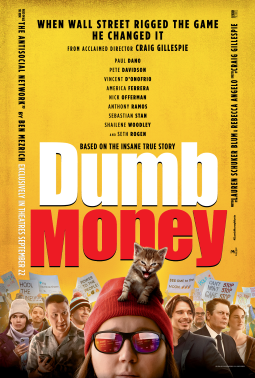
Dumb Money

Dumb Money is the ultimate David vs. Goliath tale, based on the insane true story of everyday people who flipped the script on Wall Street and got rich by turning GameStop into the world’s hottest company.

A true story released only two years after the real events happened has the potential to be concerning, but Dumb Money takes a ridiculously fun approach to its outrageous story. In order to tell such an insane turn of events that actually happened, you need to match that with a style that doesn’t take itself too seriously, and the soundtrack and comedic tone of the film very much understand that. Similar to The Big Short, it also does a great job of making financial talk sound accessible and engaging. It also frames the Gamestop short squeeze as an underdog story, and ordinary people gathering knowledge about finance and investing as a positive incentive. Everyone is great, from Paul Dano who plays the film’s lead rebel and hero, to funnier roles like Seth Rogen and Sebastian Stan. America Ferrera gives the film a lot of spirit and Anthony Ramos, Myhal’la Herrold, Talia Ryder and Shailene Woodley are also very entertaining. However, Pete Davidson is sure to get the most audience reactions as hands-down the funniest and most memorable presence in the film. With a cast this awesome and a style this entertaining, it’s hard to find much that doesn’t work about what Dumb Money sets out to do — or a reason not to watch it in theaters.

A Haunting in Venice

Hercule Poirot attends a seance at the suggestion of his friend, mystery novelist Ariadne Oliver, who wants to expose a medium as a fraud, but a murder occurs and Poirot must get to the bottom of what seems to be an impossible deadly truth.

Though Kenneth Branagh has seemed to find a formula that works in his slew of Agatha Christie-based films in which he directs himself as the iconic detective, he also wisely ditches the CGI-heavy look of the last two films for a more intimate setting within a darkly lit Venice palazzo one stormy Halloween night in 1947. Though the cast has more weak links this time, Jamie Dornan, Kyle Allen, Jude Hill, Michelle Yeoh and others deliver interesting performances, with Tina Fey being as cocky and entertaining as you’d expect her to be as a writer in the 1940s who’s friends with the Hercule Poirot. It embraces some of the visual and tonal aspects of gothic horror but cleverly doesn’t fully indulge in the genre and remains a solid Whodunit murder mystery, although the pacing still has its slow moments. As I said before, the less “obnoxious” or massively cinematic style helps it better establish a darker mood and a murder mystery that feels contained and believable, and delving just enough into the concept of spirits to feel unique compared to the last two, without throwing too many supernatural elements at you. In other words, it’s another delightful Poirot mystery that never quite surpasses the description of satisfactory, but still fun enough for a watch.

Golda

Golda focuses on Israel’s Prime Minister Golda Meir as she faces internal and political pressures during the Yom Kippur War, as she fights for her dignity and the existence of the state of Israel.

Helen Mirren shows up as she always does and disappears into the role of Golda Meir in this biopic, elevating what would’ve been a very slow, by-the-numbers historical film otherwise. Besides some amazing make-up work on her, Mirren emulates the spirit of a fighter, who was balancing personal health and guilt struggles with the weight of making decisions that could determine the fate of her reputation and her country’s fragile existence forever. She captures Meir’s cocky but patient, empathetic, and demanding spirit very vividly. Camille Cottin also does a good job as Meir’s personal assistant who becomes family to her, but unfortunately, she’s the only member of the supporting cast who feels interesting or soulful, though Liev Schreiber has a solid scene that he shares with Mirren.

Though Mirren’s performance carries the film, it also struggles with its pace, as some of the decision-making scenes feel repetitive, and even with its 100-minute runtime, it could’ve been more engaging. But it’s also a huge step up from Hollywood’s last big take on Israeli history, 2018’s 7 Days in Entebbe, which was a disaster. Though Golda isn’t that much more memorable or a necessary theater watch, the outstanding lead performance makes it a much easier watch and I’d even argue it’s a great gateway into Israeli history, and thematically strong about people making sacrifices and battling for Israel’s right to exist as a sovereign state, while being respectful to the soldiers and their loved ones involved in the Yom Kippur War.