Spider-Man: Brand New Day

Four years after the events of Spider-Man: No Way Home, Peter Parker has been forgotten by the world and has isolated himself as he fights crime full-time as Spider-Man. His past and future converge as he investigates a new threat and undergoes a potentially dangerous evolution.

Spider-Man: Brand New Day is very much a continuation of the web-slinger’s MCU arc, while marking a new chapter and direction for the hero. Peter’s sacrifice leaves lasting consequences of guilt and grief for him as he enters a humble era in his life where he’s become a private detective of sorts and a city-wide hero. This sleuth side of Spidey is very fun to see, as are the changes and solitude he’s put himself through since losing everything. That said, though we’re out of the high school era of the character and in a far more emotionally heavy arc, the movie still has plenty of humor to offer. Jon Bernthal’s inclusion as the Punisher fits seamlessly into Spider-Man’s MCU tone, especially thanks to the fun dynamic he and Tom Holland form onscreen. Zendaya continues to prove herself to be one of the most outstanding performers in these films, as MJ has evolved significantly. It’s also a delight to see Tramell Tillman and Liza Colón-Zayas here, who are perfectly cast and deliver so much presence and intrigue.

The conflict itself takes many unexpected directions, and even if it treads familiar ground, all of it feels emotionally true and fleshed out. The stunt choreography is also one of the film’s most glowing stars, with expertly crafted action scenes and some of the coolest across all four of the films. It feels like the conclusive nature of No Way Home is still honored here, as Destin Daniel Cretton sets out to rewrite the DNA of the Tom Holland Spidey saga, but all the heart we felt from his portrayal of the character before, as well as his bonds with Zendaya and Jacob Batalon’s characters, are all there, too. That former film is still honored with the fresh direction here, but what feels strongest in Brand New Day is that we’ve seen the character truly mature over his multi-film cinematic journey, and while all that comic and film fans hold dear about one of cinema’s most beloved heroes is front and center, there are also plenty of surprises for fans and casual moviegoers alike.

The Odyssey

It’s never a surprise when a Christopher Nolan film proves to be the most epic theater experience of the year. But what constantly continues to impress is his ability to transport us on journeys that feel so much bigger than our own lives, even though they look so much like our own world. Majestic, nail-biting, and outright spellbinding, The Odyssey turns one of the great mythological stories into one of the greatest cinematic journeys ever told. Homer’s epic proves the perfect battleground for Nolan’s love of telling stories out of linear order, and the movement of different storylines and events across time is thrilling to follow and creates an even more powerful experience than if we were to have discovered the story in sequence. Nolan also assembles a massive ensemble cast led by Matt Damon, who leads with a loyalty mixed with a dangerous hubris Odysseus has, who desires to “defy the gods”. Tom Holland gives possibly his best performance yet as Odysseus’ son Telemachus, though Anne Hathaway steals the show in that corner of the story as Penelope. Robert Pattinson and Jon Bernthal are also excellently cast, and Elliot Page is also a special standout, no matter how minor his role is. The many big players who also leave a huge impression include Himesh Patel, John Leguizamo, Lupita Nyong’o, Samantha Morton, and Charlize Theron.

The most incredible effect The Odyssey has is making everything feel real, thanks to Nolan’s disdain for CGI, while we also don’t have the same sweeping extreme wides we’re used to in almost all his other films, at least not the same amount. We’re immersed in the sets that are right in front of our eyes and often look visionary. The action is so thrilling it’ll have you leaning forward into your seat, while maintaining that brutality and harshness that never make the fighting look outright entertaining the way they might in other action epics. Part of what makes the magic so breathtaking is Ludwig Göransson’s score. It’s exhilarating, overwhelming, and grandiose in new ways every scene. Hoyte van Hoytema’s cinematography allows everything to feel real, even though the imagery stems from mythology, and Jennifer Lame’s editing is expertly meticulous. Despite its long runtime, the film moves at a fast pace, and every second matters. Everything we love about Nolan is here: the epic scale, the practical sets, the jumps in time, but the film is so much greater than the sum of its parts. It’s a once-in-a-lifetime adventure that delivers in beauty and scope, demanding to be seen on the world’s largest movie screens, then unpacked, before going back to watch it again, and again, and again.

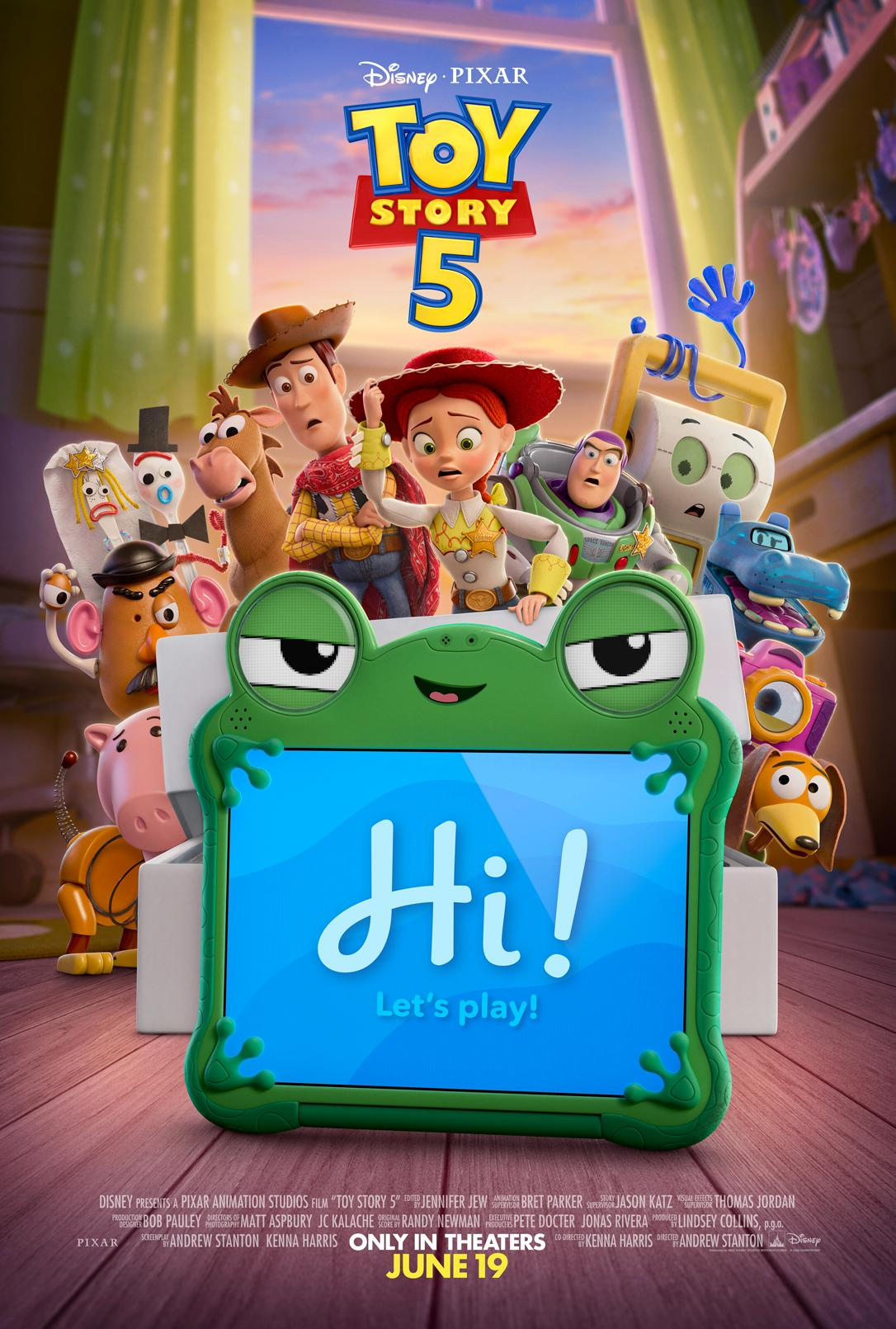
Toy Story 5

When Bonnie brings home Lilypad, a new device she uses to connect and spend time with her friends, the toys must fight to stay relevant and pave the best future for Bonnie they can.

Just when we thought the Toy Story journey concluded and there was nowhere else exciting the franchise could go, this movie series knocks it out of the park for the fifth time in a row, offering a story that feels essential yet expansive, and one that can create some very important conversations between parents and children. The film wisely makes Jessie the protagonist this time around, shifting the focus away from Woody and Buzz’s central friendship and emphasizing Jessie’s position as a leader and confronting her fears of abandonment. It’s also noteworthy that for the first time in the franchise, the female characters are the ones front and center thematically: Jessie and Lilypad’s conflict on how to best help Bonnie adjust to growing up, as well as Bonnie and another key human character the toys come across. Greta Lee is a huge standout as Lily, offering us the best of her comedic and dramatic talents. Conan O’Brien is also delightful as a character whose mere existence is hysterical but his role in the film goes far beyond the initial joke.

Toy Story 5 perfectly uses callbacks to earlier films that feel earned and even expand on the franchise’s arcs in emotional ways, even if Woody overstays his return, considering his powerful conclusion in Toy Story 4. Here, he’s serving as a mentor to the other toys on their journey with Bonnie. A B-plot about a herd of other Buzz Lightyear toys is also hilarious, and overall, every character in the ensemble is in their right place and a joy to have around. It’s always exciting, sweet, and will create important discussions about technology’s ability to help our lives, but also when tech can be too much, and when we need to remember the value of real-life friendships and outdoor activities. It’ll also resonate with audiences of all ages when it comes to the importance of not letting others reshape who you are, and proudly being yourself without feeling ashamed of your interests and personality.

After more than thirty years, the world of Toy Story keeps creating magical memories, conversations, emotions, and stories for all ages, whether old audiences to the Pixar world or new, not just because of the splendid characters and animation, but because of the storytellers behind the adventures, who remind us the importance of the child inside of us, and the most beautiful parts of ourselves that we hold close even as we grow up and change.
The Devil Wears Prada 2

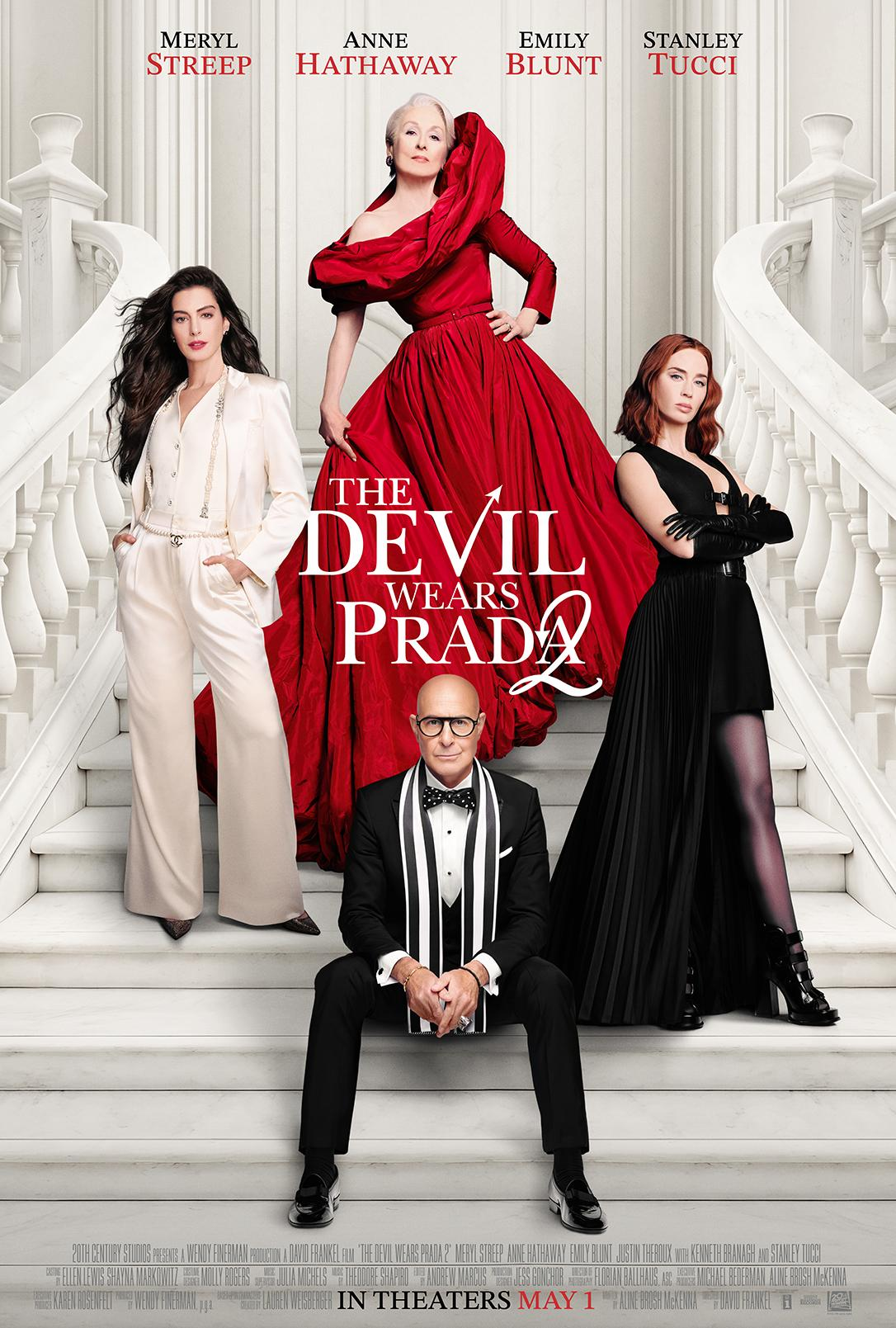
Twenty years after the first film, Miranda Priestly reunites with Andy Sachs to revamp and reignite the future of Runway magazine. The first Devil Wears Prada is a modern comedy classic, though far from perfect, its got a distinct originality, conflict, and remarkable performance from the great Meryl Streep. Save for the great performances from an all-star cast, this sequel doesn’t have any of that fuel, or much of a reason to exist. Andy’s decision to return to Runway feels rather under-explained after her decision to leave Miranda’s toxic orbit in the last film, and the pace lacks some urgency or objective. Not many characters are given the chance to grow or feel multi-layered besides Stanley Tucci’s endearing Nigel; Andy is ambitious and devoted, Miranda is narcissistic and intolerant, and Emily is stuck-up and vindictive. Anne Hathaway is a delight and Streep is always great, but Miranda doesn’t possess the same strength as a character and icon as she did in the script the first time around.

The Devil Wears Prada seemed to have a lot to say about the temptation of glamour and the seduction of power and the ability to make decisions that have an impact, but the second film doesn’t approach it with the same critical lens, rather showing us excess for the sake of the image, in a way that doesn’t feel quite modern or relevant anymore. Viewers may simply enjoy those images on the big screen if they’re focused more on fashion and less on story beats, and it may be enough to see how great Streep, Hathaway, and Tucci are in these roles, but there wasn’t much of a real narrative reason to revisit this so many years down the line in today’s world, save for the sheer scale and the main cast’s availability.

Michael

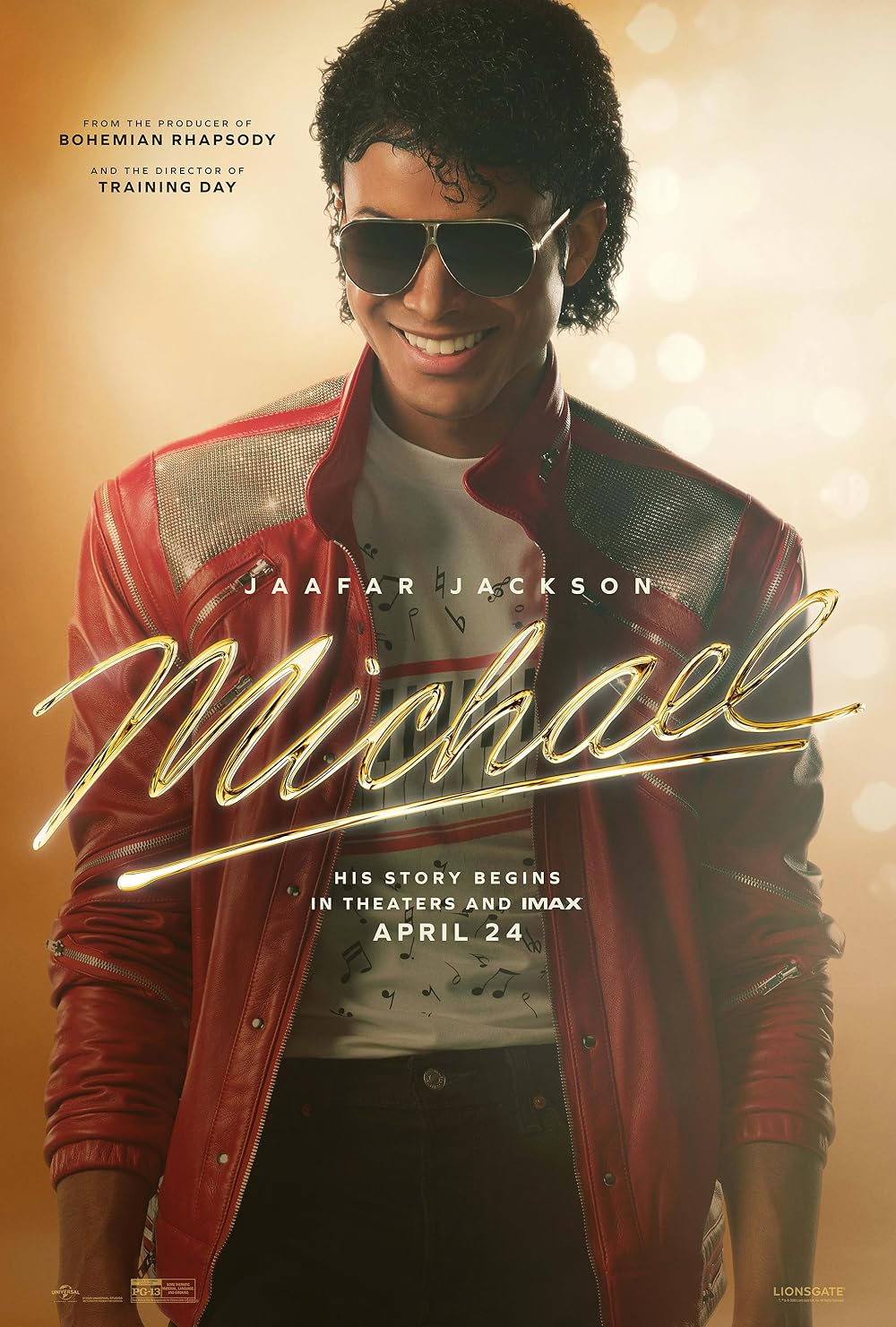
A musical biopic about a monumental pop star is a whole lot of spectacle that spends too much time with the familiar beats and too little time allowing us to feel the impact of his journey and his discography. Every character feels one-note or like a simple vessel to move plot points forward, even Michael himself. Jaafar Jackson commits himself to Michael’s amazing stage presence and dance moves, but the movie doesn’t allow us to feel much for Michael as a person outside of his circumstances and talent. Colman Domingo is excellent as Michael’s emotionally cold, controlling, and abusive father Joseph, but the film spends way too many repetitive scenes trying to show us that Michael desparately needs to break free from Joseph and pave his own way forward.

Any other theme this movie attempts to go for feels painfully underdeveloped, whether his rise to fame, health issues, activism, or the trails he blazed for black representation in mainstream arts. The things that are special to this musician are touched on briefly, while the movie instead insists on hitting all the familiar beats we’ve seen in countless music biopics. The real star here is the sound design, which dials everything up to an 11 during the concert and performance scenes and make us feel immersed in them. That unfortunately only encompasses about eight minutes of Michael‘s 127-minute runtime, which feels incomplete and like the team in the editing room had an hour they should’ve cut and far more story that could’ve already been told.

Though Michael Jackson’s songs moved the Earth and changed the course of the world, the movie doesn’t reach deep enough into the magic of his music and the work that was put around it. The film seems interested in making the case that he is indeed the greatest popstar of all time but clueless as to how to convince us, even those of us who already believe it, instead presenting us with a few of those extraordinary moments from the King of Pop’s life, while the drama offers frustrating lack of nuance that becomes more and more tedious. This missed opportunity of a film that tries a whole lot of everything with not much of it sticking at all. We should’ve been soaring with the hits and left better understanding the human being behind the legend, instead we feel like we’re interacting with caricatures, and then one of the greatest songs of all time starts playing every now and then.

Project Hail Mary

Ryland Grace awakens on the spaceship Hail Mary far, from Earth, and attempts to piece together how he got there and what his mission may be, realizing how much really lies in his hands.

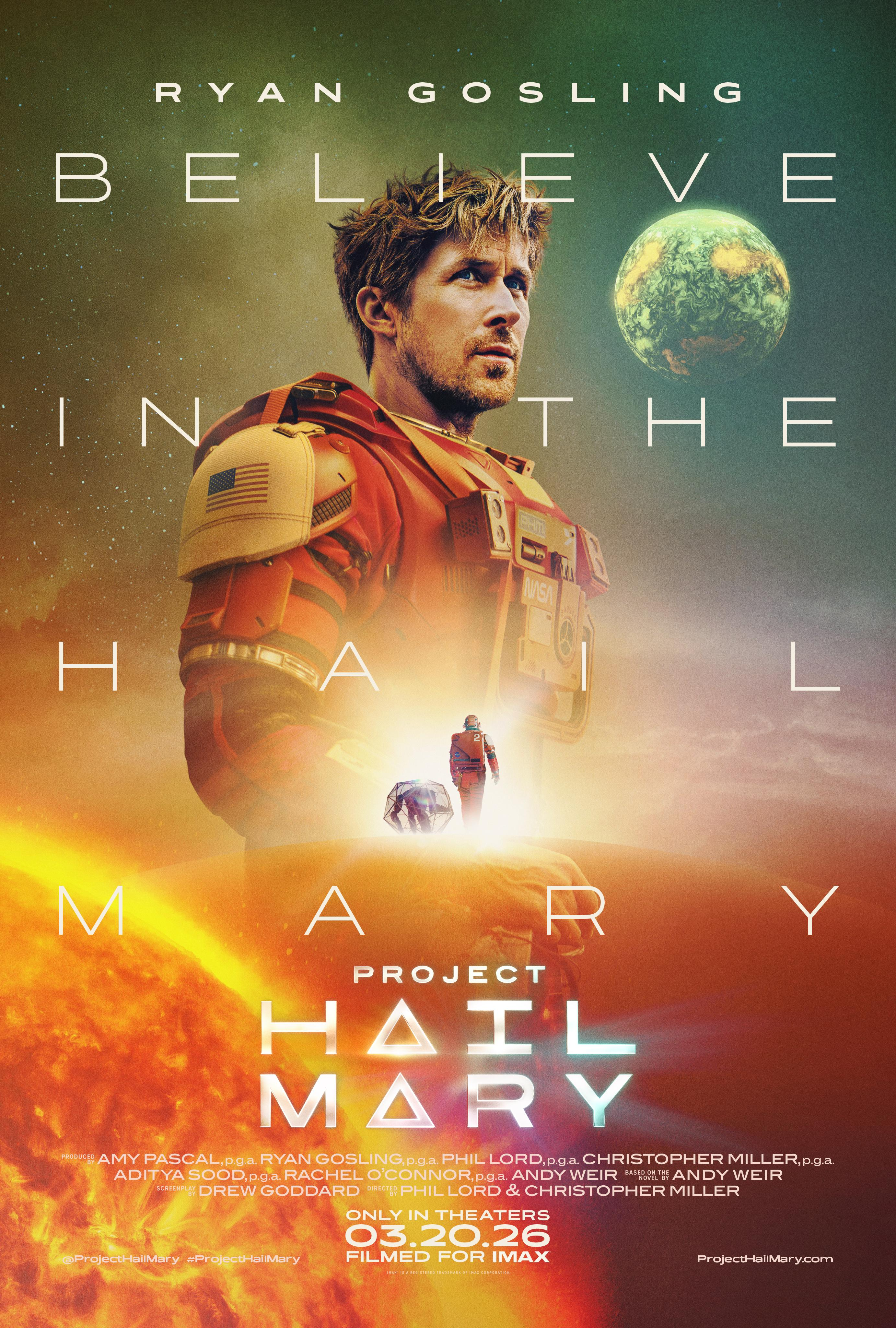
A space epic as urgent in its stakes as Interstellar, Project Hail Mary is a stunning experience that makes use of every minute to move you. Ryan Gosling proves on an even larger scale his charming leading man skills, imbuing Ryland Grace with a deep cowardice, yet a purity and longing that coexists within his apparent weakness is what makes this one of his most lovable performances yet. He is not the only magic at the center of the film — the puppeteering behind Grace’s alien companion Rocky is magnificent and creates a beautiful connection between the creature and the audience. Sandra Hüller is excellent as well and her presence as the authoritative and calculated Eva Stratt, in charge of Project Hail Mary, a global effort to send an expedition to a solar system beyond ours to save Earth from impending extinction, gives the film so much. Hüller takes on something so unexpected yet essential by stripping Stratt of the coldness felt from the character in the novel, which here feels like a necessity rather than a foundation to her being, making the character not just a figure of control but of empathy.

The visual effects, cinematography, and production design are spellbinding and maintain grand scale while conveying the character’s sense of isolation and his dire circumstances. The film also has a loose and unpredictable sense of humor while maintaining its serious through line of stakes and objectives throughout its epic runtime. Despite the seriousness and tension at the center, there’s something life-affirming that Project Hail Mary discovers was always at its heart: from fear and uncertainty come the most powerful and beautiful forces in the galaxy. The film hits all the right notes, whether the buddy humor, sweeping space journey, or effortless direction from Phil Lord and Christopher Miller, who create something universal (no pun intended), hopeful, and impossible to miss on the big screen: one of the most resonant, wondrous, and flat out perfect blockbusters of the last few years that you might not want to end.

GOAT

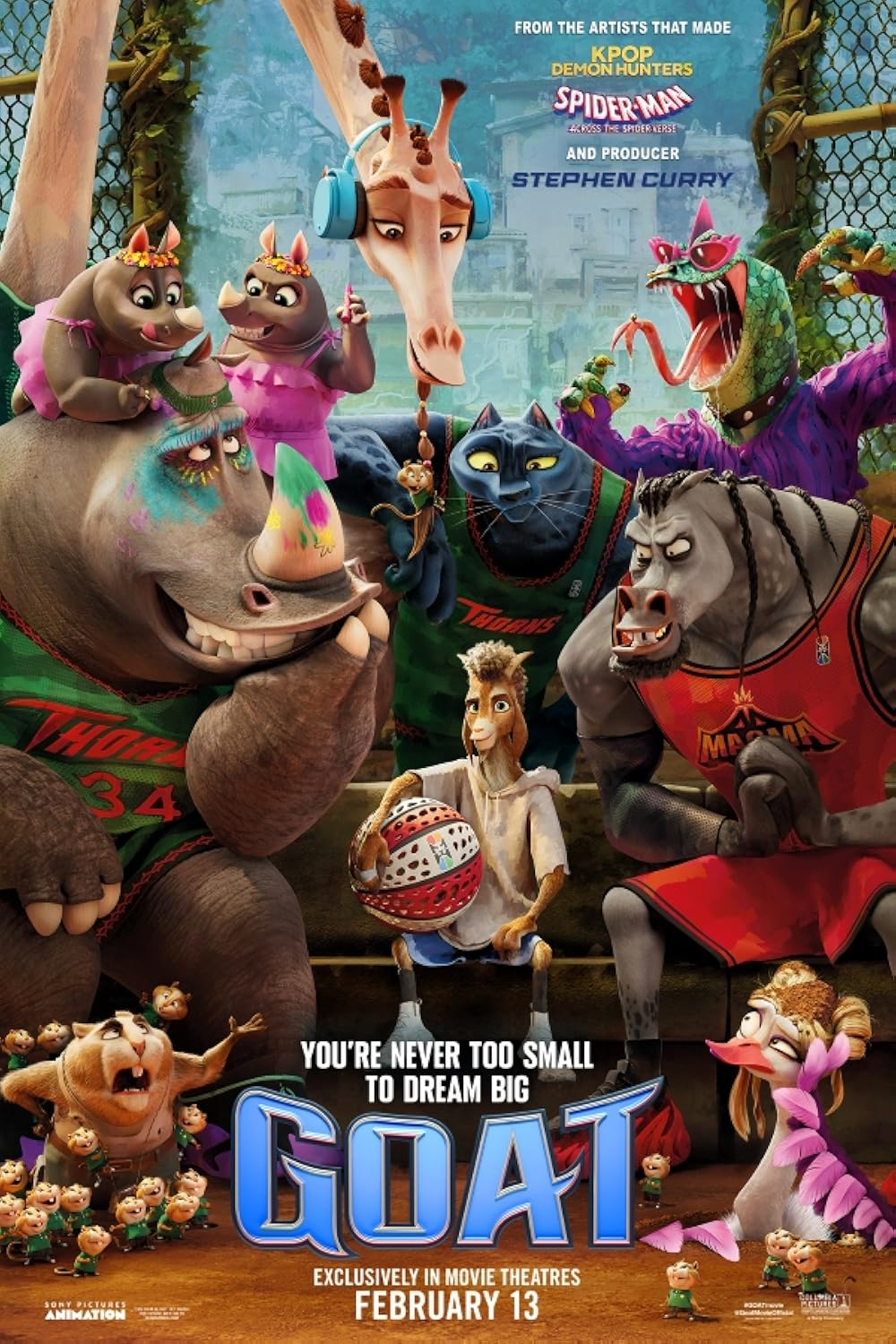
GOAT is about a goat who wants to be, well, the GOAT. Will dreams of changing the game of roarball by becoming the first “small” animal to play on his favorite time, the Vineland Thorns, though he faces adversity from both teammates and rivals.

Continuing Sony Pictures Animation’s winning streak that began with Spider-Man: Into the Spider-Verse, GOAT embraces a similar fusion of animation styles as that aforementioned film and its sequel, as well as the studio’s The Mitchells vs the Machines and KPop Demon Hunters, to create another engaging and exciting adventure that defies tropes and stereotypes and amasses an all-star cast for a delightful time. Caleb McLaughlin is great as the titular leading role, portraying Will as a humble and hard-working young athlete who wants to make it big his own way, while encouraging other to be their best, even those who doubt him.

Gabrielle Union is wonderful voicing Jett Fillmore, a local hero who can’t seem to want to share the spotlight, though this doesn’t quite make her unlikable, rather it comes from Jett’s insecurities about getting older and being pressured to retire. It’s also noteworthy that in a family film like this, the male main character’s basketball idol is a female athlete, something that’s never questioned or called out. Other standouts include Aaron Pierre as an irresistible antagonist, as well as David Harbour, Nicola Coughlan, Jenifer Lewis, Patton Oswalt, Jennifer Hudson, and NBA legend Stephen Curry, who also produced the film, which somewhat mirrors his own NBA journey.

A film that fully embraces what makes the best sports movies great, but takes unique and mature directions, GOAT is a great watch for all ages that’s a love letter to basketball and the dreamers everywhere, that never stops being eye-popping and fun, and puts a big grin on your face.

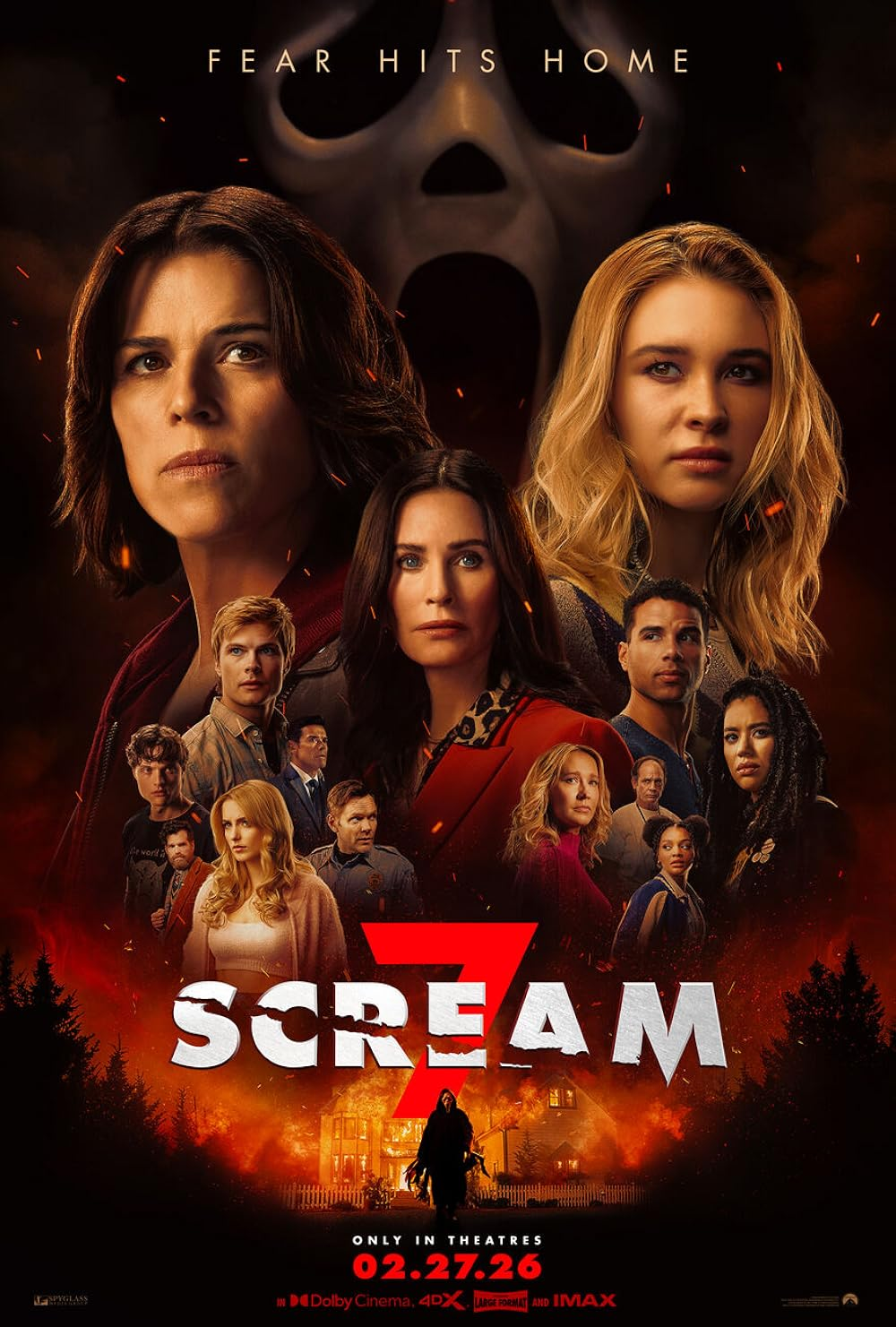
Scream 7

In the words of Christopher Nolan’s great superhero epic The Dark Knight, all great franchises can either go out a hero, or live long enough to see themselves become the villain. Too many great franchises that haven’t concluded on their own terms find themselves in the latter trap, running out of steam because they went on too long for the simple reason of trying to make more money. A project that may have been doomed from the start after the departure of franchise leads Melissa Barrera and Jenna Ortega, Scream 7 feels almost like an apology for the freshness of Scream VI, trading everything that made that film exciting for more of the same that we’ve seen done several times, over and over again.

We’ve seen the series return to Sidney Prescott years later in Scream 4 and the fifth Scream, which also finally allowed the big three of Neve Campbell, Courtney Cox, and David Aqruette to give up center stage to new leads. At this point, not only does Sidney’s return feel stale, but Campbell and Cox’s leading performances feel rather boring and fail to carry the film. Meanwhile, Jasmin Savoy Brown and Mason Gooding’s characters are by far the most fun and not given much to do. The film does up the gore from past installments, but the small town set pieces aren’t that engaging and the ensemble cast doesn’t hook you in much either, providing for a far less exciting guessing game about who might be behind the Ghostface mask than before, and it’s never a good sign when I was able to guess the killer less than halfway into the runtime.

Nostalgia in Scream (2022) and Scream VI was cleverly used as a tool to flip expectations and actually satirize and deconstruct the idea of nostalgia itself. Now, Scream 7 feels too afraid to critique or even surprise its audiences any longer. The commentary on other horror film and franchise tropes that has become a staple of the Scream films feels groan-worthy and half-baked here, especially because the movie is just reusing the same old tropes like a checklist, resulting in an installment that feels like a whole lot of nothing and especially underwhelming compared to the great fifth and sixth films. It’s time Paramount learned that if you don’t have anything new to say, it’s best not to say anything at all.

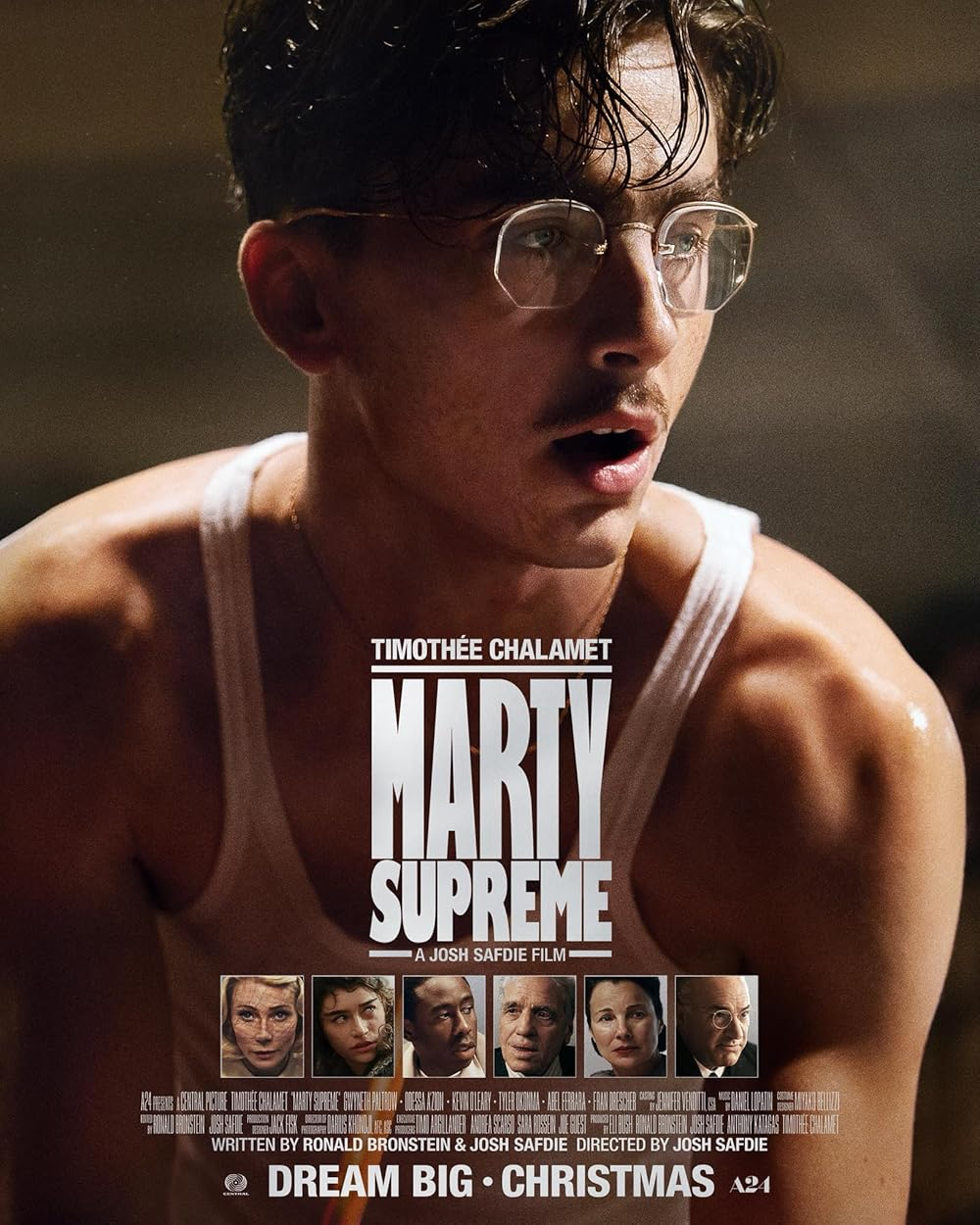
Marty Supreme

The Safdies’ bold filmmaking style has reinvented storytelling since they entered the scene in their expert use of handheld camerawork and overlapping dialogue to build tension, and Josh Safdie’s newest film is not only his grandest, but also one of the year’s must-watch movies that subverts most modern categorizations. If you had trouble rooting for Adam Sandler’s lead in Uncut Gems, Timothee Chalamet’s portrayal of Marty Mauser is almost as slimy, smooth-talking, and utterly self-centered. Not to mention, it’s the best performance of his entire career, devoting so much physicality in every moment to a character who desires to not only be great, but to be celebrated for his greatness. That’s exactly what causes him to make choices that are hot-headed, self-destructive, and often awful to others. Chalamet is loud but oddly charismatic, energetic, and layered. So why, through it all, are we secretly hoping for our unlikable protagonist to get what he wants, even if we know he might just squander it? Marty hustles, lies, insults, and risks it all to reach his ultimate goal of being the best ping pong player in the world, and Safdie’s direction as certain scenarios open rabbit holes of crazy and unwanted situations captures the exhilarating and hysterical chaos of it all.

Odessa A’zion delivers a spectacular breakout performance, giving her character of Rachel a kinetic unpredictability and standing out as a pivotal role in the story that’s impossible to look away from. Gwyneth Paltrow gives much heft to her character, a lost and washed-up but passionate actress looking to be heard in what she feels is a stuck situation in her life, and Kevin O’Leary also shines in a role defined by authority, vanity, and a coldness that looks down on Marty as he approaches him. Tyler, the Creator also stands out as a friend of Marty’s who shares some of the craziest scenes of the film with him. Safdie does an outstanding job of capturing the dirty and rugged look of 1950s New York, with madness increasing as characters yell over each other with the camera up in their faces, or sometimes bad or desperate situations escalate to much, much worse. The script, camerawork, and editing are working together in unison in every moment to create an intense and nail-biting flow that never stops. Not to mention, Daniel Lopatin’s booming score and the brilliantly selected soundtrack enhance every moment in which they’re present.

Chalamet’s performance that vivdly brings the titular character to life is just as fascinating as trying to piece together the greater poetry of the story. The magnitude of Marty’s ambitions are underscored by his entitlement to his gifts and destiny, and his willingness to deceive and toss those close to him aside. This make it fun to predict whether or not he’ll find the success he’s looking for; if he does, at what cost? And if he doesn’t, which of his egregious mistakes will be his downfall? In expected Safdie fashion, it’s overwhelming direction and sound design contribute to a nail-biting watch that resonates as a wickedly structured character study, an absurdly shocking comedy, and one of the one of the most epic dramas of the year.

Avatar: Fire and Ash

James Cameron succeeds yet again in teleporting the audience from their seats into the lands, airs, and seas of Pandora and anyone who buys a ticket for Avatar: Fire and Ash may experience one of the most visually arresting things they’ve ever seen. The complexity of the water, the Na’vi people themselves, and the incredible settings are so detailed and breathtaking to look at, immersing you into an action sci-fi saga with epic scale that only Star Wars and Dune have reached recently. Every character is challenged to the brink to make the most difficult choices, and the child characters from the last film are even stronger here. Jake and Neytiri’s son Lo’ak earns a lot of spotlight he’s given, and Jack Champion’s performance has definitely improved. Zoe Saldaña is again a highlight as Neytiri and given much more to do, while Sigourney Weaver impresses in her strong performance as Kiri. Stephen Lang eats up the scenery as the ruthless and vengeful Quaritch. It’s interesting to examine his grievance against Jake, as they’re both once-human military men now in Na’vi bodies, but even more interesting is the dichotomy between Neytiri and new antagonist Varang, played fantastically by Oona Chaplin. She’s the leader of the Ash People, who reject the Na’vi belief in the goddess Eywa and is hellbent on spreading chaos.

The action sequences are brought to life with such a might and grandeur that it truly feels like the culmination of decades of blockbuster filmmaking. The journey is so stunning that you may not want it to end, but if anything holds the film back, is action set pieces feeling recycled from the last film. The similarities to The Way of Water, especially in the final act, are glaring, including numerous character dynamics/arcs and action scenes. The human characters get a lot of screen time and are rather annoying, especially Giovanni Ribisi, who is needlessly brought back from the first film. However, it looks so gorgeous, particularly a jaw-dropping final battle, and the emotional stakes are so high that the immersive adventure forgives much of its unoriginality and some narrative shortcomings. Those looking for another thrilling experience will be amazed by the sheer beauty of what may be one of the most intricate and astounding CGI achievements of all time. If you can forgive some familiarity, Fire and Ash will lift you out of your seat and take you to worlds away that feel so tangible that watching it in big formats like IMAX and 3D is a once-in-a-lifetime experience.