Furiosa: A Mad Max Saga

As the world fell, young Furiosa is snatched from the Green Place and falls into the hands of a great Biker Horde led by the Warlord Dementus. Sweeping through the Wasteland, Furiosa must survive many trials as she puts together the means to find her way home.

Action movies have lost the rare beauty of the aesthetic of Fury Road, and its prequel nine years later now. To revisit the Wasteland is a reminder of George Miller’s impeccable vision, true to his Australian roots, and imaginative and demented at every turn. The beauty of this post-apocalyptic warzone where mankind runs wild, destroying each other for resources, is captured with a canvas-like flare that pops out in every second. Perhaps only the Mad Max franchise can so seamlessly ditch its main character without any concern from audiences, yet Anya Taylor-Joy seamlessly adds to the rich lore of the titular character that Charlize Theron already made so legendary. Her silent pain and rage still never overshadows the character’s likability, but Taylor-Joy always feels perfectly placed in this big and mad world. Speaking of mad, Chris Hemsworth’s dive into villainy makes you ask why he hasn’t taken on more psychopaths before (shoutout to Bad Times at the El Royale). His twisted heartlessness and unleashed behavior makes his character is evil as he is delightful, and the actor nails the long batches of dialogue the character has. Tom Burke is also excellent as Praetorian Jack, a character who will certainly stick out for audiences as an anchor of sorts, whether in a haunting or affectionate way.

The one thing Furiosa lacks that made Mad Max: Fury Road the defining action movie is that pitch-perfect pace, and Furiosa‘s slow build across the character’s life’s events is a stark contrast to that lightning speed. Though the buildup may last long, the action is well worth it, and the structure does anything but play it safe afterwards, making this film more heartbreaking and intimate than the last. The sound is also booming and the body count is joyously high, with the best of Miller’s witty editing and inspired scenarios involving vehicles and large battle settings. There’s not a lot of suspense with certain characters knowing where Fury Road picks up, but it also contextualizes Furiosa’s journey to redemption in the aforementioned film, and is a welcome return to the spectacular world-building that we already love Miller and this franchise for.

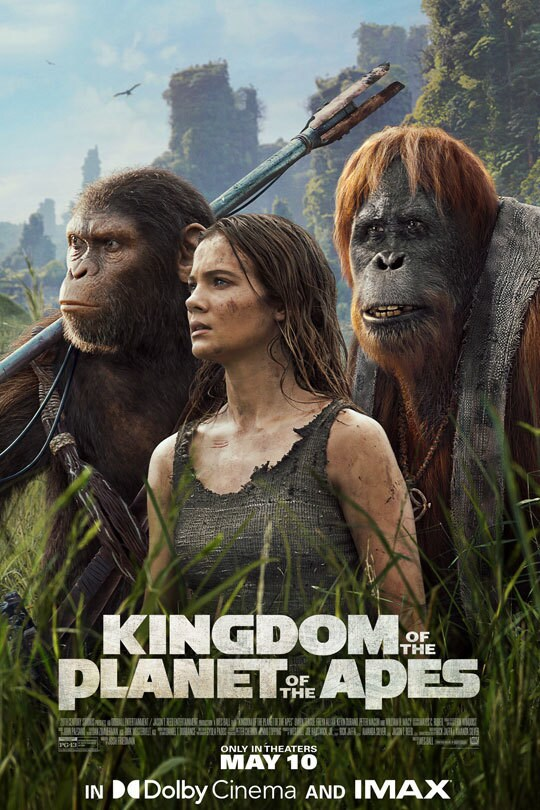
Kingdom of the Planet of the Apes

Set several generations in the future following Caesar’s reign, apes are the dominant species living harmoniously and humans have been regressed to a feral state. One young ape undertakes a harrowing journey that will cause him to question all that he has known about the past and to make choices that will define a future for apes and humans alike.

More Apes after the conclusion of the incredible Caesar trilogy with War for the Planet of the Apes sounded too cash-grabby and too soon. What was wise on the filmmakers’ behalf was to treat this installment not as a direct sequel or reboot, but a slight reset of sorts as we pick up 300 years later, focusing on the legacy of the apocalypse and Caesar’s leadership. Apes are no longer living in fear of humans, rather Earth has become their planet, which creates an intriguing new setting that still doesn’t quite undo the finality of the last film. Ever present is the amazing dedication to the visuals and world-building. The motion-capture technology used to transform the actors into chimps, and the performances themselves, are impressive and make you forget for the entire 2 hour and 25 minute runtime that you’re watching performers rather than real apes in this world. Though Andy Serkis as Caesar was an iconic leading character that’s impossible to top, Owen Teague gives a sympathetic performance as Noa who strongly takes us on this adventure in this new era for the planet. Peter Macon also stand out as the wise Raka, and Freya Allan is especially expressive in her deep performance as human character Mae, though the script missteps in where to take her path later on. Kevin Durand gives such a committed presence to the villainous and tyrannical Proximus, a more charismatic version of the manipulative and sadistic Koba from Dawn. Proximus’ dialogue and physicality dominates whatever else is in the screen and truly terrifies, and his objective is quite menacing as well. However, his motivations, compared to Koba (who many ranked as one of the 2010s’ best villains), leave less room for moral grey area and rather feel like “pure evil”; there’s no layer or nuance to the terror Proximus wants to inflict or how he got there, though I can’t complain as to how well Durand brings the character to life.

Kingdom is most interesting when focusing on the apes’ new ways and how Caesar’s legacy impacts the sects of apes in different ways. But gone is the intrigue of the human-ape conflict and its undertones for human nature, though the film doesn’t understand this and often dwells too much in conflicts that War had ended with such finality, instead of embracing its other themes as its strengths. There’s also a character played by a recognizable Oscar nominee who’s entire being there felt unnecessary and simply complicates the logic of the world building further. The film isn’t short on great action and visuals in this imaginative, lively, post-apocalyptic world. It’s just that when you have two practically perfect films in the franchise preceding it, as Matt Reeves helmed them, it’s harder for this film to escape that shadow especially when the last one ended so definitively and didn’t beg for any sort of ambiguity or continuation. Kingdom of the Planet of the Apes is an engaging ride that should probably be seen on a large screen, even when it stumbles in justifying its existence and polishing its character motivations. Not to mention, it may have just been to soon for this inevitable continuation to a perfect ending, and the film’s final minutes raise more unnecessary questions that undo what we just saw than exciting invitations for more.

Challengers

Tashi, a former tennis prodigy turned coach, turned her husband Art into a champion. But to overcome a losing streak, he needs to face his ex-best friend, Patrick, who’s also Tashi’s ex-boyfriend.

One thing that’s thrilling about Challengers is that it never gives you easy answers. Is it about devotion? Manipulation? Triumph? Doom? All of them? One thing’s for sure: it’s a film about passion. Raw physical and emotional passion between humans for one another, and for the kick they get doing the one thing they can’t live without — in this case, playing tennis. And for all the right reasons, Luca Guadagnino is at his most maximalist stylistically to convey this raw passion these characters feel and bring us into the world, from exciting editing and some experimental cinematography to the synth, almost Run Lola Run-esque score from Trent Reznor and Atticus Ross. It’s the polar opposite to his more naturalistic, minimalist approach to the intimacy of Call Me By Your Name, and an upping of the ante of the wilder style of Bones and All. Zendaya gives one of her heaviest performance, portraying Tashi perfectly over a long span of time, through fascination, ambition, longing, control, and deceit. Josh O’Connor and Mike Faist are also great, particularly Faist, whose charm entrances the screen. The West Side Story star announces himself as a powerhouse whose apparent harmlessness you can’t help but feel for. Their friendship established in the opening minutes of the film sets the stage for everything to come, and makes you care for how the rest may unfold or fall apart.

Challengers is the rare film that transports you into its world in a case where there are only 3 characters who really bear any significance. There’s a scene between the three main characters that happens early on chronologically that enchants you and sucks you into the close, complicated intimacy they inhabit in this space, and the film never lets you go once this scene happens until the credits roll. It’s an experience that’s dynamic, unpredictable, and darkly human, with three riveting leading performances at its center, and sets the bar the rest of what’s to come in Guadagnino’s directorial career.