Emilia Pérez

Lawyer Rita receives an unusual offer from cartel leader Manitas — to help him evade the authorities and disappear by becoming Emilia Pérez, the woman she always was meant to be inside.

There hasn’t quite been a film remotely like Emilia Pérez, at least not in recent memory. One that so effortlessly blends seemingly alien genres and stories together, and utilizes its story, themes, and cast in such a surprising way. Zoe Saldaña shines in her most electric role yet, in an entrancing narcotics thriller meets rock opera musical where all the show-stopping elements create a magical experience you can’t look away from. Karla Sofia Gascon gives the character an identity defined by envy and a desire for redemption that’s also reflected in Saldaña’s character. Selena Gomez rounds out the poignant cast, getting to balance her great star power with a more rageful side to her acting we haven’t seen before. 

The journey of watching the film is one that gleefully navigates its way through tones and genres that wouldn’t have meshed so beautifully in other films. The musical numbers give the characters a voice that they otherwise lack or are searching for at the start. Every character, from the main ones to the background singers, is looking for validation, redemption, or recognition, and that binds the themes of the film together. There’s a scene about halfway in where I leaned forward in my seat, and never quite leaned back because I was so entranced by the mood the film created with its music and style. It’s director Jacques Audiard taking an exciting leap to create a really special and breathtaking experience; an outlandish, wonderfully performed film that dares to challenge but wow it’s viewers.

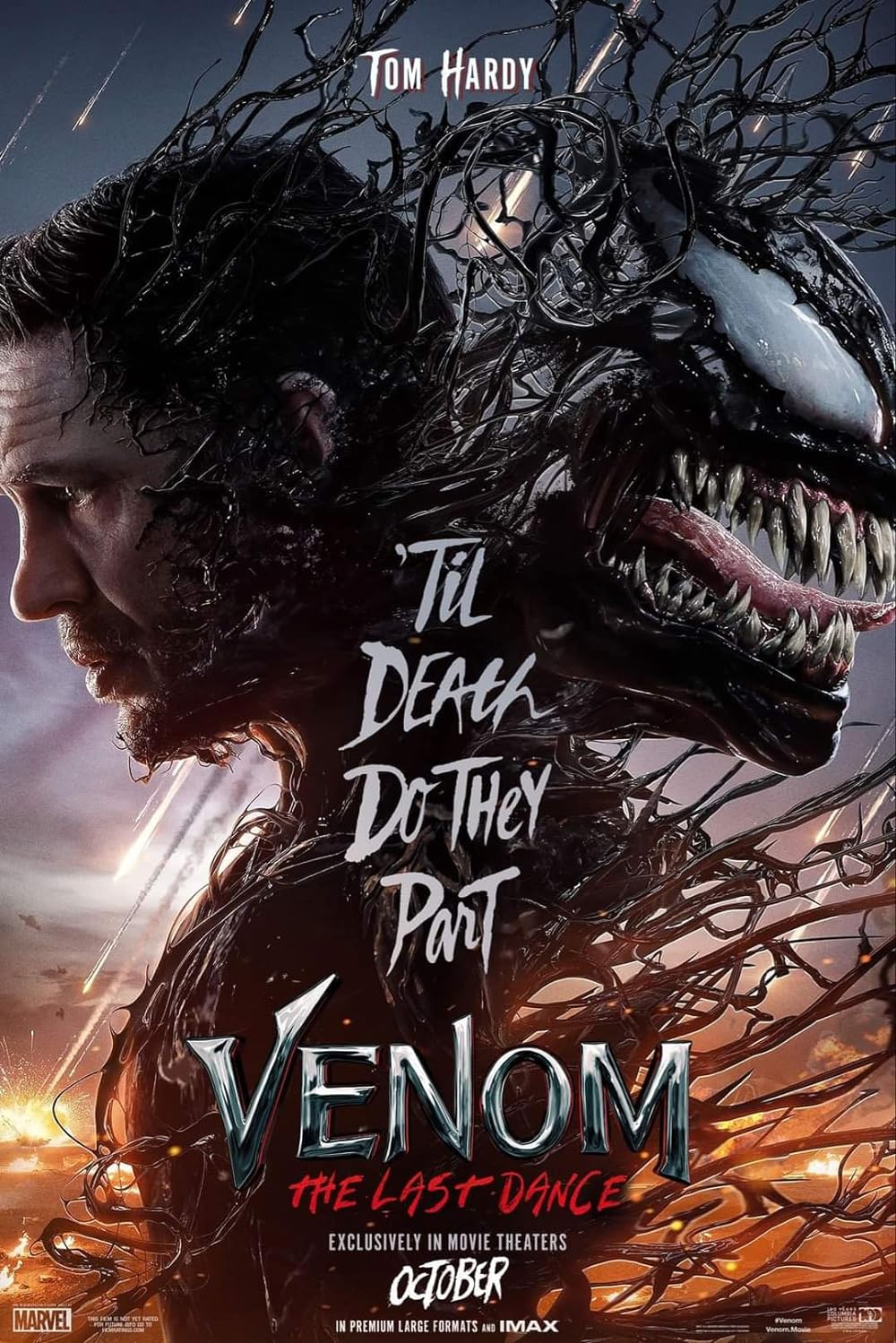
Venom: The Last Dance

Eddie and Venom are now fugitives on the run after the events of the previous film, and soon run into threats that threaten their existence together, and that of the entire world.

The third and final Venom movie offers much stronger laughs due to the bromance between Eddie and Venom. Though there’s still a fair share of cringe, there are some more genuinely funny moments, which for some is all you can ask for from these movies. But it’s hard to pinpoint whether it’s a genuinely better movie than its predecessors, or the bar was set so low by them that enjoying this one is a little easier. Not to mention, coming out after Morbius and Madame Web does this movie many favors considering it’s nowhere near as unwatchable, but how high of a compliment is that really for a movie? Where the film struggles again is making any sense of its story or having any engaging conflict beyond its titular dynamic. For the first bit of the movie, I was enjoying the chemistry between Tom Hardy and the CGI black blob much more than in the past films, but it soon descends into the same dull action scenes and tedious symbiote science exposition these films have subjected us to before.

The action scenes, including the uninspired CGI character designs, feel recycled and unattractive and do nothing different from the past films, as well as a few uninspired soundtrack choices. The rules to the conflicts are inconsistent and contrived, not to mention the disappointing use of great actress Juno Temple, who’s mostly just there to give exposition and stand on the sidelines. It’s also slightly distracting to have cast Chiwetel Ejiofor and Rhys Ifans, who have already had other Marvel roles, and Ejiofor’s character has no depth or originality to him. Every time we come back to the fighting and stakes, it’s hard to care, especially due to a few unrewarding story threads. It’s much more of the same, and leaves no impression despite its efforts to close out the trilogy. It may be the best of these films but that’s hardly a compliment considering how mindless and uninspired they already were.

Conclave

Cardinal Lawrence is tasked with overseeing Conclave, the selection of a new pope. Soon, secrets reveal themselves that could shake the very foundation of the Roman Catholic Church and bring Lawrence’s faith in his colleagues into question.

Edward Berger’s drama transcends conversations about faith and asks about men and values. The idea that selfishness and lies prevail in any space of remote competition or power is about so much more than the Catholic Church, but there are genuine stakes and universal truths to the story here. Ralph Fiennes gives one of his best performances ever as Cardinal Lawrence, a man trying to guide his belief in his Church and his peers while grappling with his understanding of faith and his place there. His character does what he feels is necessary but there’s a prevalent goodness and softness to Fiennes’ performance that beautifully accompanies his wisdom and elegance. Fiennes gives a breathtaking monologue about the coexistence of doubt and faith that took the air out of the theater — and that’s only half an hour in. I could’ve watched Fiennes embody this character for hours. Stanley Tucci is also exceptional as another one of the more moral members of the Church.

The cinematography is stunning, with colors that always stand out, and symbolism in items or actions. Even a light entering a room represents so much more for the characters and their path ahead. The action movie-like orchestral score by Volker Bertelmann is enticing and helps define the pace, which never wastes a minute of its 2-hour runtime that flies by. Though a twist at the end feels unnecessary, the idea that men flock to accusations, deception, and harm when they need to cover for themselves is delivered with heft. Fiennes’ performance gives the film the identity it needs to connect, and the writing dissects the flaws of humanity and absolution with fascination and conviction. Berger’s outstanding film invites you to continue guessing, indulging, and marveling.

The Apprentice

The Apprentice envisions the rise of billionaire tycoon and megalomaniac Donald Trump as a teacher-student relationship between Trump and his cutthroat attorney Roy Cohn, the acolyte of many evildoers in American history such as Nixon and McCarthy. It takes a serious approach with only a dash of irreverence in its script and style, showing the true scope of the values America represents and the ones it claims to but fails. Sebastian Stan isn’t doing a comedic impersonation of the man like many we’ve seen on Saturday Night Live, rather he transcends that and embodies Trump’s skin, becoming more and more like the Trump we’re used to seeing and hearing as the runtime progresses. Donald in the film is chronicled in his journey from a spoiled brat living off his dad’s achievements, to the narcissistic bully obsessed with greed and demonizing others. Much of what he seems to learn is attributed to his mentor, attorney Roy Cohn. Jeremy Strong is incredible in the role, giving a massive performance as a man who dominates every room yet evidently has a small sense of self. Cohn is played by Strong with immense physicality and a fragile fearfulness to his appearance. Even when the film’s pacing occasionally slows down or falters, the film is entirely worth it for those two principal performances.

Director Ali Abassi is fascinated with the American ambitions and values that surfaced in the 1980s, including Cohn’s “kill or be killed” mentality that many big American wealth giants lived by, or splitting the world into “winners and losers”. The use of various vintage cameras to immerse the audience in its 80s period can come off as indulgent and even distracting when too rushed, but the production value looks uncanny to how the Trumps at that time and their “achievements” really looked. Most importantly, it shows the normalization of bigotry and corruption in the American system, and how it’s rigged to enable the wealthy to get richer, and continuously toss the needs of the people aside. Trump comes of age in the film, but perhaps for the worst. His wishes are all granted, but at what cost? The spread of his ambitions to conquer the world and rub it in everyone else’s faces seem never-ending, but we see his infamous persona here originating from a desire to always be strong and win no matter the cost. The Apprentice isn’t just an origin story of modern evil, but a tale of the delusional men who roam at the top of society, capturing the essence of how a force of destruction and its hunger for power was activated and enabled by forces not so unlike him.

Anora

Anora, a young exotic dancer and call girl, meets the son of a wealthy Russian oligarch, and they soon spark up a fairytale romance. But that soon is threatened once his family gets word and sets out to break them up.

Sean Baker’s latest film is his biggest, utilizing more settings than his other films yet still addressing issues related to the working class. However, this one isn’t as grounded as his other films about America’s divisions — and flourishes because of it. The movie effortlessly balances fairy tale romance, screwball comedy, and tense drama, even becoming a hostage thriller of sorts at one point. Mikey Madison delivers a star-making performance as the titular character of Ani. She may be looking for love, control, validation, security, glamour, or respect — it varies every moment and that’s what makes Ani so unpredictable. She owns the screen with her every move and line. We meet her at her job as an escort, a role that doesn’t normally constitute a movie protagonist, but Mikey is immediately lovable despite her being from a world new to us. All the supporting characters are also expertly utilized, and the look and soundtrack make Anora feel like a lovely adventure… until things soon spiral out of control into a very different mood, yet equally fascinating and out there. 

There may be parts later on that are drawn out, but it never lets go of your attention for a moment as the stakes rise. The ending changed my entire outlook on what the film was really about all along. There’s so much depth to uncover and your expectations are completely flipped in a ruthless, heartbreaking, and unforgettable final act. But Baker’s love for his characters, even the smallest parts, breathes a human life through them and winds up making Anora a beautiful, resonant, and truly one-of-a-kind experience that juggles so much without ever compromising its nature or grasp on the audience.

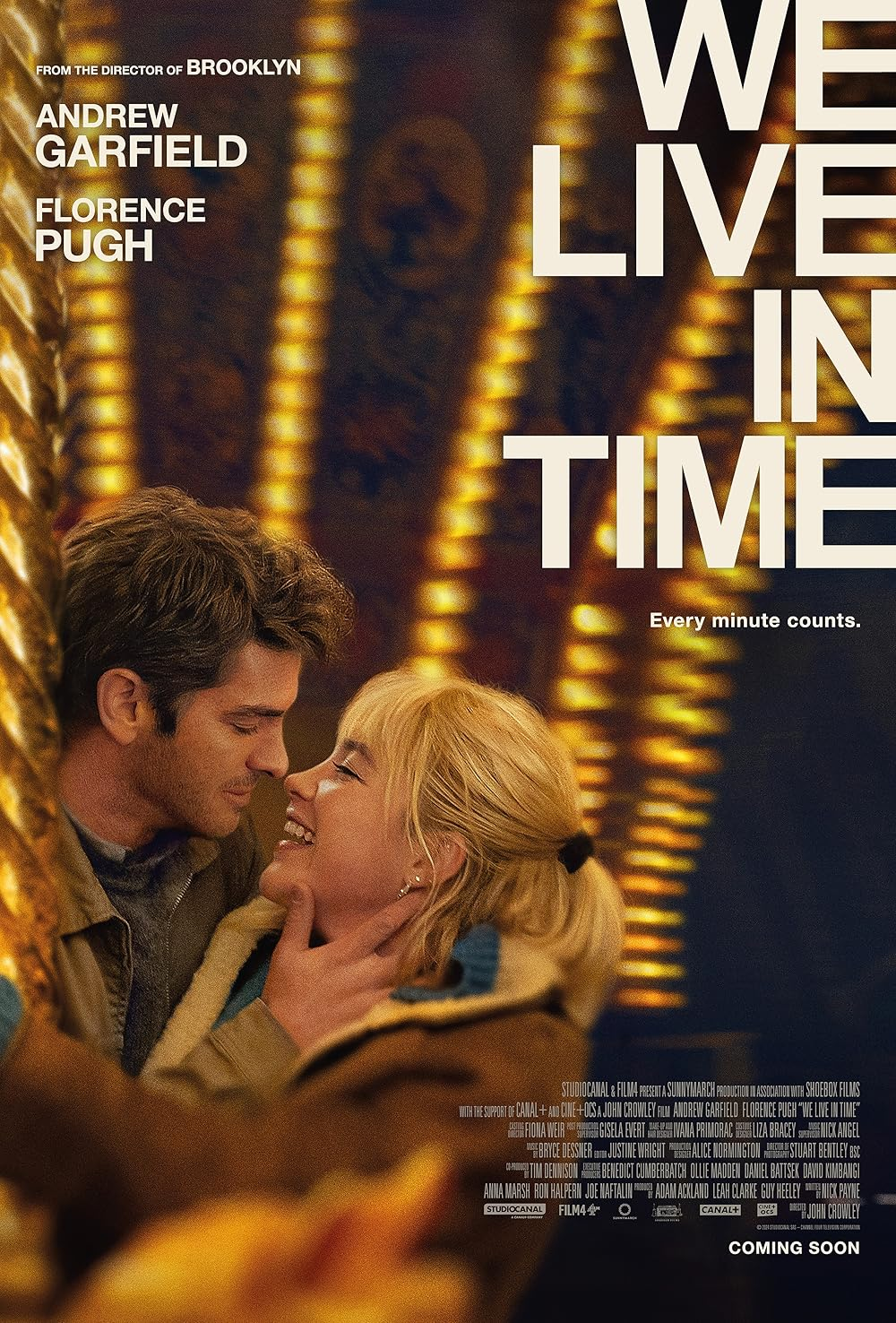
We Live in Time

Oscar nominees Andrew Garfield and Florence Pugh star in a film about more than just romance, but about making the best of our time and deciding what we want to leave behind for ourselves. As a couple faced with difficult decisions, the two leads shine, although it takes some time to buy them as a grounded couple rather than two A-list stars in a major pairing. Pugh in particular is the film’s heart: she’s a woman faced with a sadly universal and terrifying circumstance, working to preserve herself, her future, and her image for her loved ones and finding out that she doesn’t have to choose between them. Garfield is also vulnerable and works well when his character is lovingly caring for Pugh yet standing up in their relationship. 

Though the score and the pace are meditative, the unfolding of the story suffers from the unnecessary decision to present the events in a non-linear fashion, which accounts for more confusion than revelation. The film doesn’t quite live up to the high bar set by its talented leads and John Crowley’s incredible romance Brooklyn (2015), but also ends up finding its footing in a final act that follows through on the empowering promise it sets up for Pugh’s character. It also doesn’t overstay its welcome and allows things to be open to the audience’s interpretation, as is the passage of time and the future as we view it from the present. It’s a solid and human film that takes time to end up resonating, but is lifted by impressive performances and an inconsistent but ultimately heartfelt and meditative runtime.

Joker: Folie à Deux

After inciting violence, murder, and chaos in Gotham City, Arthur Fleck is institutionalized at Arkham, where he faces trial for his crimes — and perhaps the love of his life.

It might still be that there’s no reality in which a sequel to Joker makes sense. Joker felt so fresh compared to other IP-driven blockbusters when it was released, but also provided a sense of shock when it ended. Folie à Deux is a confused sequel that left me feeling nothing. Perhaps a radical decision like making this follow-up a jukebox musical is exactly what it needed to justify its existence, but a movie this ambitious is also too cowardly to take large enough swings or hit hard as a musical. The two main ingredients that work here are Joaquin Phoenix’s performance, which is still incredibly committed and breathtaking at times, and the gorgeous cinematography by Lawrence Sher, which embraces different colors and a grand sort of look to its prison scenes. However, it’s a bad sign when you wish such a legend like Phoenix was spending his time and talents elsewhere rather than helping Warner Bros. milk this character, which won him an Oscar the first time around.

One of the things that inherently doesn’t work about the concept of a Joker sequel is that we don’t have that gateway of sympathy into Arthur’s world when we meet him; he’s been dejected and abused by the world around him, but by the time this movie starts, he’s already done his awful deeds, and it’s hard to feel anything for him in this one’s opening act. Without that fascinating entrance into this world of sorrow and sadism, it’s hard to really feel anything watching the movie. Lady Gaga’s casting is inspired, but the film itself doesn’t do her and the character justice. Why make the singer of a generation whisper lots of her singing or not give her something more substantial than to pine over Arthur? In a psychological thriller about two insane criminals that turns into a musical, the numbers couldn’t afford to be this safe and scared. They feel like they’re holding back and are too concerned with convincing us they are set in the characters’ heads rather than leaning into surrealism and ambiguity. The music scenes don’t feel like a trip, or like they’re unlocking something about the characters and the film that can’t be backtracked on, they’re just breaks with song, and that’s what makes this risk feel so frustrating and timid. Not to mention, we don’t feel like we learn anything new about Arthur that wasn’t already established in the first film, nor anything original about the justice system, the mass hysteria around violence, or society’s outlook on poverty and the mentally ill.

Joker: Folie à Deux is a film that, unlike the masterful and already iconic first movie, has no identity of its own, because it’s too scared to commit to its giant leaps. As a courtroom drama, it’s derivative. As a romance, it’s painfully undercooked. As a social commentary, it’s tiring. And as a musical, it’s just too dim. By the end, nothing really transports, terrifies, or resonates, and worst of all, it fails to answer the most important question of why another chapter to this story.