Companion

Companion might fall apart if you think too much about plausibility, but that’s not the whole point. It starts out as a “getaway” thriller like any other, but soon things go, well, incredibly south. There isn’t much I can say beyond that because the story and its unfolding take so many unexpected directions that elevate the enjoyment of watching the film. Not to mention, it’s incredibly funny. Sophie Thatcher continues breaking into the thriller genre amazingly, giving her all to what the character needs. Jack Quaid is also fittingly cast as a seemingly “nice guy” with more insecurity under the surface. Rounding out the great supporting cast are Harvey Guillen and Lukas Cage, who nail the comedic timing and pitiful complexities of their characters.

The editing, comedic timing, music choices, and thrills elevate Companion above a few minor writing missteps towards the end. It’s entertaining while smart, with some outrageous dialogue and very well-filmed sequences and production value. It’s not the first modern film to try the satirical horror-thriller approach to issues of masculinity and toxic relationships, even in the last few months, but does it cleverly and with so much fun, including the humor and twisted violence, that it wins you over from start to finish.

Better Man

Better Man chronicles the rise, fall, and resurgence of popstar Robbie Williams, with a twist: Williams himself as depicted as a CGI monkey. This odd approach threatens to distract at times, and works better conceptually than in execution. However, this musical biopic rises among the crowd of forgettable tellings of famous musician’s lives through its vivacious musical sequences and booming soul. Williams, who narrates the film himself, doesn’t let himself off the hook, inviting us into genuine introspection of his ugliest parts: his insecurities, self-destructiveness, addiction, and depression. Michael Gracey’s direction puts everything in his last grand musical film The Greatest Showman to shame within minutes — the lively numbers, dynamic camerawork and choreography make the visual style bombastic while remaining intimate with Williams’ core as a man, not just his journey as a famous singer.

The effect the main character being a CGI chimpanzee has is occasionally jarring and even laughable at worst, but at best, creates an interesting visual experience compared to films with similar plots, and brings you into Williams’ imposter syndrome and self-perception. However, one can’t help but think the gimmick would’ve worked stronger if it had only lasted for one scene. Still, the film is such a breath of fresh air in that it tackles familiar points and themes from the genre on a far more up-close manner, such as feeling trapped by fame, or being numbed by addiction. Non-fans will want to learn much more about Robbie Williams’s story and learn more about his story. Fans will greatly enjoy Williams’s songs being elevated by such beautiful sequences and appreciate a bold and eccentric yet humble, emotional, and entertaining biopic.

A Real Pain

A Real Pain beautifully balances the heartbreaking and hysterical through the dynamic of Jesse Eisenberg and Kieran Culkin as cousins David and Benji, who travel from New York to Poland together on a tour in memory of their deceased grandmother, a Polish Holocaust survivor. It’s about so many things, whether big or small. From a Jewish perspective, the film powerfully touches on complicated feelings of nationality towards countries in which one’s family lived but suffered horrific atrocities, as well as generational trauma. As someone who has embarked on this tour myself, the film captures not only the visceral nature of walking into places where such evil was committed eight decades ago (which both I and the characters here came to feel, wasn’t even that long ago), but the deep emotional connection towards one’s ancestors, community, and people it invokes.

From a personal perspective, the film is also very much about empathy — the idea of feeling others’ pain, and sadness, to better understand and connect with oneself. Kieran Culkin in particular brings such harsh complexity to his character. Benji is fascinated with human connection and constantly in pursuit of embracing living life with all his senses, but doesn’t always know how to feel, or express himself to others. Even when he pushes others away and embarrasses himself, the audiences can’t help but hold him close to their heart and feel deeply for him in every moment, because of his desire to grieve for his grandmother, and true yet misguided desire for the best. Eisenberg, in one of his most substantial and beautiful performances, wonderfully conveys David’s pull to and from Benji — his responsibility yet resentment towards the way Benji feels, which comes from a distance and envy from him, yet a dear love for him. Their bond is as moving as it is poignant, and even irreverent, and best of all, it’s easy to connect with them both as an audience member, despite how wildly different they are. Eisenberg’s script is devoted to his love for his Jewish heritage and culture, and exploration of the human condition that may even make you reflect on how you live your life. He and Culkin together make for a wonderful pair in a film that’ll take you on an emotional journey filled with weight and resonance.

Nosferatu

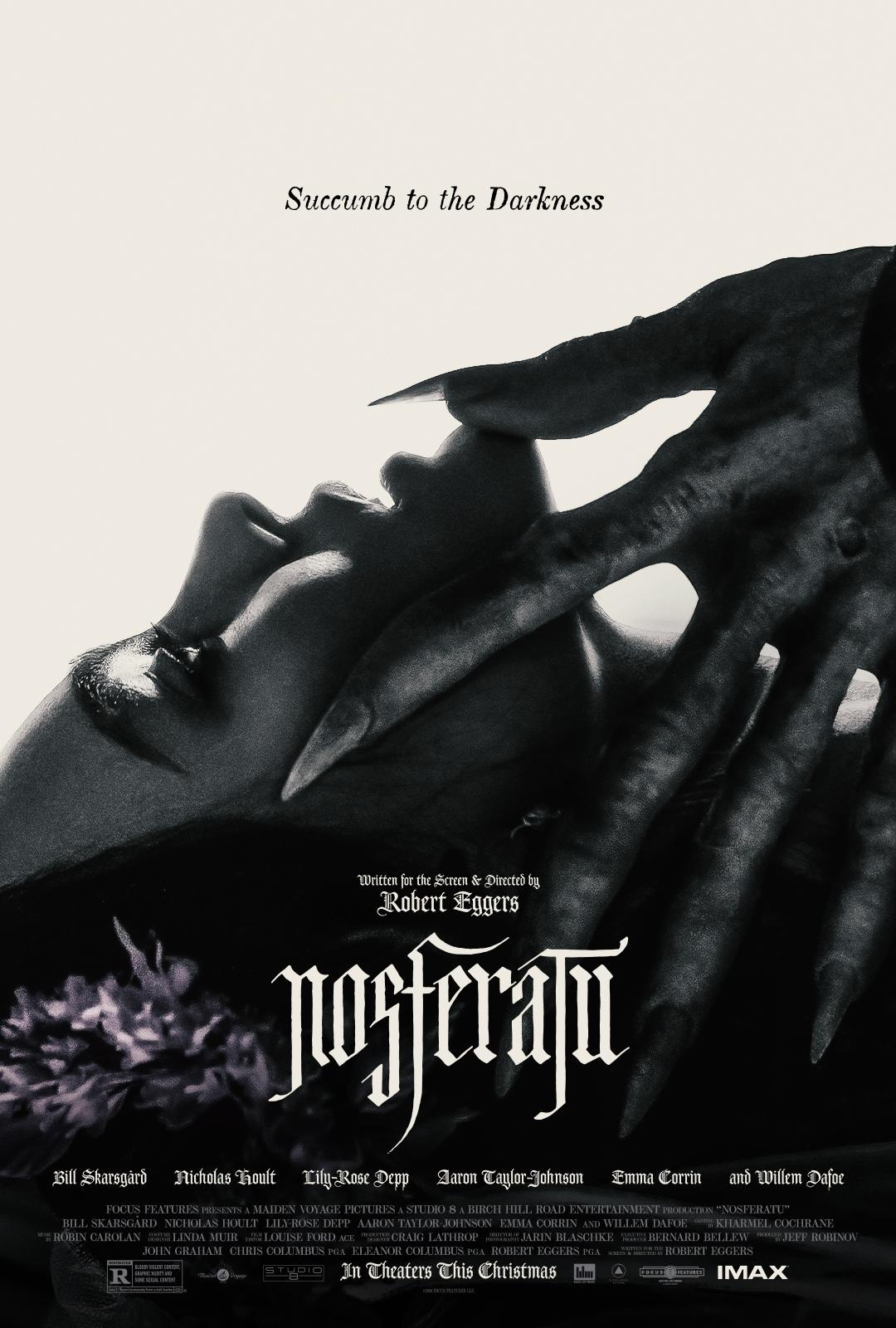
Out of all the reimaginings of the tale as old as time that is Dracula, none have been quite as chilling and outright transfixing as Robert Eggers’ Nosferatu. Eggers captures beautiful simplicity yet utter darkness in the film’s breathtaking imagery, as well as deeply terrifying sequences of gothic horror. From the jaw-dropping opening scene, the film captures its audience in a sense of heart-stopping fear that never ends until long after the credits roll. Jarin Blaschke’s cinematography wonderfully uses imbalanced lighting, gloomy color schemes, and silhouettes to create something that looks timeless. Every shot evokes a feeling of an ancient evil’s presence that’s about to be awoken and get ahold of what we’re looking at, which is exactly what happens with Count Orlok. Bill Skarsgard is unrecognizable under stunning makeup and changes his voice to create a towering and skin-crawling vampire, who’s face we wisely don’t see in close-ups until much later on. Lily-Rose Depp is a scene-stealer whose performance is so astounding that if you stop to realize it’s acting, it becomes hard to comprehend the sheer levels of physical and emotional commitment required — Depp never makes you question it once. Though the film cleverly shifts main characters between her and Nicholas Hoult, she’s the film’s beating heart and muscle.

Eggers expands on all his trademark oddities as a filmmaker, making us feel helplessly entranced. It’s nail-biting, gory, and does not hold back on scares and twisted, graphic content. The director feels in complete command of the style, whether the score, production design, or material, that digs into ideas of masculinity, obsession, and self-deception, without needing to overexplain what it’s truly about. Though I was dreading what was about to happen between the main characters and the titular vampire, I could never look away; I was deeply unsettled yet never wanted the experience to end, knowing I was in such good hands. No matter whether you know the story beats or not, there’s genuine shock and brilliance in every scene’s execution, breathing new life into a story that felt like it was always meant to fall into Eggers’ hands. It’s masterful and haunting, like watching a gorgeous fever dream that keeps building and building until an unforgettable final act. You may be going for the cast, the monstrous scares, or even just the cinematography — individually, they’re remarkable, yet together, the parts create a spellbinding whole.