Sinners

Twin brothers Smoke and Stack return to their hometown to open a blues club for a fresh start, only to discover that an even greater evil is waiting to welcome them back.

Ryan Coogler, one of the most impactful filmmakers to come out of the last decade, creates his most original, commanding, and dazzling film, a kind many have been waiting to see for a long time. Coogler gets free reign to blend genres with unique storytelling on a larger scale than we’ve seen before. The characters leap off the page and screen with their wonderful portrayals from Michael B. Jordan, Hailee Steinfeld, Wunmi Mosaku, and Delroy Lindo, as well as a more menacing turn from Jack O’Connell. As both Smoke and Stack, Jordan plays characters who aren’t free of moral question marks but still worth rooting for, and have excellent romances with Mosaku and Steinfeld, while Lindo has brilliant moments of reflection, strength, and humor.

The film portrays America in the 1930s as a place of difficulty and strive, with a system built to oppress black Americans, but in the main characters’ blues club, a dazzling, one-of-a-kind portrayal of black culture and music in a safe space of untouched, booming joy. The music is a language of its own in the film, not just another magnificent score by Ludwig Goransson, but the way music inspires and drives the characters across generations of their history. Music in the film is its own plane of sacred storytelling and unity, and it’s brought to life with roaring energy that the audience can enjoy yet by moved by. The cinematography by Autumn Durald Arkapaw, who also collaborated with Coogler on Black Panther: Wakanda Forever, also takes the film to another level, with distance between objects, characters, and backgrounds — or mere darkness — creating a weight in its shock. The film develops its characters in a world that’s breathing and moving around them in unexpected and exciting ways, even before the blues kicks in, and far before the horror action elevates the film to yet another level of mastery. The bloody violence is unpredictable and riveting to look at, and balances the line between horrific and irresistibly fun.

Though an ending scene stretches out and explains the themes too excessively, Sinners brings together genres and a remarkable cast full of life and heart that spreads to the audience. The visionary cinematography, music, and costume design compliment a story that’s filled with as much adoration for the immersive settings it creates as it is deeply hinting at themes of the system’s attempts to appropriate and erase black culture and history, and much more beneath the surface. Not only does it work for action, horror, or thriller fans, but it’s a beautiful piece of storytelling that only comes every few years. Not quite like any blockbuster we’ve seen, Sinners is a journey of pride, terror, and legend that needs to be experience on the big screen, solidifying Ryan Coogler as one of our great modern filmmakers who deserves all the more creative freedom and spotlight that’s coming his way.

The Amateur

After losing his wife in a terror attack, CIA analyst Charlie Heller blackmails his superiors into letting him go after the men responsible for her death himself.

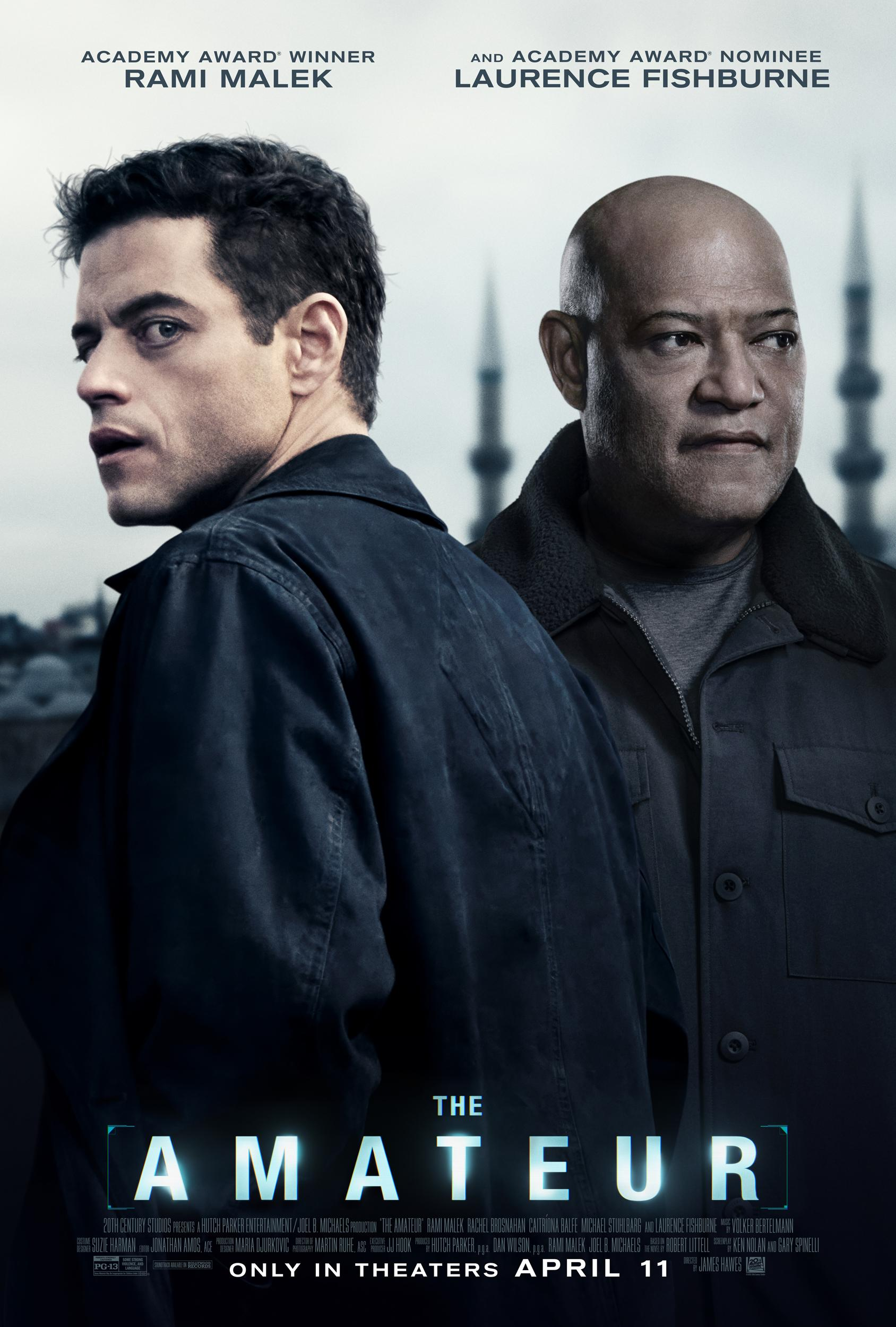
The Amateur is well-directed, with an engaging enough visual look to keep the runtime going, as well as a strong score by Oscar winner Volker Bertelmann. However, it settles for mediocre as often as it becomes thrilling. Rami Malek is excellently cast in the role, but in earlier moments in the film, his performance still feels distant, and gets to shine more later, or sometimes the editing is to blame for not letting us sit with Charlie’s grief and pain for longer in certain scenes. Holt McCallany is especially memorable as the tough CIA Deputy Director, as is Laurence Fishburne a resourceful yet more empathetic CIA operative.

Despite the packed cast, the story itself sometimes feels muted, including a lack of true exploration of the idea that this hardly trained man is committing elaborately planned out killings that would be viewed as sadistic if the men he was killing weren’t murderous terrorists. The dialogue also sometimes falters, but the elements of the formula of a smart fugitive looking for justice on the run from the law do often work, and the action-heavy scenes themselves work well. Though the resolution leaves a bit to be desired from an emotional point of view, the third act subverts some expectations, and a character that enters the film in the latter half creates some very interesting developments. The movie’s entertaining enough for fans of action and espionage films that are more patient and let their stories breathe, but it also doesn’t stand out from the crowd of similar films or demand audiences to rush to the theater.

Warfare

Warfare is about a platoon of Navy SEALs cornered during a confrontation with insurgents during the Iraq War. The film is raw and immersive, the camera knowing when to immerse you into the “action” while at other times when to simply stay put and observe from afar. Similar to Alex Garland’s last film Civil War, the film is devoid of the romanticization of violence we see in many films about war and combat, rather a film about what happens when conflict and death become a daily reality for young men, including the bond and language it creates for them out of necessity for survival.

The excellent ensemble cast shines, particularly D’Pharaoh Woon-A-Tai, along with Will Poulter, Joseph Quinn, and Cosmo Jarvis. The sound design in particular is stunning and adds to the immersion of what unfolds in this film, trying its very best to bring its audience into a battlefield where certain doom is only meters or seconds away. It doesn’t relent when it comes to the intensity and terror of battle, including the gore and stakes which are upped, while using every minute of its 90-minute runtime wisely, having something to say in the quietest and loudest of moments about its lead soldiers, as well as through a family whose home is forced to become a surveillance spot for the SEALs. The final shot in particular is chilling and unforgettable, and it’s a difficult one to shake off for those ready for a swift yet powerful film experience.

A Minecraft Movie

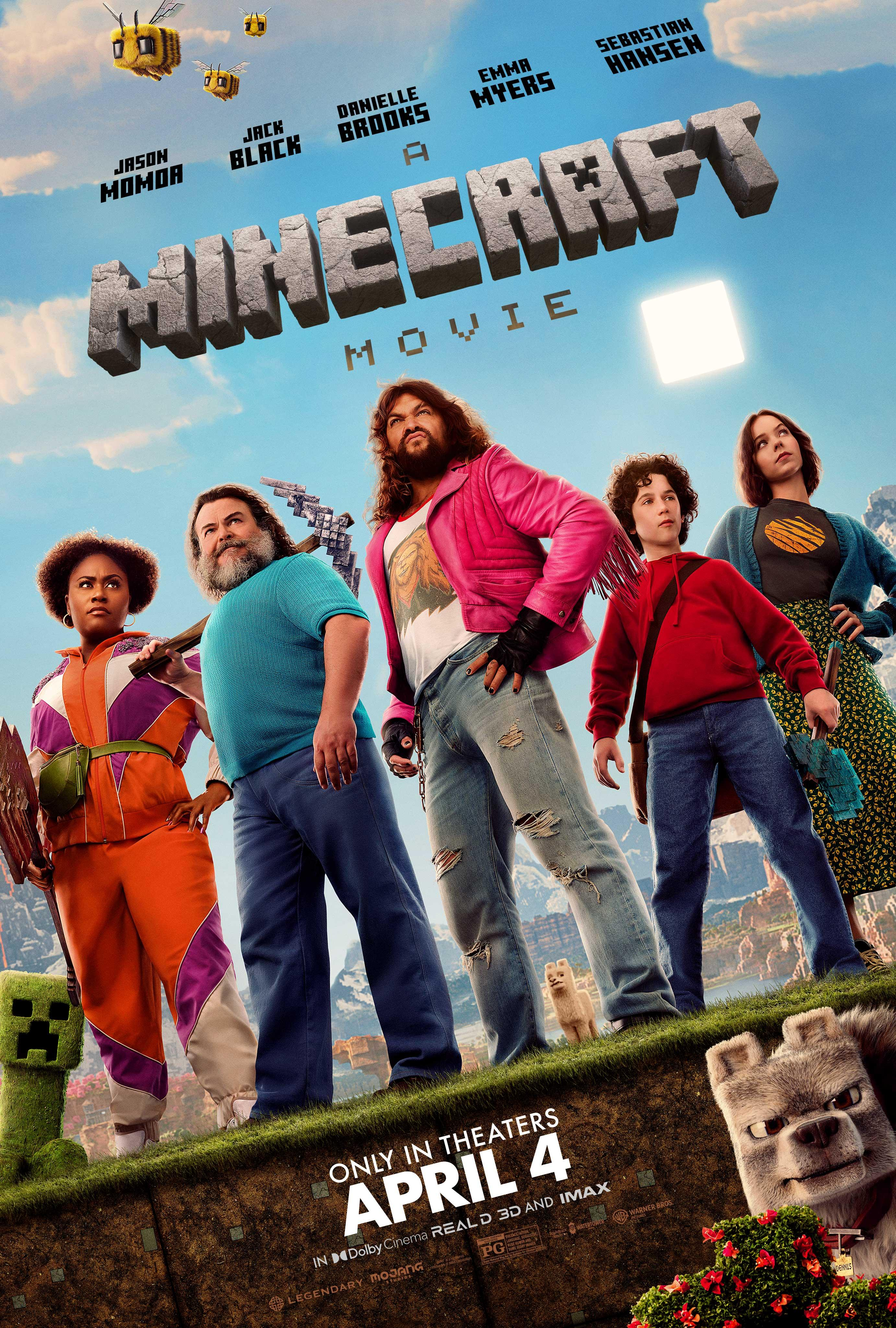
A Minecraft Movie may prove a treat for younger audiences and fans of the beloved game. It’s got charm, thanks to its main stars, particularly Jack Black. He gleefully gives his playful and extravagant energy to Steve, even throwing in his musical comedy talents. Jason Momoa entertains but his dialogue threatens to miss almost as much as it’ll make you laugh. Danielle Brooks is splendid as a very unexpected companion on this journey, and gives the runtime lots of heart. Emma Myers does a solid job playing an unlikely heroic character, whose storyline with her brother avoids some cliches while falling head first into others.

Though this is a Minecraft movie first, director Jared Hess’ love for misfits and outcasts is written all over the film. What brings the film down is the aesthetic, that fails to get you to suspend your disbelief strongly enough to overlook the unconvincing green screen and weirdly uncanny CGI of some of the Minecraft characters/species. The live-action parts carry the film well if you ignore some of the backdrops, but sometimes you’ll wish that the scenes inside the Overworld were completely animated. It also doesn’t help that the idea of an unlikely team of social outsiders from the real world trying to navigate a fantastical world they’ve been suddenly pulled into is nothing new. Even the Jumanji films, also starring Black, had much more to offer the formula.

Still, the film has just enough charm to delight children and families, embracing the essence of the game with a positive message about creativity. And Black proves that he’ll continue to entertain generations of viewers with his ability to let loose. It’s a film that embraces exactly what it is, even if when you think about the film or look too long at the visual details, the building blocks starts to fall apart.

Snow White (2025)

Some remakes get a chance to breathe new life into their stories and worlds, while others, like Disney’s new Snow White, feel like a film from 90 years ago was frozen in carbonate for decades and then unnecessarily turned into a different medium. In this case, Snow White feels like 30% that, while the other 70% feels like sprinkles of modern flare that feels out of place. Oscar winners Benj Pasek and Justin Paul add songs that feel to derivative and cliche, hitting all the same “Welcome to our lovely kingdom”, “I want a better life”, “Look how evil I am”, and “Maybe we’re attracted to each other” beats that are in nearly every other musical. In some instances, the songs even sound too much like the duo’s Dear Evan Hansen soundtrack.

Rachel Zegler tries her best to entertain in a sweet but one-dimensional role elevated by her charisma and strong singing voice. However, all the other elements around her distract, including the unconvincing and at times hideous CGI of the animals, surroundings, and let’s not even talk about those dwarves, who seem almost nightmarish. But a painfully glaring weak link is the miscasting of Gal Gadot as the Evil Queen. Her line delivery feels unnatural, and the character just gets more irritating as the film goes along.

Most sadly, Snow White is inconsistent and deeply hollow as a film. It has almost no charm that feels organic, and can’t decide between elements that feel nostalgic or new, like the very modern-sounding soundtrack. Nothing of importance is ever quite explained or given meaning to, things just happen because the point that we’ve gotten in the story needs that thing to happen. For younger children, being unconditionally kind is an important message, but even Disney has delivered this theme in a way that’s so much more tangible and heartfelt; take even their live-action 2015 Cinderella remake for example. This remake doesn’t expand on or reinvigorate its source material, simply morphs it into weird images that look colorful but never have any real sense of life.