Caught Stealing

Darren Aronofsky goes for a tone that’s a lot more entertaining and less devastating or frightening than his last few films, though it’s still very violent, unpredictably so. Austin Butler gives a fantastic performance as a bartender whose dreams of baseball glory were crushed after a tragedy, and now finds himself in the crosshairs of a dangerous plot involving numerous crime leaders. Butler’s character is serious but not quite strong, driven more by his fear of harm coming his way. His character is flawed, vulnerable, and plagued by his past, but doesn’t have some violent dark side — he’s simply caught in the crosshairs of a plot involving his neighbor. Regina King also shines greatly, and Zoe Kravitz shares wonderful chemistry with Butler.

The best part of Caught Stealing is how unpredictable it is. The story itself is so fresh that there isn’t a way to guess quite where it’s going or will end up. The violence is very dark but also provides for moments of humor, even when the shootouts and car chases result in bloody carnage. The cinematography feels vintage without overly indulging in 90s nostalgia, and makes for both bigger and more intimate moments, and two characters who play a principal part in the later act are scene-stealing. At the end of the day, though, the film works because we’re rooting for Butler’s character so much against frightening odds. Aronosky treats his characters and world here with a sense of fun and wit, while Butler proves himself as a true movie star in an original and thrilling film that’s a welcome change of pace for the director but still at the top of his game.

The Naked Gun (2025)

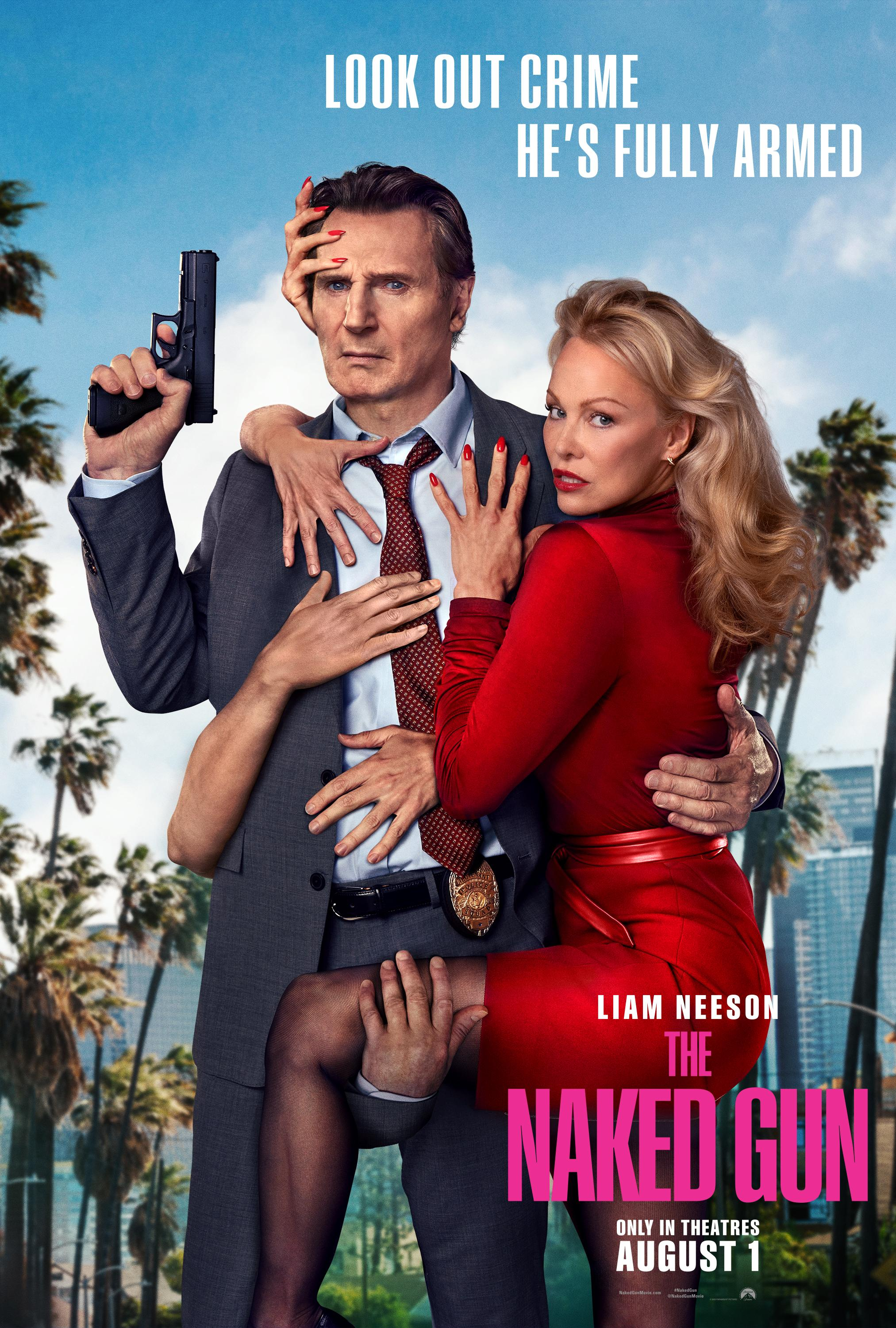
If it ain’t broke, is there any need to fix it? The Naked Gun doesn’t set out to reinvent its franchise — it tries the exact same things its predecessors would’ve, and works so well for it. The humor is still silly and not limited by the same political correctness many adhere to today, and once the laughs start coming, they never stop. Everything from visual comedy, pop culture references, wordplay, and more NSFW humor are thrown at you at light speed, and the laughs hardly miss, even when they’re not very “smart”. 

Liam Neeson does a stellar job following in the footsteps of the legendary Leslie Nielsen, with Frank Drebin, Jr. just as dim-witted but lovable as his dad. Neeson’s comedic and clueless turn serves as a huge and much-needed breath of fresh air from his far more brooding and serious action movie roles in the last two decades, perhaps making us wish more of his movie choices were comedies. Pamela Anderson’s romantic lead isn’t necessarily an interesting character, but her performance shines and makes the role fun to watch while sharing strong chemistry with Neeson that works in a weirdly endearing way. Paul Walter Hauser is also great while Danny Houston’s awful villain not only makes no sense, but his evil plot is stolen from another semi-recent spy movie.

Just like classic screwball action comedies like Top Secret and Austin Powers, The Naked Gun’s pleasure comes from its ridiculousness, and isn’t focused on coming off as high-brow or satirical as Kingsman. It’s irreverent and frankly dumb, but always on the audience’s side and undeniably a great time.

Nobody 2

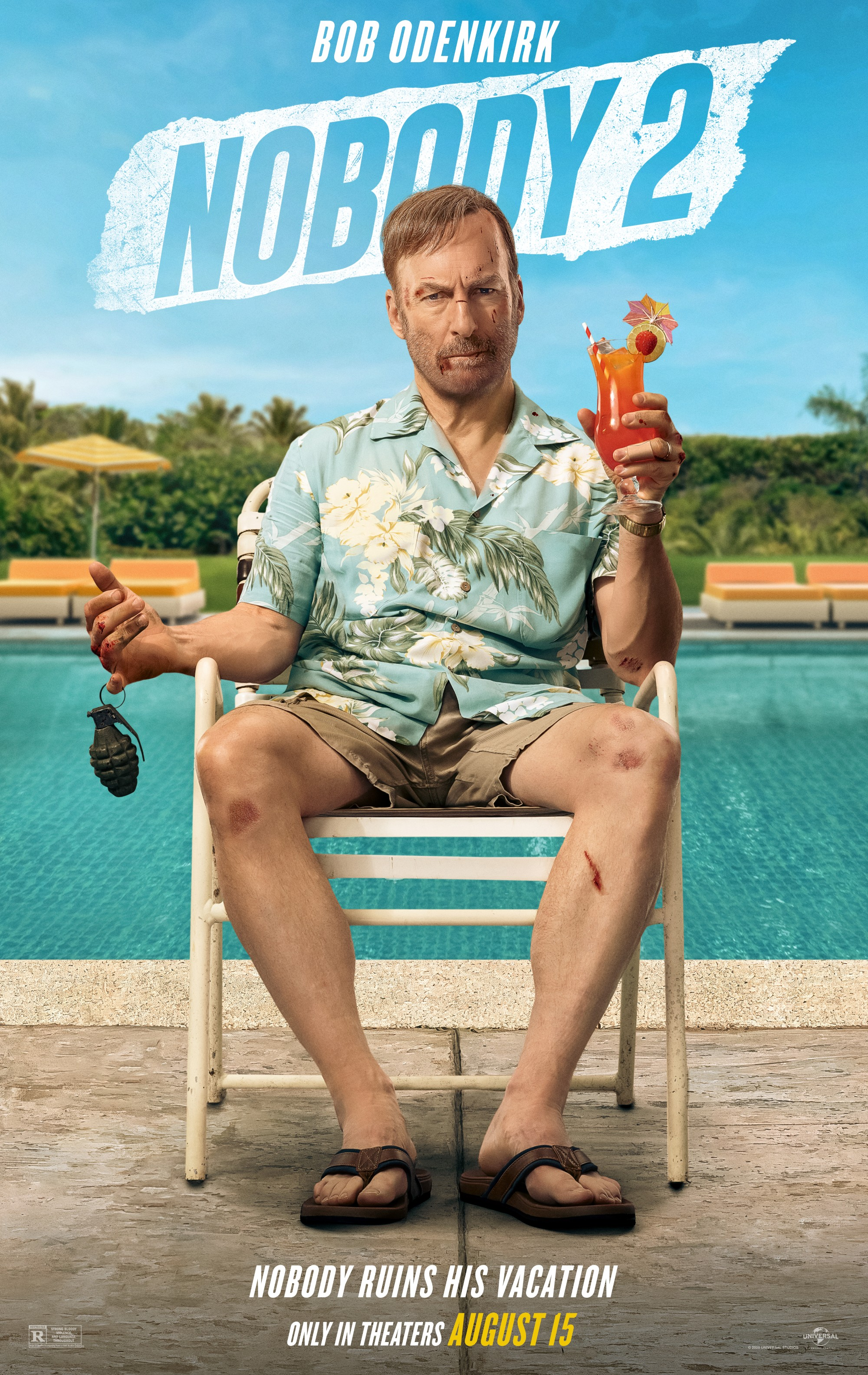
Bob Odenkirk is back as Hutch Mansell in a sequel where the action is just as wild, but the script doesn’t pack the same punch. Odenkirk is both outrageously funny and gritty in the leading role, while Connie Nielsen gets even more to do as his wife. Christopher Lloyd again shines as Hutch’s father who gets even more opportunities to completely steal the screen, and effortlessly so. John Ortiz is also solid, but many supporting characters who serves as antagonistic forces don’t really have much to do, or at least their motivations don’t feel like a natural part of the story. Sharon Stone is very well-cast, but her lines are sometimes iffy and her screen time leaves more to be desired.

Nobody 2’s family vacation premise sets it apart from its predecessor, but it also lacks the thrills that those slow revelations had in the first film — none of which really have an impact here besides Hutch being really, really good at killing people. The conflict itself feels both low-stakes and never explained in a manner that’s clear, interesting, or original. That said, the action is still fun and the final act in particular offers an awesome and massive set piece. That said, compared to its predecessor, it leaves much to be desired narratively and thematically, while still working as harmless and bloody entertainment.

Materialists

Celine Song enlists big names and a larger budget for her second feature after the Earth-shattering Past Lives, but this feels like a Celine Song movie first and never compromises for a more mainstream rom-com approach. In fact, despite some great humorous moments and consistent wit from its characters, the movie hardly feels like a comedy, rather a deep and patient romantic drama. Dakota Johnson finds herself in another hard-hitting role among some of her best like Cha Cha Real Smooth and The Peanut Butter Falcon. Her journey is flawed yet always sympathetic. Chris Evans also gives one of his most heartfelt turns in a long time, with the part of John here fitting him like a glove. Pedro Pascal also has some irresistible scenes with Johnson and the dialogue Song gives him to work with really stands out.

The film dissects how modern superficial worldviews complicate the once-simple idea of love and relationships, while romance and love can sometimes not be more different. Song is an expert at rhythmic and sophisticated dialogue, and builds a quiet and meditative atmosphere with a lovely 35mm film look and Daniel Pemberton’s strong score. There may be more than a few films that tackle similar ideas of love and, well, materialism, but it’s only through Song’s words and style that Materialists works so intimately and profoundly.

Weapons

When seventeen children from the same class all disappear one night, a community is sent reeling and forced to deal with the terrifying consequences.

Weapons is a film that bids farewell to all the tropes we’re used to in even the best of modern horror movies, throwing us first into how a community is affected by such cruel and unexplainable loss. Julia Garner is at the film’s heart as a gentle teacher who suddenly loses all but one of her students — and is quickly blamed by her peers for it. Garner is immediately bondable with the audience due to her desire for answers and peace amidst her unfair situation. But on the other side of the public tensions is what comes off as rage but reveals itself to be fear and desperation in Josh Brolin’s performance as a father hellbent on finding his missing son. His hardness reveals itself as pain and vulnerability and stands out among many others of the actor’s roles.

Though writer-director Zach Cregger sets out to make Weapons feel far more patient than other horror films, he also goes for broke structurally, stylistically, and graphically. The editing, score, and cinematography are chilling, with moments that may end up in modern horror classic territory. Cregger retains some of his previous film Barbarian‘s DNA, such as jumps in time and perspective — some less interesting than others yet necessary for the film’s slow revelation of its mysteries. Within the film’s title lies many of the answers, including the weapon of the human soul itself: the harm that we can inflict or can be inflicted on us. But it’s because the film does hold back so much, and for so much of its runtime, that everything clicks so beautifully. We see and learn just as much as we need to in order to be asking the right questions, and hopelessly guessing what might really be going on here. Once you reach the end of Weapons, you may find yourself equal parts terrified and delighted, but its unraveling will make your heart sink and your legs shake. Weapons is bold and extraordinary even in today’s ever challenging horror landscape. Cregger’s cynical and at times darkly humorous lens fits perfectly into a modern folk tale of sorts that radiates the kind of singular originality felt in M. Night Shyamalan’s golden days of making thrillers. In this epic yet personal horror film, the scares aren’t nearly the whole point, but the whole point is seriously scary — just not in all the ways you’d expect.

The Phoenician Scheme

Wes Anderson always tries to out-Wes Anderson himself with every new movie — the framing devices within framing devices, the immense ensemble casts, the intricate and stunning production design and often complex, windy storylines and characters. Some times it pays off less than others, but The Phoenician Scheme is a delight from start to finish that aspires for big but also stays true to what it establishes itself to be. Benicio del Toro finds himself in his best film role since Sicario as a pitiful and apathetical tycoon, while Mia Threapleton gives a killer breakout performance as his maybe surrogate/maybe biological daughter. Their dynamic is filled with battles of wits and values, and Anderson again recruits a truly larger-than-life cast, all in kooky and entertaining fashion. Michael Cera, Riz Ahmed, Tom Hanks, Bryan Cranston, Richard Ayoade, and Scarlett Johansson are only a few standouts here, and they really do keep on coming. Anderson also aspires for great scope with the fictional settings the leads journey into, which continue to wow and surprise; the sheer imagination of the sets is always a highlight for the director, as are the beautiful shots here.

The details of the titular deal that Benicio del Toro’s character is after may be so complicated and brisked past that they’re difficult to understand until much later on, but the caper-like plot developments are so exciting, thanks to an energy the film figures out in its opening moments and doesn’t let go of. It’s also one of the filmmaker’s funniest films in a long time, with the laughs being nearly constant but also revealing things about the characters and world we’re watching. If anything falls short here, Anderson seems to love a good anticlimax — a sudden pivot away from the big climax for a quiter, more meditative conclusion. Though this has worked in his favor before, the problem is that he’s actually trying to go for a grand finale here, but can’t help and make it feel way less than what it should be. It’s got the globe-trotting adventurousness of The Grand Budapest Hotel and The French Dispatch, and the director’s imagination doesn’t hold back. It’s certainly a step up from his previous Asteroid City, the laughs and story continuing to escalate and the pace never hitting the brakes until the very end.