If I Had Legs I’d Kick You

If I Had Legs I’d Kick You digs deep into the darkest corners of the human souls, of the ugliest thoughts that plague our minds, and the crippling anxiety and depression that traps us in the most banal of existences. Rose Byrne gives one of the most demanding, devastating, and furious performances of the last decade, as a woman suffocated by the horror and weakness of her being, confined by the truths of her situation and lacking the strength to find meaning or love in any of it. The remarkable filmmaking and camerawork allows us to pinpoint exactly how Linda interacts with her surroundings, without having to imagine any of what she’s feeling. The dread that anything is about to go wrong, that it’s all your fault, and that this excruciating guilt is forever. The feelings are so tangible to the audience, yet their roots of why she feels responsible for the life she hates are intangible and ambiguous for much of the film. 

Byrne’s character channels universal struggles, including with motherhood, while taking them to the most extreme depths and circumstances. However, we’re never brought to think that she’s a bad person, simply someone who’s isolated and unable to cry for help or carry herself along with those around her. As Linda is inconvenienced with a gaping hole in the roof of her house, the hole metaphorically grows and becomes one with her. 

The final few minutes are haunting and left me dumbfounded. The nightmarish imagery and dark humor play off each other to create a final product that’s arguably more stressful than any horror movie could be. This movie left me dumbfounded and at a loss for words, one of the most anxiety-inducing, uncomfortable, and emotionally raw films I’ve seen in a while. It’s a one-of-a-kind film, with an astounding and unforgettable lead performance, that shook me to my core.

A House of Dynamite

Tension escalates real fast in Washington, D.C., when US officials detect a ballistic missile fired from an unknown source towards American soil, as impending dread hangs over the country’s highest-ranking rooms.

Kathryn Bigelow’s urgent ensemble piece boasts incredible tension while fully gripping onto its audience with its singular structure and building of suspense. The director, who also helmed the remarkable Hurt Locker and Zero Dark Thirty, gives A House of Dynamite the same sophistication and attention to detail. Rebecca Ferguson gives the audience their entrance into this incredibly bleak time window. In a movie that could’ve come off as cold and procedural, Ferguson’s humanity and gravitas make us feel like we’re in good hands, as well as a handful of terrific actors like Idris Elba, Anthony Ramos, and Tracy Letts. The proficiency and cooperation the characters demonstrate makes the person behind each role interesting.

The nuances behind this (hopefully forever a) hypothetical situation are compelling, and the film’s secret weapon comes from the unity between the stylistic parts: Bigelow’s direction, Barry Ackroyd’s handheld camerawork, Volker Bertelmann’s potent score, and the meticulous editing. The film maintains both intimacy and sweeping scale simultaneously, focusing on tight spaces with happenings of global implications. Although the ending avoids making a more terrifying stance with its ambiguity, it’s still an expertly crafted and cinematic two hours that I didn’t want to end.

Springsteen: Deliver Me From Nowhere

Music biopics have found themselves a tried and true formula, and though Springsteen deviates from it, it also falls into a few of the same familiarities. Instead of focusing on the Boss’s entire life and on the creation of each and every one of his hits, it’s a quieter film about the recording of his more stripped-down, intimate album Nebraska, that lets us get up close with the man behind the legend. Jeremy Allen White is excellent as one of America’s most iconic and beloved rock stars, capturing the singer’s desire for versatility and personality in his art while struggling with depression. Jeremy Strong, however, ends up stealing the screen in almost all of his scenes. Refreshingly for the genre and the actor, music producer Jon Landau isn’t portrayed as a greedy, conniving villain, but as Bruce’s most reliable and caring friend who’s willing to stand up for his art and vision, even against his own corporate interests. Strong wonderfully captures the delicacy behind the businessman and the relationship between the two is the film’s strongest part. It’s also fascinating to see the old-fashioned ways of recording the songs, some of which have gone down in history, including “Born in the U.S.A.”.

The film does have its weak points, including a romantic subplot that touches on too many cliches, and the traumatic childhood flashbacks, which are rather tiring, though they boast a great performance from Stephen Graham as Bruce’s father. That said, it’s still a refreshingly smaller and far more personal biopic than most, focusing more on emotional journey than big musical numbers, and works thanks to White’s great turn as an American legend.

Good Fortune

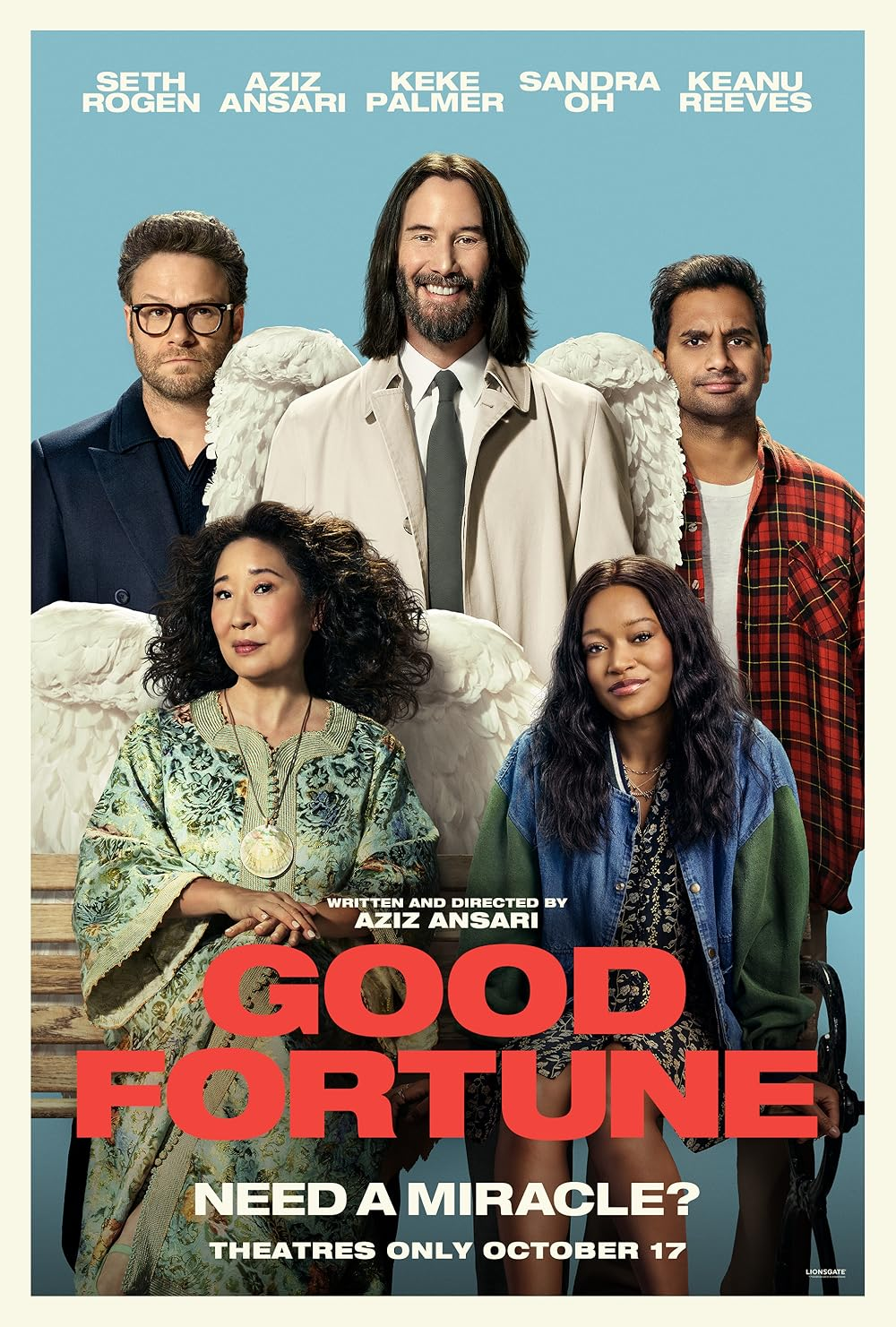
An angel (Keanu Reeves) intervenes in the life of a man (Aziz Ansari) who’s about to give up on life, but things soon get uncontrollably out of hand very quickly.

Aziz Ansari’s fantasy comedy, which sees him directing, writing, producing, and starring, is clever, laugh-out-loud funny, relatable, and inspired. The concept plays a cross between Trading Places and It’s a Wonderful Life, while never feeling generic or derivative of those films, even if the idea’s similarities aren’t being hid. Ansari gives a flawed yet understandable frustration and hopelessness with his circumstance, and a charismatic humorous side. Seth Rogen gives an incredibly funny and physical performance as his character goes on quite an unexpected journey. Keke Palmer shines as Ansari’s love interest Elena, who’s passionate and humble, with Palmer providing lots of genuine heart to the film. The casting of Gabriel was perfect and Reeves was perhaps the only actor who could convey this emotional sweetness come off as effortless yet genuine and real.

The film’s best when looking at humanity’s relationship with materialism, and contrasting wealth with the the lower class trying to achieve the seemingly impossible task of making ends meet, including the unreasonable cost of living, the terrifying market of finding a job (and usually one isn’t enough), and the corporate greed that makes harsh conditions for minimum wage workers. The film feels like it’s missing a piece of the puzzle when it comes to its main character’s arc, but it’s got a real heart to it that’s boosted by it’s lovable actors and the humor’s attempt to keep one-upping what came before. Somehow, it still feels restrained enough to be a screwball comedy that’s not completely silly, and still very genuine while fantastical and uplifting.

Frankenstein (2025)

This retelling of one of the most famous novels in history feels like Guillermo del Toro’s ultimate passion project, with a sweeping scale, and breathtaking cinematography. The production design is perhaps some of the greatest of all time here, with the attention to detail and color schemes serving as the source of much of the film’s beauty. Oscar Isaac is great as the titular scientist whose ambition becomes his own undoing, while Jacob Elordi is incredible, disappearing into the Creature but delivering much soul beneath the towering makeup work. The supporting cast stand out too, including Mia Goth, Christoph Waltz, and Charles Dance, and it feels like everyone is honored to have been given the chance to show up and work with the master of gothic fantasy.

Though its ambition is spellbinding, Frankenstein‘s first half suffers due to its pacing — some of the story feels drawn out to the point where it feels like del Toro showed us the extended version of his masterpiece before trimming some tedious details, with some events happening in the runtime much later than it feels they should have. But when a narrative turn comes in at the film’s midpoint, the themes all click into place and become very powerful — the script also forgoes big action where you’d expect it and allows these bigger themes to speak for themselves. Frankenstein feels like the culmination of Guillermo del Toro’s creative endeavors from a stylistic standpoint, though far from its best film; it could’ve been at least 10-15 minutes shorter and been an even better film, but its weight will also grow on you after the credits roll due to its beautifully expert storytelling.

Kiss of the Spider Woman (2025)

Many films have seen musical adaptations, and then had those musicals adapted into their own films. Some of these musical remake movies have worked as an update to the story, like The Producers and The Color Purple, while others such as Mean Girls and Matilda have failed to justify their existence in the theatrical medium and not offered much new to the material. Kiss of the Spider Woman may have the same main characters and overall premise, but feels completely fresh, exciting, thematically powerful all over again, and even surpasses the original in many respects. The film’s unique approach sees two political prisoners in 1983 Argentina connecting over the memory of an old Hollywood movie, which they recount as a musical, providing them escape from and drawing parallels with their harsh reality. 

Tonatiuh gives a simply incredible performance as Molina, offering a completely new approach from William Hurt’s turn as the role in the 1985 film. Molina desperately wants to be a part of a world that’s rejected him, while believing in the best in others. Tonatiuh commands every single moment of his screen time, as a character telling a story, and coming to terms with his own inner weakness. Diego Luna also gives a career-best performance as revolutionary thinker Valentin, unlocking deep empathy and passion within his impatience and defensiveness. Jennifer Lopez, meanwhile, is playing a character with multiple levels of performance, in a role that may end up becoming a standout in her filmography.

As much as it is a condemnation of the dictatorship that ate away at the soul of Argentina until a few decades ago, it’s also a layered look into the development of a bond between two men who could not be more different, but learn to care about each other profoundly. The songs aren’t all memorable, but the effect the musical numbers create in contrasting between the fantasy and reality of the prison scenes elevates the film, not to mention an unforgettable ending that enriches the entire film, especially with the hindsight since the original film was released.

Tron: Ares

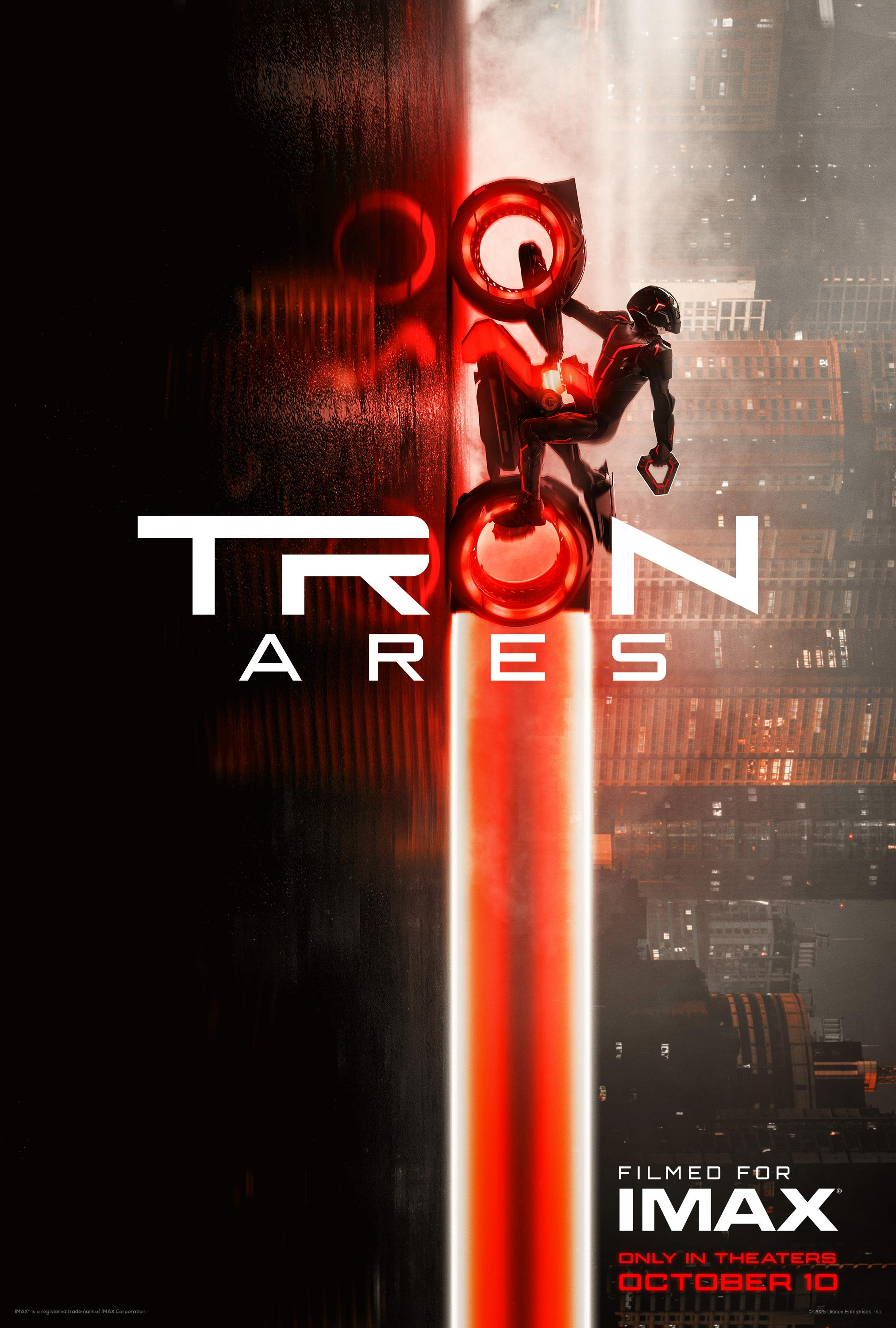
Ares, the most intelligent artificial being in the world, is sent from the virtual world of Tron into the real world on a dangerous mission that could determine the future of AI and the world.

The virtual worlds and objects that come out into the real world in Tron: Ares are eye-popping and a must in 3D. The immersive scenery within the film invite you in with the gorgeous cyberpunk look, and the score by Trent Reznor and Atticus Ross is also a highlight of the experience of watching the film. Just like its predecessor Tron: Legacy, Ares is a perfectly middle-of-the-road film with out-of-this-world visuals yet an underwhelming screenplay. Thankfully, the human protagonist is far more interesting this time around, with Greta Lee giving an engaging performance that’s fun to follow and has some heart. That said, Jared Leto’s performance is hit-or-miss, with the intentional soullessness of the titular character Ares feeling excessive and even cold when he’s supposed to start connecting with the audience and human characters. Evan Peters’ performance does the best with a cliche tech billionaire character, while Jodie Turner-Smith does a great job with a character who’s not as fleshed out as she needed to be.

The film also doesn’t quite explore its themes of altruism vs greed and war with technological advances quite in depth, but the objective the two sides of the coin are both after is engaging, as are a few standout action sequences. If only the film better explored the potential stakes and consequences of the antagonists’ goals. Even if it doesn’t quite manage to form a deep bond with any of its characters, the film is so stunning to look at that the frames leap off the screen. Only a format such as IMAX 3D justifies this watch, but if you can find a screen big enough, it’ll be quite the 2 hours of amazing, if forgettable, eye candy.

Roofman

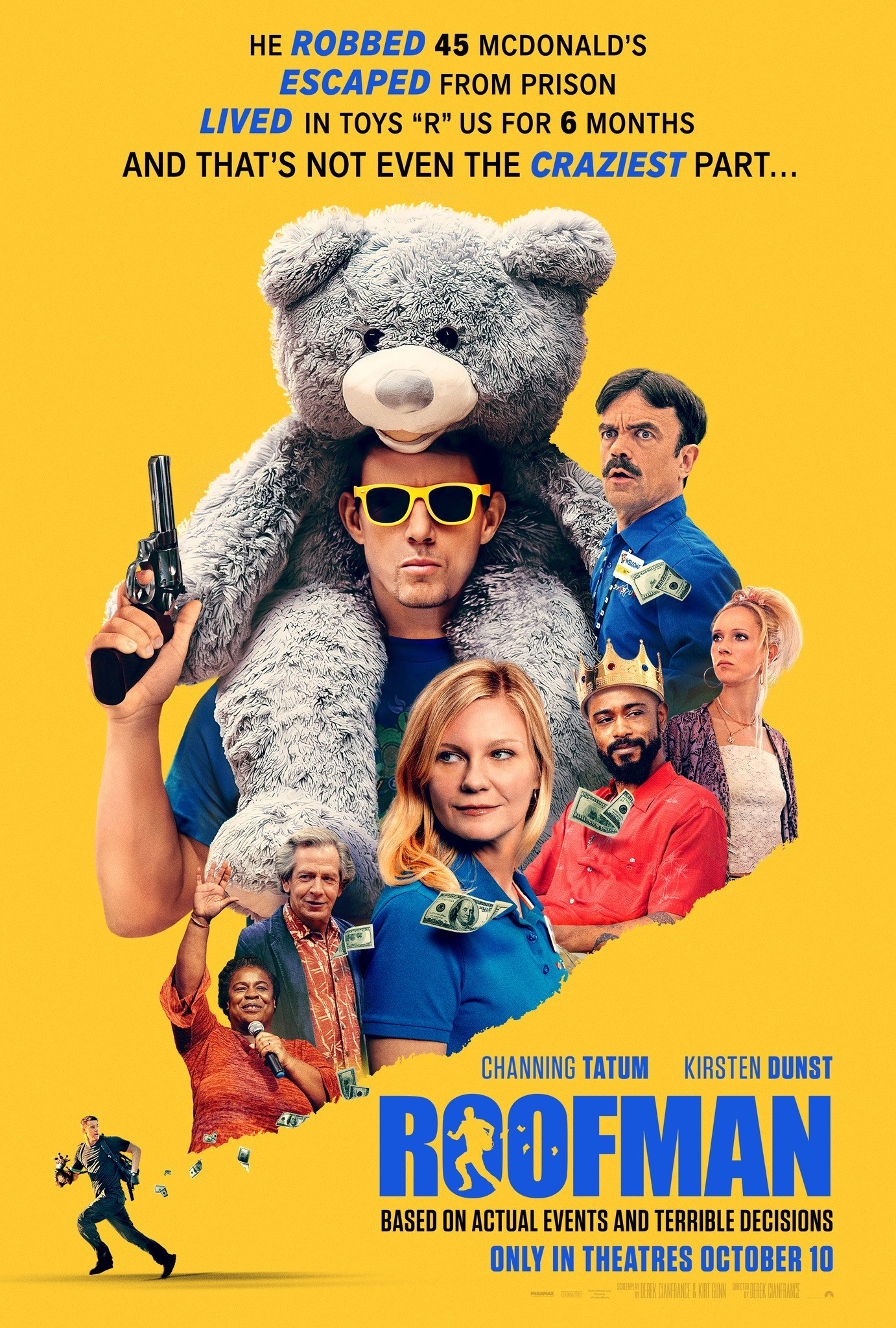
With Roofman, a true story that’s too crazy to believe based on the logline alone, Derek Cianfrance leaves meditative tear-jerker territory to tackle an unbelievable story that’s outrageous only conceptually, but still executed with patience — and a lot of charisma from its actors. Channing Tatum plays real-life robber Jeffrey Manchester with a deeply terrible set of decision-making skills. Tatum is physically comedic yet also gives the role more depth than many of his other characters in the tonally lighter films we’re used to from him lately. That said, despite the film’s awareness of the craziness of his actions, it also stops to reflect on the consequences of those actions on others and his own sense of acceptance within the new life he’s adapted into. Kirsten Dunst is also very layered in her performance and shares great chemistry with Tatum, and Peter Dinklage is a scene-stealing highlight, too.

Roofman is an entertaining time throughout that accomplishes exactly the mission it sets out to do while wisely refraining from becoming an all-out comedy and letting us sit with the characters and their circumstances. Best of all, it may also make you want to research more about the real story behind the movie — and wish for more great leading roles for Tatum like it.

A Big Bold Beautiful Journey

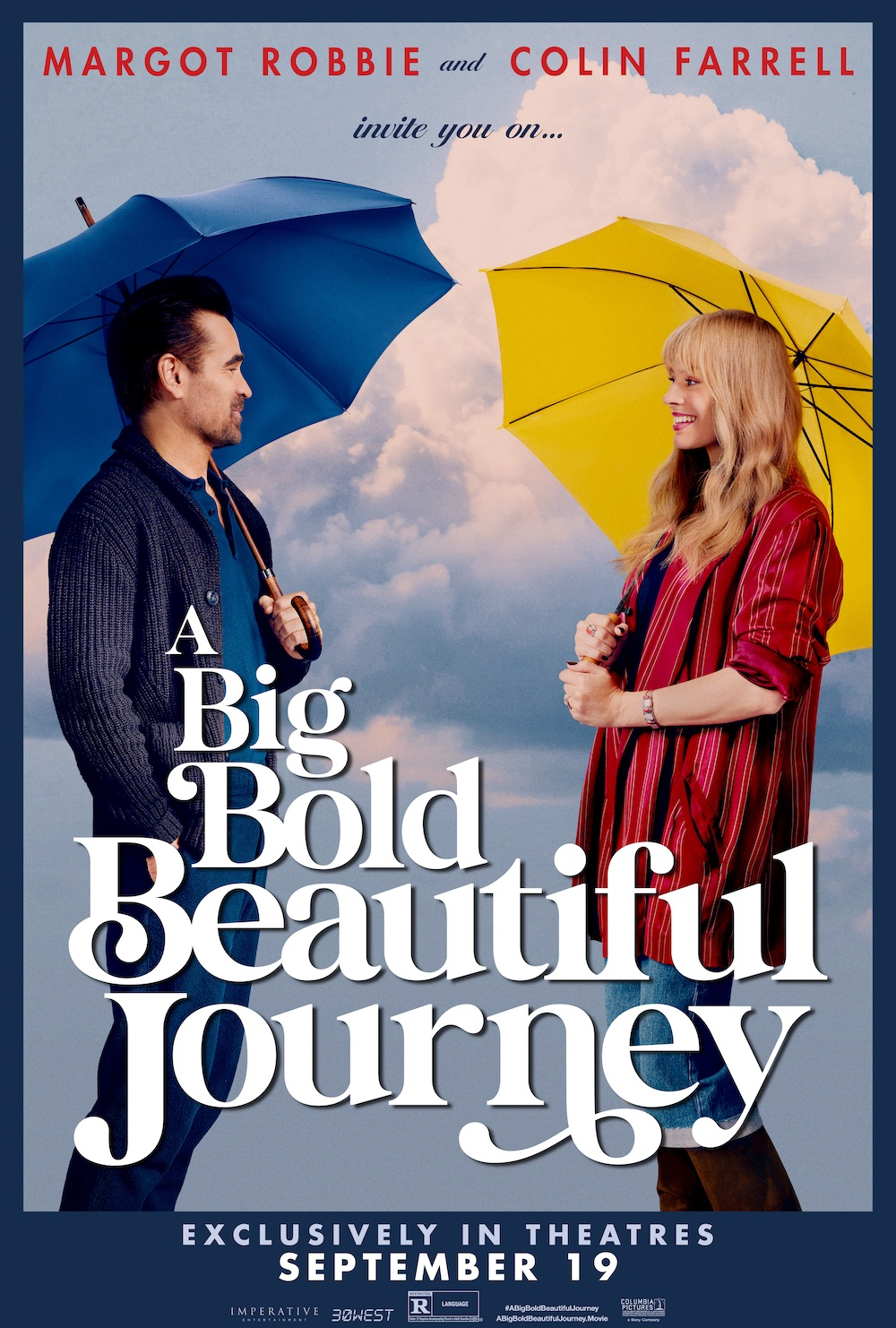
Strangers David and Sarah meet at a wedding and find themselves embarking on a surreal journey on the way home that combines the abstract with the personal, and the past with the present.

Kogonada is a brilliant filmmaker who knows how to unlock the human soul to his audiences with a patient and tender approach. A Big Bold Beautiful Journey isn’t lacking in vision, but in finding a cohesive and meaningful whole within its story. Colin Farrell and Margot Robbie are cast well together in an almost Eternal Sunshine-like odyssey, but Robbie’s character still feels distant as we still know too little about her by the end. Kogonada’s wondrous imagery gives a sense of curiosity and whimsicality, from actions, objects, and colors that stand out in the frame to a hilarious supporting character who’s also a car GPS. Some scenes entertain as the characters look back at regret, loss, and their own lack of self-confidence in creative ways, but it only makes much sense for about half an hour, until the intrigue loses steam and the dialogue in which the characters discuss the film’s themes begins to feel somewhat hollow. As a romance, the film also falls flat, not by looking back at the lead characters’ mistakes in their past relationships, but when a romance between the two of them then comes way too quickly without feeling earned.

A Big Bold Beautiful Journey digs deep into ideas such as confidence, fear, commitment, and remorse, in ways that feel emotionally earnest yet never come together to say something big, bold, and beautiful, like the title says. It’s arguably worth watching for the ambition alone, but also a shame to thing of how much better it could’ve been in the hands of this director and two magnificent stars.

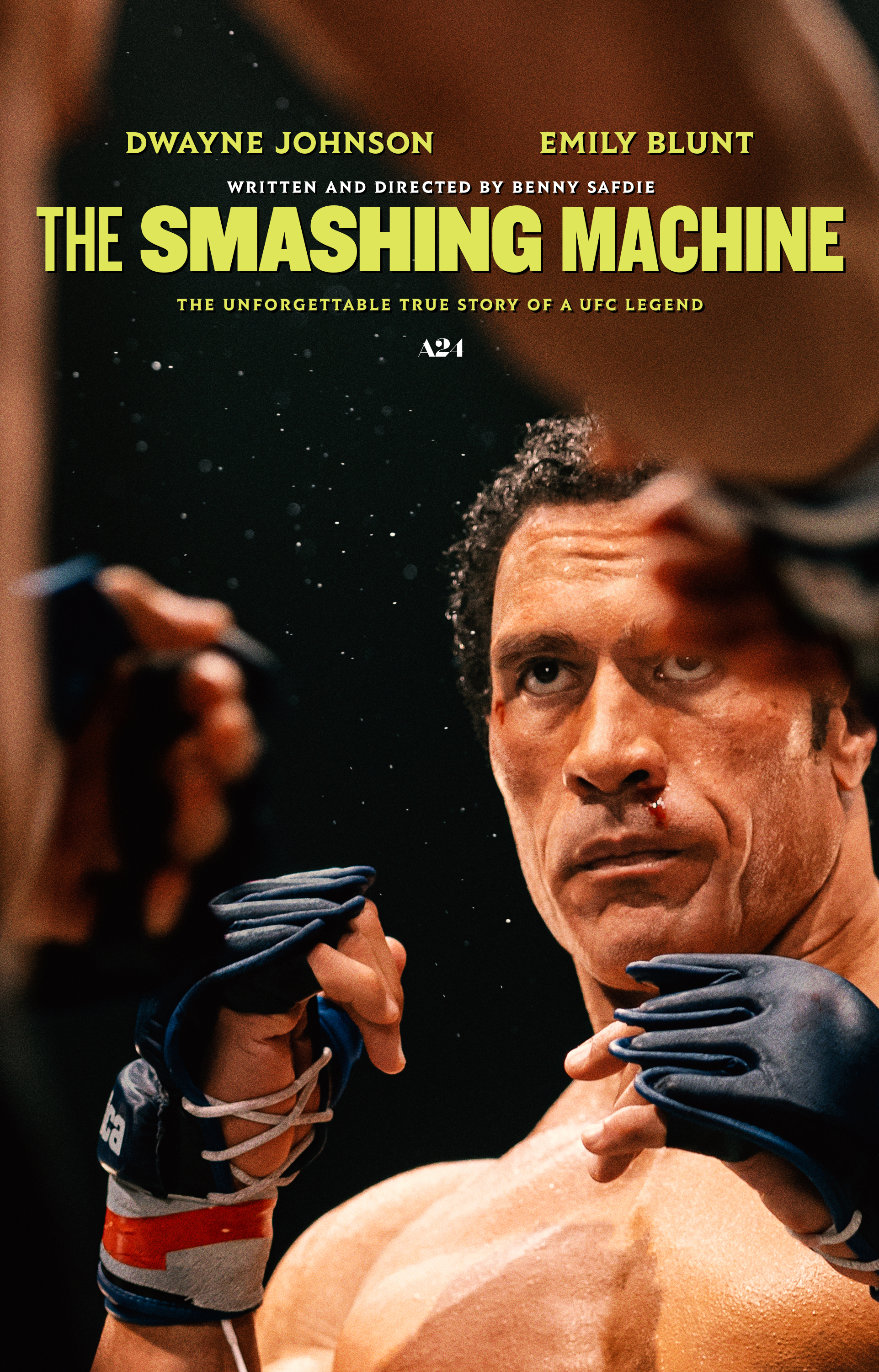
The Smashing Machine

Benny Safdie and Dwayne Johnson make for the most unlikely but welcome director-actor pairing of the year, and the latter gives a performance that not only transforms him on screen, but his image for audiences. The massive movie star persona we’re used to from him completely disappears and Johnson becomes one with Mark Kerr, the MMA fighter he plays in the film. Kerr is incredibly ferocious and determined, but sees losing as a non-option and can’t quite cope with the idea of it, even when it’s bound to happen for all athletes. Emily Blunt is also phenomenal as Dawn, Kerr’s girlfriend, matching his anger and desire to be heard in many great scenes.

The Smashing Machine, thanks to Safdie’s brilliant directions, captures a feel beyond that of a three-act screenplay with actors reading dialogue, but rather feels like you’re merely a fly on the wall inhabiting and moving through this space with the characters as you get to know them deeply and intimately. One of the beautiful things the film captures is the community MMA builds, with players training together and bonding as friends who feel like family to one another, even when there’s a chance they may face each other in the ring. It also has wrestling scenes that put many other films to shame, that are captivating even when the camera is hardly filming from inside the ring. It’s a movie so gripping you won’t realize how quick the runtime has flown by, winding up a lesser known and scale but still strong success story that’s expertly put together for an exhilarating 2 hours that demand your full attention.