Wicked: For Good

Wicked: For Good‘s rushed pacing feels like quite a whiplash from the slow burn of the first film that allowed its story to breathe much more, but it’s still a big, loud, and rewarding musical experience. The events are moving at such a fast pace that if you think about it too much, it starts to fall apart. The cinematography and editing don’t get that same patience that made the execution in the first movie so beautiful. The first act of For Good does feel a bit like its embracing the spectacle more than the soul, and if Part I felt more like its stage musical adaptation roots, this movie is the big fantasy action blockbuster. That said, it rises up to the challenge with truly great visual effects and breathtaking production design. The musical numbers are no less impressive, and the film’s heart is strong, and the chemistry between its two leads is electric.

Cynthia Erivo is again astounding and contributes to some of the film’s most awe-inspiring moments, while Ariana Grande is even better than she was in the first film. Glinda’s selfishness isn’t justified, but her softness and journey towards goodness make her so interesting to watch, even if it’s more thanks to Grande’s performance than where the script takes her. Jonathan Bailey also shines in one of the film’s most complex portrayals. There are some true show-stoppers in the soundtrack thanks to magnificent work from Erivo, Grande, and Jeff Goldblum. The music, vocals, and sets come together for some incredible musical moments that culminate the film’s emotion in great catharsis. It also very much enriches the story of the original Wizard of Oz in many creative and unexpected ways.

Wicked: For Good isn’t as subtle or as earth-shattering for the musical film genre as its predecessor, but the direction is still so lively and the spectacle is so, well, spectacular, that it’s an exciting and rewarding experience for film and theater fans alike. Together with the first film, it not only reignites but expands on and gives new life to a cultural moment like no other, and a trip to Oz that you have to see on a big screen.

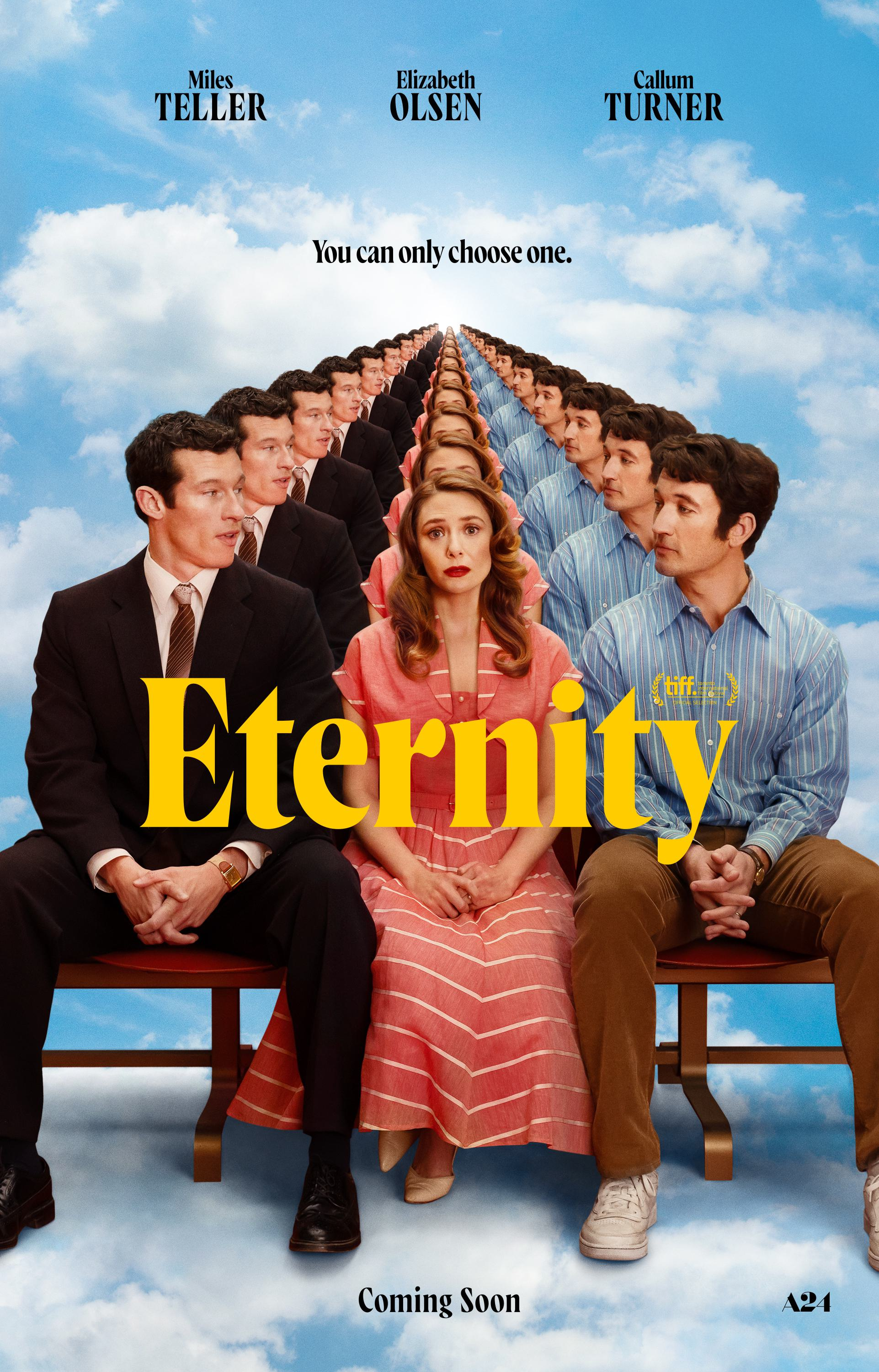
Eternity

A sharp, lively, and heartfelt rom-com set in the afterlife, Eternity asks questions about true love — is it forever? Can we have more than one in our lives? And how does love truly persevere over time?

Miles Teller and Elizabeth Olsen in particular stand out, offering emotionally rich performances while balancing humor and genuine shock at the situation they’ve found themselves in. I mean, not everyone is faced with a love triangle that will decide the rest of their existence in the afterlife. Callum Turner gives one of his most multi-dimensional performances, while Da’Vine Joy Randolph is also a magnificent standout here, giving the film much of its funniest and strongest moments. 

The production design is beautifully imaginative, combining retro technology with something that’s lively and fantastical. Exploring the corners of this dimension or plane is fascinating, and it very creatively tackles its themes that may hit hard for some audience members. It’s a touching romantic comedy, but also colorful and oozing with imagination and heart, along with high levels of belly laughter and much comedic and dramatic range from its lead trio of actors.

Rental Family

Brendan Fraser gives an empathy, softness, and delicacy to the lead character, an actor who joins a Japanese “rental family” agency, playing stand-in roles for strangers. He’s the beating heart of the film and allows the audience to connect with every one of his decisions. The movie’s Lost in Translation-like cultural differences raise interesting questions about the titular company and the effect they have on clients, whether positive, negative, or both. The concept is not only unique, but fascinating from a deeper level, and allows for an emotional patience.

However, the film’s editing lacks the same patience as Hikari’s direction, rushing from and to plot points instead of letting the story’s pace and certain scenes breathe and feel more meditative. The supporting cast is really great here, particularly the outstanding Takehiro Hira, Mari Yamamoto, and Akira Emoto. Every part, no matter how small, possesses a special key to the film’s heart. The film embraces its themes about the beautiful risk that comes with living life to the fullest by being there for and with others. However, the final act finds a messy resolution that’s slightly confusing from a thematic perspective. The film works best when it’s subtle, and least when it’s in your face, but thankfully it’s charming, gentle, and will likely work well for everyone who chooses to watch it.

The Running Man

In a future ruled by an authoritarian government, Ben Richards joins a deadly game show to win money to support his family. There’s one catch: to win, he has to survive one month on the run from expert assassins who are trying to kill him.

The Running Man is not the first film adaptation of the Stephen King novel, but it’s also the rare reimagining that not only justifies its existence by taking a completely different and more faithful direction, but also tops the original film by far. Edgar Wright’s love of filmmaking shines through in all of his projects, no matter the scale or setting. This one is a lot more self-serious than his other works, but still enough irreverence and humor shines through to balance that out. Glen Powell’s action star material gives the film much flare and entertainment, making Ben Richards a fun character to root for, even when some of his characteristics don’t always add up (a subplot about his anger issues becomes rather irrelevant after the opening minutes). Colman Domingo is also a riveting standout as the host of the titular game show, giving the dialogue and performance his all. His scenes of commentary and theatrics elevate much of the film.

Though its themes have been explored in other films, including many recent ones, it still very intriguingly explores how capitalism and consumerism enslave the working class through sadistic entertainment. It hits both close to home while evoking something different from our reality. The pace is just fast enough for the audience to root for our hero and be interested in its vibrant world-building and energy. The action is bloody and creative without feeling overly cartoonish and fitting within the world of the film, and the directions it takes are thrilling while the humor and dark satire work perfectly together. This modern adaptation not only works far better than its predecessor, but it’s a winning ride for action fans and for the always charismatic Powell.

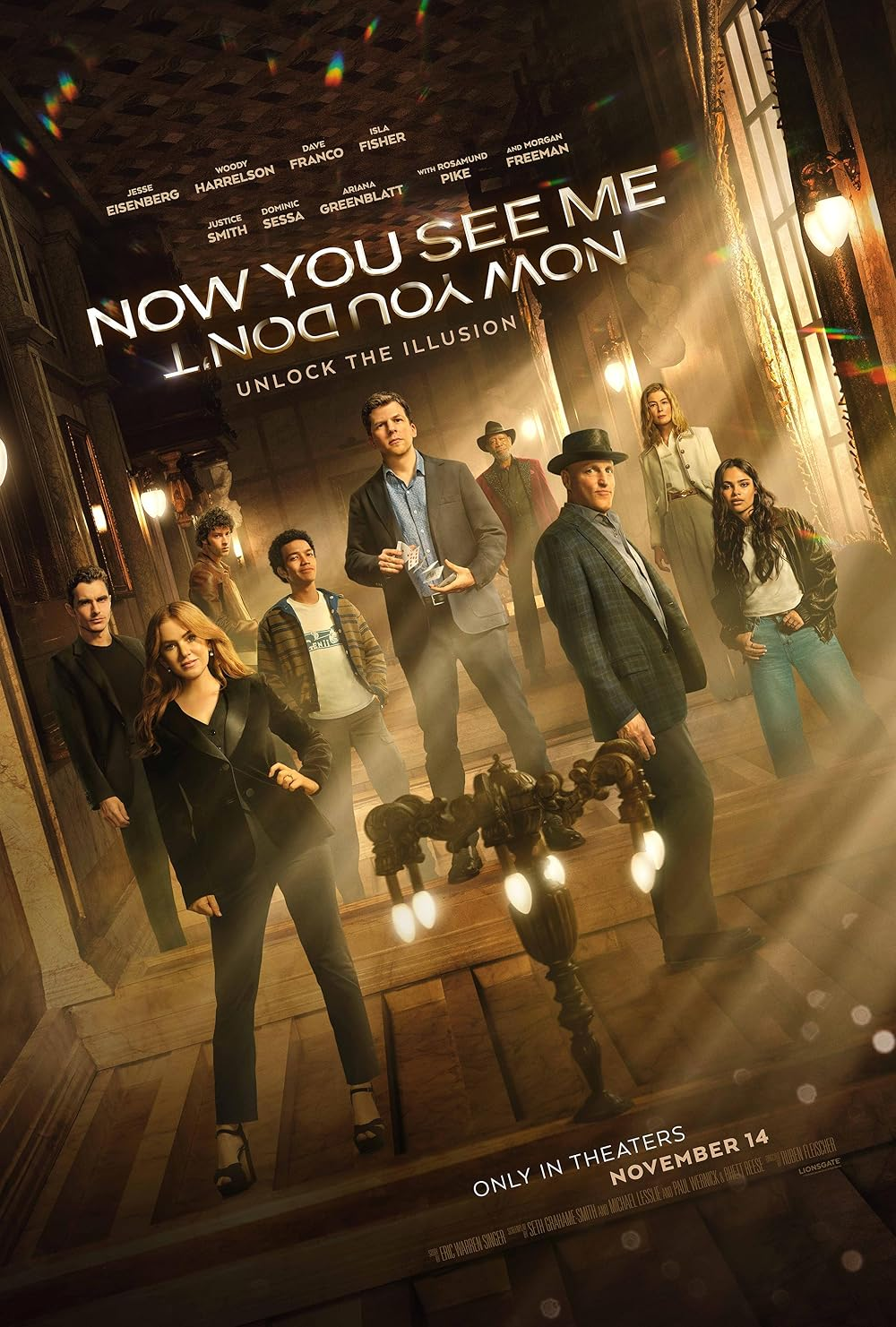
Now You See Me: Now You Don’t

The Horsemen band together once again after years apart to train a new generation of magic criminals and pull off a seemingly impossible heist.

Devoid of the fugitive thrills, star charisma, and moral ambiguity that made the first film remotely a success, this movie turns its protagonists into superheroes with plot conveniences at their disposal, and none of the big names in the cast really get to shine their personalities, with every character feeling empty, with the exceptions of those played by Dominic Sessa, Ariana Greenblatt, and Morgan Freeman. Rosamund Pike is given truly awful material to work with and a very odd South African accent.

The movie struggles to answer the question of, why this sequel so many years later? Why this heist? Why this villain? The stakes feel rather low for a third film, and when the script finally comes around to attempting satisfying responses to these questions, you’re left wishing you hadn’t heard them. The movie isn’t even quite able to tell us why we should be so impressed by these magicians, and if what they’re doing really has any meaning at all besides prestige. Things happen because the story begs them to, but a turn in the final act also comes in and makes any development the whole thing feel null and void, anyway. The action ranges from fine to filled with glaring gaps in logic, and even when the movie begs you to turn off your brain and enjoy some of the fights and humor, there’s a real lack of excitement and very irritating script directions in the way of that.

Like the Horsemen’s magic tricks, Now You See Me: Now You Don’t feels forcefully manufactured for a wide audience. If you enjoyed both the previous films, this one is a lot more of the same, but it seriously fails to justify its existence besides some big visuals and sets, even with all the star power and energy at the table.

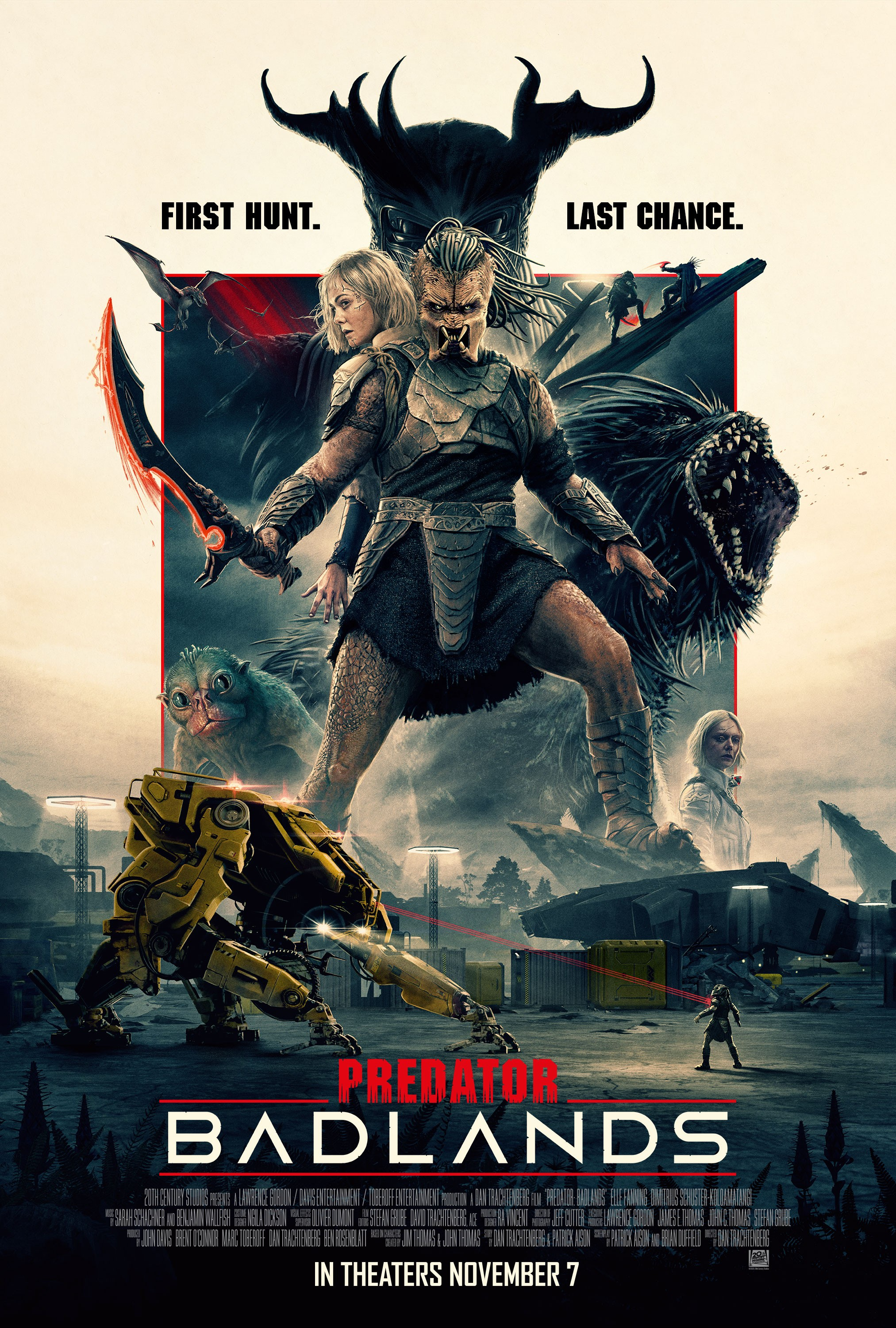
Predator: Badlands

A young outcast Predator named Dek finds himself stranded on an unfamiliar planet, and must band together with android Thia in order to face some new threats and survive.

Predator: Badlands proves that for some franchises, the standalone spinoff method can certainly hold better than trying to directly recapture the essence of the original. Badlands starts off a bit rocky, with the stunts team’s work impressing but the characterization of the Yautja feeling too distant to connect with Dek as a protagonist. Once Elle Fanning’s character is introduced to the mix in the first act, we’re finally able to feel for what’s going on, thanks to her bond with Dek, and Fanning’s wonderful performance as not one but two androids.

The action ranges from forgettable earlier on in the runtime to exciting later. Thankfully, the story and fights get better and better as the film goes along and not the other way around, and manages to stay interesting with relatively low stakes. Maybe the Predator himself makes for a cooler villain than hero, but this story works well because of Fanning and the intricate stunt performances and visual look.

Sentimental Value

Joachim Trier once again is drawn by the quirks, faults, and excellences that drive people towards and away from each other. Sentimental Value is very much about the need to express oneself and tell one’s story, often through art, or discover oneself through it. 

Renate Reinsve shines in a role both subtle yet demanding though never reminds you it’s such. Meanwhile, Stellan Skarsgard finds himself in one of the most powerful roles of his career. He gives a richness to his role, the distant father who in most films would be painted as a humiliation, but rather Trier and co-writer Eskil Vogt make Skarsgard’s character’s journey just as valid as that of his daughters, never trying to make the audience judge whether any of these characters are “better” or “worse” than one another.

Elle Fanning’s character enters this world with fascination, and her character is filled with empathy while avoiding predictable tropes the role could’ve easily fallen into. The film often lets us inhabit a space with these characters in long scenes of reflective — and introspective — dialogue, though sometimes the story takes time to pick up between acts. Once the final act comes, though, it pieces together everything the film had to say about individuals’ need to be spoken and heard through emotional intimacy — with art often being the only way — in a big and resonant manner.

Nuremberg

This accessible and matter-of-fact historical drama is engaging and makes good use of its runtime and central cast. Rami Malek inhabits the role of Douglas Kelley quite well, a psychiatrist brought to assess the mental state of Nazi prisoners convicted of war crimes leading up to the Nuremberg trial. Russell Crowe gives one of his strongest performances in recent years as Hermann Goring, one of the most evil and infamous figures of the Nazi party responsible for carrying out many of the Reich’s atrocities, including Hitler’s plan to conquer Europe and murder millions of innocent Jews and others the party deemed inferior. Crowe’s performance emulates a manipulative coldness that’s hard to read, as the film examines how such ego would respond to losing such immense power, and Malek’s character attempts to find the man’s weaknesses. Michael Shannon gives an excellent performance as Justice Robert H. Jackson, who leads the charge in the trial and remains the film’s most passionate and likable character, though Richard E. Grant does effortlessly steal the screen later on, too. Leo Woodall is solid, but his and Colin Hanks’ characters are slightly underwritten.

The film’s main distracting element is the color-grading that’s oddly dull and dry, even for a film of such hefty subject material. The movie does do a great job, however, of showing the importance of the Nuremberg trials in a broader historical context, and ensuring that such evil would never be enabled again. It also powerfully connects the rise of Nazi ideology to history that followed, including McCarthyism and other far-right movements in America. It’s an interesting watch, if not one of the most resonant recent films about WWII or the Holocaust and their aftermath, led by an all-star cast.

Bugonia

Yorgos Lanthimos creates worlds of oddity, discomfort, and unease in most of his film, but Bugonia has the most to say about our world now. Jesse Plemons and Aidan Delbis play two extremists who kidnap the CEO of a pharmaceutical company (Emma Stone), believing her to be an alien in disguise sent to enslave humanity. Plemons and Stone are daring, unsettling, and riveting in the film, continuing to surprise and take their characters further, even with both being alums of Yorgos’ filmography and tone. Plemons’ turn is scary based on the conviction of his belief that comes from lifelong pain, and Stone is phenomenal as a character who’s also done some awful things, but clearly has the moral high ground while challenging the other characters. Delbis is convincing as a character who beneath the darkness, possesses a helplessness and strange empathy.

Lanthimos’ best traits as a filmmaker are that he finds the funny and big in every circumstance, making the story feel large-scale with the editing and storytelling. He also recognizes how equally unsettling and hilarious the concept can be, and that the two almost always go hand in hand in the case of Bugonia. The cinematography by Robbie Ryan, is unique and often stunning, and the thrills come from itching to find out the insanity that’ll unfold in every moment of the tense situation. It doesn’t let any of its characters off the hook but also allows the audience to understand some of their points, while debating on which characters are less sympathetic. It’s a film about shared delusions, stemming from our modern world of online radicalization, ideology-based violence, and corporate corruption on a vast scale. The symbolism and hidden layers reveal so much more about the characters’ world and the film’s messages, and there is much horrific yet calculated madness and macabre to expect from the director, while leaving an incredibly satisfying amount of ambiguity. It balances genres, tones, and themes effortlessly, leaving food for thought in all its aspects while allowing its stars to beautifully share the spotlight in one of the most unsettling and brilliant works of film this year.

If I Had Legs I’d Kick You

If I Had Legs I’d Kick You digs deep into the darkest corners of the human souls, of the ugliest thoughts that plague our minds, and the crippling anxiety and depression that traps us in the most banal of existences. Rose Byrne gives one of the most demanding, devastating, and furious performances of the last decade, as a woman suffocated by the horror and weakness of her being, confined by the truths of her situation and lacking the strength to find meaning or love in any of it. The remarkable filmmaking and camerawork allows us to pinpoint exactly how Linda interacts with her surroundings, without having to imagine any of what she’s feeling. The dread that anything is about to go wrong, that it’s all your fault, and that this excruciating guilt is forever. The feelings are so tangible to the audience, yet their roots of why she feels responsible for the life she hates are intangible and ambiguous for much of the film. 

Byrne’s character channels universal struggles, including with motherhood, while taking them to the most extreme depths and circumstances. However, we’re never brought to think that she’s a bad person, simply someone who’s isolated and unable to cry for help or carry herself along with those around her. As Linda is inconvenienced with a gaping hole in the roof of her house, the hole metaphorically grows and becomes one with her. 

The final few minutes are haunting and left me dumbfounded. The nightmarish imagery and dark humor play off each other to create a final product that’s arguably more stressful than any horror movie could be. This movie left me dumbfounded and at a loss for words, one of the most anxiety-inducing, uncomfortable, and emotionally raw films I’ve seen in a while. It’s a one-of-a-kind film, with an astounding and unforgettable lead performance, that shook me to my core.