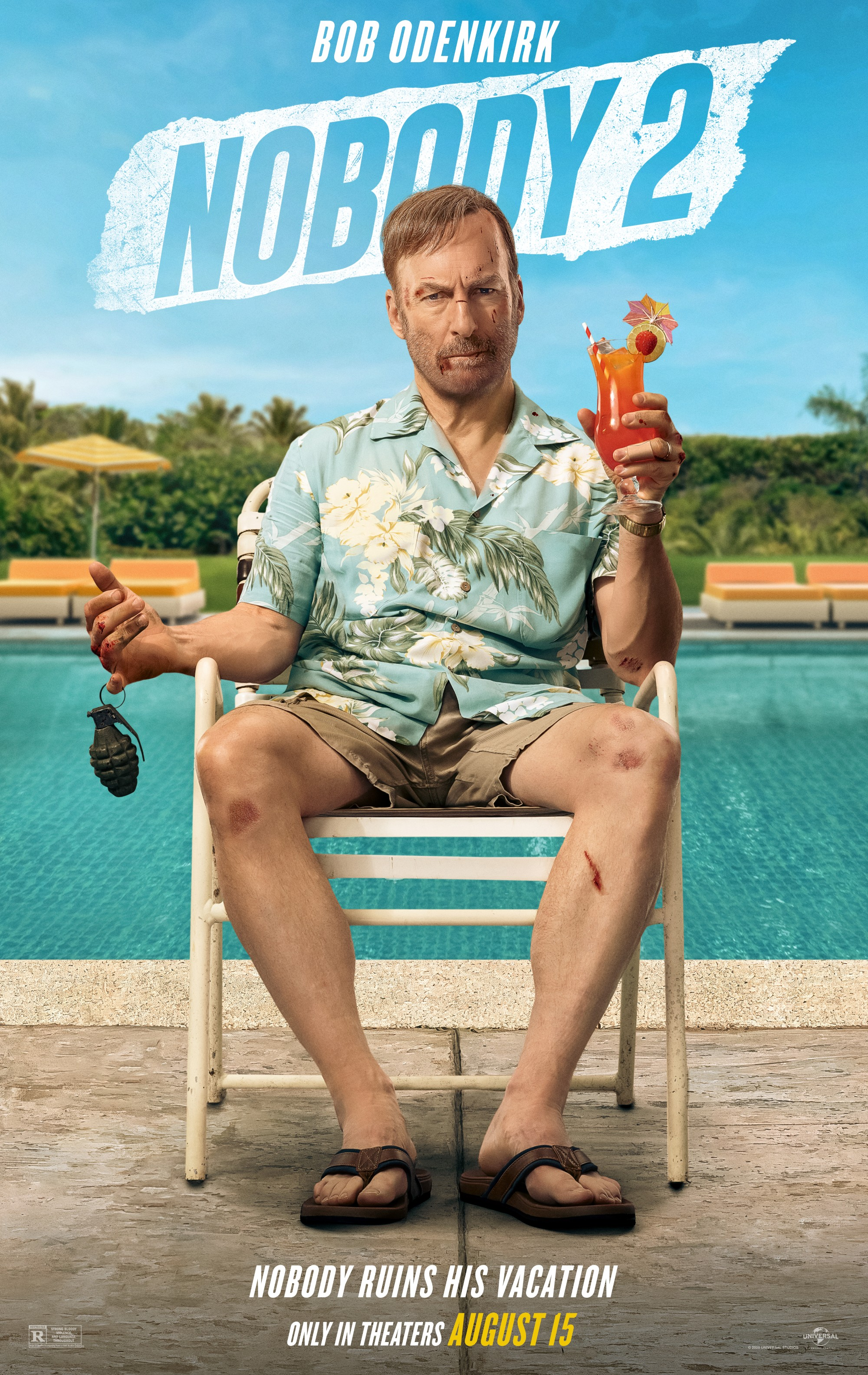
Bob Odenkirk is back as Hutch Mansell in a sequel where the action is just as wild, but the script doesn’t pack the same punch. Odenkirk is both outrageously funny and gritty in the leading role, while Connie Nielsen gets even more to do as his wife. Christopher Lloyd again shines as Hutch’s father who gets even more opportunities to completely steal the screen, and effortlessly so. John Ortiz is also solid, but many supporting characters who serves as antagonistic forces don’t really have much to do, or at least their motivations don’t feel like a natural part of the story. Sharon Stone is very well-cast, but her lines are sometimes iffy and her screen time leaves more to be desired.
Nobody 2’s family vacation premise sets it apart from its predecessor, but it also lacks the thrills that those slow revelations had in the first film — none of which really have an impact here besides Hutch being really, really good at killing people. The conflict itself feels both low-stakes and never explained in a manner that’s clear, interesting, or original. That said, the action is still fun and the final act in particular offers an awesome and massive set piece. That said, compared to its predecessor, it leaves much to be desired narratively and thematically, while still working as harmless and bloody entertainment.
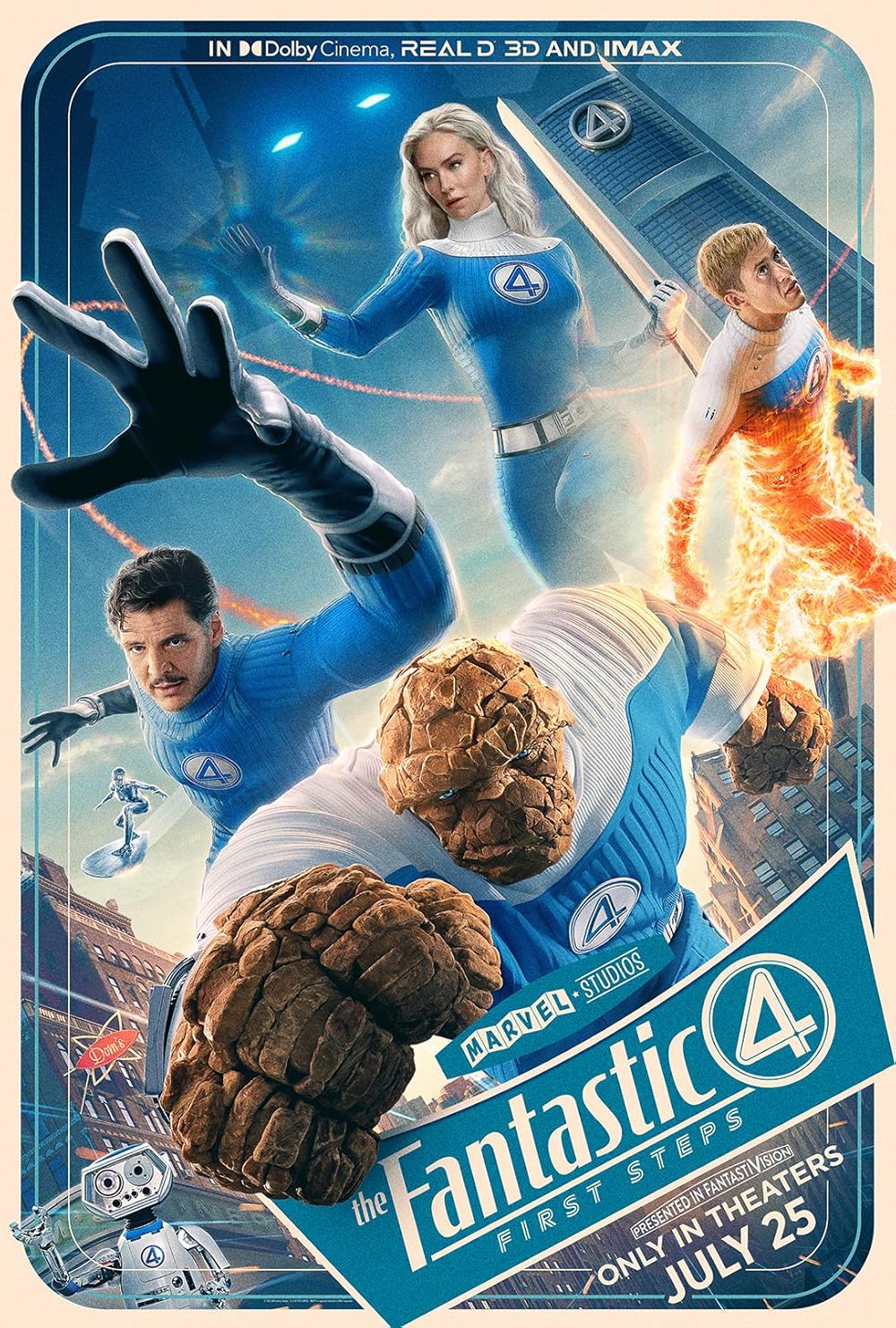
It seems like the third time’s the charm for Marvel’s first family — after three different iterations on screen, the Fantastic Four finally get a film that’s not only watchable, but irresistible. Since this film is set in a parallel universe to the 36 films preceding it in the Marvel Cinematic Universe, it gets to build a new world from scratch. The eye-popping visuals will leave you in awe, including extraordinary costume and production design. The retrofuturistic approach to this new world recaptures that feeling of wonder of humanity embarking into space for the first time, while imagining a reality where all of humanity rallied together behind reason, morality, and science. This idealism and dream-like wonder bring a beautiful look and excitement that’s distinct from Marvel’s other outings that are set in a world with undertones much more like ours. Pedro Pascal gives his star-like charisma to Reed Richards, but the film wisely gives Vanessa Kirby’s Sue Storm much of the film’s emotional weight. Kirby is given a journey unique to Marvel and the screen, and she and Joseph Quinn fit their roles like a glove. Ebon Moss-Bachrach is a highlight as the deeply heartfelt and lovable Ben Grimm, and the family’s dynamic together is sweetly reminiscent of a team like The Incredibles.
The action-packed pace wastes no time, even when it sometimes skips time with detailed character arcs, their relations with one another, their world, and their roles in it drive the film very well, even when the conflict may be priority. The only shame is that talented supporting players Sarah Niles and Natasha Lyonne weren’t given a little more screen time. The effects and action always entertain, and even the world-devouring giant Galactus is given a serviceable motivation to give his presence weight, including Ralph Ineson’s powerful voice. Meanwhile, his herald Shalla-Bal, the Silver Surfer, is given an interesting portrayal by Julia Garner. The Fantastic Four: First Steps doesn’t set out to surprise, but it certainly wows and stands out among the MCU, finally giving the characters a great outing and vivacious portrayals with a gorgeous aesthetic that takes a life of its own and gives the film a stunning feeling of enjoyment throughout.
James Gunn’s reboot of one of the most recognizable and beloved stories and characters in pop culture history wisely ditches the origin story and hits the ground running, and the momentum never quite slows down. We’re thrown into a world where Clark is already Superman, dating Lois, and surrounded by Metahumans, and the movie greatly benefits for it. David Corenswet, first and foremost, is wonderful as the titular hero, giving us someone more tangible and relatable to aspire to, while actors like Christopher Reeve and Henry Cavill played the character as larger-than-life figures bigger than any normal person could ever imagine to understand. This story is all about Superman’s flaws and embracing of his unique identity, as well as his immovable faith in humanity, even we can’t see it in ourselves or continue to turn on the guy. Corenswet’s performance is oozing with superstar levels of charm while bringing the character down to earth — no pun intended — while the script does the audience many favors by not making us feel like Superman is invincible; he can be defeated with wit and even technology, and that’s what raises the stakes here.
Rachel Brosnahan is probably the best Lois Lane we’ve yet to see, who’s naturally funny, brave, and feels like her own character, while we also care greatly for her relationship with Clark moments into being introduced to it. Nicholas Hoult is outstanding as Lex Luthor, chewing up the scenery while providing a villain that hits far too close to home — a tech billionaire with a God complex and Emperor Nero-like ambitions, who feels like he exists in his own world beyond just a terrific adversary to Superman. Gunn always shines in making his supporting cast feel close to us, like a wondrous family we’re getting to know, and everyone gets to stand out, from Edi Gathegi, Nathan Fillion, Isabela Merced, and Anthony Carrigan as other metahumans to Skyler Gisondo who is hysterical and irresistible as reporter Jimmy Olsen. Most importantly, Superman’s dog Krypto is an adorable scene-stealing standout.
Gunn’s visuals also stand out here, feeling colorful in a comic book nature and often morphing around our actors. The action is dynamic and exciting, and the excitement that’s both playful and grand. Beyond his singular and unpredictable filmmaking, Gunn’s skills as a writer shine, with conflicts that balance the gripping and the over-the-top, and a genuine heart that seeks out to represent what Superman’s been about all along — optimism, hope, and shared humanity. Gunn never feels restrained, however, by what’s defined past iterations of the character, and still makes this Superman his own. The film delivers on every promise while standing out from recent superhero outings and being perhaps the most thrilling, lovable, and worthy Superman movie yet.
In a future in which dinosaurs and humans were believed to be able to coexist but now faces climate change and mass disease outbreaks that threaten society, the Earth has now proven nearly inhospitable for dinosaurs, who have now retreated to an island. Now, a team of mercenaries and scientists embark on an expedition to retrieve DNA samples from three massive dino species that may prove to hold the key to humanity’s survival.
The Jurassic franchise began in 1993 with what’s still considered to be one of the greatest and most iconic movies ever made. Today, it continues to prove that its run its course and serves no purpose besides Universal’s cash cow. Only three years after Jurassic World Dominion supposedly marked the end of the franchise, Jurassic World Rebirth attempts to mark a new era for these films with a new age of global human-dino dynamics, and a new group of characters. Instead of utilizing this fresh start potential to breathe new light or direction, Rebirth is exactly what I feared — an unnecessary piece of nonsense that recycles the same tropes and quickly gets exhausting to watch. The characters are wooden and we aren’t given much material in order to understand or interact with them. Mahershala Ali is the definitive standout, always giving a lot of heart and likability to his role. However, a family that becomes a major subplot in the film takes up way too much screen time, and their appearances become more and more useless and frustrating the more we cut back to them.
In addition to its lack of effort in actually investing us in its characters, the concept as a whole works les when the film feels this rushed. So much has changed since the last film that it’s become a nearly pre-apocalyptic world, but a larger gap in time between releases and chronologically within the time of the franchise would’ve helped this make more sense. The dialogue also preaches much of its themes and directions instead of allowing the audience to learn or take much in visually. Besides a fun action scene set at sea, much of the action feels incredibly derivative and uninspired. There’s a serious lack of stakes and excitement, even if we’re told that the greater fate of humanity is at stake. The danger just doesn’t feel as thrilling because the film doesn’t set up its location or objectives with much clarity or heft.
Jurassic World Rebirth uses many of the same character archetypes and broader themes we’re used to from these films, while misses any real soul or thrills, or even any sense for that matter. It’s a tired return to a series that’s out of ideas and out of steam, and we’re left wondering what much of it really achieved, besides sticking the word Jurassic onto another film title and hoping crowds show up. Rebirth is concrete proof that it’s time to let the dinosaurs rest for a while longer, not just in reality, but on our big screens, too.
Out of all the live-action remakes of animated films to be released in the last few years, How to Train Your Dragon is the one that sounded too soon, and too perfect to touch more than any of the others. However, it winds up standing out among many of the other remakes that come to mind. Director Dean DeBlois sets out to retell the story of Berk and its vikings and dragons in realistic glory, but also sticks so closely to his original film’s visual palette that there almost isn’t anything new here. Large amounts of dialogue, if not the entire script, are also beat for beat exactly the same, so if you remember the original film quite well, it’s like watching a film you’ve already seen be enhanced and remastered. Though the first film is so wonderful that it doesn’t leave much need for improvements, making a new film should be justified by making some changes and additions to the story, not to mention much from the source material that the film was based on that we haven’t yet seen.
Mason Thames manages to make the role of Hiccup his own, while Gerard Butler is a standout reprising his role as Stoick from the animated trilogy. His hard exterior and brutal attitude towards dragons that develops from his fear and desire to protect his son and tribe are prominent. The production design and CGI effects work very well to form engaging action scenes — even if it takes a lot of getting used to that Toothless looks the exact same as he did in the animated version but is now interacting with live-action settings. Nico Parker is wonderful as Astrid, and her bond with Hiccup also stands out, particularly his earning of her trust. The supporting teen characters unfortunately feel like they’re doing imitations of their previous version, though Nick Frost entertains as Gobber.
Some scenes manage to carry the beauty over into this version, including Hiccup and Toothless’ initial bonding, and the former’s romantic flight with Astrid. Still, you’re sometimes left to wonder why it wouldn’t have hurt to change some more lines or backdrops, or even some add in some new story beats when you’re making a new film, after all. The real magic here that holds it all together is John Powell’s score. His themes enrich the world and the tone when they could’ve lacked in this new iteration otherwise. The movie’s insistence on staying so close that numerous scenes are a shot-for-shot copy and paste can frustrate, but its lack of originality doesn’t fully take away from the heart and vibrance that’s still here, even if in a lower capacity. For those discovering the story for the first time, though, it will certainly deliver with its themes of empathy and teamwork.
Ballerina isn’t just another action movie: it’s got a madness and energy that only this franchise has. But it doesn’t just fit perfectly into the John Wick universe, it elevates its world-building and makes a strong case for this new protagonist Eve and her potency. Much of that is thanks to Ana de Armas, who is a powerhouse and gives Eve a deep pain that is weaponized into her expertly brutal assassin skills. That’s quite the main theme here and an interesting one — hate and trauma being weaponized into violence and vengeance, and the illusion of fate and a lack of choice. The actress wonderfully takes on action scenes and stunts so intricate they give some scenes from the main John Wick franchise a run for their money. Best of all, it never feels like its recycling too much from those films, whether from a visual or choreography perspective, even if the settings and musical score aren’t trying to hide that this is a Wick movie, and the character tie-ins may feel like a bit much.
As for the supporting cast, Anjelica Huston gives a strong reprisal of her supporting role from John Wick: Chapter 3 – Parabellum, while Gabriel Byrne is well-cast as the villain, though his dialogue becomes one-note and over-the-top rather quickly. Catalina Sandino Moreno is great to watch; it’s nice to see her finally given such a prominent role in a big film like this so long after her amazing turn in the Oscar-nominated Maria Full of Grace. Due to the film being set between the third and fourth main films, Keanu Reeves’ inclusion as John Wick is fun and justified, thought the excitement of having such an iconic star around may overstay its welcome for a film that isn’t about him. Even if the story uses familiar elements such as a revenge plot or an assassin groomed to kill from a young age, they all fit in the amazing action and scenery here, which keep one-upping themselves and the audience’s expectations. It’s an exciting and stylistically top-notch action movie that rewards its crowd, even if the story itself doesn’t pack many surprises.
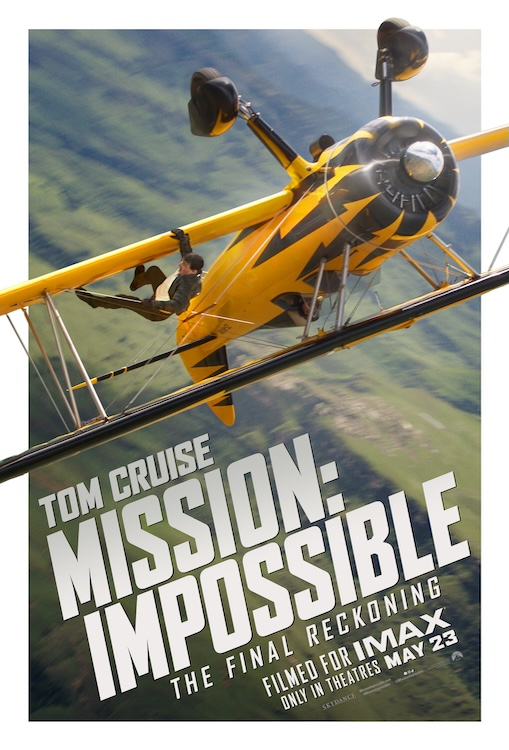
One of the most notoriously enormous franchises ever in scale comes to a close with its most ambitious installment yet. Tom Cruise’s practical commitment to the action is again breathtaking, especially the set pieces including planes and submarines. Christopher McQuarrie and Cruise are again dedicating everything to creating something gigantic that warrants the moviegoing experience, with nail-biting stakes, jaw-dropping sets, and stunning direction. It’s got a genuine feeling of danger, that the team’s loss could result in truly destructive consequences. It also pushes Ethan to the brink of his values and abilities, as each last film before it has challenged how impossible of a mission he can actually go up against, as well as personal decisions he is faced with. The ensemble cast surrounding him is great, particularly Simon Pegg, while Hayley Atwell sometimes feel pushed too far into the mix to stand out as much as she did in Dead Reckoning and Esai Morales’ villain this time lacks the presence that was felt from him in that film. The standout from the supporting players is definitely Angela Bassett as President Erika Sloane, whose relationship with Ethan Hunt becomes deeper and more complex with their new dynamic of power and the situation at hand.
In an attempt to tie past installments into this finale, the editing does become bloated, with excessive flashbacks to clips from those past films to clarify details most viewers either already know or didn’t need to be shown. Sometimes a quick dialogue exchange or even context clues can give viewers who don’t remember 7 films worth of lore the background they need, but though at times this method is excessive, it becomes rather disorienting. Not to mention, the script is also at times hard to follow, with the logic that needs to be pieced together to follow the story sometimes happening at light speed and may only be completely taken in on rewatches,. Some plot threads feel under-explained when others are given too much explanation. Despite these story and editing issues that are especially prominent in the first hour, the second half is so incredible to watch and some of the stunts feel like a once-in-a-lifetime moment in their realism and scope, and the story arcs continue to escalate until they finally come to a hard-hitting close. It’s ultimately an exhilarating and satisfying conclusion that may not be the best Mission ever, but it’s certainly the biggest and a must-watch on the most massive screen you can find.
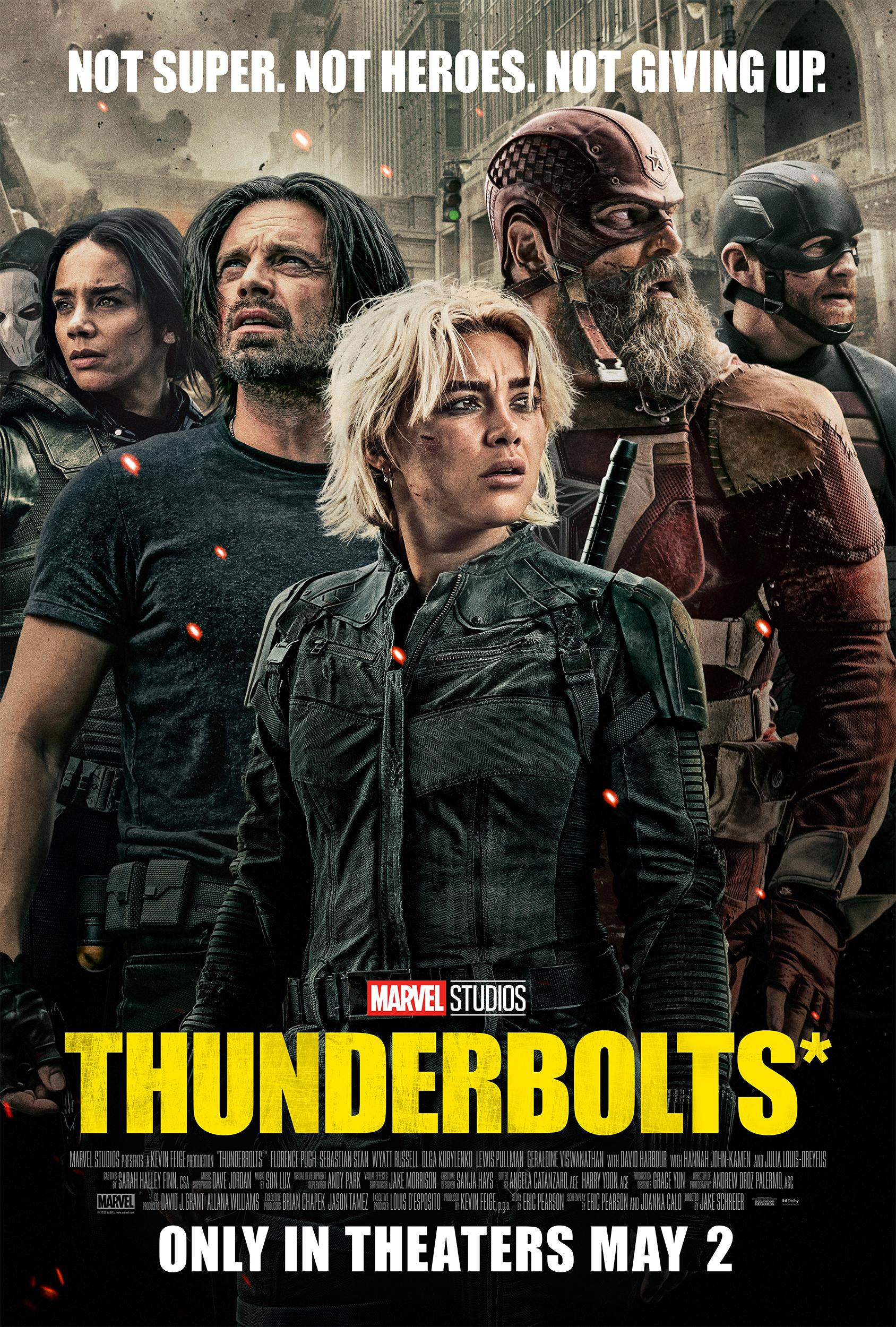
After being lured into a deadly trap by CIA director Valentina Allegra de Fontaine, a group of antiheroes form an unlikely team to bring de Fontaine and her destructive plan down.
Thunderbolts* is oozing with energy and a deep care for its characters, with a darker edge of corruption and death to its subjects. Contrary to this February’s Captain America: Brave New World, Thunderbolts* thrives by allowing its cast’s charisma to roam freely, led by the incredible Florence Pugh. This time around, Yelena is the film’s lead, and Pugh taps into the character’s core of depression and emptiness, including her tumultuous relationship with her father, former Soviet super soldier Red Guardian, played by the vivacious and hysterical David Harbour, longing for glory again. Wyatt Russell and Hannah John-Kamen are also utilized very well, while Sebastian Stan returns as Bucky, who leads many of the others through a similar emotional arc he’s learned his way through. Geraldine Viswanathan is also a standout as Mel, assistant to de Fontaine — played in such a juicy performance by Julia Louis-Dreyfus as a menacing figure who will stop at nothing to gain absolute power and avoid all consequences for it. Though Lewis Pullman’s performance doesn’t have the same loose charm we may have felt from him in Top Gun: Maverick and Lessons in Chemistry, he also well portrays Bob’s awkwardness and the darkness enveloping his character.
The best part about the film is how the characters interact as a team — their action and combat scenes are awesome, the way their differences interact through banter and humor is greatly entertaining, and the way they utilize their strengths to solve problems (albeit reluctantly) makes them unique. Some characters’ arcs could’ve used more closure, and the final act and climactic battle could’ve hit harder, and it’s not as stylistically irreverent as Guardians of the Galaxy or The Suicide Squad, but like those films, it’s about people who want anything but to be heroes learning to find redemption by embracing one another’s differences and company, and stepping up and do the right thing. It may not be one of the MCU’s most visionary installments, but also may prove to be one of their more rewatchable in the future, as its cast of misfits and contagious energy stand out. If these characters weren’t your favorite in the MCU or anything close, that may just change for good after Thunderbolts* — an extravagant action/comedy that may be short on some wildness or development in certain aspects, but is certainly big on the excitement and reward.
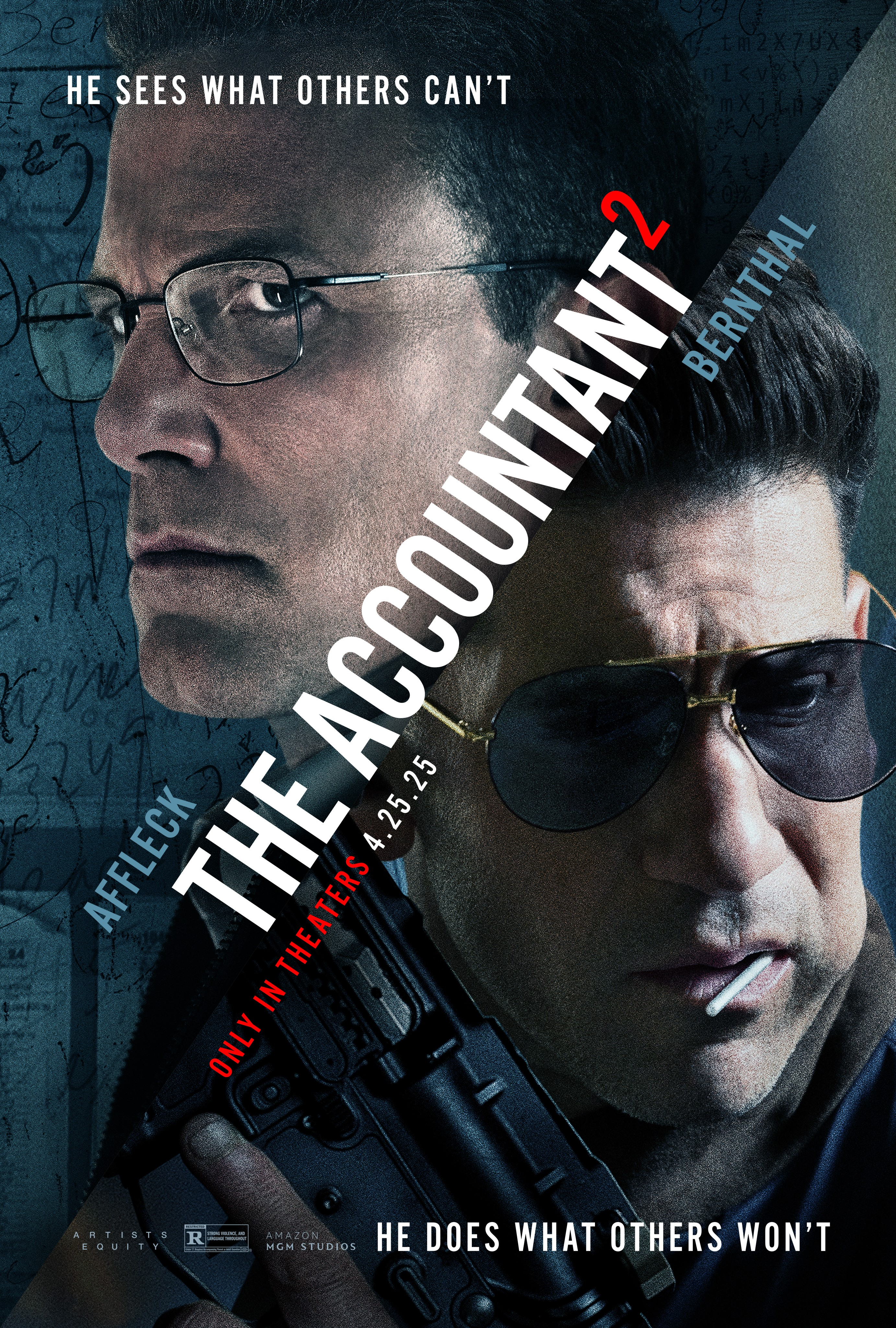
Christian Wolff (Ben Affleck) recruits his estranged brother Braxton (Jon Bernthal) to join him on a dangerous mission down a web of secrets after an old ally is murdered.
The Accountant 2 embraces much what worked in the first film, even if its slow pace and complicated conflict threaten the runtime. The clearest difference between the two is the prominence of the bro-mance between Ben Affleck and Jon Bernthal, who get much more humor and fun together — all while the film fully acknowledges that Bernthal’s character is still a psychopath, even though we’re rooting for him to find his way. The action scenes are great, with strong sound editing and gritty choreography, but the slower drama will sometimes leave you aching for more action, especially when there’s maybe too much exposition for its own good. Cynthia Addai-Robinson is also strong reprising her role, and the main character’s disability also proves for interesting and unique ways of seeing the main case, while also playing into his daily life in fun ways. The film has trouble establishing stakes as to why we should care about certain characters who are in danger, but also balances taking its story seriously with its loose banter between the two leads, while the humor never comes at the expense of letting its dark mystery breathe, and vice versa. The action and pace are on par with the first film with a different but similarly enticing mix of elements, even if it’s occasionally predictable and leaves a few plot threads unresolved, there’s also some exciting twists and turns for fans of more patient and sophisticated action and thriller films.
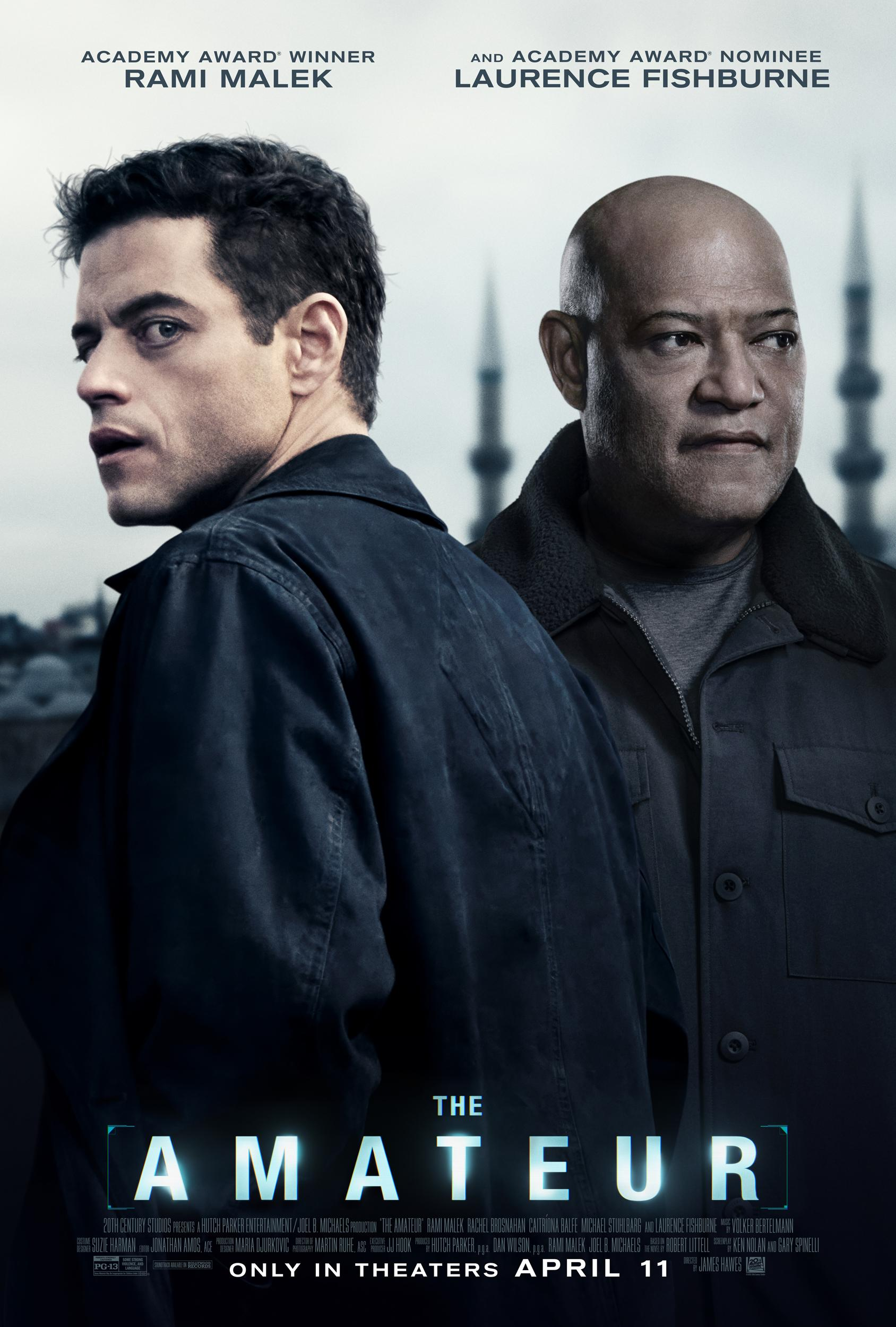
After losing his wife in a terror attack, CIA analyst Charlie Heller blackmails his superiors into letting him go after the men responsible for her death himself.
The Amateur is well-directed, with an engaging enough visual look to keep the runtime going, as well as a strong score by Oscar winner Volker Bertelmann. However, it settles for mediocre as often as it becomes thrilling. Rami Malek is excellently cast in the role, but in earlier moments in the film, his performance still feels distant, and gets to shine more later, or sometimes the editing is to blame for not letting us sit with Charlie’s grief and pain for longer in certain scenes. Holt McCallany is especially memorable as the tough CIA Deputy Director, as is Laurence Fishburne a resourceful yet more empathetic CIA operative.
Despite the packed cast, the story itself sometimes feels muted, including a lack of true exploration of the idea that this hardly trained man is committing elaborately planned out killings that would be viewed as sadistic if the men he was killing weren’t murderous terrorists. The dialogue also sometimes falters, but the elements of the formula of a smart fugitive looking for justice on the run from the law do often work, and the action-heavy scenes themselves work well. Though the resolution leaves a bit to be desired from an emotional point of view, the third act subverts some expectations, and a character that enters the film in the latter half creates some very interesting developments. The movie’s entertaining enough for fans of action and espionage films that are more patient and let their stories breathe, but it also doesn’t stand out from the crowd of similar films or demand audiences to rush to the theater.








 filmtoppings.com