One Battle After Another

After a ruthless enemy resurfaces after sixteen years, a former revolutionary must come out of hiding to protect his daughter from a terrifying power coming after them.

Paul Thomas Anderson, already one of the most sweeping and daring filmmaker of the last few decades, is not only at his most ambitious in scope here. With One Battle After Another, the director challenges himself and his audiences into discomfort and nail-biting suspense, while transcending and recontextualizing his body of work. His direction is not only at its most cinematic and maximalist, but one of his most thematically profound.

Leonardo DiCaprio shines as a man who is task-oriented and protective yet fragile in his sense of self, portraying a character who’s funny in his messiness as he is loud and dangerous if a nervous wreck. Sean Penn is vicious and terrifying, giving his best performance in decades that could even get him another Oscar, and a villain that will go down as one of the all-time greats. The ensemble cast all deserve their flowers in their own right and offer the film lots of strength. Chase Infiniti is fantastic as DiCaprio’s daughter who gives much strength to every scene she’s in, and her scenes are riveting. Teyana Taylor leaves such an impression with a tremendous performance that gives weight and immense depth to the entire film, even when she’s not on screen. Benicio del Toro shines in a lovable and entertaining performance that steals the screen while letting other performances be “bigger” at the same time, and Regina Hall is also excellent.

There isn’t one element to Anderson’s approach that turns One Battle After Another into a masterpiece; it’s the whole the parts create. The gorgeous cinematography, Jonny Greenwood’s booming score, the swift pace and dark tone, and the magnificent sound design create the unpredictability and transfixing nature of the film you’re in. It’s the most shockingly and horrifically relevant film to today’s America I can remember, with imagery mirroring current power dynamics. The imagery is so visceral and mirrors real-life conflict in a way that screams like a warning, but one for a reality that’s already begun. In the world of One Battle After Another, each person has convinced themselves of an enemy or an other, and that violence is a justified means to an end that signifies a greater good. Nobody in this film becomes a true hero, there are simply people with worse beliefs and who have codes and are willing to commit deeds that are less acceptable to our moral standards. There are many moments that stand out in One Battle After Another that invoke suspense and epic magnitude, but that feeling is felt in every moment and frame. Even for a legendary director of PTA’s rapport, One Battle After Another is a breathtaking experience that’s among one of the best films of the last ten years, and one of Paul Thomas Anderson’s most visionary and unforgettable movies.

The Roses

Architect Theo Rose and his wife, chef Ivy Rose, live a seemingly perfect life with their two children, until buried resentments start to surface and threaten to destroy the marriage and lives they’ve worked so hard to build.

An amusing update of The War of the Roses, this film retains a similar basic premise but takes a much humbler, less slapstick tone to feel distinct from that previous film which famously saw Michael Douglas and Kathleen Turner butting heads as the titular couple as their marriage hideously crashed and burned. Here, Benedict Cumberbatch and Olivia Colman are the “perfect” pair who make the film worth watching. Cumberbatch shines as a man struggling to find steam and purpose after losing it all professionally, while Colman’s performance as relatively restrained compared to some of her others, but still kills it while matching his smugness. The film has its good laughs, and does justice to some of its great supporting players including Andy Samberg and Kate McKinnon. The first hour tends to drag in the writing, but once it gets to the main point over halfway in, it gets fun. The film works best when highlighting the rockiness in the seemingly best of marriages, and when allowing its two leads to trade insults and threats and try to bring one another down with the sinking ship.

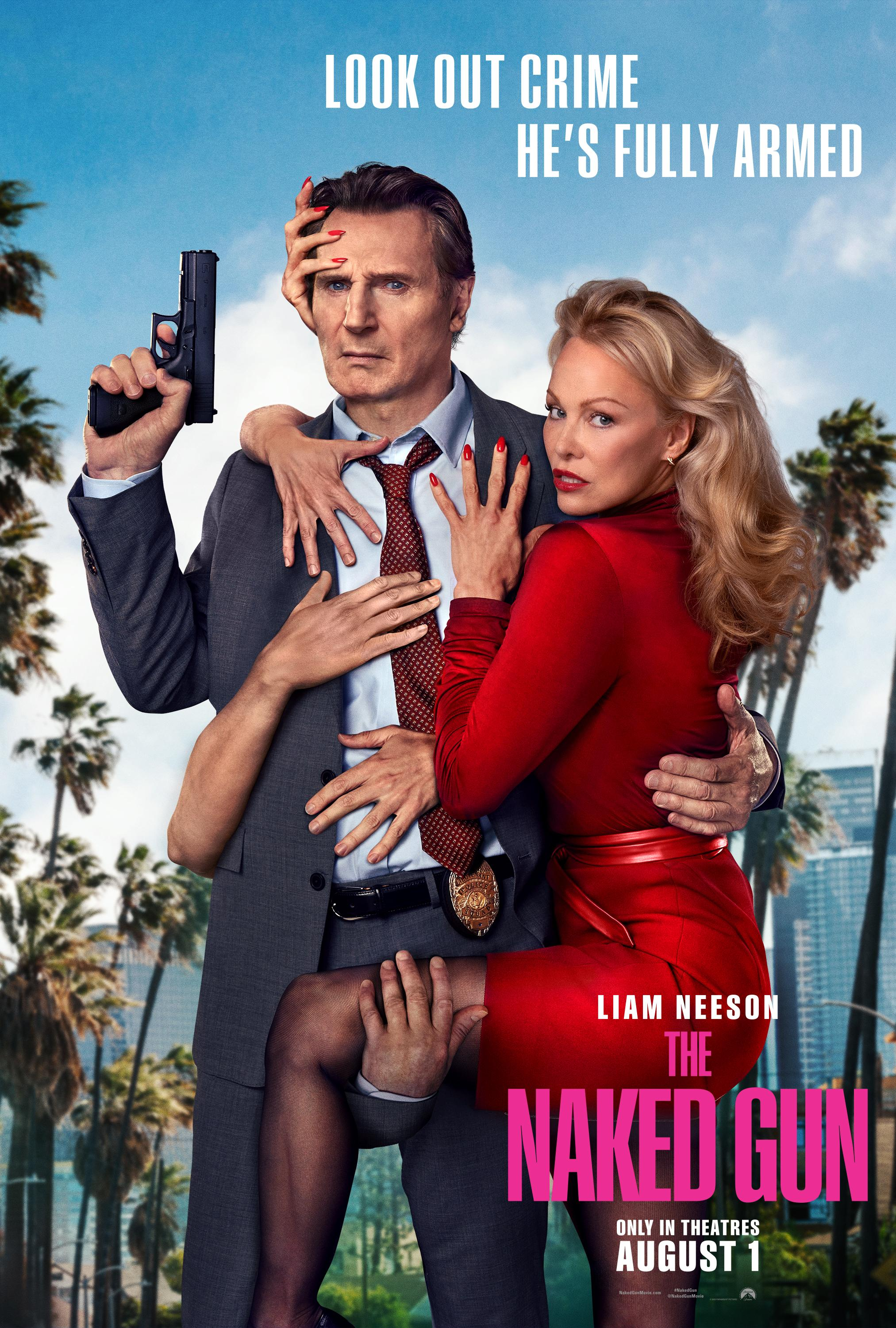
The Naked Gun (2025)

If it ain’t broke, is there any need to fix it? The Naked Gun doesn’t set out to reinvent its franchise — it tries the exact same things its predecessors would’ve, and works so well for it. The humor is still silly and not limited by the same political correctness many adhere to today, and once the laughs start coming, they never stop. Everything from visual comedy, pop culture references, wordplay, and more NSFW humor are thrown at you at light speed, and the laughs hardly miss, even when they’re not very “smart”. 

Liam Neeson does a stellar job following in the footsteps of the legendary Leslie Nielsen, with Frank Drebin, Jr. just as dim-witted but lovable as his dad. Neeson’s comedic and clueless turn serves as a huge and much-needed breath of fresh air from his far more brooding and serious action movie roles in the last two decades, perhaps making us wish more of his movie choices were comedies. Pamela Anderson’s romantic lead isn’t necessarily an interesting character, but her performance shines and makes the role fun to watch while sharing strong chemistry with Neeson that works in a weirdly endearing way. Paul Walter Hauser is also great while Danny Houston’s awful villain not only makes no sense, but his evil plot is stolen from another semi-recent spy movie.

Just like classic screwball action comedies like Top Secret and Austin Powers, The Naked Gun’s pleasure comes from its ridiculousness, and isn’t focused on coming off as high-brow or satirical as Kingsman. It’s irreverent and frankly dumb, but always on the audience’s side and undeniably a great time.

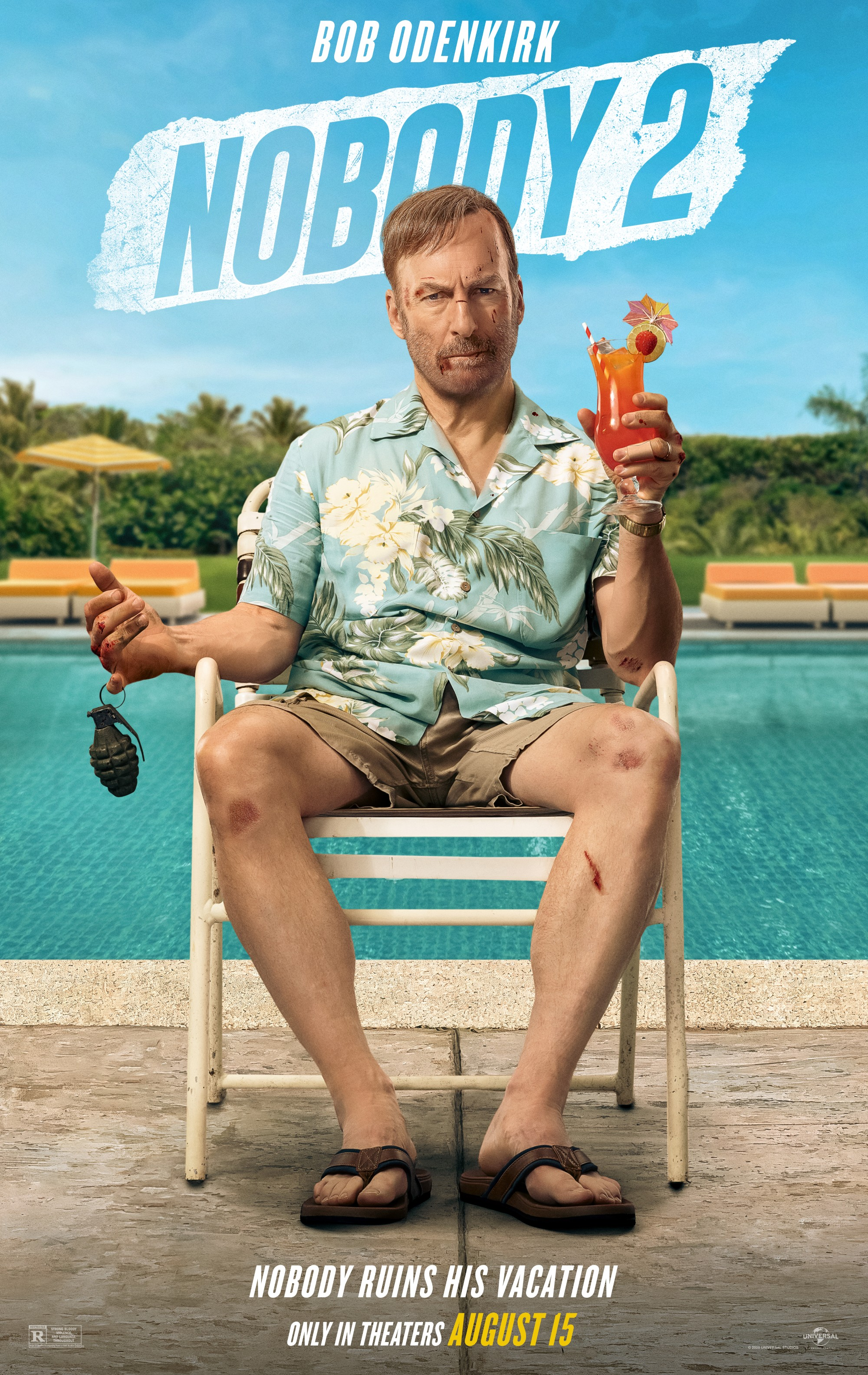
Nobody 2

Bob Odenkirk is back as Hutch Mansell in a sequel where the action is just as wild, but the script doesn’t pack the same punch. Odenkirk is both outrageously funny and gritty in the leading role, while Connie Nielsen gets even more to do as his wife. Christopher Lloyd again shines as Hutch’s father who gets even more opportunities to completely steal the screen, and effortlessly so. John Ortiz is also solid, but many supporting characters who serves as antagonistic forces don’t really have much to do, or at least their motivations don’t feel like a natural part of the story. Sharon Stone is very well-cast, but her lines are sometimes iffy and her screen time leaves more to be desired.

Nobody 2’s family vacation premise sets it apart from its predecessor, but it also lacks the thrills that those slow revelations had in the first film — none of which really have an impact here besides Hutch being really, really good at killing people. The conflict itself feels both low-stakes and never explained in a manner that’s clear, interesting, or original. That said, the action is still fun and the final act in particular offers an awesome and massive set piece. That said, compared to its predecessor, it leaves much to be desired narratively and thematically, while still working as harmless and bloody entertainment.

Materialists

Celine Song enlists big names and a larger budget for her second feature after the Earth-shattering Past Lives, but this feels like a Celine Song movie first and never compromises for a more mainstream rom-com approach. In fact, despite some great humorous moments and consistent wit from its characters, the movie hardly feels like a comedy, rather a deep and patient romantic drama. Dakota Johnson finds herself in another hard-hitting role among some of her best like Cha Cha Real Smooth and The Peanut Butter Falcon. Her journey is flawed yet always sympathetic. Chris Evans also gives one of his most heartfelt turns in a long time, with the part of John here fitting him like a glove. Pedro Pascal also has some irresistible scenes with Johnson and the dialogue Song gives him to work with really stands out.

The film dissects how modern superficial worldviews complicate the once-simple idea of love and relationships, while romance and love can sometimes not be more different. Song is an expert at rhythmic and sophisticated dialogue, and builds a quiet and meditative atmosphere with a lovely 35mm film look and Daniel Pemberton’s strong score. There may be more than a few films that tackle similar ideas of love and, well, materialism, but it’s only through Song’s words and style that Materialists works so intimately and profoundly.

The Phoenician Scheme

Wes Anderson always tries to out-Wes Anderson himself with every new movie — the framing devices within framing devices, the immense ensemble casts, the intricate and stunning production design and often complex, windy storylines and characters. Some times it pays off less than others, but The Phoenician Scheme is a delight from start to finish that aspires for big but also stays true to what it establishes itself to be. Benicio del Toro finds himself in his best film role since Sicario as a pitiful and apathetical tycoon, while Mia Threapleton gives a killer breakout performance as his maybe surrogate/maybe biological daughter. Their dynamic is filled with battles of wits and values, and Anderson again recruits a truly larger-than-life cast, all in kooky and entertaining fashion. Michael Cera, Riz Ahmed, Tom Hanks, Bryan Cranston, Richard Ayoade, and Scarlett Johansson are only a few standouts here, and they really do keep on coming. Anderson also aspires for great scope with the fictional settings the leads journey into, which continue to wow and surprise; the sheer imagination of the sets is always a highlight for the director, as are the beautiful shots here.

The details of the titular deal that Benicio del Toro’s character is after may be so complicated and brisked past that they’re difficult to understand until much later on, but the caper-like plot developments are so exciting, thanks to an energy the film figures out in its opening moments and doesn’t let go of. It’s also one of the filmmaker’s funniest films in a long time, with the laughs being nearly constant but also revealing things about the characters and world we’re watching. If anything falls short here, Anderson seems to love a good anticlimax — a sudden pivot away from the big climax for a quiter, more meditative conclusion. Though this has worked in his favor before, the problem is that he’s actually trying to go for a grand finale here, but can’t help and make it feel way less than what it should be. It’s got the globe-trotting adventurousness of The Grand Budapest Hotel and The French Dispatch, and the director’s imagination doesn’t hold back. It’s certainly a step up from his previous Asteroid City, the laughs and story continuing to escalate and the pace never hitting the brakes until the very end.

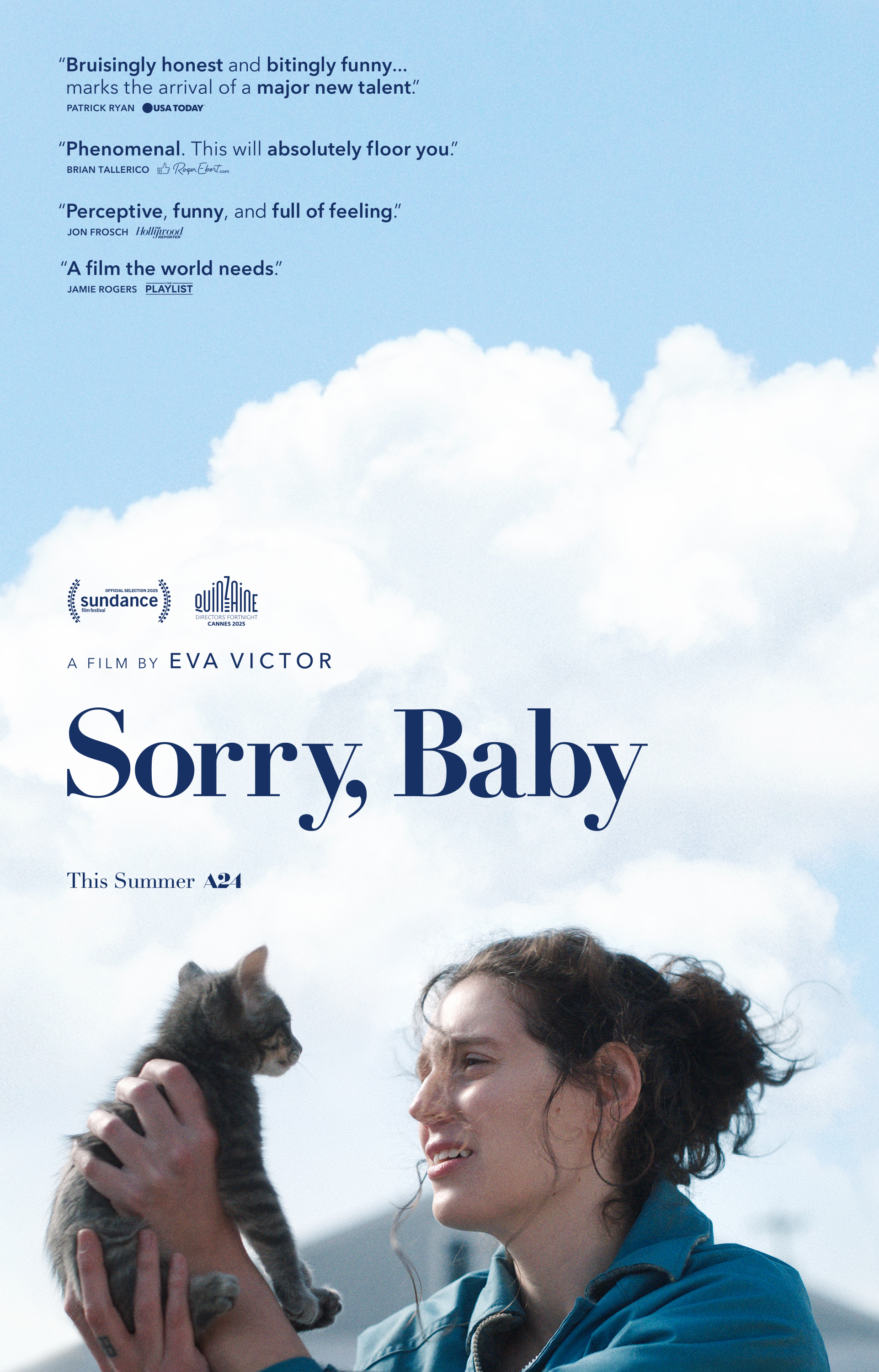
Sorry, Baby

Eva Victor’s revelatory debut film is raw, uncomfortable, and belly-laughing levels of funny. It provides a deeply personal look into a topic that’s far too real, and not only demands but earns the full attention and empathy of all watching.

Victor’s leading performance as Agnes feels real and pierces into your heart, while their charm and comedic timing are always outstanding. Naomi Ackie gives a sweet turn as Agnes’ best friend Lydie, while Lucas Hedges also shines here, as well as John Carroll Lynch in an unforgettable minor role. Victor’s direction and storytelling brilliantly unveil the truth about this film in the first act, while the script continues to surprise you. The humor is sometimes informed by the serious or the awkward. The laughs hit so hard you’ll feel like you’re on your toes — the moment you feel a line will probably be the funniest and most memorable in the movie, its topped moments later.

The film’s unflinching look at sexual violence and the culture around it also ties in to broad themes about time shaping one’s life and soul.  The film isn’t optimistic and loving despite the heavy subject matter, but because of its aftermath and the character’s journey to finding purpose again after experiencing something unspeakable. Perhaps by speaking about such things, as the film hints, hope can come through support and redemption. Sorry, Baby is one of the year’s essential watches with a magnificent story and perspective that resonate long after the credits roll.

Elio

Elio is an young boy living with his aunt, who’s obsessed with the extraterrestrial and making contact with him. One day, the lonely titular boy gets his wish and finds the fate of the galaxy in his hands.

Pixar’s newest animated film is incredibly easy for families to enjoy and even find meaningful connections to, though its far from the impactful experience we’re used to from the studio. Best of all, it focuses on acceptance, self-esteem, and finding your way through loneliness and feelings of not fitting in. Zoe Saldaña, Brad Garrett, and Jameela Jamil all give entertaining performances, and the look of many scenes are colorful and gorgeous — from diverse alien species to their suits and intricately designed spaceships.

Audiences may connect to Elio’s strive to be accepted by others, and at its core is a sweet relationship between him and his aunt that feels like the film’s true heart. However, despite some entertaining humor throughout, it takes until the third act for the story’s drive to really feel exciting at all. It’s probably not the best or most original film about its themes, but also has a whimsical charm, great visuals, and a look and feel that will definitely entertain more than just the youngsters, and give some strong material for positive discussion among families about acceptance.

Thunderbolts*

After being lured into a deadly trap by CIA director Valentina Allegra de Fontaine, a group of antiheroes form an unlikely team to bring de Fontaine and her destructive plan down.

Thunderbolts* is oozing with energy and a deep care for its characters, with a darker edge of corruption and death to its subjects. Contrary to this February’s Captain America: Brave New World, Thunderbolts* thrives by allowing its cast’s charisma to roam freely, led by the incredible Florence Pugh. This time around, Yelena is the film’s lead, and Pugh taps into the character’s core of depression and emptiness, including her tumultuous relationship with her father, former Soviet super soldier Red Guardian, played by the vivacious and hysterical David Harbour, longing for glory again. Wyatt Russell and Hannah John-Kamen are also utilized very well, while Sebastian Stan returns as Bucky, who leads many of the others through a similar emotional arc he’s learned his way through. Geraldine Viswanathan is also a standout as Mel, assistant to de Fontaine — played in such a juicy performance by Julia Louis-Dreyfus as a menacing figure who will stop at nothing to gain absolute power and avoid all consequences for it. Though Lewis Pullman’s performance doesn’t have the same loose charm we may have felt from him in Top Gun: Maverick and Lessons in Chemistry, he also well portrays Bob’s awkwardness and the darkness enveloping his character.

The best part about the film is how the characters interact as a team — their action and combat scenes are awesome, the way their differences interact through banter and humor is greatly entertaining, and the way they utilize their strengths to solve problems (albeit reluctantly) makes them unique. Some characters’ arcs could’ve used more closure, and the final act and climactic battle could’ve hit harder, and it’s not as stylistically irreverent as Guardians of the Galaxy or The Suicide Squad, but like those films, it’s about people who want anything but to be heroes learning to find redemption by embracing one another’s differences and company, and stepping up and do the right thing. It may not be one of the MCU’s most visionary installments, but also may prove to be one of their more rewatchable in the future, as its cast of misfits and contagious energy stand out. If these characters weren’t your favorite in the MCU or anything close, that may just change for good after Thunderbolts* — an extravagant action/comedy that may be short on some wildness or development in certain aspects, but is certainly big on the excitement and reward.

A Minecraft Movie

A Minecraft Movie may prove a treat for younger audiences and fans of the beloved game. It’s got charm, thanks to its main stars, particularly Jack Black. He gleefully gives his playful and extravagant energy to Steve, even throwing in his musical comedy talents. Jason Momoa entertains but his dialogue threatens to miss almost as much as it’ll make you laugh. Danielle Brooks is splendid as a very unexpected companion on this journey, and gives the runtime lots of heart. Emma Myers does a solid job playing an unlikely heroic character, whose storyline with her brother avoids some cliches while falling head first into others.

Though this is a Minecraft movie first, director Jared Hess’ love for misfits and outcasts is written all over the film. What brings the film down is the aesthetic, that fails to get you to suspend your disbelief strongly enough to overlook the unconvincing green screen and weirdly uncanny CGI of some of the Minecraft characters/species. The live-action parts carry the film well if you ignore some of the backdrops, but sometimes you’ll wish that the scenes inside the Overworld were completely animated. It also doesn’t help that the idea of an unlikely team of social outsiders from the real world trying to navigate a fantastical world they’ve been suddenly pulled into is nothing new. Even the Jumanji films, also starring Black, had much more to offer the formula.

Still, the film has just enough charm to delight children and families, embracing the essence of the game with a positive message about creativity. And Black proves that he’ll continue to entertain generations of viewers with his ability to let loose. It’s a film that embraces exactly what it is, even if when you think about the film or look too long at the visual details, the building blocks starts to fall apart.