Shazam! Fury of the Gods

Billy Batson and his foster siblings protect Philadelphia with the powers that give them the strength of the gods, but soon the daughters of Atlas arrive seeking revenge for the stealing of their family’s magic ages ago, and declare war on the Shazam family and the human world.

Shazam! remains one of the best films in DC’s current shared movie universe, and Fury of the Gods brings forward everything that worked about the first movie, while expanding on the family dynamic. It’s very entertaining to watch as all the siblings are now superpowered and how it affects their interactions and characters moving forward, as the siblings who weren’t Billy and Freddy were much more minor characters in the first film. The movie also retains the same sweet, heartwarming energy that makes the Shazam saga irreverent, touching and harmlessly entertaining. The action is more in line with Tom Holland’s Spider-Man films than something as world-ending and grim as Justice League — though sometimes the world as still at stake. Zachary Levi’s charisma and natural sense of humor shines again, though it’s way more interesting to see him on screen than Asher Angel. However, Billy is a formidable hero who’s selfless, kind, and even clumsy. However, Jack Dylan Grazer and Adam Brody shine equally as Freddy. Grace Caroline Culley also stands out as both the normal and superpowered Mary, as well as Rachel Zegler, who continues to take the world by storm after West Side Story. Though Helen Mirren is incredibly entertaining as a villain, Lucy Liu’s performance is occasionally eyebrow-raising and questionable.

The visual effects also have some moments that could have used polishing, including the creatures or large set pieces, but overall most of the sets fit the Sunday-cartoon-like vibe that Shazam has always been aiming for. Not to mention, the humor is easily as memorable as the first, though the themes aren’t so as much as Billy and Freddy’s bonding in the first movie. There’s also a few scenes with Djimon Honsou that are funny but the least interesting parts of the movie. However, Shazam! Fury of the Gods gives viewers everything they signed up for while making them laugh and smile at the screen.

Babylon

At only age 38 and with 4 major films, Damien Chazelle has solidified himself as one of our time’s most respected, beloved and exciting auteur filmmakers. His flare for grandeur and stories of epic and wondrous proportions shows once again in Babylon, even if the fact that it’s by far his most graphic movie may turn off many viewers, even within the first few minutes. As a matter of fact, there’s barely a moving story, the content is incredibly graphic, the character arcs are sometimes purposely incomplete for you to try and discover, and it doesn’t necessarily teach anything new about old Hollywood — yet something about Babylon is so transfixing and stunning that I was completely invited into the world Chazelle presented to me for 3 hours, and didn’t want it to end. The costumes and sets expertly bring you into the world of 1920s Hollywood glamour and cinema, but it’s the masterful cinematography that elevates the film into a stylistic marvel. The score by Justin Hurwitz is the best of the year, but that’s no surprise when his scores for Chazelle’s last three films were all life-changing, and this one is no exception. Hurwitz’s magnificent jazz themes and blends of instruments create a score that make an already breathtaking world a place you won’t want to leave, which perhaps explains the movie’s title.

Diego Calva is a breakthrough as the film’s lead, a party fixer that starts to work his way into the wonders of picture making. His eyes and spirit create a relatable sense of awe to the glamour he discovers and an undying empathy that sticks with the audience even when he seems to lose his way. Brad Pitt is also great as a movie star who’s devoted to his art, despite a messy home life, but fears losing his fame when silent films are no more, and talkies are suddenly the new big thing in the industry. The real scene-stealer, though, is the captivating Margot Robbie as Nellie LaRoy, an aspiring actress whose path to the spotlight is as messy as her potent need for attention, which Robbie conveys in the most lavish of ways. She delivers an Oscar-worthy performance as she creates a tremendous character that will help define her career for years to come, and will resonate even with those who didn’t love the rest of the film. The supporting cast also has their terrific moments, including but not limited to Jean Smart, Jovan Adepo, Li Jun Li, Katherine Waterson and Tobey Maguire.

Babylon‘s storytelling sometimes feels like a hangout movie in the way Once Upon a Time in Hollywood was, with extended scenes that build more to a mood than a plot point. It also feels like Damien Chazelle ripped a page out of Paul Thomas Anderson’s book, being a plot-driven character piece where an actual story with an objective, direction or basic structure still takes a back seat. Instead, the story is defined by the characters’ larger than life personalities and the outrageous decisions they make which may or may not play into the later scenes and are often what define their arc, rather than a clear backstory or revelation. My main issue with the film is the ending itself, which takes what could’ve been a more powerful moment and decides to spoon-feed the message to the audience in an incredibly baffling way, and while others may be checked out by its length and self-indulgence by then, the final minute was the only thing I really think didn’t work from a writing and editing perspective. Though it’s an understandably divisive movie for its graphic content, it is for better or worse, one of a kind, and though it isn’t as coherent, sensible or even logical as many viewers would want, it’s more than enough to invite you to discover and dig into the beautifully messy and gargantuan spectacle that is Babylon.

Glass Onion: A Knives Out Mystery

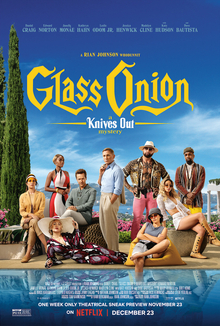
Famed detective Benoit Blanc travels to Greece, where tech billionaire Miles Bron has invited his friends for a getaway on his private island, but Blanc soon finds himself in the midst of another murder mystery he must solve.

After turning one of the most beloved films of the last few years into a whodunit franchise, Rian Johnson has delivered the rare movie that not only surpasses the original but elevates it and its entire genre. He also proves himself as a modern auteur, completely in control of his creative field and having built credibility and excitement based on his name alone. After reinventing the wheel when it comes to murder mysteries with Knives Out, he decides to reinvent the reinvention, with plot twists and dramatic irony where you’d least expect it — all without becoming unbelievable, overwhelming, or twisty for the sake of it. But credit must also be awarded to Daniel Craig, who, over these two films, has created a new fan favorite character who’s an absolute joy to have on screen, whether he’s actively solving the mystery or simply commenting on the absurdities he observes throughout the film. Speaking of which, is it possible to assemble an ensemble cast as talented and hysterical as in the first film? Well, the cast here rivals that in the original film and every performance is effortless. Janelle Monae proves herself a superstar in a performance too good to spoil, not to mention an extravagant performance from Kate Hudson as a celebrity model/influencer. Edward Norton does a great job as Bron, who’s a spoof of the eccentric billionaires we see today who can’t seem to stop feeding their egos and wallets such as Zuckerberg and Musk. But there really isn’t a weak link in the cast, whether it be Kathryn Hahn, Leslie Odom Jr., Jessica Henwick, Madelyn Cline, or Dave Bautista (the latter of which is absolutely perfect as a parody of today’s “alpha male” YouTubers such as Andrew Tate).

The movie’s themes about the oddities and shadiness of the top 1% and the toxic effects of wealth networks are anything but subtle, but Rian Johnson lets us laugh at some of the characters and the parallels to today’s pop culture, creating commentary that’s as strong as in the last film, but never annoying and best of all, entertaining to reflect on. The humor comes at you from all cast members and angles, whether it be visual, lines, or moments of performance that will make you laugh out loud. The scale expands from a winter-absorbed mansion in the last movie to a gorgeous luxurious island worth billions, while Nathan Johnson’s score is commanding and memorable. Best of all, the mystery keeps you guessing, feeding you information in the order you’d never expect and not letting go of your attention throughout the entire exuberant ride. Rian Johnson’s made a mystery as grand as it is goofy, as spectacular as it as silly, and as nail-bitingly intense as it is even more stylistically satisfying than the first film. Movies like Glass Onion: A Knives Out Mystery are what sequels and the cinematic experience are just right for, especially when the mystery has evolved into a meta high-stakes extravaganza, the cast is at the top of their game, and only a director like this one could’ve done it so right — who will likely shock and please us many more times again.

The Menu

A couple (Anya Taylor-Joy and Nicholas Hoult) travels to a coastal island to eat at an exclusive restaurant where the chef (Ralph Fiennes) has prepared a lavish menu for the affluent guests, with some shocking surprises.

The Menu is an original, tense, and hilarious time at the movies with Ralph Fiennes’ best work in years. Fiennes absolutely kills it as a man who’s controlling and intimidating yet vulnerable and easily provoked. Anya Taylor-Joy is commanding as possibly the only character you may find likable, but that’s completely intentional from the end of the script. All the other actors, like Nicholas Hoult, Hong Chau, Janet McTeer and John Leguizamo are all integral and sneak up on you with moments that are key to the film’s themes and attitudes. Mark Mylod’s stellar direction alludes to his time on Succession with the themes about the snobby and incredibly rich, caught in their pretentious attitudes that they shove onto everyone. Combined with the suspense and occasional bursts of violence, as well as the lavish production design and structure of the high-end kitchen that parodies itself more and more, this movie has one of the most hysterical screenplays of the year. The style feels modern yet sophisticated, irreverent yet deep, and has something for those looking for an eerie and fresh thriller or a sophisticated dark comedy-drama with something to say about the world of art, as well as artists and critics who take themselves way too damn seriously — which gives it a meta angle that boosts the fun even more, and ultimately makes this one of the year’s best moviegoing experiences.

Ticket to Paradise

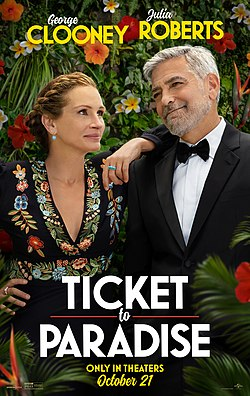
Two divorced parents, David and Georgia Cotton, travel to Bali after learning that their daughter, Lily, is planning to marry a man named Gede, whom she has just met. They decide to work together to sabotage the wedding to prevent Lily from making the same mistake they made twenty-five years ago.

Ticket to Paradise is a welcome reunion for two legendary stars, George Clooney and Julia Roberts, years after they worked on the Ocean’s films, Confessions of a Dangerous Mind, and Money Monster together. They elevate a film that occasionally threatens to fall into generic territory by breathing fun and charm into the film, even when they’re ripping each other to bits with insults. Clooney’s performance is certainly the glue here, as he embraces his comedic chops and his character often pokes fun at himself while being grumpy and over-the-top. Speaking of reunions, fans of Booksmart will love to see Kaitlyn Dever and Billie Lourd sharing the screen again — Dever is great as their daughter Lily, and Billie Lourd is a scene-stealer as her best friend Wren, a character that the plot maybe could’ve done without but when Lourd is so entertaining, the movie suddenly feels infinitely more upbeat with her in it.

The movie can sometimes fall into cheesy territory especially with some obviously scripted lines and an exaggerated ending, as well as some unclear themes about who is more right about what, but it never sinks the film’s heart and sweetness. It’s a film that means to charm and show the nature of flawed parents getting over their own immaturities while loving their daughter, and when the parents are played by two of the most charismatic people in the world, you’ve got yourself a winning film. Though it’s nothing you’ll be urged to watch more than once, or even the best comedy out right now, given how much more memorable and hysterical Bros is, Ticket to Paradise is certainly a harmless and heartfelt good time, especially for today’s rom-com standards, with laughs, vacation-y settings, and charming performances.

Bros

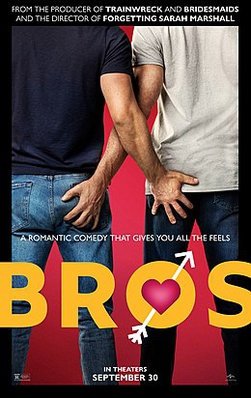
Bobby Lieber (Billy Eichner), a podcast host and museum curator creating the world’s first LGBTQ museum, attempts a relationship with lawyer Aaron — but they must overcome their commitment problems first.

Not only is it celebratory for a major studio to release a gay rom-com, but it’s a breath of fresh air to see a movie about the LGBTQ community that isn’t gloomy or traumatizing but rather entertaining and optimistic. Through through the museum Lieber is creating, the movie is very much about embracing the queer community and undoing the centuries of history that’s been erased. Though Bros rejects the idea that gay and straight relationships are exactly the same by having its lead character claim that “Love is not love!”, as gay male relationships have their own nuances and issues, the romance will be gripping for all audience. But just as important as its representation is the fact that it’s fun, uplifting and hysterical.

Billy Eichner is a fantastic leading man who’s loving yet stubborn nature comes off as warm as it does occasionally frustrating to see him stumble and figure out his way. Eichner, who also co-wrote the movie with director Nicholas Stoller, gives even the side characters their place to shine and make the audience laugh. There’s some incredibly funny moments that will stick with you and come to mind whenever you think of this movie, and lines that are too good to spoil but are worth the laughs in a theater with an audience. Luke Macfarlane is also a breakout star and is endearing as the more “macho” gay man as opposed to Eichner’s “flamboyant”-labeled character, but as the movie mentions, the queer community is not a monolith and the film embraces lesbian, gay. bisexual, and trans characters, including those of color, in its supporting cast. Though the plot occasionally lacks direction, and it may be a few minutes too long, it’s the dialogue and humor that keeps the audience engaged, and the romance that more than gets the audience to root for the leads that grounds the whole film.

As a comedy, Bros will give you stomach-inducing laughs, and as a romance, it’s more than sweet. It’s the positive celebration of diversity that audiences, both queer and straight, will feel uplifted by, and enjoy the sweetness, silliness, and raunchiness the film has to offer.

Nope

OJ and Emerald Haywood are siblings who own a ranch in a lonely gulch of inland California, where they train and handle horses for movie and TV productions. Soon, they bear witness to an uncanny and chilling discovery. 

To call Jordan Peele a unique filmmaker of our time would be an understatement — he’s blended genres and used them to incorporate thoughtful social commentary into the most mainstream popcorn entertainment, all while giving audiences films that can satisfy, challenge, and entertain. Nope is no different. It’s a science fiction-horror-thriller-comedy with a modern infusion of likable characters and borderline surrealist world-building, and Peele’s filmmaking is at the level of the most respected auteurs like Stanley Kubrick. It’s got moments of shock, laughter, brutality, and terrifying humanity that adds so much astonishment to a film that starts with what could’ve been an overused premise in anyone’s else hands. Daniel Kaluuya has evolved into a modern film star of his generation — though he’s starred in Black Panther and won an Oscar for Judas and the Black Messiah, it was Peele’s debut Get Out that guaranteed his stardom. He’s a master at being funny but showing a character confront with real and inner “demons” in a silent way but always being a fun character too. Keke Palmer has a contagious, bubbly energy and I’m sure the entire cast and crew had plenty of laughs due to her fantastic delivery of her lines that often sneaks up on you in hysterical ways. But she’s also a genuine hero, not to mention Steven Yeun and Brandon Perea who are scene stealers.

Peele’s style always challenges genre, structure, and how the audience expects to react to things. His stylistic energy in Nope invokes eyes staring in awe, jaws dropping, and mouths smiling all at once. Due to this, Nope transcends accessibility for fans of horror, and is a top-notch film for all fans of big-screen spectacle, because it never settles for just being a horror movie. In it’s own way, Nope is a piece of art, that’s not meant to give you easy answers or leave you comfortable. Like Peele’s last movie Us, there’s so much to debunk as the thematic elements often drive the filmmaking in his movies. This one addresses many things, but among it, humanity’s flocking to images chaos and danger, and our obsession with getting as close to death and trauma as we can while wanting to arrogantly cheat the effects they may have on us, should our endeavors to harness danger go wrong. The movie is also a tribute to filmmakers and crew members in positions we don’t often acknowledge, and the achievements of black contributions to cinema that aren’t always celebrated. In a way, Peele uses this movie to celebrate the invention of cinema but also warn about our roles as audience members and monetizers of content that’s both real and adapted from truth. With it, he creates the most daring and awe-inspiring summer blockbuster possible that I’m sure will inspire many to create and challenge the world of films the way he has.

Bullet Train

Assassin Ladybug finds himself on a bullet train from Tokyo to Kyoto in order to grab a briefcase of money, but the task reveals itself not so simple as Ladybug discovers he’s not the only assassin on the train looking for the briefcase.

Bullet Train is everything I’ve wanted from an original action movie for a long time — bold, unpredictable, brutal, and irreverent. David Leitch colors the titular train with a lively style and makes the action unhinged and genuinely thrilling. Brad Pitt is no less an action badass than in the days of Fight Club, Troy and Mr. & Mrs. Smith. He gives the character a lot of humor in that he’s an assassin trying to find inner peace and avoid violence — guess how well that works out for him. But it’s hard to call a single character weak or overshadowed by Pitt. Joey King delivers her best ever turn as a deceitful young assassin, and Aaron Taylor-Johnson gives the film some excellent quips. His screen time with Brian Tyree Henry, who’s the film’s highlight, is the most heartfelt aspect of a film in which hitmen are all trying to kill each other. Henry’s talent radiates a special hysterical charm and will make you laugh and smile the most out of all the characters, not to mention he’s one of the most exciting actors these days. Even Bad Bunny, in his acting debut, does a solid job, and Zazie Beetz kills it in a minor role, and in my opinion the most underutilized performer of the film, considering she’s one of the best actresses in the film’s cast. Not to mention a lot of familiar faces that I was surprised were even in the movie, so stay away from the cast list before you see this one.

Bullet Train‘s script feels reminiscent of Guy Ritchie’s most uncompromising films, like Snatch, RocknRolla and The Gentlemen, in which you have to choose your alliances among a cast of criminal characters and anyone could bite the dust. Not to mention the script never takes itself seriously for a second, incorporating flashbacks, a vibrant soundtrack, and unexpected laugh-out-loud humor. The editing is where the film both shines and sometimes falters, as there are a few moments of unnecessarily aggressive cuts during scenes where there’s either action that could’ve used more wide shots, or explanations for events you’ve already seen play out. There’s also an exposition monologue at the end that’s easily the low point of the film and some character placements that don’t flow as smoothly in the third act or have no reason to be there. But in the end, only a filmmaker as bold as Leitch could get away with making something so much fresher than any other $100 million action movie you’ll see on the big screen today that’s not a sequel. Bullet Train has so much going twistiness, vulgarity and blood going for it, yet it’s the cheeky wit, exuberant performances, and relentless style that makes this ride such a welcome one.

The Unbearable Weight of Massive Talent

Nicolas Cage, down on his luck at a creative, financial and personal crossroads, attends a superfan’s birthday party in Spain for $1 million, but must soon become a real life action hero when he finds himself in real danger and conflict.

The Unbearable Weight of Massive Talent is refreshingly meta about the movie industries and its stars — a sort of hybrid between Adaptation and Lethal Weapon. It’s a tribute to the magic of movies and movie stars, and the diversity of Nicolas Cage’s films, including the absurdity of some of his roles and personas, as well as the large fan following he’s retained throughout the years. The movie has some direct references to his various roles, from his Oscar-caliber roles in Leaving Las Vegas and Adaptation to his action blockbuster hits such as Face/Off, The Rock and Con Air, and his more recent indie ventures like Mandy. But they also namedrop Moonstruck, National Treasure, Gone in 60 Seconds, and even The Croods: A New Age, I mean what more could you ask for in a movie about Nic Cage? Within all of this, it’s both a meta commentary to the kinds of scripts and films audiences like — as Cage has been in some of every type — and a laugh-out-loud buddy comedy between Cage and the wonderful Pedro Pascal. Though Cage embraces and pokes fun at himself as, well, himself, Pascal plays Cage’s biggest fan and new best friend who may or may not be a dangerous arms dealer. Pascal’s line delivery, exaggeration and lovability makes him an undeniable delight to watch. So it has something for people looking for an intricate script about scripts, a tribute to an iconic actor, and an action-packed laugh-out-loud comedy. Not to mention there’s some heart involved as the movie tries to parody the idea of a “mature movie about people and relationships” while genuinely getting you interested in the main two friends.

Though it helps to have watched some of Cage’s most iconic movies (on a personal note, my favorites of his are Face/Off, Adaptation and Raising Arizona), it’s also on the stronger end of crowd-pleasing action comedies and has a little something for everyone, definitely living up to the Massive Talent part of its title.

The Lost City

A reclusive romance novelist on a book tour with her cover model gets swept up in a kidnapping attempt that lands them both in a cutthroat jungle adventure.

Sandra Bullock and Channing Tatum make a fun pair in this romantic action-adventure comedy that had me laughing out loud. The leads have great chemistry and they both get to exercise their comedic skills to this wide-appealing genre film. Da’Vine Joy Randolph also steals the show as Bullock’s best friend and Brad Pitt makes an outstandingly thrilling appearance. Though the story is very similar to other recent films like Jungle Cruise and Uncharted, the silly, almost self-aware touch is what makes it a delightful, harmless time. It’s easy to tell where the ride is going, but it’s also very tempting to go along with the ride due to Bullock and Tatum’s chemistry, enough to go to the theater and enjoy with others.