Roofman

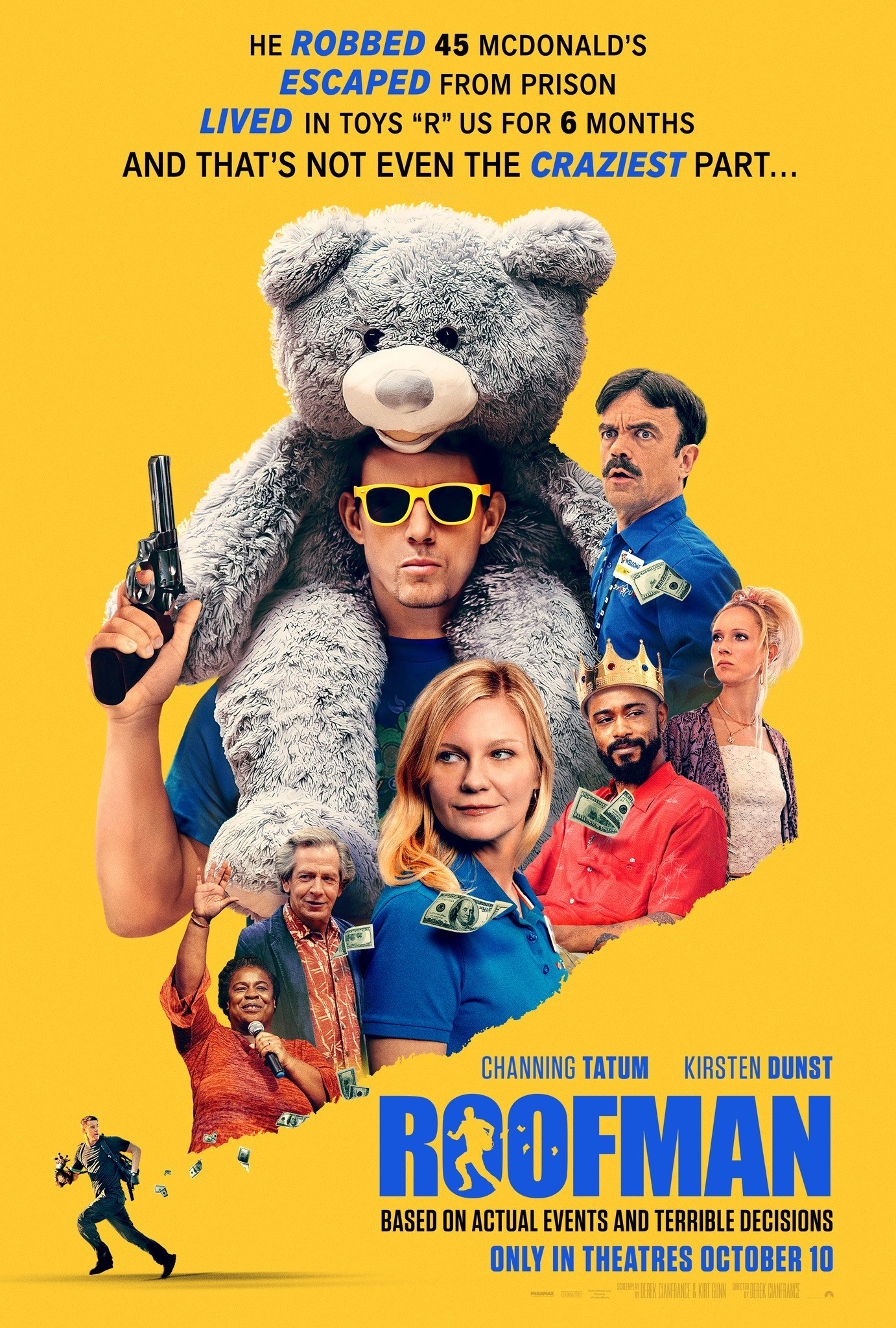
With Roofman, a true story that’s too crazy to believe based on the logline alone, Derek Cianfrance leaves meditative tear-jerker territory to tackle an unbelievable story that’s outrageous only conceptually, but still executed with patience — and a lot of charisma from its actors. Channing Tatum plays real-life robber Jeffrey Manchester with a deeply terrible set of decision-making skills. Tatum is physically comedic yet also gives the role more depth than many of his other characters in the tonally lighter films we’re used to from him lately. That said, despite the film’s awareness of the craziness of his actions, it also stops to reflect on the consequences of those actions on others and his own sense of acceptance within the new life he’s adapted into. Kirsten Dunst is also very layered in her performance and shares great chemistry with Tatum, and Peter Dinklage is a scene-stealing highlight, too.

Roofman is an entertaining time throughout that accomplishes exactly the mission it sets out to do while wisely refraining from becoming an all-out comedy and letting us sit with the characters and their circumstances. Best of all, it may also make you want to research more about the real story behind the movie — and wish for more great leading roles for Tatum like it.

A Big Bold Beautiful Journey

Strangers David and Sarah meet at a wedding and find themselves embarking on a surreal journey on the way home that combines the abstract with the personal, and the past with the present.

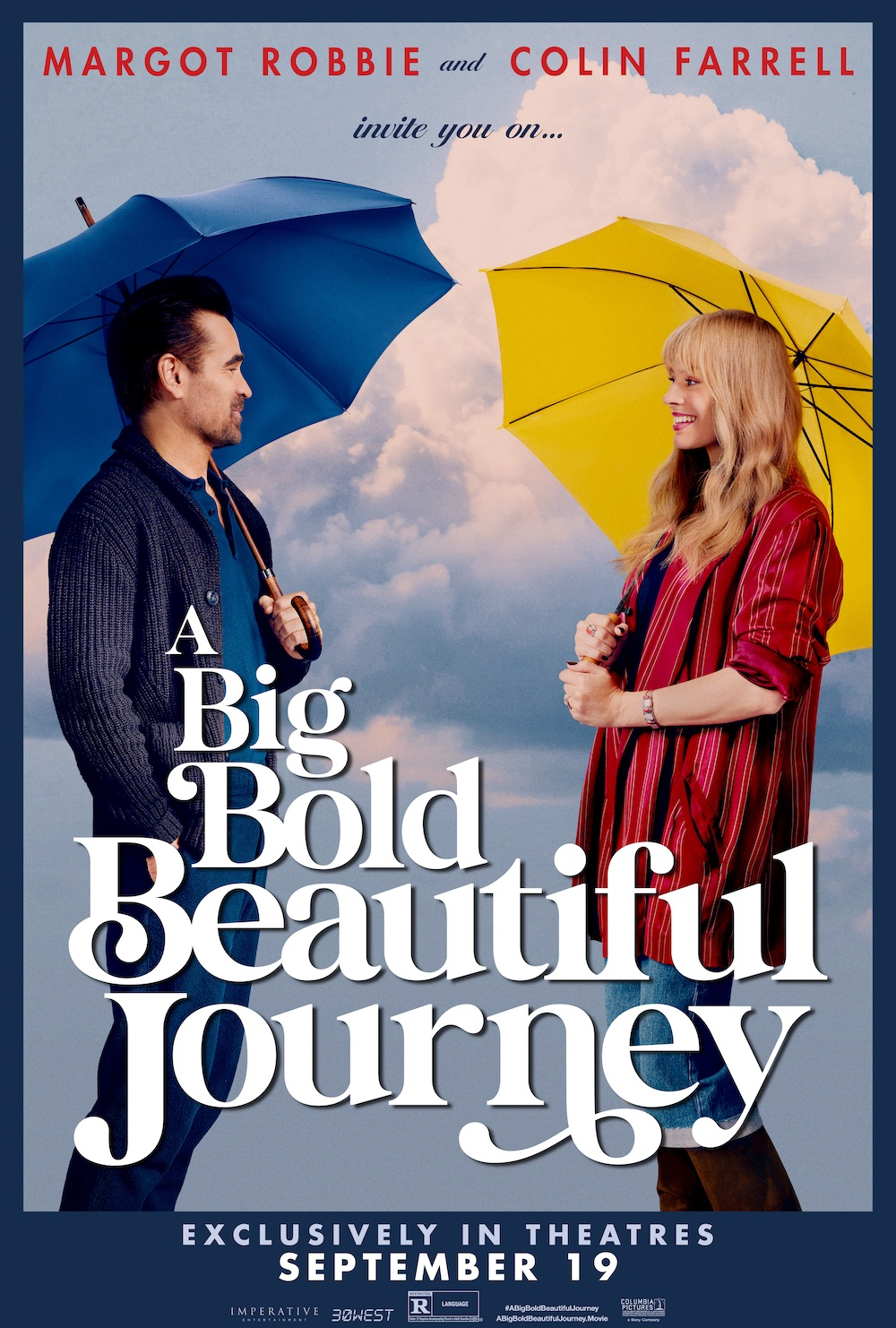
Kogonada is a brilliant filmmaker who knows how to unlock the human soul to his audiences with a patient and tender approach. A Big Bold Beautiful Journey isn’t lacking in vision, but in finding a cohesive and meaningful whole within its story. Colin Farrell and Margot Robbie are cast well together in an almost Eternal Sunshine-like odyssey, but Robbie’s character still feels distant as we still know too little about her by the end. Kogonada’s wondrous imagery gives a sense of curiosity and whimsicality, from actions, objects, and colors that stand out in the frame to a hilarious supporting character who’s also a car GPS. Some scenes entertain as the characters look back at regret, loss, and their own lack of self-confidence in creative ways, but it only makes much sense for about half an hour, until the intrigue loses steam and the dialogue in which the characters discuss the film’s themes begins to feel somewhat hollow. As a romance, the film also falls flat, not by looking back at the lead characters’ mistakes in their past relationships, but when a romance between the two of them then comes way too quickly without feeling earned.

A Big Bold Beautiful Journey digs deep into ideas such as confidence, fear, commitment, and remorse, in ways that feel emotionally earnest yet never come together to say something big, bold, and beautiful, like the title says. It’s arguably worth watching for the ambition alone, but also a shame to thing of how much better it could’ve been in the hands of this director and two magnificent stars.

The Smashing Machine

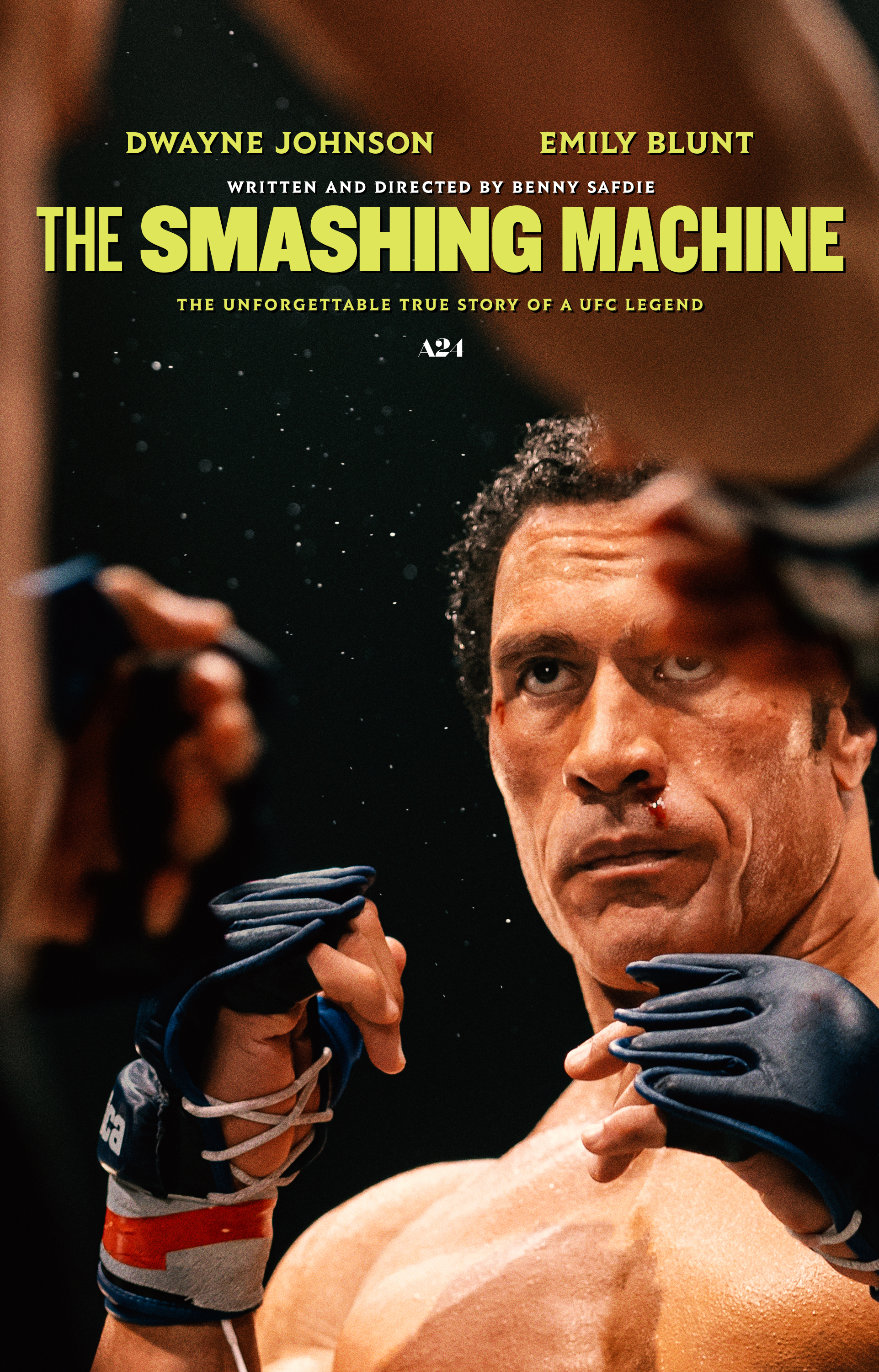
Benny Safdie and Dwayne Johnson make for the most unlikely but welcome director-actor pairing of the year, and the latter gives a performance that not only transforms him on screen, but his image for audiences. The massive movie star persona we’re used to from him completely disappears and Johnson becomes one with Mark Kerr, the MMA fighter he plays in the film. Kerr is incredibly ferocious and determined, but sees losing as a non-option and can’t quite cope with the idea of it, even when it’s bound to happen for all athletes. Emily Blunt is also phenomenal as Dawn, Kerr’s girlfriend, matching his anger and desire to be heard in many great scenes.

The Smashing Machine, thanks to Safdie’s brilliant directions, captures a feel beyond that of a three-act screenplay with actors reading dialogue, but rather feels like you’re merely a fly on the wall inhabiting and moving through this space with the characters as you get to know them deeply and intimately. One of the beautiful things the film captures is the community MMA builds, with players training together and bonding as friends who feel like family to one another, even when there’s a chance they may face each other in the ring. It also has wrestling scenes that put many other films to shame, that are captivating even when the camera is hardly filming from inside the ring. It’s a movie so gripping you won’t realize how quick the runtime has flown by, winding up a lesser known and scale but still strong success story that’s expertly put together for an exhilarating 2 hours that demand your full attention.

One Battle After Another

After a ruthless enemy resurfaces after sixteen years, a former revolutionary must come out of hiding to protect his daughter from a terrifying power coming after them.

Paul Thomas Anderson, already one of the most sweeping and daring filmmaker of the last few decades, is not only at his most ambitious in scope here. With One Battle After Another, the director challenges himself and his audiences into discomfort and nail-biting suspense, while transcending and recontextualizing his body of work. His direction is not only at its most cinematic and maximalist, but one of his most thematically profound.

Leonardo DiCaprio shines as a man who is task-oriented and protective yet fragile in his sense of self, portraying a character who’s funny in his messiness as he is loud and dangerous if a nervous wreck. Sean Penn is vicious and terrifying, giving his best performance in decades that could even get him another Oscar, and a villain that will go down as one of the all-time greats. The ensemble cast all deserve their flowers in their own right and offer the film lots of strength. Chase Infiniti is fantastic as DiCaprio’s daughter who gives much strength to every scene she’s in, and her scenes are riveting. Teyana Taylor leaves such an impression with a tremendous performance that gives weight and immense depth to the entire film, even when she’s not on screen. Benicio del Toro shines in a lovable and entertaining performance that steals the screen while letting other performances be “bigger” at the same time, and Regina Hall is also excellent.

There isn’t one element to Anderson’s approach that turns One Battle After Another into a masterpiece; it’s the whole the parts create. The gorgeous cinematography, Jonny Greenwood’s booming score, the swift pace and dark tone, and the magnificent sound design create the unpredictability and transfixing nature of the film you’re in. It’s the most shockingly and horrifically relevant film to today’s America I can remember, with imagery mirroring current power dynamics. The imagery is so visceral and mirrors real-life conflict in a way that screams like a warning, but one for a reality that’s already begun. In the world of One Battle After Another, each person has convinced themselves of an enemy or an other, and that violence is a justified means to an end that signifies a greater good. Nobody in this film becomes a true hero, there are simply people with worse beliefs and who have codes and are willing to commit deeds that are less acceptable to our moral standards. There are many moments that stand out in One Battle After Another that invoke suspense and epic magnitude, but that feeling is felt in every moment and frame. Even for a legendary director of PTA’s rapport, One Battle After Another is a breathtaking experience that’s among one of the best films of the last ten years, and one of Paul Thomas Anderson’s most visionary and unforgettable movies.

The Roses

Architect Theo Rose and his wife, chef Ivy Rose, live a seemingly perfect life with their two children, until buried resentments start to surface and threaten to destroy the marriage and lives they’ve worked so hard to build.

An amusing update of The War of the Roses, this film retains a similar basic premise but takes a much humbler, less slapstick tone to feel distinct from that previous film which famously saw Michael Douglas and Kathleen Turner butting heads as the titular couple as their marriage hideously crashed and burned. Here, Benedict Cumberbatch and Olivia Colman are the “perfect” pair who make the film worth watching. Cumberbatch shines as a man struggling to find steam and purpose after losing it all professionally, while Colman’s performance as relatively restrained compared to some of her others, but still kills it while matching his smugness. The film has its good laughs, and does justice to some of its great supporting players including Andy Samberg and Kate McKinnon. The first hour tends to drag in the writing, but once it gets to the main point over halfway in, it gets fun. The film works best when highlighting the rockiness in the seemingly best of marriages, and when allowing its two leads to trade insults and threats and try to bring one another down with the sinking ship.

Caught Stealing

Darren Aronofsky goes for a tone that’s a lot more entertaining and less devastating or frightening than his last few films, though it’s still very violent, unpredictably so. Austin Butler gives a fantastic performance as a bartender whose dreams of baseball glory were crushed after a tragedy, and now finds himself in the crosshairs of a dangerous plot involving numerous crime leaders. Butler’s character is serious but not quite strong, driven more by his fear of harm coming his way. His character is flawed, vulnerable, and plagued by his past, but doesn’t have some violent dark side — he’s simply caught in the crosshairs of a plot involving his neighbor. Regina King also shines greatly, and Zoe Kravitz shares wonderful chemistry with Butler.

The best part of Caught Stealing is how unpredictable it is. The story itself is so fresh that there isn’t a way to guess quite where it’s going or will end up. The violence is very dark but also provides for moments of humor, even when the shootouts and car chases result in bloody carnage. The cinematography feels vintage without overly indulging in 90s nostalgia, and makes for both bigger and more intimate moments, and two characters who play a principal part in the later act are scene-stealing. At the end of the day, though, the film works because we’re rooting for Butler’s character so much against frightening odds. Aronosky treats his characters and world here with a sense of fun and wit, while Butler proves himself as a true movie star in an original and thrilling film that’s a welcome change of pace for the director but still at the top of his game.

Materialists

Celine Song enlists big names and a larger budget for her second feature after the Earth-shattering Past Lives, but this feels like a Celine Song movie first and never compromises for a more mainstream rom-com approach. In fact, despite some great humorous moments and consistent wit from its characters, the movie hardly feels like a comedy, rather a deep and patient romantic drama. Dakota Johnson finds herself in another hard-hitting role among some of her best like Cha Cha Real Smooth and The Peanut Butter Falcon. Her journey is flawed yet always sympathetic. Chris Evans also gives one of his most heartfelt turns in a long time, with the part of John here fitting him like a glove. Pedro Pascal also has some irresistible scenes with Johnson and the dialogue Song gives him to work with really stands out.

The film dissects how modern superficial worldviews complicate the once-simple idea of love and relationships, while romance and love can sometimes not be more different. Song is an expert at rhythmic and sophisticated dialogue, and builds a quiet and meditative atmosphere with a lovely 35mm film look and Daniel Pemberton’s strong score. There may be more than a few films that tackle similar ideas of love and, well, materialism, but it’s only through Song’s words and style that Materialists works so intimately and profoundly.

Sorry, Baby

Eva Victor’s revelatory debut film is raw, uncomfortable, and belly-laughing levels of funny. It provides a deeply personal look into a topic that’s far too real, and not only demands but earns the full attention and empathy of all watching.

Victor’s leading performance as Agnes feels real and pierces into your heart, while their charm and comedic timing are always outstanding. Naomi Ackie gives a sweet turn as Agnes’ best friend Lydie, while Lucas Hedges also shines here, as well as John Carroll Lynch in an unforgettable minor role. Victor’s direction and storytelling brilliantly unveil the truth about this film in the first act, while the script continues to surprise you. The humor is sometimes informed by the serious or the awkward. The laughs hit so hard you’ll feel like you’re on your toes — the moment you feel a line will probably be the funniest and most memorable in the movie, its topped moments later.

The film’s unflinching look at sexual violence and the culture around it also ties in to broad themes about time shaping one’s life and soul.  The film isn’t optimistic and loving despite the heavy subject matter, but because of its aftermath and the character’s journey to finding purpose again after experiencing something unspeakable. Perhaps by speaking about such things, as the film hints, hope can come through support and redemption. Sorry, Baby is one of the year’s essential watches with a magnificent story and perspective that resonate long after the credits roll.

The Life of Chuck

Imagine peeling back the complex layers of Mike Flanagan’s thematic tissue for a uniquely human tale, devoid of all of his beloved horror and thriller conventions. That seems to be The Life of Chuck’s concern; it’s a cleverly structured film that has the soul of his past works intact, while working more as a psychological drama that has a beautiful wave of positivity rising above some of its bleakness and tragedy. It’s by far his most hopeful work, balancing a great ensemble cast that includes Tom Hiddleston, Chiwetel Ejiofor, Karen Gillan, Mark Hamill, and nearly all of Flanagan’s other regular actors.

The film is divided into three acts, each of which creates an intriguing vignette on its own while brilliantly complimenting the full story as a whole. It finds ways to surprise you with its reflections on human connection — to others and the world — and creating one’s own joy. Each of the three acts recontextualize one another, and it leaves you with poignance while presenting lots of heart. Moments that Flanagan usually plants as a setup for horror can often become bittersweet here but also rather empower and charm. There’s hope, melancholy, sweetness, humor, and dread, yet it stays distinct from the director’s other works in its emotional effectiveness while still remaining something that can please lots of fans of his and Stephen King’s works and adaptations.

The Alto Knights

Two of New York City’s most notorious organized crime bosses vie for control of the city’s streets. Once best friends, petty jealousies and a series of betrayals set them on a deadly collision course.

Robert De Niro playing an infamous mobster is nothing new. But De Niro playing TWO mobsters? Throw in legendary director Barry Levinson of Bugsy, Rain Man, and Good Morning, Vietnam, now that’s something worth writing home about, right? Unfortunately, The Alto Knights is anything but; a film with maybe some potential on set that was completely butchered in the editing room. De Niro’s dual performance is supposed to fascinate the audience but instead distracts. Frank Costello and Vito Genovese are not presented in the film as being two sides of the same coin, as were the mobster twin brothers Kray, played by Tom Hardy in Legend. In this film, the two mobsters are depicted as not just of different families and mannerisms but of different ages, experiences, and motivations. When De Niro finally shares the screen with himself, it’s impossible to buy these disparities as the script depicts them, rather we buy them more like equals under different heaps of makeup, which was not the intention. As Costello, De Niro is giving something between a less soulful version of his turn in The Irishman, a less extravagant version of his turn in The Untouchables, and a less funny version of his turn in Analyze This. He’s interesting as Genovese, but casting another actor to oppose him would’ve worked better to show that one of these gangsters is actually much more frightening than the other.

The film recycles tired tropes of past popular mob films, and as I’ve alluded to here, many of them already star the great De Niro. Though some scenes are at least mediocre in their execution, the editing is horrendous and makes some scenes unwatchable. The film insists on blasting through most scenes like a documentary montage rather than letting scenes breathe and feel like a thrilling drama. The constant narration and barrages of exposition are condescending to its audience of a normally intelligent genre, but insists on feeding us information we could’ve learned through context clues within scenes. The poor dialogue can’t be salvaged by lacking performances from Debra Messing and Cosmo Jarvis, the latter of whose promising transformation never quite gets to shine. Moreover, there never feels like an escalation of tension or events when there feels like we should be building towards something, rather a lack of setup that also leads to a lack of reward. The Alto Knights starts on a bad foot, and never even hints at a chance to redeem itself. Even De Niro and crime film fans need not waste their time, in theaters or at home.