A cranky history teacher at a remote prep school is forced to remain on campus over the holidays with a troubled student who has no place to go.
Directed by Alexander Payne, who won Oscars for writing Sideways and The Descendants, The Holdovers is destined to be an instant classic. It’s my new favorite Payne movie, and shows Paul Giamatti as an expert actor in both the comedic and dramatic fronts, yet a very different performance from his Sideways role. He plays a resentful yet timid and lonesome soul who finds an unexpected companion over the Christmas break. Da’Vine Joy Randolph should be a frontrunner to get nominated for Best Supporting Actress as a woman dealing with unthinkable grief but still attempting to be a voice of warmth and reason for those around here. Dominic Sessa delivers a sensational and heartbreaking and breakout performance as a savage teenager devoid of his parents’ love, who is the center of the film along with Giamatti’s character. Payne’s direction is his most magnificent, delivering the 1970s sets and soundtrack with a feeling of grandiose. He digs deep into these broken misfits who have lovable souls underneath their pain, characters we’d often be quick to judge but soon would stand up through thick and thin as audience members. It has something for everyone, whether you want to laugh and feel connected, or a little poignant emotion too. Comedy and drama fans, this is one of the best of the year, and a highlight for both Payne and Giamatti’s careers as artists.
Golda focuses on Israel’s Prime Minister Golda Meir as she faces internal and political pressures during the Yom Kippur War, as she fights for her dignity and the existence of the state of Israel.
Helen Mirren shows up as she always does and disappears into the role of Golda Meir in this biopic, elevating what would’ve been a very slow, by-the-numbers historical film otherwise. Besides some amazing make-up work on her, Mirren emulates the spirit of a fighter, who was balancing personal health and guilt struggles with the weight of making decisions that could determine the fate of her reputation and her country’s fragile existence forever. She captures Meir’s cocky but patient, empathetic, and demanding spirit very vividly. Camille Cottin also does a good job as Meir’s personal assistant who becomes family to her, but unfortunately, she’s the only member of the supporting cast who feels interesting or soulful, though Liev Schreiber has a solid scene that he shares with Mirren.
Though Mirren’s performance carries the film, it also struggles with its pace, as some of the decision-making scenes feel repetitive, and even with its 100-minute runtime, it could’ve been more engaging. But it’s also a huge step up from Hollywood’s last big take on Israeli history, 2018’s 7 Days in Entebbe, which was a disaster. Though Golda isn’t that much more memorable or a necessary theater watch, the outstanding lead performance makes it a much easier watch and I’d even argue it’s a great gateway into Israeli history, and thematically strong about people making sacrifices and battling for Israel’s right to exist as a sovereign state, while being respectful to the soldiers and their loved ones involved in the Yom Kippur War.
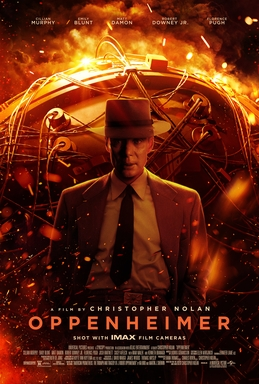
Christopher Nolan’s new film tackles the story of American scientist J. Robert Oppenheimer and his role in the development of the atomic bomb as part of the top-secret Manhattan Project during World War II. Aside from being the most immersive and devoted filmmaker of our time to the cinematic experience, Nolan is known for often trying to top himself with his ever-growing ambition, style and scale. Oppenheimer is his equivalent to Lawrence of Arabia or Amadeus, a three-hour historical epic that shifts time periods, perspectives, and color styles consistently. The cinematography is absolutely stunning, with the practical sets and effects sticking out, and the creative choices during the explosion scenes managing to awe and surprise. Ludwig Goransson’s arresting score may have topped even his work for the Black Panther films and Tenet, and the intricate editing is commendable. But one thing Nolan should also be appreciated for here is his writing, that packs a level of sophistication about history, human nature, science, and what it’s like to be a genius who may have the ability to unlock horrific powers. It’s a film that focuses on the new era the atomic bomb marked for the world, because of the destruction such immense power and its knowledge could cause in the hands and ego of mankind in power. Will such an invention cause scorched earth, or the end of the earth?
Cillian Murphy gives a performance that may end up defining his image as a celebrity and actor. The transformation is unreal and his eyes give so much to Oppenheimer’s mannerisms and attitudes towards the scenery. The film has an Avengers-sized supporting cast of named actors, some even being Oscar winners who only show up for a scene or two. Among the standouts are Matt Damon, Emily Blunt, Florence Pugh, Josh Hartnett, Jason Clarke, Jack Quaid, and Benny Safdie — and some A-listers who aren’t even in the trailer so I won’t reveal them in case you don’t already know — but Robert Downey Jr. gives a career standout of a turn and really manages to own all his scenes while giving sides of him we hadn’t seen before. Though there is an incredible amount of story and dialogue that’s given to you at a quick pace, and it feels like this for the whole 3 hours, I also respect that the film sees its audience as intelligent and eager to learn such information. It has something for buffs of history, Nolan, or simply visual grandeur. It’s Nolan’s most stylistically challenging yet mature achievement and one of his best written films as well, but not just that, it may be one of the best directed movies I’ve ever seen. It’s a monumental study of an era in the world and the man behind that name, shown through Nolan’s beautiful eye for the gorgeous, yet unimaginable (in this case), possibilities of human endeavors.
Nora and Hae Sung, two deeply connected childhood friends, are wrested apart after Nora’s family emigrates from South Korea. Twenty years later, they are reunited for one fateful week as they confront notions of love and destiny.
Though stories about “what if” romances are not alien for audiences, director Celine Song introduces herself to the mainstream with a magnificent film that’s beautifully told through her gentle eye and script. The style is filled with meditative melancholy, exploring the beauty of fate and what does and doesn’t come out of it, and that happiness and destiny can also mean loss and regret — this is heavily indicated through Greta Lee, who’s lovely performance inhabits lots of emotions but with great restraint in her profoundly kind and poignant expression of the character. Teo Yoo is also excellent as Hae Sung, and John Magaro is delightful as Nora’s husband who deals with this interesting situation for him with patience, understanding, and goodness.
The beautiful wide shots that linger on the characters express the energy they feel within the space they inhabit, and the calming score is simply unforgettable. Within moments of the film, the simplistic yet intimate style pulls you into the love, pain, and reflection these characters experience. It’s one of the most enchanting, touching movies about love and connection I’ve ever seen, deserving a mention in the same breath as Her and Before Sunrise. Yet this one may not just make you reflect on romance, but about those special people in your life who may come in and out but change your life forever. It’s one of those films that digs to the deepest points of your heart and never leaves and may leave you as filled up as heartbroken, and may end up being a defining film for 2023.
Air tells the true underdog story behind a stamp in worldwide culture — shoe salesman Sonny Vaccaro, and how he led Nike’s pursuit of the greatest athlete in the history of basketball, Michael Jordan. We know how the story will end, but seeing the risks and passion of the characters is what makes the experience of watching Air pay off. The film is led by an all-star cast of Matt Damon, Ben Affleck, Jason Bateman, and Viola Davis, who are all great — as well as Chris Messina who delivers a fantastic supporting performance as Jordan’s agent. Damon takes the spirit of a many who dared to think against the company’s norm and risk everything to aim extremely high in his belief that one athlete and one shoe can make the world better for all the sports fans, shoe-wearers and dreamers out there. That heart absolutely is felt with the audience, with the knowledge that Michael Jordan has in fact become one of the most inspirational figures in the world to people of all ages, genders and backgrounds. Not only that, but the writing and directing make the business side of the rise of Air Jordan interesting, when the courtside aspect of the sport is absent. Also absent is Jordan as a character in the movie, which may distract for some, but the movie doesn’t outright suffer because of it. Davis is also excellent, showing a mother that gives everything to advocate for her son, and stands for the pure belief that her son will in fact change the world of basketball forever.
The turning of a pivotal moment in the NBA into a high-stakes, big dream from humble beginnings, that changed an industry forever, definitely reminds of the recent HBO series Winning Time: The Rise of The Lakers Dynasty, which would make a great companion piece to watch with Air. The 80s feel and soundtrack that director Ben Affleck gives the movie provides a feeling of the greatness that is right around the corner, that these dreamers at Nike are just about to achieve, and the rush of whether or not their hard work and putting everything on the line will convert to success and dreams into reality. Fans of Damon and Affleck, sports films, feel-good movies, and dramas should go to the big screen for this one that turns a business deal about a shoe into the fight of a generation that changed the world and raised the bar for what humans and dreamers can do.
At only age 38 and with 4 major films, Damien Chazelle has solidified himself as one of our time’s most respected, beloved and exciting auteur filmmakers. His flare for grandeur and stories of epic and wondrous proportions shows once again in Babylon, even if the fact that it’s by far his most graphic movie may turn off many viewers, even within the first few minutes. As a matter of fact, there’s barely a moving story, the content is incredibly graphic, the character arcs are sometimes purposely incomplete for you to try and discover, and it doesn’t necessarily teach anything new about old Hollywood — yet something about Babylon is so transfixing and stunning that I was completely invited into the world Chazelle presented to me for 3 hours, and didn’t want it to end. The costumes and sets expertly bring you into the world of 1920s Hollywood glamour and cinema, but it’s the masterful cinematography that elevates the film into a stylistic marvel. The score by Justin Hurwitz is the best of the year, but that’s no surprise when his scores for Chazelle’s last three films were all life-changing, and this one is no exception. Hurwitz’s magnificent jazz themes and blends of instruments create a score that make an already breathtaking world a place you won’t want to leave, which perhaps explains the movie’s title.
Diego Calva is a breakthrough as the film’s lead, a party fixer that starts to work his way into the wonders of picture making. His eyes and spirit create a relatable sense of awe to the glamour he discovers and an undying empathy that sticks with the audience even when he seems to lose his way. Brad Pitt is also great as a movie star who’s devoted to his art, despite a messy home life, but fears losing his fame when silent films are no more, and talkies are suddenly the new big thing in the industry. The real scene-stealer, though, is the captivating Margot Robbie as Nellie LaRoy, an aspiring actress whose path to the spotlight is as messy as her potent need for attention, which Robbie conveys in the most lavish of ways. She delivers an Oscar-worthy performance as she creates a tremendous character that will help define her career for years to come, and will resonate even with those who didn’t love the rest of the film. The supporting cast also has their terrific moments, including but not limited to Jean Smart, Jovan Adepo, Li Jun Li, Katherine Waterson and Tobey Maguire.
Babylon‘s storytelling sometimes feels like a hangout movie in the way Once Upon a Time in Hollywood was, with extended scenes that build more to a mood than a plot point. It also feels like Damien Chazelle ripped a page out of Paul Thomas Anderson’s book, being a plot-driven character piece where an actual story with an objective, direction or basic structure still takes a back seat. Instead, the story is defined by the characters’ larger than life personalities and the outrageous decisions they make which may or may not play into the later scenes and are often what define their arc, rather than a clear backstory or revelation. My main issue with the film is the ending itself, which takes what could’ve been a more powerful moment and decides to spoon-feed the message to the audience in an incredibly baffling way, and while others may be checked out by its length and self-indulgence by then, the final minute was the only thing I really think didn’t work from a writing and editing perspective. Though it’s an understandably divisive movie for its graphic content, it is for better or worse, one of a kind, and though it isn’t as coherent, sensible or even logical as many viewers would want, it’s more than enough to invite you to discover and dig into the beautifully messy and gargantuan spectacle that is Babylon.
Naomi Ackie stuns in this biopic about Whitney Houston, and the movie makes a strong case for why she was the greatest singing voice of her generation. It highlights Whitney’s accomplishments, shortcomings, and struggles with glamour, empathy and care, but the editing seems to occasionally bring Ackie’s performance down and while the characters and performances are strong, the script is so cliche it almost feels like it’s checking off boxes as it goes. The music biopic tropes are almost all there, whether it be the way the movie portrays the sudden rise to fame, abusive marriage, addiction, controlling father — it’s the Aretha Franklin biopic Respect but with a different soundtrack. The way the movie goes through these cliches feels almost like the way the parodical Walk Hard: The Dewey Cox story would’ve been written, and the editing often glosses past important story points and doesn’t let the beautiful musical sequences breathe and play out without frequent montage-like editing during the songs. Cinematograper Barry Ackroyd of the Bourne movies, The Hurt Locker, Captain Phillips, and Bombshell isn’t enjoying using a tripod too much and often shifts between handheld and still shots mid-scene which occasionally distracts.
In addition to Ackie’s breathtaking work, changing Houston’s mannerisms as she takes us from her teen years to the end of her life, Stanley Tucci is excellent as her manager Clive Davis, who in a nice change of pace from most biopics, isn’t the greedy asshole who takes advantage of the star, but a kind counselor and a devoted friend to Whitney. Ashton Sanders does a strong job as her husband Bobby Brown, as well as Tamara Tunie and Clarke Peters as her parents. Seeing Whitney’s process in creating her songs is also very satisfying, as well as her struggles with drugs and her music being called “not black enough” by critics of her music. Though it’s easier to follow than this year’s Elvis and has fun sequences for fans of Whitney’s music, with a star-making work from Naomi Ackie, but the script in the latter half could’ve been much stronger, as well as the runtime which drags later on and could’ve trimmed 10-20 minutes.
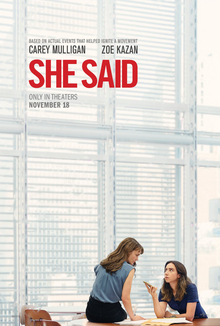
She Said follows the true story of New York Times reporters Megan Twohey and Jodi Kantor as they break one of the most important stories in a generation – a story that helped ignite a movement and shattered decades of silence around the subject of sexual assault in Hollywood. The movie packs with it a lot of weight, as the Harvey Weinstein bombshell was only 5 years ago, leading to the beginning of the #MeToo movement. Director Maria Schrader and writer Rebecca Lenkieweicz choose to highlight the journalists and their integrity, relentlessness and dedication, as well as their victims and their courage to speak out, rather than showing Weinstein himself on screen. Carey Mulligan and Zoe Kazan bring ferocity and empathy to their performances, and the movie highlights their perseverance and strength in their job, but also the importance of this story to them as women, as well as their balancing of their personal lives as mothers and the support of their husbands without it being questioned. Mulligan especially feels very naturally in command of her role, but Kazan also rises to having that same on-screen force. Andre Braugher is also great as Dean Baquet, the chief editor of the New York Times, and Samantha Morton and Jennifer Ehle are excellent as two women interviewed about their experiences with Weinstein.
The film is an important watch and though the more emotional moments may make viewers uncomfortable, it’s powerful to see Hollywood reckon with such a recent past, doing it with such patience and grabbing your interest even when talky scenes with many journalistic, legal, or industry terms can go on for long. The movie not only resonates because of the terrible things that happened in the film industry, but the silence that was allowed for go on for decades, the many who enabled the wrongdoers and their remaining in power — and whether the accountability still must be held — and the failure of the law to protect victims of sexual abuse, a change that’s only begun mere years ago. It addresses a system that’s allowed men to get away with years of abuse of power, and even get elected president, but at its core, it works because it brings forward the strong voices that helped contribute to the exposure of the broken system, both from the reporting and the survivor side. It’s a film that’s a conversation starter, about change that still needs to be made, and in affinity with the women of its story, whose bravery and determination are front and center.
Growing up in post-World War II era Arizona, a young man named Sammy Fabelman discovers a shattering family secret and explores how the power of films can help him see the truth.
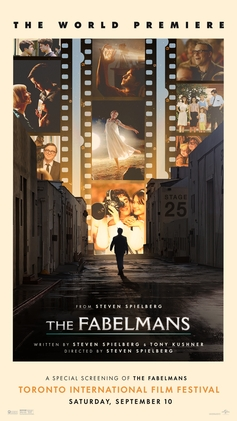
Inspired by his own childhood and infatuation with cinema and filmmaking, The Fabelmans feels like everything Steven Spielberg’s career has been leading up to until now. But not only is it personal and revealing, it’s a masterpiece in its own right that earns its spot amongst other Spielberg classics. Michelle Williams somehow tops her remarkable work in Blue Valentine and Manchester by the Sea in one of the most powerful performances in Spielberg’s recent films. Williams makes the role and everything it demands hers. Along with his co-writer Tony Kushner, who also worked with the director on Munich, Lincoln and West Side Story, Spielberg paints an empathetic look at his mother through Williams’ character, Mitzi Fabelman, but also doesn’t shy away from her flaws and shortcomings, though never quite judging her. As the family’s patriarch Burt, Paul Dano delivers his most restrained but possibly most impactful performance yet, as the logos to Mitzi’s pathos, who does everything, even if it’s spending lots of time with his work or being firm with his kids, out of love and pride for his family. Seth Rogen is also excellent as Sammy’s surrogate uncle, portraying the most endearing and complex role of his career — not to mention Judd Hirsch in a hilarious few minutes of screentime. But Gabrille LaBelle as Sammy himself is a breakout to behold. He rips into your heart as a young man who embodies the aspiration and underdog not just in Spielberg but in all of us, as he works through familial conflicts, (sometimes anti-Semitic) bullying, and adolescence through empathy and, as sappy yet poetic as it sounds, film.
Along with his frequent collaborator behind the camera, cinematographer Janusz Kaminski, Spielberg makes basic settings such as a camping site or a high school hallway feel like a fairy tale. The production value along with the colors of the scenery make the simplest 1950s and 60s settings look grand, and makes film and cameras look like a weapon that spews greatness and wonder wherever it goes, because to the legendary filmmaker, that’s exactly what it is, and he makes you feel it in every frame. Even if you’re a cinema buff, it’s the most human coming-of-age story about family in a long time that juxtaposes innocence with the mistakes people, especially parental figures, can make — but the importance their humanity has on their children — and the uncertainty yet optimism of the world that is to come for Sammy Fabelman. Spielberg also manages to tell entire stories about certain characters’ backgrounds without ever directly addressing them, simply through their reactions and decisions. It’s incredible that about 50 years and 40 movies into his career, he still manages to surprise us and make us in awe, but don’t worry, there’s a lot of laugh-out-loud humor as well, so much effectively for a movie that isn’t ever quite a comedy. Knowing where the director’s story ends makes this journey with him, which is 2-and-a-half hours but earns every minute of it, even more gratifying. This movie especially resonated with me for its striking depiction of how movies and filmmaking can make you feel less lonely, as Spielberg’s films have for around half a century now. It’ll entertain, inspire and touch all ages, feeling like the culmination of his creative career yet unlike almost anything he’s ever made before. By the end you’d want to thank him for the opportunity to peer into his world.
The Woman King historical epic inspired by the true events that happened in The Kingdom of Dahomey, one of the most powerful states of Africa in the 18th and 19th centuries. Viola Davis makes every performance of hers seem effortless, and her role as General Nanisca of the Agoije, the Dahomey’s all-female group of warriors who defend the Kingdom, is no exception. Davis portrays the titular character as a fighter with a tough exterior who eventually peels back layers to reveal pain she must defend herself from through physical and emotional strength. Thuso Mbedu and Lashana Lynch are both outstanding, Mbedu as a new recruit who must grow into a courageous fighter, and Lynch as a commander who gives it her all into the role physically and makes you care so much about her character.
The action is staged very well and is surprisingly strong for a PG-13 rating, but it’s never distractingly holding back from showing violence either, though nothing is disturbing here. The grandeur of the costumes and sets makes the atmosphere work so well, and the film benefits from a spectacular score from Terence Blanchard, who should at least get nominated for an Oscar. Though the film does occasionally slow down between the powerful moments, the last act especially is the most exciting, investing and empowering and elevates the entire movie. It’s a great popcorn action film but also a showcase of amazing production and performances that’s built for the big screen.










 filmtoppings.com