Wicked: For Good

Wicked: For Good‘s rushed pacing feels like quite a whiplash from the slow burn of the first film that allowed its story to breathe much more, but it’s still a big, loud, and rewarding musical experience. The events are moving at such a fast pace that if you think about it too much, it starts to fall apart. The cinematography and editing don’t get that same patience that made the execution in the first movie so beautiful. The first act of For Good does feel a bit like its embracing the spectacle more than the soul, and if Part I felt more like its stage musical adaptation roots, this movie is the big fantasy action blockbuster. That said, it rises up to the challenge with truly great visual effects and breathtaking production design. The musical numbers are no less impressive, and the film’s heart is strong, and the chemistry between its two leads is electric.

Cynthia Erivo is again astounding and contributes to some of the film’s most awe-inspiring moments, while Ariana Grande is even better than she was in the first film. Glinda’s selfishness isn’t justified, but her softness and journey towards goodness make her so interesting to watch, even if it’s more thanks to Grande’s performance than where the script takes her. Jonathan Bailey also shines in one of the film’s most complex portrayals. There are some true show-stoppers in the soundtrack thanks to magnificent work from Erivo, Grande, and Jeff Goldblum. The music, vocals, and sets come together for some incredible musical moments that culminate the film’s emotion in great catharsis. It also very much enriches the story of the original Wizard of Oz in many creative and unexpected ways.

Wicked: For Good isn’t as subtle or as earth-shattering for the musical film genre as its predecessor, but the direction is still so lively and the spectacle is so, well, spectacular, that it’s an exciting and rewarding experience for film and theater fans alike. Together with the first film, it not only reignites but expands on and gives new life to a cultural moment like no other, and a trip to Oz that you have to see on a big screen.

Eternity

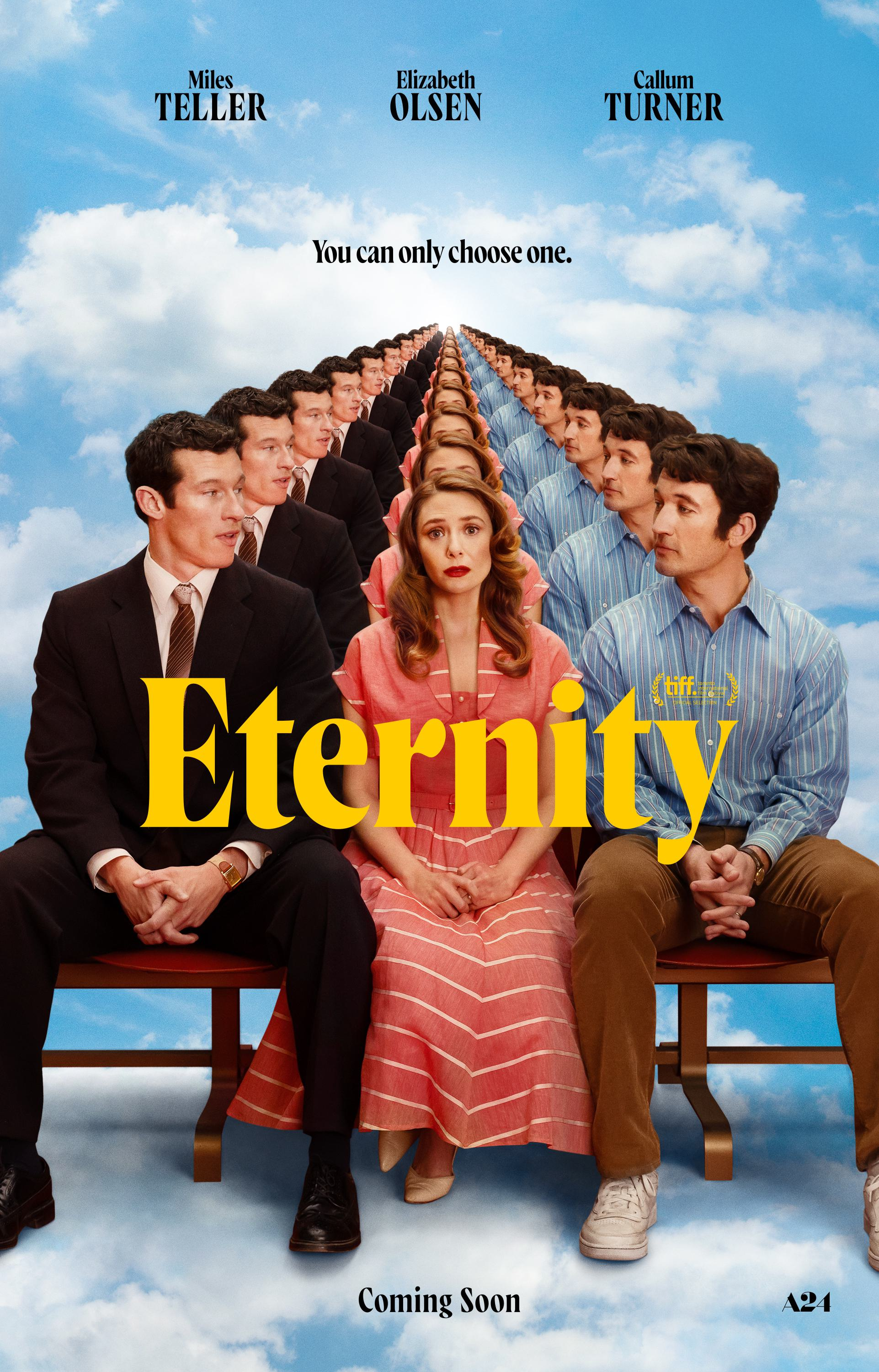
A sharp, lively, and heartfelt rom-com set in the afterlife, Eternity asks questions about true love — is it forever? Can we have more than one in our lives? And how does love truly persevere over time?

Miles Teller and Elizabeth Olsen in particular stand out, offering emotionally rich performances while balancing humor and genuine shock at the situation they’ve found themselves in. I mean, not everyone is faced with a love triangle that will decide the rest of their existence in the afterlife. Callum Turner gives one of his most multi-dimensional performances, while Da’Vine Joy Randolph is also a magnificent standout here, giving the film much of its funniest and strongest moments. 

The production design is beautifully imaginative, combining retro technology with something that’s lively and fantastical. Exploring the corners of this dimension or plane is fascinating, and it very creatively tackles its themes that may hit hard for some audience members. It’s a touching romantic comedy, but also colorful and oozing with imagination and heart, along with high levels of belly laughter and much comedic and dramatic range from its lead trio of actors.

Good Fortune

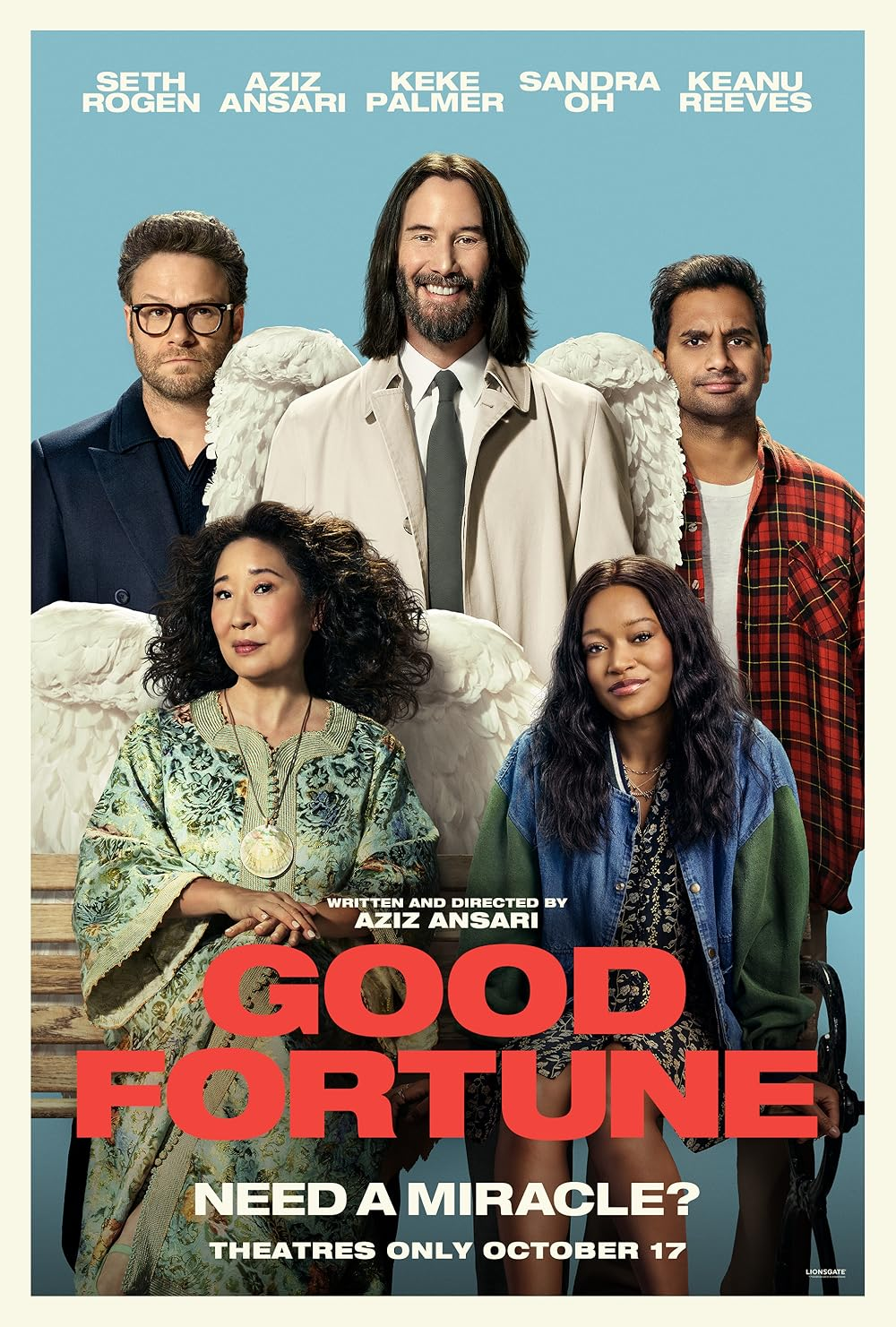
An angel (Keanu Reeves) intervenes in the life of a man (Aziz Ansari) who’s about to give up on life, but things soon get uncontrollably out of hand very quickly.

Aziz Ansari’s fantasy comedy, which sees him directing, writing, producing, and starring, is clever, laugh-out-loud funny, relatable, and inspired. The concept plays a cross between Trading Places and It’s a Wonderful Life, while never feeling generic or derivative of those films, even if the idea’s similarities aren’t being hid. Ansari gives a flawed yet understandable frustration and hopelessness with his circumstance, and a charismatic humorous side. Seth Rogen gives an incredibly funny and physical performance as his character goes on quite an unexpected journey. Keke Palmer shines as Ansari’s love interest Elena, who’s passionate and humble, with Palmer providing lots of genuine heart to the film. The casting of Gabriel was perfect and Reeves was perhaps the only actor who could convey this emotional sweetness come off as effortless yet genuine and real.

The film’s best when looking at humanity’s relationship with materialism, and contrasting wealth with the the lower class trying to achieve the seemingly impossible task of making ends meet, including the unreasonable cost of living, the terrifying market of finding a job (and usually one isn’t enough), and the corporate greed that makes harsh conditions for minimum wage workers. The film feels like it’s missing a piece of the puzzle when it comes to its main character’s arc, but it’s got a real heart to it that’s boosted by it’s lovable actors and the humor’s attempt to keep one-upping what came before. Somehow, it still feels restrained enough to be a screwball comedy that’s not completely silly, and still very genuine while fantastical and uplifting.

Frankenstein (2025)

This retelling of one of the most famous novels in history feels like Guillermo del Toro’s ultimate passion project, with a sweeping scale, and breathtaking cinematography. The production design is perhaps some of the greatest of all time here, with the attention to detail and color schemes serving as the source of much of the film’s beauty. Oscar Isaac is great as the titular scientist whose ambition becomes his own undoing, while Jacob Elordi is incredible, disappearing into the Creature but delivering much soul beneath the towering makeup work. The supporting cast stand out too, including Mia Goth, Christoph Waltz, and Charles Dance, and it feels like everyone is honored to have been given the chance to show up and work with the master of gothic fantasy.

Though its ambition is spellbinding, Frankenstein‘s first half suffers due to its pacing — some of the story feels drawn out to the point where it feels like del Toro showed us the extended version of his masterpiece before trimming some tedious details, with some events happening in the runtime much later than it feels they should have. But when a narrative turn comes in at the film’s midpoint, the themes all click into place and become very powerful — the script also forgoes big action where you’d expect it and allows these bigger themes to speak for themselves. Frankenstein feels like the culmination of Guillermo del Toro’s creative endeavors from a stylistic standpoint, though far from its best film; it could’ve been at least 10-15 minutes shorter and been an even better film, but its weight will also grow on you after the credits roll due to its beautifully expert storytelling.

A Big Bold Beautiful Journey

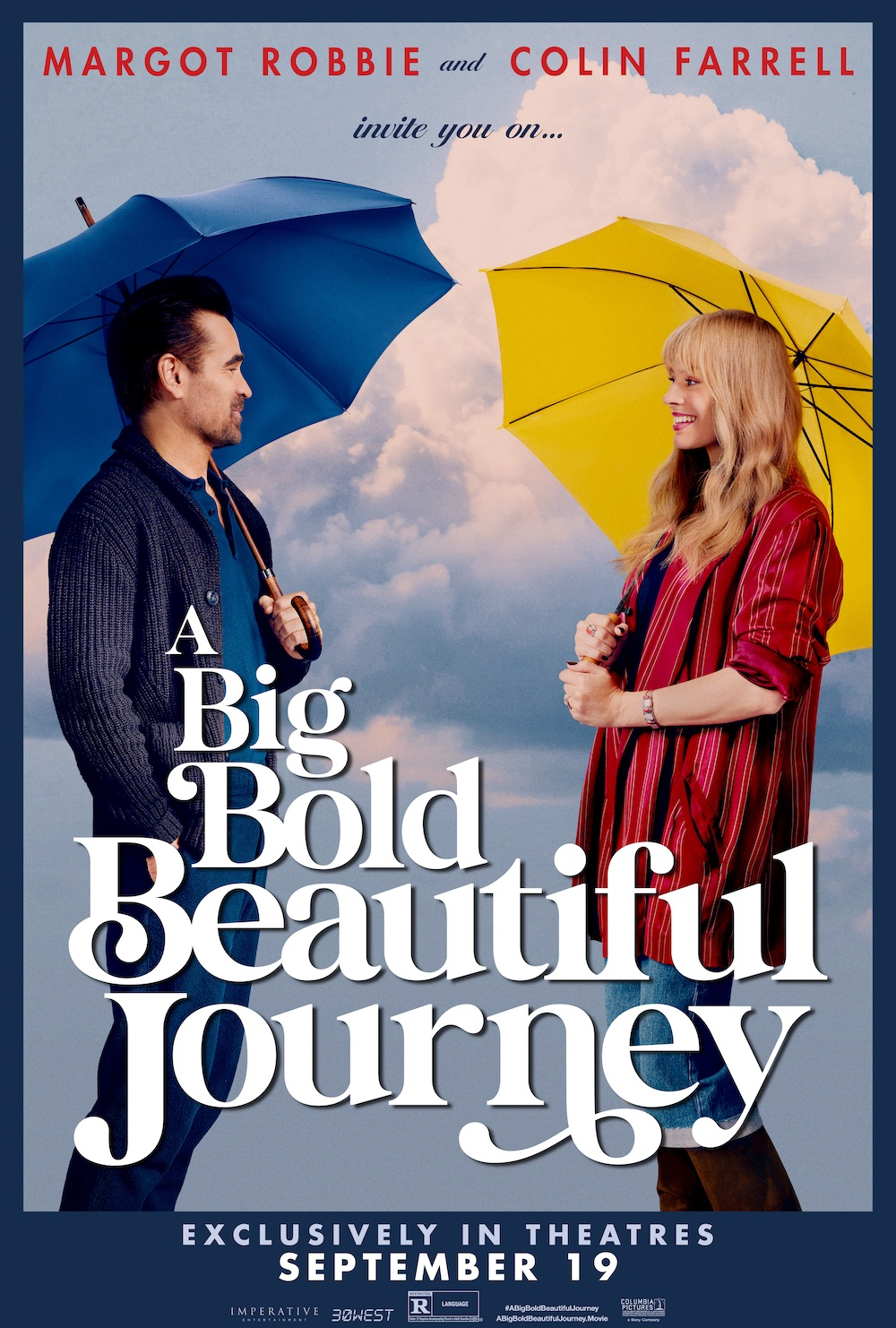
Strangers David and Sarah meet at a wedding and find themselves embarking on a surreal journey on the way home that combines the abstract with the personal, and the past with the present.

Kogonada is a brilliant filmmaker who knows how to unlock the human soul to his audiences with a patient and tender approach. A Big Bold Beautiful Journey isn’t lacking in vision, but in finding a cohesive and meaningful whole within its story. Colin Farrell and Margot Robbie are cast well together in an almost Eternal Sunshine-like odyssey, but Robbie’s character still feels distant as we still know too little about her by the end. Kogonada’s wondrous imagery gives a sense of curiosity and whimsicality, from actions, objects, and colors that stand out in the frame to a hilarious supporting character who’s also a car GPS. Some scenes entertain as the characters look back at regret, loss, and their own lack of self-confidence in creative ways, but it only makes much sense for about half an hour, until the intrigue loses steam and the dialogue in which the characters discuss the film’s themes begins to feel somewhat hollow. As a romance, the film also falls flat, not by looking back at the lead characters’ mistakes in their past relationships, but when a romance between the two of them then comes way too quickly without feeling earned.

A Big Bold Beautiful Journey digs deep into ideas such as confidence, fear, commitment, and remorse, in ways that feel emotionally earnest yet never come together to say something big, bold, and beautiful, like the title says. It’s arguably worth watching for the ambition alone, but also a shame to thing of how much better it could’ve been in the hands of this director and two magnificent stars.

The Fantastic Four: First Steps

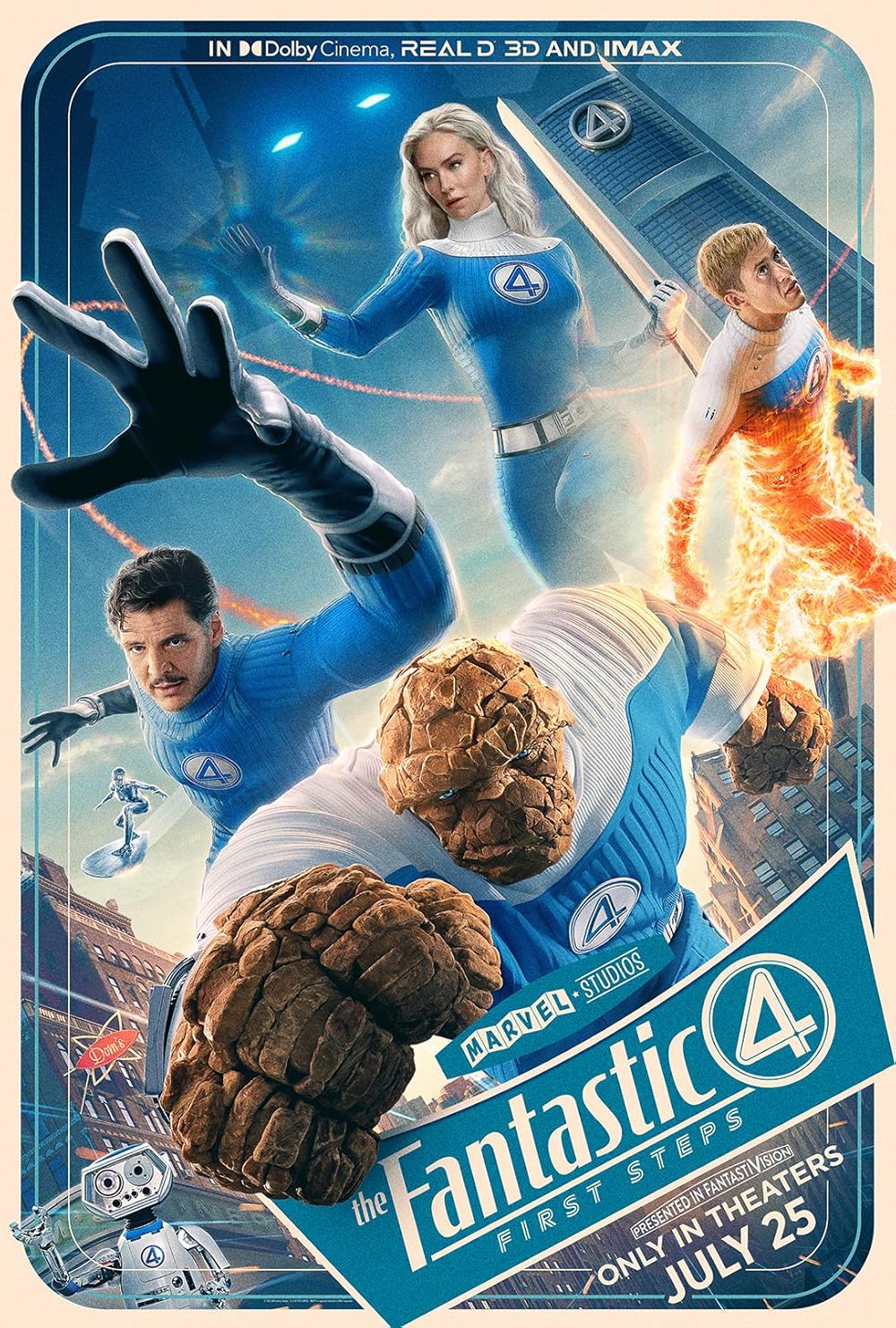
It seems like the third time’s the charm for Marvel’s first family — after three different iterations on screen, the Fantastic Four finally get a film that’s not only watchable, but irresistible. Since this film is set in a parallel universe to the 36 films preceding it in the Marvel Cinematic Universe, it gets to build a new world from scratch. The eye-popping visuals will leave you in awe, including extraordinary costume and production design. The retrofuturistic approach to this new world recaptures that feeling of wonder of humanity embarking into space for the first time, while imagining a reality where all of humanity rallied together behind reason, morality, and science. This idealism and dream-like wonder bring a beautiful look and excitement that’s distinct from Marvel’s other outings that are set in a world with undertones much more like ours. Pedro Pascal gives his star-like charisma to Reed Richards, but the film wisely gives Vanessa Kirby’s Sue Storm much of the film’s emotional weight. Kirby is given a journey unique to Marvel and the screen, and she and Joseph Quinn fit their roles like a glove. Ebon Moss-Bachrach is a highlight as the deeply heartfelt and lovable Ben Grimm, and the family’s dynamic together is sweetly reminiscent of a team like The Incredibles.

The action-packed pace wastes no time, even when it sometimes skips time with detailed character arcs, their relations with one another, their world, and their roles in it drive the film very well, even when the conflict may be priority. The only shame is that talented supporting players Sarah Niles and Natasha Lyonne weren’t given a little more screen time. The effects and action always entertain, and even the world-devouring giant Galactus is given a serviceable motivation to give his presence weight, including Ralph Ineson’s powerful voice. Meanwhile, his herald Shalla-Bal, the Silver Surfer, is given an interesting portrayal by Julia Garner. The Fantastic Four: First Steps doesn’t set out to surprise, but it certainly wows and stands out among the MCU, finally giving the characters a great outing and vivacious portrayals with a gorgeous aesthetic that takes a life of its own and gives the film a stunning feeling of enjoyment throughout.

Superman (2025)

James Gunn’s reboot of one of the most recognizable and beloved stories and characters in pop culture history wisely ditches the origin story and hits the ground running, and the momentum never quite slows down. We’re thrown into a world where Clark is already Superman, dating Lois, and surrounded by Metahumans, and the movie greatly benefits for it. David Corenswet, first and foremost, is wonderful as the titular hero, giving us someone more tangible and relatable to aspire to, while actors like Christopher Reeve and Henry Cavill played the character as larger-than-life figures bigger than any normal person could ever imagine to understand. This story is all about Superman’s flaws and embracing of his unique identity, as well as his immovable faith in humanity, even we can’t see it in ourselves or continue to turn on the guy. Corenswet’s performance is oozing with superstar levels of charm while bringing the character down to earth — no pun intended — while the script does the audience many favors by not making us feel like Superman is invincible; he can be defeated with wit and even technology, and that’s what raises the stakes here.

Rachel Brosnahan is probably the best Lois Lane we’ve yet to see, who’s naturally funny, brave, and feels like her own character, while we also care greatly for her relationship with Clark moments into being introduced to it. Nicholas Hoult is outstanding as Lex Luthor, chewing up the scenery while providing a villain that hits far too close to home — a tech billionaire with a God complex and Emperor Nero-like ambitions, who feels like he exists in his own world beyond just a terrific adversary to Superman. Gunn always shines in making his supporting cast feel close to us, like a wondrous family we’re getting to know, and everyone gets to stand out, from Edi Gathegi, Nathan Fillion, Isabela Merced, and Anthony Carrigan as other metahumans to Skyler Gisondo who is hysterical and irresistible as reporter Jimmy Olsen. Most importantly, Superman’s dog Krypto is an adorable scene-stealing standout.

Gunn’s visuals also stand out here, feeling colorful in a comic book nature and often morphing around our actors. The action is dynamic and exciting, and the excitement that’s both playful and grand. Beyond his singular and unpredictable filmmaking, Gunn’s skills as a writer shine, with conflicts that balance the gripping and the over-the-top, and a genuine heart that seeks out to represent what Superman’s been about all along — optimism, hope, and shared humanity. Gunn never feels restrained, however, by what’s defined past iterations of the character, and still makes this Superman his own. The film delivers on every promise while standing out from recent superhero outings and being perhaps the most thrilling, lovable, and worthy Superman movie yet.

How to Train Your Dragon (2025)

Out of all the live-action remakes of animated films to be released in the last few years, How to Train Your Dragon is the one that sounded too soon, and too perfect to touch more than any of the others. However, it winds up standing out among many of the other remakes that come to mind. Director Dean DeBlois sets out to retell the story of Berk and its vikings and dragons in realistic glory, but also sticks so closely to his original film’s visual palette that there almost isn’t anything new here. Large amounts of dialogue, if not the entire script, are also beat for beat exactly the same, so if you remember the original film quite well, it’s like watching a film you’ve already seen be enhanced and remastered. Though the first film is so wonderful that it doesn’t leave much need for improvements, making a new film should be justified by making some changes and additions to the story, not to mention much from the source material that the film was based on that we haven’t yet seen.

Mason Thames manages to make the role of Hiccup his own, while Gerard Butler is a standout reprising his role as Stoick from the animated trilogy. His hard exterior and brutal attitude towards dragons that develops from his fear and desire to protect his son and tribe are prominent. The production design and CGI effects work very well to form engaging action scenes — even if it takes a lot of getting used to that Toothless looks the exact same as he did in the animated version but is now interacting with live-action settings. Nico Parker is wonderful as Astrid, and her bond with Hiccup also stands out, particularly his earning of her trust. The supporting teen characters unfortunately feel like they’re doing imitations of their previous version, though Nick Frost entertains as Gobber.

Some scenes manage to carry the beauty over into this version, including Hiccup and Toothless’ initial bonding, and the former’s romantic flight with Astrid. Still, you’re sometimes left to wonder why it wouldn’t have hurt to change some more lines or backdrops, or even some add in some new story beats when you’re making a new film, after all. The real magic here that holds it all together is John Powell’s score. His themes enrich the world and the tone when they could’ve lacked in this new iteration otherwise. The movie’s insistence on staying so close that numerous scenes are a shot-for-shot copy and paste can frustrate, but its lack of originality doesn’t fully take away from the heart and vibrance that’s still here, even if in a lower capacity. For those discovering the story for the first time, though, it will certainly deliver with its themes of empathy and teamwork.

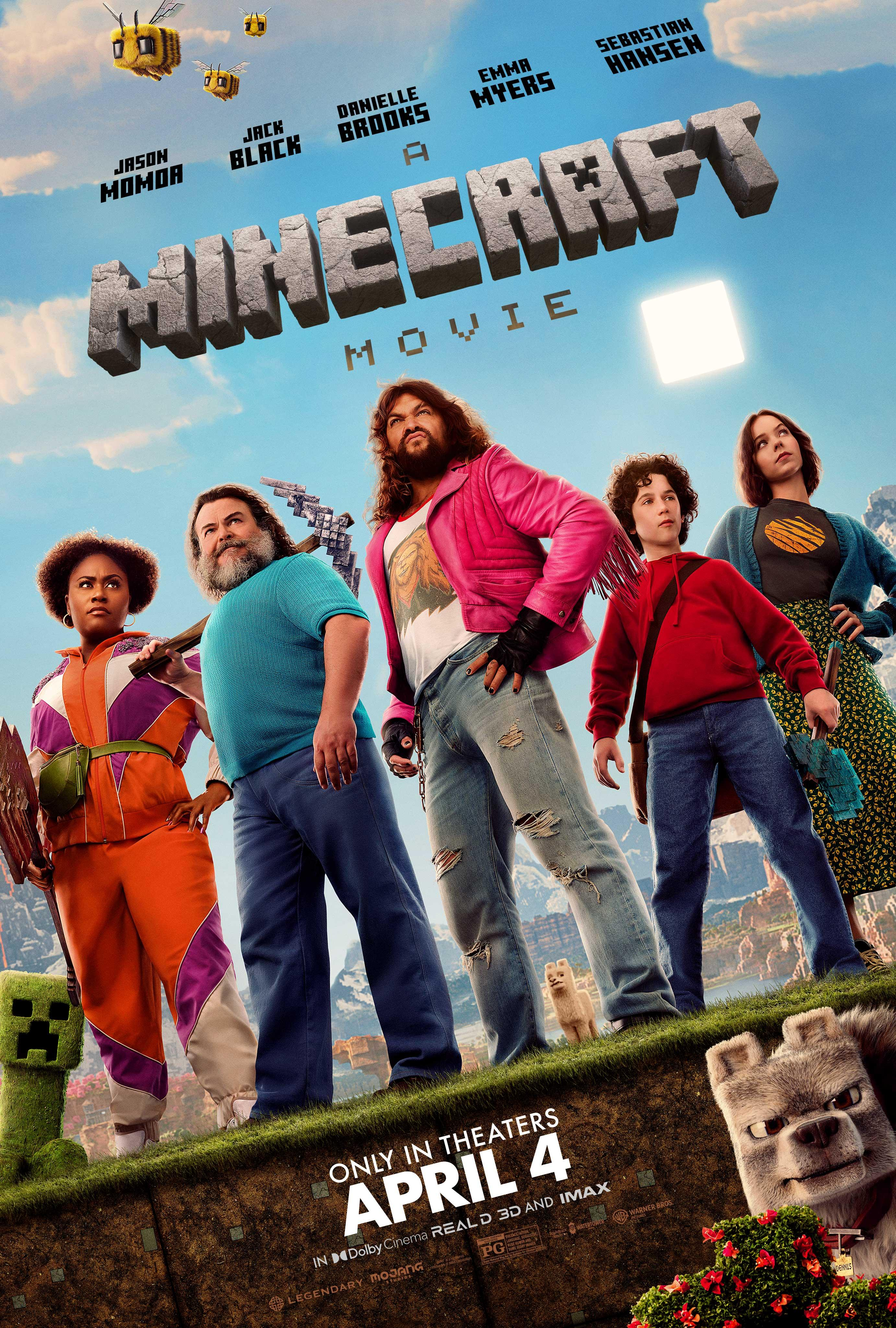
A Minecraft Movie

A Minecraft Movie may prove a treat for younger audiences and fans of the beloved game. It’s got charm, thanks to its main stars, particularly Jack Black. He gleefully gives his playful and extravagant energy to Steve, even throwing in his musical comedy talents. Jason Momoa entertains but his dialogue threatens to miss almost as much as it’ll make you laugh. Danielle Brooks is splendid as a very unexpected companion on this journey, and gives the runtime lots of heart. Emma Myers does a solid job playing an unlikely heroic character, whose storyline with her brother avoids some cliches while falling head first into others.

Though this is a Minecraft movie first, director Jared Hess’ love for misfits and outcasts is written all over the film. What brings the film down is the aesthetic, that fails to get you to suspend your disbelief strongly enough to overlook the unconvincing green screen and weirdly uncanny CGI of some of the Minecraft characters/species. The live-action parts carry the film well if you ignore some of the backdrops, but sometimes you’ll wish that the scenes inside the Overworld were completely animated. It also doesn’t help that the idea of an unlikely team of social outsiders from the real world trying to navigate a fantastical world they’ve been suddenly pulled into is nothing new. Even the Jumanji films, also starring Black, had much more to offer the formula.

Still, the film has just enough charm to delight children and families, embracing the essence of the game with a positive message about creativity. And Black proves that he’ll continue to entertain generations of viewers with his ability to let loose. It’s a film that embraces exactly what it is, even if when you think about the film or look too long at the visual details, the building blocks starts to fall apart.

Snow White (2025)

Some remakes get a chance to breathe new life into their stories and worlds, while others, like Disney’s new Snow White, feel like a film from 90 years ago was frozen in carbonate for decades and then unnecessarily turned into a different medium. In this case, Snow White feels like 30% that, while the other 70% feels like sprinkles of modern flare that feels out of place. Oscar winners Benj Pasek and Justin Paul add songs that feel to derivative and cliche, hitting all the same “Welcome to our lovely kingdom”, “I want a better life”, “Look how evil I am”, and “Maybe we’re attracted to each other” beats that are in nearly every other musical. In some instances, the songs even sound too much like the duo’s Dear Evan Hansen soundtrack.

Rachel Zegler tries her best to entertain in a sweet but one-dimensional role elevated by her charisma and strong singing voice. However, all the other elements around her distract, including the unconvincing and at times hideous CGI of the animals, surroundings, and let’s not even talk about those dwarves, who seem almost nightmarish. But a painfully glaring weak link is the miscasting of Gal Gadot as the Evil Queen. Her line delivery feels unnatural, and the character just gets more irritating as the film goes along.

Most sadly, Snow White is inconsistent and deeply hollow as a film. It has almost no charm that feels organic, and can’t decide between elements that feel nostalgic or new, like the very modern-sounding soundtrack. Nothing of importance is ever quite explained or given meaning to, things just happen because the point that we’ve gotten in the story needs that thing to happen. For younger children, being unconditionally kind is an important message, but even Disney has delivered this theme in a way that’s so much more tangible and heartfelt; take even their live-action 2015 Cinderella remake for example. This remake doesn’t expand on or reinvigorate its source material, simply morphs it into weird images that look colorful but never have any real sense of life.