Wicked

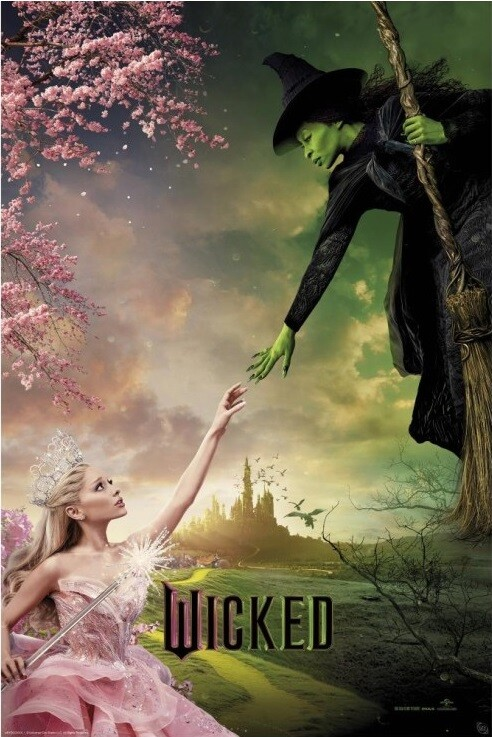
Wicked tells the story of Oz in a new light, as we meet Elphaba and Glinda in their early years of sorcery, who eventually become the Wicked Witch and the Good Witch, respectively.

Few stage-to-musical adaptations in recent memory capture the excitement of being there with the actors on a production filled with song and dance like this one. Despite its title, Wicked is one big burst of joy, led by the spectacular Cynthia Erivo, who makes the material, and the mere art of musical theater itself, feel like they were made for her. Erivo’s enchanting voice is moving and never quite lets go of the audience, rather you’ll be begging for more of her songs. Ariana Grande plays into type well as Galdina, who starts of as quite the narcissist, but the characterizations of both her and Elphaba soon become more complicated in a way that feels genuine and touching. Michelle Yeoh is also wonderful, and Jonathan Bailey and Jeff Goldblum are delightful. But it’s not one element that makes the movie works: it’s the beautiful costumes and sets, put together with the music and story, brought to life by these talents. The songs might have not worked without the incredible musical numbers and dance sequences, but Jon M. Chu steps up to the responsibility of bringing out the best of this bombastic fantasy tale. It also deeply humanizes an infamous movie villain in a way that feels natural and oddly grounded, with themes that may connect with audiences.

As this is only the first part of the two-film adaptation of the musical, the pace dives deep into unexpected subplots, and though this approach threatens to deem the split unnecessary, it ends up fleshing out its world in a rewarding way, making the runtime worth it, and leaving audiences with much anticipation for the next film. Wicked is a cinematic experience with exciting musical numbers, an incredible leading performance from Erivo, and mesmerizing execution that’s a must for both fans and non-fans. It’s hard to believe there’s so much more to come, though where you’re left here in Elphaba and Glinda’s journey is still an astounding and gratifying moment.
Emilia Pérez

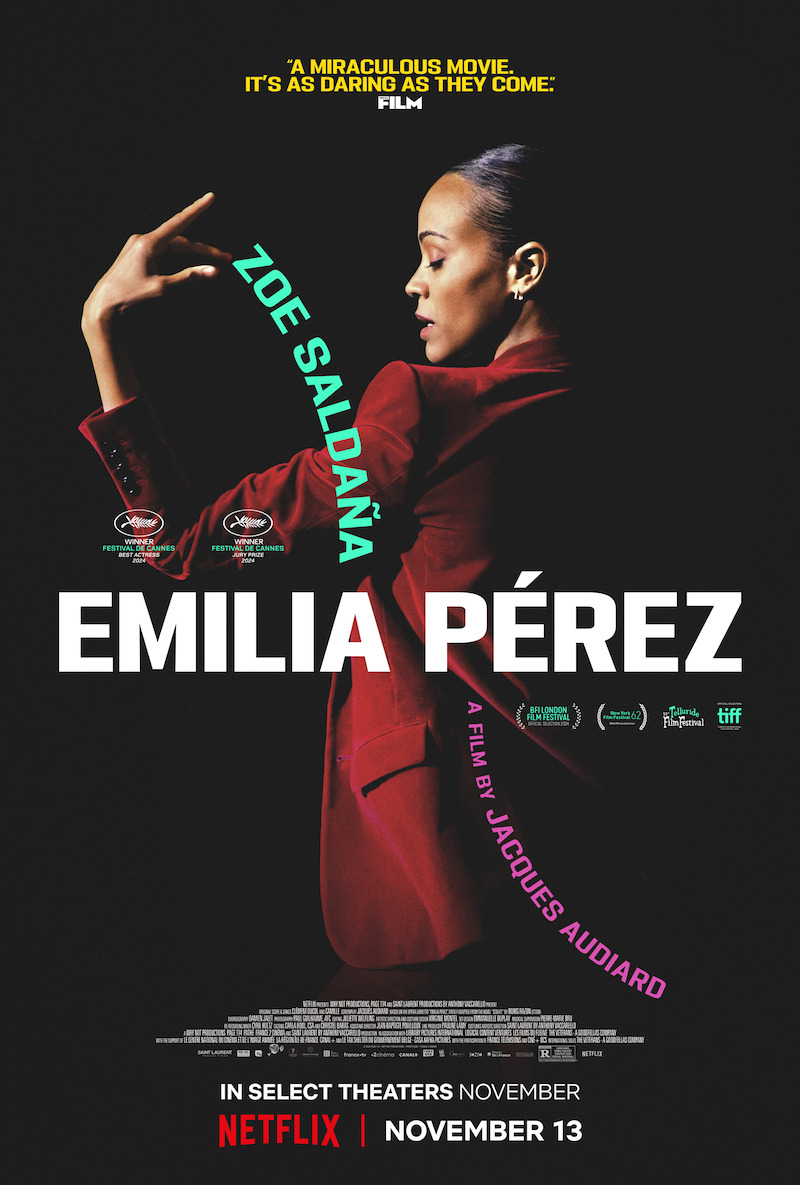
Lawyer Rita receives an unusual offer from cartel leader Manitas — to help him evade the authorities and disappear by becoming Emilia Pérez, the woman she always was meant to be inside.

There hasn’t quite been a film remotely like Emilia Pérez, at least not in recent memory. One that so effortlessly blends seemingly alien genres and stories together, and utilizes its story, themes, and cast in such a surprising way. Zoe Saldaña shines in her most electric role yet, in an entrancing narcotics thriller meets rock opera musical where all the show-stopping elements create a magical experience you can’t look away from. Karla Sofia Gascon gives the character an identity defined by envy and a desire for redemption that’s also reflected in Saldaña’s character. Selena Gomez rounds out the poignant cast, getting to balance her great star power with a more rageful side to her acting we haven’t seen before. 

The journey of watching the film is one that gleefully navigates its way through tones and genres that wouldn’t have meshed so beautifully in other films. The musical numbers give the characters a voice that they otherwise lack or are searching for at the start. Every character, from the main ones to the background singers, is looking for validation, redemption, or recognition, and that binds the themes of the film together. There’s a scene about halfway in where I leaned forward in my seat, and never quite leaned back because I was so entranced by the mood the film created with its music and style. It’s director Jacques Audiard taking an exciting leap to create a really special and breathtaking experience; an outlandish, wonderfully performed film that dares to challenge but wow it’s viewers.

Joker: Folie à Deux

After inciting violence, murder, and chaos in Gotham City, Arthur Fleck is institutionalized at Arkham, where he faces trial for his crimes — and perhaps the love of his life.

It might still be that there’s no reality in which a sequel to Joker makes sense. Joker felt so fresh compared to other IP-driven blockbusters when it was released, but also provided a sense of shock when it ended. Folie à Deux is a confused sequel that left me feeling nothing. Perhaps a radical decision like making this follow-up a jukebox musical is exactly what it needed to justify its existence, but a movie this ambitious is also too cowardly to take large enough swings or hit hard as a musical. The two main ingredients that work here are Joaquin Phoenix’s performance, which is still incredibly committed and breathtaking at times, and the gorgeous cinematography by Lawrence Sher, which embraces different colors and a grand sort of look to its prison scenes. However, it’s a bad sign when you wish such a legend like Phoenix was spending his time and talents elsewhere rather than helping Warner Bros. milk this character, which won him an Oscar the first time around.

One of the things that inherently doesn’t work about the concept of a Joker sequel is that we don’t have that gateway of sympathy into Arthur’s world when we meet him; he’s been dejected and abused by the world around him, but by the time this movie starts, he’s already done his awful deeds, and it’s hard to feel anything for him in this one’s opening act. Without that fascinating entrance into this world of sorrow and sadism, it’s hard to really feel anything watching the movie. Lady Gaga’s casting is inspired, but the film itself doesn’t do her and the character justice. Why make the singer of a generation whisper lots of her singing or not give her something more substantial than to pine over Arthur? In a psychological thriller about two insane criminals that turns into a musical, the numbers couldn’t afford to be this safe and scared. They feel like they’re holding back and are too concerned with convincing us they are set in the characters’ heads rather than leaning into surrealism and ambiguity. The music scenes don’t feel like a trip, or like they’re unlocking something about the characters and the film that can’t be backtracked on, they’re just breaks with song, and that’s what makes this risk feel so frustrating and timid. Not to mention, we don’t feel like we learn anything new about Arthur that wasn’t already established in the first film, nor anything original about the justice system, the mass hysteria around violence, or society’s outlook on poverty and the mentally ill.

Joker: Folie à Deux is a film that, unlike the masterful and already iconic first movie, has no identity of its own, because it’s too scared to commit to its giant leaps. As a courtroom drama, it’s derivative. As a romance, it’s painfully undercooked. As a social commentary, it’s tiring. And as a musical, it’s just too dim. By the end, nothing really transports, terrifies, or resonates, and worst of all, it fails to answer the most important question of why another chapter to this story.

Back to Black

Back to Black chronicles the life and music of Amy Winehouse, through the journey of adolescence to adulthood and the creation of one of the best-selling albums of our time.

It may feel like a step up from recent music biopics like Elvis and I Wanna Dance with Somebody, and may be on par with something like Respect and not quite at the glory of Rocketman. Marisa Abela is great as Winehouse, bringing the young music-loving girl to the screen in the start and the mess of an unstable addict she becomes later in life. But what’s most unbelievable is Abela’s singing which completely captures the one-of-a-kind grandeur of Amy’s voice. There are times when Abela completely disappears and you simply feel the singer alive in front of you. Eddie Marsan gives one of his most memorable performances to date as Amy’s father, while Lesley Manville also brings a lot to the movie as her grandmother. When Jack O’Connell comes in, however, as Amy’s love interest and eventual husband, the film falls into messy melodrama that sinks the runtime and falls into the same traps that many of these biopics suffer from when channeling the artist’s pain and troubles. Winehouse’s journey through love and addiction is filled with cliches, but is empathetic enough for us to forgive her shortcomings. The film also does a great job of incorporating her songs into the film, and best of all, it manages to have its audience actually interact with the subject as a tangible person, rather than just a larger-than-life legend. The more minimalistic approach to the musical biopic gives Back to Black a strong start, but you’ll also have a few too many instances of deja vu, though we’ve certainly seen it done worse. It’s watchable enough for non-fans of the late singer, but for some, it might not stand out among similar films with similar beats that have come out far too recently.

Mean Girls (2024)

In this musical reimagining of the beloved high school comedy, Cady Heron moves back to the United States from Kenya, where she finds herself a part of the most toxic and destructive high school clique, the Plastics, led by the manipulative and egomaniacal Regina George.

Beloved films being adapted into stage musicals and the musical being in turn adapted into another film is nothing new — we’ve seen it happen with The Producers, Matilda, and most recently, The Color Purple. With the exception of the former, however, the trend still fails to justify the existence of a second film. The energetic songs probably make for a phenomenal stage musical experience in this case, but watching it as a film, it doesn’t have much new to offer if you’ve already seen the 2004 version. Angourie Rice is solid as Cady, and Renee Rapp does an incredible job singing in the role of Regina George, but it doesn’t feel like they do much to escape the shadow of what Lindsay Lohan and Rachel McAdams gave those roles — though that isn’t their fault as actors at all, rather that of the first film’s cultural legacy. Auli’i Cravalho is the film’s most glaring strength and she expands on what the role of Janice has to offer. Every time Cravalho has to sing or deliver a line, she steals the entire film with her charm and talent and she’s the greatest improvement on the original movie. Some songs are more amusing than others, and they’re filmed very well with occasional extended takes, but they aren’t enough to add a whole new layer to the experience, because it still overall feels like watching the exact same movie again. You may feel like the film’s racing through iconic quotes and familiar set pieces that shouldn’t be changed because they worked so well, not to mention almost entirely the same dialogue. That 2004 film already felt really modern and continues to find new audiences that enjoy it today, so despite us having the age of social media to deal with twenty years later, this “even more modern” approach has nothing new to offer, and the themes feel executed in a weaker way here. Tina Fey and Tim Meadows even reprise their roles because so much of what already worked in the previous film comes with an “If it ain’t broke, don’t fix it” disclaimer. If anything, it’ll make you want to seek this musical out on the stage because I’m sure it’s an absolute blast, but the cinematic element doesn’t justify another Mean Girls movie that looks, sounds, and feels so similar, or perhaps it was just too soon for this remake.

The Color Purple (2023)

The Color Purple is the second film adaptation of Alice Walker’s beloved novel, this one based on the Broadway musical adaptation as well, about a young woman named Celie who faces many hardships living in the South in the 1900s, but ultimately finds extraordinary strength and hope in the unbreakable bonds of sisterhood.

Though everyone in this new cinematic rendition The Color Purple is one of the best at what they do, the idea of making this a musical doesn’t always fit with the tone of all the rough things going on in the characters’ world, and the very clean cinematography removes the grit that Steven Spielberg’s version had that showed you the weight of the hardships and abuse Celie endured. Here, the most earned moments for Celie’s character aren’t necessarily her musical numbers but rather moments where Fantasia Barrino gets to shine just based on her interactions with other actors or set pieces that inform Celie’s character. Barrino is very strong in the role, but Taraji P. Henson runs away with the movie every time she shares a scene with her, or anyone for that matter. Henson portrays blues singer and “loose woman” Shug Avery with a power to her that commands every other character in both a loving and wise way, not to mention her show-stopping musical number in a tavern. Danielle Brooks is the other highlight as Sofia, whose characters shamelessness and courage shine through in both her songs and her incredible physical acting. Colman Domingo is simply incredible as Mister, inhabiting the character in not an inch less of meanness and disgust as Danny Glover did so brilliantly in the 1985 film, but also giving the abusive man a quietly human edge to him that Domingo finds even when the audience doesn’t want to see it. Corey Hawkins, Halle Bailey, and H.E.R. also give strong turns due to their potent screen presences and musical talents, and even Louis Gossett Jr. shows up for an excellent short appearance.

There’s no denying how amazing their singing and dancing is. However, it’s the songs themselves that don’t blend in with the material this story is telling. Save for a song or two, the lyrics aren’t quite memorable, either. This imagination of the story clearly works much better as a stage musical, where the audience can interact with the actors in real space as they sing and dance. For a film that gets cruelly serious at times, though the more uplifting song breaks don’t compliment the more hard-hitting scenes as much as the film would like to think, even though the actresses are always killing it. And although the costume design is award-worthy, the digital cinematography may have given it more of a music video edge that director Blitz Bazawule is used to, that could’ve benefitted from longer shots and a more period-like look. In short, come for the spectacular cast and a timeless story, but there’s no promising audiences won’t prefer the rougher and more dramatically coherent film that Spielberg led back in 1985 with Whoopi Goldberg and Oprah Winfrey.

Wonka

Ever wondered about the origins of Roald Dahl’s iconic chocolate factory owner that’s been famously portrayed by Gene Wilder and Johnny Depp? Well, neither did I, but Timothee Chalamet absolutely gives a performance that lives up to those standards in an unnecessary yet whimsical family film. Though the story is as frustratingly familiar as it is cute, Paul King’s direction and a few musical numbers are the saving grace here. King brings the charm that made Paddington resonate with viewers and brings a wondrous British comedy element to the film, along with an optimistic and adventurous tone. Though only a few songs demand revisits, the musical numbers give the film a lively energy that would’ve felt contrived without them. Chalamet throws himself into the physical comedy of the character and also sings very well, and Calah Lane is a great breakout as a young orphan named Noodle who Wonka befriends. Olivia Colman is also delightfully wicked, and Jim Carter and Natasha Rothwell stand out as Wonka’s outcast friends. Keegan-Michael Key’s performance may not reach the heights of his more streamline comedic turns, and Hugh Grant’s turn as an Oompa Loompa is ruined by distracting CGI — the role was obviously there for the studio just to gloat about having the iconic race of mini-people in the film.

The film’s corrupt, mustache-twirling trio of businessmen villains are also entertaining and so unapologetically cheeky that one of them even vomits at the sound of the word “poor”, but for all its funny and charming moments and the outstanding costumes and production design, there’s also some unconvincing computer-generated set pieces and some overblown humor that may only be aimed for younger audiences. There’s also some plot elements that may feel too much like other kids’ films, even Paddington or another recent origin story Cruella bear lots of similarities in the story. As a film that’s right for the entire family and may even be good for rewatches for children in the holiday season, Wonka delivers, but it may be too silly for older audiences despite its endearing appeal and cast.

Wish

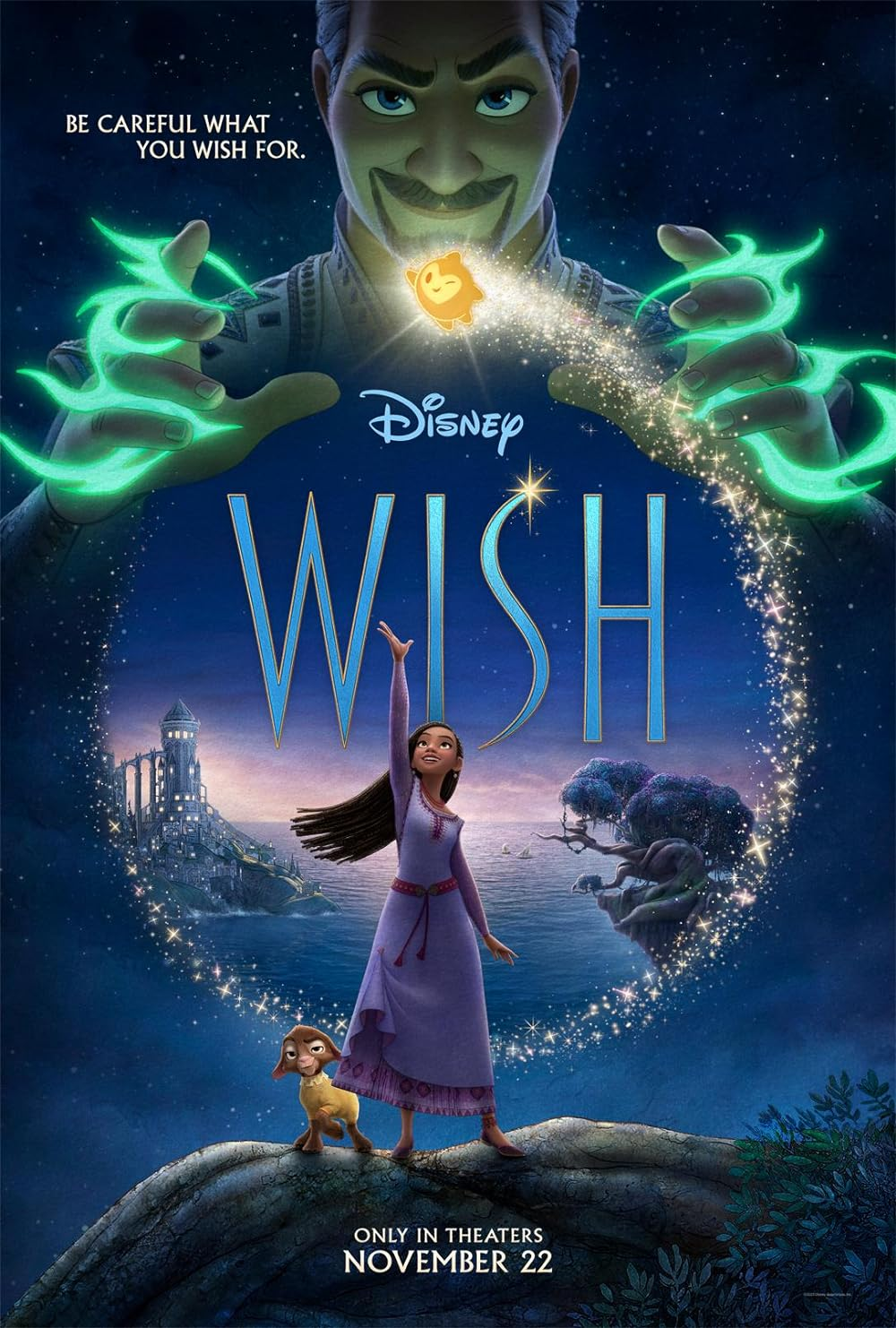
In the Kingdom of Rosas, King Magnifico safeguards the people’s wishes with the promise to grant them one day. But when young Asha wishes upon a star for her community to have better, what she didn’t expect was for the star to answer back.

Disney experiments with the 2D coloring of 3D characters that films like the Spider-Verse have popularized, which can’t seem to make up for the film’s derivative story. Though the animation is vivid in colorful in the scenes that are night-set or creatively lit, most of the scenes set during the day feel like they lack lighting or any sort of flare besides the gimmick. Ariana DeBose’s performance is full of joy and her singing is spectacular, though that shouldn’t come as a surprise. The character of Asha has nothing to really distinguish herself from other Disney heroines like Rapunzel and Mirabel, and the concept of her wishes and motives feel rather underdeveloped. Chris Pine does great as well, but his villain’s descent from charismatic leader to power-hungry wizard feels unearned. None of the supporting characters are quite memorable, and a few of the songs do stand out, including “This Wish”, “At All Costs”, and “This is the Thanks I Get”. But both the middle and end portions, particularly the talking animals and forgettable action, greatly suffer from this lack of an interesting ensemble and heart that made the characters in Frozen, Moana or Encanto resonate. It’s certainly enough to keep the children entertained and singing along, but is also too generic to earn a place among the ranks of other films from the studio that have solidified themselves in Disney’s legacy.

The Little Mermaid (2023)

Ariel, a young mermaid longing to experience the human world, makes a deal with a sea witch to trade her beautiful voice for human legs so she can discover the world above water and impress a prince.

Disney’s live-action remakes have fallen on a spectrum from awe-inspiring to mediocre to horrendous. The Little Mermaid‘s execution reminds me most of the Aladdin remake, in that it’s trying so hard to emulate the style and feel of the animation instead of embracing the fact that it’s in live-action, which makes the look and feel turn out artificial. The visuals in the underwater scenes fail to establish a balance between fantastical and photorealistic, and look too much like they were a shot on a soundstage, with the actors and the effects not blending in too well. Not to mention the beautiful and immersive underwater worlds we’ve recently seen in Aquaman, Avatar: The Way of Water, and Black Panther: Wakanda Forever, and The Little Mermaid‘s depiction can’t distinguish itself or awe in a new way. Halle Bailey is possibly the best Ariel we could’ve gotten — though at first it feels like she’s trying too hard to emulate a 1989 animated character, she eventually gets the chance to make the performance her own as the film goes by, and gives Ariel that naive curiosity and goodness she needed. And her wonderful, angelic singing voice does songs like “Part of Your World” justice. Daveed Diggs is a highlight as the voice of Sebastian, giving us a laugh-out-loud entertaining time as the iconic sidekick and a personality that feels like Diggs is having the time of his life. But Melissa McCarthy as Ursula is an absolute blast here — she feels like what Ursula was always meant to be had they ever made this story into live-action, but McCarthy also makes Ursula borderline likable when she’s not doing evil things due to simply how much fun she’s having being flamboyant, cackling and over-the-top. Though some were concerned about her casting as Ursula, I think she completely nailed it and elevated the whole movie.

The Little Mermaid‘s strengths often lie in the aforementioned cast members, but Bailey and Jonah Hauer-King also have a lot of chemistry, and the movie’s heart gets to flow a lot more naturally when they’re hanging out in the surface world, including the iconic “Kiss the Girl” scene. But besides that, Prince Eric’s character arc, including his relationship with his mother, really only feels “cute” and that’s it. Perhaps that’s all you should ask for in a Disney remake, for it to be sweet and likable enough for kids, and the movie delivers on that part, as the underwater scenes and the themes of compassion will be enough for younger audiences to feel that intrigue. But it also reuses a lot of the tropes we see in these Disney live-action remakes, not to mention the movie is concerned with anything but Ariel’s role as a sister, as Triton’s other daughters are a mere afterthought in the script, and Triton himself is perhaps more understandable than the writers wanted. For a director like Rob Marshall, who’s a cinematic musical veteran including with Chicago and Mary Poppins Returns, the shots during the musical scenes feel often redundant. There’s an atrocious new song led by the usually great Awkwafina that feels too much like the songwriters took a decades-long break before writing this song instead of fitting in well with the rest of the music, and a song delivered entirely through narration in Ariel’s head that could have also been directed in a more creative way. Like I said, the film feels too much directed in the language of animation that it simply feels like an animated movie in live-action rather than a live-action adaptation of an animated film.

Though there’s a lot that can be enjoyed, The Little Mermaid fails to justify its existence in the live-action medium, as there’s too much here that feels like the style of animation, even in something like Moana, would have complimented better, and those visuals feel too devoid of that effortless personality in live-action, but it still has its charm and is still one of the more watchable live-action remakes of Disney classics.

I Wanna Dance with Somebody

Naomi Ackie stuns in this biopic about Whitney Houston, and the movie makes a strong case for why she was the greatest singing voice of her generation. It highlights Whitney’s accomplishments, shortcomings, and struggles with glamour, empathy and care, but the editing seems to occasionally bring Ackie’s performance down and while the characters and performances are strong, the script is so cliche it almost feels like it’s checking off boxes as it goes. The music biopic tropes are almost all there, whether it be the way the movie portrays the sudden rise to fame, abusive marriage, addiction, controlling father — it’s the Aretha Franklin biopic Respect but with a different soundtrack. The way the movie goes through these cliches feels almost like the way the parodical Walk Hard: The Dewey Cox story would’ve been written, and the editing often glosses past important story points and doesn’t let the beautiful musical sequences breathe and play out without frequent montage-like editing during the songs. Cinematograper Barry Ackroyd of the Bourne movies, The Hurt Locker, Captain Phillips, and Bombshell isn’t enjoying using a tripod too much and often shifts between handheld and still shots mid-scene which occasionally distracts.

In addition to Ackie’s breathtaking work, changing Houston’s mannerisms as she takes us from her teen years to the end of her life, Stanley Tucci is excellent as her manager Clive Davis, who in a nice change of pace from most biopics, isn’t the greedy asshole who takes advantage of the star, but a kind counselor and a devoted friend to Whitney. Ashton Sanders does a strong job as her husband Bobby Brown, as well as Tamara Tunie and Clarke Peters as her parents. Seeing Whitney’s process in creating her songs is also very satisfying, as well as her struggles with drugs and her music being called “not black enough” by critics of her music. Though it’s easier to follow than this year’s Elvis and has fun sequences for fans of Whitney’s music, with a star-making work from Naomi Ackie, but the script in the latter half could’ve been much stronger, as well as the runtime which drags later on and could’ve trimmed 10-20 minutes.