Eternity

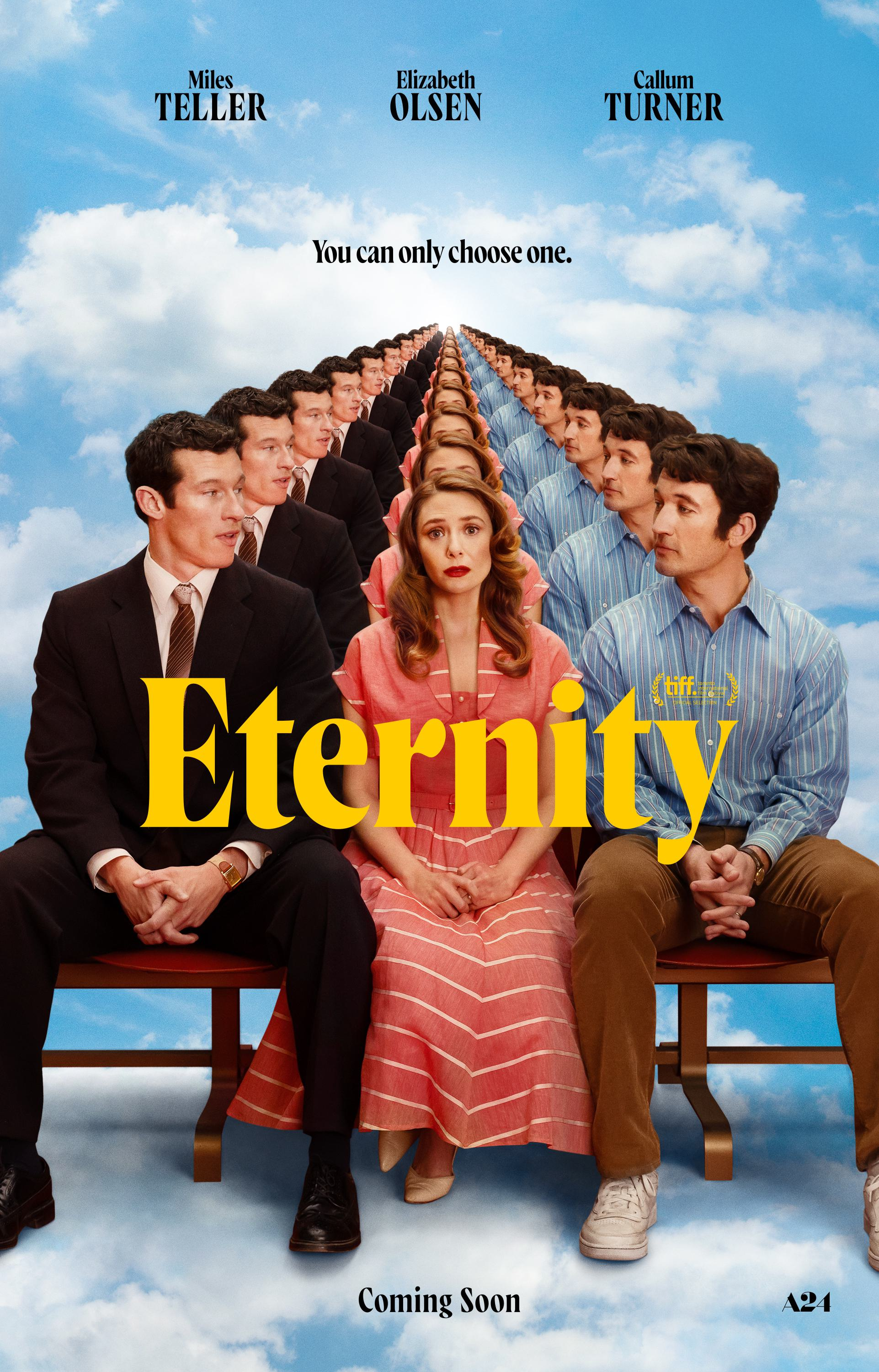
A sharp, lively, and heartfelt rom-com set in the afterlife, Eternity asks questions about true love — is it forever? Can we have more than one in our lives? And how does love truly persevere over time?

Miles Teller and Elizabeth Olsen in particular stand out, offering emotionally rich performances while balancing humor and genuine shock at the situation they’ve found themselves in. I mean, not everyone is faced with a love triangle that will decide the rest of their existence in the afterlife. Callum Turner gives one of his most multi-dimensional performances, while Da’Vine Joy Randolph is also a magnificent standout here, giving the film much of its funniest and strongest moments. 

The production design is beautifully imaginative, combining retro technology with something that’s lively and fantastical. Exploring the corners of this dimension or plane is fascinating, and it very creatively tackles its themes that may hit hard for some audience members. It’s a touching romantic comedy, but also colorful and oozing with imagination and heart, along with high levels of belly laughter and much comedic and dramatic range from its lead trio of actors.

A Big Bold Beautiful Journey

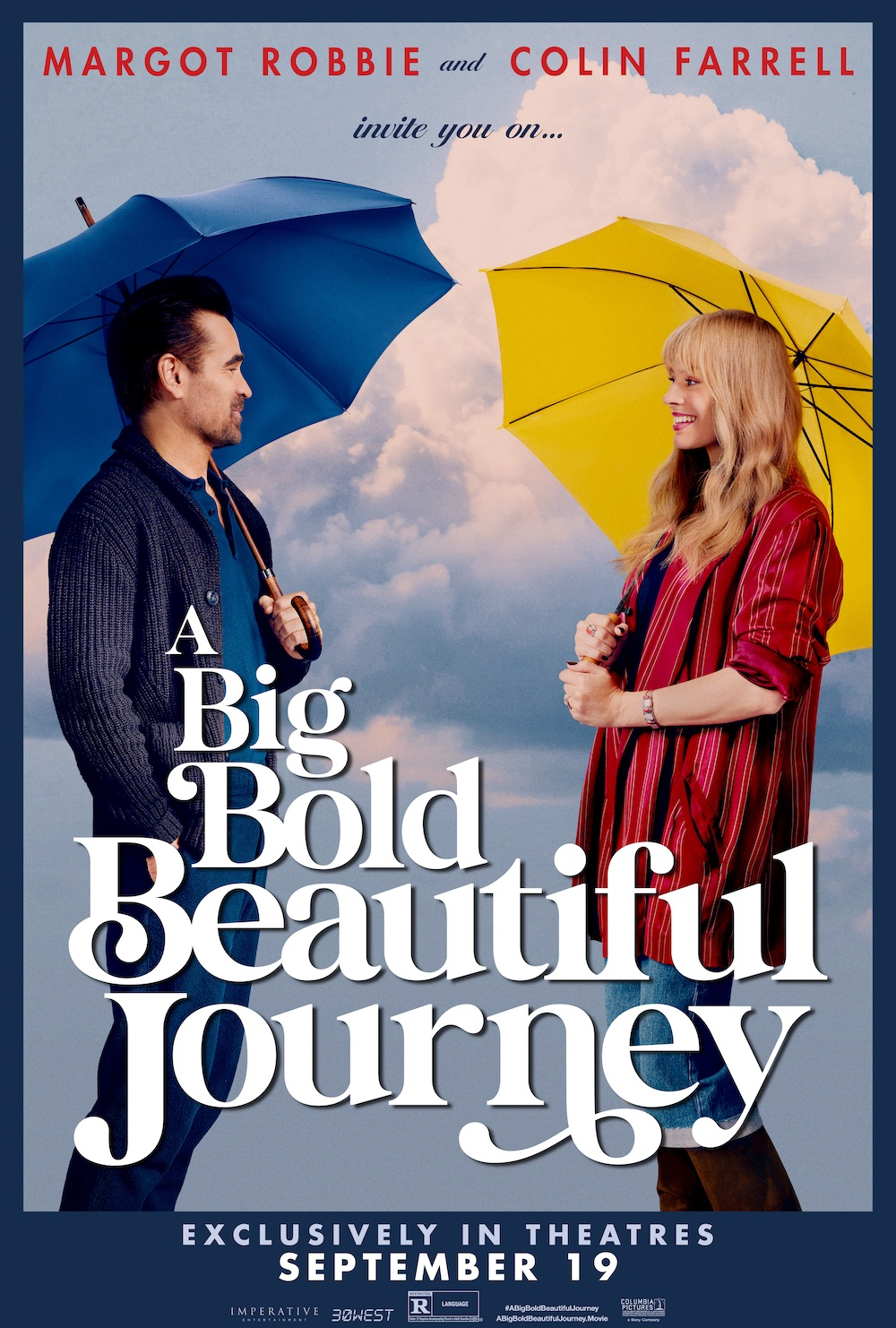
Strangers David and Sarah meet at a wedding and find themselves embarking on a surreal journey on the way home that combines the abstract with the personal, and the past with the present.

Kogonada is a brilliant filmmaker who knows how to unlock the human soul to his audiences with a patient and tender approach. A Big Bold Beautiful Journey isn’t lacking in vision, but in finding a cohesive and meaningful whole within its story. Colin Farrell and Margot Robbie are cast well together in an almost Eternal Sunshine-like odyssey, but Robbie’s character still feels distant as we still know too little about her by the end. Kogonada’s wondrous imagery gives a sense of curiosity and whimsicality, from actions, objects, and colors that stand out in the frame to a hilarious supporting character who’s also a car GPS. Some scenes entertain as the characters look back at regret, loss, and their own lack of self-confidence in creative ways, but it only makes much sense for about half an hour, until the intrigue loses steam and the dialogue in which the characters discuss the film’s themes begins to feel somewhat hollow. As a romance, the film also falls flat, not by looking back at the lead characters’ mistakes in their past relationships, but when a romance between the two of them then comes way too quickly without feeling earned.

A Big Bold Beautiful Journey digs deep into ideas such as confidence, fear, commitment, and remorse, in ways that feel emotionally earnest yet never come together to say something big, bold, and beautiful, like the title says. It’s arguably worth watching for the ambition alone, but also a shame to thing of how much better it could’ve been in the hands of this director and two magnificent stars.

The Roses

Architect Theo Rose and his wife, chef Ivy Rose, live a seemingly perfect life with their two children, until buried resentments start to surface and threaten to destroy the marriage and lives they’ve worked so hard to build.

An amusing update of The War of the Roses, this film retains a similar basic premise but takes a much humbler, less slapstick tone to feel distinct from that previous film which famously saw Michael Douglas and Kathleen Turner butting heads as the titular couple as their marriage hideously crashed and burned. Here, Benedict Cumberbatch and Olivia Colman are the “perfect” pair who make the film worth watching. Cumberbatch shines as a man struggling to find steam and purpose after losing it all professionally, while Colman’s performance as relatively restrained compared to some of her others, but still kills it while matching his smugness. The film has its good laughs, and does justice to some of its great supporting players including Andy Samberg and Kate McKinnon. The first hour tends to drag in the writing, but once it gets to the main point over halfway in, it gets fun. The film works best when highlighting the rockiness in the seemingly best of marriages, and when allowing its two leads to trade insults and threats and try to bring one another down with the sinking ship.

Materialists

Celine Song enlists big names and a larger budget for her second feature after the Earth-shattering Past Lives, but this feels like a Celine Song movie first and never compromises for a more mainstream rom-com approach. In fact, despite some great humorous moments and consistent wit from its characters, the movie hardly feels like a comedy, rather a deep and patient romantic drama. Dakota Johnson finds herself in another hard-hitting role among some of her best like Cha Cha Real Smooth and The Peanut Butter Falcon. Her journey is flawed yet always sympathetic. Chris Evans also gives one of his most heartfelt turns in a long time, with the part of John here fitting him like a glove. Pedro Pascal also has some irresistible scenes with Johnson and the dialogue Song gives him to work with really stands out.

The film dissects how modern superficial worldviews complicate the once-simple idea of love and relationships, while romance and love can sometimes not be more different. Song is an expert at rhythmic and sophisticated dialogue, and builds a quiet and meditative atmosphere with a lovely 35mm film look and Daniel Pemberton’s strong score. There may be more than a few films that tackle similar ideas of love and, well, materialism, but it’s only through Song’s words and style that Materialists works so intimately and profoundly.

Bridget Jones: Mad About the Boy

Renee Zellweger’s iconic British protagonist has become something of a cinematic treasure across four films now. But her films haven’t made us just laugh along at her missteps, but watch her develop, and even come of age, you could say. This final film has a somewhat more bittersweet tone, though, as Bridget’s lover, Mark Darcy, is no longer in the picture. Four years after his loss, she is finally ready to move on and find love again. The film maturely tackles coming to terms with grief, finding joy again while coexisting with the memory of those who have passed on. But it’s also still irreverent, charming, and romantic. It tackles some of the basics that the first film gave a go at, but Zellweger not only shows Bridget’s goofy side, but her struggles with being a single mother of two, and the absence of her husband.

Joining the mix are Chiwetel Ejiofor and Leo Woodall, who both charm in different ways, but Ejiofor in particular has great chemistry with Zellweger. Though it does retread familiar rom-com territory, or that of comedies about parents raising children, and it’s not the sharpest or smartest of the franchise over Bridget Jones’s Baby, it still offers a good time and a heartwarming conclusion to a lovable, messy delight of a character.

Babygirl

It’s so easy for erotic thrillers to fall too far into camp, or take themselves too seriously, which has caused many, such as Unfaithful or Basic Instinct, to fall into either melodrama or laughability. Babygirl not only succeeds because of its layered themes, but also because of its irony. It feels like a film that has to be made today. Only Halina Reijn behind the camera could’ve made Babygirl feel as audacious as it is without the moral discomfort taking over. The direction, cinematography, editing, and score pack surprises and evolve with the film as the story descends into murkiness and the situation gets increasingly out of hand. 

Nicole Kidman gives her most daring performance in years, a character that on the page seems like many others she’s played, but is ultimately anything but. The script explores Romy’s inability to recognize her freedom to choose after an awful decision, as she throws herself into a situation she suddenly can’t escape. The film dives into power and gender dynamics, workplace standards, and the murky idea of submission. Is power the ability to lie? To be reckless? To screw up, or even give that power up? Are those powers and luxuries different for women, even today?

While Kidman is incredible, Harris Dickinson is equally magnetic. He’s equal parts silly and brutish, and the tough masculinity bursts out of his awkward softness, indicating a desire to pin down and control. Their dynamic is fascinating, but the movie brilliantly leans into camp humor during some of the more cringey scenes, without it overshadowing the mature undertones. Antonio Banderas also has plenty of strong moments, playing Kidman’s husband, a complex, empathetic character in his own right. Sophie Wilde shines as well, and her scenes are brilliantly played and key to the film’s themes.

The film’s thrills come in this fusion of feelings we have towards these characters, and how easily it all escalates. Reijn is clearly having fun with it all, whether the shots of corporate Manhattan, the mirror she holds to these characters, or the remarkable soundtrack choices. The runtime is enticing and you never quite know what you’re about to get. There’s nuance to unpack and never provides easy answers to its questions about its workplace and familial settings, but it all feels so effortless that you never feel like the movie’s working too hard to make you think, laugh, or have fun.

Babygirl - Wikipedia

We Live in Time

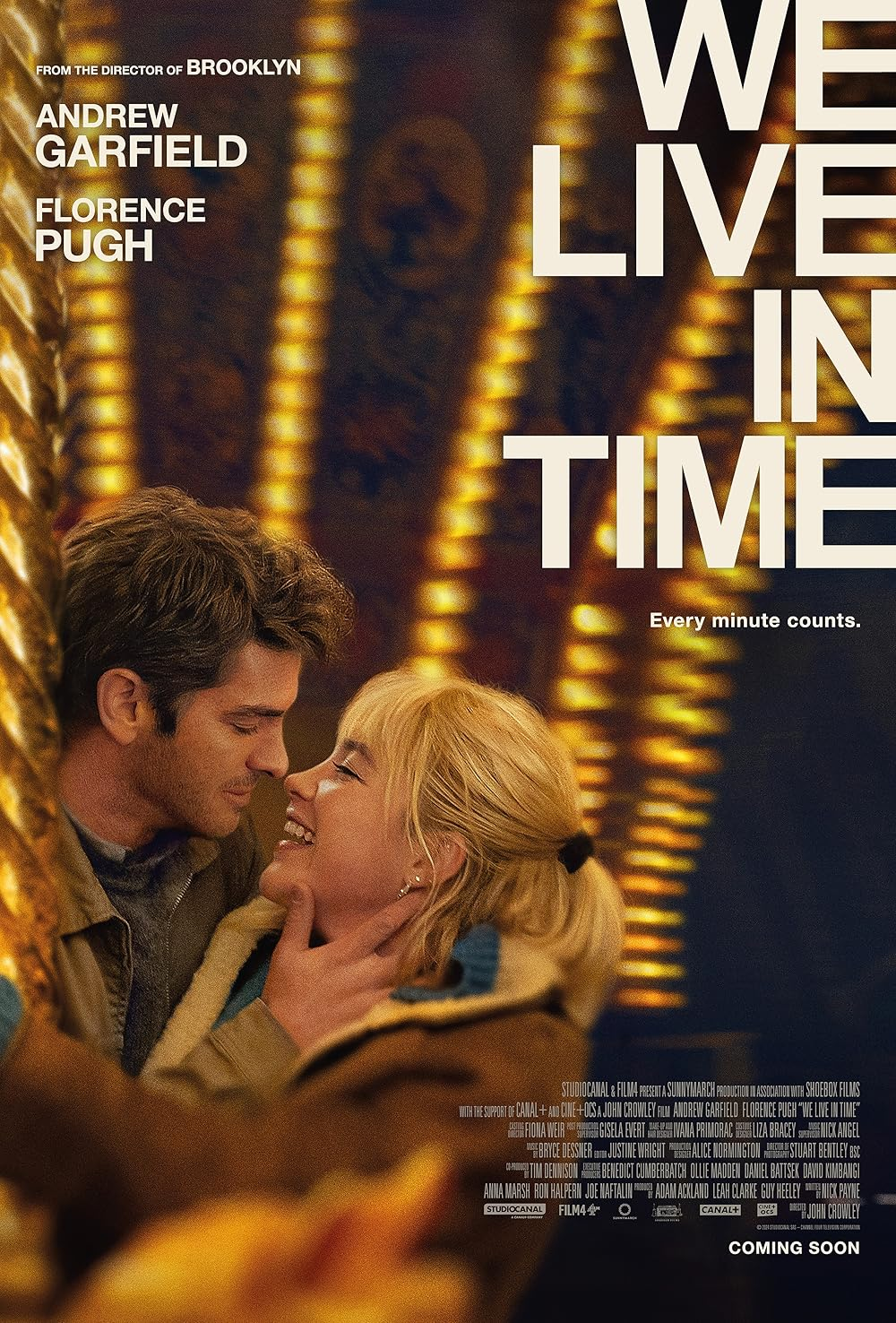
Oscar nominees Andrew Garfield and Florence Pugh star in a film about more than just romance, but about making the best of our time and deciding what we want to leave behind for ourselves. As a couple faced with difficult decisions, the two leads shine, although it takes some time to buy them as a grounded couple rather than two A-list stars in a major pairing. Pugh in particular is the film’s heart: she’s a woman faced with a sadly universal and terrifying circumstance, working to preserve herself, her future, and her image for her loved ones and finding out that she doesn’t have to choose between them. Garfield is also vulnerable and works well when his character is lovingly caring for Pugh yet standing up in their relationship. 

Though the score and the pace are meditative, the unfolding of the story suffers from the unnecessary decision to present the events in a non-linear fashion, which accounts for more confusion than revelation. The film doesn’t quite live up to the high bar set by its talented leads and John Crowley’s incredible romance Brooklyn (2015), but also ends up finding its footing in a final act that follows through on the empowering promise it sets up for Pugh’s character. It also doesn’t overstay its welcome and allows things to be open to the audience’s interpretation, as is the passage of time and the future as we view it from the present. It’s a solid and human film that takes time to end up resonating, but is lifted by impressive performances and an inconsistent but ultimately heartfelt and meditative runtime.

Challengers

Tashi, a former tennis prodigy turned coach, turned her husband Art into a champion. But to overcome a losing streak, he needs to face his ex-best friend, Patrick, who’s also Tashi’s ex-boyfriend.

One thing that’s thrilling about Challengers is that it never gives you easy answers. Is it about devotion? Manipulation? Triumph? Doom? All of them? One thing’s for sure: it’s a film about passion. Raw physical and emotional passion between humans for one another, and for the kick they get doing the one thing they can’t live without — in this case, playing tennis. And for all the right reasons, Luca Guadagnino is at his most maximalist stylistically to convey this raw passion these characters feel and bring us into the world, from exciting editing and some experimental cinematography to the synth, almost Run Lola Run-esque score from Trent Reznor and Atticus Ross. It’s the polar opposite to his more naturalistic, minimalist approach to the intimacy of Call Me By Your Name, and an upping of the ante of the wilder style of Bones and All. Zendaya gives one of her heaviest performance, portraying Tashi perfectly over a long span of time, through fascination, ambition, longing, control, and deceit. Josh O’Connor and Mike Faist are also great, particularly Faist, whose charm entrances the screen. The West Side Story star announces himself as a powerhouse whose apparent harmlessness you can’t help but feel for. Their friendship established in the opening minutes of the film sets the stage for everything to come, and makes you care for how the rest may unfold or fall apart.

Challengers is the rare film that transports you into its world in a case where there are only 3 characters who really bear any significance. There’s a scene between the three main characters that happens early on chronologically that enchants you and sucks you into the close, complicated intimacy they inhabit in this space, and the film never lets you go once this scene happens until the credits roll. It’s an experience that’s dynamic, unpredictable, and darkly human, with three riveting leading performances at its center, and sets the bar the rest of what’s to come in Guadagnino’s directorial career.

Priscilla

When teenage Priscilla Beaulieu meets Elvis Presley, the man who is already a meteoric rock-and-roll superstar becomes someone entirely unexpected in private moments: a thrilling crush, an ally in loneliness, a vulnerable best friend.

Sofia Coppola’s strong directional choices, including the timely visuals and songs, shine through in Priscilla. Cailee Spaeny’s star-making performance shows Priscilla as a young woman who feels like the luckiest girl on Earth as she’s the one adored by the world’s most desirable and larger-than-life musicians and celebrities. She feels like she’s a princess, like she’s in Barbieland — except she soon learns that she’s seen as more of an accessory in Elvis’ “dollhouse” than the star. The movie doesn’t gloss past the couple’s age difference, nor does it forgive Elvis’ reckless habits and the consequences of fame on personal privacy and autonomy. Priscilla is depicted as a woman who always longed for independence but is never truly able to stand on her own two feet in her pursuit of adoration from the man she loves. Jacob Elordi also steals the scene as Elvis, perhaps not as pitch-perfect as Austin Butler’s transformation last year in Baz Luhrmann’s Elvis, but he still brings a lot to the role.

The costumes and production value create a very lavish look that shows the glamorous life Priscilla was attracted to and lived alongside Elvis, but within that a sense of loneliness as she struggles with sharing him — her Elvis — with the rest of the world, and the celebrity and husband versions of the man become hard to separate in their relationship. Though the second half does begin to feel structurally repetitive and doesn’t draw you in as much as the first half, the film knows exactly when to end in a moment that brings the best out of Spaeny’s performance. Priscilla is a personal look into the lives of legends that’s boasted by its aesthetic style and Spaeny’s naivety and gravitas she brings to the titular role.

Past Lives

Nora and Hae Sung, two deeply connected childhood friends, are wrested apart after Nora’s family emigrates from South Korea. Twenty years later, they are reunited for one fateful week as they confront notions of love and destiny.

Though stories about “what if” romances are not alien for audiences, director Celine Song introduces herself to the mainstream with a magnificent film that’s beautifully told through her gentle eye and script. The style is filled with meditative melancholy, exploring the beauty of fate and what does and doesn’t come out of it, and that happiness and destiny can also mean loss and regret — this is heavily indicated through Greta Lee, who’s lovely performance inhabits lots of emotions but with great restraint in her profoundly kind and poignant expression of the character. Teo Yoo is also excellent as Hae Sung, and John Magaro is delightful as Nora’s husband who deals with this interesting situation for him with patience, understanding, and goodness.

The beautiful wide shots that linger on the characters express the energy they feel within the space they inhabit, and the calming score is simply unforgettable. Within moments of the film, the simplistic yet intimate style pulls you into the love, pain, and reflection these characters experience. It’s one of the most enchanting, touching movies about love and connection I’ve ever seen, deserving a mention in the same breath as Her and Before Sunrise. Yet this one may not just make you reflect on romance, but about those special people in your life who may come in and out but change your life forever. It’s one of those films that digs to the deepest points of your heart and never leaves and may leave you as filled up as heartbroken, and may end up being a defining film for 2023.