Marty Supreme

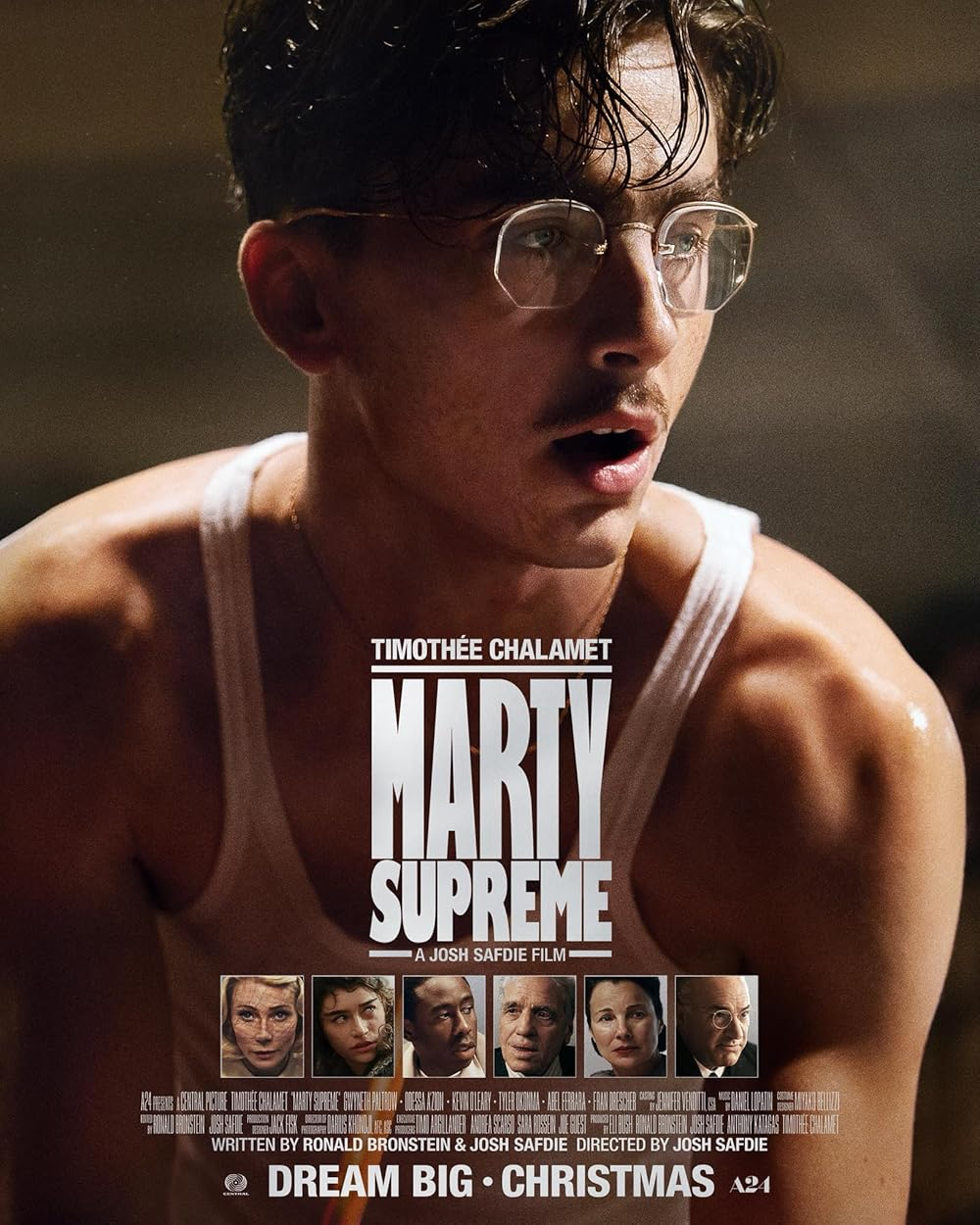
The Safdies’ bold filmmaking style has reinvented storytelling since they entered the scene in their expert use of handheld camerawork and overlapping dialogue to build tension, and Josh Safdie’s newest film is not only his grandest, but also one of the year’s must-watch movies that subverts most modern categorizations. If you had trouble rooting for Adam Sandler’s lead in Uncut Gems, Timothee Chalamet’s portrayal of Marty Mauser is almost as slimy, smooth-talking, and utterly self-centered. Not to mention, it’s the best performance of his entire career, devoting so much physicality in every moment to a character who desires to not only be great, but to be celebrated for his greatness. That’s exactly what causes him to make choices that are hot-headed, self-destructive, and often awful to others. Chalamet is loud but oddly charismatic, energetic, and layered. So why, through it all, are we secretly hoping for our unlikable protagonist to get what he wants, even if we know he might just squander it? Marty hustles, lies, insults, and risks it all to reach his ultimate goal of being the best ping pong player in the world, and Safdie’s direction as certain scenarios open rabbit holes of crazy and unwanted situations captures the exhilarating and hysterical chaos of it all.

Odessa A’zion delivers a spectacular breakout performance, giving her character of Rachel a kinetic unpredictability and standing out as a pivotal role in the story that’s impossible to look away from. Gwyneth Paltrow gives much heft to her character, a lost and washed-up but passionate actress looking to be heard in what she feels is a stuck situation in her life, and Kevin O’Leary also shines in a role defined by authority, vanity, and a coldness that looks down on Marty as he approaches him. Tyler, the Creator also stands out as a friend of Marty’s who shares some of the craziest scenes of the film with him. Safdie does an outstanding job of capturing the dirty and rugged look of 1950s New York, with madness increasing as characters yell over each other with the camera up in their faces, or sometimes bad or desperate situations escalate to much, much worse. The script, camerawork, and editing are working together in unison in every moment to create an intense and nail-biting flow that never stops. Not to mention, Daniel Lopatin’s booming score and the brilliantly selected soundtrack enhance every moment in which they’re present.

Chalamet’s performance that vivdly brings the titular character to life is just as fascinating as trying to piece together the greater poetry of the story. The magnitude of Marty’s ambitions are underscored by his entitlement to his gifts and destiny, and his willingness to deceive and toss those close to him aside. This make it fun to predict whether or not he’ll find the success he’s looking for; if he does, at what cost? And if he doesn’t, which of his egregious mistakes will be his downfall? In expected Safdie fashion, it’s overwhelming direction and sound design contribute to a nail-biting watch that resonates as a wickedly structured character study, an absurdly shocking comedy, and one of the one of the most epic dramas of the year.

The Smashing Machine

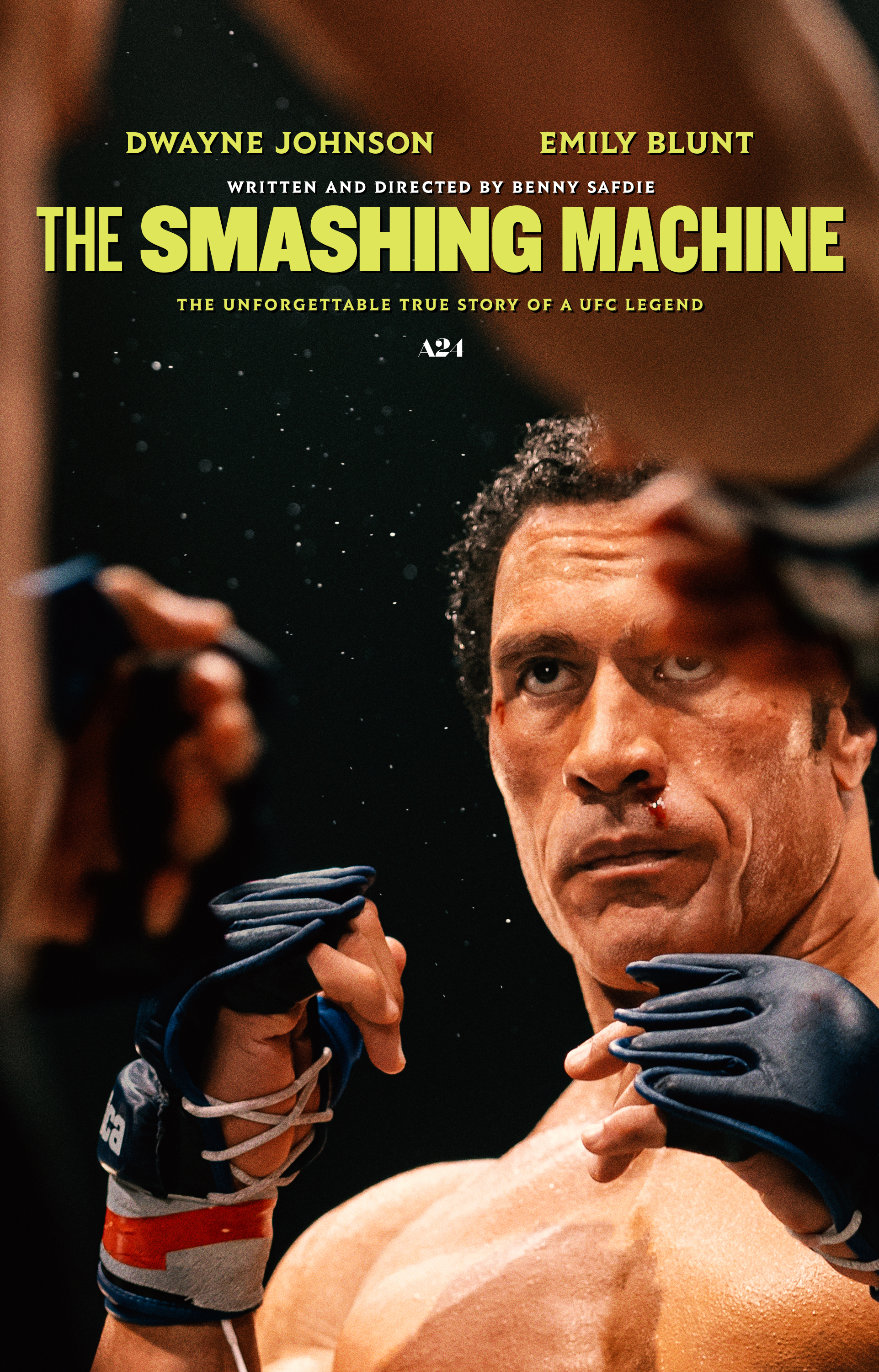
Benny Safdie and Dwayne Johnson make for the most unlikely but welcome director-actor pairing of the year, and the latter gives a performance that not only transforms him on screen, but his image for audiences. The massive movie star persona we’re used to from him completely disappears and Johnson becomes one with Mark Kerr, the MMA fighter he plays in the film. Kerr is incredibly ferocious and determined, but sees losing as a non-option and can’t quite cope with the idea of it, even when it’s bound to happen for all athletes. Emily Blunt is also phenomenal as Dawn, Kerr’s girlfriend, matching his anger and desire to be heard in many great scenes.

The Smashing Machine, thanks to Safdie’s brilliant directions, captures a feel beyond that of a three-act screenplay with actors reading dialogue, but rather feels like you’re merely a fly on the wall inhabiting and moving through this space with the characters as you get to know them deeply and intimately. One of the beautiful things the film captures is the community MMA builds, with players training together and bonding as friends who feel like family to one another, even when there’s a chance they may face each other in the ring. It also has wrestling scenes that put many other films to shame, that are captivating even when the camera is hardly filming from inside the ring. It’s a movie so gripping you won’t realize how quick the runtime has flown by, winding up a lesser known and scale but still strong success story that’s expertly put together for an exhilarating 2 hours that demand your full attention.

F1

Brad Pitt leads F1 with his signature leading charm that’s effortless and likable, even when character makes selfish decisions. Together with the rest of the cast, and the film’s commitment to in-camera racing and massive scale, this sports drama has all the right ingredients, even if the story is rather standard. The cinematography in the racing action is beautiful, and the sound design is impeccable and immersive. Hans Zimmer’s score is a standout, as is the soundtrack that includes celebrated contemporary hip hop artists. This exciting energy elevates the film and makes what you’re seeing feel so real.

However, the character beats are almost all formulaic (no pun intended) — the reluctant veteran thrown back in, the cocky rookie and the rivalry between them, the antagonistic businessman, and so on. It’s never hard to tell where the story is going, and we’ve seen similar arcs before, even in Joseph Kosinski’s own Top Gun: Maverick. That said, the aforementioned rivalry between Pitt and Damson Idris is admirable and complex, and the experience is elevated by knowing they’re actually driving those cars. Idris and Kerry Condon are standouts from a performance perspective. Idris’ almost vain excitement to be in the big leagues contrasting Pitt’s strategic mind who’s also a bit worn out and not sure he’ll ever find that spark he once had for racing again. Condon makes us root for her part just as much, a brilliant technical direction behind the scenes who’s also in pursuit of a complete victory.

F1 packs few surprises in its script, but it more than redeems itself with the exhilarating scope that justifies the theatrical experience. Best of all, it celebrates not just the grandeur of the sport in its highs, lows, and the ambitions of those behind the wheel and the pit stop, but the potential of the blockbuster, especially with practical effects. It completely delivers on its promises with astonishing action and cinematography, and the familiarity is more than redeemed by the entertaining cast and the stunning technological accomplishments.

The Fire Inside

Rachel Morrison impresses in her touching and exciting directorial debut. The film focuses on Claressa Shields, the only American boxer to win a gold medal at the Olympics — let alone at age 16!

Morrison’s energetic style and the vibrant soundtrack give a Creed-like energy to The Fire Inside, a film that portrays the city of Flint as the ultimate underdog and gives the audience characters we can really interact with and understand, even if we don’t always agree with them, such as Claressa’s parents. Ryan Destiny shines in her first major role, giving Claressa Shields a titular fire and rageful drive to win that makes her fascinating and lovable.

What makes the film worth the price of admission is watching Brian Tyree Henry work his magic in an awards-worthy powerhouse of a performance. As Claressa’s coach Jason, Henry not only extends an enduring tough love that anchors the film, but makes the audience fall in love with the character and wish for him to be our coach and grounding force. Henry’s one-of-a-kind humanity and charm makes Jason lovable and riveting, and we as an audience deeply care for him and understand his decisions even when Claressa might not.

As for the film as a whole, there are many familiar beats to other sports and boxing films that it touches on, but it never loses its heart and engagement and even subverts the typical uplifting sports film structure to show that its true soul was in this coach-student relationship that feels like so much more to us. It’s not going to rank among the greatest boxing pictures, but surely is worth a watch for a feel-good story.

Challengers

Tashi, a former tennis prodigy turned coach, turned her husband Art into a champion. But to overcome a losing streak, he needs to face his ex-best friend, Patrick, who’s also Tashi’s ex-boyfriend.

One thing that’s thrilling about Challengers is that it never gives you easy answers. Is it about devotion? Manipulation? Triumph? Doom? All of them? One thing’s for sure: it’s a film about passion. Raw physical and emotional passion between humans for one another, and for the kick they get doing the one thing they can’t live without — in this case, playing tennis. And for all the right reasons, Luca Guadagnino is at his most maximalist stylistically to convey this raw passion these characters feel and bring us into the world, from exciting editing and some experimental cinematography to the synth, almost Run Lola Run-esque score from Trent Reznor and Atticus Ross. It’s the polar opposite to his more naturalistic, minimalist approach to the intimacy of Call Me By Your Name, and an upping of the ante of the wilder style of Bones and All. Zendaya gives one of her heaviest performance, portraying Tashi perfectly over a long span of time, through fascination, ambition, longing, control, and deceit. Josh O’Connor and Mike Faist are also great, particularly Faist, whose charm entrances the screen. The West Side Story star announces himself as a powerhouse whose apparent harmlessness you can’t help but feel for. Their friendship established in the opening minutes of the film sets the stage for everything to come, and makes you care for how the rest may unfold or fall apart.

Challengers is the rare film that transports you into its world in a case where there are only 3 characters who really bear any significance. There’s a scene between the three main characters that happens early on chronologically that enchants you and sucks you into the close, complicated intimacy they inhabit in this space, and the film never lets you go once this scene happens until the credits roll. It’s an experience that’s dynamic, unpredictable, and darkly human, with three riveting leading performances at its center, and sets the bar the rest of what’s to come in Guadagnino’s directorial career.

Ferrari

Ferrari is legendary director Michael Mann’s latest outing, telling the titular racing driver and entrepreneur’s family life and his entering of his racing team into the 1957 Mille Miglia cup in an attempt to solidify Ferrari as the greatest auto name in Italy — and maybe even the world.

Adam Driver gives a great performance as a figure whose determination for glory and pushing the limits as to what’s possible are front and center — but not necessarily depicted in the most interesting way. His character’s decisions don’t have a lot to say, neither does the story of his relationship with his wife, played by Penelope Cruz; rather it’s the performances that elevate the material. Shailene Woodley is also strong in the film, as is Patrick Dempsey, but again, their characters are more fun to see due to the actors’ work than what they give the film. Like with Ali, Michael Mann seems to be in control of the era he’s depicting through the racing scenes and the production of the scenery. The shots of the cars zooming through the Italian countryside are nice, and everything around Ferrari’s preparation for the race is engaging. However, Ferrari doesn’t have anything as momentous to say as its titular brand and its portrayal of the thrill of the sport of racing by the end of its runtime, which occasionally slows down. The third act is especially noteworthy and there’s a devastating event that hits hard at the end of the film. It’s always a pleasure to see Driver commit himself to a great role, but there’s certainly more resonant racing true stories such as Ford v Ferrari and Rush.

Next Goal Wins

Next Goal Wins is the true story of American soccer coach Thomas Rongen, who travels to the American Samoa to help transform their team from the world’s worst team into stars. Taika Waititi’s irreverent flare not only gives the film plenty of laughs but an endearing underdog spirit that also highlights Samoan culture unlike lots of popular media. The casting of Michael Fassbender, an actor known primarily for dramatic roles, as a comedic lead does the film wonders. The way he portrays frustration and confusion with the incompetence around him is enjoyable, until the character begins to accept his journey into finding community around him, which becomes quite touching. Kaimana is also a standout as the character Jaiyah, an incredibly memorable and impactful character, not to mention fun supporting performances from Will Arnett and Elisabeth Moss.

The film’s comedic style is incredibly laugh-out-loud and makes you laugh in every way from situational humor to extreme physical comedy — the way Waititi does it best. Sure, underdog sports movies aren’t new to us, but the special cultural touch and loving characters make this a film that’s entertaining with every moment it has to offer. It’s short but incredibly sweet and wears its heart on its sleeve from the opening to the end credits that show you the real story the film is based on.

Gran Turismo

Gran Turismo is based on the true story of racer Jann Mardenborough, who wins a series of Nissan-sponsored video game competitions through his gaming skills and becomes a real-life professional race car driver. Though the spectacle is strong with this film, the overall execution is muddled and mostly carried by David Harbour’s performance as Mardenborough’s trainer. Harbour is excellent as a hard but deeply encouraging mentor figure who develops a camaraderie of sorts with Jann, and the story of a gamer achieving the impossible and fulfilling his dreams becoming a real racer has some fun to it considering its a true story, but there’s also dragged out “sports underdog” cliches and a muddled execution. Blomkamp’s directing is fashionable but often jarring, with headache-inducing editing during the racing scenes that clearly look expensive but lack the adrenaline of Ford v Ferrari and Rush. Archie Madekwe is solid in the lead role, but the supporting cast doesn’t feel as interesting or human, with the exception of Harbour and a strong Djimon Honsou. The first two acts though are dragged out and the montage-style pacing feels frustrating and uninteresting, with weird video game-like edits that are supposed to feel meta but instead take you out of the scene.

Gran Turismo has enough references for fans of real-life racing, and racing scenes for fans of action and sports, and the third act is a fun and significant improvement over the first hour and a half of the film, but may not warrant a watch unless you’re strictly looking for sports and spectacle.

Air

Air tells the true underdog story behind a stamp in worldwide culture — shoe salesman Sonny Vaccaro, and how he led Nike’s pursuit of the greatest athlete in the history of basketball, Michael Jordan. We know how the story will end, but seeing the risks and passion of the characters is what makes the experience of watching Air pay off. The film is led by an all-star cast of Matt Damon, Ben Affleck, Jason Bateman, and Viola Davis, who are all great — as well as Chris Messina who delivers a fantastic supporting performance as Jordan’s agent. Damon takes the spirit of a many who dared to think against the company’s norm and risk everything to aim extremely high in his belief that one athlete and one shoe can make the world better for all the sports fans, shoe-wearers and dreamers out there. That heart absolutely is felt with the audience, with the knowledge that Michael Jordan has in fact become one of the most inspirational figures in the world to people of all ages, genders and backgrounds. Not only that, but the writing and directing make the business side of the rise of Air Jordan interesting, when the courtside aspect of the sport is absent. Also absent is Jordan as a character in the movie, which may distract for some, but the movie doesn’t outright suffer because of it. Davis is also excellent, showing a mother that gives everything to advocate for her son, and stands for the pure belief that her son will in fact change the world of basketball forever.

The turning of a pivotal moment in the NBA into a high-stakes, big dream from humble beginnings, that changed an industry forever, definitely reminds of the recent HBO series Winning Time: The Rise of The Lakers Dynasty, which would make a great companion piece to watch with Air. The 80s feel and soundtrack that director Ben Affleck gives the movie provides a feeling of the greatness that is right around the corner, that these dreamers at Nike are just about to achieve, and the rush of whether or not their hard work and putting everything on the line will convert to success and dreams into reality. Fans of Damon and Affleck, sports films, feel-good movies, and dramas should go to the big screen for this one that turns a business deal about a shoe into the fight of a generation that changed the world and raised the bar for what humans and dreamers can do.

Creed III

Adonis Creed has been living out his wildest dreams, including being the reigning heavyweight boxing champion of the world, and a loving husband and father. When an old friend Dame returns from a long prison sentence, he brings back his and Adonis’ past with him, which will lead to the next big match of Creed’s career.

Though the Creed films were always follow-ups to the beloved Rocky franchise, they’ve made themselves feel fresh and modern while retaining the themes of hard work, underdogs, healthy masculinity, and family that make Rocky so iconic. Three films in, and what you’re watching still feels exciting and imbued with passion from behind the camera. Not to mention the director behind the camera is also its star, Michael B. Jordan. He delivers a strong debut as a filmmaker and brings out not only a strong visual energy to the boxing and training sequences, but the best out of the performances. Jordan and Thompson again work so well together and are two of the most charismatic, vigorous stars of this generation. The dynamic they have, now that their daughter is in the films too, brings another beautiful layer to their world that we’ve already been invested in thanks to the last two films. Jonathan Majors is a formidable screen partner to Jordan as Dame, a man ready to get back at the world for the unfortunate past he’s suffered and the life he feels he’s been robbed of. But similar to the Dragos in Creed II, Dame is empathetic and his longing for the championship Rocky and Creed have already felt isn’t as selfish as his attitude towards getting there.

Along with the excitement of seeing cool stars spar it out in the boxing ring is the complexity that the Creed films’ characters have and the scripts’ push to always have them growing and learning new things, as for every film to feel significant. Despite this, one story arc does feel slightly incomplete at the end and despite creative editing from Jordan, it does get aggressive in a few instances. Though it isn’t as wondrously directed as when Ryan Coogler was at the helm, it’s a film that gets better and better, with the dialogue just as exciting as the sports, but when the sports is there, it’s a blast thanks to the actors, direction, and always thrilling soundtrack that gives the film so much life.