Marty Supreme

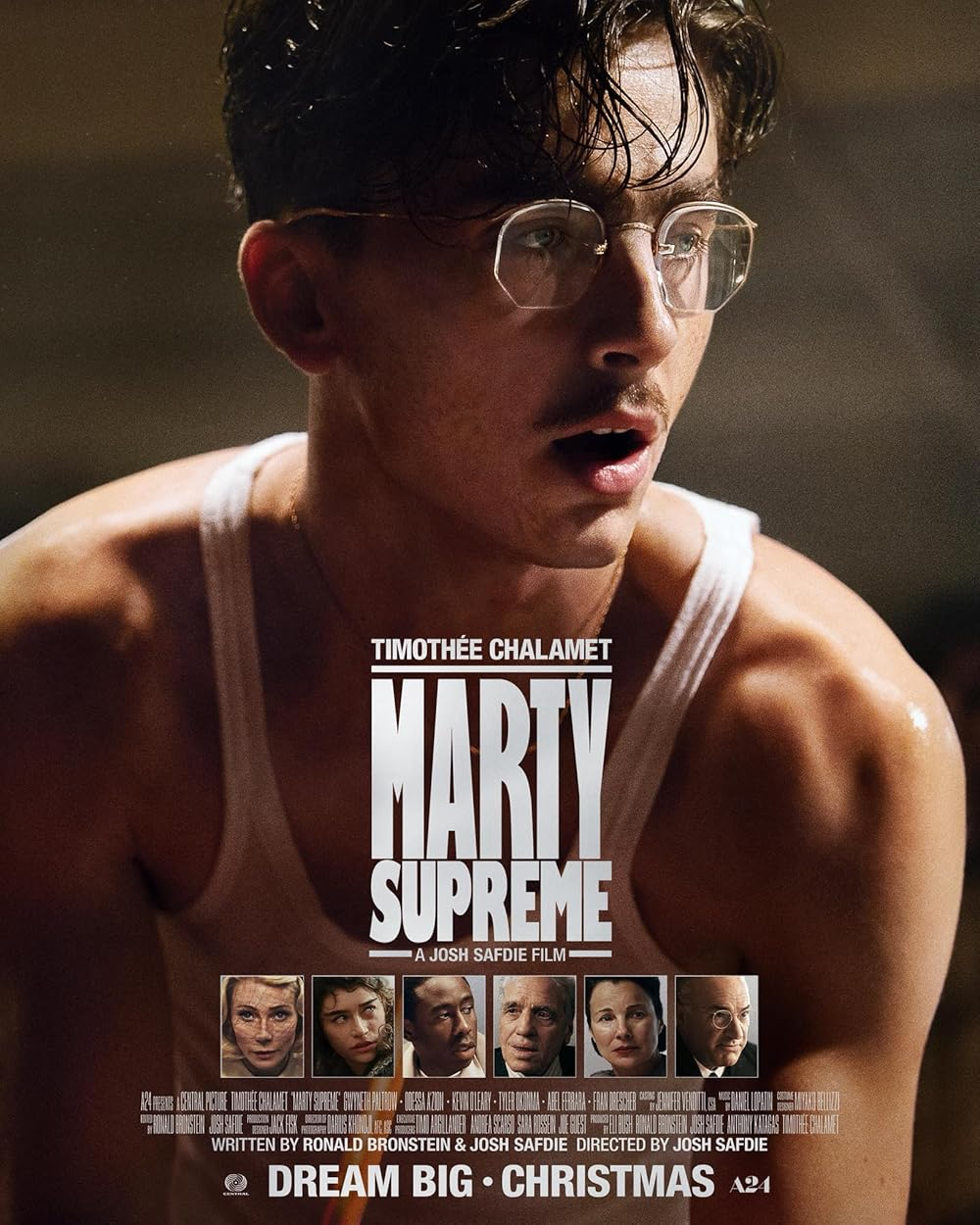
The Safdies’ bold filmmaking style has reinvented storytelling since they entered the scene in their expert use of handheld camerawork and overlapping dialogue to build tension, and Josh Safdie’s newest film is not only his grandest, but also one of the year’s must-watch movies that subverts most modern categorizations. If you had trouble rooting for Adam Sandler’s lead in Uncut Gems, Timothee Chalamet’s portrayal of Marty Mauser is almost as slimy, smooth-talking, and utterly self-centered. Not to mention, it’s the best performance of his entire career, devoting so much physicality in every moment to a character who desires to not only be great, but to be celebrated for his greatness. That’s exactly what causes him to make choices that are hot-headed, self-destructive, and often awful to others. Chalamet is loud but oddly charismatic, energetic, and layered. So why, through it all, are we secretly hoping for our unlikable protagonist to get what he wants, even if we know he might just squander it? Marty hustles, lies, insults, and risks it all to reach his ultimate goal of being the best ping pong player in the world, and Safdie’s direction as certain scenarios open rabbit holes of crazy and unwanted situations captures the exhilarating and hysterical chaos of it all.

Odessa A’zion delivers a spectacular breakout performance, giving her character of Rachel a kinetic unpredictability and standing out as a pivotal role in the story that’s impossible to look away from. Gwyneth Paltrow gives much heft to her character, a lost and washed-up but passionate actress looking to be heard in what she feels is a stuck situation in her life, and Kevin O’Leary also shines in a role defined by authority, vanity, and a coldness that looks down on Marty as he approaches him. Tyler, the Creator also stands out as a friend of Marty’s who shares some of the craziest scenes of the film with him. Safdie does an outstanding job of capturing the dirty and rugged look of 1950s New York, with madness increasing as characters yell over each other with the camera up in their faces, or sometimes bad or desperate situations escalate to much, much worse. The script, camerawork, and editing are working together in unison in every moment to create an intense and nail-biting flow that never stops. Not to mention, Daniel Lopatin’s booming score and the brilliantly selected soundtrack enhance every moment in which they’re present.

Chalamet’s performance that vivdly brings the titular character to life is just as fascinating as trying to piece together the greater poetry of the story. The magnitude of Marty’s ambitions are underscored by his entitlement to his gifts and destiny, and his willingness to deceive and toss those close to him aside. This make it fun to predict whether or not he’ll find the success he’s looking for; if he does, at what cost? And if he doesn’t, which of his egregious mistakes will be his downfall? In expected Safdie fashion, it’s overwhelming direction and sound design contribute to a nail-biting watch that resonates as a wickedly structured character study, an absurdly shocking comedy, and one of the one of the most epic dramas of the year.

Avatar: Fire and Ash

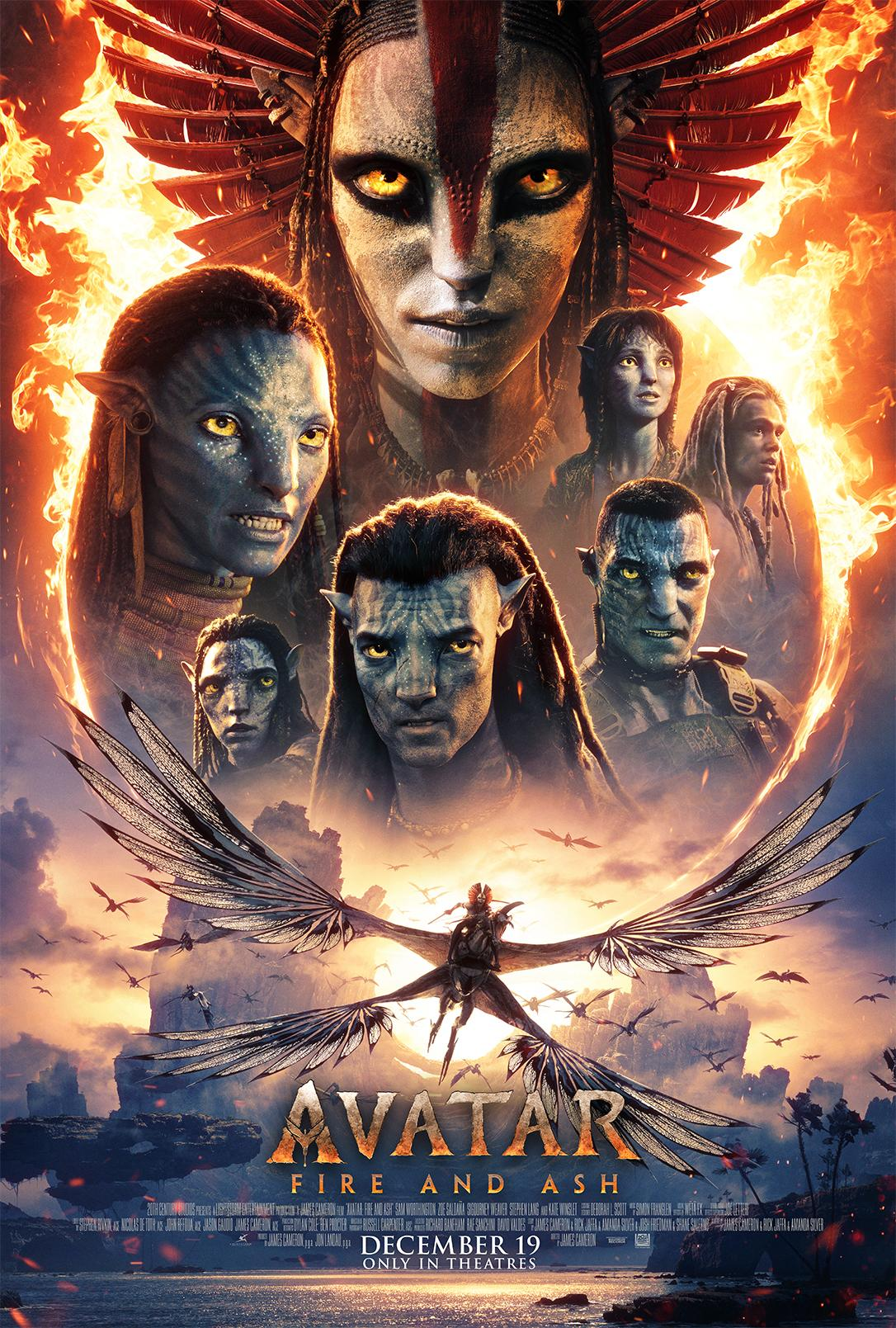
James Cameron succeeds yet again in teleporting the audience from their seats into the lands, airs, and seas of Pandora and anyone who buys a ticket for Avatar: Fire and Ash may experience one of the most visually arresting things they’ve ever seen. The complexity of the water, the Na’vi people themselves, and the incredible settings are so detailed and breathtaking to look at, immersing you into an action sci-fi saga with epic scale that only Star Wars and Dune have reached recently. Every character is challenged to the brink to make the most difficult choices, and the child characters from the last film are even stronger here. Jake and Neytiri’s son Lo’ak earns a lot of spotlight he’s given, and Jack Champion’s performance has definitely improved. Zoe Saldaña is again a highlight as Neytiri and given much more to do, while Sigourney Weaver impresses in her strong performance as Kiri. Stephen Lang eats up the scenery as the ruthless and vengeful Quaritch. It’s interesting to examine his grievance against Jake, as they’re both once-human military men now in Na’vi bodies, but even more interesting is the dichotomy between Neytiri and new antagonist Varang, played fantastically by Oona Chaplin. She’s the leader of the Ash People, who reject the Na’vi belief in the goddess Eywa and is hellbent on spreading chaos.

The action sequences are brought to life with such a might and grandeur that it truly feels like the culmination of decades of blockbuster filmmaking. The journey is so stunning that you may not want it to end, but if anything holds the film back, is action set pieces feeling recycled from the last film. The similarities to The Way of Water, especially in the final act, are glaring, including numerous character dynamics/arcs and action scenes. The human characters get a lot of screen time and are rather annoying, especially Giovanni Ribisi, who is needlessly brought back from the first film. However, it looks so gorgeous, particularly a jaw-dropping final battle, and the emotional stakes are so high that the immersive adventure forgives much of its unoriginality and some narrative shortcomings. Those looking for another thrilling experience will be amazed by the sheer beauty of what may be one of the most intricate and astounding CGI achievements of all time. If you can forgive some familiarity, Fire and Ash will lift you out of your seat and take you to worlds away that feel so tangible that watching it in big formats like IMAX and 3D is a once-in-a-lifetime experience.

Jay Kelly

Noah Baumbach’s largest film in cast and scale isn’t his best work or even close, but certainly one of his most ambitious. George Clooney stars as the titular Hollywood actor seeking to reconcile with his daughters as he is about to be given a lifetime achievement honor in Europe. Jay’s relationship with his manager Ron is the film’s real heart here, with Adam Sandler not only stealing the entire film but giving one of the best performances of his entire career. Ron is torn between his devotion to his client and dear friend, and the heartache of missing out on time with his wife and kids. Sandler gives the character a dimensional charm, conflict, and vulnerability. Laura Dern is also outstanding as Jay’s publicist, also frustrated as she’s desperately trying to fulfill the impossible role of chasing Jay around and covering for him.

Many other familiar faces give very strong performances here, although Baumbach’s directing here stands out even more than his writing this time around. The film’s approach to memory and distance is very interesting, as is the idea of this “king” finally spending time with ordinary people who perceive him as a legend of sorts. However, the main storyline between Jay and his daughters doesn’t quite have the emotional weight that’s needed, with the themes being a bit too obvious and the film just lacking enough screen time with his youngest daughter to feel the way the movie wants us to about the main father-daughter relationship here. A performance moment and line delivery from Clooney in the film’s final moments, however, elevates the entire film and brings the themes full circle, even if it takes that long for them to really hit hard. Jay Kelly doesn’t live up to the excellence of Baumbach’s best storytelling like Marriage Story, but is still big yet introspective, with Clooney and Sandler standing out together, and the latter’s performance resonating in particular.

The Running Man

In a future ruled by an authoritarian government, Ben Richards joins a deadly game show to win money to support his family. There’s one catch: to win, he has to survive one month on the run from expert assassins who are trying to kill him.

The Running Man is not the first film adaptation of the Stephen King novel, but it’s also the rare reimagining that not only justifies its existence by taking a completely different and more faithful direction, but also tops the original film by far. Edgar Wright’s love of filmmaking shines through in all of his projects, no matter the scale or setting. This one is a lot more self-serious than his other works, but still enough irreverence and humor shines through to balance that out. Glen Powell’s action star material gives the film much flare and entertainment, making Ben Richards a fun character to root for, even when some of his characteristics don’t always add up (a subplot about his anger issues becomes rather irrelevant after the opening minutes). Colman Domingo is also a riveting standout as the host of the titular game show, giving the dialogue and performance his all. His scenes of commentary and theatrics elevate much of the film.

Though its themes have been explored in other films, including many recent ones, it still very intriguingly explores how capitalism and consumerism enslave the working class through sadistic entertainment. It hits both close to home while evoking something different from our reality. The pace is just fast enough for the audience to root for our hero and be interested in its vibrant world-building and energy. The action is bloody and creative without feeling overly cartoonish and fitting within the world of the film, and the directions it takes are thrilling while the humor and dark satire work perfectly together. This modern adaptation not only works far better than its predecessor, but it’s a winning ride for action fans and for the always charismatic Powell.

Bugonia

Yorgos Lanthimos creates worlds of oddity, discomfort, and unease in most of his film, but Bugonia has the most to say about our world now. Jesse Plemons and Aidan Delbis play two extremists who kidnap the CEO of a pharmaceutical company (Emma Stone), believing her to be an alien in disguise sent to enslave humanity. Plemons and Stone are daring, unsettling, and riveting in the film, continuing to surprise and take their characters further, even with both being alums of Yorgos’ filmography and tone. Plemons’ turn is scary based on the conviction of his belief that comes from lifelong pain, and Stone is phenomenal as a character who’s also done some awful things, but clearly has the moral high ground while challenging the other characters. Delbis is convincing as a character who beneath the darkness, possesses a helplessness and strange empathy.

Lanthimos’ best traits as a filmmaker are that he finds the funny and big in every circumstance, making the story feel large-scale with the editing and storytelling. He also recognizes how equally unsettling and hilarious the concept can be, and that the two almost always go hand in hand in the case of Bugonia. The cinematography by Robbie Ryan, is unique and often stunning, and the thrills come from itching to find out the insanity that’ll unfold in every moment of the tense situation. It doesn’t let any of its characters off the hook but also allows the audience to understand some of their points, while debating on which characters are less sympathetic. It’s a film about shared delusions, stemming from our modern world of online radicalization, ideology-based violence, and corporate corruption on a vast scale. The symbolism and hidden layers reveal so much more about the characters’ world and the film’s messages, and there is much horrific yet calculated madness and macabre to expect from the director, while leaving an incredibly satisfying amount of ambiguity. It balances genres, tones, and themes effortlessly, leaving food for thought in all its aspects while allowing its stars to beautifully share the spotlight in one of the most unsettling and brilliant works of film this year.

If I Had Legs I’d Kick You

If I Had Legs I’d Kick You digs deep into the darkest corners of the human souls, of the ugliest thoughts that plague our minds, and the crippling anxiety and depression that traps us in the most banal of existences. Rose Byrne gives one of the most demanding, devastating, and furious performances of the last decade, as a woman suffocated by the horror and weakness of her being, confined by the truths of her situation and lacking the strength to find meaning or love in any of it. The remarkable filmmaking and camerawork allows us to pinpoint exactly how Linda interacts with her surroundings, without having to imagine any of what she’s feeling. The dread that anything is about to go wrong, that it’s all your fault, and that this excruciating guilt is forever. The feelings are so tangible to the audience, yet their roots of why she feels responsible for the life she hates are intangible and ambiguous for much of the film. 

Byrne’s character channels universal struggles, including with motherhood, while taking them to the most extreme depths and circumstances. However, we’re never brought to think that she’s a bad person, simply someone who’s isolated and unable to cry for help or carry herself along with those around her. As Linda is inconvenienced with a gaping hole in the roof of her house, the hole metaphorically grows and becomes one with her. 

The final few minutes are haunting and left me dumbfounded. The nightmarish imagery and dark humor play off each other to create a final product that’s arguably more stressful than any horror movie could be. This movie left me dumbfounded and at a loss for words, one of the most anxiety-inducing, uncomfortable, and emotionally raw films I’ve seen in a while. It’s a one-of-a-kind film, with an astounding and unforgettable lead performance, that shook me to my core.

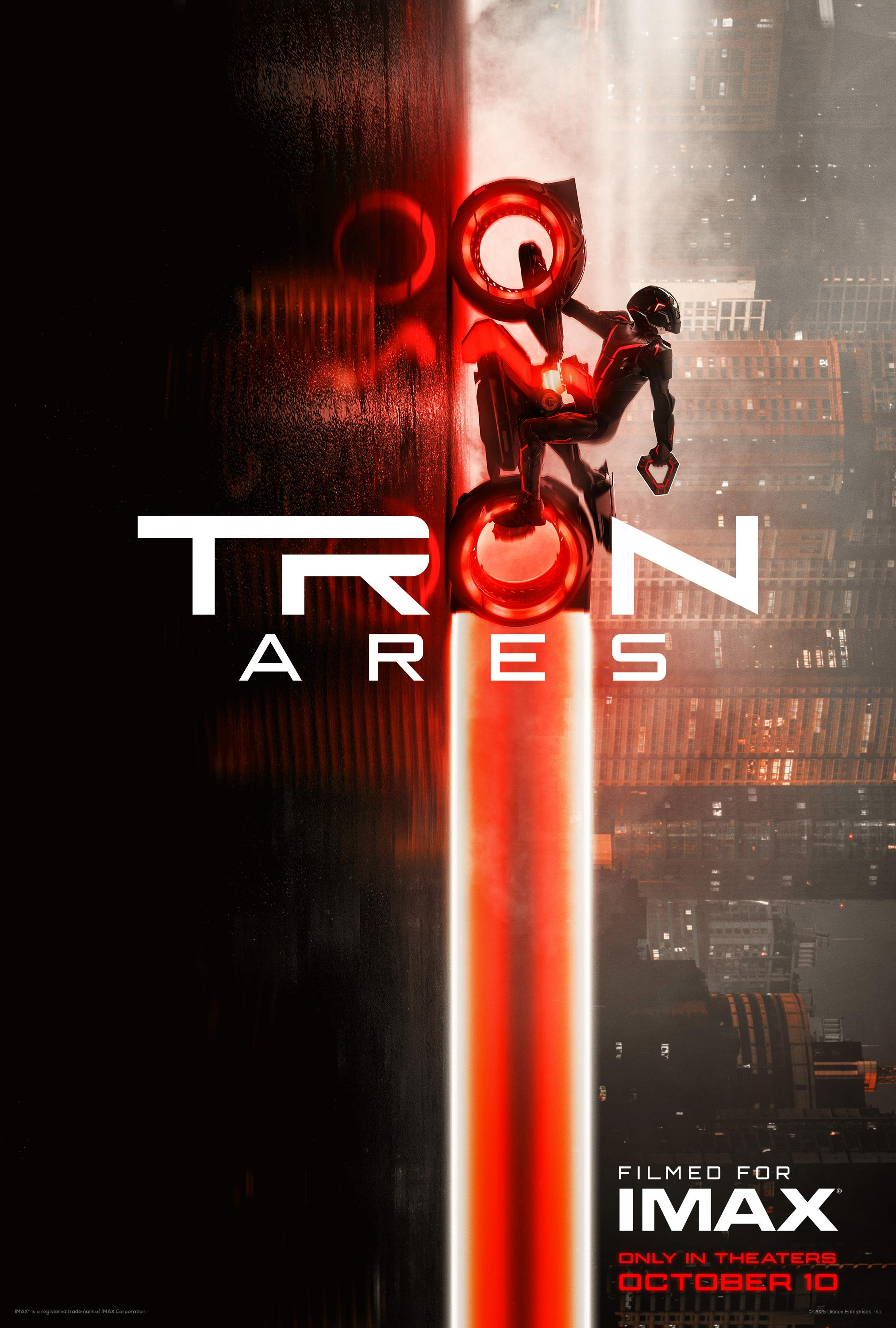
Tron: Ares

Ares, the most intelligent artificial being in the world, is sent from the virtual world of Tron into the real world on a dangerous mission that could determine the future of AI and the world.

The virtual worlds and objects that come out into the real world in Tron: Ares are eye-popping and a must in 3D. The immersive scenery within the film invite you in with the gorgeous cyberpunk look, and the score by Trent Reznor and Atticus Ross is also a highlight of the experience of watching the film. Just like its predecessor Tron: Legacy, Ares is a perfectly middle-of-the-road film with out-of-this-world visuals yet an underwhelming screenplay. Thankfully, the human protagonist is far more interesting this time around, with Greta Lee giving an engaging performance that’s fun to follow and has some heart. That said, Jared Leto’s performance is hit-or-miss, with the intentional soullessness of the titular character Ares feeling excessive and even cold when he’s supposed to start connecting with the audience and human characters. Evan Peters’ performance does the best with a cliche tech billionaire character, while Jodie Turner-Smith does a great job with a character who’s not as fleshed out as she needed to be.

The film also doesn’t quite explore its themes of altruism vs greed and war with technological advances quite in depth, but the objective the two sides of the coin are both after is engaging, as are a few standout action sequences. If only the film better explored the potential stakes and consequences of the antagonists’ goals. Even if it doesn’t quite manage to form a deep bond with any of its characters, the film is so stunning to look at that the frames leap off the screen. Only a format such as IMAX 3D justifies this watch, but if you can find a screen big enough, it’ll be quite the 2 hours of amazing, if forgettable, eye candy.

One Battle After Another

After a ruthless enemy resurfaces after sixteen years, a former revolutionary must come out of hiding to protect his daughter from a terrifying power coming after them.

Paul Thomas Anderson, already one of the most sweeping and daring filmmaker of the last few decades, is not only at his most ambitious in scope here. With One Battle After Another, the director challenges himself and his audiences into discomfort and nail-biting suspense, while transcending and recontextualizing his body of work. His direction is not only at its most cinematic and maximalist, but one of his most thematically profound.

Leonardo DiCaprio shines as a man who is task-oriented and protective yet fragile in his sense of self, portraying a character who’s funny in his messiness as he is loud and dangerous if a nervous wreck. Sean Penn is vicious and terrifying, giving his best performance in decades that could even get him another Oscar, and a villain that will go down as one of the all-time greats. The ensemble cast all deserve their flowers in their own right and offer the film lots of strength. Chase Infiniti is fantastic as DiCaprio’s daughter who gives much strength to every scene she’s in, and her scenes are riveting. Teyana Taylor leaves such an impression with a tremendous performance that gives weight and immense depth to the entire film, even when she’s not on screen. Benicio del Toro shines in a lovable and entertaining performance that steals the screen while letting other performances be “bigger” at the same time, and Regina Hall is also excellent.

There isn’t one element to Anderson’s approach that turns One Battle After Another into a masterpiece; it’s the whole the parts create. The gorgeous cinematography, Jonny Greenwood’s booming score, the swift pace and dark tone, and the magnificent sound design create the unpredictability and transfixing nature of the film you’re in. It’s the most shockingly and horrifically relevant film to today’s America I can remember, with imagery mirroring current power dynamics. The imagery is so visceral and mirrors real-life conflict in a way that screams like a warning, but one for a reality that’s already begun. In the world of One Battle After Another, each person has convinced themselves of an enemy or an other, and that violence is a justified means to an end that signifies a greater good. Nobody in this film becomes a true hero, there are simply people with worse beliefs and who have codes and are willing to commit deeds that are less acceptable to our moral standards. There are many moments that stand out in One Battle After Another that invoke suspense and epic magnitude, but that feeling is felt in every moment and frame. Even for a legendary director of PTA’s rapport, One Battle After Another is a breathtaking experience that’s among one of the best films of the last ten years, and one of Paul Thomas Anderson’s most visionary and unforgettable movies.

Weapons

When seventeen children from the same class all disappear one night, a community is sent reeling and forced to deal with the terrifying consequences.

Weapons is a film that bids farewell to all the tropes we’re used to in even the best of modern horror movies, throwing us first into how a community is affected by such cruel and unexplainable loss. Julia Garner is at the film’s heart as a gentle teacher who suddenly loses all but one of her students — and is quickly blamed by her peers for it. Garner is immediately bondable with the audience due to her desire for answers and peace amidst her unfair situation. But on the other side of the public tensions is what comes off as rage but reveals itself to be fear and desperation in Josh Brolin’s performance as a father hellbent on finding his missing son. His hardness reveals itself as pain and vulnerability and stands out among many others of the actor’s roles.

Though writer-director Zach Cregger sets out to make Weapons feel far more patient than other horror films, he also goes for broke structurally, stylistically, and graphically. The editing, score, and cinematography are chilling, with moments that may end up in modern horror classic territory. Cregger retains some of his previous film Barbarian‘s DNA, such as jumps in time and perspective — some less interesting than others yet necessary for the film’s slow revelation of its mysteries. Within the film’s title lies many of the answers, including the weapon of the human soul itself: the harm that we can inflict or can be inflicted on us. But it’s because the film does hold back so much, and for so much of its runtime, that everything clicks so beautifully. We see and learn just as much as we need to in order to be asking the right questions, and hopelessly guessing what might really be going on here. Once you reach the end of Weapons, you may find yourself equal parts terrified and delighted, but its unraveling will make your heart sink and your legs shake. Weapons is bold and extraordinary even in today’s ever challenging horror landscape. Cregger’s cynical and at times darkly humorous lens fits perfectly into a modern folk tale of sorts that radiates the kind of singular originality felt in M. Night Shyamalan’s golden days of making thrillers. In this epic yet personal horror film, the scares aren’t nearly the whole point, but the whole point is seriously scary — just not in all the ways you’d expect.

The Fantastic Four: First Steps

It seems like the third time’s the charm for Marvel’s first family — after three different iterations on screen, the Fantastic Four finally get a film that’s not only watchable, but irresistible. Since this film is set in a parallel universe to the 36 films preceding it in the Marvel Cinematic Universe, it gets to build a new world from scratch. The eye-popping visuals will leave you in awe, including extraordinary costume and production design. The retrofuturistic approach to this new world recaptures that feeling of wonder of humanity embarking into space for the first time, while imagining a reality where all of humanity rallied together behind reason, morality, and science. This idealism and dream-like wonder bring a beautiful look and excitement that’s distinct from Marvel’s other outings that are set in a world with undertones much more like ours. Pedro Pascal gives his star-like charisma to Reed Richards, but the film wisely gives Vanessa Kirby’s Sue Storm much of the film’s emotional weight. Kirby is given a journey unique to Marvel and the screen, and she and Joseph Quinn fit their roles like a glove. Ebon Moss-Bachrach is a highlight as the deeply heartfelt and lovable Ben Grimm, and the family’s dynamic together is sweetly reminiscent of a team like The Incredibles.

The action-packed pace wastes no time, even when it sometimes skips time with detailed character arcs, their relations with one another, their world, and their roles in it drive the film very well, even when the conflict may be priority. The only shame is that talented supporting players Sarah Niles and Natasha Lyonne weren’t given a little more screen time. The effects and action always entertain, and even the world-devouring giant Galactus is given a serviceable motivation to give his presence weight, including Ralph Ineson’s powerful voice. Meanwhile, his herald Shalla-Bal, the Silver Surfer, is given an interesting portrayal by Julia Garner. The Fantastic Four: First Steps doesn’t set out to surprise, but it certainly wows and stands out among the MCU, finally giving the characters a great outing and vivacious portrayals with a gorgeous aesthetic that takes a life of its own and gives the film a stunning feeling of enjoyment throughout.