Megalopolis

Megalopolis is the ambitious new epic fantasy/sci-fi drama from cinema legend Francis Ford Coppola. In the city of New Rome, Julia Cicero (Nathalie Emmanuel) is torn between the ideas and loyalties of architect Cesar Catalina (Adam Driver), who sets out to reinvent the NYC-esque city entirely into a utopia of his imagining, and her father (Giancarlo Esposito), the mayor who wants to keep things as they are.

Megalopolis sets out to be the most ambitious movie meant for a large screen in ages, with outrageous ideas coming at us straight from Coppola’s mind (and pockets, too). Unfortunately, shooting for the moon doesn’t land Megalopolis among the stars, more so the dirt. It’s a canvas of messy ideas that come together without reward, prestige, or even sense. The dialogue is unintelligible, the story is impossible to follow, and the green screen and effects that try to imagine out-of-this-world visuals in line with Doctor Strange look rather hideous and more in line with Spy Kids or Speed Racer. The film poorly utilizes its stacked cast that includes Driver, Emmanuel, Esposito, Aubrey Plaza, Shia LaBeouf, Jon Voight, Laurence Fishburne, Dustin Hoffman, and more. They’re all given surface-level characters with awful dialogue and absolutely no idea what to do with them. An early scene featuring a number of the principal cast debating on the city’s feature feels more like a drunken celebrity costume party than a scripted and rehearsed scene in a film. The characters are inconsistent (and have unexplained superpowers?), and LaBeouf’s antagonist is laughable and serves no threat whatsoever. Fishburne’s narration is indulgent and unnecessary — the movie begins with Coppola conveying to the audience through Fishburne that he sees parallels between our modern metropolises and Ancient Rome, and then proceeds to spoonfeed that same message to us for 138 minutes with no further nuance.

You may be glad you chose to see Megalopolis on a huge screen… for about two minutes, and then everything goes haywire. The mess of tones and logic is the least of the audience’s worries here; it’s a sensory disaster and a meaningless, incomprehensible drag with hollow ideas and distracting visuals. Things don’t explain themselves or mean things in Megalopolis. They just happen. Yet there’s no mystery underneath to unlock and no sense of intrigue, maturity, or intellect whatsoever from the man who directed The Godfather, Apocalypse Now, and The Conversation. If, like me, you don’t manage to hop on board with this puzzling vision from a filmmaking master devoid of wonder or enjoyment, this is one city you’ll be itching to escape from.

The Creator

In a future where humans have gone to war with artificial intelligence, Joshua, an ex-special forces agent, is recruited to hunt down and kill the “Creator”, who has developed a mysterious weapon with the power to end the war.

Seven years after the release of his last film Rogue One: A Star Wars Story, Gareth Edwards arrives with what feels like a visionary action film that feels parts Blade Runner and Avatar. The visual effects come together seamlessly to create a world that’s set in the distant future but might not be so far-fetched considering attitudes on AI in these times. The humans, robots, and hybrids all blend together in the frame and the robots’ movements look so smooth you’d believe they look exactly like that as they interact with other items in the screen. Not to mention the pitch-perfect cinematography from Greig Fraser and Oren Soffer that creates a mood that’s stunning yet violent, in-camera yet out of this world. John David Washington makes becoming one of the generation’s coolest action stars look effortless, and Allison Janney is surprisingly great, as well as the always delightful and nuanced work of Ken Watanabe. Madeline Yuna Voyles delivers a great breakout as a powerful AI child, though her relationship with Washington’s character doesn’t really click until later on, and even then feels a little derivative.

Though structurally you will occasionally encounter familiarity, the film takes a unique approach to the conflict between humans and artificial life, and visually it’s like nothing out there right now. Though the plot turns may be predictable for many viewers, it has a flare and liveliness to the action that not many other action movies this year had. More importantly, it feels even more special today as it’s one of the only theatrical action/sci-fi blockbusters of this scale without any source material/IP that’s been released in the last few years, and that’s worth commending and supporting. But whenever this had been released or viewed, Gareth Edwards’ inspired direction solidifies him as someone who’s in love with the worlds his movies imagine as much as the stories they tell on the page, and The Creator would make you want to invest in anything he puts his stamp on next.

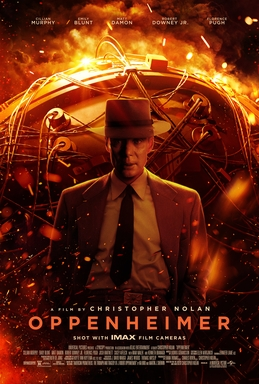
Oppenheimer

Christopher Nolan’s new film tackles the story of American scientist J. Robert Oppenheimer and his role in the development of the atomic bomb as part of the top-secret Manhattan Project during World War II. Aside from being the most immersive and devoted filmmaker of our time to the cinematic experience, Nolan is known for often trying to top himself with his ever-growing ambition, style and scale. Oppenheimer is his equivalent to Lawrence of Arabia or Amadeus, a three-hour historical epic that shifts time periods, perspectives, and color styles consistently. The cinematography is absolutely stunning, with the practical sets and effects sticking out, and the creative choices during the explosion scenes managing to awe and surprise. Ludwig Goransson’s arresting score may have topped even his work for the Black Panther films and Tenet, and the intricate editing is commendable. But one thing Nolan should also be appreciated for here is his writing, that packs a level of sophistication about history, human nature, science, and what it’s like to be a genius who may have the ability to unlock horrific powers. It’s a film that focuses on the new era the atomic bomb marked for the world, because of the destruction such immense power and its knowledge could cause in the hands and ego of mankind in power. Will such an invention cause scorched earth, or the end of the earth?

Cillian Murphy gives a performance that may end up defining his image as a celebrity and actor. The transformation is unreal and his eyes give so much to Oppenheimer’s mannerisms and attitudes towards the scenery. The film has an Avengers-sized supporting cast of named actors, some even being Oscar winners who only show up for a scene or two. Among the standouts are Matt Damon, Emily Blunt, Florence Pugh, Josh Hartnett, Jason Clarke, Jack Quaid, and Benny Safdie — and some A-listers who aren’t even in the trailer so I won’t reveal them in case you don’t already know — but Robert Downey Jr. gives a career standout of a turn and really manages to own all his scenes while giving sides of him we hadn’t seen before. Though there is an incredible amount of story and dialogue that’s given to you at a quick pace, and it feels like this for the whole 3 hours, I also respect that the film sees its audience as intelligent and eager to learn such information. It has something for buffs of history, Nolan, or simply visual grandeur. It’s Nolan’s most stylistically challenging yet mature achievement and one of his best written films as well, but not just that, it may be one of the best directed movies I’ve ever seen. It’s a monumental study of an era in the world and the man behind that name, shown through Nolan’s beautiful eye for the gorgeous, yet unimaginable (in this case), possibilities of human endeavors.

Nope

OJ and Emerald Haywood are siblings who own a ranch in a lonely gulch of inland California, where they train and handle horses for movie and TV productions. Soon, they bear witness to an uncanny and chilling discovery. 

To call Jordan Peele a unique filmmaker of our time would be an understatement — he’s blended genres and used them to incorporate thoughtful social commentary into the most mainstream popcorn entertainment, all while giving audiences films that can satisfy, challenge, and entertain. Nope is no different. It’s a science fiction-horror-thriller-comedy with a modern infusion of likable characters and borderline surrealist world-building, and Peele’s filmmaking is at the level of the most respected auteurs like Stanley Kubrick. It’s got moments of shock, laughter, brutality, and terrifying humanity that adds so much astonishment to a film that starts with what could’ve been an overused premise in anyone’s else hands. Daniel Kaluuya has evolved into a modern film star of his generation — though he’s starred in Black Panther and won an Oscar for Judas and the Black Messiah, it was Peele’s debut Get Out that guaranteed his stardom. He’s a master at being funny but showing a character confront with real and inner “demons” in a silent way but always being a fun character too. Keke Palmer has a contagious, bubbly energy and I’m sure the entire cast and crew had plenty of laughs due to her fantastic delivery of her lines that often sneaks up on you in hysterical ways. But she’s also a genuine hero, not to mention Steven Yeun and Brandon Perea who are scene stealers.

Peele’s style always challenges genre, structure, and how the audience expects to react to things. His stylistic energy in Nope invokes eyes staring in awe, jaws dropping, and mouths smiling all at once. Due to this, Nope transcends accessibility for fans of horror, and is a top-notch film for all fans of big-screen spectacle, because it never settles for just being a horror movie. In it’s own way, Nope is a piece of art, that’s not meant to give you easy answers or leave you comfortable. Like Peele’s last movie Us, there’s so much to debunk as the thematic elements often drive the filmmaking in his movies. This one addresses many things, but among it, humanity’s flocking to images chaos and danger, and our obsession with getting as close to death and trauma as we can while wanting to arrogantly cheat the effects they may have on us, should our endeavors to harness danger go wrong. The movie is also a tribute to filmmakers and crew members in positions we don’t often acknowledge, and the achievements of black contributions to cinema that aren’t always celebrated. In a way, Peele uses this movie to celebrate the invention of cinema but also warn about our roles as audience members and monetizers of content that’s both real and adapted from truth. With it, he creates the most daring and awe-inspiring summer blockbuster possible that I’m sure will inspire many to create and challenge the world of films the way he has.