F1

Brad Pitt leads F1 with his signature leading charm that’s effortless and likable, even when character makes selfish decisions. Together with the rest of the cast, and the film’s commitment to in-camera racing and massive scale, this sports drama has all the right ingredients, even if the story is rather standard. The cinematography in the racing action is beautiful, and the sound design is impeccable and immersive. Hans Zimmer’s score is a standout, as is the soundtrack that includes celebrated contemporary hip hop artists. This exciting energy elevates the film and makes what you’re seeing feel so real.

However, the character beats are almost all formulaic (no pun intended) — the reluctant veteran thrown back in, the cocky rookie and the rivalry between them, the antagonistic businessman, and so on. It’s never hard to tell where the story is going, and we’ve seen similar arcs before, even in Joseph Kosinski’s own Top Gun: Maverick. That said, the aforementioned rivalry between Pitt and Damson Idris is admirable and complex, and the experience is elevated by knowing they’re actually driving those cars. Idris and Kerry Condon are standouts from a performance perspective. Idris’ almost vain excitement to be in the big leagues contrasting Pitt’s strategic mind who’s also a bit worn out and not sure he’ll ever find that spark he once had for racing again. Condon makes us root for her part just as much, a brilliant technical direction behind the scenes who’s also in pursuit of a complete victory.

F1 packs few surprises in its script, but it more than redeems itself with the exhilarating scope that justifies the theatrical experience. Best of all, it celebrates not just the grandeur of the sport in its highs, lows, and the ambitions of those behind the wheel and the pit stop, but the potential of the blockbuster, especially with practical effects. It completely delivers on its promises with astonishing action and cinematography, and the familiarity is more than redeemed by the entertaining cast and the stunning technological accomplishments.

How to Train Your Dragon (2025)

Out of all the live-action remakes of animated films to be released in the last few years, How to Train Your Dragon is the one that sounded too soon, and too perfect to touch more than any of the others. However, it winds up standing out among many of the other remakes that come to mind. Director Dean DeBlois sets out to retell the story of Berk and its vikings and dragons in realistic glory, but also sticks so closely to his original film’s visual palette that there almost isn’t anything new here. Large amounts of dialogue, if not the entire script, are also beat for beat exactly the same, so if you remember the original film quite well, it’s like watching a film you’ve already seen be enhanced and remastered. Though the first film is so wonderful that it doesn’t leave much need for improvements, making a new film should be justified by making some changes and additions to the story, not to mention much from the source material that the film was based on that we haven’t yet seen.

Mason Thames manages to make the role of Hiccup his own, while Gerard Butler is a standout reprising his role as Stoick from the animated trilogy. His hard exterior and brutal attitude towards dragons that develops from his fear and desire to protect his son and tribe are prominent. The production design and CGI effects work very well to form engaging action scenes — even if it takes a lot of getting used to that Toothless looks the exact same as he did in the animated version but is now interacting with live-action settings. Nico Parker is wonderful as Astrid, and her bond with Hiccup also stands out, particularly his earning of her trust. The supporting teen characters unfortunately feel like they’re doing imitations of their previous version, though Nick Frost entertains as Gobber.

Some scenes manage to carry the beauty over into this version, including Hiccup and Toothless’ initial bonding, and the former’s romantic flight with Astrid. Still, you’re sometimes left to wonder why it wouldn’t have hurt to change some more lines or backdrops, or even some add in some new story beats when you’re making a new film, after all. The real magic here that holds it all together is John Powell’s score. His themes enrich the world and the tone when they could’ve lacked in this new iteration otherwise. The movie’s insistence on staying so close that numerous scenes are a shot-for-shot copy and paste can frustrate, but its lack of originality doesn’t fully take away from the heart and vibrance that’s still here, even if in a lower capacity. For those discovering the story for the first time, though, it will certainly deliver with its themes of empathy and teamwork.

Mission: Impossible – The Final Reckoning

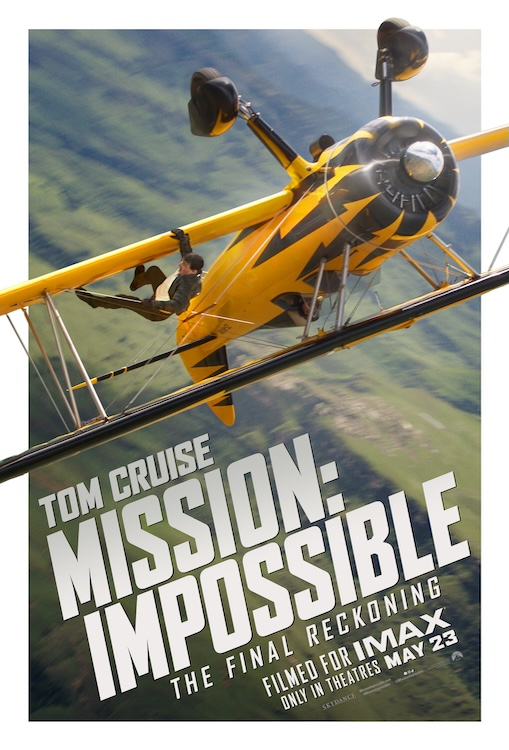
One of the most notoriously enormous franchises ever in scale comes to a close with its most ambitious installment yet. Tom Cruise’s practical commitment to the action is again breathtaking, especially the set pieces including planes and submarines. Christopher McQuarrie and Cruise are again dedicating everything to creating something gigantic that warrants the moviegoing experience, with nail-biting stakes, jaw-dropping sets, and stunning direction. It’s got a genuine feeling of danger, that the team’s loss could result in truly destructive consequences. It also pushes Ethan to the brink of his values and abilities, as each last film before it has challenged how impossible of a mission he can actually go up against, as well as personal decisions he is faced with. The ensemble cast surrounding him is great, particularly Simon Pegg, while Hayley Atwell sometimes feel pushed too far into the mix to stand out as much as she did in Dead Reckoning and Esai Morales’ villain this time lacks the presence that was felt from him in that film. The standout from the supporting players is definitely Angela Bassett as President Erika Sloane, whose relationship with Ethan Hunt becomes deeper and more complex with their new dynamic of power and the situation at hand.

In an attempt to tie past installments into this finale, the editing does become bloated, with excessive flashbacks to clips from those past films to clarify details most viewers either already know or didn’t need to be shown. Sometimes a quick dialogue exchange or even context clues can give viewers who don’t remember 7 films worth of lore the background they need, but though at times this method is excessive, it becomes rather disorienting. Not to mention, the script is also at times hard to follow, with the logic that needs to be pieced together to follow the story sometimes happening at light speed and may only be completely taken in on rewatches,. Some plot threads feel under-explained when others are given too much explanation. Despite these story and editing issues that are especially prominent in the first hour, the second half is so incredible to watch and some of the stunts feel like a once-in-a-lifetime moment in their realism and scope, and the story arcs continue to escalate until they finally come to a hard-hitting close. It’s ultimately an exhilarating and satisfying conclusion that may not be the best Mission ever, but it’s certainly the biggest and a must-watch on the most massive screen you can find.

Thunderbolts*

After being lured into a deadly trap by CIA director Valentina Allegra de Fontaine, a group of antiheroes form an unlikely team to bring de Fontaine and her destructive plan down.

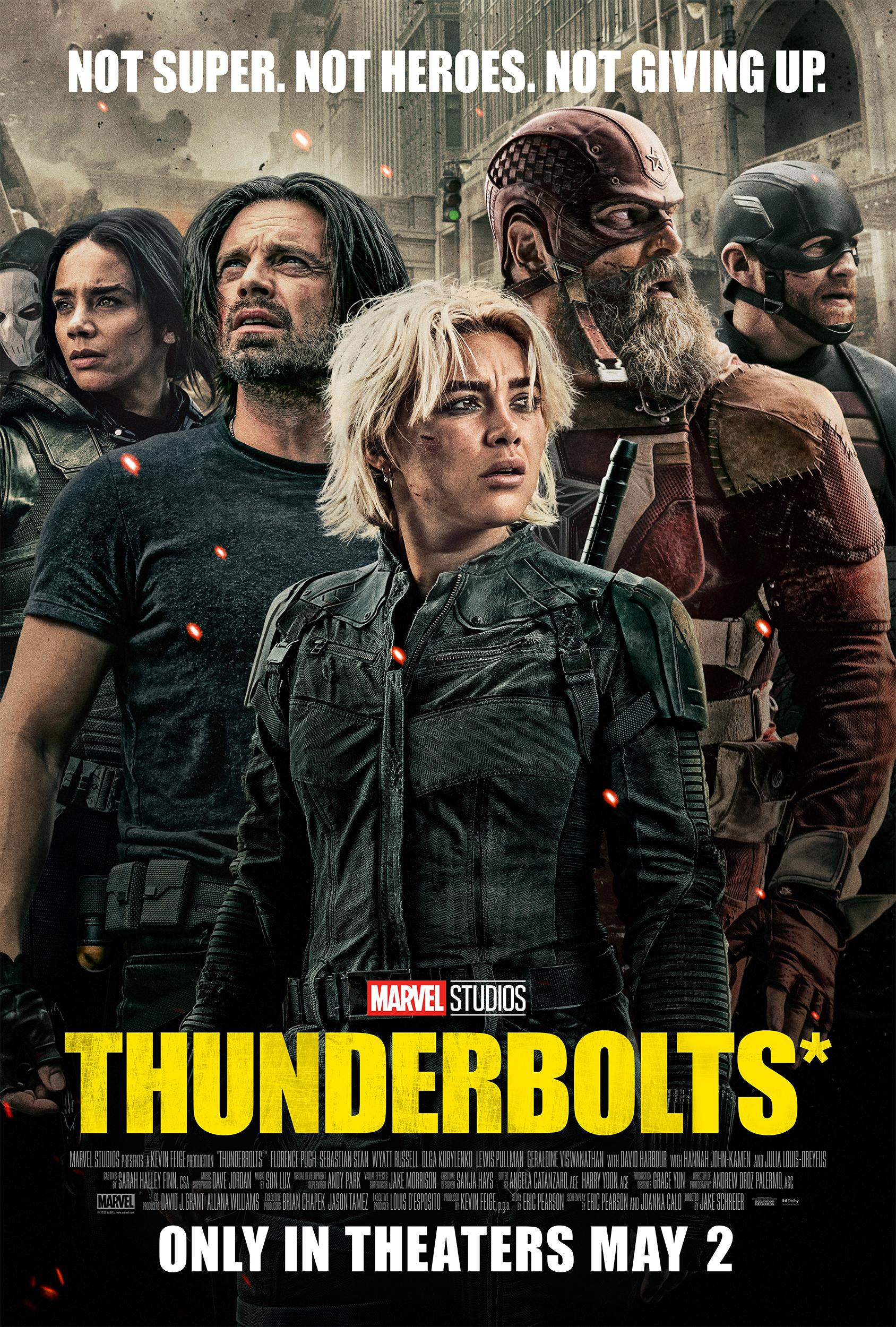
Thunderbolts* is oozing with energy and a deep care for its characters, with a darker edge of corruption and death to its subjects. Contrary to this February’s Captain America: Brave New World, Thunderbolts* thrives by allowing its cast’s charisma to roam freely, led by the incredible Florence Pugh. This time around, Yelena is the film’s lead, and Pugh taps into the character’s core of depression and emptiness, including her tumultuous relationship with her father, former Soviet super soldier Red Guardian, played by the vivacious and hysterical David Harbour, longing for glory again. Wyatt Russell and Hannah John-Kamen are also utilized very well, while Sebastian Stan returns as Bucky, who leads many of the others through a similar emotional arc he’s learned his way through. Geraldine Viswanathan is also a standout as Mel, assistant to de Fontaine — played in such a juicy performance by Julia Louis-Dreyfus as a menacing figure who will stop at nothing to gain absolute power and avoid all consequences for it. Though Lewis Pullman’s performance doesn’t have the same loose charm we may have felt from him in Top Gun: Maverick and Lessons in Chemistry, he also well portrays Bob’s awkwardness and the darkness enveloping his character.

The best part about the film is how the characters interact as a team — their action and combat scenes are awesome, the way their differences interact through banter and humor is greatly entertaining, and the way they utilize their strengths to solve problems (albeit reluctantly) makes them unique. Some characters’ arcs could’ve used more closure, and the final act and climactic battle could’ve hit harder, and it’s not as stylistically irreverent as Guardians of the Galaxy or The Suicide Squad, but like those films, it’s about people who want anything but to be heroes learning to find redemption by embracing one another’s differences and company, and stepping up and do the right thing. It may not be one of the MCU’s most visionary installments, but also may prove to be one of their more rewatchable in the future, as its cast of misfits and contagious energy stand out. If these characters weren’t your favorite in the MCU or anything close, that may just change for good after Thunderbolts* — an extravagant action/comedy that may be short on some wildness or development in certain aspects, but is certainly big on the excitement and reward.

Sinners

Twin brothers Smoke and Stack return to their hometown to open a blues club for a fresh start, only to discover that an even greater evil is waiting to welcome them back.

Ryan Coogler, one of the most impactful filmmakers to come out of the last decade, creates his most original, commanding, and dazzling film, a kind many have been waiting to see for a long time. Coogler gets free reign to blend genres with unique storytelling on a larger scale than we’ve seen before. The characters leap off the page and screen with their wonderful portrayals from Michael B. Jordan, Hailee Steinfeld, Wunmi Mosaku, and Delroy Lindo, as well as a more menacing turn from Jack O’Connell. As both Smoke and Stack, Jordan plays characters who aren’t free of moral question marks but still worth rooting for, and have excellent romances with Mosaku and Steinfeld, while Lindo has brilliant moments of reflection, strength, and humor.

The film portrays America in the 1930s as a place of difficulty and strive, with a system built to oppress black Americans, but in the main characters’ blues club, a dazzling, one-of-a-kind portrayal of black culture and music in a safe space of untouched, booming joy. The music is a language of its own in the film, not just another magnificent score by Ludwig Goransson, but the way music inspires and drives the characters across generations of their history. Music in the film is its own plane of sacred storytelling and unity, and it’s brought to life with roaring energy that the audience can enjoy yet by moved by. The cinematography by Autumn Durald Arkapaw, who also collaborated with Coogler on Black Panther: Wakanda Forever, also takes the film to another level, with distance between objects, characters, and backgrounds — or mere darkness — creating a weight in its shock. The film develops its characters in a world that’s breathing and moving around them in unexpected and exciting ways, even before the blues kicks in, and far before the horror action elevates the film to yet another level of mastery. The bloody violence is unpredictable and riveting to look at, and balances the line between horrific and irresistibly fun.

Though an ending scene stretches out and explains the themes too excessively, Sinners brings together genres and a remarkable cast full of life and heart that spreads to the audience. The visionary cinematography, music, and costume design compliment a story that’s filled with as much adoration for the immersive settings it creates as it is deeply hinting at themes of the system’s attempts to appropriate and erase black culture and history, and much more beneath the surface. Not only does it work for action, horror, or thriller fans, but it’s a beautiful piece of storytelling that only comes every few years. Not quite like any blockbuster we’ve seen, Sinners is a journey of pride, terror, and legend that needs to be experience on the big screen, solidifying Ryan Coogler as one of our great modern filmmakers who deserves all the more creative freedom and spotlight that’s coming his way.

A Minecraft Movie

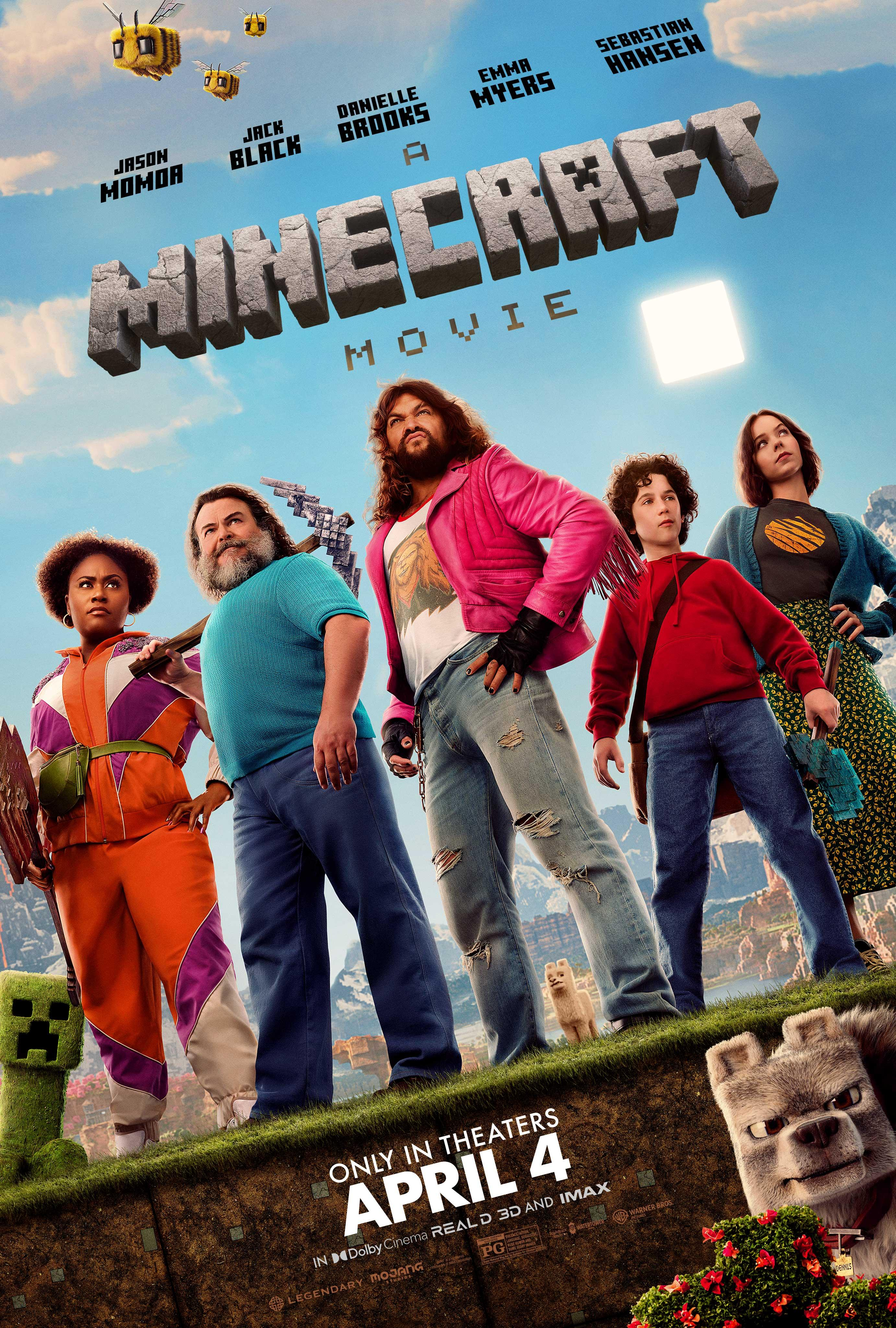
A Minecraft Movie may prove a treat for younger audiences and fans of the beloved game. It’s got charm, thanks to its main stars, particularly Jack Black. He gleefully gives his playful and extravagant energy to Steve, even throwing in his musical comedy talents. Jason Momoa entertains but his dialogue threatens to miss almost as much as it’ll make you laugh. Danielle Brooks is splendid as a very unexpected companion on this journey, and gives the runtime lots of heart. Emma Myers does a solid job playing an unlikely heroic character, whose storyline with her brother avoids some cliches while falling head first into others.

Though this is a Minecraft movie first, director Jared Hess’ love for misfits and outcasts is written all over the film. What brings the film down is the aesthetic, that fails to get you to suspend your disbelief strongly enough to overlook the unconvincing green screen and weirdly uncanny CGI of some of the Minecraft characters/species. The live-action parts carry the film well if you ignore some of the backdrops, but sometimes you’ll wish that the scenes inside the Overworld were completely animated. It also doesn’t help that the idea of an unlikely team of social outsiders from the real world trying to navigate a fantastical world they’ve been suddenly pulled into is nothing new. Even the Jumanji films, also starring Black, had much more to offer the formula.

Still, the film has just enough charm to delight children and families, embracing the essence of the game with a positive message about creativity. And Black proves that he’ll continue to entertain generations of viewers with his ability to let loose. It’s a film that embraces exactly what it is, even if when you think about the film or look too long at the visual details, the building blocks starts to fall apart.

Snow White (2025)

Some remakes get a chance to breathe new life into their stories and worlds, while others, like Disney’s new Snow White, feel like a film from 90 years ago was frozen in carbonate for decades and then unnecessarily turned into a different medium. In this case, Snow White feels like 30% that, while the other 70% feels like sprinkles of modern flare that feels out of place. Oscar winners Benj Pasek and Justin Paul add songs that feel to derivative and cliche, hitting all the same “Welcome to our lovely kingdom”, “I want a better life”, “Look how evil I am”, and “Maybe we’re attracted to each other” beats that are in nearly every other musical. In some instances, the songs even sound too much like the duo’s Dear Evan Hansen soundtrack.

Rachel Zegler tries her best to entertain in a sweet but one-dimensional role elevated by her charisma and strong singing voice. However, all the other elements around her distract, including the unconvincing and at times hideous CGI of the animals, surroundings, and let’s not even talk about those dwarves, who seem almost nightmarish. But a painfully glaring weak link is the miscasting of Gal Gadot as the Evil Queen. Her line delivery feels unnatural, and the character just gets more irritating as the film goes along.

Most sadly, Snow White is inconsistent and deeply hollow as a film. It has almost no charm that feels organic, and can’t decide between elements that feel nostalgic or new, like the very modern-sounding soundtrack. Nothing of importance is ever quite explained or given meaning to, things just happen because the point that we’ve gotten in the story needs that thing to happen. For younger children, being unconditionally kind is an important message, but even Disney has delivered this theme in a way that’s so much more tangible and heartfelt; take even their live-action 2015 Cinderella remake for example. This remake doesn’t expand on or reinvigorate its source material, simply morphs it into weird images that look colorful but never have any real sense of life.

The Alto Knights

Two of New York City’s most notorious organized crime bosses vie for control of the city’s streets. Once best friends, petty jealousies and a series of betrayals set them on a deadly collision course.

Robert De Niro playing an infamous mobster is nothing new. But De Niro playing TWO mobsters? Throw in legendary director Barry Levinson of Bugsy, Rain Man, and Good Morning, Vietnam, now that’s something worth writing home about, right? Unfortunately, The Alto Knights is anything but; a film with maybe some potential on set that was completely butchered in the editing room. De Niro’s dual performance is supposed to fascinate the audience but instead distracts. Frank Costello and Vito Genovese are not presented in the film as being two sides of the same coin, as were the mobster twin brothers Kray, played by Tom Hardy in Legend. In this film, the two mobsters are depicted as not just of different families and mannerisms but of different ages, experiences, and motivations. When De Niro finally shares the screen with himself, it’s impossible to buy these disparities as the script depicts them, rather we buy them more like equals under different heaps of makeup, which was not the intention. As Costello, De Niro is giving something between a less soulful version of his turn in The Irishman, a less extravagant version of his turn in The Untouchables, and a less funny version of his turn in Analyze This. He’s interesting as Genovese, but casting another actor to oppose him would’ve worked better to show that one of these gangsters is actually much more frightening than the other.

The film recycles tired tropes of past popular mob films, and as I’ve alluded to here, many of them already star the great De Niro. Though some scenes are at least mediocre in their execution, the editing is horrendous and makes some scenes unwatchable. The film insists on blasting through most scenes like a documentary montage rather than letting scenes breathe and feel like a thrilling drama. The constant narration and barrages of exposition are condescending to its audience of a normally intelligent genre, but insists on feeding us information we could’ve learned through context clues within scenes. The poor dialogue can’t be salvaged by lacking performances from Debra Messing and Cosmo Jarvis, the latter of whose promising transformation never quite gets to shine. Moreover, there never feels like an escalation of tension or events when there feels like we should be building towards something, rather a lack of setup that also leads to a lack of reward. The Alto Knights starts on a bad foot, and never even hints at a chance to redeem itself. Even De Niro and crime film fans need not waste their time, in theaters or at home.

Mickey 17

Mickey is an Expendable on a expedition to the space colony Niflheim — meaning a new copy of him is printed out every time he dies, which is more often than others. Soon, trouble ensues as Mickey finds himself in a dangerous situation and a fight to survive.

Bong Joon-ho’s likely largest production in sheer scale isn’t subtle in its themes, whether of human nature, fascism, or the arrogant abuse of technology, but it’s still clever, vibrant, and so full of heart, more than enough so to serve as an absolute blast of a film. The look and feel of the sci-fi settings feels original and Pattinson’s delivery of the titular character is likable. Mickey 17 is an insecure man/clone who’s somewhat at peace with the bleakness of his situation, but is fun to follow along and has the sudden urge to stay alive and fight for what’s right. He also has great chemistry with himself as Mickey 18, who’s only a few hours older than 17 but almost the polar opposite — hardened and occasionally ruthless. Naomi Ackie gives the film its soul; she’s so lively and wonderful as Nasha, who elevates Mickey as much as she’s on her own meaningful journey. Steven Yeun also shines as a sleazy and unrealiable but multi-dimensional frenemy of Mickey’s. The parallels between Mark Ruffalo’s character and certain powerful men in our reality aren’t hard to decipher, but he and Toni Collette entertain, even when their performances occasionally threaten to fall into caricature.

Mickey 17‘s magic is finding the humor and gentleness within the darkness. Mickey always sees his situation with a sense of irony, but Bong also finds care and soul within side characters who usually would feel disposable in other films. He never loses sight of the absurdity at hand but keeps elevating the stakes and with it, his signature expert eye. The film packs charm, exceptional world-building, irreverence, and characters we love, not despite but especially for their messiest parts.

Bridget Jones: Mad About the Boy

Renee Zellweger’s iconic British protagonist has become something of a cinematic treasure across four films now. But her films haven’t made us just laugh along at her missteps, but watch her develop, and even come of age, you could say. This final film has a somewhat more bittersweet tone, though, as Bridget’s lover, Mark Darcy, is no longer in the picture. Four years after his loss, she is finally ready to move on and find love again. The film maturely tackles coming to terms with grief, finding joy again while coexisting with the memory of those who have passed on. But it’s also still irreverent, charming, and romantic. It tackles some of the basics that the first film gave a go at, but Zellweger not only shows Bridget’s goofy side, but her struggles with being a single mother of two, and the absence of her husband.

Joining the mix are Chiwetel Ejiofor and Leo Woodall, who both charm in different ways, but Ejiofor in particular has great chemistry with Zellweger. Though it does retread familiar rom-com territory, or that of comedies about parents raising children, and it’s not the sharpest or smartest of the franchise over Bridget Jones’s Baby, it still offers a good time and a heartwarming conclusion to a lovable, messy delight of a character.