Nosferatu

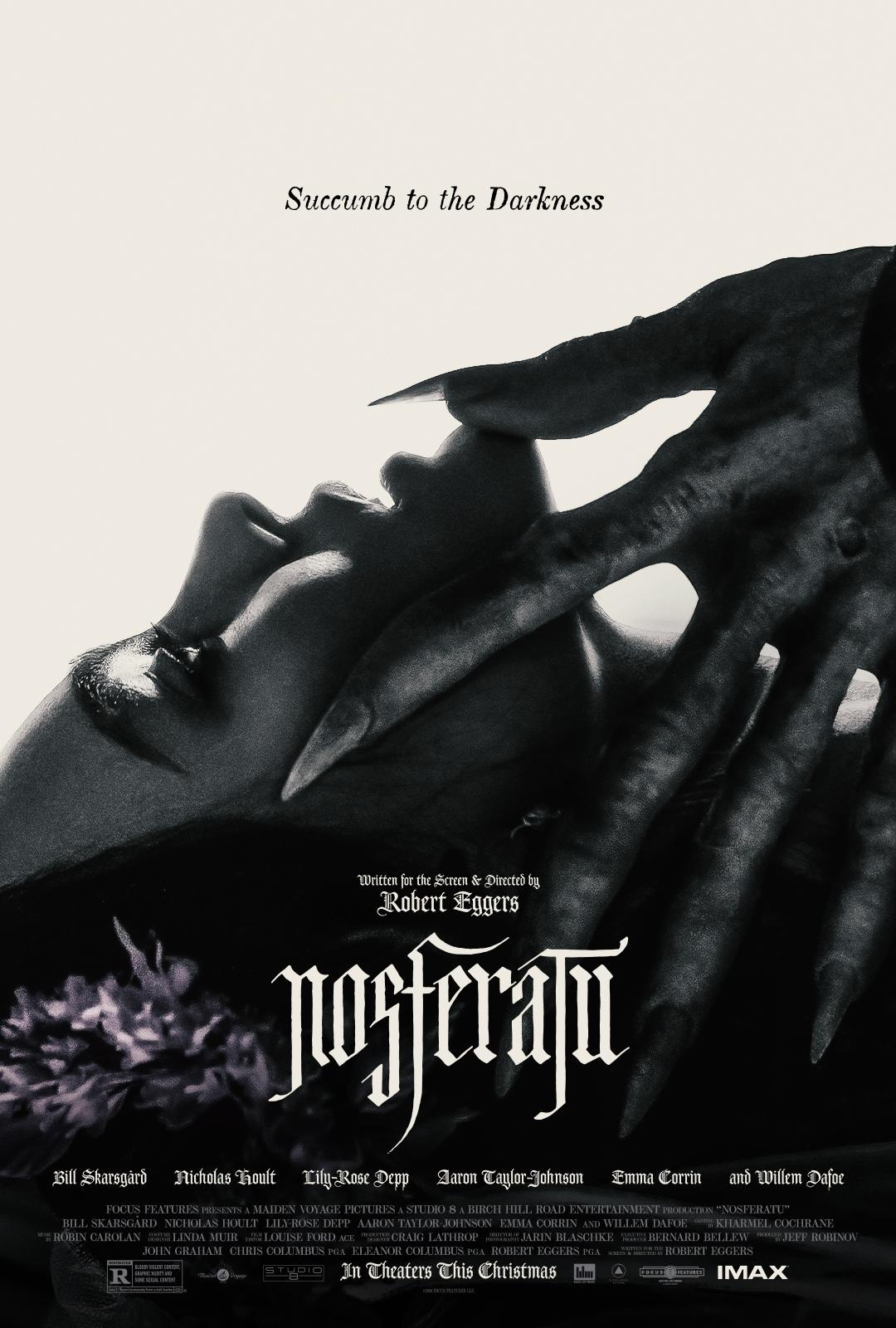
Out of all the reimaginings of the tale as old as time that is Dracula, none have been quite as chilling and outright transfixing as Robert Eggers’ Nosferatu. Eggers captures beautiful simplicity yet utter darkness in the film’s breathtaking imagery, as well as deeply terrifying sequences of gothic horror. From the jaw-dropping opening scene, the film captures its audience in a sense of heart-stopping fear that never ends until long after the credits roll. Jarin Blaschke’s cinematography wonderfully uses imbalanced lighting, gloomy color schemes, and silhouettes to create something that looks timeless. Every shot evokes a feeling of an ancient evil’s presence that’s about to be awoken and get ahold of what we’re looking at, which is exactly what happens with Count Orlok. Bill Skarsgard is unrecognizable under stunning makeup and changes his voice to create a towering and skin-crawling vampire, who’s face we wisely don’t see in close-ups until much later on. Lily-Rose Depp is a scene-stealer whose performance is so astounding that if you stop to realize it’s acting, it becomes hard to comprehend the sheer levels of physical and emotional commitment required — Depp never makes you question it once. Though the film cleverly shifts main characters between her and Nicholas Hoult, she’s the film’s beating heart and muscle.

Eggers expands on all his trademark oddities as a filmmaker, making us feel helplessly entranced. It’s nail-biting, gory, and does not hold back on scares and twisted, graphic content. The director feels in complete command of the style, whether the score, production design, or material, that digs into ideas of masculinity, obsession, and self-deception, without needing to overexplain what it’s truly about. Though I was dreading what was about to happen between the main characters and the titular vampire, I could never look away; I was deeply unsettled yet never wanted the experience to end, knowing I was in such good hands. No matter whether you know the story beats or not, there’s genuine shock and brilliance in every scene’s execution, breathing new life into a story that felt like it was always meant to fall into Eggers’ hands. It’s masterful and haunting, like watching a gorgeous fever dream that keeps building and building until an unforgettable final act. You may be going for the cast, the monstrous scares, or even just the cinematography — individually, they’re remarkable, yet together, the parts create a spellbinding whole.
Saturday Night

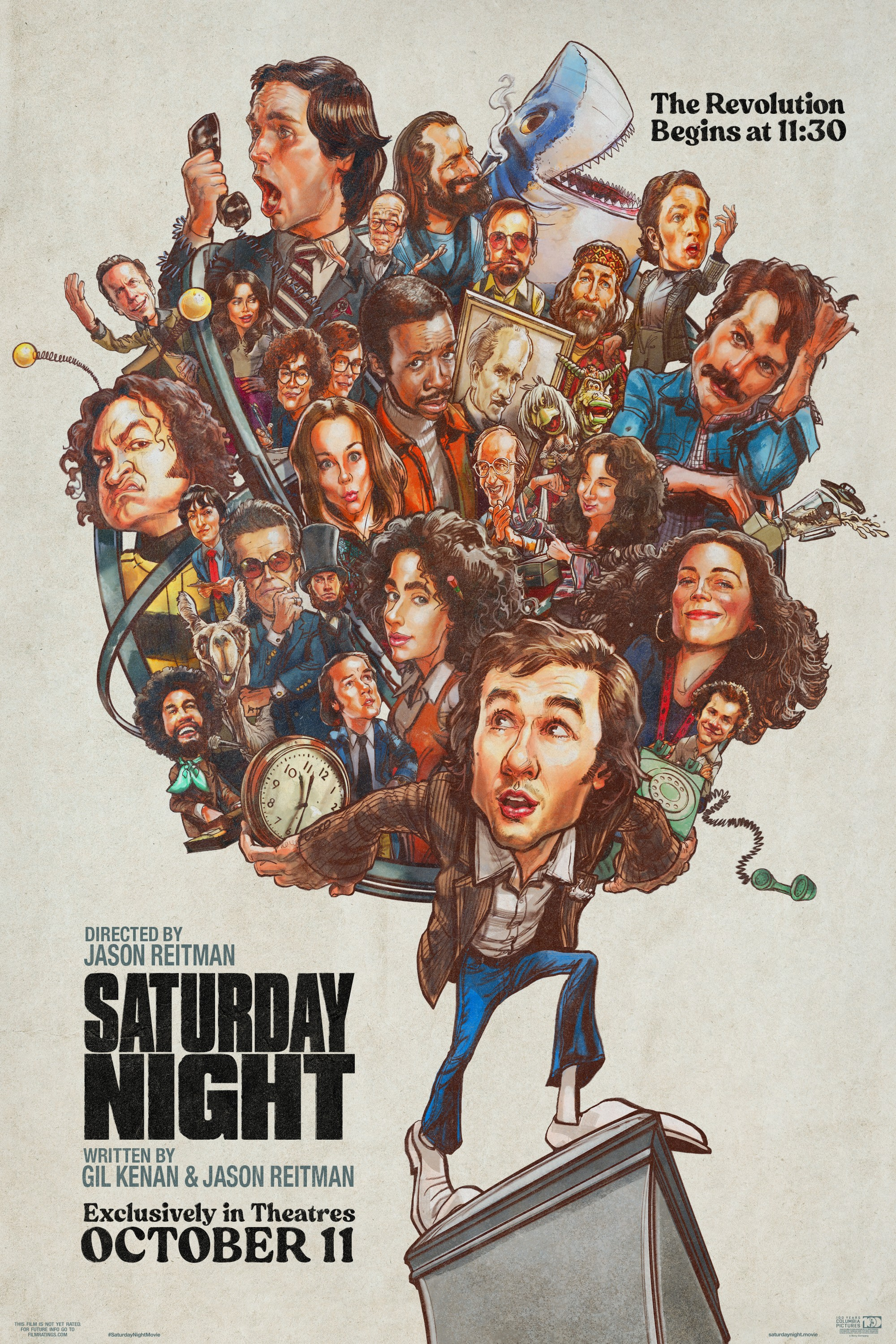
Saturday Night takes us to the fateful night of October 11, 1975 in Manhattan, where Lorne Michaels tried to launch his sketch comedy show for its first-ever episode, which we now know as the iconic and influential Saturday Night Live nearly 50 years later.

A film about SNL should make us laugh, feel revealing, and be packed with celebrity and pop culture history, and that’s exactly what Jason Reitman’s take on the sketch show’s beginning offers plenty of. The lovely 70mm look, long takes throughout the studio, and energetic score from Jon Batiste give the film a strong and dedicated technical edge.

While many films based on true stories have one or two casting choices that feel inspired, Saturday Night has dozens. Gabriel LaBelle, who’s probably a decade younger than Lorne Michaels was when this all went down, plays the creator with a contagious ambition to make magic for audiences on the stage. Rachel Sennott is sometimes the scene-stealer and the heart of it all, while Dylan O’Brien as Dan Aykroyd is one of his most fun performances in years. Cory Michael Smith brilliantly portrays the unstable ego of Chevy Chase, one of the most infamous members of the show’s original cast, while Matt Wood is uncanny in his recreation of the late John Belushi. Nicholas Braun is impeccable and unforgettable as not one but two cultural icons; they’re a pair of performances you have to see to believe. And we haven’t even mentioned Lamorne Morris, Cooper Hoffman, and Matthew Rhys, the latter of whom chews up the scenery as comedian George Carlin. More recognizable names Willem Dafoe and J.K. Simmons are also excellent and hysterical. The best part about this cast is that it reflects how Reitman wants us to feel about the characters and circumstances in the film — a ragtag group of youngsters with the potential to make us laugh, joining forces hoping to change the world.

As we know, the events of this movie, as chaotic as they unfold, did change the world. The most wonderful part about Saturday Night is that it celebrates the convergence of culture for half a decade, which began as NBC’s laughing stock but has since brought together millions with the arts of comedy, music, and performance joining together. The movie itself isn’t as funny as it thinks it is, but when a film celebrates laughter while making you laugh, those ingredients are the perfect groundwork for a purely entertaining wonder, even as you watch everything go wrong (at first). Fans of SNL will have a delightful time with the mythology of 20th-century American comedy, but anyone else will still have a great time with Reitman’s love letter to popular culture, humor, New York City, and the underdog.

Poor Things

Bella Baxter is a young woman brought back from the dead by the brilliant and unorthodox scientist Dr. Godwin Baxter. Under Baxter’s protection, Bella is eager to learn. Hungry for the worldliness she is lacking, Bella runs off with Duncan Wedderburn, a slick and debauched lawyer, on a whirlwind adventure across the continents.

Trigger warnings are a no-brainer with Yorgos Lanthimos, as his films are often filled with sadistic, violent, and hypersexualized power games where nobody is quite a pleasant person. These tropes as well as Lanthimos’ trademark cringe humor are just the baseline to describing Poor Things, a sickening yet grandiose movie that transcends categorization. It’s hysterical but not quite a comedy; it’s poetic but not quite a drama. Emma Stone gives a performance so demanding and so audacious yet it never breaks the illusion of being acting. You completely buy her character in the context of the story and are taken aback by her character’s abnormal physicality and wonder with being alive. Mark Ruffalo is also throwing himself into this role that could’ve easily fallen into unbelievability, but he perfectly balances an exaggerated, almost theatrical edge to his role with a vile, pitiful nature to it. Willem Dafoe plays a scientist under heaps of makeup whose motives may provide an emotional anchor to Stone’s character but also unpeels itself to be uncomfortably pathetic due to his background, and Ramy Youssef also does a great job here.

Poor Things may owe some of its inspiration to classic monster movies, but really isn’t like anything audiences have seen before. The production design creates an eye-popping, fantastical version of the Victorian Era and a world with a completely fresh aesthetic, as well as dynamic cinematography with color, B&W, and even a few fish-eye lens shots to invoke Bella’s warped worldview. Bella’s curiosity is devoid of prejudice and preconceived notions on the world’s structures, and she finds herself appalled by those around her trying to control her, and fascinated by anything she gets to choose to do. The humor is ridiculously honest and ballsy, and therefore, not for everyone — not to mention the exaggeratedly comic sex scenes and the uncompromising and even disgusting violence. Its audacity will certainly find its pleasurers, especially those who already love the director’s filmography. This bold tour de force isn’t for the faint of heart and may leave you at a loss for words. The writing and execution are exhilarating in the best way; the more disturbing and out-of-this world it gets, the less you’ll feel you want to look away. You’ll simply want to witness the bizarre yet fascinating unfold in front of you when it’s through Yorgos’ eye and so irresistibly played by Stone as this woman with the literal brain of an infant in her head, eager to experience being alive for all its peculiarities..