Killers of the Flower Moon

Martin Scorsese’s new film chronicles the Osage Nation’s discovery of oil on their land and surge to wealth in the 1920s, but dozens of Osage people were soon murdered one by one by white opportunists who sought to gain their fortune. Killers of the Flower Moon is a tragic historical Western epic that’s long but the director’s passion for the material shines through with expert storytelling that’s based on disturbing and sickening facts. The film’s beautiful and daring cinematography welcomes you into a rural world in Oklahoma that you probably didn’t learn about in history — that the Osage Native Americans were at one point some of the wealthiest people in the country, and their power in the oil industry. Even with countless films in which Scorsese has depicted cold brutal murders and tortures for power, there’s something to the way he frames the idea of violence here that’s even more gruesome — it’s an assault on an innocent people’s livelihood, a greedy and deceitful theft of power and order for personal gain. Not that his other films hadn’t explored this in the worlds of organized crime or religious persecution, but here it resonates for the terror and cultural genocide that the racial violence inflicts — much of which went without justice in reality.

Leonardo DiCaprio shows dedication to the role of Ernest Burkhart, his most morally murky character in years. Robert De Niro, meanwhile, is at his most pure evil, never holding back on the ruthlessness and false charm of his character. Lily Gladstone delivers one of the year’s most demanding and heart-shattering performances as Ernest’s Osage wife Mollie, who endures horrific losses and fears for her own existence as well as that of her entire people. Gladstone’s commitment and humanity takes the character to tragic depths and gives the film so much weight, and she should be a leading name in this year’s Best Actress discussion. Scorsese has clearly put so much care into bringing Osage culture and history to life, as well as trying to anger his viewers about the injustices that have been committed in American history. It shows the treacherous and predatory nature of its white antagonists who attempted to wipe out a people to usurp their oil empire, a greed that still marginalizes Indigenous people today. The 3-and-a-half-hour runtime could’ve probably trimmed around 20 minutes, but mostly earns it and helps the film feel like a story that spans years of corruption and destruction. Potentially one of Scorsese’s most emotionally disheartening and resonant works, it’ll make you want to learn even more about the legacy of the Osage killings and what the community is like today, and likely beg for Oscar nominations for the cast and crew of this masterful epic tale of widespread crime, betrayal, and evil that captures the American west for all its grandiose and horror.

The Hunger Games: The Ballad of Songbirds and Snakes

The Hunger Games: The Ballad of Songbirds and Snakes is set 64 years before the first Hunger Games movie, around the time of the 10th Hunger Games where a young Coriolanus Snow is living in the Capitol, facing choices that will define his future and that of Panem as he mentors District 12 tribute Lucy Gray Baird to victory in the arena.

This adaptation of Suzanne Collins’ excellent prequel to her acclaimed series of novels has the best cinematography of the franchise, and stunning production design. The Hunger Games films have always boasted incredible world-building, making the intricate politics and history of Panem spread far beyond the screen, and introducing the audience to a wide world of characters within it. However, the film sometimes lacks soul when it needs it most, especially in its first act. Tom Blyth gives an interesting performance of a young man as his narcissism and consumption for power begins to consume him whole. Though Rachel Zegler’s singing voice and presence gives Lucy Gray heart, her character lacks the consistency and potency she’s meant to have, not to mention an off-putting Southern accent. The chemistry between Zegler and Blyth feels weak, though it should’ve been a key component in the film. Jason Schwartzman gives a great comedic performance as Lucky Flickerman, the announcer of the Games, and Josh Andres Rivera gives the most empathetic performance as Sejanus. Hunter Schafer also steals the screen as Snow’s cousin Tigris, but doesn’t have nearly as many scenes as she deserved. Although Viola Davis’ character is supposed to be repulsive, her voice and lines are weirdly over-the-top.

The sequences we see inside of the Hunger Games are absolutely amazing, and more visually exciting than anything we saw in the arena of the original 2012 film. The dynamic shots and lighting create a scenery that’s both grand and sadistic. The post-war dynamics between the Capitol and Districts hits hard with the viewing of the Games, the dialogue itself is lacking and character decisions seem sometimes unearned. What is well-earned is this idea of a Hunger Games prequel set at this era so soon after a civil war and its sickening aftermath, and hitting home themes about human nature, but it should likely be viewed in the context of the films that were released before it — films that may have had better characterization despite this one’s admirable ambitions and aesthetic.

Next Goal Wins

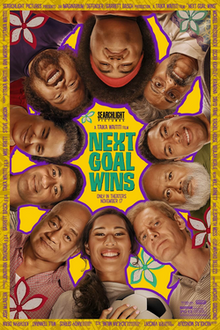
Next Goal Wins is the true story of American soccer coach Thomas Rongen, who travels to the American Samoa to help transform their team from the world’s worst team into stars. Taika Waititi’s irreverent flare not only gives the film plenty of laughs but an endearing underdog spirit that also highlights Samoan culture unlike lots of popular media. The casting of Michael Fassbender, an actor known primarily for dramatic roles, as a comedic lead does the film wonders. The way he portrays frustration and confusion with the incompetence around him is enjoyable, until the character begins to accept his journey into finding community around him, which becomes quite touching. Kaimana is also a standout as the character Jaiyah, an incredibly memorable and impactful character, not to mention fun supporting performances from Will Arnett and Elisabeth Moss.

The film’s comedic style is incredibly laugh-out-loud and makes you laugh in every way from situational humor to extreme physical comedy — the way Waititi does it best. Sure, underdog sports movies aren’t new to us, but the special cultural touch and loving characters make this a film that’s entertaining with every moment it has to offer. It’s short but incredibly sweet and wears its heart on its sleeve from the opening to the end credits that show you the real story the film is based on.

Priscilla

When teenage Priscilla Beaulieu meets Elvis Presley, the man who is already a meteoric rock-and-roll superstar becomes someone entirely unexpected in private moments: a thrilling crush, an ally in loneliness, a vulnerable best friend.

Sofia Coppola’s strong directional choices, including the timely visuals and songs, shine through in Priscilla. Cailee Spaeny’s star-making performance shows Priscilla as a young woman who feels like the luckiest girl on Earth as she’s the one adored by the world’s most desirable and larger-than-life musicians and celebrities. She feels like she’s a princess, like she’s in Barbieland — except she soon learns that she’s seen as more of an accessory in Elvis’ “dollhouse” than the star. The movie doesn’t gloss past the couple’s age difference, nor does it forgive Elvis’ reckless habits and the consequences of fame on personal privacy and autonomy. Priscilla is depicted as a woman who always longed for independence but is never truly able to stand on her own two feet in her pursuit of adoration from the man she loves. Jacob Elordi also steals the scene as Elvis, perhaps not as pitch-perfect as Austin Butler’s transformation last year in Baz Luhrmann’s Elvis, but he still brings a lot to the role.

The costumes and production value create a very lavish look that shows the glamorous life Priscilla was attracted to and lived alongside Elvis, but within that a sense of loneliness as she struggles with sharing him — her Elvis — with the rest of the world, and the celebrity and husband versions of the man become hard to separate in their relationship. Though the second half does begin to feel structurally repetitive and doesn’t draw you in as much as the first half, the film knows exactly when to end in a moment that brings the best out of Spaeny’s performance. Priscilla is a personal look into the lives of legends that’s boasted by its aesthetic style and Spaeny’s naivety and gravitas she brings to the titular role.

The Marvels

Carol Danvers gets her powers entangled with those of Kamala Khan and Monica Rambeau, forcing them to work together to save the universe.

The best way to make a good Captain Marvel sequel is to bring in the other superpowered women in her world — her “niece” who hasn’t seen her in years, and Jersey City teen who’s Carol’s biggest fan. Right away, Nia DaCosta’s directorial energy shines in the pace and editing, but what truly strengthens the experience is the chemistry between Brie Larson, Teyonah Parris, and Iman Vellani. The three blend together naturally, particularly Larson and Vellani, with Larson’s loving presence shining through as does Vellani’s excitement over seeing her hero in the flesh. Though Carol and Monica get to have some heart-to-heart, it doesn’t feel like Rambeau’s character gets more interestingly developed than in WandaVision. The villain Dar-Benn is one of the film’s greatest faults — though Zawe Ashton is strongly cast and the character’s motives are clearly established, her actions don’t feel menacing or personal enough to warrant the audience’s hatred of her as a villain.

Despite mostly strong visuals, the action scenes (besides a great opening one) feel like more derivative versions of other action scenes in the MCU except for the “switching places” aspect, and the latter ones feel in fact messy and rushed. The film also isn’t too concerned with making its emotional themes stick, and most of the heart rests in the natural talent the three stars already bring and the love they share for each other in the story, but Kamala Khan’s family makes for great supporting characters and comedic reliefs, as well as the adorable Flerken cat Goose. The rules and devices that come into play, feel either incoherent or underdeveloped within the flow of the story, resulting in the film sometimes feeling like a less realized version of a great movie. That said, there’s heart, energy, and fun in this film, and even some delightful musical moments, although DaCosta’s passion isn’t felt as much when some other of its critical ideas feel standard and undercooked.

The Holdovers

A cranky history teacher at a remote prep school is forced to remain on campus over the holidays with a troubled student who has no place to go.

Directed by Alexander Payne, who won Oscars for writing Sideways and The Descendants, The Holdovers is destined to be an instant classic. It’s my new favorite Payne movie, and shows Paul Giamatti as an expert actor in both the comedic and dramatic fronts, yet a very different performance from his Sideways role. He plays a resentful yet timid and lonesome soul who finds an unexpected companion over the Christmas break. Da’Vine Joy Randolph should be a frontrunner to get nominated for Best Supporting Actress as a woman dealing with unthinkable grief but still attempting to be a voice of warmth and reason for those around here. Dominic Sessa delivers a sensational and heartbreaking and breakout performance as a savage teenager devoid of his parents’ love, who is the center of the film along with Giamatti’s character. Payne’s direction is his most magnificent, delivering the 1970s sets and soundtrack with a feeling of grandiose. He digs deep into these broken misfits who have lovable souls underneath their pain, characters we’d often be quick to judge but soon would stand up through thick and thin as audience members. It has something for everyone, whether you want to laugh and feel connected, or a little poignant emotion too. Comedy and drama fans, this is one of the best of the year, and a highlight for both Payne and Giamatti’s careers as artists.

The Creator

In a future where humans have gone to war with artificial intelligence, Joshua, an ex-special forces agent, is recruited to hunt down and kill the “Creator”, who has developed a mysterious weapon with the power to end the war.

Seven years after the release of his last film Rogue One: A Star Wars Story, Gareth Edwards arrives with what feels like a visionary action film that feels parts Blade Runner and Avatar. The visual effects come together seamlessly to create a world that’s set in the distant future but might not be so far-fetched considering attitudes on AI in these times. The humans, robots, and hybrids all blend together in the frame and the robots’ movements look so smooth you’d believe they look exactly like that as they interact with other items in the screen. Not to mention the pitch-perfect cinematography from Greig Fraser and Oren Soffer that creates a mood that’s stunning yet violent, in-camera yet out of this world. John David Washington makes becoming one of the generation’s coolest action stars look effortless, and Allison Janney is surprisingly great, as well as the always delightful and nuanced work of Ken Watanabe. Madeline Yuna Voyles delivers a great breakout as a powerful AI child, though her relationship with Washington’s character doesn’t really click until later on, and even then feels a little derivative.

Though structurally you will occasionally encounter familiarity, the film takes a unique approach to the conflict between humans and artificial life, and visually it’s like nothing out there right now. Though the plot turns may be predictable for many viewers, it has a flare and liveliness to the action that not many other action movies this year had. More importantly, it feels even more special today as it’s one of the only theatrical action/sci-fi blockbusters of this scale without any source material/IP that’s been released in the last few years, and that’s worth commending and supporting. But whenever this had been released or viewed, Gareth Edwards’ inspired direction solidifies him as someone who’s in love with the worlds his movies imagine as much as the stories they tell on the page, and The Creator would make you want to invest in anything he puts his stamp on next.

Dumb Money

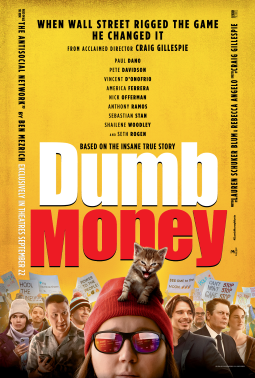
Dumb Money is the ultimate David vs. Goliath tale, based on the insane true story of everyday people who flipped the script on Wall Street and got rich by turning GameStop into the world’s hottest company.

A true story released only two years after the real events happened has the potential to be concerning, but Dumb Money takes a ridiculously fun approach to its outrageous story. In order to tell such an insane turn of events that actually happened, you need to match that with a style that doesn’t take itself too seriously, and the soundtrack and comedic tone of the film very much understand that. Similar to The Big Short, it also does a great job of making financial talk sound accessible and engaging. It also frames the Gamestop short squeeze as an underdog story, and ordinary people gathering knowledge about finance and investing as a positive incentive. Everyone is great, from Paul Dano who plays the film’s lead rebel and hero, to funnier roles like Seth Rogen and Sebastian Stan. America Ferrera gives the film a lot of spirit and Anthony Ramos, Myhal’la Herrold, Talia Ryder and Shailene Woodley are also very entertaining. However, Pete Davidson is sure to get the most audience reactions as hands-down the funniest and most memorable presence in the film. With a cast this awesome and a style this entertaining, it’s hard to find much that doesn’t work about what Dumb Money sets out to do — or a reason not to watch it in theaters.

A Haunting in Venice

Hercule Poirot attends a seance at the suggestion of his friend, mystery novelist Ariadne Oliver, who wants to expose a medium as a fraud, but a murder occurs and Poirot must get to the bottom of what seems to be an impossible deadly truth.

Though Kenneth Branagh has seemed to find a formula that works in his slew of Agatha Christie-based films in which he directs himself as the iconic detective, he also wisely ditches the CGI-heavy look of the last two films for a more intimate setting within a darkly lit Venice palazzo one stormy Halloween night in 1947. Though the cast has more weak links this time, Jamie Dornan, Kyle Allen, Jude Hill, Michelle Yeoh and others deliver interesting performances, with Tina Fey being as cocky and entertaining as you’d expect her to be as a writer in the 1940s who’s friends with the Hercule Poirot. It embraces some of the visual and tonal aspects of gothic horror but cleverly doesn’t fully indulge in the genre and remains a solid Whodunit murder mystery, although the pacing still has its slow moments. As I said before, the less “obnoxious” or massively cinematic style helps it better establish a darker mood and a murder mystery that feels contained and believable, and delving just enough into the concept of spirits to feel unique compared to the last two, without throwing too many supernatural elements at you. In other words, it’s another delightful Poirot mystery that never quite surpasses the description of satisfactory, but still fun enough for a watch.

Golda

Golda focuses on Israel’s Prime Minister Golda Meir as she faces internal and political pressures during the Yom Kippur War, as she fights for her dignity and the existence of the state of Israel.

Helen Mirren shows up as she always does and disappears into the role of Golda Meir in this biopic, elevating what would’ve been a very slow, by-the-numbers historical film otherwise. Besides some amazing make-up work on her, Mirren emulates the spirit of a fighter, who was balancing personal health and guilt struggles with the weight of making decisions that could determine the fate of her reputation and her country’s fragile existence forever. She captures Meir’s cocky but patient, empathetic, and demanding spirit very vividly. Camille Cottin also does a good job as Meir’s personal assistant who becomes family to her, but unfortunately, she’s the only member of the supporting cast who feels interesting or soulful, though Liev Schreiber has a solid scene that he shares with Mirren.

Though Mirren’s performance carries the film, it also struggles with its pace, as some of the decision-making scenes feel repetitive, and even with its 100-minute runtime, it could’ve been more engaging. But it’s also a huge step up from Hollywood’s last big take on Israeli history, 2018’s 7 Days in Entebbe, which was a disaster. Though Golda isn’t that much more memorable or a necessary theater watch, the outstanding lead performance makes it a much easier watch and I’d even argue it’s a great gateway into Israeli history, and thematically strong about people making sacrifices and battling for Israel’s right to exist as a sovereign state, while being respectful to the soldiers and their loved ones involved in the Yom Kippur War.