Celine Song enlists big names and a larger budget for her second feature after the Earth-shattering Past Lives, but this feels like a Celine Song movie first and never compromises for a more mainstream rom-com approach. In fact, despite some great humorous moments and consistent wit from its characters, the movie hardly feels like a comedy, rather a deep and patient romantic drama. Dakota Johnson finds herself in another hard-hitting role among some of her best like Cha Cha Real Smooth and The Peanut Butter Falcon. Her journey is flawed yet always sympathetic. Chris Evans also gives one of his most heartfelt turns in a long time, with the part of John here fitting him like a glove. Pedro Pascal also has some irresistible scenes with Johnson and the dialogue Song gives him to work with really stands out.
The film dissects how modern superficial worldviews complicate the once-simple idea of love and relationships, while romance and love can sometimes not be more different. Song is an expert at rhythmic and sophisticated dialogue, and builds a quiet and meditative atmosphere with a lovely 35mm film look and Daniel Pemberton’s strong score. There may be more than a few films that tackle similar ideas of love and, well, materialism, but it’s only through Song’s words and style that Materialists works so intimately and profoundly.
When seventeen children from the same class all disappear one night, a community is sent reeling and forced to deal with the terrifying consequences.
Weapons is a film that bids farewell to all the tropes we’re used to in even the best of modern horror movies, throwing us first into how a community is affected by such cruel and unexplainable loss. Julia Garner is at the film’s heart as a gentle teacher who suddenly loses all but one of her students — and is quickly blamed by her peers for it. Garner is immediately bondable with the audience due to her desire for answers and peace amidst her unfair situation. But on the other side of the public tensions is what comes off as rage but reveals itself to be fear and desperation in Josh Brolin’s performance as a father hellbent on finding his missing son. His hardness reveals itself as pain and vulnerability and stands out among many others of the actor’s roles.
Though writer-director Zach Cregger sets out to make Weapons feel far more patient than other horror films, he also goes for broke structurally, stylistically, and graphically. The editing, score, and cinematography are chilling, with moments that may end up in modern horror classic territory. Cregger retains some of his previous film Barbarian‘s DNA, such as jumps in time and perspective — some less interesting than others yet necessary for the film’s slow revelation of its mysteries. Within the film’s title lies many of the answers, including the weapon of the human soul itself: the harm that we can inflict or can be inflicted on us. But it’s because the film does hold back so much, and for so much of its runtime, that everything clicks so beautifully. We see and learn just as much as we need to in order to be asking the right questions, and hopelessly guessing what might really be going on here. Once you reach the end of Weapons, you may find yourself equal parts terrified and delighted, but its unraveling will make your heart sink and your legs shake. Weapons is bold and extraordinary even in today’s ever challenging horror landscape. Cregger’s cynical and at times darkly humorous lens fits perfectly into a modern folk tale of sorts that radiates the kind of singular originality felt in M. Night Shyamalan’s golden days of making thrillers. In this epic yet personal horror film, the scares aren’t nearly the whole point, but the whole point is seriously scary — just not in all the ways you’d expect.
Wes Anderson always tries to out-Wes Anderson himself with every new movie — the framing devices within framing devices, the immense ensemble casts, the intricate and stunning production design and often complex, windy storylines and characters. Some times it pays off less than others, but The Phoenician Scheme is a delight from start to finish that aspires for big but also stays true to what it establishes itself to be. Benicio del Toro finds himself in his best film role since Sicario as a pitiful and apathetical tycoon, while Mia Threapleton gives a killer breakout performance as his maybe surrogate/maybe biological daughter. Their dynamic is filled with battles of wits and values, and Anderson again recruits a truly larger-than-life cast, all in kooky and entertaining fashion. Michael Cera, Riz Ahmed, Tom Hanks, Bryan Cranston, Richard Ayoade, and Scarlett Johansson are only a few standouts here, and they really do keep on coming. Anderson also aspires for great scope with the fictional settings the leads journey into, which continue to wow and surprise; the sheer imagination of the sets is always a highlight for the director, as are the beautiful shots here.
The details of the titular deal that Benicio del Toro’s character is after may be so complicated and brisked past that they’re difficult to understand until much later on, but the caper-like plot developments are so exciting, thanks to an energy the film figures out in its opening moments and doesn’t let go of. It’s also one of the filmmaker’s funniest films in a long time, with the laughs being nearly constant but also revealing things about the characters and world we’re watching. If anything falls short here, Anderson seems to love a good anticlimax — a sudden pivot away from the big climax for a quiter, more meditative conclusion. Though this has worked in his favor before, the problem is that he’s actually trying to go for a grand finale here, but can’t help and make it feel way less than what it should be. It’s got the globe-trotting adventurousness of The Grand Budapest Hotel and The French Dispatch, and the director’s imagination doesn’t hold back. It’s certainly a step up from his previous Asteroid City, the laughs and story continuing to escalate and the pace never hitting the brakes until the very end.
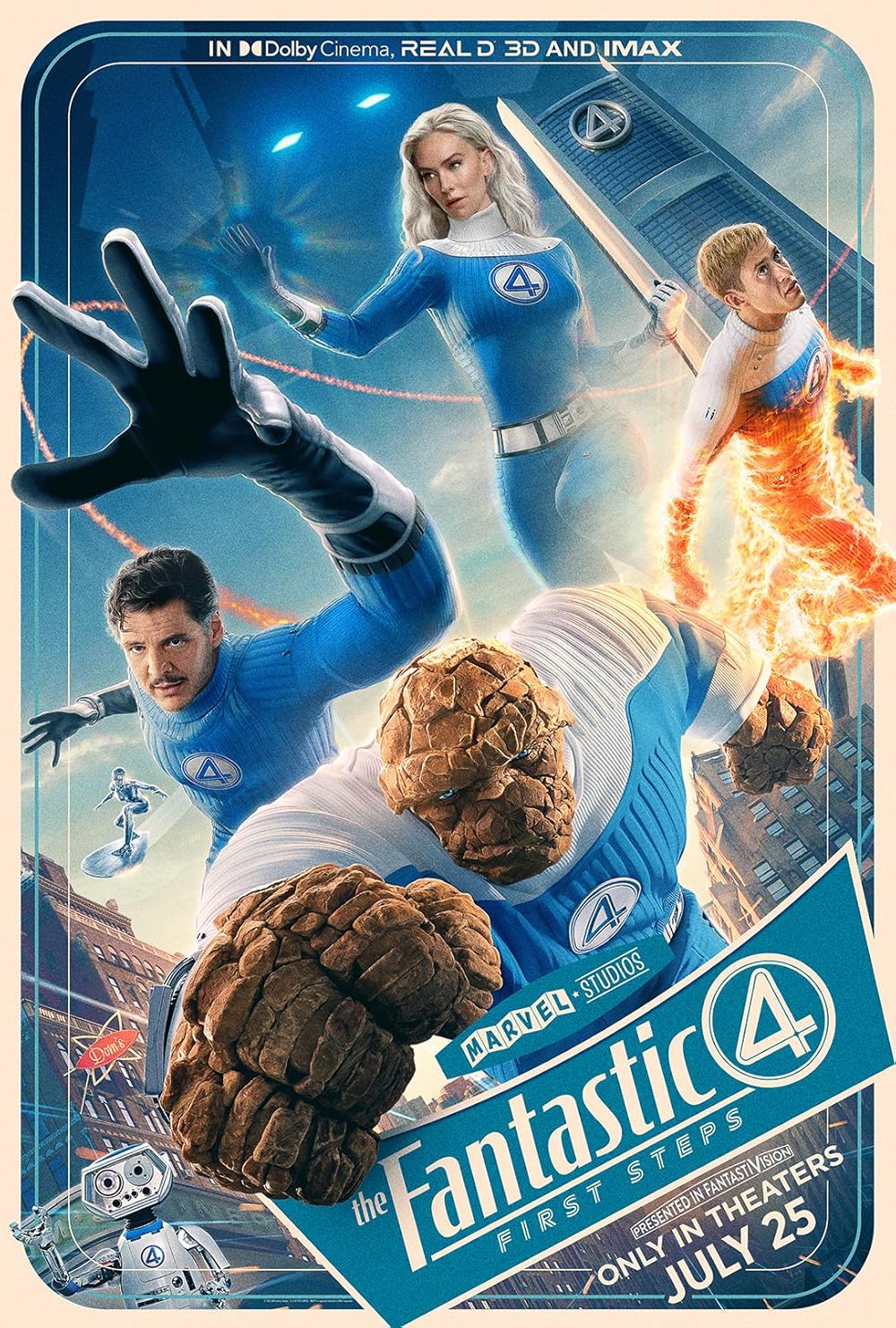
It seems like the third time’s the charm for Marvel’s first family — after three different iterations on screen, the Fantastic Four finally get a film that’s not only watchable, but irresistible. Since this film is set in a parallel universe to the 36 films preceding it in the Marvel Cinematic Universe, it gets to build a new world from scratch. The eye-popping visuals will leave you in awe, including extraordinary costume and production design. The retrofuturistic approach to this new world recaptures that feeling of wonder of humanity embarking into space for the first time, while imagining a reality where all of humanity rallied together behind reason, morality, and science. This idealism and dream-like wonder bring a beautiful look and excitement that’s distinct from Marvel’s other outings that are set in a world with undertones much more like ours. Pedro Pascal gives his star-like charisma to Reed Richards, but the film wisely gives Vanessa Kirby’s Sue Storm much of the film’s emotional weight. Kirby is given a journey unique to Marvel and the screen, and she and Joseph Quinn fit their roles like a glove. Ebon Moss-Bachrach is a highlight as the deeply heartfelt and lovable Ben Grimm, and the family’s dynamic together is sweetly reminiscent of a team like The Incredibles.
The action-packed pace wastes no time, even when it sometimes skips time with detailed character arcs, their relations with one another, their world, and their roles in it drive the film very well, even when the conflict may be priority. The only shame is that talented supporting players Sarah Niles and Natasha Lyonne weren’t given a little more screen time. The effects and action always entertain, and even the world-devouring giant Galactus is given a serviceable motivation to give his presence weight, including Ralph Ineson’s powerful voice. Meanwhile, his herald Shalla-Bal, the Silver Surfer, is given an interesting portrayal by Julia Garner. The Fantastic Four: First Steps doesn’t set out to surprise, but it certainly wows and stands out among the MCU, finally giving the characters a great outing and vivacious portrayals with a gorgeous aesthetic that takes a life of its own and gives the film a stunning feeling of enjoyment throughout.
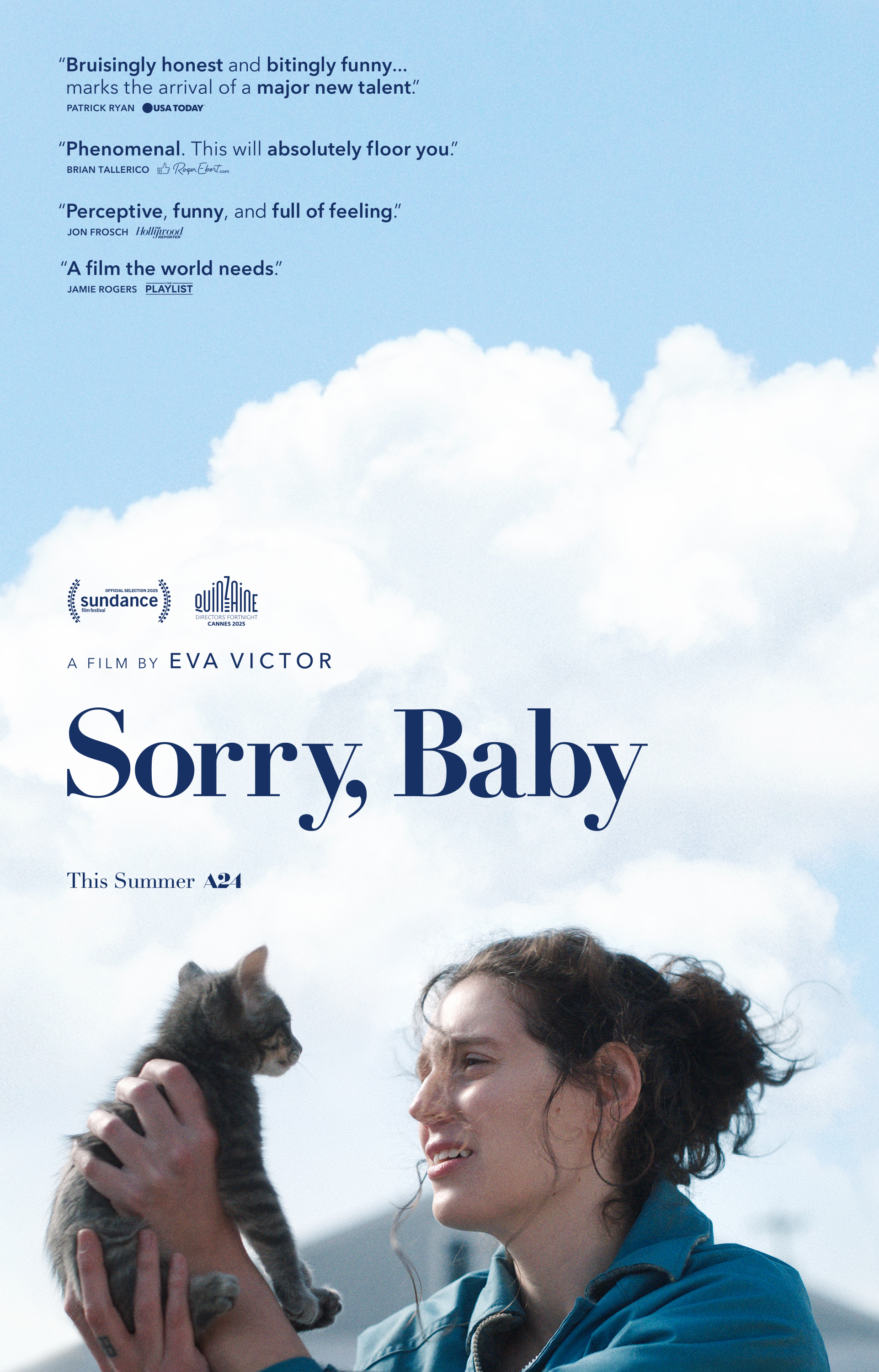
Eva Victor’s revelatory debut film is raw, uncomfortable, and belly-laughing levels of funny. It provides a deeply personal look into a topic that’s far too real, and not only demands but earns the full attention and empathy of all watching.
Victor’s leading performance as Agnes feels real and pierces into your heart, while their charm and comedic timing are always outstanding. Naomi Ackie gives a sweet turn as Agnes’ best friend Lydie, while Lucas Hedges also shines here, as well as John Carroll Lynch in an unforgettable minor role. Victor’s direction and storytelling brilliantly unveil the truth about this film in the first act, while the script continues to surprise you. The humor is sometimes informed by the serious or the awkward. The laughs hit so hard you’ll feel like you’re on your toes — the moment you feel a line will probably be the funniest and most memorable in the movie, its topped moments later.
The film’s unflinching look at sexual violence and the culture around it also ties in to broad themes about time shaping one’s life and soul. The film isn’t optimistic and loving despite the heavy subject matter, but because of its aftermath and the character’s journey to finding purpose again after experiencing something unspeakable. Perhaps by speaking about such things, as the film hints, hope can come through support and redemption. Sorry, Baby is one of the year’s essential watches with a magnificent story and perspective that resonate long after the credits roll.
James Gunn’s reboot of one of the most recognizable and beloved stories and characters in pop culture history wisely ditches the origin story and hits the ground running, and the momentum never quite slows down. We’re thrown into a world where Clark is already Superman, dating Lois, and surrounded by Metahumans, and the movie greatly benefits for it. David Corenswet, first and foremost, is wonderful as the titular hero, giving us someone more tangible and relatable to aspire to, while actors like Christopher Reeve and Henry Cavill played the character as larger-than-life figures bigger than any normal person could ever imagine to understand. This story is all about Superman’s flaws and embracing of his unique identity, as well as his immovable faith in humanity, even we can’t see it in ourselves or continue to turn on the guy. Corenswet’s performance is oozing with superstar levels of charm while bringing the character down to earth — no pun intended — while the script does the audience many favors by not making us feel like Superman is invincible; he can be defeated with wit and even technology, and that’s what raises the stakes here.
Rachel Brosnahan is probably the best Lois Lane we’ve yet to see, who’s naturally funny, brave, and feels like her own character, while we also care greatly for her relationship with Clark moments into being introduced to it. Nicholas Hoult is outstanding as Lex Luthor, chewing up the scenery while providing a villain that hits far too close to home — a tech billionaire with a God complex and Emperor Nero-like ambitions, who feels like he exists in his own world beyond just a terrific adversary to Superman. Gunn always shines in making his supporting cast feel close to us, like a wondrous family we’re getting to know, and everyone gets to stand out, from Edi Gathegi, Nathan Fillion, Isabela Merced, and Anthony Carrigan as other metahumans to Skyler Gisondo who is hysterical and irresistible as reporter Jimmy Olsen. Most importantly, Superman’s dog Krypto is an adorable scene-stealing standout.
Gunn’s visuals also stand out here, feeling colorful in a comic book nature and often morphing around our actors. The action is dynamic and exciting, and the excitement that’s both playful and grand. Beyond his singular and unpredictable filmmaking, Gunn’s skills as a writer shine, with conflicts that balance the gripping and the over-the-top, and a genuine heart that seeks out to represent what Superman’s been about all along — optimism, hope, and shared humanity. Gunn never feels restrained, however, by what’s defined past iterations of the character, and still makes this Superman his own. The film delivers on every promise while standing out from recent superhero outings and being perhaps the most thrilling, lovable, and worthy Superman movie yet.
In a future in which dinosaurs and humans were believed to be able to coexist but now faces climate change and mass disease outbreaks that threaten society, the Earth has now proven nearly inhospitable for dinosaurs, who have now retreated to an island. Now, a team of mercenaries and scientists embark on an expedition to retrieve DNA samples from three massive dino species that may prove to hold the key to humanity’s survival.
The Jurassic franchise began in 1993 with what’s still considered to be one of the greatest and most iconic movies ever made. Today, it continues to prove that its run its course and serves no purpose besides Universal’s cash cow. Only three years after Jurassic World Dominion supposedly marked the end of the franchise, Jurassic World Rebirth attempts to mark a new era for these films with a new age of global human-dino dynamics, and a new group of characters. Instead of utilizing this fresh start potential to breathe new light or direction, Rebirth is exactly what I feared — an unnecessary piece of nonsense that recycles the same tropes and quickly gets exhausting to watch. The characters are wooden and we aren’t given much material in order to understand or interact with them. Mahershala Ali is the definitive standout, always giving a lot of heart and likability to his role. However, a family that becomes a major subplot in the film takes up way too much screen time, and their appearances become more and more useless and frustrating the more we cut back to them.
In addition to its lack of effort in actually investing us in its characters, the concept as a whole works les when the film feels this rushed. So much has changed since the last film that it’s become a nearly pre-apocalyptic world, but a larger gap in time between releases and chronologically within the time of the franchise would’ve helped this make more sense. The dialogue also preaches much of its themes and directions instead of allowing the audience to learn or take much in visually. Besides a fun action scene set at sea, much of the action feels incredibly derivative and uninspired. There’s a serious lack of stakes and excitement, even if we’re told that the greater fate of humanity is at stake. The danger just doesn’t feel as thrilling because the film doesn’t set up its location or objectives with much clarity or heft.
Jurassic World Rebirth uses many of the same character archetypes and broader themes we’re used to from these films, while misses any real soul or thrills, or even any sense for that matter. It’s a tired return to a series that’s out of ideas and out of steam, and we’re left wondering what much of it really achieved, besides sticking the word Jurassic onto another film title and hoping crowds show up. Rebirth is concrete proof that it’s time to let the dinosaurs rest for a while longer, not just in reality, but on our big screens, too.
Elio is an young boy living with his aunt, who’s obsessed with the extraterrestrial and making contact with him. One day, the lonely titular boy gets his wish and finds the fate of the galaxy in his hands.
Pixar’s newest animated film is incredibly easy for families to enjoy and even find meaningful connections to, though its far from the impactful experience we’re used to from the studio. Best of all, it focuses on acceptance, self-esteem, and finding your way through loneliness and feelings of not fitting in. Zoe Saldaña, Brad Garrett, and Jameela Jamil all give entertaining performances, and the look of many scenes are colorful and gorgeous — from diverse alien species to their suits and intricately designed spaceships.
Audiences may connect to Elio’s strive to be accepted by others, and at its core is a sweet relationship between him and his aunt that feels like the film’s true heart. However, despite some entertaining humor throughout, it takes until the third act for the story’s drive to really feel exciting at all. It’s probably not the best or most original film about its themes, but also has a whimsical charm, great visuals, and a look and feel that will definitely entertain more than just the youngsters, and give some strong material for positive discussion among families about acceptance.
Out of all the zombie epidemics we’ve seen in cinema history, 28 Days Later and the franchise it’s spawned has depicted perhaps the bleakest, most horrifying, and cynical approach to the creatures. 28 Years Later carries that sheer terror and gore over in this generally rewarding continuation, as well as some of its predecessor’s more outdated stylistic choices that director Danny Boyle seems to cherish. Despite a few slightly self-aware soundtrack or action moments, the film portrays a hopeless future in which a nightmarish virus has caused a zombie apocalypse, and human nature is hardly a bright alternative. Now that it’s been decades since the world went to hell, we see the impact this has had on different sects of survivors, and small peeks at how the rest of the world may be interacting with this situation on the outside.
Boyle has a glaring pull to editing scenes like a music video, which frustrates when overdone, especially due to the prominent shaky cam, but when he trades this for calmer, more wide shot-driven scenes, the film looks beautiful, particularly the scenes set at night. The world isn’t given a wasteland-like look we’ve seen in films like Zombieland or I Am Legend — rather focusing on large fields and tidal islands filled with green and surrounded by blue sea.
Aaron Taylor-Johnson and Jodie Comer are great here, while Ralph Fiennes is a scene-stealer in a supporting role that’s incredibly powerful. The film does leave much to be resolved in a forthcoming sequel, which results in an underwhelming ending, but one that still very much leaves you excited for more after a stunning and unexpected final act.
Brad Pitt leads F1 with his signature leading charm that’s effortless and likable, even when character makes selfish decisions. Together with the rest of the cast, and the film’s commitment to in-camera racing and massive scale, this sports drama has all the right ingredients, even if the story is rather standard. The cinematography in the racing action is beautiful, and the sound design is impeccable and immersive. Hans Zimmer’s score is a standout, as is the soundtrack that includes celebrated contemporary hip hop artists. This exciting energy elevates the film and makes what you’re seeing feel so real.
However, the character beats are almost all formulaic (no pun intended) — the reluctant veteran thrown back in, the cocky rookie and the rivalry between them, the antagonistic businessman, and so on. It’s never hard to tell where the story is going, and we’ve seen similar arcs before, even in Joseph Kosinski’s own Top Gun: Maverick. That said, the aforementioned rivalry between Pitt and Damson Idris is admirable and complex, and the experience is elevated by knowing they’re actually driving those cars. Idris and Kerry Condon are standouts from a performance perspective. Idris’ almost vain excitement to be in the big leagues contrasting Pitt’s strategic mind who’s also a bit worn out and not sure he’ll ever find that spark he once had for racing again. Condon makes us root for her part just as much, a brilliant technical direction behind the scenes who’s also in pursuit of a complete victory.
F1 packs few surprises in its script, but it more than redeems itself with the exhilarating scope that justifies the theatrical experience. Best of all, it celebrates not just the grandeur of the sport in its highs, lows, and the ambitions of those behind the wheel and the pit stop, but the potential of the blockbuster, especially with practical effects. It completely delivers on its promises with astonishing action and cinematography, and the familiarity is more than redeemed by the entertaining cast and the stunning technological accomplishments.