Argylle

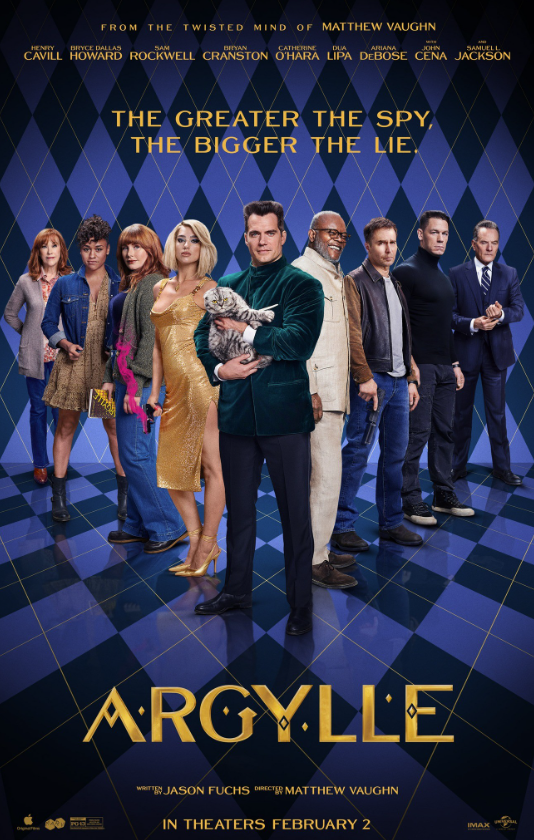
Elly Conway is the reclusive author of the Argylle spy novels . Soon, she realizes the plot of the new book she’s writing starts to mirror real-world events, as a global spy syndicate starts to come after her.

It’s always a blessing when Matthew Vaughn gives us a glimpse into his twisted mind with his witty and bombastic action scenes, and Argylle has a few of those, but it’s everything else that disappoints. Vaughn directs with a love for spy material and cartoonish entertainment mixed with modern, meta flare. The script, however, completely misses the mark and looks the commanding energy that his Kingsman had. Even Sam Rockwell, whose charm and goofiness often comes effortlessly, has to work with dialogue that falls flat and the attempts at humor don’t manage to illicit a response. Though Henry Cavill has some fun and Bryce Dallas Howard tries her best in the leading role, there’s more left to be desired in Ariana DeBose, John Cena, and Samuel L. Jackson’s screentime. Bryan Cranston’s villain may be the weakest link of the cast, as everything he’s given to do is annoyingly generic.

The movie’s downfall is also its ambition, which is often what lifts Vaughn up above the rest. The ludicrous twists are executed in a head-scratching way, and all the film’s rules or explorations of fiction vs reality are thrown to the side for more frustrating decisions that make its lead character less interesting. The pacing also suffers greatly in the film’s second half, the end of which sees us getting a few of those glorious scenes of carnage Vaughn’s known for, which still feel softened compared to what they could’ve been due to the PG-13 rating, but are delightfully exaggerated and have great soundtrack choices. By then, however, the journey to get there is simply exhausting and it may be too little, too late for many viewers.

Argylle is a massive disappointment in which a singular director brings his trademarks to the screen yet again, only this time without the laugh-out-loud glee or the clever script that usually support his vision. Its ambition unfortunately exceeds its grasp, and its inconsistent and convoluted execution make this invitation to take the world a little less seriously with Matthew Vaughn a sadly unrewarding one.

Aquaman and the Lost Kingdom

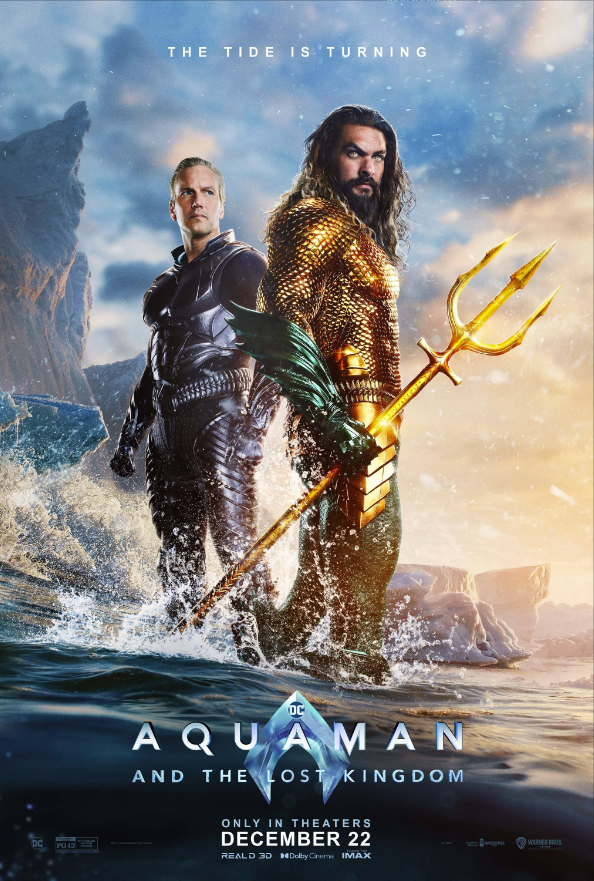
When Black Manta returns for revenge against Arthur Curry/Aquaman, who is now King of Atlantis, he must unite with his former enemy — his half-brother Orm — to prevent Manta from causing a global catastrophe.

The first Aquaman film isn’t a must watch for action or fantasy fans, but it’s a fun film that knows what it’s going for and how to build an engaging world and action set pieces on the screen. Save for a few cool effects and maybe one action scene that’s great, this soulless and uninspired sequel lacks all of that. The story is so convoluted and unengaging that it’s hard to imagine James Wan had any part in bringing it life. Jason Momoa is having a great time in the titular role, but everyone else seems like they’d rather be anywhere else, even the great Nicole Kidman. Aquaman and Orm’s brotherly dynamic isn’t as sweet as the film imagines it is, and it’s basically the same dynamic Thor and Loki had when the latter broke out from prison in Thor: The Dark World. However, Momoa gives off that endearing energy very well in his line delivery — maybe the only good thing this script has going for it. Yahya Abdul Mateen II as the main villain really excited me, but even he isn’t really used well, with his unfiltered rage being clouded by plot MacGuffins and silly side goals that the film should’ve done without, not to mention Randall Park who’s very well cast but his character isn’t executed that strongly, and Dolph Lundgren’s incredibly questionable and head-scratching performance.

The visuals of Atlantis still look cool but the corners of this fantastical world that are explored this time don’t look very interesting once you leave the kingdom of Atlantis itself, which is pretty early on. Besides one action scene that takes place in the first act in Atlantis’ big city you saw in the first film, the action’s choreography misses the mark and the attempts to raise the stakes by adding plot devices and tying them into climate change are too tacked on. There’s also plenty of dialogue and soundtrack choices that are simply irritating and generic. Through the end, Aquaman and the Lost Kingdom doesn’t seem interested in redeeming itself and settles for the less exciting decisions each time. It’s a disappointment considering how enjoyable and cheeky that first movie is, and does nothing to warrant a watch even for fans of that first movie’s energy and characters, or action movie fans in general besides some empty spectacle without the delight.

Napoleon

Two decades after receiving his first Oscar nomination for Ridley Scott’s Gladiator, Joaquin Phoenix reteams with the legendary director for another epic action film about one of history’s most famous (and infamous) generals. Scott delivers on the promise of a Napoleon epic filled with spectacle. The action sequences are clearly committed and the best of Scott’s approach. The grandiose definitely comes through particularly in two famous battles; the violence does get a laughably gratuitous in certain occasions, though. Phoenix’s central performance captures Napoleon’s larger-than-life presence without romanticizing his historical grandeur, showing his ruthlessness and narcissism having led to countless deaths through his wars and invasions. His performance makes his screentime interesting, but sometimes the political dynamics drag and other scenes fall into unintentional camp or lifelessness when the battlefield isn’t the centerpiece. His relationship with Empress Josephine (Vanessa Kirby) is an interesting but also generic storytelling catalyst as well. The music and editing feel particularly poor in the film’s execution and rather unfitting. Though it’s cool to see the 158-minute film cover Napoleon’s entire life and rise to power, it also robs the film of any intimate tension that a film like The Last Duel benefitted from. Sometimes it feels like empty spectacle, and the muted color palette may distract in the wider shots, too.

Still, Napoleon benefits from its production value and immense storytelling among a historical icon’s rise and fall, and seeing a 2.5-hour Ridley Scott Napoleon epic may be all we really needed and were asking for. With the engaging action and lead performance that carry some of the film, it delivers on those fronts. However, it isn’t a must on the big screen and may still deliver the same entertainment when you watch it at home, as the grandiose on its own may be the saving grace for those who end up liking it.

The Hunger Games: The Ballad of Songbirds and Snakes

The Hunger Games: The Ballad of Songbirds and Snakes is set 64 years before the first Hunger Games movie, around the time of the 10th Hunger Games where a young Coriolanus Snow is living in the Capitol, facing choices that will define his future and that of Panem as he mentors District 12 tribute Lucy Gray Baird to victory in the arena.

This adaptation of Suzanne Collins’ excellent prequel to her acclaimed series of novels has the best cinematography of the franchise, and stunning production design. The Hunger Games films have always boasted incredible world-building, making the intricate politics and history of Panem spread far beyond the screen, and introducing the audience to a wide world of characters within it. However, the film sometimes lacks soul when it needs it most, especially in its first act. Tom Blyth gives an interesting performance of a young man as his narcissism and consumption for power begins to consume him whole. Though Rachel Zegler’s singing voice and presence gives Lucy Gray heart, her character lacks the consistency and potency she’s meant to have, not to mention an off-putting Southern accent. The chemistry between Zegler and Blyth feels weak, though it should’ve been a key component in the film. Jason Schwartzman gives a great comedic performance as Lucky Flickerman, the announcer of the Games, and Josh Andres Rivera gives the most empathetic performance as Sejanus. Hunter Schafer also steals the screen as Snow’s cousin Tigris, but doesn’t have nearly as many scenes as she deserved. Although Viola Davis’ character is supposed to be repulsive, her voice and lines are weirdly over-the-top.

The sequences we see inside of the Hunger Games are absolutely amazing, and more visually exciting than anything we saw in the arena of the original 2012 film. The dynamic shots and lighting create a scenery that’s both grand and sadistic. The post-war dynamics between the Capitol and Districts hits hard with the viewing of the Games, the dialogue itself is lacking and character decisions seem sometimes unearned. What is well-earned is this idea of a Hunger Games prequel set at this era so soon after a civil war and its sickening aftermath, and hitting home themes about human nature, but it should likely be viewed in the context of the films that were released before it — films that may have had better characterization despite this one’s admirable ambitions and aesthetic.

The Marvels

Carol Danvers gets her powers entangled with those of Kamala Khan and Monica Rambeau, forcing them to work together to save the universe.

The best way to make a good Captain Marvel sequel is to bring in the other superpowered women in her world — her “niece” who hasn’t seen her in years, and Jersey City teen who’s Carol’s biggest fan. Right away, Nia DaCosta’s directorial energy shines in the pace and editing, but what truly strengthens the experience is the chemistry between Brie Larson, Teyonah Parris, and Iman Vellani. The three blend together naturally, particularly Larson and Vellani, with Larson’s loving presence shining through as does Vellani’s excitement over seeing her hero in the flesh. Though Carol and Monica get to have some heart-to-heart, it doesn’t feel like Rambeau’s character gets more interestingly developed than in WandaVision. The villain Dar-Benn is one of the film’s greatest faults — though Zawe Ashton is strongly cast and the character’s motives are clearly established, her actions don’t feel menacing or personal enough to warrant the audience’s hatred of her as a villain.

Despite mostly strong visuals, the action scenes (besides a great opening one) feel like more derivative versions of other action scenes in the MCU except for the “switching places” aspect, and the latter ones feel in fact messy and rushed. The film also isn’t too concerned with making its emotional themes stick, and most of the heart rests in the natural talent the three stars already bring and the love they share for each other in the story, but Kamala Khan’s family makes for great supporting characters and comedic reliefs, as well as the adorable Flerken cat Goose. The rules and devices that come into play, feel either incoherent or underdeveloped within the flow of the story, resulting in the film sometimes feeling like a less realized version of a great movie. That said, there’s heart, energy, and fun in this film, and even some delightful musical moments, although DaCosta’s passion isn’t felt as much when some other of its critical ideas feel standard and undercooked.

The Creator

In a future where humans have gone to war with artificial intelligence, Joshua, an ex-special forces agent, is recruited to hunt down and kill the “Creator”, who has developed a mysterious weapon with the power to end the war.

Seven years after the release of his last film Rogue One: A Star Wars Story, Gareth Edwards arrives with what feels like a visionary action film that feels parts Blade Runner and Avatar. The visual effects come together seamlessly to create a world that’s set in the distant future but might not be so far-fetched considering attitudes on AI in these times. The humans, robots, and hybrids all blend together in the frame and the robots’ movements look so smooth you’d believe they look exactly like that as they interact with other items in the screen. Not to mention the pitch-perfect cinematography from Greig Fraser and Oren Soffer that creates a mood that’s stunning yet violent, in-camera yet out of this world. John David Washington makes becoming one of the generation’s coolest action stars look effortless, and Allison Janney is surprisingly great, as well as the always delightful and nuanced work of Ken Watanabe. Madeline Yuna Voyles delivers a great breakout as a powerful AI child, though her relationship with Washington’s character doesn’t really click until later on, and even then feels a little derivative.

Though structurally you will occasionally encounter familiarity, the film takes a unique approach to the conflict between humans and artificial life, and visually it’s like nothing out there right now. Though the plot turns may be predictable for many viewers, it has a flare and liveliness to the action that not many other action movies this year had. More importantly, it feels even more special today as it’s one of the only theatrical action/sci-fi blockbusters of this scale without any source material/IP that’s been released in the last few years, and that’s worth commending and supporting. But whenever this had been released or viewed, Gareth Edwards’ inspired direction solidifies him as someone who’s in love with the worlds his movies imagine as much as the stories they tell on the page, and The Creator would make you want to invest in anything he puts his stamp on next.

Gran Turismo

Gran Turismo is based on the true story of racer Jann Mardenborough, who wins a series of Nissan-sponsored video game competitions through his gaming skills and becomes a real-life professional race car driver. Though the spectacle is strong with this film, the overall execution is muddled and mostly carried by David Harbour’s performance as Mardenborough’s trainer. Harbour is excellent as a hard but deeply encouraging mentor figure who develops a camaraderie of sorts with Jann, and the story of a gamer achieving the impossible and fulfilling his dreams becoming a real racer has some fun to it considering its a true story, but there’s also dragged out “sports underdog” cliches and a muddled execution. Blomkamp’s directing is fashionable but often jarring, with headache-inducing editing during the racing scenes that clearly look expensive but lack the adrenaline of Ford v Ferrari and Rush. Archie Madekwe is solid in the lead role, but the supporting cast doesn’t feel as interesting or human, with the exception of Harbour and a strong Djimon Honsou. The first two acts though are dragged out and the montage-style pacing feels frustrating and uninteresting, with weird video game-like edits that are supposed to feel meta but instead take you out of the scene.

Gran Turismo has enough references for fans of real-life racing, and racing scenes for fans of action and sports, and the third act is a fun and significant improvement over the first hour and a half of the film, but may not warrant a watch unless you’re strictly looking for sports and spectacle.

Blue Beetle

When recent college gradaute comes across a valuable piece of military tech designed by Kord Industries, he suddenly gets attached to a sentient scarab and becomes its host. He must use his new suit to discover his identity and fight for his family.

Blue Beetle has no concern with scale or world-building like the other last few DCEU films, but feels effortless in building beautiful family dynamics among the Reyes family that give our lead character a real soul and a reason to fight. It’s lovely to see such a supportive family with no strings attached in a superhero film, and see Jaime as a college graduate going through relatable life issues. But the character could’ve easily still fallen flat in the script had the film not struck gold with its casting. Xolo Mariduena is a ray of light and as Jaime. Not a moment goes by where you don’t feel his charm and energy as a magnetic and empathetic presence, but as Jaime learns, he isn’t the same without his family. He’s surrounded by a cast of fantastic performers as the family. George Lopez in particular is absolutely hilarious as his Uncle Rudy, not to mention a scene-stealing Adriana Barazza as his grandma. Belissa Escobedo is also a breakout as Jaime’s sister Milagro who is an incredibly layered and likable character, and these actors come together to build a support system that helps Jaime understand the importance of family while cheering him on on his own journey. Bruna Marquezene is also great as Jenny Kord and adds a lot to the film, and Harvey Guillen has a small but hysterical role. Susan Sarandon is well-cast as Victoria Kord, though her lines and motives are riddled with superhero corporate baddie cliches.

Though the cast helps make the movie as soulful as it is, the visual look of the film can be underwhelming. The 80s campy feel is appreciable but the quality of the CGI and the lighting choices are uninteresting, and occasionally questionable. That being sad, the cheeky energy converts enough into smiles and emotion that the audience feels for its lead characters, making Jaime Reyes potentially one of the best DCEU protagonists, and worth a watch for fans of superhero films.

Teenage Mutant Ninja Turtles: Mutant Mayhem

For years, Raphael, Michaelangelo, Donatello and Leonardo have been trained in the ways of ninjitsu by their father Splinter, and have been told not to leave the sewers for fear of what the humans will do to them. But the turtles decide to foil a dangerous plot and become the heroes New York City needs.

After numerous iterations, the Ninja Turtles franchise finally has an installment that understands the tone this IP deserves to feel lively and memorable. The turtles are voiced by actual teens, so they really get to feel youthful and like genuine characters (as much as mutant turtles can), and perhaps animation was the best way to go all along. The live-action designs of the characters in the past always looked too silly or creepy, and the style always helps this film live up to the mayhem suggested in the title. The Spider-Verse-inspired animation style of 3D graphics and 2D coloring gives the film a teenage feel, but more than that, something imaginative, wild, and fresh that doesn’t demand to be taken too seriously like the Michael Bay-produced live-action iteration. The dynamic “camera movements” and hip-hop soundtrack gives the film a constant energy that always put a smile on my face. The packed voice cast is also great, particularly Jackie Chan as Splinter, who may secretly be the heart of the film. Chan gives the talking rat a soul that makes him unique beyond what could have been the typical strict parent in an animated movie. Ayo Edebiri is also lovely as April O’Neill, an aspiring teenage journalist who befriends the turtles instantly and is a refreshing departure from the hyper-sexualized it-girl April from past iterations. Ice Cube is a very entertaining villain whose personality and understanding motivations make it easy to enjoy his cliche evil plan. The only character I didn’t quite enjoy was Maya Rudolph’s Cynthia Utrom, not because of the voice performance but rather the generic archetype and motives that had nothing to elevate or make her feel necessary.

I’m surprised to say that I finally find the Ninja Turtles to be great, but this movie is incredibly funny and booming with imagination and heart. Though it does draw a lot tonally from the recent iterations of Spider-Man, it’s hard to complain when the animation and script are this much fun.

Mission: Impossible – Dead Reckoning Part One

Ethan Hunt and his IMF (Impossible Missions Force) team must track down a dangerous weapon before it falls into the wrong hands.

Mission: Impossible is a franchise that has my utmost respect for how much it aspires to keep daring and topping what came before. Each of the last four installments have delivered unforgettable action scenes and helped redefine the franchise, so Dead Reckoning does… just that. And seven movies in, it’s still got a phenomenal amount of excitement to go along with the loud, immersive action. Tom Cruise commits to the massive action set pieces in a way that’s audacious, commendable, and likable. With the various locations, vehicles, weapons, and lighting styles, Christopher McQuarrie has proven himself to be a top-tier action director of the 21st century with this and the last two installments. Not to mention it doesn’t just look cool, but also nail-biting as I felt my body in suspense throughout a lot of the film.

Cruise also isn’t the only winning part of the cast — Simon Pegg and Ving Rhames’ lovable IMF members continue to be expanded on and serve the movie’s mood, Rebecca Ferguson proves again that she’s the best of the franchise’s female badasses (though I’d have liked to see her given more to do than she had here), and Hayley Atwell is a charming and fun addition to the cast. Vanessa Kirby, Shea Whigham, and Pom Klementieff are also giving it their all in memorable roles, and Esai Morales is a simply fantastic villain. His layered voice compliments his chilling appearance and dialogue — I only wish his motivations were expanded on a little more.

Similar to Fallout, the visual style feels gritty, like almost anything could happen, though it also effectively embraces the fun and humor even more. But like its predecessor, the writing is so complex it may take rewatches to understand every objective, alliance, motivation, and MacGuffin the script presents. However, it’s rewarding to see this franchise keep aiming for higher while never losing what’s made the last few installments into epic must-watches. I also loved the way the film modernizes the saga in that it explores technology and its dangers in a way that hopefully enough people out there take note of. There’s only a few minor narrative points I would’ve polished, like an emotional moment for Ethan that should have embraced the darkness of what Ethan was feeling more, but it’s not like the movie isn’t already 163 minutes long — but don’t worry, it flies by. Mission: Impossible – Dead Reckoning Part One isn’t just a must-watch in theaters, it made me feel lucky to have caught such a marvelous action movie on the big screen. Tom Cruise continues to show us, well, the impossible, in countless ways, but that and the stunning thrills, fun, scale, cast and directions the story and filmmaking take make it worth every second of its length, and shows the action spy genre at some of its finest ever.