Mufasa: The Lion King

Rafiki tells Simba and Nala’s daughter Kiara the story of her grandfather Mufasa, the once king of Pride Rock, and his upbringing with his brother Scar.

Mufasa boasts a beautiful cinematic experience that’s best experienced in 3D. The visuals are transporting with their photorealism and colorful sceneries of the wild world, and get to develop new settings without behind held back by recreating scenes from another movie the way 2019’s The Lion King was. That alone warrants the theatrical experience here, and not much else. Though Mufasa isn’t remaking another beloved movie anymore, it’s still restrained by the same lack of characterization that made the photorealistic animals feel emotionally distant in its predecessor. The animals can’t quite emote like they can in other animated films, and this creates a tonal dissonance between what the original 1994 film set for the franchise and the photoreal road the filmmakers are going down now. Aaron Pierre’s gravitas gives Mufasa just the right profundity, but Kelvin Harrison Jr., who’s a wonderful actor, feels rather miscast as Scar, a character who feels inconsistent both performance and character-wise. The problem with the rest of the characters is that save for Mads Mikkelsen’s villain, who’s basically Scar from the original minus the intrigue, everyone is a younger version of a Lion King character, and are stuck doing impersonations of the actors that came before them. There feels like there is nothing to discover emotionally, and the backstory behind the characters doesn’t really enrich what came before rather than just filling in some logistical gaps, all of which form a very cliche story. Not to mention, Billy Eichner and Seth Rogen as Timon and Pumbaa’s gags have been done to death and annoy more than they charm.

Though this one isn’t following the same story of another film beat for beat the way The Lion King was, that movie at least had the advantage of inheriting phenomenal songs from the original film. Lin-Manuel Miranda’s music here is incredibly lacking, with every song feeling derivative of a song from its predecessor, or even more recent Disney films. The worst part is, despite some of the action being visually stunning, the musical sequences are weakened because of a lack of connection to the animal characters who are less animated when they’re made to look real. If this made the 2019 film feel cold to you, this one won’t feel any more energetic. The film opens with a powerful tribute to James Earl Jones, the original voice of Mufasa — the fact that that’s the most (and maybe only) emotionally touching part of the film is very telling. Despite stunning visuals, including some beautiful sequences of the animals in the snow, Mufasa doesn’t offer much originality from a thematic, character, or musical point of view, and everything underneath the breathtaking aesthetic is easy to forget after watching.

Kraven the Hunter

Sergei Kravinoff, the son of a crime lord, develops a gift for fighting for and defending wild animals, but soon old and new foes from his life converge as he must embark on the most dangerous fight of his life.

Explaining the movie just then was a difficult task, not in an effort to avoid spoilers of the premise, but because the movie is so shallow it’s hard to really try and sell. It doesn’t quite make much sense, but worst of all, it isn’t fun to sit through. Weak character motivations and a hideous visual style plague this so-called origin story for another Spider-Man villain who Sony tries to manipulate into an antihero, rather unconvincingly. Aaron Taylor-Johnson’s casting as the titular character could’ve been promising in another movie, but he instead looks bored with the material he’s given, and who can blame him? Ariana DeBose and Fred Hechinger are also trying to salvage characters given no weight, but Alessandro Nivola, Christopher Abbott, and Russell Crowe are all awful. Nivola especially is given a lot of screentime but his slimy, unintimidating villain is flat and downright unwatchable.

Kraven, who in the source material is a terrifying brute, is supposed to be a much more sympathetic protagonist here, but we’re never given much reason to like him besides the fact that he’s played by a charismatic, good-looking actor, who isn’t really allowed to exercise too much of that charisma here. The action scenes are ruined by what looks like unfinished CGI, and every character’s look and dialogue is annoying, besides a moments Oscar winner DeBose has that are tolerable at best. The plot points are repetitive, the themes are undercooked, and the overall style is dull and feels more like test footage than a finished film that this character deserves. Not to mention, there’s some painfully obvious dubbed-over lines, which was also a glaring issue in Sony’s Marvel spin-off Madame Web from earlier this year. There’s no real reason here to root for any sort of journey here, as there’s never a promise of any real reward. The film pretends to be gritty, but only ends up being unintentionally humorous. It’s a fittingly empty end to Sony’s Spider-Man Universe of villain spin-offs that like its predecessors in the franchise, you’ll be begging to forget the moment it’s over.

Gladiator II

Decades after the events of Gladiator, the Roman Empire has fallen into the tyrannical hands of Emperors Geta and Caracalla. Hanno, a young man taken to Rome as a slave, learns of his connection to the Empire and trains to be a Gladiator to fight against the corrupt emperors.

This long-awaited sequel doesn’t have the same visual beauty and flare as its predecessor, but is still a solid action film that embraces the best aspects of the first film’s story. It’s quite an uphill battle to create a hero as strong as Maximus Meridius now that he and Russell Crowe are out of the picture… unless, of course, you cast Paul Mescal. Mescal brings a tenderness to his performance that shows through even when he ought to show strength and ferocity in the arena. Pedro Pascal is also fantastic and completely chews up the scenery, as do Joseph Quinn and Fred Hechinger as the spoiled and maniacal emperors. Denzel Washington gives so much life to the film, seemingly just by being his soulful, fun self. He brings a lot of humanity as he and Mescal enter a mentor-student dynamic. The film doesn’t work as well without Washington’s presence, whose character takes unexpected turns throughout the film.

Gladiator II‘s script works when focusing on its protagonist’s journey, as well as his fight against tyrrany. The power dynamics and engaging action scenes carry the story forward, though visually, it feels held back from what could’ve been compared to the first film. Ridley Scott’s style here doesn’t feel as patient and refined as in his recent The Last Duel, and the CGI could’ve used a lot more improvement. However, the action choreography is as bloody and grand as fans of the original could hope for, and the ending is beautifully done as a realization of promises we didn’t even realize the first film had. It’s a noble continuation that honors the first film, and its cast led by Mescal and Washington, while never quite reaching that original movie’s breathtaking heights, but still better than some of Scott’s other recent outings, and worth a watch in theaters.

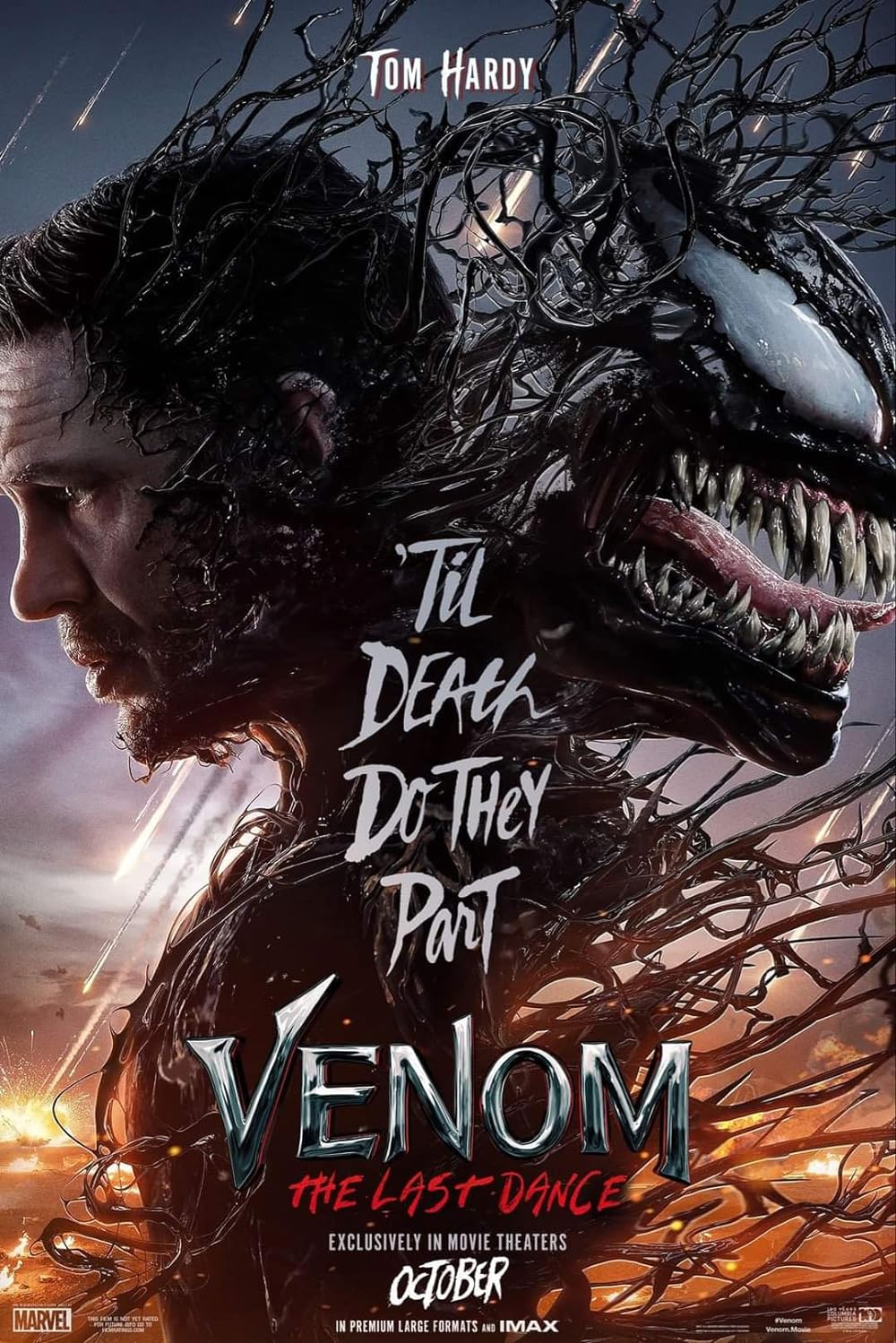
Venom: The Last Dance

Eddie and Venom are now fugitives on the run after the events of the previous film, and soon run into threats that threaten their existence together, and that of the entire world.

The third and final Venom movie offers much stronger laughs due to the bromance between Eddie and Venom. Though there’s still a fair share of cringe, there are some more genuinely funny moments, which for some is all you can ask for from these movies. But it’s hard to pinpoint whether it’s a genuinely better movie than its predecessors, or the bar was set so low by them that enjoying this one is a little easier. Not to mention, coming out after Morbius and Madame Web does this movie many favors considering it’s nowhere near as unwatchable, but how high of a compliment is that really for a movie? Where the film struggles again is making any sense of its story or having any engaging conflict beyond its titular dynamic. For the first bit of the movie, I was enjoying the chemistry between Tom Hardy and the CGI black blob much more than in the past films, but it soon descends into the same dull action scenes and tedious symbiote science exposition these films have subjected us to before.

The action scenes, including the uninspired CGI character designs, feel recycled and unattractive and do nothing different from the past films, as well as a few uninspired soundtrack choices. The rules to the conflicts are inconsistent and contrived, not to mention the disappointing use of great actress Juno Temple, who’s mostly just there to give exposition and stand on the sidelines. It’s also slightly distracting to have cast Chiwetel Ejiofor and Rhys Ifans, who have already had other Marvel roles, and Ejiofor’s character has no depth or originality to him. Every time we come back to the fighting and stakes, it’s hard to care, especially due to a few unrewarding story threads. It’s much more of the same, and leaves no impression despite its efforts to close out the trilogy. It may be the best of these films but that’s hardly a compliment considering how mindless and uninspired they already were.

The Wild Robot

ROZZUM unit 7134, or “Roz” for short, is an intelligent robot who finds herself shipwrecked on an island, where she learns to coexist with the animals living there and becomes the adopted parent of an orphaned baby goose, all as the rest of robot-kind awaits her return.

The Wild Robot breathes new life into themes we’ve explored plenty in animated films. The animation is absolutely gorgeous; the storybook-esque coloring that DreamWorks also embraced with Puss in Boots: The Last Wish makes the forest Roz explores look stunning, and makes room for creative liberties with some of the coloring — overly red fires look beautiful in the night sky, and water looks absolutely magnificent. The movie isn’t overly concerned with shoving in action sequences for the sake of youngsters’ attention, nor does it feel pressed to pace itself quicker; the time jumps and lower stakes often benefit the film. Lupita Nyong’o was likely the only person who could’ve voiced Roz with such audacious surprise and innocent gentleness, capturing her eagerness to help, learn, and soon, live the way she wants with and for whom she wants. Pedro Pascal, Kit Connor, Mark Hamill, and Catherine O’Hara round out the great batch of animal voices, though Stephanie Hsu especially kills it as an antagonist.

Though there are moments earlier in The Wild Robot where the animal chase scenes may feel more child-aimed, the movie wisely strips its themes down to the core, about difference and found family, and of course, kindness, to feel fresh and fascinating even compared to many other animated films that have been about the exact same thing. It’s a film that’s sure to touch as much as it will entertain, and the visual and emotional experience of the film together will resonate with all ages. Is it DreamWorks’ best film since the How To Train Your Dragon movies? Perhaps, but it’s also sure to stand the test of time as strongly as some of their greatest classics.

Alien: Romulus

While scavenging the deep ends of a derelict space station, a group of young space colonists come face to face with the most terrifying life form in the universe.

Alien: Romulus distances itself from much of the story of the other films, to create a contained haunted house/spaceship thriller. The film manages to give us enough interesting characters to attach us to the action and root for certain ones to make it out, though a few others are simply irritating. Making the premise about a “heist gone wrong” makes it feel unique and gives the film a more fun hook than expected. Cailee Spaeny, who needs no introduction at this point, is not only a terrific lead but perhaps the best person who could’ve played this role, flawlessly balancing the terrified and badass sides to Rain without feeling like Ripley, Shaw, or Daniels 2.0, giving a protective and resourceful edge to her strength. David Jonsson gets a lot to work with as Rain’s surrogate brother Andy, and Isabela Merced absolutely owns her screen time with the terror her character goes through. I mean, who can blame anyone for reacting in such horror after looking at a Xenomorph for the first time?

The effects of the creatures are seamless and innovative, and the gore that unfolds throughout the runtime does not relent or let you feel safe. Though it takes a bit to get going, the thrills get more and more innovative as we explore deeper and deeper through the titular space station. Though it’s often visually stunning, including shots of asteroid belts, planets, and spaceships, the darker lighting makes the shots not quite as gorgeous to look at as Prometheus and Covenant. It embraces enough of the formula that’s made past films work while finding enough in this story to induce curiosity and excitement. It thankfully stands on its own but the action scenes may end up ranking high for fans of the franchise, and ultimately deliver the sophisticated mix of science fiction, action, and horror that have made these films, 45 years later, still feel gripping and cool.

Deadpool & Wolverine

Deadpool enters the larger Marvel Cinematic Universe when he’s called upon by the TVA to save his timeline from erasure — or in other words, a Disney acquisition.

Deadpool continuing into the larger MCU, and with a larger sandbox to reference and joke with, only feels right, with the character reminding us that anything and everything in the world of entertainment need not be taken so seriously. Excitingly, it’s not just the convergence of the Fox Marvel heroes and the MCU, but also Hugh Jackman’s return as Wolverine, whom Deadpool has already poked fun of in his films. The film asks, what if two people who can’t die and have no temper but are polar opposites need to get along (but can’t)? That buddy comedy aspect drives the film, as do the multiverse-level visuals. In addition to Reynolds’ increasingly impressive commitment to one of the most foul-mouthed heroes to ever wear spandex, and Jackman’s rage-filled but emotionally charged take on a Wolverine different from the one we parted ways from in Logan, Emma Corrin shines and never feels lesser than the two A-listers when on screen with them. Corrin gives a delightfully cruel and loose performance as Cassandra Nova, and certainly not right-minded, almost like a Mad Max character given Professor X’s powers. Matthew Macfadyen also gives the film some great fun as a TVA agent whose a little murkier than the ones we met in Loki.

The film’s writing for its lead character doesn’t really hit hard on a deep level, and Wade’s relationship with Vanessa feels like a superficial conflict thrown in for the sake of necessity. Their arc worked way better in Deadpool 2, and here, this variant of Logan is by far the more inviting emotional aspect of the film. Despite Deadpool’s growth as a person taking a backseat, this is a film where the experience is reliant on the action, humor, and surprises, and it delivers on all three fronts. The action scenes are creative, eye-popping, and cheerfully graphic, from an opening that’s one of the most brilliant fight scenes in the trilogy to much, much more that comes after. The jokes come at light speed and have something belly laugh-inducing for everyone, including references to the actors’ filmography. The film also embraces the idea of the multiverse with cameos to behold that’s been kept secret from the marketing for our enjoyment in the theater. It’s probably why Deadpool & Wolverine, despite not having a marginally original story, is such a memorable crowd experience and action blockbuster that does not hold back, continuing to push the limits of how much the blood, raunchiness, and self-awareness can surprise and amuse us. But it’s not just irreverent for the sake of it — the humor and energy of the film brilliantly mesh with the CGI-heavy worldbuilding of the MCU, so come the chemistry that’s promised from the title and meta potential of these franchises colliding, and though that’s the mainstay here, it’s more than enough devoted fans of the superhero genre and the collective theater experience.

Twisters

Kate Cooper, a retired tornado-chaser and meteorologist, is persuaded by her former colleague Javi to return to work with a new team and new technologies to stop deadly new tornadoes from wreaking havoc on central Oklahoma.

Twisters is a film that takes a vastly similar premise to the original, and a genre that’s been tired and torn since that first film’s release — a few good-looking movie stars trying to survive a deadly natural disaster — but winds up being better and more engaging than that first film in just about every way. The stars’ endless charm is the film’s secret weapon. Often in a modern effects-centric disaster film, one might find themselves either bored to death by the human scenes or yelling at their dumb decisions. The characters here aren’t just compelling, they’re also so much darn fun to watch. Daisy Edgar-Jones (of Normal People, Fresh, and Where the Crawdads Sing fame) is one of the reasons the film is so interesting to watch, and Kate’s intelligence, empathy, and passion for making a difference through science make for an emotional lead. If Hit Man hadn’t already proved that Glen Powell was a superstar here to stay, he’s again awesome here as a scientifically smart, behaviorally dumb Internet-famous tornado chaser whose group and approaches clash with Kate’s. His character genuinely feels layered, in addition to the funny cowboy side we first meet, and his chemistry with Edgar-Jones is irresistible. Not many actors have the charm Anthony Ramos has given every film he graces, and his presence in the film isn’t taken for granted. A few great actors like Brandon Perea and Sasha Lane could’ve been given a little more to do, though.

In addition to genuinely wanting to watch these characters interact and survive, the tornado action and destruction are a blast. The effects look like a great blend of that Amblin Spielbergian practical look and some large CGI set pieces. They all come together seamlessly with the booming sound effects to create an edge-of-your-seat experience. But director Lee Isaac Chung’s style is never only about big effects and havoc. The characters, science, and even the editing are always key to the story and pace here — not to mention, the soundtrack adds a terrific lot to the film. This new take on a familiar story meshes the old and the new with plenty of genuine thrills that I haven’t felt in many franchise films this year. But none of it matters without its stars’ infectious charisma, which, together with the tornado action, will put a big smile on your face and prove one of the year’s strongest blockbuster sequels that undoubtedly tops the first.

Furiosa: A Mad Max Saga

As the world fell, young Furiosa is snatched from the Green Place and falls into the hands of a great Biker Horde led by the Warlord Dementus. Sweeping through the Wasteland, Furiosa must survive many trials as she puts together the means to find her way home.

Action movies have lost the rare beauty of the aesthetic of Fury Road, and its prequel nine years later now. To revisit the Wasteland is a reminder of George Miller’s impeccable vision, true to his Australian roots, and imaginative and demented at every turn. The beauty of this post-apocalyptic warzone where mankind runs wild, destroying each other for resources, is captured with a canvas-like flare that pops out in every second. Perhaps only the Mad Max franchise can so seamlessly ditch its main character without any concern from audiences, yet Anya Taylor-Joy seamlessly adds to the rich lore of the titular character that Charlize Theron already made so legendary. Her silent pain and rage still never overshadows the character’s likability, but Taylor-Joy always feels perfectly placed in this big and mad world. Speaking of mad, Chris Hemsworth’s dive into villainy makes you ask why he hasn’t taken on more psychopaths before (shoutout to Bad Times at the El Royale). His twisted heartlessness and unleashed behavior makes his character is evil as he is delightful, and the actor nails the long batches of dialogue the character has. Tom Burke is also excellent as Praetorian Jack, a character who will certainly stick out for audiences as an anchor of sorts, whether in a haunting or affectionate way.

The one thing Furiosa lacks that made Mad Max: Fury Road the defining action movie is that pitch-perfect pace, and Furiosa‘s slow build across the character’s life’s events is a stark contrast to that lightning speed. Though the buildup may last long, the action is well worth it, and the structure does anything but play it safe afterwards, making this film more heartbreaking and intimate than the last. The sound is also booming and the body count is joyously high, with the best of Miller’s witty editing and inspired scenarios involving vehicles and large battle settings. There’s not a lot of suspense with certain characters knowing where Fury Road picks up, but it also contextualizes Furiosa’s journey to redemption in the aforementioned film, and is a welcome return to the spectacular world-building that we already love Miller and this franchise for.

Kingdom of the Planet of the Apes

Set several generations in the future following Caesar’s reign, apes are the dominant species living harmoniously and humans have been regressed to a feral state. One young ape undertakes a harrowing journey that will cause him to question all that he has known about the past and to make choices that will define a future for apes and humans alike.

More Apes after the conclusion of the incredible Caesar trilogy with War for the Planet of the Apes sounded too cash-grabby and too soon. What was wise on the filmmakers’ behalf was to treat this installment not as a direct sequel or reboot, but a slight reset of sorts as we pick up 300 years later, focusing on the legacy of the apocalypse and Caesar’s leadership. Apes are no longer living in fear of humans, rather Earth has become their planet, which creates an intriguing new setting that still doesn’t quite undo the finality of the last film. Ever present is the amazing dedication to the visuals and world-building. The motion-capture technology used to transform the actors into chimps, and the performances themselves, are impressive and make you forget for the entire 2 hour and 25 minute runtime that you’re watching performers rather than real apes in this world. Though Andy Serkis as Caesar was an iconic leading character that’s impossible to top, Owen Teague gives a sympathetic performance as Noa who strongly takes us on this adventure in this new era for the planet. Peter Macon also stand out as the wise Raka, and Freya Allan is especially expressive in her deep performance as human character Mae, though the script missteps in where to take her path later on. Kevin Durand gives such a committed presence to the villainous and tyrannical Proximus, a more charismatic version of the manipulative and sadistic Koba from Dawn. Proximus’ dialogue and physicality dominates whatever else is in the screen and truly terrifies, and his objective is quite menacing as well. However, his motivations, compared to Koba (who many ranked as one of the 2010s’ best villains), leave less room for moral grey area and rather feel like “pure evil”; there’s no layer or nuance to the terror Proximus wants to inflict or how he got there, though I can’t complain as to how well Durand brings the character to life.

Kingdom is most interesting when focusing on the apes’ new ways and how Caesar’s legacy impacts the sects of apes in different ways. But gone is the intrigue of the human-ape conflict and its undertones for human nature, though the film doesn’t understand this and often dwells too much in conflicts that War had ended with such finality, instead of embracing its other themes as its strengths. There’s also a character played by a recognizable Oscar nominee who’s entire being there felt unnecessary and simply complicates the logic of the world building further. The film isn’t short on great action and visuals in this imaginative, lively, post-apocalyptic world. It’s just that when you have two practically perfect films in the franchise preceding it, as Matt Reeves helmed them, it’s harder for this film to escape that shadow especially when the last one ended so definitively and didn’t beg for any sort of ambiguity or continuation. Kingdom of the Planet of the Apes is an engaging ride that should probably be seen on a large screen, even when it stumbles in justifying its existence and polishing its character motivations. Not to mention, it may have just been to soon for this inevitable continuation to a perfect ending, and the film’s final minutes raise more unnecessary questions that undo what we just saw than exciting invitations for more.