Marty Supreme

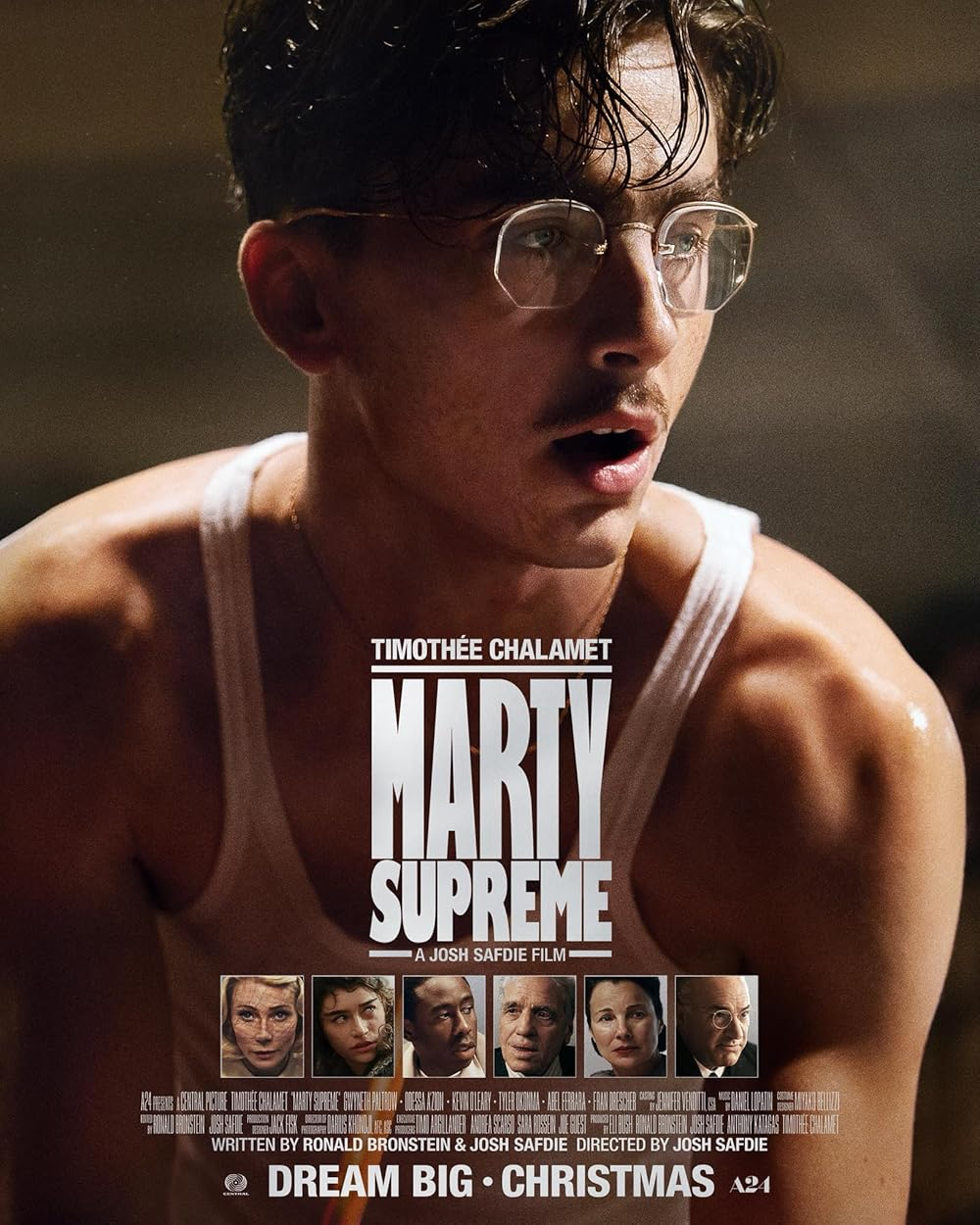
The Safdies’ bold filmmaking style has reinvented storytelling since they entered the scene in their expert use of handheld camerawork and overlapping dialogue to build tension, and Josh Safdie’s newest film is not only his grandest, but also one of the year’s must-watch movies that subverts most modern categorizations. If you had trouble rooting for Adam Sandler’s lead in Uncut Gems, Timothee Chalamet’s portrayal of Marty Mauser is almost as slimy, smooth-talking, and utterly self-centered. Not to mention, it’s the best performance of his entire career, devoting so much physicality in every moment to a character who desires to not only be great, but to be celebrated for his greatness. That’s exactly what causes him to make choices that are hot-headed, self-destructive, and often awful to others. Chalamet is loud but oddly charismatic, energetic, and layered. So why, through it all, are we secretly hoping for our unlikable protagonist to get what he wants, even if we know he might just squander it? Marty hustles, lies, insults, and risks it all to reach his ultimate goal of being the best ping pong player in the world, and Safdie’s direction as certain scenarios open rabbit holes of crazy and unwanted situations captures the exhilarating and hysterical chaos of it all.

Odessa A’zion delivers a spectacular breakout performance, giving her character of Rachel a kinetic unpredictability and standing out as a pivotal role in the story that’s impossible to look away from. Gwyneth Paltrow gives much heft to her character, a lost and washed-up but passionate actress looking to be heard in what she feels is a stuck situation in her life, and Kevin O’Leary also shines in a role defined by authority, vanity, and a coldness that looks down on Marty as he approaches him. Tyler, the Creator also stands out as a friend of Marty’s who shares some of the craziest scenes of the film with him. Safdie does an outstanding job of capturing the dirty and rugged look of 1950s New York, with madness increasing as characters yell over each other with the camera up in their faces, or sometimes bad or desperate situations escalate to much, much worse. The script, camerawork, and editing are working together in unison in every moment to create an intense and nail-biting flow that never stops. Not to mention, Daniel Lopatin’s booming score and the brilliantly selected soundtrack enhance every moment in which they’re present.

Chalamet’s performance that vivdly brings the titular character to life is just as fascinating as trying to piece together the greater poetry of the story. The magnitude of Marty’s ambitions are underscored by his entitlement to his gifts and destiny, and his willingness to deceive and toss those close to him aside. This make it fun to predict whether or not he’ll find the success he’s looking for; if he does, at what cost? And if he doesn’t, which of his egregious mistakes will be his downfall? In expected Safdie fashion, it’s overwhelming direction and sound design contribute to a nail-biting watch that resonates as a wickedly structured character study, an absurdly shocking comedy, and one of the one of the most epic dramas of the year.

Is This Thing On?

There’s something pure in seeing the healing nature of art and how it helps people through tough times — but watching a character embrace stand-up comedy means both the audience within the movie and the audience of the film, as in us, gets to laugh, if the movie’s well-written enough. Is This Thing On? hits all the right notes thanks to its funny and vulnerable script and pitch-perfect casting of its two leads.

Will Arnett gives far and away the most wonderful performance of his career, never letting his signature goofiness get in the way of something raw and delicate. The way he finds joy through a new hobby, and many who find that comedy puts just a little beneath his wings, feels so cinematic. Laura Dern is terrific and gives so much to the character’s complexity, and at times the story is very much her own.

Cooper’s direction knows when to be showy and when to close in very intimately, while the script does a great job portraying the complexities of love, even as its practicality and patience fades, and sometimes even reignites. What thankfully subverts expectations is that neither character going through this divorce is “unlikable” or acting in a way that feels to irrational or hard to sympathize with. They can be flawed and distant, but very much easy to care for and understand. Arnett and Dern are splendid together and feel so perfectly matched every second we see them both on the screen. The film has just the right amount of silly yet smart laughs, which never compromise the film’s truthful humanity and intelligence.

Jay Kelly

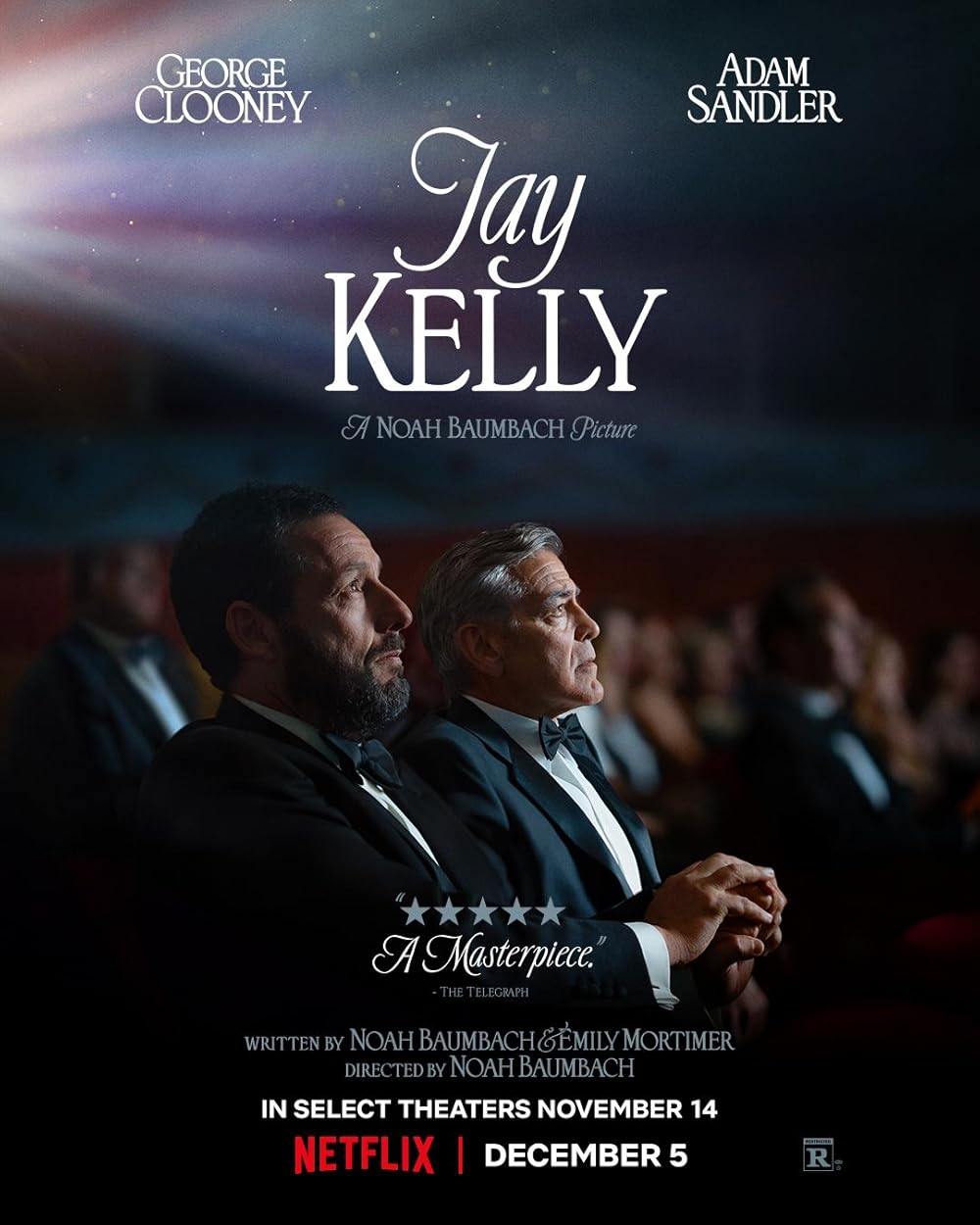
Noah Baumbach’s largest film in cast and scale isn’t his best work or even close, but certainly one of his most ambitious. George Clooney stars as the titular Hollywood actor seeking to reconcile with his daughters as he is about to be given a lifetime achievement honor in Europe. Jay’s relationship with his manager Ron is the film’s real heart here, with Adam Sandler not only stealing the entire film but giving one of the best performances of his entire career. Ron is torn between his devotion to his client and dear friend, and the heartache of missing out on time with his wife and kids. Sandler gives the character a dimensional charm, conflict, and vulnerability. Laura Dern is also outstanding as Jay’s publicist, also frustrated as she’s desperately trying to fulfill the impossible role of chasing Jay around and covering for him.

Many other familiar faces give very strong performances here, although Baumbach’s directing here stands out even more than his writing this time around. The film’s approach to memory and distance is very interesting, as is the idea of this “king” finally spending time with ordinary people who perceive him as a legend of sorts. However, the main storyline between Jay and his daughters doesn’t quite have the emotional weight that’s needed, with the themes being a bit too obvious and the film just lacking enough screen time with his youngest daughter to feel the way the movie wants us to about the main father-daughter relationship here. A performance moment and line delivery from Clooney in the film’s final moments, however, elevates the entire film and brings the themes full circle, even if it takes that long for them to really hit hard. Jay Kelly doesn’t live up to the excellence of Baumbach’s best storytelling like Marriage Story, but is still big yet introspective, with Clooney and Sandler standing out together, and the latter’s performance resonating in particular.

Zootopia 2

Zootopia 2 expands on its titular setting in ways that contrary to many big sequel, feel natural to the world of its story and quite visually intriguing. Though it can’t recapture the magic of Zootopia (to be fair, almost no animated movie can), this sequel is engaging, charming, and incredibly funny, despite a rushed start. Ginnifer Goodwin and Jason Bateman contribute to the great, if rocky, dynamic duo that is Judy Hopps and Nick Wilde, now partners on the Zootopia police force and looking to do some good together. Though at first it feels like Nick has unlearned much of what he learned in the first film, we soon come to understand his motivations and where their friendship goes is very heartfelt and excellently written. Fortune Feimster, Ke Huy Quan, and Andy Samberg stand out the most as new characters in the mix, particularly Feimster as a lovable new ally of the duo.

The film may miss the thematic weight of the first film, but still has an interesting, if unsubtle, message that parents can grasp onto profoundly and discuss with their children. It does rely overly on reference and callbacks to the first film for laughs, but also is its own film when it needs to be, with engaging settings and a conflict that starts off predictable but gets more and more fun. Even if it’s a significant step down from its predecessor, it’s got fun for all ages and a ride that was worth the wait.

Wake Up Dead Man: A Knives Out Mystery

Beyond the sharp and satirical writing he’s known for, Rian Johnson shines in today’s cinematic world as a brilliant and wonderful director. From the visual humor to his incredible attention to production design, storytelling and revelations through editing, and even the smallest things like the sound design when characters speak and the pace of dialogue and events, Wake Up Dead Man proves Johnson yet again as not just a writer who loves surprises and fun, but an unrivaled filmmaker. Even when the satire isn’t quite as revolutionary as in the last two films, there’s so much more that’s allowed to take center stage here that the movie didn’t need some social messages to resonate. 

Daniel Craig as Benoit Blanc is a protagonist like no other, a beacon of clarity, charisma, and fun who we’ll never be able to have enough of. When Blanc isn’t front and center in the script, the film still thrives, thanks to a riveting story and fantastic performances from Josh O’Connor, Glenn Close, Josh Brolin, and more. The film unravels itself like a snake, with plenty of surprises, twists, turns, and unique structural choices. Every scene seems to get better than the last and the reward lasts until the very end. The film seems to be commenting on the idea of truth, storytelling and myth — in this case, packaged as faith — sealing some off from objective reality and keeping many of us in our comfortable, tight circles in which we’re never challenged. All the while, the film is exciting, beautiful to look at, and packs irresistible performances and dialogue. With Rian Johnson, even when we don’t know what’s about to happen, we always know we’re in the best hands.

Eternity

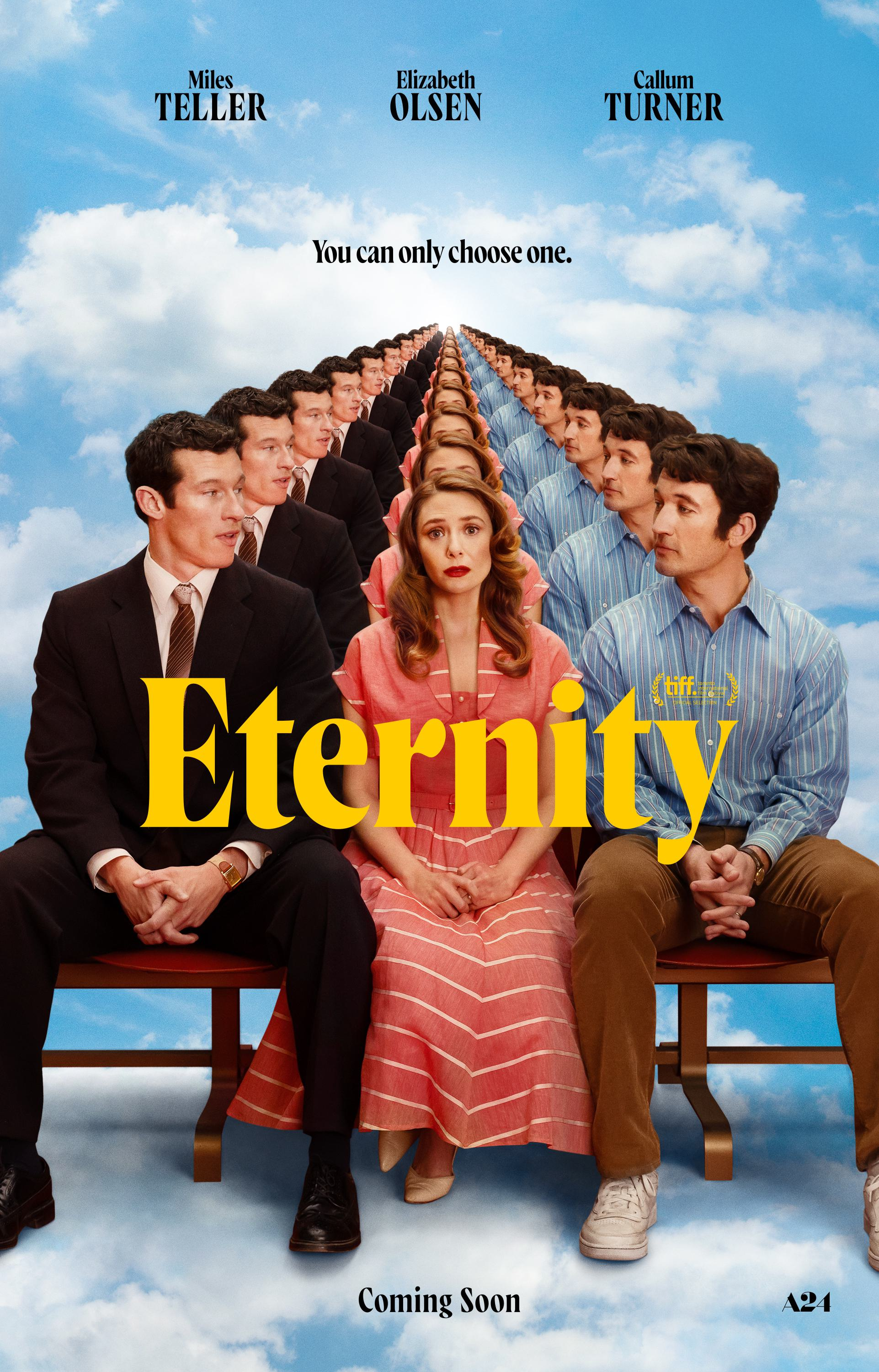
A sharp, lively, and heartfelt rom-com set in the afterlife, Eternity asks questions about true love — is it forever? Can we have more than one in our lives? And how does love truly persevere over time?

Miles Teller and Elizabeth Olsen in particular stand out, offering emotionally rich performances while balancing humor and genuine shock at the situation they’ve found themselves in. I mean, not everyone is faced with a love triangle that will decide the rest of their existence in the afterlife. Callum Turner gives one of his most multi-dimensional performances, while Da’Vine Joy Randolph is also a magnificent standout here, giving the film much of its funniest and strongest moments. 

The production design is beautifully imaginative, combining retro technology with something that’s lively and fantastical. Exploring the corners of this dimension or plane is fascinating, and it very creatively tackles its themes that may hit hard for some audience members. It’s a touching romantic comedy, but also colorful and oozing with imagination and heart, along with high levels of belly laughter and much comedic and dramatic range from its lead trio of actors.

Rental Family

Brendan Fraser gives an empathy, softness, and delicacy to the lead character, an actor who joins a Japanese “rental family” agency, playing stand-in roles for strangers. He’s the beating heart of the film and allows the audience to connect with every one of his decisions. The movie’s Lost in Translation-like cultural differences raise interesting questions about the titular company and the effect they have on clients, whether positive, negative, or both. The concept is not only unique, but fascinating from a deeper level, and allows for an emotional patience.

However, the film’s editing lacks the same patience as Hikari’s direction, rushing from and to plot points instead of letting the story’s pace and certain scenes breathe and feel more meditative. The supporting cast is really great here, particularly the outstanding Takehiro Hira, Mari Yamamoto, and Akira Emoto. Every part, no matter how small, possesses a special key to the film’s heart. The film embraces its themes about the beautiful risk that comes with living life to the fullest by being there for and with others. However, the final act finds a messy resolution that’s slightly confusing from a thematic perspective. The film works best when it’s subtle, and least when it’s in your face, but thankfully it’s charming, gentle, and will likely work well for everyone who chooses to watch it.

Bugonia

Yorgos Lanthimos creates worlds of oddity, discomfort, and unease in most of his film, but Bugonia has the most to say about our world now. Jesse Plemons and Aidan Delbis play two extremists who kidnap the CEO of a pharmaceutical company (Emma Stone), believing her to be an alien in disguise sent to enslave humanity. Plemons and Stone are daring, unsettling, and riveting in the film, continuing to surprise and take their characters further, even with both being alums of Yorgos’ filmography and tone. Plemons’ turn is scary based on the conviction of his belief that comes from lifelong pain, and Stone is phenomenal as a character who’s also done some awful things, but clearly has the moral high ground while challenging the other characters. Delbis is convincing as a character who beneath the darkness, possesses a helplessness and strange empathy.

Lanthimos’ best traits as a filmmaker are that he finds the funny and big in every circumstance, making the story feel large-scale with the editing and storytelling. He also recognizes how equally unsettling and hilarious the concept can be, and that the two almost always go hand in hand in the case of Bugonia. The cinematography by Robbie Ryan, is unique and often stunning, and the thrills come from itching to find out the insanity that’ll unfold in every moment of the tense situation. It doesn’t let any of its characters off the hook but also allows the audience to understand some of their points, while debating on which characters are less sympathetic. It’s a film about shared delusions, stemming from our modern world of online radicalization, ideology-based violence, and corporate corruption on a vast scale. The symbolism and hidden layers reveal so much more about the characters’ world and the film’s messages, and there is much horrific yet calculated madness and macabre to expect from the director, while leaving an incredibly satisfying amount of ambiguity. It balances genres, tones, and themes effortlessly, leaving food for thought in all its aspects while allowing its stars to beautifully share the spotlight in one of the most unsettling and brilliant works of film this year.

Good Fortune

An angel (Keanu Reeves) intervenes in the life of a man (Aziz Ansari) who’s about to give up on life, but things soon get uncontrollably out of hand very quickly.

Aziz Ansari’s fantasy comedy, which sees him directing, writing, producing, and starring, is clever, laugh-out-loud funny, relatable, and inspired. The concept plays a cross between Trading Places and It’s a Wonderful Life, while never feeling generic or derivative of those films, even if the idea’s similarities aren’t being hid. Ansari gives a flawed yet understandable frustration and hopelessness with his circumstance, and a charismatic humorous side. Seth Rogen gives an incredibly funny and physical performance as his character goes on quite an unexpected journey. Keke Palmer shines as Ansari’s love interest Elena, who’s passionate and humble, with Palmer providing lots of genuine heart to the film. The casting of Gabriel was perfect and Reeves was perhaps the only actor who could convey this emotional sweetness come off as effortless yet genuine and real.

The film’s best when looking at humanity’s relationship with materialism, and contrasting wealth with the the lower class trying to achieve the seemingly impossible task of making ends meet, including the unreasonable cost of living, the terrifying market of finding a job (and usually one isn’t enough), and the corporate greed that makes harsh conditions for minimum wage workers. The film feels like it’s missing a piece of the puzzle when it comes to its main character’s arc, but it’s got a real heart to it that’s boosted by it’s lovable actors and the humor’s attempt to keep one-upping what came before. Somehow, it still feels restrained enough to be a screwball comedy that’s not completely silly, and still very genuine while fantastical and uplifting.

Roofman

With Roofman, a true story that’s too crazy to believe based on the logline alone, Derek Cianfrance leaves meditative tear-jerker territory to tackle an unbelievable story that’s outrageous only conceptually, but still executed with patience — and a lot of charisma from its actors. Channing Tatum plays real-life robber Jeffrey Manchester with a deeply terrible set of decision-making skills. Tatum is physically comedic yet also gives the role more depth than many of his other characters in the tonally lighter films we’re used to from him lately. That said, despite the film’s awareness of the craziness of his actions, it also stops to reflect on the consequences of those actions on others and his own sense of acceptance within the new life he’s adapted into. Kirsten Dunst is also very layered in her performance and shares great chemistry with Tatum, and Peter Dinklage is a scene-stealing highlight, too.

Roofman is an entertaining time throughout that accomplishes exactly the mission it sets out to do while wisely refraining from becoming an all-out comedy and letting us sit with the characters and their circumstances. Best of all, it may also make you want to research more about the real story behind the movie — and wish for more great leading roles for Tatum like it.