Zootopia 2

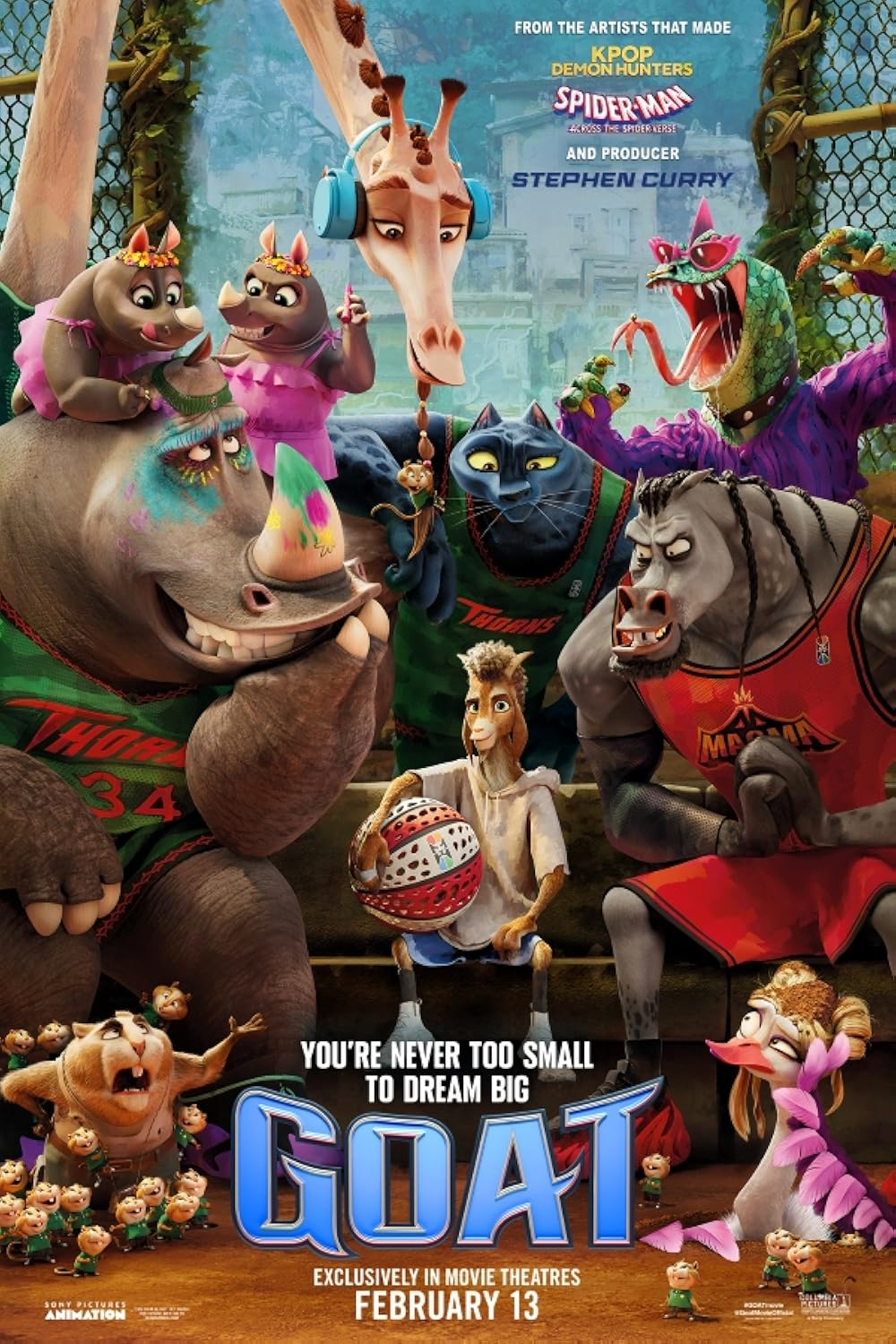
Zootopia 2 expands on its titular setting in ways that contrary to many big sequel, feel natural to the world of its story and quite visually intriguing. Though it can’t recapture the magic of Zootopia (to be fair, almost no animated movie can), this sequel is engaging, charming, and incredibly funny, despite a rushed start. Ginnifer Goodwin and Jason Bateman contribute to the great, if rocky, dynamic duo that is Judy Hopps and Nick Wilde, now partners on the Zootopia police force and looking to do some good together. Though at first it feels like Nick has unlearned much of what he learned in the first film, we soon come to understand his motivations and where their friendship goes is very heartfelt and excellently written. Fortune Feimster, Ke Huy Quan, and Andy Samberg stand out the most as new characters in the mix, particularly Feimster as a lovable new ally of the duo.

The film may miss the thematic weight of the first film, but still has an interesting, if unsubtle, message that parents can grasp onto profoundly and discuss with their children. It does rely overly on reference and callbacks to the first film for laughs, but also is its own film when it needs to be, with engaging settings and a conflict that starts off predictable but gets more and more fun. Even if it’s a significant step down from its predecessor, it’s got fun for all ages and a ride that was worth the wait.

Wake Up Dead Man: A Knives Out Mystery

Beyond the sharp and satirical writing he’s known for, Rian Johnson shines in today’s cinematic world as a brilliant and wonderful director. From the visual humor to his incredible attention to production design, storytelling and revelations through editing, and even the smallest things like the sound design when characters speak and the pace of dialogue and events, Wake Up Dead Man proves Johnson yet again as not just a writer who loves surprises and fun, but an unrivaled filmmaker. Even when the satire isn’t quite as revolutionary as in the last two films, there’s so much more that’s allowed to take center stage here that the movie didn’t need some social messages to resonate. 

Daniel Craig as Benoit Blanc is a protagonist like no other, a beacon of clarity, charisma, and fun who we’ll never be able to have enough of. When Blanc isn’t front and center in the script, the film still thrives, thanks to a riveting story and fantastic performances from Josh O’Connor, Glenn Close, Josh Brolin, and more. The film unravels itself like a snake, with plenty of surprises, twists, turns, and unique structural choices. Every scene seems to get better than the last and the reward lasts until the very end. The film seems to be commenting on the idea of truth, storytelling and myth — in this case, packaged as faith — sealing some off from objective reality and keeping many of us in our comfortable, tight circles in which we’re never challenged. All the while, the film is exciting, beautiful to look at, and packs irresistible performances and dialogue. With Rian Johnson, even when we don’t know what’s about to happen, we always know we’re in the best hands.

Eternity

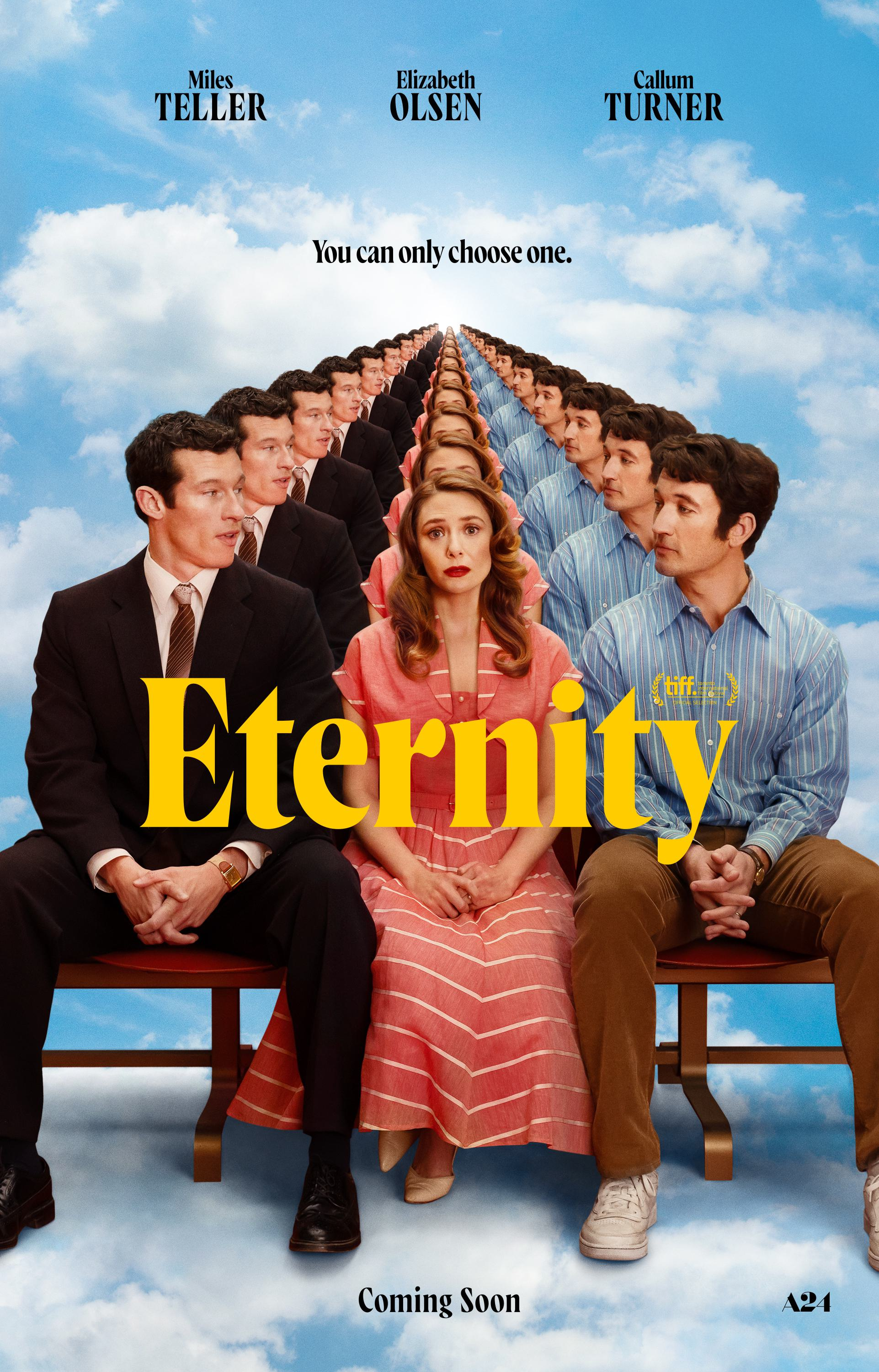
A sharp, lively, and heartfelt rom-com set in the afterlife, Eternity asks questions about true love — is it forever? Can we have more than one in our lives? And how does love truly persevere over time?

Miles Teller and Elizabeth Olsen in particular stand out, offering emotionally rich performances while balancing humor and genuine shock at the situation they’ve found themselves in. I mean, not everyone is faced with a love triangle that will decide the rest of their existence in the afterlife. Callum Turner gives one of his most multi-dimensional performances, while Da’Vine Joy Randolph is also a magnificent standout here, giving the film much of its funniest and strongest moments. 

The production design is beautifully imaginative, combining retro technology with something that’s lively and fantastical. Exploring the corners of this dimension or plane is fascinating, and it very creatively tackles its themes that may hit hard for some audience members. It’s a touching romantic comedy, but also colorful and oozing with imagination and heart, along with high levels of belly laughter and much comedic and dramatic range from its lead trio of actors.

Rental Family

Brendan Fraser gives an empathy, softness, and delicacy to the lead character, an actor who joins a Japanese “rental family” agency, playing stand-in roles for strangers. He’s the beating heart of the film and allows the audience to connect with every one of his decisions. The movie’s Lost in Translation-like cultural differences raise interesting questions about the titular company and the effect they have on clients, whether positive, negative, or both. The concept is not only unique, but fascinating from a deeper level, and allows for an emotional patience.

However, the film’s editing lacks the same patience as Hikari’s direction, rushing from and to plot points instead of letting the story’s pace and certain scenes breathe and feel more meditative. The supporting cast is really great here, particularly the outstanding Takehiro Hira, Mari Yamamoto, and Akira Emoto. Every part, no matter how small, possesses a special key to the film’s heart. The film embraces its themes about the beautiful risk that comes with living life to the fullest by being there for and with others. However, the final act finds a messy resolution that’s slightly confusing from a thematic perspective. The film works best when it’s subtle, and least when it’s in your face, but thankfully it’s charming, gentle, and will likely work well for everyone who chooses to watch it.

Bugonia

Yorgos Lanthimos creates worlds of oddity, discomfort, and unease in most of his film, but Bugonia has the most to say about our world now. Jesse Plemons and Aidan Delbis play two extremists who kidnap the CEO of a pharmaceutical company (Emma Stone), believing her to be an alien in disguise sent to enslave humanity. Plemons and Stone are daring, unsettling, and riveting in the film, continuing to surprise and take their characters further, even with both being alums of Yorgos’ filmography and tone. Plemons’ turn is scary based on the conviction of his belief that comes from lifelong pain, and Stone is phenomenal as a character who’s also done some awful things, but clearly has the moral high ground while challenging the other characters. Delbis is convincing as a character who beneath the darkness, possesses a helplessness and strange empathy.

Lanthimos’ best traits as a filmmaker are that he finds the funny and big in every circumstance, making the story feel large-scale with the editing and storytelling. He also recognizes how equally unsettling and hilarious the concept can be, and that the two almost always go hand in hand in the case of Bugonia. The cinematography by Robbie Ryan, is unique and often stunning, and the thrills come from itching to find out the insanity that’ll unfold in every moment of the tense situation. It doesn’t let any of its characters off the hook but also allows the audience to understand some of their points, while debating on which characters are less sympathetic. It’s a film about shared delusions, stemming from our modern world of online radicalization, ideology-based violence, and corporate corruption on a vast scale. The symbolism and hidden layers reveal so much more about the characters’ world and the film’s messages, and there is much horrific yet calculated madness and macabre to expect from the director, while leaving an incredibly satisfying amount of ambiguity. It balances genres, tones, and themes effortlessly, leaving food for thought in all its aspects while allowing its stars to beautifully share the spotlight in one of the most unsettling and brilliant works of film this year.

Good Fortune

An angel (Keanu Reeves) intervenes in the life of a man (Aziz Ansari) who’s about to give up on life, but things soon get uncontrollably out of hand very quickly.

Aziz Ansari’s fantasy comedy, which sees him directing, writing, producing, and starring, is clever, laugh-out-loud funny, relatable, and inspired. The concept plays a cross between Trading Places and It’s a Wonderful Life, while never feeling generic or derivative of those films, even if the idea’s similarities aren’t being hid. Ansari gives a flawed yet understandable frustration and hopelessness with his circumstance, and a charismatic humorous side. Seth Rogen gives an incredibly funny and physical performance as his character goes on quite an unexpected journey. Keke Palmer shines as Ansari’s love interest Elena, who’s passionate and humble, with Palmer providing lots of genuine heart to the film. The casting of Gabriel was perfect and Reeves was perhaps the only actor who could convey this emotional sweetness come off as effortless yet genuine and real.

The film’s best when looking at humanity’s relationship with materialism, and contrasting wealth with the the lower class trying to achieve the seemingly impossible task of making ends meet, including the unreasonable cost of living, the terrifying market of finding a job (and usually one isn’t enough), and the corporate greed that makes harsh conditions for minimum wage workers. The film feels like it’s missing a piece of the puzzle when it comes to its main character’s arc, but it’s got a real heart to it that’s boosted by it’s lovable actors and the humor’s attempt to keep one-upping what came before. Somehow, it still feels restrained enough to be a screwball comedy that’s not completely silly, and still very genuine while fantastical and uplifting.

Roofman

With Roofman, a true story that’s too crazy to believe based on the logline alone, Derek Cianfrance leaves meditative tear-jerker territory to tackle an unbelievable story that’s outrageous only conceptually, but still executed with patience — and a lot of charisma from its actors. Channing Tatum plays real-life robber Jeffrey Manchester with a deeply terrible set of decision-making skills. Tatum is physically comedic yet also gives the role more depth than many of his other characters in the tonally lighter films we’re used to from him lately. That said, despite the film’s awareness of the craziness of his actions, it also stops to reflect on the consequences of those actions on others and his own sense of acceptance within the new life he’s adapted into. Kirsten Dunst is also very layered in her performance and shares great chemistry with Tatum, and Peter Dinklage is a scene-stealing highlight, too.

Roofman is an entertaining time throughout that accomplishes exactly the mission it sets out to do while wisely refraining from becoming an all-out comedy and letting us sit with the characters and their circumstances. Best of all, it may also make you want to research more about the real story behind the movie — and wish for more great leading roles for Tatum like it.

One Battle After Another

After a ruthless enemy resurfaces after sixteen years, a former revolutionary must come out of hiding to protect his daughter from a terrifying power coming after them.

Paul Thomas Anderson, already one of the most sweeping and daring filmmaker of the last few decades, is not only at his most ambitious in scope here. With One Battle After Another, the director challenges himself and his audiences into discomfort and nail-biting suspense, while transcending and recontextualizing his body of work. His direction is not only at its most cinematic and maximalist, but one of his most thematically profound.

Leonardo DiCaprio shines as a man who is task-oriented and protective yet fragile in his sense of self, portraying a character who’s funny in his messiness as he is loud and dangerous if a nervous wreck. Sean Penn is vicious and terrifying, giving his best performance in decades that could even get him another Oscar, and a villain that will go down as one of the all-time greats. The ensemble cast all deserve their flowers in their own right and offer the film lots of strength. Chase Infiniti is fantastic as DiCaprio’s daughter who gives much strength to every scene she’s in, and her scenes are riveting. Teyana Taylor leaves such an impression with a tremendous performance that gives weight and immense depth to the entire film, even when she’s not on screen. Benicio del Toro shines in a lovable and entertaining performance that steals the screen while letting other performances be “bigger” at the same time, and Regina Hall is also excellent.

There isn’t one element to Anderson’s approach that turns One Battle After Another into a masterpiece; it’s the whole the parts create. The gorgeous cinematography, Jonny Greenwood’s booming score, the swift pace and dark tone, and the magnificent sound design create the unpredictability and transfixing nature of the film you’re in. It’s the most shockingly and horrifically relevant film to today’s America I can remember, with imagery mirroring current power dynamics. The imagery is so visceral and mirrors real-life conflict in a way that screams like a warning, but one for a reality that’s already begun. In the world of One Battle After Another, each person has convinced themselves of an enemy or an other, and that violence is a justified means to an end that signifies a greater good. Nobody in this film becomes a true hero, there are simply people with worse beliefs and who have codes and are willing to commit deeds that are less acceptable to our moral standards. There are many moments that stand out in One Battle After Another that invoke suspense and epic magnitude, but that feeling is felt in every moment and frame. Even for a legendary director of PTA’s rapport, One Battle After Another is a breathtaking experience that’s among one of the best films of the last ten years, and one of Paul Thomas Anderson’s most visionary and unforgettable movies.

The Roses

Architect Theo Rose and his wife, chef Ivy Rose, live a seemingly perfect life with their two children, until buried resentments start to surface and threaten to destroy the marriage and lives they’ve worked so hard to build.

An amusing update of The War of the Roses, this film retains a similar basic premise but takes a much humbler, less slapstick tone to feel distinct from that previous film which famously saw Michael Douglas and Kathleen Turner butting heads as the titular couple as their marriage hideously crashed and burned. Here, Benedict Cumberbatch and Olivia Colman are the “perfect” pair who make the film worth watching. Cumberbatch shines as a man struggling to find steam and purpose after losing it all professionally, while Colman’s performance as relatively restrained compared to some of her others, but still kills it while matching his smugness. The film has its good laughs, and does justice to some of its great supporting players including Andy Samberg and Kate McKinnon. The first hour tends to drag in the writing, but once it gets to the main point over halfway in, it gets fun. The film works best when highlighting the rockiness in the seemingly best of marriages, and when allowing its two leads to trade insults and threats and try to bring one another down with the sinking ship.

The Naked Gun (2025)

If it ain’t broke, is there any need to fix it? The Naked Gun doesn’t set out to reinvent its franchise — it tries the exact same things its predecessors would’ve, and works so well for it. The humor is still silly and not limited by the same political correctness many adhere to today, and once the laughs start coming, they never stop. Everything from visual comedy, pop culture references, wordplay, and more NSFW humor are thrown at you at light speed, and the laughs hardly miss, even when they’re not very “smart”. 

Liam Neeson does a stellar job following in the footsteps of the legendary Leslie Nielsen, with Frank Drebin, Jr. just as dim-witted but lovable as his dad. Neeson’s comedic and clueless turn serves as a huge and much-needed breath of fresh air from his far more brooding and serious action movie roles in the last two decades, perhaps making us wish more of his movie choices were comedies. Pamela Anderson’s romantic lead isn’t necessarily an interesting character, but her performance shines and makes the role fun to watch while sharing strong chemistry with Neeson that works in a weirdly endearing way. Paul Walter Hauser is also great while Danny Houston’s awful villain not only makes no sense, but his evil plot is stolen from another semi-recent spy movie.

Just like classic screwball action comedies like Top Secret and Austin Powers, The Naked Gun’s pleasure comes from its ridiculousness, and isn’t focused on coming off as high-brow or satirical as Kingsman. It’s irreverent and frankly dumb, but always on the audience’s side and undeniably a great time.