Elio is an young boy living with his aunt, who’s obsessed with the extraterrestrial and making contact with him. One day, the lonely titular boy gets his wish and finds the fate of the galaxy in his hands.
Pixar’s newest animated film is incredibly easy for families to enjoy and even find meaningful connections to, though its far from the impactful experience we’re used to from the studio. Best of all, it focuses on acceptance, self-esteem, and finding your way through loneliness and feelings of not fitting in. Zoe Saldaña, Brad Garrett, and Jameela Jamil all give entertaining performances, and the look of many scenes are colorful and gorgeous — from diverse alien species to their suits and intricately designed spaceships.
Audiences may connect to Elio’s strive to be accepted by others, and at its core is a sweet relationship between him and his aunt that feels like the film’s true heart. However, despite some entertaining humor throughout, it takes until the third act for the story’s drive to really feel exciting at all. It’s probably not the best or most original film about its themes, but also has a whimsical charm, great visuals, and a look and feel that will definitely entertain more than just the youngsters, and give some strong material for positive discussion among families about acceptance.
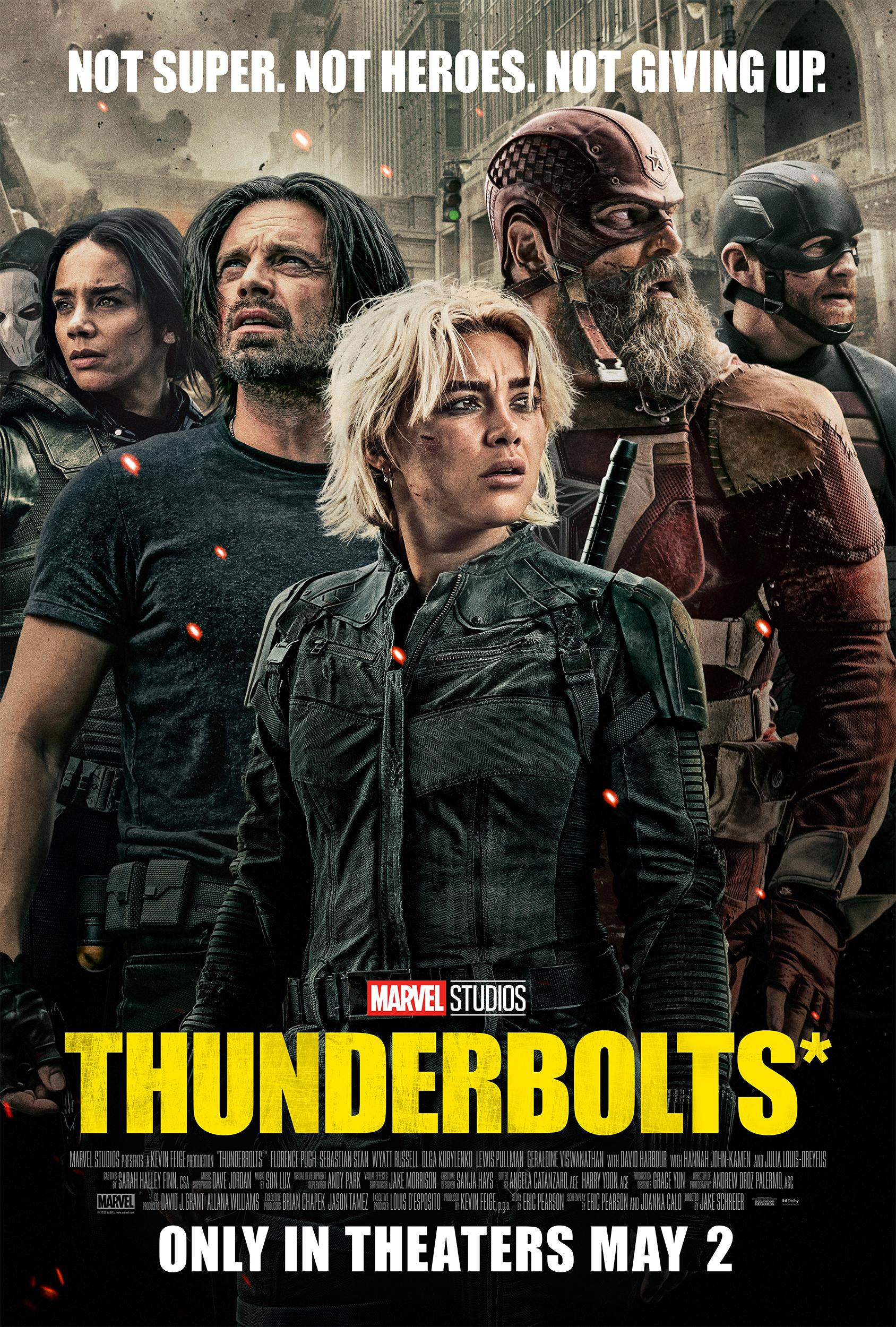
After being lured into a deadly trap by CIA director Valentina Allegra de Fontaine, a group of antiheroes form an unlikely team to bring de Fontaine and her destructive plan down.
Thunderbolts* is oozing with energy and a deep care for its characters, with a darker edge of corruption and death to its subjects. Contrary to this February’s Captain America: Brave New World, Thunderbolts* thrives by allowing its cast’s charisma to roam freely, led by the incredible Florence Pugh. This time around, Yelena is the film’s lead, and Pugh taps into the character’s core of depression and emptiness, including her tumultuous relationship with her father, former Soviet super soldier Red Guardian, played by the vivacious and hysterical David Harbour, longing for glory again. Wyatt Russell and Hannah John-Kamen are also utilized very well, while Sebastian Stan returns as Bucky, who leads many of the others through a similar emotional arc he’s learned his way through. Geraldine Viswanathan is also a standout as Mel, assistant to de Fontaine — played in such a juicy performance by Julia Louis-Dreyfus as a menacing figure who will stop at nothing to gain absolute power and avoid all consequences for it. Though Lewis Pullman’s performance doesn’t have the same loose charm we may have felt from him in Top Gun: Maverick and Lessons in Chemistry, he also well portrays Bob’s awkwardness and the darkness enveloping his character.
The best part about the film is how the characters interact as a team — their action and combat scenes are awesome, the way their differences interact through banter and humor is greatly entertaining, and the way they utilize their strengths to solve problems (albeit reluctantly) makes them unique. Some characters’ arcs could’ve used more closure, and the final act and climactic battle could’ve hit harder, and it’s not as stylistically irreverent as Guardians of the Galaxy or The Suicide Squad, but like those films, it’s about people who want anything but to be heroes learning to find redemption by embracing one another’s differences and company, and stepping up and do the right thing. It may not be one of the MCU’s most visionary installments, but also may prove to be one of their more rewatchable in the future, as its cast of misfits and contagious energy stand out. If these characters weren’t your favorite in the MCU or anything close, that may just change for good after Thunderbolts* — an extravagant action/comedy that may be short on some wildness or development in certain aspects, but is certainly big on the excitement and reward.
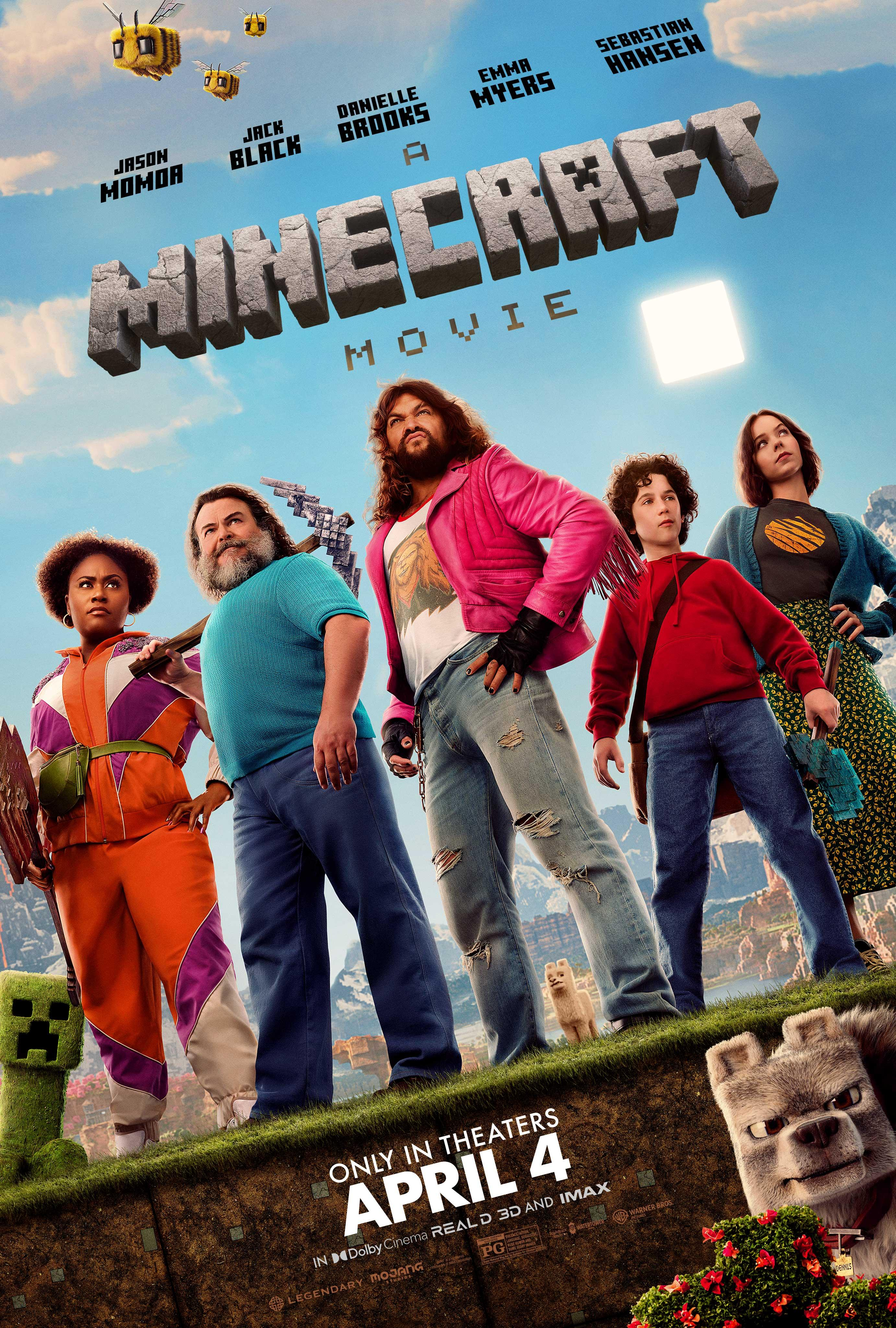
A Minecraft Movie may prove a treat for younger audiences and fans of the beloved game. It’s got charm, thanks to its main stars, particularly Jack Black. He gleefully gives his playful and extravagant energy to Steve, even throwing in his musical comedy talents. Jason Momoa entertains but his dialogue threatens to miss almost as much as it’ll make you laugh. Danielle Brooks is splendid as a very unexpected companion on this journey, and gives the runtime lots of heart. Emma Myers does a solid job playing an unlikely heroic character, whose storyline with her brother avoids some cliches while falling head first into others.
Though this is a Minecraft movie first, director Jared Hess’ love for misfits and outcasts is written all over the film. What brings the film down is the aesthetic, that fails to get you to suspend your disbelief strongly enough to overlook the unconvincing green screen and weirdly uncanny CGI of some of the Minecraft characters/species. The live-action parts carry the film well if you ignore some of the backdrops, but sometimes you’ll wish that the scenes inside the Overworld were completely animated. It also doesn’t help that the idea of an unlikely team of social outsiders from the real world trying to navigate a fantastical world they’ve been suddenly pulled into is nothing new. Even the Jumanji films, also starring Black, had much more to offer the formula.
Still, the film has just enough charm to delight children and families, embracing the essence of the game with a positive message about creativity. And Black proves that he’ll continue to entertain generations of viewers with his ability to let loose. It’s a film that embraces exactly what it is, even if when you think about the film or look too long at the visual details, the building blocks starts to fall apart.
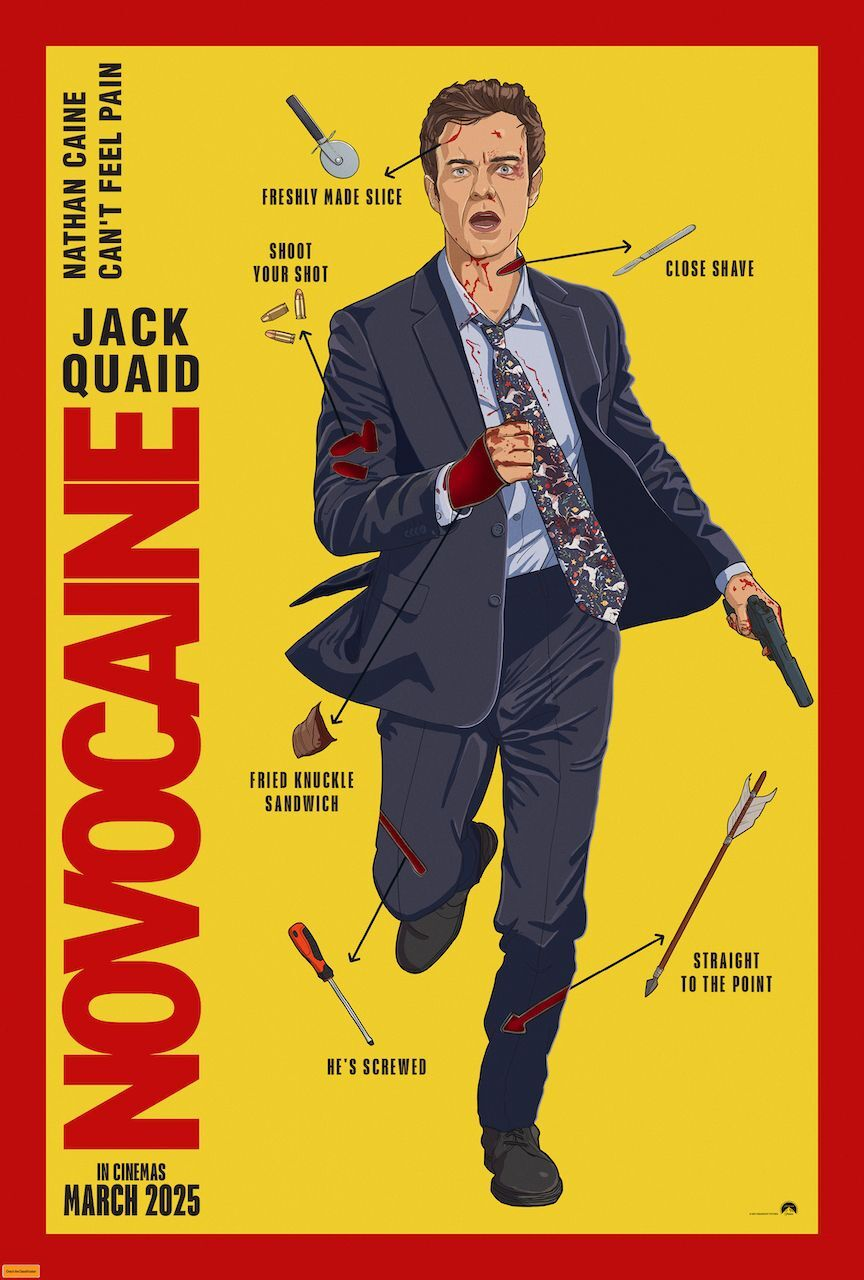
In this increasingly over-the-top action comedy, Nathan Caine is an assistant bank manager who takes manners into his own hands when the girl of his dreams is kidnapped by armed criminals. To make matters both more and less helpful, Nathan has a rare condition where he can’t feel pain at all.
Novocaine takes full advantage of its smart concept, upping the ante in humor, gore, and excitement throughout its runtime. However, it stars off genuinely charming and emotionally effective in its beginning, making Nathan’s arc, and the audience’s investment, pay off. Jack Quaid gives the film its heart, and though the trope of an unskilled, unqualified everyman suddenly thrusted into a deadly action-packed situation has been done to death, the journey feels completely fleshed out and earned here. Quaid has tons of fun leading into the ridiculous and often accidental badassery of his protagonist. Amber Midthunder also gives the film plenty of heart and proves her versatility, and Jacob Batalon is hilarious. Betty Gabriel is also strong as a cop on Nathan’s tail, and even the villains, in all their cheesiness, gives some fun to be appreciated in their performances.
As Novocaine continues to push the limits of the term “over-the-top”, it occasionally stumbles in its story’s believability, but the suspense of disbelief when it comes to the gory action scenes never detracts, just further entertains and may even have your jaw on the floor. The more audacious it becomes, the more pleasing the journey with Novocaine gets. But balancing out the gore and nonsense is a sense of heart with its romance and friendship at its core, with Quaid’s charisma at its center that we can never quite get enough of.
Mickey is an Expendable on a expedition to the space colony Niflheim — meaning a new copy of him is printed out every time he dies, which is more often than others. Soon, trouble ensues as Mickey finds himself in a dangerous situation and a fight to survive.
Bong Joon-ho’s likely largest production in sheer scale isn’t subtle in its themes, whether of human nature, fascism, or the arrogant abuse of technology, but it’s still clever, vibrant, and so full of heart, more than enough so to serve as an absolute blast of a film. The look and feel of the sci-fi settings feels original and Pattinson’s delivery of the titular character is likable. Mickey 17 is an insecure man/clone who’s somewhat at peace with the bleakness of his situation, but is fun to follow along and has the sudden urge to stay alive and fight for what’s right. He also has great chemistry with himself as Mickey 18, who’s only a few hours older than 17 but almost the polar opposite — hardened and occasionally ruthless. Naomi Ackie gives the film its soul; she’s so lively and wonderful as Nasha, who elevates Mickey as much as she’s on her own meaningful journey. Steven Yeun also shines as a sleazy and unrealiable but multi-dimensional frenemy of Mickey’s. The parallels between Mark Ruffalo’s character and certain powerful men in our reality aren’t hard to decipher, but he and Toni Collette entertain, even when their performances occasionally threaten to fall into caricature.
Mickey 17‘s magic is finding the humor and gentleness within the darkness. Mickey always sees his situation with a sense of irony, but Bong also finds care and soul within side characters who usually would feel disposable in other films. He never loses sight of the absurdity at hand but keeps elevating the stakes and with it, his signature expert eye. The film packs charm, exceptional world-building, irreverence, and characters we love, not despite but especially for their messiest parts.
Renee Zellweger’s iconic British protagonist has become something of a cinematic treasure across four films now. But her films haven’t made us just laugh along at her missteps, but watch her develop, and even come of age, you could say. This final film has a somewhat more bittersweet tone, though, as Bridget’s lover, Mark Darcy, is no longer in the picture. Four years after his loss, she is finally ready to move on and find love again. The film maturely tackles coming to terms with grief, finding joy again while coexisting with the memory of those who have passed on. But it’s also still irreverent, charming, and romantic. It tackles some of the basics that the first film gave a go at, but Zellweger not only shows Bridget’s goofy side, but her struggles with being a single mother of two, and the absence of her husband.
Joining the mix are Chiwetel Ejiofor and Leo Woodall, who both charm in different ways, but Ejiofor in particular has great chemistry with Zellweger. Though it does retread familiar rom-com territory, or that of comedies about parents raising children, and it’s not the sharpest or smartest of the franchise over Bridget Jones’s Baby, it still offers a good time and a heartwarming conclusion to a lovable, messy delight of a character.
A Real Pain beautifully balances the heartbreaking and hysterical through the dynamic of Jesse Eisenberg and Kieran Culkin as cousins David and Benji, who travel from New York to Poland together on a tour in memory of their deceased grandmother, a Polish Holocaust survivor. It’s about so many things, whether big or small. From a Jewish perspective, the film powerfully touches on complicated feelings of nationality towards countries in which one’s family lived but suffered horrific atrocities, as well as generational trauma. As someone who has embarked on this tour myself, the film captures not only the visceral nature of walking into places where such evil was committed eight decades ago (which both I and the characters here came to feel, wasn’t even that long ago), but the deep emotional connection towards one’s ancestors, community, and people it invokes.
From a personal perspective, the film is also very much about empathy — the idea of feeling others’ pain, and sadness, to better understand and connect with oneself. Kieran Culkin in particular brings such harsh complexity to his character. Benji is fascinated with human connection and constantly in pursuit of embracing living life with all his senses, but doesn’t always know how to feel, or express himself to others. Even when he pushes others away and embarrasses himself, the audiences can’t help but hold him close to their heart and feel deeply for him in every moment, because of his desire to grieve for his grandmother, and true yet misguided desire for the best. Eisenberg, in one of his most substantial and beautiful performances, wonderfully conveys David’s pull to and from Benji — his responsibility yet resentment towards the way Benji feels, which comes from a distance and envy from him, yet a dear love for him. Their bond is as moving as it is poignant, and even irreverent, and best of all, it’s easy to connect with them both as an audience member, despite how wildly different they are. Eisenberg’s script is devoted to his love for his Jewish heritage and culture, and exploration of the human condition that may even make you reflect on how you live your life. He and Culkin together make for a wonderful pair in a film that’ll take you on an emotional journey filled with weight and resonance.
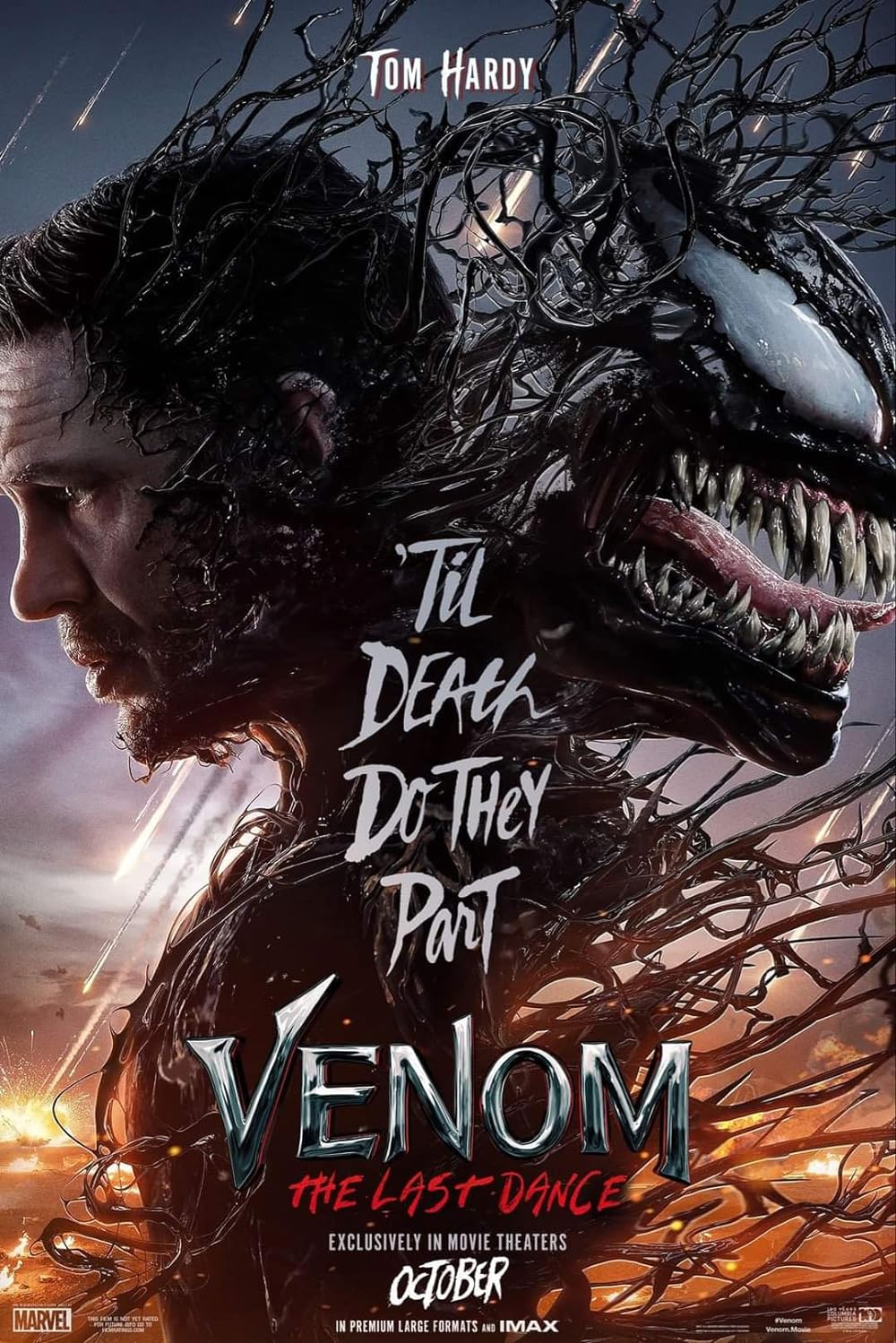
Eddie and Venom are now fugitives on the run after the events of the previous film, and soon run into threats that threaten their existence together, and that of the entire world.
The third and final Venom movie offers much stronger laughs due to the bromance between Eddie and Venom. Though there’s still a fair share of cringe, there are some more genuinely funny moments, which for some is all you can ask for from these movies. But it’s hard to pinpoint whether it’s a genuinely better movie than its predecessors, or the bar was set so low by them that enjoying this one is a little easier. Not to mention, coming out after Morbius and Madame Web does this movie many favors considering it’s nowhere near as unwatchable, but how high of a compliment is that really for a movie? Where the film struggles again is making any sense of its story or having any engaging conflict beyond its titular dynamic. For the first bit of the movie, I was enjoying the chemistry between Tom Hardy and the CGI black blob much more than in the past films, but it soon descends into the same dull action scenes and tedious symbiote science exposition these films have subjected us to before.
The action scenes, including the uninspired CGI character designs, feel recycled and unattractive and do nothing different from the past films, as well as a few uninspired soundtrack choices. The rules to the conflicts are inconsistent and contrived, not to mention the disappointing use of great actress Juno Temple, who’s mostly just there to give exposition and stand on the sidelines. It’s also slightly distracting to have cast Chiwetel Ejiofor and Rhys Ifans, who have already had other Marvel roles, and Ejiofor’s character has no depth or originality to him. Every time we come back to the fighting and stakes, it’s hard to care, especially due to a few unrewarding story threads. It’s much more of the same, and leaves no impression despite its efforts to close out the trilogy. It may be the best of these films but that’s hardly a compliment considering how mindless and uninspired they already were.
Anora, a young exotic dancer and call girl, meets the son of a wealthy Russian oligarch, and they soon spark up a fairytale romance. But that soon is threatened once his family gets word and sets out to break them up.
Sean Baker’s latest film is his biggest, utilizing more settings than his other films yet still addressing issues related to the working class. However, this one isn’t as grounded as his other films about America’s divisions — and flourishes because of it. The movie effortlessly balances fairy tale romance, screwball comedy, and tense drama, even becoming a hostage thriller of sorts at one point. Mikey Madison delivers a star-making performance as the titular character of Ani. She may be looking for love, control, validation, security, glamour, or respect — it varies every moment and that’s what makes Ani so unpredictable. She owns the screen with her every move and line. We meet her at her job as an escort, a role that doesn’t normally constitute a movie protagonist, but Mikey is immediately lovable despite her being from a world new to us. All the supporting characters are also expertly utilized, and the look and soundtrack make Anora feel like a lovely adventure… until things soon spiral out of control into a very different mood, yet equally fascinating and out there.
There may be parts later on that are drawn out, but it never lets go of your attention for a moment as the stakes rise. The ending changed my entire outlook on what the film was really about all along. There’s so much depth to uncover and your expectations are completely flipped in a ruthless, heartbreaking, and unforgettable final act. But Baker’s love for his characters, even the smallest parts, breathes a human life through them and winds up making Anora a beautiful, resonant, and truly one-of-a-kind experience that juggles so much without ever compromising its nature or grasp on the audience.
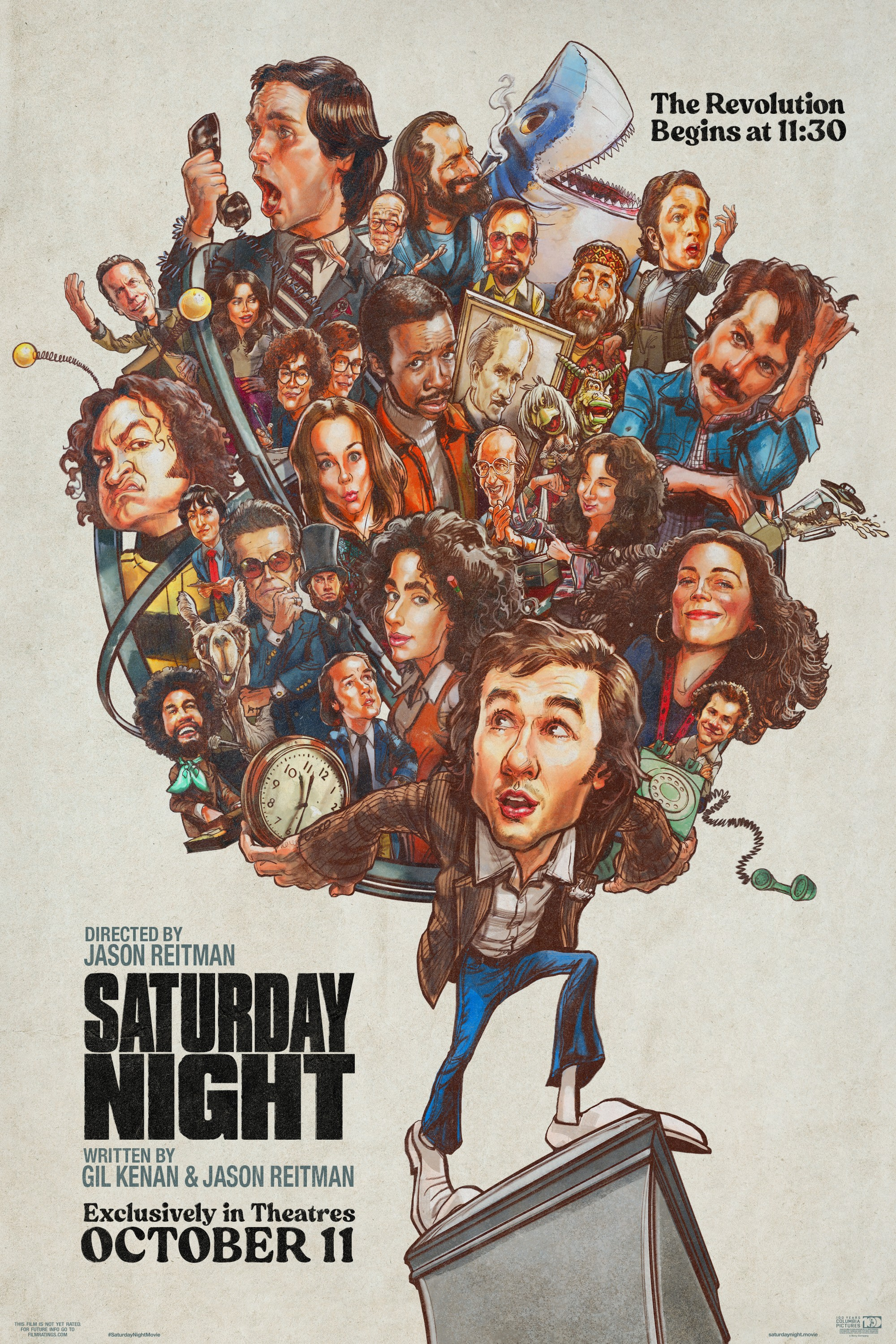
Saturday Night takes us to the fateful night of October 11, 1975 in Manhattan, where Lorne Michaels tried to launch his sketch comedy show for its first-ever episode, which we now know as the iconic and influential Saturday Night Live nearly 50 years later.
A film about SNL should make us laugh, feel revealing, and be packed with celebrity and pop culture history, and that’s exactly what Jason Reitman’s take on the sketch show’s beginning offers plenty of. The lovely 70mm look, long takes throughout the studio, and energetic score from Jon Batiste give the film a strong and dedicated technical edge.
While many films based on true stories have one or two casting choices that feel inspired, Saturday Night has dozens. Gabriel LaBelle, who’s probably a decade younger than Lorne Michaels was when this all went down, plays the creator with a contagious ambition to make magic for audiences on the stage. Rachel Sennott is sometimes the scene-stealer and the heart of it all, while Dylan O’Brien as Dan Aykroyd is one of his most fun performances in years. Cory Michael Smith brilliantly portrays the unstable ego of Chevy Chase, one of the most infamous members of the show’s original cast, while Matt Wood is uncanny in his recreation of the late John Belushi. Nicholas Braun is impeccable and unforgettable as not one but two cultural icons; they’re a pair of performances you have to see to believe. And we haven’t even mentioned Lamorne Morris, Cooper Hoffman, and Matthew Rhys, the latter of whom chews up the scenery as comedian George Carlin. More recognizable names Willem Dafoe and J.K. Simmons are also excellent and hysterical. The best part about this cast is that it reflects how Reitman wants us to feel about the characters and circumstances in the film — a ragtag group of youngsters with the potential to make us laugh, joining forces hoping to change the world.
As we know, the events of this movie, as chaotic as they unfold, did change the world. The most wonderful part about Saturday Night is that it celebrates the convergence of culture for half a decade, which began as NBC’s laughing stock but has since brought together millions with the arts of comedy, music, and performance joining together. The movie itself isn’t as funny as it thinks it is, but when a film celebrates laughter while making you laugh, those ingredients are the perfect groundwork for a purely entertaining wonder, even as you watch everything go wrong (at first). Fans of SNL will have a delightful time with the mythology of 20th-century American comedy, but anyone else will still have a great time with Reitman’s love letter to popular culture, humor, New York City, and the underdog.







 filmtoppings.com