Mean Girls (2024)

In this musical reimagining of the beloved high school comedy, Cady Heron moves back to the United States from Kenya, where she finds herself a part of the most toxic and destructive high school clique, the Plastics, led by the manipulative and egomaniacal Regina George.

Beloved films being adapted into stage musicals and the musical being in turn adapted into another film is nothing new — we’ve seen it happen with The Producers, Matilda, and most recently, The Color Purple. With the exception of the former, however, the trend still fails to justify the existence of a second film. The energetic songs probably make for a phenomenal stage musical experience in this case, but watching it as a film, it doesn’t have much new to offer if you’ve already seen the 2004 version. Angourie Rice is solid as Cady, and Renee Rapp does an incredible job singing in the role of Regina George, but it doesn’t feel like they do much to escape the shadow of what Lindsay Lohan and Rachel McAdams gave those roles — though that isn’t their fault as actors at all, rather that of the first film’s cultural legacy. Auli’i Cravalho is the film’s most glaring strength and she expands on what the role of Janice has to offer. Every time Cravalho has to sing or deliver a line, she steals the entire film with her charm and talent and she’s the greatest improvement on the original movie. Some songs are more amusing than others, and they’re filmed very well with occasional extended takes, but they aren’t enough to add a whole new layer to the experience, because it still overall feels like watching the exact same movie again. You may feel like the film’s racing through iconic quotes and familiar set pieces that shouldn’t be changed because they worked so well, not to mention almost entirely the same dialogue. That 2004 film already felt really modern and continues to find new audiences that enjoy it today, so despite us having the age of social media to deal with twenty years later, this “even more modern” approach has nothing new to offer, and the themes feel executed in a weaker way here. Tina Fey and Tim Meadows even reprise their roles because so much of what already worked in the previous film comes with an “If it ain’t broke, don’t fix it” disclaimer. If anything, it’ll make you want to seek this musical out on the stage because I’m sure it’s an absolute blast, but the cinematic element doesn’t justify another Mean Girls movie that looks, sounds, and feels so similar, or perhaps it was just too soon for this remake.

Wonka

Ever wondered about the origins of Roald Dahl’s iconic chocolate factory owner that’s been famously portrayed by Gene Wilder and Johnny Depp? Well, neither did I, but Timothee Chalamet absolutely gives a performance that lives up to those standards in an unnecessary yet whimsical family film. Though the story is as frustratingly familiar as it is cute, Paul King’s direction and a few musical numbers are the saving grace here. King brings the charm that made Paddington resonate with viewers and brings a wondrous British comedy element to the film, along with an optimistic and adventurous tone. Though only a few songs demand revisits, the musical numbers give the film a lively energy that would’ve felt contrived without them. Chalamet throws himself into the physical comedy of the character and also sings very well, and Calah Lane is a great breakout as a young orphan named Noodle who Wonka befriends. Olivia Colman is also delightfully wicked, and Jim Carter and Natasha Rothwell stand out as Wonka’s outcast friends. Keegan-Michael Key’s performance may not reach the heights of his more streamline comedic turns, and Hugh Grant’s turn as an Oompa Loompa is ruined by distracting CGI — the role was obviously there for the studio just to gloat about having the iconic race of mini-people in the film.

The film’s corrupt, mustache-twirling trio of businessmen villains are also entertaining and so unapologetically cheeky that one of them even vomits at the sound of the word “poor”, but for all its funny and charming moments and the outstanding costumes and production design, there’s also some unconvincing computer-generated set pieces and some overblown humor that may only be aimed for younger audiences. There’s also some plot elements that may feel too much like other kids’ films, even Paddington or another recent origin story Cruella bear lots of similarities in the story. As a film that’s right for the entire family and may even be good for rewatches for children in the holiday season, Wonka delivers, but it may be too silly for older audiences despite its endearing appeal and cast.

American Fiction

Thelonious “Monk” Ellison, a writer frustrated with his struggles to gain fame and publish a book, is fed up with the establishment profiting from black trauma in entertainment, so he writes a book under a pen name that purposely feeds off the black stereotypes and exploitations he resents. Ironically, his book soon becomes a hit and propels him to the heart of hypocrisy and the madness he claims to disdain.

First-time director Cord Jefferson has created a laugh-out-loud satire that mirrors the world of entertainment we live in, but also balances the family drama elements strongly. Jeffrey Wright gives a career-best performance in a project that feels like it’s finally utilizing and exercising the beloved character actor’s talents to their full extent. Wright leans into the script’s “straight comedy” elements of Monk adopting an alias and putting up with his frustrations with the industry, but he also gives the film a lot of emotional gravitas that’s needed to feel for Monk as a human being. Sterling K. Brown is hysterical as Monk’s goofier younger brother who steals the scene just by being there and acting so out there, while Issa Rae and Erika Alexander also give strong supporting performances, not to mention the entertaining dynamic between Monk and his agent played by John Ortiz.

The film cleverly takes a meta approach to modern-day media consumption and the idea that the public will eat up any story about minority communities as long as they bathe in trauma and suffering. Jefferson’s script takes on the popularity of films like Boyz n the Hood, Precious, and many others in the idea that limiting black voices to black pain or pitiful stereotypes may make the culture overlook stories from black artists that don’t delve into such melodrama. The film jabs at the fact that for years, many black roles were slaves, gang member, or citizens of poor neighbors, and that there’s so much more to black characters and stories — and especially the idea of “woke” whites taking offense or defining the societal norms on behalf of minorities on such matters. There’s plenty of food for thought in the clever approach the film takes to its satire, but also laughs that sometimes come at you at a lighting speed, and nuanced characters who aren’t defined by their race, as Jefferson proves, all while showing frustration at the way things are. It’s as great of an audacious comedy as it is a character drama that offers a unique satirical voice with memorable performances from Wright and Brown.

Poor Things

Bella Baxter is a young woman brought back from the dead by the brilliant and unorthodox scientist Dr. Godwin Baxter. Under Baxter’s protection, Bella is eager to learn. Hungry for the worldliness she is lacking, Bella runs off with Duncan Wedderburn, a slick and debauched lawyer, on a whirlwind adventure across the continents.

Trigger warnings are a no-brainer with Yorgos Lanthimos, as his films are often filled with sadistic, violent, and hypersexualized power games where nobody is quite a pleasant person. These tropes as well as Lanthimos’ trademark cringe humor are just the baseline to describing Poor Things, a sickening yet grandiose movie that transcends categorization. It’s hysterical but not quite a comedy; it’s poetic but not quite a drama. Emma Stone gives a performance so demanding and so audacious yet it never breaks the illusion of being acting. You completely buy her character in the context of the story and are taken aback by her character’s abnormal physicality and wonder with being alive. Mark Ruffalo is also throwing himself into this role that could’ve easily fallen into unbelievability, but he perfectly balances an exaggerated, almost theatrical edge to his role with a vile, pitiful nature to it. Willem Dafoe plays a scientist under heaps of makeup whose motives may provide an emotional anchor to Stone’s character but also unpeels itself to be uncomfortably pathetic due to his background, and Ramy Youssef also does a great job here.

Poor Things may owe some of its inspiration to classic monster movies, but really isn’t like anything audiences have seen before. The production design creates an eye-popping, fantastical version of the Victorian Era and a world with a completely fresh aesthetic, as well as dynamic cinematography with color, B&W, and even a few fish-eye lens shots to invoke Bella’s warped worldview. Bella’s curiosity is devoid of prejudice and preconceived notions on the world’s structures, and she finds herself appalled by those around her trying to control her, and fascinated by anything she gets to choose to do. The humor is ridiculously honest and ballsy, and therefore, not for everyone — not to mention the exaggeratedly comic sex scenes and the uncompromising and even disgusting violence. Its audacity will certainly find its pleasurers, especially those who already love the director’s filmography. This bold tour de force isn’t for the faint of heart and may leave you at a loss for words. The writing and execution are exhilarating in the best way; the more disturbing and out-of-this world it gets, the less you’ll feel you want to look away. You’ll simply want to witness the bizarre yet fascinating unfold in front of you when it’s through Yorgos’ eye and so irresistibly played by Stone as this woman with the literal brain of an infant in her head, eager to experience being alive for all its peculiarities..

Next Goal Wins

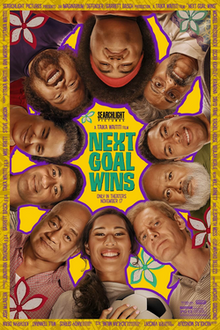
Next Goal Wins is the true story of American soccer coach Thomas Rongen, who travels to the American Samoa to help transform their team from the world’s worst team into stars. Taika Waititi’s irreverent flare not only gives the film plenty of laughs but an endearing underdog spirit that also highlights Samoan culture unlike lots of popular media. The casting of Michael Fassbender, an actor known primarily for dramatic roles, as a comedic lead does the film wonders. The way he portrays frustration and confusion with the incompetence around him is enjoyable, until the character begins to accept his journey into finding community around him, which becomes quite touching. Kaimana is also a standout as the character Jaiyah, an incredibly memorable and impactful character, not to mention fun supporting performances from Will Arnett and Elisabeth Moss.

The film’s comedic style is incredibly laugh-out-loud and makes you laugh in every way from situational humor to extreme physical comedy — the way Waititi does it best. Sure, underdog sports movies aren’t new to us, but the special cultural touch and loving characters make this a film that’s entertaining with every moment it has to offer. It’s short but incredibly sweet and wears its heart on its sleeve from the opening to the end credits that show you the real story the film is based on.

The Holdovers

A cranky history teacher at a remote prep school is forced to remain on campus over the holidays with a troubled student who has no place to go.

Directed by Alexander Payne, who won Oscars for writing Sideways and The Descendants, The Holdovers is destined to be an instant classic. It’s my new favorite Payne movie, and shows Paul Giamatti as an expert actor in both the comedic and dramatic fronts, yet a very different performance from his Sideways role. He plays a resentful yet timid and lonesome soul who finds an unexpected companion over the Christmas break. Da’Vine Joy Randolph should be a frontrunner to get nominated for Best Supporting Actress as a woman dealing with unthinkable grief but still attempting to be a voice of warmth and reason for those around here. Dominic Sessa delivers a sensational and heartbreaking and breakout performance as a savage teenager devoid of his parents’ love, who is the center of the film along with Giamatti’s character. Payne’s direction is his most magnificent, delivering the 1970s sets and soundtrack with a feeling of grandiose. He digs deep into these broken misfits who have lovable souls underneath their pain, characters we’d often be quick to judge but soon would stand up through thick and thin as audience members. It has something for everyone, whether you want to laugh and feel connected, or a little poignant emotion too. Comedy and drama fans, this is one of the best of the year, and a highlight for both Payne and Giamatti’s careers as artists.

Dumb Money

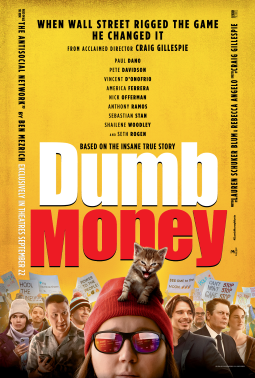
Dumb Money is the ultimate David vs. Goliath tale, based on the insane true story of everyday people who flipped the script on Wall Street and got rich by turning GameStop into the world’s hottest company.

A true story released only two years after the real events happened has the potential to be concerning, but Dumb Money takes a ridiculously fun approach to its outrageous story. In order to tell such an insane turn of events that actually happened, you need to match that with a style that doesn’t take itself too seriously, and the soundtrack and comedic tone of the film very much understand that. Similar to The Big Short, it also does a great job of making financial talk sound accessible and engaging. It also frames the Gamestop short squeeze as an underdog story, and ordinary people gathering knowledge about finance and investing as a positive incentive. Everyone is great, from Paul Dano who plays the film’s lead rebel and hero, to funnier roles like Seth Rogen and Sebastian Stan. America Ferrera gives the film a lot of spirit and Anthony Ramos, Myhal’la Herrold, Talia Ryder and Shailene Woodley are also very entertaining. However, Pete Davidson is sure to get the most audience reactions as hands-down the funniest and most memorable presence in the film. With a cast this awesome and a style this entertaining, it’s hard to find much that doesn’t work about what Dumb Money sets out to do — or a reason not to watch it in theaters.

Blue Beetle

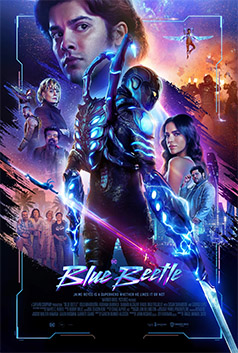
When recent college gradaute comes across a valuable piece of military tech designed by Kord Industries, he suddenly gets attached to a sentient scarab and becomes its host. He must use his new suit to discover his identity and fight for his family.

Blue Beetle has no concern with scale or world-building like the other last few DCEU films, but feels effortless in building beautiful family dynamics among the Reyes family that give our lead character a real soul and a reason to fight. It’s lovely to see such a supportive family with no strings attached in a superhero film, and see Jaime as a college graduate going through relatable life issues. But the character could’ve easily still fallen flat in the script had the film not struck gold with its casting. Xolo Mariduena is a ray of light and as Jaime. Not a moment goes by where you don’t feel his charm and energy as a magnetic and empathetic presence, but as Jaime learns, he isn’t the same without his family. He’s surrounded by a cast of fantastic performers as the family. George Lopez in particular is absolutely hilarious as his Uncle Rudy, not to mention a scene-stealing Adriana Barazza as his grandma. Belissa Escobedo is also a breakout as Jaime’s sister Milagro who is an incredibly layered and likable character, and these actors come together to build a support system that helps Jaime understand the importance of family while cheering him on on his own journey. Bruna Marquezene is also great as Jenny Kord and adds a lot to the film, and Harvey Guillen has a small but hysterical role. Susan Sarandon is well-cast as Victoria Kord, though her lines and motives are riddled with superhero corporate baddie cliches.

Though the cast helps make the movie as soulful as it is, the visual look of the film can be underwhelming. The 80s campy feel is appreciable but the quality of the CGI and the lighting choices are uninteresting, and occasionally questionable. That being sad, the cheeky energy converts enough into smiles and emotion that the audience feels for its lead characters, making Jaime Reyes potentially one of the best DCEU protagonists, and worth a watch for fans of superhero films.

Teenage Mutant Ninja Turtles: Mutant Mayhem

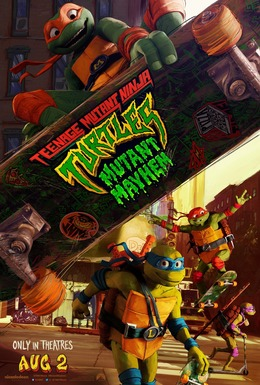
For years, Raphael, Michaelangelo, Donatello and Leonardo have been trained in the ways of ninjitsu by their father Splinter, and have been told not to leave the sewers for fear of what the humans will do to them. But the turtles decide to foil a dangerous plot and become the heroes New York City needs.

After numerous iterations, the Ninja Turtles franchise finally has an installment that understands the tone this IP deserves to feel lively and memorable. The turtles are voiced by actual teens, so they really get to feel youthful and like genuine characters (as much as mutant turtles can), and perhaps animation was the best way to go all along. The live-action designs of the characters in the past always looked too silly or creepy, and the style always helps this film live up to the mayhem suggested in the title. The Spider-Verse-inspired animation style of 3D graphics and 2D coloring gives the film a teenage feel, but more than that, something imaginative, wild, and fresh that doesn’t demand to be taken too seriously like the Michael Bay-produced live-action iteration. The dynamic “camera movements” and hip-hop soundtrack gives the film a constant energy that always put a smile on my face. The packed voice cast is also great, particularly Jackie Chan as Splinter, who may secretly be the heart of the film. Chan gives the talking rat a soul that makes him unique beyond what could have been the typical strict parent in an animated movie. Ayo Edebiri is also lovely as April O’Neill, an aspiring teenage journalist who befriends the turtles instantly and is a refreshing departure from the hyper-sexualized it-girl April from past iterations. Ice Cube is a very entertaining villain whose personality and understanding motivations make it easy to enjoy his cliche evil plan. The only character I didn’t quite enjoy was Maya Rudolph’s Cynthia Utrom, not because of the voice performance but rather the generic archetype and motives that had nothing to elevate or make her feel necessary.

I’m surprised to say that I finally find the Ninja Turtles to be great, but this movie is incredibly funny and booming with imagination and heart. Though it does draw a lot tonally from the recent iterations of Spider-Man, it’s hard to complain when the animation and script are this much fun.

Barbie

Stereotypical Barbie (Margot Robbie) leaves the Barbie-run utopia of Barbie Land alongside Ken (Ryan Gosling) in search of self-discovery after realizing she might not be as perfect as she thought.

Director Greta Gerwig of Lady Bird and Little Women fame takes what could’ve been a tiringly formulaic fish-out-of-water toy-based film and makes it a clever and cheeky good time. For all its ridiculousness, there is an undeniable heart here and the cast seems to be having such a great time. Gosling in particular gets to show off his master skills as a comedic and physical performer and America Ferrera is an important character who’s inarguably the heart of the film. Aside from Robbie, Simu Liu, Kate McKinnon, Issa Rae, Kingsley Ben-Adir Alexandra Shipp, Emma Mackey and Will Ferrell are also as delightful as some of the performances are campy, though that’s definitely the point of the movie thematically. The bright colors and fun costume designs, as well as the spot-on soundtrack add to this film’s level of meta irreverence that’s only matched by The LEGO Movie, a movie that may draw comparisons, including the fact that Will Ferrell plays a character related to business in both. 

While this may be the most self-aware movie of all time and it leans into that quite well, it also packs some delightful surprises in its humor and themes that definitely weren’t written particularly with kids in mind. It’s so in touch with its audience, who may be especially tweens and teens, but may also be a great watch for mothers. The movie explores the idea of Barbie as having been a representation of womanhood and shows with honesty the complexity of the human condition and women as flawed individuals who are expected to always be at their best but that isn’t quite life, and that’s the beauty of it. It also unpacks some of the ridiculousness of social constructs such as gender stereotypes and the patriarchy in a way that occasionally hits you on the head but adds nuance to this film about Barbie dolls. Best of all, the jokes are great and so passionately delivered by the actors that like I said, the fun they must have had on set feels contagious to the audiences watching. 

Barbie may be obvious in its thematic delivery but also absurdly charming and witty, with an excellent message for young girls and an all-star cast that’s the best live-action movie about dolls we could’ve imagined.