Shang-Chi is forced to confront his past after being drawn into the Ten Rings organization, led by his father who trained him to become a deadly Kung Fu master from the day he was born.
Shang-Chi and the Legend of the Ten Rings achieves the difficult task a new hero to an already enormous cinematic universe while still feeling as exciting and unpredictable as some of the past outings. The settings, characters and conflict are inviting, especially the vigorous execution from director Destin Daniel Cretton (whose previous movies Short Term 12 and Just Mercy I highly recommend). The action is dynamic with scale that ranges from martial arts on a bus to fantastical battles with ancient superpowers, and sets that range from San Francisco to China. The film clearly took inspiration from the practical martial arts days of Jackie Chan, and the passionate fights of Crouching Tiger, Hidden Dragon. The music, including the excellent score and solid hip-hop soundtrack choices, also adds a lot to the film’s pace and globe-trotting adventure, reminiscent of the modern, colorful nature of Black Panther that also brought elements of ancient culture to its production design. And similar to that film’s effect on black representation and culture, Shang-Chi marks the first time an Asian main character gets their due in an action movie of this proportion, but there are badasses alongside the hero as well, including strong women in power whose place in the fight is never questioned. Simu Liu immediately fits perfectly into the roster of MCU heroes, delivering a well-rounded hero who’s journey you love to follow along. Liu excellently balances charisma and heart that makes you embrace Shang-Chi in a humanly way, with the pain and difficult decisions that comes with the character’s traumatic past. The family dynamic elevates the conflict and Tony Leung’s portrayal of his power-hungry father is ruthless, a character who’s mere presence makes you feel fear and distrust, yet you see his perspective that sends him on this destructive path that sees many hurt. Awkwafina, who’s worked magic almost every time she’s in front of the screen, is not just wonderful comic relief but a loving best friend whose chemistry with Liu makes the runtime interesting. Michelle Yeoh also adds plenty to the film in a key role in the film.
With every Marvel movie, the studio proves that they can reach wide audiences with their large budgets and marketing, but more than that, their heart and entertainment, and this movie has plenty. It’s also helpful that unlike Black Widow, this movie is set in the present day chronologically — so stay free of spoilers because Marvel loves throwing in some surprises, and boy do they pay off! Though a few moments of green screen are noticable and some of the exposition has tedious moments, Shang-Chi’s fast paced adventure of self-discovery, with emotional stakes and action that mixes modern and mythical feelings, presents a fun mix of action, comedy and emotion with great sound editing, fantasy and sets in addition to likable protagonists and formidable foes. By the end I felt on the edge of my seat, unsure of what will happen to the characters because of the stakes and surprises that are presented. Marvel once again brings theater-worthy fun to the screen that all ages can love and eventually rewatch along with the rest of their library.
The culmination of the 4-film MonsterVerse franchise pits two of the greatest icons in motion picture history against one another – the fearsome Godzilla and the mighty Kong – with humanity caught in the balance.
This massively awaited film had plenty of promise, but ended up being a disappointment for me. What should’ve been a visually enthralling epic turned out to be a cartoonish WWE smackdown with sloppy direction and editing, and the worst writing in the franchise. The visual depth and feeling of actual destruction and danger from Godzilla: King of the Monsters is completely gone, and the visual style here is a lot less nuanced. While the storyboarding of this film must have been incredible, the CGI itself in some parts could have used some improvement to seem more seamless and epic, and a little less digital, which is odd because it had 2 years in post-production, less than its better-looking predecessor. Some cool visual moments are often ruined with silly editing choices like slo-mo and weird cuts, as well as some randomly placed rock songs that couldn’t have felt less fitting. The movie has a lighter tone than its predecessor, but unfortunately the messy editing and lackluster story aren’t willing to support that vision and maintain a style that consistently delivers.
It’s weird that a CGI giant gorilla has more emotional connection with the audience in this movie than the human characters, because that’s how I felt with Kong versus the humans in this film. And writing great characters has been a challenge for this saga before. Alexander Skarsgard is just there, and Rebecca Hall does well but her story wouldn’t have worked without her connection with this young deaf girl who communicates with Kong. Millie Bobby Brown and Julian Dennison are solid but their story is very uninteresting. Demian Bichir plays maybe the worst character in the entire franchise, who is incredibly bland and predictable from the moment he appears. Eiza Gonzalez’s character is also very generic. While Kyle Chandler was the lead in the last film, he gets nothing to do here — he didn’t need to be a large part again, but this just adds to the underwhelming nature of the cast of great actors in this film. The one cast member who was utilized well and perfectly cast was Brian Tyree Henry, who elevates his character’s so-so writing with great comedic relief and energy. The story itself that surrounds the human and monster characters is often frustratingly cliché, with big companies conspiring around these monsters with heroes with nonexistent character development and some laughable lines of dialogue. While this is supposed to be the biggest of the franchise, it’s ironically the shortest. At only 113 minutes, it suffers from a very rushed pace that never lets the film breathe and build atmosphere and adventure. It could’ve used another 15-30 minutes. The titular fights themselves are awesome, and the choreography when Godzilla and Kong fight is very memorable. However, by the time it gets really good it feels like too little, too late, and is also short-lived because of an underwhelming and predictable climax that goes for the least emotionally rewarding or daring conclusion possible. The end of the last film also set up the idea of monsters living among humans, but that’s completely tossed aside here for far inferior storylines that have been used in so many films before. There’s also no tension present, because although there are large, exciting monster fights, the spectacle isn’t treated with enough care to build a true epic, instead feeling like a rushed cartoon that doesn’t care much about all it has to offer besides the fighting. While it may entertain those simply looking for some fulfillment on the title, it’s sad how much more this could’ve been had the movie understood the full potential it held at hand.
Centuries after the dragons sacrificed themselves to save humanity in a war, Raya sets out to unite the human tribes of Kumandra once again and stop an old threat, with the help of the last dragon Sisu.
It’s easy to wonder why Disney would waste time with an easy cash-grab sequel like Frozen 2 when tasked with original films, they knock it out of the park. Raya and the Last Dragon proves so with stunning images and settings, and an engrossing adventure that, although I wish I had seen in theaters (which wasn’t possible due to the film not having a wide release, although it is available on Disney+), makes a story that would otherwise be familiar feel inviting and visually memorable. For those seeing it on the big screen, it’ll be surely unforgettable. The mythical settings and journeys to different corners of Kumandra make this feel like a more epic journey than any of Disney’s live-action films, and the skies, buildings, lights, and natural world that the characters interact with make this another achievement when it comes to animation, and its no less than another such adventure film on Disney’s resume, Moana. Kelly Marie Tran brings a complex voice character who displays optimism, empathy, bravery, rage, and determination in many stages of the film, bringing a flawed hero but one that fits perfectly into Disney’s roster of strong animated heroes. Awkwafina is a joy as Sisu and brings much needed comedic relief and enjoyment to an already great movie. Ever since her amazing performance in The Farewell, the actress/comedian has proven to be a treasure in Hollywood. She was such an inspired and wholesome choice to voice the charismatic dragon who, although 500 years old, has a youthful energy to her as she is figuring out how to be a hero as much as Raya. Benedict Wong is also excellent as a supporting hero. While there are no one-sided villains, Gemma Chan certainly plays a standout character, and Sandra Oh and Daniel Dae Kim are great too as the parents of Chan and Tran’s characters, respectively.
The chemistry between Tran and Awkwafina’s characters, the breathtaking animation, and the large scale are the binding elements of what make this movie another instant classic. The imaginative worlds and challenges the leads face through new settings, as well as the colorful and lively action sequences, felt as exciting to me as it would to child audiences. While the film’s emotional core and themes aren’t as moving as Soul‘s, which I think had some of the strongest messages in animation lately, the movie does have touching messages that will definitely work especially for younger audiences, and serve the story well enough, about choosing trust and empathy over greed and fighting. It’s only unfortunate that Disney didn’t wait for everyone to experience this film theatrically, as it’s one of their most visually imaginative films in years. But that’s another story. Whether you do seek it out in a theater near you or stream it on Disney+, watch it with your family and loved ones.
Like the animated musical that inspired it, Disney’s live-action Mulan is based on an ancient legend of a young warrior who defies gender norms in an act of courage to protect her family and home land.
Last year, the shot-for-shot replicas of Aladdin and The Lion King made more money than amazing movies like 1917 and Parasite due to pure audience nostalgia, and that says everything about today’s movie demographics and Disney’s future priorities. However, unlike those other remakes, I had much to look forward to with Mulan as it seemed like a less cartoonish, fantasy-driven take on a tale that wasn’t even so Disney-like to start with. Mulan is a movie that’s definitely on the higher end of the remake spectrum — definitely below The Jungle Book but probably at the same level as Beauty and the Beast. This isn’t a difficult movie to enjoy — the scenery is lively, the acting is solid, and the story is easy to follow especially when you know what it’s going for. So while I appreciate the attempt to make something somewhat different, Disney was unable to step out of the previous film’s shadow without removing the heart that the original had. I don’t care about talking dragons or bursting into song, but even an empowering movie like this somehow felt devoid of emotional connection due to lack of character. It’s very much confusing as to whether it’s trying to still be a charming kid’s movie or a serious war movie. On one hand, you have the childish elements removed, and a PG-13 rating to focus on action scenes, but then you have a witch who can turn into a bird and Mulan basically fighting with… the Force? I’m not one to nitpick about “How could this possibly work in real life?” when I watch a movie, let alone a Disney fantasy film, but she does so many stunts that seem physically implausible and only make sense if you’re some sort of Jedi or one of the heroes from Crouching Tiger, Hidden Dragon. There isn’t even a throwaway line about Mulan maybe having a strong connection to nature or her physical side, she just magically is the greatest acrobat and fighter in the world and we don’t even see her develop these abilities like the rest of the soldiers, which pushes us even farther from our iconic hero.
Liu Yifei does well as the titular character with what she’s given, but I wish the director and writers showed her emotional journey more, as her entire development feels defined only by the “woman defying gender norms” and “Loyal Brave and True” mottos. The rest of the cast feels underutilized especially Donnie Yen, an acclaimed performer who’s already proven himself to film lovers in Rogue One: A Star Wars Story as well as the Ip Man movies. Instead of seeing an interesting teacher-student relationship between Commander Tung and Mulan, he only serves for one scene of dramatic irony and one trust/distrust contrast moment. Tzi Ma does an excellent job as Mulan’s father, and her mother’s actress is also good, but we don’t see much of them either — same goes for Jet Li who is really great as the Emperor. There’s also a character who befriends Mulan and is the first one to really trust in her but the connection feels oddly one-sided. And the villains are awful, both the cartoonish Bori Khan and the equally pointless and emotionless shapeshifting witch. The visuals are very creative, especially the lovely scenery used for wide shots and battle sequences. The standouts include an amazing shot of a fight scene on a geyser, and the sequences in the Imperial City, that I could even see scoring the film an Oscar nomination for Production Design. The story is entertaining again to follow, especially when you remember the spirit of the story you already know, and when you follow conversations between the young soldiers, as well as the training montage where you can’t help but recall the awesome song that’s originally thee in the animation. The final battle is especially cool, but the film is greatly hurt — this may even be the film’s greatest flaw — by the horrendous editing. The random moments of slo-mo, as well as rushing through sequences in a montage fashion, is especially what hurt important character and scene-building moments, and letting the action play out for longer would’ve strengthened the spectacle. So while I did enjoy Mulan for the most part and had a positive impression of it when it ended (speaking of which, the end credits are gorgeous), something felt missing throughout which is that charm and energy that’s present in most terrific family films. It isn’t fully felt until a touching final scene where the messages unify and become clearer and more impactful to the plot. It’s a fun family watch, an important story about breaking down stereotypes and who “can” and “can’t” fulfill certain duties, but an extra 10-20 minutes of runtime, as well as stronger utilization of the cast and a more consistent emotional pull not just to the empowerment theme but also to the characters and world of the story, would’ve made this a more satisfying and excellent remake like we hoped for.
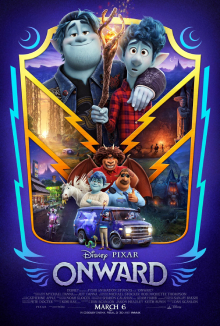
Set in a suburban fantasy world, Disney/Pixar’s Onward introduces two teenage elf brothers who embark on an extraordinary quest to discover if there is still a little magic left out there in order to bring back their deceased father for one day.
Onward is everything viewers will hope it’ll be with an original and exciting premise supported by mature and heartfelt themes. The movie does an excellent job at world-building and atmosphere; this suburban version of Lord of the Rings is brought to life with so much creativity and we get to see plenty of corners in this new, fascinating world. Tom Holland and Chris Pratt’s roles fit like a glove — their already known personalities wonderfully amplify the characters that felt like they could’ve been written just for these specific performers. The fact that Holland and Pratt have already shared the screen before in Avengers: Infinity War just makes it even more entertaining, but it’s also the writing for Ian and Barley that makes their brotherhood the anchor of the film. Julia Louis-Dreyfus is also great their badass mom, but Octavia Spencer is a standout as the Manticore — a mystical beast who now runs a restaurant and misses the glory days of magic, fighting, and flight. Not only is the character brilliant but Spencer makes the role of a “scary on the outside, soft on the inside” character feel fun and fresh.
Onward is the kind of film where the quality increases as the runtime progresses — the objective is creative and every obstacle, physical or emotional, is exciting to watch and our heroes’ quest never feels dull. Not to mention the plot is more mature than most family-aimed films — even for a Pixar movie. When it comes to down to the true emotion of the film, it lands at all the right moments and manages to craft a realistic representation of sibling-hood and family, even if the main characters happen to be elves. The film is very much mystical yet its roots lies in the real world — it’s based on director Dan Scanlon’s real-life experiences as he lost his father at a young age, meaning it may especially reach viewers who have lost a parent. In my case, this movie did get me emotional but for a much different reason — as an older brother, watching Barley play older brother/mentor to Ian made me reflect on my own experiences with brotherhood (in only positive ways, don’t worry). This is the power of family films — to tell stories about family. While I felt Frozen 2 was lacking of that sort of merit, this proves that may have only been a one-time miss for Disney, and while Onward might not be able to reach Nemo or WALL-E levels of classic — and maybe not better than some of their recent hits like Inside Out and Coco — I can say it’s as great as I was wishing it would be, and certainly has potential to hold up among the rest of Pixar’s library, but only time can tell. Pixar has held a special place in my heart for a reason, and Onward once again proves their strengths in delivering stories that audiences can cherish and grow up with, regardless of age.
The final chapter of the legendary story that’s spanned generations, The Rise of Skywalker follows the Resistance taking a final stand against the First Order, as Rey, the last of the lightsaber-wielding Jedi, prepares to face off against the Supreme Leader Kylo Ren.
Star Wars: The Rise of Skywalker takes the challenge of concluding a culturally treasured story that’s spanned four decades head-on, yet sacrifices something important in the process. Part of Star Wars is taking you away from reality and over to a galaxy far, far away, and this film succeeds at making the eye-popping visuals stand out in every shot, especially if you watch it in 3D, as you should for every Star Wars movie considering the grand scale they have to offer. John Williams, one of the real MVPs of the franchise, has composed every film in this saga and once again stuns with his beautiful musical scores. The cast still has plenty of energy and heart, especially the trio of protagonists — Daisy Ridley’s Rey shows plenty of emotion and energy and it’s hard not to love her character as she embarks on the final chapter of her adventure, and John Boyega’s Finn, as well as Oscar Isaac’s Poe, are very lovable as the daring fighters who are eager to lead and defeat the First Order for the greater good of the galaxy. It’s difficult not to enjoy whenever the lovable Chewbacca, C3P0, or BB-8 are on-screen either. The late Carrie Fisher also appears as General Leia, and although her appearance is very small, it’s a welcome and bittersweet one. Also returning from the original trilogy are Mark Hamill and Billy Dee Williams as galactic legends Luke and Lando — if only they had a bit more to do on screen, though. Unfortunately, nobody really gets a meaningful arc this time except Rey, but even her arc gets muddled and confusing by a decision that harms the emotional weight of the previous two installments. Not even Adam Driver, who plays the main antagonist in Episodes VII and VIII, gets much to do. In the last film, Kylo Ren became the Supreme Leader of the First Order, but instead of utilizing that brilliant and original idea of having a young, conflicted boy become the head of the evil, tyrannical organization, he ends up answering to Palpatine for most of the film, and I’m not sure if Palpatine’s role in the film was even warranted. Finn’s a deserter of the First Order who’s become a sign of heroism and bravery for the Resistance, but that isn’t explored as an important character trait anymore — hell, he’s no longer a multi-dimensional character anymore, barely anyone is in this movie. Naomi Ackie is introduced as a new character named Jannah. Her character seems fantastic, yet they do absolutely nothing with her character other than make her stand next to Finn for the film’s entire second half, so unfortunately we’ll never know anything about her or if she was really as great of a character as she could’ve been.
The runtime is stuffed with so many ideas that either don’t make sense or are rushed past in the blink of an eye; it felt so rushed that it was almost like Disney mandated them to not make it a minute longer. The editing in The Force Awakens was so excellent it even received an Oscar nomination, but here the cuts are so fast and occasionally feel unnatural. In the other films, the action scenes feel nuanced but the ones here are so quick that it’s going to be hard to look at them as “scenes” for their filmmaking and purpose. In a movie with so much fighting, I ironically can’t remember a specific moment where the action is notably impressive, although it’s thankfully loud and colorful enough to be engaging, yet not resonant. In the predecessor The Last Jedi, I was shaking in suspense for a lot of the film, but unfortunately in The Rise of Skywalker, there isn’t really a moment where I had that same feeling. Maybe it’s because although there’s so much plot, the script never gives us a moment to breathe or just develop the characters emotionally. Without any emotional arcs being set up, we can’t be concerned about what’ll happen to them later in the film. There’s also a few iffy lines of dialogue that either felt like placeholders or sub-par ways to convey ideas that could’ve come off as stronger. The movie also has plenty of moments that allude to the previous films, such as A New Hope and The Empire Strikes Back, and these moments will work well because how much of an impact this saga has had throughout the audience’s lifetimes. Some moments will make you applaud and smile, and my theater experience with this film only reminds me how beautiful these Star Wars films bring people together, even after 42 years. However, by the end The Rise of Skywalker doesn’t feel like the natural continuation of the trilogy’s story, but rather like it’s trying to be the antithesis of The Last Jedi. Many of the powerful decisions Rian Johnson made in VIII feel undermined by what J.J. Abrams chooses to do in some scenes, and instead of going with the flow of the story, it feels like he disregarded the tone and value of the previous film, and even his own film The Force Awakens (I’m not even sure what the tone of this movie is, if I’m being honest). Abrams is a filmmaker I regard with lots of talent towards bringing a sense of wonder and imagination towards the screen, and it’s unfortunate because there so many moments of greatness throughout that are harmed by the light-speed runtime (which although, at 142 minutes, is longer than most other SW films, still feels incredibly rushed and overcrowded), and the director’s working against the story that he and Johnson established so well before. Although the actual ending of the film and the Skywalker Saga is nicely done, the final chapter of the journey there should’ve hit home as well. Regrettably though, it’s the least risky and exhilarating film of the bunch (although it’s arguably better than the prequels, which to me don’t capture the true meaning of Star Wars that well).
Star Wars: The Rise of Skywalker is the conclusion to one of the most beloved stories in the history of not only film, but also the art of fiction itself. Unfortunately, as an enormous fan myself, I found myself disappointed. the overabundance of ideas Abrams tries to fit into a crammed runtime (if you ask me, they should’ve taken a page out of Marvel’s book and made the movie 3 hours in order to give this saga the fitting send-off it deserved), and the choice to emphasize too much fan service over a sufficient amount of character/emotional payoff end up harming the story that was so beautifully constructed in the past outings of this trilogy. This feels like a great film that was cut in half and then made some frustrating last-minute decisions that don’t even impact the later events of the film, and the main characters’ arcs would’ve been much stronger without these decisions. While there were definitely some plot points I enjoyed and the vibrant visuals and world-building, as well as the film’s role in concluding the franchise, will excite most audiences and incite instances of applause, the lack of boldness and spirit makes this the least gripping and rewarding film in the sequel trilogy, despite the satisfying nostalgia that makes for an awesome theater experience when you’re watching it with other Star Wars-loving audience members.
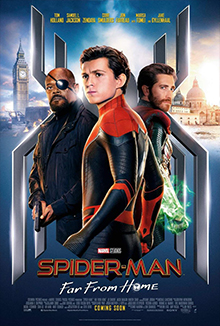
After the events of Avengers: Endgame, Peter Parker goes on a school trip to Europe with his friends, only to be recruited by Nick Fury to take on the Spider-Man mantle once again and team up with interdimensional hero Mysterio to fight new threats known as the Elementals.
Spider-Man: Far From Home marks the beginning of a new chapter for the Marvel Cinematic Universe, and had a lot of expectations to fill consider it not only has to follow the grand phenomenon that was Endgame but also follow up on the story of Spider-Man: Homecoming and make a story that still feels new and exciting. Well not only does Spider-Man: Far From Home live up to the expectations for a good Homecoming sequel but it also introduces new concepts and unexpected turns even after 23 Marvel films, proving that they haven’t yet lost their steam. Tom Holland still carries the film wonderfully and continues to convince me that he’s the best Spider-Man yet. Peter is now trying to hold onto his youth and is afraid to accept new and bigger responsibilites after losing an important figure in his life. Peter must learn to mature and step up throughout the film which makes for a strong arc in the film. Also great is his chemistry with Zendaya, who is also really great in her role as MJ, who we didn’t see enough of in Homecoming but is a leading part here. Watching their connection blossom throughout the film is really sweet and was done well by the writers and actors. Also really fun parts of the film are Jacob Batalon as Peter’s hysterical best friend Ned, and Jon Favreau as Tony Stark’s assistant Happy who is still played with plenty of charm, and he and Peter once again have great scenes together.
What director Jon Watts is once again able to do with this sequel is maintain that “high school movie” tone with Peter facing issues like bullies, crushes, etc., but Watts also makes sure to bring us a high-stakes superhero movie with threats and responsibilites that Peter must face as Spider-Man. He keeps the tone light and adds plenty of humor as we’re used to seeing from Marvel, and keeps the signature Marvel hero, villain, and conflict tropes. However, one thing I was underwhelemed by was the visual look of the film. Marvel has always impressed me with the production design, cienamtography, and visuals in their films, espeically lately with the gorgeous Captain Marvel and Avengers movies, but here the movie feels very boringly shot and there is no color scheme or visual style that will keep your eyes in awe like the past Marvel movies this year have. The battles often feel well-realized but the green screen also sometimes doesn’t blend in and the design for the Elementals villains as well as the final battle are also less impressive visually. Also, the fact that Sony oversees these Spider-Man MCU films while Disney controls all the others leads to some questionable or unexplained references to the bigger universe, which are sometimes welcome but sometimes a bit much or raise unneeded questions rather than serve as world-building. While Homecoming had fun small appearances from Iron Man and Captain America, here some of the connections to the rest of the MCU feel like Sony trying to constantly remind the world that their property is part of Disney’s Marvel universe as well. Other than the obvious impact Infinity War and Endgame have on the main character, some of this world-building raises more questions than it needs to and possibly tampers with the consistency Disney has been keeping so smoothly through its MCU films. I feel like there were also some underdeveloped plot points throughout the film, and they could have extended the runtime by only 5 minutes to help establish these more, like we don’t see much of how the world is readjusting after Thanos’ actions shook the universe, and we also hear peoople repeadetly mention a large character from Endgame but I think we needed a bit more about how Peter is affected by that character’s loss. Also, the timing of the release was way too soon (only 2 months) after Endgame, which was the big conclusion to many years of MCU films — so why not wait a bit longer and let us take in the first big chapter instead of diving right into the next one? Hopefully this won’t undermine the effect of Endgame as a finale as time goes by, because both these films are still great on their own. What Spider-Man: Far From Home does best, however, is remind us why we love this incarnation of the character and why he resonates with audiences, as well as provide new challenges and growth for the character as well deliver on the tone of a film that has to feel large-scaled on small-sclaed at the same time.
Spider-Man: Far From Home is a satisfying sequel that ups the scale and stakes for Spidey with more locations and more cdhallenging foes than before, even though it’s visually dull compared to the other big Marvel movies this year, and the pacing could’ve been slightly improved. However, the performances, storyline, and humor all deliver as expected and there’s an awesome mid-credits scene that changes the game for the future of Spider-Man.
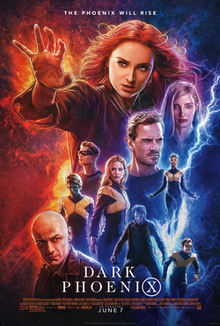
The X-Men have become global heroes, taking on riskier missions, and when Jean Grey is hit with a solar flare on a space rescue mission, it unleashes an unimaginable strength in her that threatens the X-Men and the entire world.
As the conclusion of this Fox X-Men saga, Dark Phoenix is somewhat enjoyable with a fascinating cast and characters that are stayed true to here. Sophie Turner does a solid job as Jean, and even if she sometimes overacts, she does a good job of delivering fear, uncertainty, and pain in her performance. Despite the title though, the real standouts are actually the supporting characters played by James McAvoy, Michael Fassbender, Jennifer Lawrence, and Nicholas Hoult. These characters really get moments to shine and the writing from the previous films is carried down to keep them effective characters like they are here. However, there are some writing choices that make Charles and Mystique feel a bit out of character, like Raven’s constant doubting of the X-Men’s mission which was there before but in this film’s situation is a bit of a stretch. Also, Charles clearly introduces some of the conflict in the movie but it also feels like the other characters treat him too poorly for the sake of the story. Also, one of the coolest characters from the last few films, Quicksilver, is hardly in the film, which is a missed opportunity considering how much enjoyment he brings to the screen and the fact that X-Men: Apocalypse also revealed him being Magneto’s son, which has absolutely no payoff (not really a spoiler, it’s a fact revealed early on in the predecessor which was released in 2016).
It’s surprising that the real reason this film works is besides the main story and the fact that this is a Phoenix adaptation, it feels above all like an X-Men movie and the character relations are what work best. Jean’s internal conflict which is the central arc of the film actually falls second to the world-building and the connections between the other characters, as well as nods to themes that even have allegories of WWII events, like the idea of one incident drawing fear towards an entire group of people. The action works at times, especially a fun space rescue scene at the beginning that has striking visual effects, as well as an exciting battle in New York City later on which does an impressive job displaying the characters’ powers. The score from Hans Zimmer is also remarkable and helps bring a darker tone than most superhero films which isn’t really ever interrupted by light humor, something most Marvel movies like to include. Unfortuantley however, one of the hardest parts of the film to enjoy comes when an alien race is introduced, led by Jessica Chastain in what is sadly one of her least notable on-screen performances. This shape-shifting alien race feels too familiar, as we just saw the same idea with the Skrulls in Captain Marvel, and their designs and powers are so inconsistent and boring, as well as their overall presence which was just unwelcome. There’s also some lines and moments that feel out of place, like Halston Sage singing a modern pop song at a party in the 90s, or cringeworthy dialogue like a random moment in which Raven says that “The women always save the men around here so you should really think of changing the name to X-Women,” a line that comes out of nowhere, has no context and serves no purpose to the story.
Also, after some interesting drama and action, the film takes a drop in quality during a final battle where suddenly a lot of the excitement is lost and I didn’t really care about where it was going. This final battle was poorly choreographed and obviously felt like a last-minute reshoot, and sacrificed any convincing emotion the previous two acts may have had, and it culminates in a horrible and laughable climax that might be one of the worst scenes in the entire franchise. The ending to the film, which is now supposed to end the entire franchise, feels pretty abrupt and anticlimactic as a conclusion and I wish they had made one or two more films after this before bringing the story of the X-Men to a proper close. The way the film ends also leaves lots of plot holes in the timeline and unresolved things that make no sense when looking at the ending of X-Men: Days of Future Past, and this film is now supposed to be a prequel to that film’s final sequence but instead it diverts away from that to make the story in the franchise even more confusing. There’s also a huge plot hole in this film that completely ignores the events of X-Men: Apocalypse — if Jean used the Phoenix force in the ’80s, how does she only get the Phoenix force in the ’90s? Dark Phoenix feels darker than the other films and focuses more on character and plot than large world-ending scale, but by the end, I wasn’t really sure what it wanted to be. What redeems Dark Phoenix as a film though is the acting, music, and action (sometimes), as well as some interesting dilemmas and character arcs raised that may or may not appeal to both fans and non-fans, but personally I found it to be a lot better than the critics are calling it, though it’s still disappointing considering how awesome I’ve seen this series become before.
A modern rendition of the beloved story of a thief who meets a beautiful young princess, finds a lamp and befriends a Genie, and must fight against the evil royal advisor Jafar.
There is no real reason as to why Disney’s new wave of live-action remakes is needed, other than for the studio to gather more money, but some have even shown potential and paid off like The Jungle Book and Beauty and the Beast. We’ve also recently gotten Dumbo and will soon have a CGI Lion King. However, Aladdin was the one I was most skeptical about because of how close to my heart the original was and how many times I’ve viewed it. There’s so many aspects that can’t be changed or replaced, especially not Robin Williams’ Genie. This live-action rendition finds some highs and lows but ultimately never justifies its existence, but then again, I wasn’t really expecting it to. Aladdin plays it mostly by the books but even when it tries to reinvent itself, it often fails. The musical numbers don’t have much energy into them with weary long takes that don’t feel engaging, and attempts to “modernize” some of the songs with the addition of a drum backdrop was not a good call. We didn’t ask it to beat the original, but we certainly didn’t ask for an autotuned Will Smith singing “Arabian Nights” or a credits version of “Friend Like Me” that includes DJ Khaled. I know, I don’t believe it either. The cast finds some faults to but also brings the film its greatest strengths. Mena Massoud feels like the perfect embodiment of how a live-action Aladdin should look and sound. Naomi Scott is fantastic as Jasmine, who not only has a powerful arc as she seeks to bring Agrabah the true leadership it deserves and speak out against those who silence her and say she is better “seen than heard”, but the actress also has a gorgeous look and singing voice that make her one of the best parts of the film. Will Smith is also one of the most entertaining parts as the Genie. Does he live up to the performance of the role by Robin Williams? No, nobody ever can and it’s too much to ask from someone to do so. However, Smith still captures the fun spirit the Genie has and embraces every moment he has on screen, even though the horrid CGI on his blue form takes some getting used to. My main problem with the cast is definitely Jafar. Growing up, Jafar was one of my favorite Disney villains because of his menacing and thundering presence and how intimidating he felt. Jafar’s execution in this remake is rather weak and annoying, with his monotonous delivery making him feel extremely generic and unlikable. Other great actors cast in the film are Nasim Pedrad, Navid Neghaban, and Billy Magnussen, but they all have to do weird voices throughout the whole film. Pedrad’s new character is a highlight but her unnecessary “elegant” accent slightly bothered me, Neghaban was a good choice for the Sultan by doesn’t have the hilarity and over-the-top personality the Sultan is known for having, and Magnussen had no reason to be in the film and his terrible German accent makes you dislike his new and unnecessary character — he was definitely better off doing other projects.
Aladdin’s real main selling point is nostalgia, as for all of these remakes. Kids will find themselves bopping their heads to tunes like “Friend Like Me” or being enamored by the beloved anthem “A Whole New World”, but when this classic animated adventure was converted to the live-action treatment, it feels like a lot of the wonder was lost. Aladdin and Jasmine’s chemistry, is still there, as well as the friendship between the Genie and the titular character, but what feels loss is the character’s iconic journey from a street thief who steals for himself but also just cares for the other poor people around him, to a selfless, courageous hero who will fight for his love and the kingdom. His arc just doesn’t feel as effective and the movie doesn’t leave us thinking about the films’ themes and emotions like the original did for me all those years. It’s not like all animated stories can perfectly stay effective in all mediums, but Aladdin does definitely suffer from being too close but also changing too much of the wrong things. However, one thing that does land is the humor. There are some fun humorous moments that I did not expect, especially a scene involving a dance. There’s definitely some pacing issues that this remake faces, though. Since the original is 90 minutes but this remake is 130, there feels like a lot of unnecessary filler added to the third act which just makes it tiring and it drags on and doesn’t find much of a point until the climax. The visual look isn’t very impressive either. The cinematography looks so bland, sometimes almost as if someone went to the desert and started shooting on their iPhone. But even the production design isn’t very convincing and it all clearly looks shot on a film set. The movie also fails to capture the vastness of Agrabah that was so intriguing in the first film. Here, everything feels a lot smaller and less striking to the eye, as well as poor CGI for the Genie as well as a few action sequences which aren’t enticing at all. There’s even a character in the final battle who looks like all the DC Extended Universe villains combined, and believe me, that’s not a good thing. Making Iago look like a real parrot takes away all the humorous and cartoonish feel that’s made him a classic role, same with Raja, who’s just a tiger rather than a trusty sidekick for Jasmine. Guy Ritchie’s new Aladdin doesn’t necessarily ruin the film that inspired it, but it certainly doesn’t honor the beauty of the glamour and the story that’s taken us all by awe like something like, say, the new Broadway musical adaptation.
Aladdin clearly didn’t need to be made, but kids will still enjoy a remake that’s, not really different from the original and in the end is just an inferior rendition of a magnificent gem that came before. Despite some entertaining moments but mostly frustrating changes and updates, there isn’t too much to take away except lovable songs you already know, and a strong, fresher arc for Jasmine as well as a standout delivery from Will Smith.
After the decimation of half the universe at the hands of Thanos, the Avengers must fight to restore order to the universe once and for all in the conclusion to an 11-year, 22-film-long journey through the Marvel Cinematic Universe.
If you’ve ever felt like all these shared universes and year-long franchises have been leading up to something, then, well, it’s here. The moment fans have been waiting for since 2008 has finally arrived, culminating an already enormous franchise in a gigantic finale that’s everything I wanted it to be and more. It’s the most shocking and emotional movie out of the entire superhero genre, but also brings all the excitement and fun Marvel knows for while having a more somber tone than most Marvel films as well. This movie brings eleven years of cinema in a cinematic event that pays off every minute dedicated to waiting for, watching, and discussing Marvel films over the years. If you think you could get away with only watching a few of the previous films before this one, then you’re wrong — in order to truly grasp the substance of Endgame like the movie wants you to, you are required to watch every film from the Iron Man, Captain America, and Thor trilogies to all the other connected adventures such as Guardians of the Galaxy, Doctor Strange, Ant-Man and the Wasp, and Captain Marvel, and of course, the first three Avengers film. After all, it has been an eleven-year adventure and, to be honest, the Marvel Cinematic Universe has been the center of popular culture for as long as I’ve known about it and have been following it. In case you don’t know, I’ve seen every Marvel movie in theaters since 2012 and this franchise has always had a special place in my heart. This movie is one that everyone can love, but simply going to see Endgame without any prior knowledge won’t bring you as much joy and emotional payoff as that which so many fans in my theater, including myself, experienced when watching this film. The performances are all spectacular, including Robert Downey Jr. and Chris Evans reprising their beloved roles as the leading names of the Avengers, which have easily become the greatest characters in modern cinema. The movie does a wonderful job continuing every character arc from the previous films but still takes characters in unexpected directions, which may be why characters like Hawkeye, Black Widow, and Thor are such highlights as well. Every actor wonderfully reminds us why they were so perfect from the role, including the previously mentioned actors, as well as Mark Ruffalo who is always so enjoyable as Bruce Banner. Not to mention Paul Rudd, who is perfect comedic relief but also delivers a terrific performance overall as his character Scott Lang, better known as Ant-Man. Another character I was very impressed by is Nebula, who originates from the Guardians of the Galaxy films and is most deeply connected to Thanos from all the characters in the film. Nebula’s arc has always intrigued me though many have overlooked it, and the script takes advantage of what makes her great very well and transforms her into a real hero, as opposed to her darker, villainous personality when her journey began in Guardians of the Galaxy. Telling you who else is in the film would already be a spoiler, but every cast member that does appear in the movie perfectly utilized and is very much welcomed every minute they’re on screen.
Remember when Avengers: Infinity War came out and everyone called it a cinematic landmark because of the incomparable scale and stakes? Well, Avengers: Endgame succeeds at topping that scale by creating something even more unimaginably enormous and climactic. Moments fans have awaited for years and buildup waiting to be payed off, it’s all rewarded here in scenes you would never think to picture in your head but finally can. Audiences will continuously clap and cheer as the past films are referenced and heroes do awesome things you’ve always wanted them to do. This movie made me react like no movie before, and I had a huge smile on my face in some scenes that I just couldn’t get rid of. Even after twenty-two films, Marvel takes unexpected directions that you wouldn’t have thought of but still remain true to the long-lasting story arcs. This results in an emotionally surreal experience where you cannot tell what will happen next, or if Hollywood can ever top such a glorious event. The way Endgame handles its story serving as a climax of eleven years of cinema and as a 3-hour movie lover’s dream, well, it convinces me that this is the peak of filmmaking history here. Every movie in history has always promised to “up the ante”, but after Endgame, it’s hard to see how the scale, stakes, and weight of this film can ever be topped. But that’s not a bad thing. Maybe it just means that we lived in the right time, to witness such a grand phenomenon unfold in front of our eyes, and that we’ll be able to tell those who come after us of the adventure we went on with these characters over the years, and the conclusion of their stories that we see here, wrapped up terrifically in one of the greatest superhero movie endings of all time, which in turn helps make up the greatest superhero movie, and one of the most astonishing action movies and blockbusters put to film in this day and age.
Avengers: Endgame is a cinematic event that must be witnessed on the big screen, marking the end of an era for Marvel but one that still exceeds expectations with fantastic writing, emotional value, nostalgia, and visuals and set pieces that will be remembered for the rest of however long superhero and action movies continue to be made. Thank you, Marvel Studios, for making such a sensational universe and making the experience of being a fan an unforgettable one. I’m sure more people can agree with me on that than Thanos can snap away. You’ve definitely already heard of Avengers: Endgame and now that you know why you should see it, what are you waiting for?





 filmtoppings.com