Wake Up Dead Man: A Knives Out Mystery

Beyond the sharp and satirical writing he’s known for, Rian Johnson shines in today’s cinematic world as a brilliant and wonderful director. From the visual humor to his incredible attention to production design, storytelling and revelations through editing, and even the smallest things like the sound design when characters speak and the pace of dialogue and events, Wake Up Dead Man proves Johnson yet again as not just a writer who loves surprises and fun, but an unrivaled filmmaker. Even when the satire isn’t quite as revolutionary as in the last two films, there’s so much more that’s allowed to take center stage here that the movie didn’t need some social messages to resonate. 

Daniel Craig as Benoit Blanc is a protagonist like no other, a beacon of clarity, charisma, and fun who we’ll never be able to have enough of. When Blanc isn’t front and center in the script, the film still thrives, thanks to a riveting story and fantastic performances from Josh O’Connor, Glenn Close, Josh Brolin, and more. The film unravels itself like a snake, with plenty of surprises, twists, turns, and unique structural choices. Every scene seems to get better than the last and the reward lasts until the very end. The film seems to be commenting on the idea of truth, storytelling and myth — in this case, packaged as faith — sealing some off from objective reality and keeping many of us in our comfortable, tight circles in which we’re never challenged. All the while, the film is exciting, beautiful to look at, and packs irresistible performances and dialogue. With Rian Johnson, even when we don’t know what’s about to happen, we always know we’re in the best hands.

Bugonia

Yorgos Lanthimos creates worlds of oddity, discomfort, and unease in most of his film, but Bugonia has the most to say about our world now. Jesse Plemons and Aidan Delbis play two extremists who kidnap the CEO of a pharmaceutical company (Emma Stone), believing her to be an alien in disguise sent to enslave humanity. Plemons and Stone are daring, unsettling, and riveting in the film, continuing to surprise and take their characters further, even with both being alums of Yorgos’ filmography and tone. Plemons’ turn is scary based on the conviction of his belief that comes from lifelong pain, and Stone is phenomenal as a character who’s also done some awful things, but clearly has the moral high ground while challenging the other characters. Delbis is convincing as a character who beneath the darkness, possesses a helplessness and strange empathy.

Lanthimos’ best traits as a filmmaker are that he finds the funny and big in every circumstance, making the story feel large-scale with the editing and storytelling. He also recognizes how equally unsettling and hilarious the concept can be, and that the two almost always go hand in hand in the case of Bugonia. The cinematography by Robbie Ryan, is unique and often stunning, and the thrills come from itching to find out the insanity that’ll unfold in every moment of the tense situation. It doesn’t let any of its characters off the hook but also allows the audience to understand some of their points, while debating on which characters are less sympathetic. It’s a film about shared delusions, stemming from our modern world of online radicalization, ideology-based violence, and corporate corruption on a vast scale. The symbolism and hidden layers reveal so much more about the characters’ world and the film’s messages, and there is much horrific yet calculated madness and macabre to expect from the director, while leaving an incredibly satisfying amount of ambiguity. It balances genres, tones, and themes effortlessly, leaving food for thought in all its aspects while allowing its stars to beautifully share the spotlight in one of the most unsettling and brilliant works of film this year.

A House of Dynamite

Tension escalates real fast in Washington, D.C., when US officials detect a ballistic missile fired from an unknown source towards American soil, as impending dread hangs over the country’s highest-ranking rooms.

Kathryn Bigelow’s urgent ensemble piece boasts incredible tension while fully gripping onto its audience with its singular structure and building of suspense. The director, who also helmed the remarkable Hurt Locker and Zero Dark Thirty, gives A House of Dynamite the same sophistication and attention to detail. Rebecca Ferguson gives the audience their entrance into this incredibly bleak time window. In a movie that could’ve come off as cold and procedural, Ferguson’s humanity and gravitas make us feel like we’re in good hands, as well as a handful of terrific actors like Idris Elba, Anthony Ramos, and Tracy Letts. The proficiency and cooperation the characters demonstrate makes the person behind each role interesting.

The nuances behind this (hopefully forever a) hypothetical situation are compelling, and the film’s secret weapon comes from the unity between the stylistic parts: Bigelow’s direction, Barry Ackroyd’s handheld camerawork, Volker Bertelmann’s potent score, and the meticulous editing. The film maintains both intimacy and sweeping scale simultaneously, focusing on tight spaces with happenings of global implications. Although the ending avoids making a more terrifying stance with its ambiguity, it’s still an expertly crafted and cinematic two hours that I didn’t want to end.

One Battle After Another

After a ruthless enemy resurfaces after sixteen years, a former revolutionary must come out of hiding to protect his daughter from a terrifying power coming after them.

Paul Thomas Anderson, already one of the most sweeping and daring filmmaker of the last few decades, is not only at his most ambitious in scope here. With One Battle After Another, the director challenges himself and his audiences into discomfort and nail-biting suspense, while transcending and recontextualizing his body of work. His direction is not only at its most cinematic and maximalist, but one of his most thematically profound.

Leonardo DiCaprio shines as a man who is task-oriented and protective yet fragile in his sense of self, portraying a character who’s funny in his messiness as he is loud and dangerous if a nervous wreck. Sean Penn is vicious and terrifying, giving his best performance in decades that could even get him another Oscar, and a villain that will go down as one of the all-time greats. The ensemble cast all deserve their flowers in their own right and offer the film lots of strength. Chase Infiniti is fantastic as DiCaprio’s daughter who gives much strength to every scene she’s in, and her scenes are riveting. Teyana Taylor leaves such an impression with a tremendous performance that gives weight and immense depth to the entire film, even when she’s not on screen. Benicio del Toro shines in a lovable and entertaining performance that steals the screen while letting other performances be “bigger” at the same time, and Regina Hall is also excellent.

There isn’t one element to Anderson’s approach that turns One Battle After Another into a masterpiece; it’s the whole the parts create. The gorgeous cinematography, Jonny Greenwood’s booming score, the swift pace and dark tone, and the magnificent sound design create the unpredictability and transfixing nature of the film you’re in. It’s the most shockingly and horrifically relevant film to today’s America I can remember, with imagery mirroring current power dynamics. The imagery is so visceral and mirrors real-life conflict in a way that screams like a warning, but one for a reality that’s already begun. In the world of One Battle After Another, each person has convinced themselves of an enemy or an other, and that violence is a justified means to an end that signifies a greater good. Nobody in this film becomes a true hero, there are simply people with worse beliefs and who have codes and are willing to commit deeds that are less acceptable to our moral standards. There are many moments that stand out in One Battle After Another that invoke suspense and epic magnitude, but that feeling is felt in every moment and frame. Even for a legendary director of PTA’s rapport, One Battle After Another is a breathtaking experience that’s among one of the best films of the last ten years, and one of Paul Thomas Anderson’s most visionary and unforgettable movies.

The Lost Bus

Paul Greengrass is truly a master of suspense, and of creating massive events and sequences that feel like a ticking time bomb that might not end until the film does. The Lost Bus is no exception, and proves his love yet again for humans’ cooperation and resilience in the face of unimaginable fear and adversity. 

The film is set during the horrific 2018 fires in Paradise, California, which may still feel fresh for many Californians and even more so due to this last year’s events. The movie focuses on the area’s fire department wide efforts to fight the fires and save lives, while also zooming on Matthew McConaughey (giving an amazing performance) as bus driver Kevin McCay, trying to rescue 22 children from the fast-spreading inferno, together with a teacher of theirs, Mary Ludwig, also played wonderfully by the terrific America Ferrera.

The movie does an excellent job bringing you into the terror of the events faced by the characters, including from the perspective of a child and a parent. All the while, the visual effects and sound design immerse you into these almost real-time events and put you on the edge of your seat — save for a few noticeable shots of CGI. The handheld cam Greengrass is known for elevates every moment and glues the pace together along with the tense music. You’re invested in the characters and the community’s pain and loss, while some devastating truths about the fires and their causes are revealed. The Lost Bus is a gripping true story that will stick with you not only because it’s a not-so-recent story, but also because of its humanity and implications that reach far and wide.

Caught Stealing

Darren Aronofsky goes for a tone that’s a lot more entertaining and less devastating or frightening than his last few films, though it’s still very violent, unpredictably so. Austin Butler gives a fantastic performance as a bartender whose dreams of baseball glory were crushed after a tragedy, and now finds himself in the crosshairs of a dangerous plot involving numerous crime leaders. Butler’s character is serious but not quite strong, driven more by his fear of harm coming his way. His character is flawed, vulnerable, and plagued by his past, but doesn’t have some violent dark side — he’s simply caught in the crosshairs of a plot involving his neighbor. Regina King also shines greatly, and Zoe Kravitz shares wonderful chemistry with Butler.

The best part of Caught Stealing is how unpredictable it is. The story itself is so fresh that there isn’t a way to guess quite where it’s going or will end up. The violence is very dark but also provides for moments of humor, even when the shootouts and car chases result in bloody carnage. The cinematography feels vintage without overly indulging in 90s nostalgia, and makes for both bigger and more intimate moments, and two characters who play a principal part in the later act are scene-stealing. At the end of the day, though, the film works because we’re rooting for Butler’s character so much against frightening odds. Aronosky treats his characters and world here with a sense of fun and wit, while Butler proves himself as a true movie star in an original and thrilling film that’s a welcome change of pace for the director but still at the top of his game.

Weapons

When seventeen children from the same class all disappear one night, a community is sent reeling and forced to deal with the terrifying consequences.

Weapons is a film that bids farewell to all the tropes we’re used to in even the best of modern horror movies, throwing us first into how a community is affected by such cruel and unexplainable loss. Julia Garner is at the film’s heart as a gentle teacher who suddenly loses all but one of her students — and is quickly blamed by her peers for it. Garner is immediately bondable with the audience due to her desire for answers and peace amidst her unfair situation. But on the other side of the public tensions is what comes off as rage but reveals itself to be fear and desperation in Josh Brolin’s performance as a father hellbent on finding his missing son. His hardness reveals itself as pain and vulnerability and stands out among many others of the actor’s roles.

Though writer-director Zach Cregger sets out to make Weapons feel far more patient than other horror films, he also goes for broke structurally, stylistically, and graphically. The editing, score, and cinematography are chilling, with moments that may end up in modern horror classic territory. Cregger retains some of his previous film Barbarian‘s DNA, such as jumps in time and perspective — some less interesting than others yet necessary for the film’s slow revelation of its mysteries. Within the film’s title lies many of the answers, including the weapon of the human soul itself: the harm that we can inflict or can be inflicted on us. But it’s because the film does hold back so much, and for so much of its runtime, that everything clicks so beautifully. We see and learn just as much as we need to in order to be asking the right questions, and hopelessly guessing what might really be going on here. Once you reach the end of Weapons, you may find yourself equal parts terrified and delighted, but its unraveling will make your heart sink and your legs shake. Weapons is bold and extraordinary even in today’s ever challenging horror landscape. Cregger’s cynical and at times darkly humorous lens fits perfectly into a modern folk tale of sorts that radiates the kind of singular originality felt in M. Night Shyamalan’s golden days of making thrillers. In this epic yet personal horror film, the scares aren’t nearly the whole point, but the whole point is seriously scary — just not in all the ways you’d expect.

28 Years Later

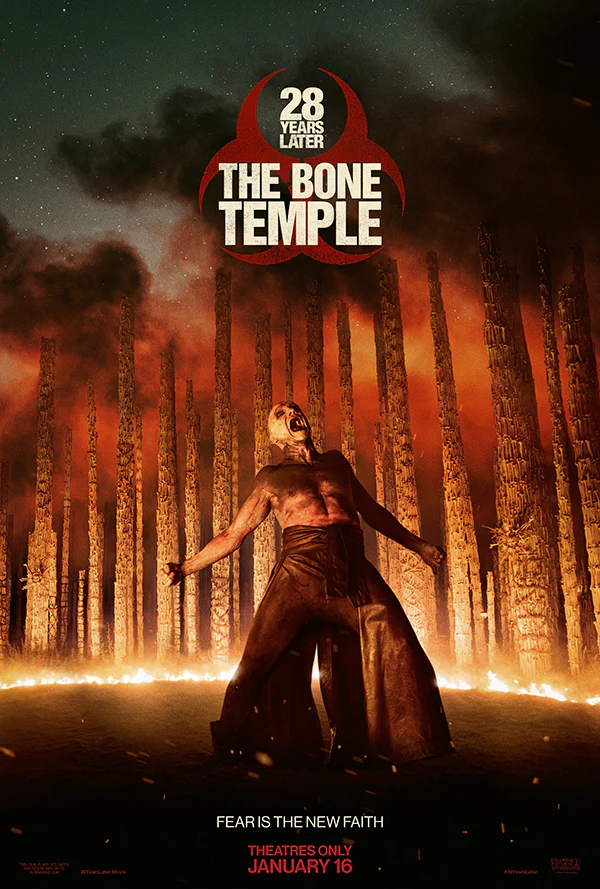
Out of all the zombie epidemics we’ve seen in cinema history, 28 Days Later and the franchise it’s spawned has depicted perhaps the bleakest, most horrifying, and cynical approach to the creatures. 28 Years Later carries that sheer terror and gore over in this generally rewarding continuation, as well as some of its predecessor’s more outdated stylistic choices that director Danny Boyle seems to cherish. Despite a few slightly self-aware soundtrack or action moments, the film portrays a hopeless future in which a nightmarish virus has caused a zombie apocalypse, and human nature is hardly a bright alternative. Now that it’s been decades since the world went to hell, we see the impact this has had on different sects of survivors, and small peeks at how the rest of the world may be interacting with this situation on the outside.

Boyle has a glaring pull to editing scenes like a music video, which frustrates when overdone, especially due to the prominent shaky cam, but when he trades this for calmer, more wide shot-driven scenes, the film looks beautiful, particularly the scenes set at night. The world isn’t given a wasteland-like look we’ve seen in films like Zombieland or I Am Legend — rather focusing on large fields and tidal islands filled with green and surrounded by blue sea.

Aaron Taylor-Johnson and Jodie Comer are great here, while Ralph Fiennes is a scene-stealer in a supporting role that’s incredibly powerful. The film does leave much to be resolved in a forthcoming sequel, which results in an underwhelming ending, but one that still very much leaves you excited for more after a stunning and unexpected final act.

Sinners

Twin brothers Smoke and Stack return to their hometown to open a blues club for a fresh start, only to discover that an even greater evil is waiting to welcome them back.

Ryan Coogler, one of the most impactful filmmakers to come out of the last decade, creates his most original, commanding, and dazzling film, a kind many have been waiting to see for a long time. Coogler gets free reign to blend genres with unique storytelling on a larger scale than we’ve seen before. The characters leap off the page and screen with their wonderful portrayals from Michael B. Jordan, Hailee Steinfeld, Wunmi Mosaku, and Delroy Lindo, as well as a more menacing turn from Jack O’Connell. As both Smoke and Stack, Jordan plays characters who aren’t free of moral question marks but still worth rooting for, and have excellent romances with Mosaku and Steinfeld, while Lindo has brilliant moments of reflection, strength, and humor.

The film portrays America in the 1930s as a place of difficulty and strive, with a system built to oppress black Americans, but in the main characters’ blues club, a dazzling, one-of-a-kind portrayal of black culture and music in a safe space of untouched, booming joy. The music is a language of its own in the film, not just another magnificent score by Ludwig Goransson, but the way music inspires and drives the characters across generations of their history. Music in the film is its own plane of sacred storytelling and unity, and it’s brought to life with roaring energy that the audience can enjoy yet by moved by. The cinematography by Autumn Durald Arkapaw, who also collaborated with Coogler on Black Panther: Wakanda Forever, also takes the film to another level, with distance between objects, characters, and backgrounds — or mere darkness — creating a weight in its shock. The film develops its characters in a world that’s breathing and moving around them in unexpected and exciting ways, even before the blues kicks in, and far before the horror action elevates the film to yet another level of mastery. The bloody violence is unpredictable and riveting to look at, and balances the line between horrific and irresistibly fun.

Though an ending scene stretches out and explains the themes too excessively, Sinners brings together genres and a remarkable cast full of life and heart that spreads to the audience. The visionary cinematography, music, and costume design compliment a story that’s filled with as much adoration for the immersive settings it creates as it is deeply hinting at themes of the system’s attempts to appropriate and erase black culture and history, and much more beneath the surface. Not only does it work for action, horror, or thriller fans, but it’s a beautiful piece of storytelling that only comes every few years. Not quite like any blockbuster we’ve seen, Sinners is a journey of pride, terror, and legend that needs to be experience on the big screen, solidifying Ryan Coogler as one of our great modern filmmakers who deserves all the more creative freedom and spotlight that’s coming his way.

The Amateur

After losing his wife in a terror attack, CIA analyst Charlie Heller blackmails his superiors into letting him go after the men responsible for her death himself.

The Amateur is well-directed, with an engaging enough visual look to keep the runtime going, as well as a strong score by Oscar winner Volker Bertelmann. However, it settles for mediocre as often as it becomes thrilling. Rami Malek is excellently cast in the role, but in earlier moments in the film, his performance still feels distant, and gets to shine more later, or sometimes the editing is to blame for not letting us sit with Charlie’s grief and pain for longer in certain scenes. Holt McCallany is especially memorable as the tough CIA Deputy Director, as is Laurence Fishburne a resourceful yet more empathetic CIA operative.

Despite the packed cast, the story itself sometimes feels muted, including a lack of true exploration of the idea that this hardly trained man is committing elaborately planned out killings that would be viewed as sadistic if the men he was killing weren’t murderous terrorists. The dialogue also sometimes falters, but the elements of the formula of a smart fugitive looking for justice on the run from the law do often work, and the action-heavy scenes themselves work well. Though the resolution leaves a bit to be desired from an emotional point of view, the third act subverts some expectations, and a character that enters the film in the latter half creates some very interesting developments. The movie’s entertaining enough for fans of action and espionage films that are more patient and let their stories breathe, but it also doesn’t stand out from the crowd of similar films or demand audiences to rush to the theater.