Caught Stealing

Darren Aronofsky goes for a tone that’s a lot more entertaining and less devastating or frightening than his last few films, though it’s still very violent, unpredictably so. Austin Butler gives a fantastic performance as a bartender whose dreams of baseball glory were crushed after a tragedy, and now finds himself in the crosshairs of a dangerous plot involving numerous crime leaders. Butler’s character is serious but not quite strong, driven more by his fear of harm coming his way. His character is flawed, vulnerable, and plagued by his past, but doesn’t have some violent dark side — he’s simply caught in the crosshairs of a plot involving his neighbor. Regina King also shines greatly, and Zoe Kravitz shares wonderful chemistry with Butler.

The best part of Caught Stealing is how unpredictable it is. The story itself is so fresh that there isn’t a way to guess quite where it’s going or will end up. The violence is very dark but also provides for moments of humor, even when the shootouts and car chases result in bloody carnage. The cinematography feels vintage without overly indulging in 90s nostalgia, and makes for both bigger and more intimate moments, and two characters who play a principal part in the later act are scene-stealing. At the end of the day, though, the film works because we’re rooting for Butler’s character so much against frightening odds. Aronosky treats his characters and world here with a sense of fun and wit, while Butler proves himself as a true movie star in an original and thrilling film that’s a welcome change of pace for the director but still at the top of his game.

Weapons

When seventeen children from the same class all disappear one night, a community is sent reeling and forced to deal with the terrifying consequences.

Weapons is a film that bids farewell to all the tropes we’re used to in even the best of modern horror movies, throwing us first into how a community is affected by such cruel and unexplainable loss. Julia Garner is at the film’s heart as a gentle teacher who suddenly loses all but one of her students — and is quickly blamed by her peers for it. Garner is immediately bondable with the audience due to her desire for answers and peace amidst her unfair situation. But on the other side of the public tensions is what comes off as rage but reveals itself to be fear and desperation in Josh Brolin’s performance as a father hellbent on finding his missing son. His hardness reveals itself as pain and vulnerability and stands out among many others of the actor’s roles.

Though writer-director Zach Cregger sets out to make Weapons feel far more patient than other horror films, he also goes for broke structurally, stylistically, and graphically. The editing, score, and cinematography are chilling, with moments that may end up in modern horror classic territory. Cregger retains some of his previous film Barbarian‘s DNA, such as jumps in time and perspective — some less interesting than others yet necessary for the film’s slow revelation of its mysteries. Within the film’s title lies many of the answers, including the weapon of the human soul itself: the harm that we can inflict or can be inflicted on us. But it’s because the film does hold back so much, and for so much of its runtime, that everything clicks so beautifully. We see and learn just as much as we need to in order to be asking the right questions, and hopelessly guessing what might really be going on here. Once you reach the end of Weapons, you may find yourself equal parts terrified and delighted, but its unraveling will make your heart sink and your legs shake. Weapons is bold and extraordinary even in today’s ever challenging horror landscape. Cregger’s cynical and at times darkly humorous lens fits perfectly into a modern folk tale of sorts that radiates the kind of singular originality felt in M. Night Shyamalan’s golden days of making thrillers. In this epic yet personal horror film, the scares aren’t nearly the whole point, but the whole point is seriously scary — just not in all the ways you’d expect.

28 Years Later

Out of all the zombie epidemics we’ve seen in cinema history, 28 Days Later and the franchise it’s spawned has depicted perhaps the bleakest, most horrifying, and cynical approach to the creatures. 28 Years Later carries that sheer terror and gore over in this generally rewarding continuation, as well as some of its predecessor’s more outdated stylistic choices that director Danny Boyle seems to cherish. Despite a few slightly self-aware soundtrack or action moments, the film portrays a hopeless future in which a nightmarish virus has caused a zombie apocalypse, and human nature is hardly a bright alternative. Now that it’s been decades since the world went to hell, we see the impact this has had on different sects of survivors, and small peeks at how the rest of the world may be interacting with this situation on the outside.

Boyle has a glaring pull to editing scenes like a music video, which frustrates when overdone, especially due to the prominent shaky cam, but when he trades this for calmer, more wide shot-driven scenes, the film looks beautiful, particularly the scenes set at night. The world isn’t given a wasteland-like look we’ve seen in films like Zombieland or I Am Legend — rather focusing on large fields and tidal islands filled with green and surrounded by blue sea.

Aaron Taylor-Johnson and Jodie Comer are great here, while Ralph Fiennes is a scene-stealer in a supporting role that’s incredibly powerful. The film does leave much to be resolved in a forthcoming sequel, which results in an underwhelming ending, but one that still very much leaves you excited for more after a stunning and unexpected final act.

Sinners

Twin brothers Smoke and Stack return to their hometown to open a blues club for a fresh start, only to discover that an even greater evil is waiting to welcome them back.

Ryan Coogler, one of the most impactful filmmakers to come out of the last decade, creates his most original, commanding, and dazzling film, a kind many have been waiting to see for a long time. Coogler gets free reign to blend genres with unique storytelling on a larger scale than we’ve seen before. The characters leap off the page and screen with their wonderful portrayals from Michael B. Jordan, Hailee Steinfeld, Wunmi Mosaku, and Delroy Lindo, as well as a more menacing turn from Jack O’Connell. As both Smoke and Stack, Jordan plays characters who aren’t free of moral question marks but still worth rooting for, and have excellent romances with Mosaku and Steinfeld, while Lindo has brilliant moments of reflection, strength, and humor.

The film portrays America in the 1930s as a place of difficulty and strive, with a system built to oppress black Americans, but in the main characters’ blues club, a dazzling, one-of-a-kind portrayal of black culture and music in a safe space of untouched, booming joy. The music is a language of its own in the film, not just another magnificent score by Ludwig Goransson, but the way music inspires and drives the characters across generations of their history. Music in the film is its own plane of sacred storytelling and unity, and it’s brought to life with roaring energy that the audience can enjoy yet by moved by. The cinematography by Autumn Durald Arkapaw, who also collaborated with Coogler on Black Panther: Wakanda Forever, also takes the film to another level, with distance between objects, characters, and backgrounds — or mere darkness — creating a weight in its shock. The film develops its characters in a world that’s breathing and moving around them in unexpected and exciting ways, even before the blues kicks in, and far before the horror action elevates the film to yet another level of mastery. The bloody violence is unpredictable and riveting to look at, and balances the line between horrific and irresistibly fun.

Though an ending scene stretches out and explains the themes too excessively, Sinners brings together genres and a remarkable cast full of life and heart that spreads to the audience. The visionary cinematography, music, and costume design compliment a story that’s filled with as much adoration for the immersive settings it creates as it is deeply hinting at themes of the system’s attempts to appropriate and erase black culture and history, and much more beneath the surface. Not only does it work for action, horror, or thriller fans, but it’s a beautiful piece of storytelling that only comes every few years. Not quite like any blockbuster we’ve seen, Sinners is a journey of pride, terror, and legend that needs to be experience on the big screen, solidifying Ryan Coogler as one of our great modern filmmakers who deserves all the more creative freedom and spotlight that’s coming his way.

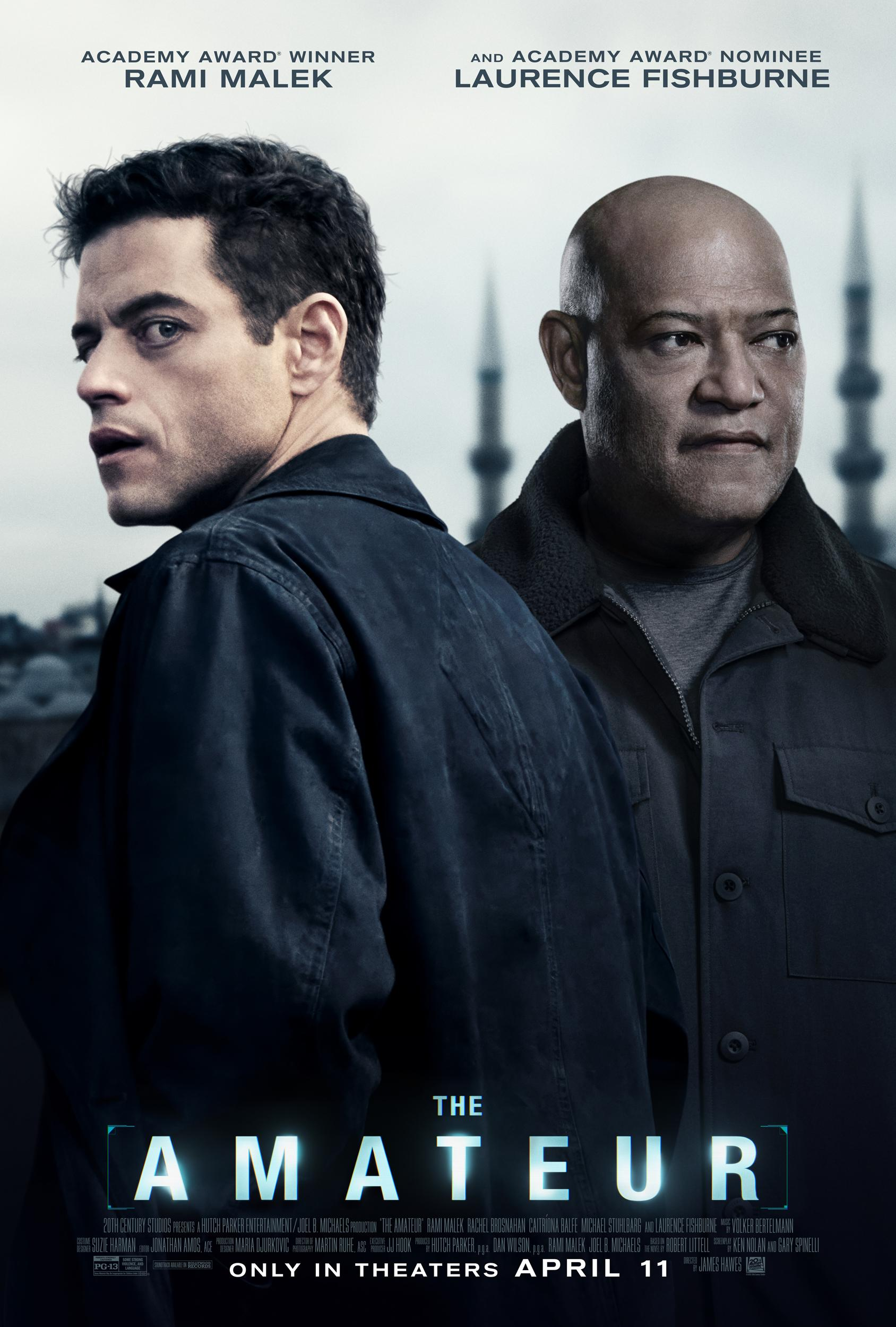
The Amateur

After losing his wife in a terror attack, CIA analyst Charlie Heller blackmails his superiors into letting him go after the men responsible for her death himself.

The Amateur is well-directed, with an engaging enough visual look to keep the runtime going, as well as a strong score by Oscar winner Volker Bertelmann. However, it settles for mediocre as often as it becomes thrilling. Rami Malek is excellently cast in the role, but in earlier moments in the film, his performance still feels distant, and gets to shine more later, or sometimes the editing is to blame for not letting us sit with Charlie’s grief and pain for longer in certain scenes. Holt McCallany is especially memorable as the tough CIA Deputy Director, as is Laurence Fishburne a resourceful yet more empathetic CIA operative.

Despite the packed cast, the story itself sometimes feels muted, including a lack of true exploration of the idea that this hardly trained man is committing elaborately planned out killings that would be viewed as sadistic if the men he was killing weren’t murderous terrorists. The dialogue also sometimes falters, but the elements of the formula of a smart fugitive looking for justice on the run from the law do often work, and the action-heavy scenes themselves work well. Though the resolution leaves a bit to be desired from an emotional point of view, the third act subverts some expectations, and a character that enters the film in the latter half creates some very interesting developments. The movie’s entertaining enough for fans of action and espionage films that are more patient and let their stories breathe, but it also doesn’t stand out from the crowd of similar films or demand audiences to rush to the theater.

Black Bag

Intelligence agent George Woodhouse is enlisted in investigating his wife, agent Kathryn Woodhouse, for treason, uncovering a web of secrets and deception.

Steven Soderbergh’s cleverest film in years, Black Bag boasts an entertaining cast, an exciting aesthetic, and a story that’s inviting though occasionally overwhelmingly complicated. Michael Fassbender and Cate Blanchett have great chemistry together as a couple with a complex love. Fassbender’s character in particular has an interesting manner to him, and every decision reveals more about the lengths he’s willing to go to. Marisa Abela, Tom Burke, Naomie Harris, and Rege-Jean Page all round out a great ensemble cast, each of whom has unique and intriguing characteristics and flaws.

Soderbergh has tested the limits of filmmaking with a number of his films recently. Though he takes a more traditional approach here, the writing and aesthetic still feel large and thoughtful, with the pace flying by and the turns the story takes becoming more and more exciting. With perfectly cast characters and a smart story, Black Bag definitely ranks high for the director’s more recent efforts.

Companion

Companion might fall apart if you think too much about plausibility, but that’s not the whole point. It starts out as a “getaway” thriller like any other, but soon things go, well, incredibly south. There isn’t much I can say beyond that because the story and its unfolding take so many unexpected directions that elevate the enjoyment of watching the film. Not to mention, it’s incredibly funny. Sophie Thatcher continues breaking into the thriller genre amazingly, giving her all to what the character needs. Jack Quaid is also fittingly cast as a seemingly “nice guy” with more insecurity under the surface. Rounding out the great supporting cast are Harvey Guillen and Lukas Cage, who nail the comedic timing and pitiful complexities of their characters.

The editing, comedic timing, music choices, and thrills elevate Companion above a few minor writing missteps towards the end. It’s entertaining while smart, with some outrageous dialogue and very well-filmed sequences and production value. It’s not the first modern film to try the satirical horror-thriller approach to issues of masculinity and toxic relationships, even in the last few months, but does it cleverly and with so much fun, including the humor and twisted violence, that it wins you over from start to finish.

Nosferatu

Out of all the reimaginings of the tale as old as time that is Dracula, none have been quite as chilling and outright transfixing as Robert Eggers’ Nosferatu. Eggers captures beautiful simplicity yet utter darkness in the film’s breathtaking imagery, as well as deeply terrifying sequences of gothic horror. From the jaw-dropping opening scene, the film captures its audience in a sense of heart-stopping fear that never ends until long after the credits roll. Jarin Blaschke’s cinematography wonderfully uses imbalanced lighting, gloomy color schemes, and silhouettes to create something that looks timeless. Every shot evokes a feeling of an ancient evil’s presence that’s about to be awoken and get ahold of what we’re looking at, which is exactly what happens with Count Orlok. Bill Skarsgard is unrecognizable under stunning makeup and changes his voice to create a towering and skin-crawling vampire, who’s face we wisely don’t see in close-ups until much later on. Lily-Rose Depp is a scene-stealer whose performance is so astounding that if you stop to realize it’s acting, it becomes hard to comprehend the sheer levels of physical and emotional commitment required — Depp never makes you question it once. Though the film cleverly shifts main characters between her and Nicholas Hoult, she’s the film’s beating heart and muscle.

Eggers expands on all his trademark oddities as a filmmaker, making us feel helplessly entranced. It’s nail-biting, gory, and does not hold back on scares and twisted, graphic content. The director feels in complete command of the style, whether the score, production design, or material, that digs into ideas of masculinity, obsession, and self-deception, without needing to overexplain what it’s truly about. Though I was dreading what was about to happen between the main characters and the titular vampire, I could never look away; I was deeply unsettled yet never wanted the experience to end, knowing I was in such good hands. No matter whether you know the story beats or not, there’s genuine shock and brilliance in every scene’s execution, breathing new life into a story that felt like it was always meant to fall into Eggers’ hands. It’s masterful and haunting, like watching a gorgeous fever dream that keeps building and building until an unforgettable final act. You may be going for the cast, the monstrous scares, or even just the cinematography — individually, they’re remarkable, yet together, the parts create a spellbinding whole.

Heretic

When two Mormon missionaries arrive at Mr. Reed’s house attempting to convert them, they find themselves stuck there in a game of wits, fighting for their lives.

When two Mormon missionaries arrive at Mr. Reed’s house attempting to convert them, they find themselves stuck there, fighting for their lives.

Heretic doesn’t play out with the typical levels of jump scares and macabre we’re used to from horror films these days — rather it’s a battle of wits in which the characters contemplate belief, religion, and faith… oh, and an adult man is terrorizing two young women as they’re held captive in his house, which becomes a maze of puzzles related to his disdain for their faith. Hugh Grant is rather terrifying as Mr. Reed here, but he’s clearly having such a delightful time in the character’s skin. He’s as threatening as you can imagine a mysterious man in his 60s alone in a large house but also has plenty of outlandish and hilarious dialogue. Some viewers simply looking for an intellectual dark comedy could most definitely find satisfaction in watching Heretic. You also genuinely care about our two protagonists. Sophie Thatcher and Chloe East both bring cleverness to the film, a willingness to challenge their captor, and not break down and quit. Thatcher brings a rebellious sense of mystery to Sister Barnes, while Chloe East is heartfelt and capable as Sister Paxton.

Though Heretic takes some time for the uniqueness and thrills to set in, it stands out from other recent horror films thanks to its restraint on its scares, as well as its smart screenplay and chilling villain. The three performances are integral and lift up the film’s shocking fun, and may even make you think about some big ideas all while you’re enjoying this dark ride.

Joker: Folie à Deux

After inciting violence, murder, and chaos in Gotham City, Arthur Fleck is institutionalized at Arkham, where he faces trial for his crimes — and perhaps the love of his life.

It might still be that there’s no reality in which a sequel to Joker makes sense. Joker felt so fresh compared to other IP-driven blockbusters when it was released, but also provided a sense of shock when it ended. Folie à Deux is a confused sequel that left me feeling nothing. Perhaps a radical decision like making this follow-up a jukebox musical is exactly what it needed to justify its existence, but a movie this ambitious is also too cowardly to take large enough swings or hit hard as a musical. The two main ingredients that work here are Joaquin Phoenix’s performance, which is still incredibly committed and breathtaking at times, and the gorgeous cinematography by Lawrence Sher, which embraces different colors and a grand sort of look to its prison scenes. However, it’s a bad sign when you wish such a legend like Phoenix was spending his time and talents elsewhere rather than helping Warner Bros. milk this character, which won him an Oscar the first time around.

One of the things that inherently doesn’t work about the concept of a Joker sequel is that we don’t have that gateway of sympathy into Arthur’s world when we meet him; he’s been dejected and abused by the world around him, but by the time this movie starts, he’s already done his awful deeds, and it’s hard to feel anything for him in this one’s opening act. Without that fascinating entrance into this world of sorrow and sadism, it’s hard to really feel anything watching the movie. Lady Gaga’s casting is inspired, but the film itself doesn’t do her and the character justice. Why make the singer of a generation whisper lots of her singing or not give her something more substantial than to pine over Arthur? In a psychological thriller about two insane criminals that turns into a musical, the numbers couldn’t afford to be this safe and scared. They feel like they’re holding back and are too concerned with convincing us they are set in the characters’ heads rather than leaning into surrealism and ambiguity. The music scenes don’t feel like a trip, or like they’re unlocking something about the characters and the film that can’t be backtracked on, they’re just breaks with song, and that’s what makes this risk feel so frustrating and timid. Not to mention, we don’t feel like we learn anything new about Arthur that wasn’t already established in the first film, nor anything original about the justice system, the mass hysteria around violence, or society’s outlook on poverty and the mentally ill.

Joker: Folie à Deux is a film that, unlike the masterful and already iconic first movie, has no identity of its own, because it’s too scared to commit to its giant leaps. As a courtroom drama, it’s derivative. As a romance, it’s painfully undercooked. As a social commentary, it’s tiring. And as a musical, it’s just too dim. By the end, nothing really transports, terrifies, or resonates, and worst of all, it fails to answer the most important question of why another chapter to this story.