After saving the world in Suicide Squad, and fresh off her break-up with the Joker, Harley Quinn finds herself a target after crossing paths with Roman Sionis, who’s in pursuit of a valuable diamond, and must team up with Dinah Lance (AKA Black Canary), Helena Bertinelli (AKA Huntress), Cassandra Cain, and Renee Montoya, in order to stop him.
Birds of Prey takes some major steps in the right direction after the mess that was Suicide Squad, in which Robbie was really the only relieving aspect. This film is a complete departure from everything its predecessor was — this one’s an irreverent, R-rated crime comedy that looks like a comic book come to life, in the best way. The film feels ready to take risks, go all-out with the humor and raunchiness, tell non-linear stories that don’t progress quickly, and freely create a new mood that doesn’t feel like anything else in the DC Extended Universe. Instead of floating portals and ancient demons, the action is — still cartoonish, yet very street-level, with the villains being your average asshole criminals who want glory, money, and to torture and kill people. Perhaps the villains are the film’s weakest part — Ewan McGregor gets very over-the-top and annoying as Roman Sionis/Black Mask, who does bad things because he’s bad and evil… never seen that before! But he’s more than redeemed for by the heroes. Margot Robbie is perfect as Harley Quinn, she completely owns not only the role but the image of Quinn, not only because she’s the first live-action portrayal of the character but because she’ll be the ideal one for generations to come. Jurnee Smollett-Bell is a breakout here as Dinah Lance, we spend plenty of time with her and are able to feel engaged with her performance and progression throughout. Perhaps we needed more of Mary Elizabeth Winstead… for such a talented actress, she’s barely in the film and her character has plenty of potential that wasn’t utilized as well as Harley and Canary. Perhaps there’ll still be a chance for Huntress to shine soon?
For all its attempts at humor, some of the jokes and dialogue will miss, too, like some unsubtle messages, some “funny” or “deep” moments that don’t always land, and some weird soundtrack choices, including an odd Marilyn Monroe reenactment-montage that’s quickly skipped on instead of being utilized as a crazy-fun moment. Other than that, Birds of Prey definitely knows when not to take itself seriously, and the story-driven rather than character driven approach actually works when your characters are supposed to be very over-the-top and morally ambiguous and your style is all out with time jumps, visual humor, insanely fun action, and narration (although there’s certainly a bit much of Harley’s narration over scenes). Maybe it doesn’t feel as fresh as the Deadpool films did, especially when the first film was the first in its genre to be so crude and self-aware, and in such an unapologetic way. However, Birds of Prey utilizes its cast of characters and script in unexpected and welcome ways, and enough of a hilarious, engaging, and refreshing run-time to make up for some weak antagonists and a few minor but certainly forgivable missteps in dialogue and soundtrack choices.
Tonight were the 92nd Oscars! Here are the winners in case you missed it:
Best Picture: Parasite Best Director: Bong Joon-Ho – Parasite Best Actor: Joaquin Phoenix – Joker Best Actress: Renee Zellweger – Judy Best Supporting Actor: Brad Pitt – Once Upon a Time in Hollywood Best Supporting Actress: Laura Dern – Marriage Story Best Original Screenplay: Parasite Best Adapted Screenplay: Jojo Rabbit Best Animated Feature: Toy Story 4 Best Original Score: Joker Best Original Song: “(I’m Gonna) Love Me Again” (from Rocketman) Best Cinematography: 1917 Best Film Editing: Ford v Ferrari Best Production Design: Once Upon a Time in Hollywood Best Makeup and Hairstyling: Bombshell Best Costume Design: Little Women Best Animated Short: Hair Love Best Visual Effects: 1917 Best Sound Editing: Ford v Ferrari Best Sound Mixing: 1917 Best Foreign Language Film: Parasite (from South Korea)
Overall, these Oscars were some of the best in years — I agree with almost all the winners, I’m just very disappointed that Sam Mendes lost Best Director despite making one of the best directed films in years with 1917. That was the category I was most enthusiastic for, but ultimately most let down by. He won every other directing award this season, like the Golden Globes, Critics’ Choice, BAFTAs, and Director’s Guild Awards, so it’s odd to me that the Academy thought differently than the majority of people in the industry as well as audience members. Parasite did make history though by becoming the first foreign language film to win Best Picture. It’s a deserving spot in history for an outstanding film. Joaquin Phoenix had the most moving speech of the night about unity and injustice, and won his first Oscar. Taika Waititi also won his first Oscar for Jojo Rabbit which I was very happy about. Little Women was the very safe choice to win Costume Design and Once Upon a Time in Hollywood was the only film this year with costumes that were actually memorable. Hildur Guðnadóttir became the first woman to win Best Original Score for composing Joker, making Thomas Newman lose his 14th Oscar for a superior score in 1917 that I thought should’ve won. Still though, history was made tonight.
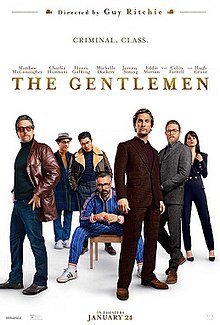
After big studio pieces like King Arthur and Aladdin that didn’t quite feel like they belonged to him (although he did make quite a good Sherlock Holmes film with Robert Downey Jr., and The Man from U.N.C.L.E. was arguably fun as well), The Gentlemen is Guy Ritchie at his most untamed and… Guy Ritchie-like. He goes back to doing what he does best — making irreverent, unforgiving British crime with non-stop violence and cursing, playing around with narrative in creative ways and even referencing himself. He celebrates his creative freedom with this film to bring to life a violent, original, and entertaining crime flick that will be embraced by his fans as well as any audience member who’s willing to enjoy this great film for what it is. Matthew McConaughey’s character would be much less lovable in real life than his other roles yet is always a blast to watch, even when he’s a marijuana-obsessed crime lord. Charlie Hunnam is surprisingly the perfect choice to play the classic British crime protagonist in a Guy Ritchie movie and this is far better than his other film roles to date. Older audiences will definitely be attracted by the addition of Hugh Grant, who plays a much shadier role than his typical romantic lead but his continued partnership with Ritchie always works well. However, my favorite part of the cast was Colin Farrell, who is no stranger to this British crime noir subgenre, specifically In Bruges and Seven Psychopaths. These roles always fit Farrell like a shoe so seeing him as a mean but enjoyable criminal again is nothing but fun. The entire cast is strong, with the exception of Jeremy Strong who is awfully miscast as a role that’s supposed to come off as serious and intimidating yet ends up feeling dull and uninteresting in his performance.
From an eye-catching opening and an awesome opening credits sequence, you know The Gentlemen is something special among the action and comedy films Hollywood is used to releasing today. Ritchie definitely steps out of the box, playing around with narrative and characters, like showing you an event and then showing it again from different perspective to fool you as to what may have happened before. He also knows how to make his dialogue incredibly memorable and his characters intriguing, even when their backstories aren’t quite needed. It almost feels reminiscent not only of early Ritchie films like Snatch, but also of early Tarantino like Reservoir Dogs and Pulp Fiction. This movie’s first act can be slow, but once the plot and characters are set up, it all becomes very interesting and unpredictable. Ultimately, The Gentlemen feels like a refreshing reward that we only get every once in a while with a superb cast at their A-game and some truly unique filmmaking that makes for some laugh-out-loud, unapologetic nonstop entertainment — or as Hugh Grant’s character calls it, “beautiful, beautiful cinema!”.
There’s been films this year that have enamored me, mesmerized me, and reminded me why I love films, but all year I have been waiting for a triumph on the level of 1917. Not only is it Sam Mendes’ strongest directorial effort, it’s one of the greatest filmmaking feats in years, breaking technical boundaries and capturing your senses from the first to final minute, leaving a remarkable lasting impact for long after the credits roll. Though on paper, the story sounds rather simple, Mendes is still able to create the most awe-inspiring and gripping cinematic experience of the year through the film’s outstanding execution. The film is made to look like one unbroken take, with the help of legendary cinematographer Roger Deakins, whose work alongside filmmakers like the Coens, Denis Villeneuve, and Mendes has earned him 15 Oscar nominations and one win — here, he breaks his own boundaries once again with jaw-dropping long takes, beautifully capturing the non-stop action through trenches and city ruins and conveying as powerful of a story with no cuts that most films do with thousands. The one-take act is not only dazzling from a technical perspective, but makes the story feel like one continuous movement, without room to stop and catch your breath, which works perfectly for this adventure war film in which time is the enemy. The unbelievable production design that brings these settings to life is immersive and exemplary. Also worth noting is the work of composer Thomas Newman. Having heard many of his scores that he’s made throughout the decades, this feels like the culmination of all his works in which he beautifully covers a variety of tones — ambient, thrilling, reflective, and emotional.
The stylistic elements work perfectly to elevate a basic concept into a nail-biting adventure where we fear for our leads’ lives as the journey into lands of uncertainty. Speaking of the leads, George McKay is especially excellent at capturing the fearful but determined spirit of his character. We don’t need to hear much about the characters’ pasts or personal lives to feel something — through moments of human instinct, persistence, and compassion, Mendes gives us everything we need to care about these characters and get more emotional than almost any film this year. So the style doesn’t just serve as a “gimmick” to round up Oscar nominations, but as a form of storytelling to make an already superb script feel even stronger. The closing cards, in which Mendes dedicates the film to his grandfather (who was a WWI veteran himself), makes the effect even more powerful. Thinking about the film after it ended, I was reminded why I go to the movies, and what storytelling is for — not just to put asses in seats, but to leave a lasting effect on an audience by utilizing the art of cinema to tell stories with true meaning and soul. Whether you’re a fan of war movies or not, it doesn’t matter, because 1917 is the film this year that cannot be missed on the big screen at any costs, and a definite frontrunner this year. It will certainly be looked back at in years to come for its originality and trailblazing in its genre, and might not be topped by another war film for many, many years.
Howard Ratner, a charismatic New York City jeweler always on the lookout for the next big score, makes a series of high-stakes bets that could lead to the windfall of a lifetime.
As soon as I heard that Adam Sandler was starring in an A24 film, I immediately got excited — I’ve seen Sandler prove himself by stepping out of the typical “goofy physical humor” tropes before in Punch-Drunk Love and The Meyerowitz Stories. Here, Sandler delivers a completely new side of his acting skills; it feels like somewhere in between his charismatic and serious sides — except his character Howard is a criminal and a downright horrible person. He continuously cheats his buyers, put his gambling addiction above his family, and even cheats on his wife, but possibly the fact that he has a family is what ultimately grounds his character and gives us brief moments to sympathize for him when the terrible choices he’s made come back to bite him. Sandler is really able to take on a challenge like nothing in his career and really stuns, as he was certainly the right choice to play the part as the film ultimately proves. After watching Uncut Gems, you’ll never see Sandler the same way. Julia Fox is scene-stealing as Howie’s mistress, who not only conveys energy but she’s perhaps the only character who’s able to do kind and forgiving things in the entire film. Not only has she not had any prior acting experience, but neither has Kevin Garnett who is also great, starring as himself yet he’s able to make every scene of his engaging. Lakeith Stanfield, who proves himself over and over again, also has some strong moments in a minor role. Idina Menzel also does really well as Howie’s wife, who is reasonably fed up with his neglectful, reckless behavior.
The Safdie brothers certainly know how to make a film theirs. Every setting and character feel like they’re living in the Safdie’s world. They’ve clearly made themselves more than distinctive and their films really do feel like nothing ever made before, almost as if they’ve invented their own genre, or at least style. That said, although their style definitely feels new and authentic, with actors (and non-actors appearing in the film) yelling over each other and real setting being used, I wasn’t a big fan of their previous film, Good Time. Although Uncut Gems is definitely a lot more interesting, and the camerawork and music feel more fitting here, it still at times suffers from a lack of direction, especially in the middle part of the film. There’s some excellent sequences and creative filmmaking throughout, but at times, even in the film’s strongest moments, its elements work against each other — the script inserts uncomfortable “cringe humor” into scenes with opposing goals, like trying to be heartfelt or powerful. The Safdies once again try to push the boundaries of human senses even further — How loud and retro can this score get? How bad can we depict humans to be? How gross and unsettling can we make it? Hell, the movie even starts with a close-up of Sandler getting a colonoscopy. What business did this moment have being there, I still don’t know. It felt like these moments of weirdness or darkness sometimes didn’t add up to much or were there for the sake of it. Thankfully though, the climax feels far more engaging and rewarding than in their previous film, thanks to a more interesting buildup and multiple things going on in different locations with different characters, and we can actually care about what’ll end up happening to Howie, even though like I said, he messes up time after time and mistreats nearly everyone in his life. It’s those small moments Sandler and the script deliver that put us on his side when it comes to his major bets and successes. I just wish the film struggled less in finding a consistent direction and reason for us to care. This is different than every Sandler film and just about every film out there right now, so it isn’t hard to see how it would be off-putting to many, but if you know what you’re in for with the Safdie brothers, then you may be able to enjoy it — their vision has definitely left me thinking after the end. If only everything else wasn’t subordinate to the extravagant cast that gives it their all.
Tonight was the Golden Globes, honoring the best of movies and television of 2019! Here are the winners in the film categories:
Best Picture – Drama: 1917
Best Picture – Musical or Comedy: Once Upon a Time in Hollywood
Best Director: Sam Mendes – 1917
Best Actor – Drama: Joaquin Phoenix – Joker
Best Actress – Drama: Renée Zellweger – Judy
Best Actor – Musical or Comedy: Taron Egerton – Rocketman
Best Actress – Musical or Comedy: Awkwafina – The Farewell
Best Supporting Actor: Brad Pitt – Once Upon a Time in Hollywood
Best Supporting Actress: Laura Dern – Marriage Story
Best Screenplay: Once Upon a Time in Hollywood
Best Original Score: Joker
Best Original Song: “(I’m Gonna) Love Me Again” (by Elton John) from Rocketman
Best Animated Feature: Missing Link
Best Foreign Language Film: Parasite (South Korea)
Overall I really enjoyed this year’s Golden Globes ceremony. Not only was Ricky Gervais a hilarious host who dared to make raunchy jokes in a world where humor is taken very sensitively, and it’s refreshing to see him not care and deliver a more shocking taste in his humor. I also thought the winners were far better than last year’s, especially considering Bohemian Rhapsody won Best Drama last year, even though it was the least interesting nominee in its category and got mixed reception from critics and audiences. I have yet to see 1917 but from the trailers I’ve seen, it seems amazing. I was most excited about Brad Pitt’s win for playing one of the greatest film characters of the decade, Cliff Booth, in Once Upon a Time in Hollywood, which won the most awards of the night. I’m also very happy with Awkwafina’s win for her terrific The Farewell performance. Although I liked Taron Egerton’s performance as Elton John, I am very disappointed that Leonardo DiCaprio did not win for his terrific performance as Rick Dalton. I hope he’s at least nominated for the Oscar. I loved Joaquin Phoenix for his complex role in Joker and think he’s a deserving winner too, but I still think Adam Driver and Scarlett Johansson should be in strong consideration for their magnificent turns in Marriage Story. Speaking of which, I am very disappointed that Johansson did not win, though I still haven’t seen Judy. I am also disappointed that Missing Link won Best Animated Feature over How To Train Your Dragon: The Hidden World and Toy Story 4. Other than that, I’m happy with how the winners turned out (as well as some great TV getting awarded, like Chernobyl and Fleabag) — but the highlights of the night were the lifetime achievement awards given to two of modern entertainment’s faces — Tom Hanks and Ellen DeGenres for their lifetime achievements in film and teleivison, respectively. Hanks, who’s been in more treasured films than I can count, has influenced Hollywood with his incredible performances but also his positivity and impact towards those around him. Ellen is most famous for continuously giving back to the community and for continuing to fight for justice, risking her career to come out and pave the way for future LGBT stars, as described in an emotional introduction from SNL star Kate McKinnon. Hanks is my favorite actor and Ellen is one of the greatest TV personalities there ever is, so together they made the most notable honors in a long time from the Globes.
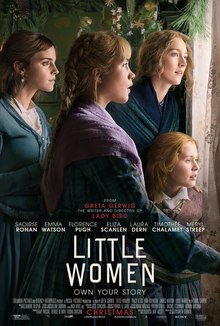
This re-imagining of the classic tale tells the story of the March sisters – four young women each determined to live life on their own terms. This story has been adapted plenty before, but be careful before you can pass on it just for that. Greta Gerwig, who made her transition to the director’s chair with the universally beloved Lady Bird, once again proves her directing skills and breathes energy and light into the screen. The gorgeous production value always stands out, as the costumes and sets are colorful, but the cinematography enhances the beauty to the eye, and this visual appeal combined with Alexandre Desplat’s ambient score makes for an engaging theater experience. However, what truly makes this film resonate is its cast of characters, played by A-list names including some who have worked with Gerwig in the past. Saoirse Ronan, beautifully embodying the soul that is Jo March in every moment on the screen, graps the film and the audiences in her hands with a charming, humane, and poignant performance, rivaling her terrific turn in Gerwig’s previous film, as well as being deserving of awards buzz. The camera beautifully captures every expression of hers and it’s hard not to fall in love with Jo’s ambition, playfulness, and spirit. But she’s not the only performer who steals the screen. It really has been the year of Florence Pugh — this his her third role in 2019 in which she’s really shone as a leading part, and although it’s not as excellent as her gut-punching role in Midsommar, her performance as Amy packs plenty of dimension and ferocity, and every instance with her on screen belongs to her. Amy is sweet and vengeful, tough and vulnerable, and realistically human above all — often she longs to be independent yet sometimes her emotions get in the way of that. Laura Dern also stands out as Marmee, the selfless and loving mother of the girls, in a touching and later heartbreaking performance that’s even more hard-hitting than her much-talked about Marriage Story role. Marmee continuously displays endurance through hardships and role model-like behavior to her daughters on how to behave towards others and themselves. A few actors, like Emma Watson and Timothee Chalamet, just feel like themselves for the majority, but Chalamet has an excellent scene in the latter half of the film in which he really impresses. Meryl Streep also makes the best of her appearance as a judgmental and scene-stealing Aunt March, and Chris Cooper also shows up as a more likable and lighthearted character than his typical role.
Little Women packs a strong punch with its actors and its glamorous prestige, but occasionally loses itself along the journey. This is due to the fact that the movie has many themes going for it, but a few important ones feel too underutilized and weren’t focused on enough. The movie is about female independence (expectations of women vs. their own desires), “owning your story” — literally so in the case of Jo wanting to publish her book yet continuously being asked to make changes to the female character’s journey (making the plot feel very meta in that way), and sisterhood and familial love. Regrettably, these themes didn’t really get the strong focus they deserve, instead only addresses in throwaway lines that are powerfully acted but sometimes out of place in the context of a scene. There’s even a few plot instances that contradict the moving messages the film may have been trying to say — most notably, I found the film in its core to actually be about life and the flow of time, as the movie depicts its protagonists growing up into “little women” (hence the title), and adjusting to change, including travel, passion, and heartbreak. So how ironic that even the center force of the script gets undercut by Gerwig’s choice to tell the story in non-linear fashion, and ultimately the jumps in time feel unnecessary and take away from what could’ve been a beautiful Boyhood-like “lifelike flow” to the runtime. This is why, in the first act of the film, a couple of moments just feel like a compilation of sequences rather than one overarching premise. Thankfully, the second half is especially emotional and memorable in the delivery of its messages and dialogue, but often it feels like the actors and director empowering the script which would’ve felt unpolished on its own.
Little Women would’ve been even more fantastic if not for its nonlinear narrative and a few script choices that feel rushed or untrue to the bigger picture, yet still resonates because of the characters, who so magically embody the hearts of what feel like real people, so sensibly livened by the ensemble cast. The visual appeal’s only there to accompany this already vigorous premise, proving that some stories may really be timeless, even though the runtime drags in the beginning and a few major themes are muddled by a few decisions Gerwig makes. Still though, if this is where Gerwig is after only two directorial works, then I solemnly request that she never stop making films.
The final chapter of the legendary story that’s spanned generations, The Rise of Skywalker follows the Resistance taking a final stand against the First Order, as Rey, the last of the lightsaber-wielding Jedi, prepares to face off against the Supreme Leader Kylo Ren.
Star Wars: The Rise of Skywalker takes the challenge of concluding a culturally treasured story that’s spanned four decades head-on, yet sacrifices something important in the process. Part of Star Wars is taking you away from reality and over to a galaxy far, far away, and this film succeeds at making the eye-popping visuals stand out in every shot, especially if you watch it in 3D, as you should for every Star Wars movie considering the grand scale they have to offer. John Williams, one of the real MVPs of the franchise, has composed every film in this saga and once again stuns with his beautiful musical scores. The cast still has plenty of energy and heart, especially the trio of protagonists — Daisy Ridley’s Rey shows plenty of emotion and energy and it’s hard not to love her character as she embarks on the final chapter of her adventure, and John Boyega’s Finn, as well as Oscar Isaac’s Poe, are very lovable as the daring fighters who are eager to lead and defeat the First Order for the greater good of the galaxy. It’s difficult not to enjoy whenever the lovable Chewbacca, C3P0, or BB-8 are on-screen either. The late Carrie Fisher also appears as General Leia, and although her appearance is very small, it’s a welcome and bittersweet one. Also returning from the original trilogy are Mark Hamill and Billy Dee Williams as galactic legends Luke and Lando — if only they had a bit more to do on screen, though. Unfortunately, nobody really gets a meaningful arc this time except Rey, but even her arc gets muddled and confusing by a decision that harms the emotional weight of the previous two installments. Not even Adam Driver, who plays the main antagonist in Episodes VII and VIII, gets much to do. In the last film, Kylo Ren became the Supreme Leader of the First Order, but instead of utilizing that brilliant and original idea of having a young, conflicted boy become the head of the evil, tyrannical organization, he ends up answering to Palpatine for most of the film, and I’m not sure if Palpatine’s role in the film was even warranted. Finn’s a deserter of the First Order who’s become a sign of heroism and bravery for the Resistance, but that isn’t explored as an important character trait anymore — hell, he’s no longer a multi-dimensional character anymore, barely anyone is in this movie. Naomi Ackie is introduced as a new character named Jannah. Her character seems fantastic, yet they do absolutely nothing with her character other than make her stand next to Finn for the film’s entire second half, so unfortunately we’ll never know anything about her or if she was really as great of a character as she could’ve been.
The runtime is stuffed with so many ideas that either don’t make sense or are rushed past in the blink of an eye; it felt so rushed that it was almost like Disney mandated them to not make it a minute longer. The editing in The Force Awakens was so excellent it even received an Oscar nomination, but here the cuts are so fast and occasionally feel unnatural. In the other films, the action scenes feel nuanced but the ones here are so quick that it’s going to be hard to look at them as “scenes” for their filmmaking and purpose. In a movie with so much fighting, I ironically can’t remember a specific moment where the action is notably impressive, although it’s thankfully loud and colorful enough to be engaging, yet not resonant. In the predecessor The Last Jedi, I was shaking in suspense for a lot of the film, but unfortunately in The Rise of Skywalker, there isn’t really a moment where I had that same feeling. Maybe it’s because although there’s so much plot, the script never gives us a moment to breathe or just develop the characters emotionally. Without any emotional arcs being set up, we can’t be concerned about what’ll happen to them later in the film. There’s also a few iffy lines of dialogue that either felt like placeholders or sub-par ways to convey ideas that could’ve come off as stronger. The movie also has plenty of moments that allude to the previous films, such as A New Hope and The Empire Strikes Back, and these moments will work well because how much of an impact this saga has had throughout the audience’s lifetimes. Some moments will make you applaud and smile, and my theater experience with this film only reminds me how beautiful these Star Wars films bring people together, even after 42 years. However, by the end The Rise of Skywalker doesn’t feel like the natural continuation of the trilogy’s story, but rather like it’s trying to be the antithesis of The Last Jedi. Many of the powerful decisions Rian Johnson made in VIII feel undermined by what J.J. Abrams chooses to do in some scenes, and instead of going with the flow of the story, it feels like he disregarded the tone and value of the previous film, and even his own film The Force Awakens (I’m not even sure what the tone of this movie is, if I’m being honest). Abrams is a filmmaker I regard with lots of talent towards bringing a sense of wonder and imagination towards the screen, and it’s unfortunate because there so many moments of greatness throughout that are harmed by the light-speed runtime (which although, at 142 minutes, is longer than most other SW films, still feels incredibly rushed and overcrowded), and the director’s working against the story that he and Johnson established so well before. Although the actual ending of the film and the Skywalker Saga is nicely done, the final chapter of the journey there should’ve hit home as well. Regrettably though, it’s the least risky and exhilarating film of the bunch (although it’s arguably better than the prequels, which to me don’t capture the true meaning of Star Wars that well).
Star Wars: The Rise of Skywalker is the conclusion to one of the most beloved stories in the history of not only film, but also the art of fiction itself. Unfortunately, as an enormous fan myself, I found myself disappointed. the overabundance of ideas Abrams tries to fit into a crammed runtime (if you ask me, they should’ve taken a page out of Marvel’s book and made the movie 3 hours in order to give this saga the fitting send-off it deserved), and the choice to emphasize too much fan service over a sufficient amount of character/emotional payoff end up harming the story that was so beautifully constructed in the past outings of this trilogy. This feels like a great film that was cut in half and then made some frustrating last-minute decisions that don’t even impact the later events of the film, and the main characters’ arcs would’ve been much stronger without these decisions. While there were definitely some plot points I enjoyed and the vibrant visuals and world-building, as well as the film’s role in concluding the franchise, will excite most audiences and incite instances of applause, the lack of boldness and spirit makes this the least gripping and rewarding film in the sequel trilogy, despite the satisfying nostalgia that makes for an awesome theater experience when you’re watching it with other Star Wars-loving audience members.
Lloyd Vogel is an investigative journalist who receives an assignment to profile Fred Rogers, aka Mr. Rogers. Fred’s empathy, kindness and decency soon chips away at Vogel’s jaded outlook on life, forcing him to reconcile with his painful past.
A Beautiful Day in the Neighborhood is one of those films every human should go see, not because it’s one of the most quintessential films — but because it’s one of the most moving and inspiring. Mr. Rogers’ words and messages shine to an audience in a world that now more than ever should remember the ways of this childhood television icon, who aspired not to be an icon to all, but rather a friend. The movie begins and ends like an episode out of Mr. Rogers’ Neighborhood, with Rogers, played wonderfully by Tom Hanks, singing his signature songs and introducing the protagonist, an excellent foil to Rogers who has a tragic past, leaving tension and anger inside of him towards his family. Rhys hits the right marks from emotion to the rude cynicism of his character, while Hanks captures Rogers’ calm and slow speech, and moreover, the strength and presence of an inspiration and a hero to so many viewers over multiple generations. Director Marielle Heller establishes a strong style after her mediocre Can You Ever Forgive Me? which was released last year and nobody seems to remember anymore. Yet here every scene seems integral to the feel of the film and not a single scene feels uninteresting. A Beautiful Day in the Neighborhood is a mix of heartwarming, impactful, and poignant yet hopeful about everyone’s capabilities as their own special individual. Rogers’ ideas of love, kindness, inclusivity, forgiveness, openness, and optimism translate perfectly to a big screen audience (that even kids could probably enjoy), that will be left moved, and probably clapping by the end, and certainly want to be Mr. Rogers’ neighbor, or even more so, aspire to be like him someday.
Elsa sets out to discover the origin of her powers and save Arendelle, with the help of her sister Anna, as well as Kristoff, Olaf, and Sven.
The first Frozen was a phenomenon when it was released six years ago; audiences loved it because of the inspirational and empowering story about sisterhood, family, and independence. Unfortunately, I can’t quite tell you what the second film is really about, even days after I’ve seen it. Frozen 2 has no stakes, resonant themes, memorable songs, or character changes throughout the story. Kristen Bell and Idina Menzel are still impressive and the connection between Anna and Elsa is strong, but although they take up the most screen-time, the film in its core isn’t really about them — more so about their deceased parents and some ancient war they took part in. The forest storyline also gets very complicated and uninteresting with a completely wasted performance from Sterling K. Brown. At least Evan Rachel Wood’s voice is a standout in the opening scene. The animation also isn’t as resonant as it was in the first film or Zootopia, Moana, and all of Disney’s most recent animated works. The plot feels very inconsequential and most the characters barely have an arc, so there aren’t any inspiring messages that shine through. There’s also a plot twist that anyone who has seen a single Disney film can see coming. I normally go to animated films in the theaters because I want a film that appeals equally to all generations. Yet unfortunately, this has none of the depth or intelligence the first film had, and is strictly for the pleasure of youngsters. I didn’t even laugh more than once.
Frozen 2 could’ve been a meaningful sequel, but rather it feels more like the unnecessary direct-to-DVD sequels like Aladdin: The Return of Jafar and Mulan II, films I like to pretend never existed because of their disposable and impossible-to-remember-plots. Good cast and animation can’t make up for a muddled story without much reward for the 6-year wait.







 filmtoppings.com