The Creator

In a future where humans have gone to war with artificial intelligence, Joshua, an ex-special forces agent, is recruited to hunt down and kill the “Creator”, who has developed a mysterious weapon with the power to end the war.

Seven years after the release of his last film Rogue One: A Star Wars Story, Gareth Edwards arrives with what feels like a visionary action film that feels parts Blade Runner and Avatar. The visual effects come together seamlessly to create a world that’s set in the distant future but might not be so far-fetched considering attitudes on AI in these times. The humans, robots, and hybrids all blend together in the frame and the robots’ movements look so smooth you’d believe they look exactly like that as they interact with other items in the screen. Not to mention the pitch-perfect cinematography from Greig Fraser and Oren Soffer that creates a mood that’s stunning yet violent, in-camera yet out of this world. John David Washington makes becoming one of the generation’s coolest action stars look effortless, and Allison Janney is surprisingly great, as well as the always delightful and nuanced work of Ken Watanabe. Madeline Yuna Voyles delivers a great breakout as a powerful AI child, though her relationship with Washington’s character doesn’t really click until later on, and even then feels a little derivative.

Though structurally you will occasionally encounter familiarity, the film takes a unique approach to the conflict between humans and artificial life, and visually it’s like nothing out there right now. Though the plot turns may be predictable for many viewers, it has a flare and liveliness to the action that not many other action movies this year had. More importantly, it feels even more special today as it’s one of the only theatrical action/sci-fi blockbusters of this scale without any source material/IP that’s been released in the last few years, and that’s worth commending and supporting. But whenever this had been released or viewed, Gareth Edwards’ inspired direction solidifies him as someone who’s in love with the worlds his movies imagine as much as the stories they tell on the page, and The Creator would make you want to invest in anything he puts his stamp on next.

A Haunting in Venice

Hercule Poirot attends a seance at the suggestion of his friend, mystery novelist Ariadne Oliver, who wants to expose a medium as a fraud, but a murder occurs and Poirot must get to the bottom of what seems to be an impossible deadly truth.

Though Kenneth Branagh has seemed to find a formula that works in his slew of Agatha Christie-based films in which he directs himself as the iconic detective, he also wisely ditches the CGI-heavy look of the last two films for a more intimate setting within a darkly lit Venice palazzo one stormy Halloween night in 1947. Though the cast has more weak links this time, Jamie Dornan, Kyle Allen, Jude Hill, Michelle Yeoh and others deliver interesting performances, with Tina Fey being as cocky and entertaining as you’d expect her to be as a writer in the 1940s who’s friends with the Hercule Poirot. It embraces some of the visual and tonal aspects of gothic horror but cleverly doesn’t fully indulge in the genre and remains a solid Whodunit murder mystery, although the pacing still has its slow moments. As I said before, the less “obnoxious” or massively cinematic style helps it better establish a darker mood and a murder mystery that feels contained and believable, and delving just enough into the concept of spirits to feel unique compared to the last two, without throwing too many supernatural elements at you. In other words, it’s another delightful Poirot mystery that never quite surpasses the description of satisfactory, but still fun enough for a watch.

Gran Turismo

Gran Turismo is based on the true story of racer Jann Mardenborough, who wins a series of Nissan-sponsored video game competitions through his gaming skills and becomes a real-life professional race car driver. Though the spectacle is strong with this film, the overall execution is muddled and mostly carried by David Harbour’s performance as Mardenborough’s trainer. Harbour is excellent as a hard but deeply encouraging mentor figure who develops a camaraderie of sorts with Jann, and the story of a gamer achieving the impossible and fulfilling his dreams becoming a real racer has some fun to it considering its a true story, but there’s also dragged out “sports underdog” cliches and a muddled execution. Blomkamp’s directing is fashionable but often jarring, with headache-inducing editing during the racing scenes that clearly look expensive but lack the adrenaline of Ford v Ferrari and Rush. Archie Madekwe is solid in the lead role, but the supporting cast doesn’t feel as interesting or human, with the exception of Harbour and a strong Djimon Honsou. The first two acts though are dragged out and the montage-style pacing feels frustrating and uninteresting, with weird video game-like edits that are supposed to feel meta but instead take you out of the scene.

Gran Turismo has enough references for fans of real-life racing, and racing scenes for fans of action and sports, and the third act is a fun and significant improvement over the first hour and a half of the film, but may not warrant a watch unless you’re strictly looking for sports and spectacle.

Guardians of the Galaxy Vol. 3

Years after defeating Thanos alongside the Avengers, the Guardians embark on an uncertain adventure to save one of their own from a monumental threat, meeting old and new friends and foes along the way.

It’s been almost a decade since James Gunn’s first Guardians changed the game for superhero movies — and so many copycats or inspirations have come to the mainstream since, or attempted to. But the camaraderie of the titular team has not gotten old, even if it’s their sixth overall appearance in the MCU, and likely their last. The goofy quirks of Gunn’s humor, poking fun at the mistfit-like attitudes of the characters, or his way of giving the outcasts a traumatic backstory and a chance to grow, breathe life and soul into nearly every frame of Vol. 3. It’s not necessarily the best of the three, but it is the most visually dynamic, with engaging settings and interesting close-ups or moving shots during the actions. Chris Pratt and Dave Bautista continue to deliver in the roles that have come to define their career and help shape their A-lister status, but it’s Karen Gillan and especially Pom Klementieff who get to really grow and steal the screen from them. Rocket is also given a heavy storyline that is as tear-jerking as it is revelatory for his character. Though Chukwudi Iwuji’s villain is very over-the-top, he’s also entertaining and works for the film’s purpose. However, the inclusion of Gamora’s alternate version from an Endgame timeline feels like the storyline that didn’t add too much to the film, and her original incarnation’s death in Infinity War still feels best left untouched as it hangs weirdly over her appearance here. Here, her character is more to serve Peter Quill’s arc or simply an excuse to have the awesome Zoë Saldaña around. However, Will Poulter’s presence is Adam Warlock suffer here despite the movie’s already long (yet breezy and earned) 150-minute runtime — though he’s built up as a threat to interact with the Guardians and make his own decisions, he’s left as a very basic side character who cracks a few jokes. The character deserved an awful lot better than he got, especially due to the great work Poulter does do with what he’s given, it’s just a shame his and Ayesha’s story set up from the post-credits scene of Vol. 2 gets the bare minimum payoff. In addition, a notable standout is Oscar nominee Maria Bakalova as the voice of Cosmo the Spacedog, a very entertaining critter who gets her deserved limelight.

The soundtrack in the last two films was dominant and diverse, practically its own character within the film and a driving force for Quill’s arc. The soundtrack in this movie definitely hits less hard and may have a few too similar songs, but it’s made up for with a few amazing needle drops that set the tone and immerse you in the moment. Most of all, the character’s dynamics are all so beautiful and the building of the action is the backbone of the film, rooted in the bond of this team that has strengthened and matured over a few films. Even if the first film is a beast that’s only rivaled by a few other Marvel movies for the title of the studio’s best film, Guardians of the Galaxy Vol. 3 has undeniable charm and is also one of the most emotional MCU films across all the phases. It’s one of their better post-Endgame works and a great big-screen watch for the visuals, heart, and cast of characters.

Dungeons & Dragons: Honor Among Thieves

A charming thief and a band of unlikely adventurers embark on an epic quest to retrieve a lost relic, but things go dangerously awry when they run afoul of the wrong people.

With the medieval action/fantasy epic genre being worn out to death in recent years, and a franchise with a less than notable track record, Dungeons & Dragons: Honor Among Thieves is the year’s most pleasant surprise so far. Sure, the conflict and world-building tread the line of “just enough” and the exposition isn’t that engaging, but Jonathan Goldstein and John Francis Daley imbue the film with a well-meaning, heartfelt energy that provides unexpected laughs and charm. Unlike a lot of bland fantasy action films from recent years like King Arthur: Legend of the Sword, Warcraft or the countless Hercules reboots, the characters in this movie feel like they have actual souls and empathetic reasons for the audience to root for them, not just in the quest but in their personal journeys. Chris Pine reminds the audience why his charisma works so naturally for a leading man, even though his character is occasionally greedy and a misfit. Michelle Rodriguez also delivers a more hardcore but lovable character than Letty from the Fast and Furious saga, and Justice Smith also delivers a sorcerer learning to gain his confidence well. Rege-Jean Page and Sophia Lillis both play standouts as very well-realized characters that may one day deserve a cool spinoff. Hugh Grant is also a silly yet fun villain, though his character’s presence and writing do the bare minimum for an antagonist to face off against the main team, and with an actor less capable than Grant, the role would’ve needed much more to sustain the audience’s attention.

Though some of the visual effects and green-screen are obvious, the movie isn’t trying to remind too much of the Lord of the Rings films, but rather create a jolly and comedic journey that perfectly fits the imagination, playfulness and vast possibilities of the Dungeons & Dragons brand. The action and excitement are enough to make up for conflict and rules that seem cliche, not to mention editing, direction and humor that make this not a must-watch, but better than it had any right to be, and will make the audience have a smile on their face and want to spend even more time with these characters than they ever thought they would.

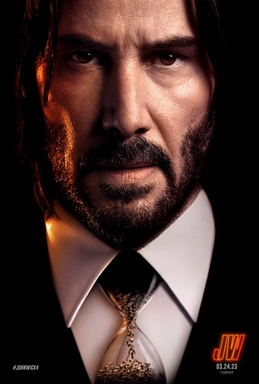
John Wick: Chapter 4

John Wick uncovers a path to defeating The High Table. But before he can earn his freedom, Wick must face off against a new enemy with powerful alliances across the globe and forces that turn old friends into foes.

Ever since John Wick offered a fresh and influential voice to the action movie landscape, the sequels have been attempting to top the scale, world-building, and insanity of the action from before. To say John Wick: Chapter 4 delivers on the promise of being the largest and most outrageous in the franchise would be an understatement. The fights are the longest, most intricately choreographed and most beautifully shot this series has been, and Keanu Reeves and the stunt team give mind-blowing work. Though for some, the movie’s obsession with topping itself may result in caricature, but it’s everything that fans of this franchise have signed up and waited for through 4 films, and then some. In addition to Reeves’ incredible commitment, Donnie Yen is one of the best characters this franchise has seen, bringing his martial-arts reputation to the series, not to mention Shamier Anderson, who’s incredibly an entertaining and likable character, as well as the excellent Hiroyuki Sanada who has great scenes with Keanu. Fans of the franchise already know to expect Ian McShane and Laurence Fishburne, not to mention this is one of the last appearances of the late Lance Reddick who was always a gem as the Continental concierge Charon. Bill Skarsgard’s character is intentionally hatable, but occasionally gets too much on the audience’s nerves to even be a fun villain.

Though these films are known way less for story beats and more for the “gun fu”, Chapter 4 culminates the titular character’s arc from the four films with more going on with him than in the last film, though the second act is 10 or so minutes too long, particularly a scene with Scott Adkins and the buildup to it. Set pieces from a Continental Hotel in Osaka to the Arc de Triomphe in Paris are nail-biting and stunning to watch, though the soundtrack is frustratingly repetitive and maybe too aggressive during the action — perhaps less dubstep would’ve been just fine — which I didn’t find to be an issue in the previous films. However, this is still a big-screen treat and an iconic action franchise coming to a grand, thrilling, and satisfying conclusion, rewarding viewers who have been tuning in through John’s creative kills and all the rules of the hitman underground world.

Shazam! Fury of the Gods

Billy Batson and his foster siblings protect Philadelphia with the powers that give them the strength of the gods, but soon the daughters of Atlas arrive seeking revenge for the stealing of their family’s magic ages ago, and declare war on the Shazam family and the human world.

Shazam! remains one of the best films in DC’s current shared movie universe, and Fury of the Gods brings forward everything that worked about the first movie, while expanding on the family dynamic. It’s very entertaining to watch as all the siblings are now superpowered and how it affects their interactions and characters moving forward, as the siblings who weren’t Billy and Freddy were much more minor characters in the first film. The movie also retains the same sweet, heartwarming energy that makes the Shazam saga irreverent, touching and harmlessly entertaining. The action is more in line with Tom Holland’s Spider-Man films than something as world-ending and grim as Justice League — though sometimes the world as still at stake. Zachary Levi’s charisma and natural sense of humor shines again, though it’s way more interesting to see him on screen than Asher Angel. However, Billy is a formidable hero who’s selfless, kind, and even clumsy. However, Jack Dylan Grazer and Adam Brody shine equally as Freddy. Grace Caroline Culley also stands out as both the normal and superpowered Mary, as well as Rachel Zegler, who continues to take the world by storm after West Side Story. Though Helen Mirren is incredibly entertaining as a villain, Lucy Liu’s performance is occasionally eyebrow-raising and questionable.

The visual effects also have some moments that could have used polishing, including the creatures or large set pieces, but overall most of the sets fit the Sunday-cartoon-like vibe that Shazam has always been aiming for. Not to mention, the humor is easily as memorable as the first, though the themes aren’t so as much as Billy and Freddy’s bonding in the first movie. There’s also a few scenes with Djimon Honsou that are funny but the least interesting parts of the movie. However, Shazam! Fury of the Gods gives viewers everything they signed up for while making them laugh and smile at the screen.

Creed III

Adonis Creed has been living out his wildest dreams, including being the reigning heavyweight boxing champion of the world, and a loving husband and father. When an old friend Dame returns from a long prison sentence, he brings back his and Adonis’ past with him, which will lead to the next big match of Creed’s career.

Though the Creed films were always follow-ups to the beloved Rocky franchise, they’ve made themselves feel fresh and modern while retaining the themes of hard work, underdogs, healthy masculinity, and family that make Rocky so iconic. Three films in, and what you’re watching still feels exciting and imbued with passion from behind the camera. Not to mention the director behind the camera is also its star, Michael B. Jordan. He delivers a strong debut as a filmmaker and brings out not only a strong visual energy to the boxing and training sequences, but the best out of the performances. Jordan and Thompson again work so well together and are two of the most charismatic, vigorous stars of this generation. The dynamic they have, now that their daughter is in the films too, brings another beautiful layer to their world that we’ve already been invested in thanks to the last two films. Jonathan Majors is a formidable screen partner to Jordan as Dame, a man ready to get back at the world for the unfortunate past he’s suffered and the life he feels he’s been robbed of. But similar to the Dragos in Creed II, Dame is empathetic and his longing for the championship Rocky and Creed have already felt isn’t as selfish as his attitude towards getting there.

Along with the excitement of seeing cool stars spar it out in the boxing ring is the complexity that the Creed films’ characters have and the scripts’ push to always have them growing and learning new things, as for every film to feel significant. Despite this, one story arc does feel slightly incomplete at the end and despite creative editing from Jordan, it does get aggressive in a few instances. Though it isn’t as wondrously directed as when Ryan Coogler was at the helm, it’s a film that gets better and better, with the dialogue just as exciting as the sports, but when the sports is there, it’s a blast thanks to the actors, direction, and always thrilling soundtrack that gives the film so much life.

I Wanna Dance with Somebody

Naomi Ackie stuns in this biopic about Whitney Houston, and the movie makes a strong case for why she was the greatest singing voice of her generation. It highlights Whitney’s accomplishments, shortcomings, and struggles with glamour, empathy and care, but the editing seems to occasionally bring Ackie’s performance down and while the characters and performances are strong, the script is so cliche it almost feels like it’s checking off boxes as it goes. The music biopic tropes are almost all there, whether it be the way the movie portrays the sudden rise to fame, abusive marriage, addiction, controlling father — it’s the Aretha Franklin biopic Respect but with a different soundtrack. The way the movie goes through these cliches feels almost like the way the parodical Walk Hard: The Dewey Cox story would’ve been written, and the editing often glosses past important story points and doesn’t let the beautiful musical sequences breathe and play out without frequent montage-like editing during the songs. Cinematograper Barry Ackroyd of the Bourne movies, The Hurt Locker, Captain Phillips, and Bombshell isn’t enjoying using a tripod too much and often shifts between handheld and still shots mid-scene which occasionally distracts.

In addition to Ackie’s breathtaking work, changing Houston’s mannerisms as she takes us from her teen years to the end of her life, Stanley Tucci is excellent as her manager Clive Davis, who in a nice change of pace from most biopics, isn’t the greedy asshole who takes advantage of the star, but a kind counselor and a devoted friend to Whitney. Ashton Sanders does a strong job as her husband Bobby Brown, as well as Tamara Tunie and Clarke Peters as her parents. Seeing Whitney’s process in creating her songs is also very satisfying, as well as her struggles with drugs and her music being called “not black enough” by critics of her music. Though it’s easier to follow than this year’s Elvis and has fun sequences for fans of Whitney’s music, with a star-making work from Naomi Ackie, but the script in the latter half could’ve been much stronger, as well as the runtime which drags later on and could’ve trimmed 10-20 minutes.

Avatar: The Way of Water

Set more than a decade after the events of the first film, learn the story of the Sully family (Jake, Neytiri, and their kids), the trouble that follows them, the lengths they go to keep each other safe, the battles they fight to stay alive, and the tragedies they endure.

James Cameron created a monumental landmark in visual entertainment and epic storytelling with Avatar. A sequel so many years later with so much promise to top the first would send too impossible to be real, but The Way of Water manages to deliver that same ambition felt in every shot of the first film and then some. Years were spent to create new technology to film motion-capture scenes underwater, and I’m glad Cameron spent all the time he needed to get it right because the term “out of this world” has never fit more for anything else. The plot beats in the first hour are familiar, but everything from there onwards is breathtaking, grand, and mesmerizing to the eye. The underwater scenes are some of the most visceral visual cinema I’ve ever seen, with the detail and realism allows you to completely suspend disbelief as you feel you’re actually on Pandora. Sam Worthington and Zoe Saldana are great in their roles again, and the script this time beautifully captures the depth of a parent’s love for their child. Sigourney Weaver returns not as the same character but in a different and inventive way. Jake and Neytiri’s children are as complex and poetic characters as their parents who carry across the story’s themes such as empathy, uniqueness, and selflessness.

Cameron manages to somehow expand on the scale of Pandora and this fictional universe that millions of audiences were already in love with, while finding the intimate moments beneath all the colorful CGI that often stick out and resonate. The cast ensemble may not be Lord of the Rings-level of memorable yet, but the world-building and storytelling certainly is. Not to mention, the love Cameron creates between the audience and the oceans of Pandora may hopefully bring attention to the way corporations and human actions deplete our oceans here at home, and the way of water the title refers to is the beauty of nature that our ancestors knew so purely that can give life and consume those who don’t respect it. The overall narrative has familiar beats but the emotion is heartfelt and thrilling, and the atmosphere and aesthetics are a once-in-a-lifetime experience that has to be seen on the biggest screen you can seek out and in 3D — I’d recommend IMAX 3D, which is how I saw it. Avatar: The Way of Water may have the lesser story of the two Avatar films, but it has a sensational awe and grandeur to its fusion of images, score, and weight that invites you to not only enjoy, but experience, behold, and never want to leave the forests and oceans of Pandora.