The King’s Man

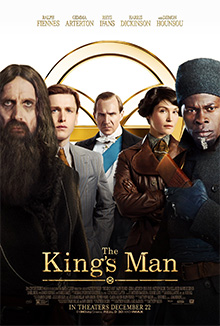
In the prequel to the Kingsman film series, Orlando Oxford (Ralph Fiennes) forms the Kingsman agency during World War I to stop a huge conspiracy to wipe out millions.

In this large, historically-based prequel, Matthew Vaughn’s unique eye for action and wit remain sharp but he ditches the parodical energy of the last two films for a tonal mess of a WWI action film that takes itself too seriously. Obviously, war is not a joke but the movie already makes fun of the figures behind WWI with its caricatures of Rasputin, Kaiser Wilhelm, King George and Tsar Nicholas (the latter three all being played by the same actor, to make things sillier). So with this Inglorious Basterds-like irreverence the movie plays around with, why not make the entire movie a comedy like the last two movies? The script tries way too hard to teach a somber lesson about violence, but the problem is the movie thrives on the over-the-top carnage seen on screen. The movie is a tonal mess, with the film trying to be both a cartoonish spy comedy and attempting to deconstruct war and lessons around what violence is, as well as having serious, intense scenes on the Western Front that feel like something out of a completely different movie. To make matters worse, the characters all feel flat and the supporting roles, like those of Gemma Arteron and Djimon Honsou, have no agency of their own. Ralph Fiennes is the only actor who gets a fully realized character and he can obviously do no wrong as a performer.

The action and music shine here — as soon as the action begins, the energy kicks in, with thrilling choreography, score (the Kingsman theme that recurs throughout the franchise can never get old), and set pieces. The action and humor play off each other well in these sequences, and Vaughn is an expert at crafting action scenes that grab your attention but are still unapologetically witty and crazy. If I were ever to watch this movie again, though, I would skip all the boring drama and go straight to the awesome action scenes. Instead of embracing the wild and sharp fun the action brings the film, it’s brought done by serious attempts to be a WWI drama, Unfortunately, in the more serious scenes, it feels detached from its audience, and creates a tonally confused movie that can’t decide what it wants to be. The original Kingsman film spoofed James Bond-like spy films while being a terrific example of one. This one missed an opportunity to lean completely into satirizing the politics of war while having an actually fun and wondrous action adventure, but it lacks the unapologetic confidence, energy, adventurousness and irreverence of the last two.

The King's Man.jpg

Venom: Let There Be Carnage

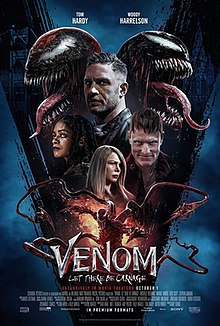
Eddie Brock (Tom Hardy) is still learning how to live as a host to alien symbiote Venom, but a visit to an obsessed imprisoned serial killer leads to another symbiote on the loose that the duo must face.

The first Venom movie has a mixed reputation — it’s hated by critics thought it was a box office success and fans enjoyed the relationship between Eddie and Venom. The sequel understands what some fans enjoyed about the first film and leans even more into the silliness of that dynamic. Unfortunately, it carries with it everything that made the first film one of the worst superhero movies in recent years. The dialogue is horrendous — there are a few good jokes here and there but every time every time a plot point needs explaining or the villains open their mouth, you can’t take it seriously at all. And every time the symbiote Venom opens his mouth, his lines are incredibly bland and annoying. For a cast led by four Oscar nominees, nobody does a remotely memorable job, though Hardy looks like he’s enjoying himself more this time. Woody Harrelson as Cletus Kasady could’ve been a darkly hysterical psychopath of a killer, but instead he feels like his character’s twin brother in Now You See Me 2, meaning his performance is truly unbearable. Naomie Harris is also at her worst as Shriek, Kasady’s girlfriend from his teen years who he hasn’t seen in decades but they’re still madly in love. Even the humor often dives from funny into purely cringeworthy territory as the jokes don’t feel more thought out, just Tom Hardy goofing around with 2 different voices.

The action and editing are a mess, with nonstop cuts and dark lighting that prevents you from truly grasping onto the set pieces without laughing at everything that’s going on. The CGI also doesn’t feel so smooth though the design of Carnage is great — the character itself, though, is poorly utilized and we barely get to see him fight Venom or understand what makes him a unique symbiote and fan favorite comic-book villain. There’s no reason viewers would remember him or why he’d strike fear into the audience’s heads like he does with the characters in the film — he’s just a bad symbiote like Riot in the first movie. Considering director Andy Serkis has created some of the most interesting CGI characters of all time, it makes no sense for him to create something as haphazard and painful as this. In terms of conflict, there’s no interesting build of stakes or threat, and in terms of internal conflict for our hero, it’s literally just “Eddie and Venom have to fight less and get along more and Venom needs to eat bad guys but not good guys”.

Visually, script-wise, and tonally, Venom: Let There Be Carnage doesn’t have itself figured out, just like the bro-mance at the center of the film. Though the post-credits scene is worth staying for, the movie as a whole proves why these films can’t latch onto viewers as well as a symbiote like Venom latches onto its host Eddie.

Venom Let There Be Carnage poster.jpg

Free Guy

Guy, a background character in a videogame called Free City, learns the truth about his existence and must race against time to save his world and reclaim his free will.

It seems that with Free Guy, Ryan Reynolds has finally found a movie that lives up to his comedic skills outside of the Deadpool franchise. Reynolds makes the movie infinitely better with his exaggerated reactions, unpredictable and irreverent self-awareness and pop culture analogies, as well as a sense of purity to his character that isn’t seen in his raunchier, more morally ambiguous portrayal of Deadpool. Meanwhile, this movie has a PG-13 rating yet this movie finds its audience and the humor lands most of the time. He has plenty of charisma and humor that carries the story and action but also not overkill where it compromises his character development. Jodie Comer is also wonderful as a female badass who isn’t a traditional “female sidekick and love interest to the male lead”, yet she’s actually the protagonist of the story as much as Reynolds in the best way. Joe Keery also has much time to shine, he’s very famous as Steve in Stranger Things, and just as lovable here. Lil Rel Howery is excellent comedic relief and best friend material everywhere he appears, and Taika Waititi takes a role that in the script would’ve looked incredibly cheesy and hard to stand, and with his delivery, makes the part an irresistible, hilarious part that was perfect for him. I had the same feeling with Reynolds, the role would’ve been much worse with another A-list funny action star.

Reynolds producing and starring gives the movie the perfect opportunity to be meta and let loose on pop culture references and self-aware jokes. Unlike Space Jam: A New Legacy, however, it never descends into immaturity and nonsense, instead embracing its stars talents instead of overly relying on effects. It also takes time to comment on the violent nature of Grand Theft Auto and similar videogames, as well as our obsession with hyperreality and simulated reality like Ready Player One did. The movie’s heartfelt side also asks us to use our humanity for empathy and connecting with other humans more. Believe me, it sounds cheesy but it’s delivered with plenty of heart, as well as themes about free will, the potential of AI, and being more than what people expect of you. The depiction of the world inside the videogame is colorful and lively and feels like a great live-action companion to Wreck-It Ralph, making you think about what such a world would be like in live-action, striking the perfect balance between letting the audience indulge in the silliness but always retaining heart and fun. The movie sometimes hits similar beats to other mainstream other action comedies, and you may be reminded of elements of similar films but it never lets the familiarity get the best of it. Free Guy flourishes when utilizing the loose, free-spirited edge to the humor, story, and characters, including hilarious editing and some unforgettable cameos that had my audience hysterical in the theater and are too brilliant to spoil. While it’s not a must-watch, it’s a great theater experience that makes the best of its potential and talents. It’s especially great to watch Ryan Reynolds and crew have a clearly awesome time starring in and making this entertaining movie that put a smile on my face and never sacrifices the insane visuals for a good story and time that like Deadpool, knows it’s very out there but is always on the audience’s side and never gets too cheesy for its own good.

Free Guy 2021 Poster.jpg

The Suicide Squad

Supervillains Harley Quinn, Bloodsport, Peacemaker and many other of the most notorious villains from the DC Universe are recruited by Amanda Waller to join a mission to liberate the South American island of Corto Maltese from a murderous regime that’s conducting shady experiments. In, exchange the villains get 10 years off their prison sentences if they successfully complete the mission, but if they fail, they’re dead.

DC’s ambitious 2016 endeavor Suicide Squad was a massive failure and disappointment that’s easily at the bottom of the DC Extended Universe ranking when discussing quality. This new sequel, written and directed by James Gunn, the man behind the Guardians of the Galaxy films, is without a doubt at the top of that ranking. The Suicide Squad does its brilliant concept justice this time, throwing away everything that didn’t work about the original and acting as a hilarious, goofy, energetic action-packed wonder that stands beautifully on its own. While the first film aimed to be goofy and comedic, it still had this dark, gritty edge to it which it struggled to balance with a PG-13 rating and fantastical, world-ending conflicts. This movie is colorful and indulges in the goofiness without ever taking itself seriously, yet the characters and story hit home further. The action set pieces are memorable and the R rating helps this movie fully realize its potential with balls-to-the-wall, cartoonish violence that fits with the twisted nature of the characters while still injecting humor and fun through the R rated violence and jokes. The movie also diverges from many superhero movie tropes by focusing less on the huge fantastical concepts and letting you know that nobody is safe.

The characters in this film are even sillier than in the first movie, and some even viler, but the movie makes them incredibly fun and lively to watch, even when there’s carnage to behold. There’s no way you can get enough of Margot Robbie as Harley Quinn — she adds so much to the movie and both this and Birds of Prey have made the style as insane as her, to make her this psychotic yet somehow lovable and exciting protagonist in the most awesome way. However, the other cast members’ work rival hers here. Idris Elba can do no wrong as Bloodsport and he has some great banter with John Cena’s Peacemaker — they’re both very foul people but have some of the best moments of the movie. Joel Kinnaman also has some memorable moments this time as Rick Flag, and Viola Davis plays the menacing Amanda Waller who is trying to make the Suicide Squad do some good but may be more hatable than all the actual criminals in the film — which is a testament to Davis’ terrific casting and presence. A standout has to be Ratcatcher 2, played by Daniela Melchior who gives the movie lots of heart and empathy. Like I said before, the movie continuously embraces the ridiculousness it presents without trying to put a “sane” lens onto it, as shown with wild concepts like characters named Polka-Dot Man and King Shark (a talking shark voiced by Sylvester Stallone). James Gunn’s direction adds a twisted comedy yet so much care for the story and the people in it while not trying to contribute to the bigger DC universe with forced sequel setups which we’ve seen plenty of lately. From the eye-popping action set pieces to the daring style to the standalone nature of the story, it stands out not just as a great comic book movie but as a great movie, period.

The Suicide Squad shows what the DC universe can do when it gives filmmakers full creative freedom and don’t take themselves too seriously. Even with other R-rated superhero comedies like Deadpool around, The Suicide Squad feels really fresh and with the success of Joker and the entertaining Birds of Prey, DC has been figuring out how to make some gems that stand well on their own while differentiating themselves from Marvel and other superhero iterations.

The Suicide Squad official poster.jpeg

Cruella

Cruella dives into the origins of the infamous 101 Dalmatians antagonist. Emma Stone is seriously great as the lead and another reason to praise the actress as well as the seemingly impeccable casting directors at Disney. Her performance is charming, unpredictable, and twisted. Though she is notoriously an insane criminal and dog-killer, she is likable in comparison to the other big Emma of the film. Emma Thompson plays a ruthless, egomaniacal fashion designer whose absolutely repulsive without a single redeeming quality. Her repugnance reminded me of Meryl Streep’s Miranda Priestly in The Devil Wears Prada, another evil, sadistic, fashion designer. Thompson portrays this narcissism and wickedness well, and the movie does a mostly good job, aside from a few lines, keeping her out of cartoonish territory. The relationship between the Emmas onscreen is easily a gripping anchor for the film’s story. Two other standouts are Cruella’s loyal surrogate brothers and sidekicks, played by Joel Fry and Paul Walter Hauser. My favorite was especially Hauser, who is much more comedic (and British) than his other popular turns in films like I, Tonya, Richard Jewell and Da 5 Bloods, and nails every moment he’s on screen. As a fan of his, I was especially glad to see him be in a film with a wide audience like a Disney film.

Cruella‘s script manages to, for most of the runtime, distance itself from the famous story it’s inspired by, despite a few nods and a shoehorned post-credits scene thrown in for the Disney hardcore fans. It feels very much like a Craig Gillespie movie — like his previous film I, Tonya, it’s a fast-paced chronicle of a morally ambiguous woman’s journey into such obscurity. However, it’s the hyper-stylistic approach that’s most detrimental to the film. The soundtrack is a nonstop barrage of rock music with no room for silence or drama, with one popular rock song after the other, and the music choices being frankly on the nose and unoriginal (seriously, why do so many films use “Sympathy for the Devil” by The Rolling Stones?). Had the style kept some of this energy but toned it down to make scenes feel less fluffy and more dramatic for its villain, the movie would’ve resonated more. With such gorgeous production design and costumes that made me awe (and trust me, I don’t always notice beauty in costume design like I did in this film), as well as solid acting and writing, why didn’t Disney trust its audiences to stay engaged from these elements instead of throwing in popular music every second? There’s also a little too much narration for my taste, and you can tell this took inspiration from Scorsese’s hyper-style he trademarked with Goodfellas and The Wolf of Wall Street — a style at least one big movie a year feels the urge to adapt. The movie’s script is best when it follows the psychotic nature of Cruella and her descent into darkness, which Stone wonderfully portrays and is the most intriguing part of the film. It’s also enjoyable to point out the similarities between Cruella and other popular solo movie villains like Joker and Harley Quinn (who headlined the considerably entertaining Birds of Prey), I only wish this movie embraced what worked so much about those two aforementioned films’ approach to their villains. And that’s not saying they should have gotten rid of the energy and fast pace — which does work once Estella becomes Cruella — just give the darker, more unpredictable moments of Stone’s performance room to breathe rather than be edited like a fun heist sequence from an Ocean’s Eleven movie. There’s also a few iffy moments of CGI, including the dogs and a scene involving water, that made me cringe. Cruella is entertaining, fashionable, and has fun with its concept, but feels boxed in by a soundtrack poorly edited into the film that weakens the impact of certain scenes and connections to the original IP that feel thrown in just to check boxes on a studio checklist. Those who are interested will enjoy it, as it’s certainly a good time that’s carried well by its cast, especially the insanity conveyed by Stone, but I feel like there was potential for a stronger film in the editing room.

Cruella 2021 film poster.jpg

Onward

Set in a suburban fantasy world, Disney/Pixar’s Onward introduces two teenage elf brothers who embark on an extraordinary quest to discover if there is still a little magic left out there in order to bring back their deceased father for one day.

Onward is everything viewers will hope it’ll be with an original and exciting premise supported by mature and heartfelt themes. The movie does an excellent job at world-building and atmosphere; this suburban version of Lord of the Rings is brought to life with so much creativity and we get to see plenty of corners in this new, fascinating world. Tom Holland and Chris Pratt’s roles fit like a glove — their already known personalities wonderfully amplify the characters that felt like they could’ve been written just for these specific performers. The fact that Holland and Pratt have already shared the screen before in Avengers: Infinity War just makes it even more entertaining, but it’s also the writing for Ian and Barley that makes their brotherhood the anchor of the film. Julia Louis-Dreyfus is also great their badass mom, but Octavia Spencer is a standout as the Manticore — a mystical beast who now runs a restaurant and misses the glory days of magic, fighting, and flight. Not only is the character brilliant but Spencer makes the role of a “scary on the outside, soft on the inside” character feel fun and fresh.

Onward is the kind of film where the quality increases as the runtime progresses — the objective is creative and every obstacle, physical or emotional, is exciting to watch and our heroes’ quest never feels dull. Not to mention the plot is more mature than most family-aimed films — even for a Pixar movie. When it comes to down to the true emotion of the film, it lands at all the right moments and manages to craft a realistic representation of sibling-hood and family, even if the main characters happen to be elves. The film is very much mystical yet its roots lies in the real world — it’s based on director Dan Scanlon’s real-life experiences as he lost his father at a young age, meaning it may especially reach viewers who have lost a parent. In my case, this movie did get me emotional but for a much different reason — as an older brother, watching Barley play older brother/mentor to Ian made me reflect on my own experiences with brotherhood (in only positive ways, don’t worry). This is the power of family films — to tell stories about family. While I felt Frozen 2 was lacking of that sort of merit, this proves that may have only been a one-time miss for Disney, and while Onward might not be able to reach Nemo or WALL-E levels of classic — and maybe not better than some of their recent hits like Inside Out and Coco — I can say it’s as great as I was wishing it would be, and certainly has potential to hold up among the rest of Pixar’s library, but only time can tell. Pixar has held a special place in my heart for a reason, and Onward once again proves their strengths in delivering stories that audiences can cherish and grow up with, regardless of age.

Onward poster.jpg

The Gentlemen

After big studio pieces like King Arthur and Aladdin that didn’t quite feel like they belonged to him (although he did make quite a good Sherlock Holmes film with Robert Downey Jr., and The Man from U.N.C.L.E. was arguably fun as well), The Gentlemen is Guy Ritchie at his most untamed and… Guy Ritchie-like. He goes back to doing what he does best — making irreverent, unforgiving British crime with non-stop violence and cursing, playing around with narrative in creative ways and even referencing himself. He celebrates his creative freedom with this film to bring to life a violent, original, and entertaining crime flick that will be embraced by his fans as well as any audience member who’s willing to enjoy this great film for what it is. Matthew McConaughey’s character would be much less lovable in real life than his other roles yet is always a blast to watch, even when he’s a marijuana-obsessed crime lord. Charlie Hunnam is surprisingly the perfect choice to play the classic British crime protagonist in a Guy Ritchie movie and this is far better than his other film roles to date. Older audiences will definitely be attracted by the addition of Hugh Grant, who plays a much shadier role than his typical romantic lead but his continued partnership with Ritchie always works well. However, my favorite part of the cast was Colin Farrell, who is no stranger to this British crime noir subgenre, specifically In Bruges and Seven Psychopaths. These roles always fit Farrell like a shoe so seeing him as a mean but enjoyable criminal again is nothing but fun. The entire cast is strong, with the exception of Jeremy Strong who is awfully miscast as a role that’s supposed to come off as serious and intimidating yet ends up feeling dull and uninteresting in his performance.

From an eye-catching opening and an awesome opening credits sequence, you know The Gentlemen is something special among the action and comedy films Hollywood is used to releasing today. Ritchie definitely steps out of the box, playing around with narrative and characters, like showing you an event and then showing it again from different perspective to fool you as to what may have happened before. He also knows how to make his dialogue incredibly memorable and his characters intriguing, even when their backstories aren’t quite needed. It almost feels reminiscent not only of early Ritchie films like Snatch, but also of early Tarantino like Reservoir Dogs and Pulp Fiction. This movie’s first act can be slow, but once the plot and characters are set up, it all becomes very interesting and unpredictable. Ultimately, The Gentlemen feels like a refreshing reward that we only get every once in a while with a superb cast at their A-game and some truly unique filmmaking that makes for some laugh-out-loud, unapologetic nonstop entertainment — or as Hugh Grant’s character calls it, “beautiful, beautiful cinema!”.

The Gentlemen poster.jpg

Knives Out

When wealthy crime novelist Harlan Thrombey (Christopher Plummer) is found dead on his 85th birthday, his eccentric family is gathered by an equally bizarre detective named Benoit Blanc (Daniel Craig) to solve the case of Harlan’s murder.

When an original project from a respected filmmaker and an incredibly talented cast is released — that’s when I know I’m in for something good. Knives Out has mystery, laughs, and plenty of popular actors quarreling. The cast, including Craig, Chris Evans, Jamie Lee Curtis, Toni Collette, and Michael Shannon, all get a shot to shine, but the film belongs to Ana de Armas. She steals the screen in every one of her moments and is the character you really want to root for. There’s plenty of witty, hilarious, and memorable dialogue from the remarkable Rian Johnson, who also uses some brilliant visual cues for glamour, as well as “a-ha!” moments and even some humor. From the first act, the movie takes a turn away from what you’d normally expect in a “Whodunnit” murder mystery, yet it all makes for an equally creative and thrilling experience. However, I do feel like some revelations were placed too early along the film’s runtime and could have been saved for a few sequences later. Also, while Johnson does present some truly golden moments throughout the film, like the savage, vulgar moments or the more showy, stylish moments, I think the film could’ve overall used a more distinct style, as I know Johnson is of much skill yet a few scenes felt like they could’ve been directed by anyone. Also, perhaps the film could’ve benefited from an R-rating as a few scenes do slightly hold back in terms of language, yet fortunately this is nothing that harms the film. Johnson also goes for some social themes — some so direct and on-the-nose that they feel too obvious and surface-level, and others so subtle and hidden that they require more digging and thought before the true meaning of some of the themes really come to me, but he certainly addresses ideas such as class, race, politics, and the Internet’s influence on Americans.

Ultimately, though, Rian Johnson is able to once again challenge genres and craft unique dialogue while still being able to appeal to mainstream audiences with the incredible cast that help make Knives Out quite the pleasing and interesting experience, appealing to all generations with its call-backs to Agatha Christie’s genres, and cast involving all generations, like Christopher Plummer and Chris Evans, as well as the fast-paced and humorous script that make for a “Whodunnit” like no film has ever “dunnit” before.

Knives Out poster.jpeg

Zombieland: Double Tap

Life in the zombie apocalypse can be quite tough — yet these four know how to make the best of it. The ten-year wait for the sequel to a fan favorite has finally ended, in the too-good-to-be-true reunion of the original cast, who by now have become renowned and award-nominated household names if they weren’t already – Woody Harrelson, Jesse Eisenberg, Emma Stone, and Abigail Breslin. Sony even successfully brought the original writers and director back on board — writers Rhett Reese and Paul Wernick, who have since then found great success with another genre-breaking, beloved series with Deadpool and Deadpool 2 — and director Ruben Fleischer, who even after an awful misstep with whatever the hell Venom was supposed to be, retains the signature taste of what made Zombieland so great. Double Tap is one of those sequels that takes everything the first film does and tries to do it all but bigger, and for the most part the film hits its target quite well. From the opening narration that will already get a few laughs, to a slo-mo opening credits action scene that recalls a montage that opened the predecessor, it’s clear that the heart and unique fun from the first film is back. It’s ideal to watch the first film to thoroughly understand the characters and their relationships, as well as some call-backs, like Harrelson’s character Tallahassee’s signature catchphrases, as well as a joke about a famous celebrity’s unfortunate demise as depicted in the first film. However, Zombieland: Double Tap can still stand on its own for general audiences searching for a violent action comedy that doesn’t hold back.

While not as iconic as he was when he first played the role, Woody Harrelson is still delightful as the badass Tallahassee who since the first film has grown to love his new family but still is the unrestrained, hilarious zombie-killer who loves Elvis and his guns, and takes annoyance towards car designs and pacifism. Eisenberg is also once again solid as Columbus, even though sometimes his narration gets a bit too explanatory or excessive, and his character arc feels slightly questionable at times when it comes to his love interests, and Stone is also charming and great again, though it’s hard today not to compare to her superior performances like La La Land and The Favourite. And while Breslin is still decent, it’s slightly disappointing to see her character separated from the rest of the gang for part of the film so we don’t get to see as much chemistry from the main four. Rosario Dawson and Zoey Deutch are surprisingly terrific additions to the cast who both have plenty of energy and also have great chemistry with the leads. While the film mostly keeps that signature fun the first film had, there’s one action scene that felt poorly shot, with too many cuts and shaky cam. However, this is redeemed by a later long-take action scene that’s quite enjoyable and creative. Also, the humor does sometimes get routine and predictable, but there are still a fair share of laugh-out-loud moments. Overall, the movie doesn’t feel as fresh as the original considering how many films have tried to do similar, and the story doesn’t have the same natural flow, but there’s still plenty to commend here, including an exciting final battle. Ultimately, Zombieland: Double Tap is a worthy sequel, and although some moments are rushed and other comedic moments don’t feel top-tier, the over-the-top violence and dialogue and the ultimate execution of the film including the cast and story, that’s set in a violent apocalyptic world yet still makes you smile and think about themes like family, is what makes it feel worthy of your time and money, so follow Columbus’ list of rules and enjoy the little things by going to enjoy Zombieland: Double Tap on the big screen.

Zombieland Double Tap teaser poster.jpg

Hustlers

A group of strippers learn to cheat their way into wealth by luring greedy, wealthy Wall street clients and drugging them into spending all their money at their club, in a desperate attempt to take their lives back after the 2008 economic collapse cuts into their profits.

What could’ve easily been a laughable, terrible misfire instead shines at the hands of its two leads and an engaging screenplay boasted by a vibrant style. Jennifer Lopez sticks out as the “mentor” of the gang who I’ve never seen with this much depth on the screen. Lopez’s energy and her chemistry with Constance Wu make the film, with Wu’s turn here being grounded, layered, and far above her work in Crazy Rich Asians. The casting also brings back names that haven’t been prominent on screen before — I was afraid Julia Stiles’ career had died with her Jason Bourne character, and Keke Palmer was last notably seen ten years ago on in her True Jackson role on Nickelodeon, which not many remember either. Lili Reinhart also hasn’t really had a known big-screen role before and was only popular before for her leading role on the teen series Riverdale. One cast member, however, that I was glad we didn’t see a lot of was Cardi B, whose irritating, unbearable presence is only around for one scene, almost as if the studio forced the writers to put her in just to gain more audiences. However the rest of the cast proves you don’t need more than one or two popular names to attract audiences for this kind of concept. The script often hits the same notes as every other scam film, like The Wolf of Wall Street, Catch Me if You Can, War Dogs, Can You Ever Forgive Me?, and so on — so it’s not hard to see where the movie will end. But it’s the seemingly ridiculous/over-the-top yet true concept, and the sisterly connection between the two leads, that make Hustlers worthwhile. The flashy, fast-paced style sometimes makes for some strong energy but it also leads to some parts being rushed past or feel undermined, like some scenes that include music in the background that would’ve worked better without the background score. There’s also some inconsistencies in the style, with some distracting handheld cam that thankfully calms down as the film goes. Also, though the film is quite funny, the writers choose to play it safe in the first act with mostly sex jokes or physical humor (“character who throws up often” cliche, characters getting drugged and passing out, etc. I was glad things got especially crazed in the second half where the plot is very engaging and sticks the landing towards the end. Hustlers can be viewed both through the lens of a comedy and a drama, andwhile it soars but occasionally stumbles at both, it’s got a spark of intrigue and excitement at its core that it makes it, while not a must-watch, stand out above other big genre players out right now like Hobbs and Shaw or It Chapter Two.

Hustlers (Official Film Poster).png