The Suicide Squad

Supervillains Harley Quinn, Bloodsport, Peacemaker and many other of the most notorious villains from the DC Universe are recruited by Amanda Waller to join a mission to liberate the South American island of Corto Maltese from a murderous regime that’s conducting shady experiments. In, exchange the villains get 10 years off their prison sentences if they successfully complete the mission, but if they fail, they’re dead.

DC’s ambitious 2016 endeavor Suicide Squad was a massive failure and disappointment that’s easily at the bottom of the DC Extended Universe ranking when discussing quality. This new sequel, written and directed by James Gunn, the man behind the Guardians of the Galaxy films, is without a doubt at the top of that ranking. The Suicide Squad does its brilliant concept justice this time, throwing away everything that didn’t work about the original and acting as a hilarious, goofy, energetic action-packed wonder that stands beautifully on its own. While the first film aimed to be goofy and comedic, it still had this dark, gritty edge to it which it struggled to balance with a PG-13 rating and fantastical, world-ending conflicts. This movie is colorful and indulges in the goofiness without ever taking itself seriously, yet the characters and story hit home further. The action set pieces are memorable and the R rating helps this movie fully realize its potential with balls-to-the-wall, cartoonish violence that fits with the twisted nature of the characters while still injecting humor and fun through the R rated violence and jokes. The movie also diverges from many superhero movie tropes by focusing less on the huge fantastical concepts and letting you know that nobody is safe.

The characters in this film are even sillier than in the first movie, and some even viler, but the movie makes them incredibly fun and lively to watch, even when there’s carnage to behold. There’s no way you can get enough of Margot Robbie as Harley Quinn — she adds so much to the movie and both this and Birds of Prey have made the style as insane as her, to make her this psychotic yet somehow lovable and exciting protagonist in the most awesome way. However, the other cast members’ work rival hers here. Idris Elba can do no wrong as Bloodsport and he has some great banter with John Cena’s Peacemaker — they’re both very foul people but have some of the best moments of the movie. Joel Kinnaman also has some memorable moments this time as Rick Flag, and Viola Davis plays the menacing Amanda Waller who is trying to make the Suicide Squad do some good but may be more hatable than all the actual criminals in the film — which is a testament to Davis’ terrific casting and presence. A standout has to be Ratcatcher 2, played by Daniela Melchior who gives the movie lots of heart and empathy. Like I said before, the movie continuously embraces the ridiculousness it presents without trying to put a “sane” lens onto it, as shown with wild concepts like characters named Polka-Dot Man and King Shark (a talking shark voiced by Sylvester Stallone). James Gunn’s direction adds a twisted comedy yet so much care for the story and the people in it while not trying to contribute to the bigger DC universe with forced sequel setups which we’ve seen plenty of lately. From the eye-popping action set pieces to the daring style to the standalone nature of the story, it stands out not just as a great comic book movie but as a great movie, period.

The Suicide Squad shows what the DC universe can do when it gives filmmakers full creative freedom and don’t take themselves too seriously. Even with other R-rated superhero comedies like Deadpool around, The Suicide Squad feels really fresh and with the success of Joker and the entertaining Birds of Prey, DC has been figuring out how to make some gems that stand well on their own while differentiating themselves from Marvel and other superhero iterations.

The Suicide Squad official poster.jpeg

Cruella

Cruella dives into the origins of the infamous 101 Dalmatians antagonist. Emma Stone is seriously great as the lead and another reason to praise the actress as well as the seemingly impeccable casting directors at Disney. Her performance is charming, unpredictable, and twisted. Though she is notoriously an insane criminal and dog-killer, she is likable in comparison to the other big Emma of the film. Emma Thompson plays a ruthless, egomaniacal fashion designer whose absolutely repulsive without a single redeeming quality. Her repugnance reminded me of Meryl Streep’s Miranda Priestly in The Devil Wears Prada, another evil, sadistic, fashion designer. Thompson portrays this narcissism and wickedness well, and the movie does a mostly good job, aside from a few lines, keeping her out of cartoonish territory. The relationship between the Emmas onscreen is easily a gripping anchor for the film’s story. Two other standouts are Cruella’s loyal surrogate brothers and sidekicks, played by Joel Fry and Paul Walter Hauser. My favorite was especially Hauser, who is much more comedic (and British) than his other popular turns in films like I, Tonya, Richard Jewell and Da 5 Bloods, and nails every moment he’s on screen. As a fan of his, I was especially glad to see him be in a film with a wide audience like a Disney film.

Cruella‘s script manages to, for most of the runtime, distance itself from the famous story it’s inspired by, despite a few nods and a shoehorned post-credits scene thrown in for the Disney hardcore fans. It feels very much like a Craig Gillespie movie — like his previous film I, Tonya, it’s a fast-paced chronicle of a morally ambiguous woman’s journey into such obscurity. However, it’s the hyper-stylistic approach that’s most detrimental to the film. The soundtrack is a nonstop barrage of rock music with no room for silence or drama, with one popular rock song after the other, and the music choices being frankly on the nose and unoriginal (seriously, why do so many films use “Sympathy for the Devil” by The Rolling Stones?). Had the style kept some of this energy but toned it down to make scenes feel less fluffy and more dramatic for its villain, the movie would’ve resonated more. With such gorgeous production design and costumes that made me awe (and trust me, I don’t always notice beauty in costume design like I did in this film), as well as solid acting and writing, why didn’t Disney trust its audiences to stay engaged from these elements instead of throwing in popular music every second? There’s also a little too much narration for my taste, and you can tell this took inspiration from Scorsese’s hyper-style he trademarked with Goodfellas and The Wolf of Wall Street — a style at least one big movie a year feels the urge to adapt. The movie’s script is best when it follows the psychotic nature of Cruella and her descent into darkness, which Stone wonderfully portrays and is the most intriguing part of the film. It’s also enjoyable to point out the similarities between Cruella and other popular solo movie villains like Joker and Harley Quinn (who headlined the considerably entertaining Birds of Prey), I only wish this movie embraced what worked so much about those two aforementioned films’ approach to their villains. And that’s not saying they should have gotten rid of the energy and fast pace — which does work once Estella becomes Cruella — just give the darker, more unpredictable moments of Stone’s performance room to breathe rather than be edited like a fun heist sequence from an Ocean’s Eleven movie. There’s also a few iffy moments of CGI, including the dogs and a scene involving water, that made me cringe. Cruella is entertaining, fashionable, and has fun with its concept, but feels boxed in by a soundtrack poorly edited into the film that weakens the impact of certain scenes and connections to the original IP that feel thrown in just to check boxes on a studio checklist. Those who are interested will enjoy it, as it’s certainly a good time that’s carried well by its cast, especially the insanity conveyed by Stone, but I feel like there was potential for a stronger film in the editing room.

Cruella 2021 film poster.jpg

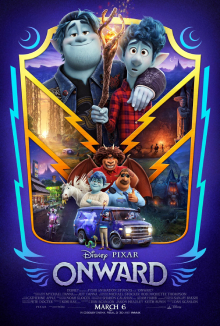
Onward

Set in a suburban fantasy world, Disney/Pixar’s Onward introduces two teenage elf brothers who embark on an extraordinary quest to discover if there is still a little magic left out there in order to bring back their deceased father for one day.

Onward is everything viewers will hope it’ll be with an original and exciting premise supported by mature and heartfelt themes. The movie does an excellent job at world-building and atmosphere; this suburban version of Lord of the Rings is brought to life with so much creativity and we get to see plenty of corners in this new, fascinating world. Tom Holland and Chris Pratt’s roles fit like a glove — their already known personalities wonderfully amplify the characters that felt like they could’ve been written just for these specific performers. The fact that Holland and Pratt have already shared the screen before in Avengers: Infinity War just makes it even more entertaining, but it’s also the writing for Ian and Barley that makes their brotherhood the anchor of the film. Julia Louis-Dreyfus is also great their badass mom, but Octavia Spencer is a standout as the Manticore — a mystical beast who now runs a restaurant and misses the glory days of magic, fighting, and flight. Not only is the character brilliant but Spencer makes the role of a “scary on the outside, soft on the inside” character feel fun and fresh.

Onward is the kind of film where the quality increases as the runtime progresses — the objective is creative and every obstacle, physical or emotional, is exciting to watch and our heroes’ quest never feels dull. Not to mention the plot is more mature than most family-aimed films — even for a Pixar movie. When it comes to down to the true emotion of the film, it lands at all the right moments and manages to craft a realistic representation of sibling-hood and family, even if the main characters happen to be elves. The film is very much mystical yet its roots lies in the real world — it’s based on director Dan Scanlon’s real-life experiences as he lost his father at a young age, meaning it may especially reach viewers who have lost a parent. In my case, this movie did get me emotional but for a much different reason — as an older brother, watching Barley play older brother/mentor to Ian made me reflect on my own experiences with brotherhood (in only positive ways, don’t worry). This is the power of family films — to tell stories about family. While I felt Frozen 2 was lacking of that sort of merit, this proves that may have only been a one-time miss for Disney, and while Onward might not be able to reach Nemo or WALL-E levels of classic — and maybe not better than some of their recent hits like Inside Out and Coco — I can say it’s as great as I was wishing it would be, and certainly has potential to hold up among the rest of Pixar’s library, but only time can tell. Pixar has held a special place in my heart for a reason, and Onward once again proves their strengths in delivering stories that audiences can cherish and grow up with, regardless of age.

Onward poster.jpg

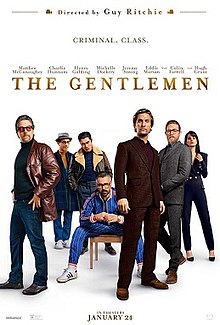
The Gentlemen

After big studio pieces like King Arthur and Aladdin that didn’t quite feel like they belonged to him (although he did make quite a good Sherlock Holmes film with Robert Downey Jr., and The Man from U.N.C.L.E. was arguably fun as well), The Gentlemen is Guy Ritchie at his most untamed and… Guy Ritchie-like. He goes back to doing what he does best — making irreverent, unforgiving British crime with non-stop violence and cursing, playing around with narrative in creative ways and even referencing himself. He celebrates his creative freedom with this film to bring to life a violent, original, and entertaining crime flick that will be embraced by his fans as well as any audience member who’s willing to enjoy this great film for what it is. Matthew McConaughey’s character would be much less lovable in real life than his other roles yet is always a blast to watch, even when he’s a marijuana-obsessed crime lord. Charlie Hunnam is surprisingly the perfect choice to play the classic British crime protagonist in a Guy Ritchie movie and this is far better than his other film roles to date. Older audiences will definitely be attracted by the addition of Hugh Grant, who plays a much shadier role than his typical romantic lead but his continued partnership with Ritchie always works well. However, my favorite part of the cast was Colin Farrell, who is no stranger to this British crime noir subgenre, specifically In Bruges and Seven Psychopaths. These roles always fit Farrell like a shoe so seeing him as a mean but enjoyable criminal again is nothing but fun. The entire cast is strong, with the exception of Jeremy Strong who is awfully miscast as a role that’s supposed to come off as serious and intimidating yet ends up feeling dull and uninteresting in his performance.

From an eye-catching opening and an awesome opening credits sequence, you know The Gentlemen is something special among the action and comedy films Hollywood is used to releasing today. Ritchie definitely steps out of the box, playing around with narrative and characters, like showing you an event and then showing it again from different perspective to fool you as to what may have happened before. He also knows how to make his dialogue incredibly memorable and his characters intriguing, even when their backstories aren’t quite needed. It almost feels reminiscent not only of early Ritchie films like Snatch, but also of early Tarantino like Reservoir Dogs and Pulp Fiction. This movie’s first act can be slow, but once the plot and characters are set up, it all becomes very interesting and unpredictable. Ultimately, The Gentlemen feels like a refreshing reward that we only get every once in a while with a superb cast at their A-game and some truly unique filmmaking that makes for some laugh-out-loud, unapologetic nonstop entertainment — or as Hugh Grant’s character calls it, “beautiful, beautiful cinema!”.

The Gentlemen poster.jpg

Knives Out

When wealthy crime novelist Harlan Thrombey (Christopher Plummer) is found dead on his 85th birthday, his eccentric family is gathered by an equally bizarre detective named Benoit Blanc (Daniel Craig) to solve the case of Harlan’s murder.

When an original project from a respected filmmaker and an incredibly talented cast is released — that’s when I know I’m in for something good. Knives Out has mystery, laughs, and plenty of popular actors quarreling. The cast, including Craig, Chris Evans, Jamie Lee Curtis, Toni Collette, and Michael Shannon, all get a shot to shine, but the film belongs to Ana de Armas. She steals the screen in every one of her moments and is the character you really want to root for. There’s plenty of witty, hilarious, and memorable dialogue from the remarkable Rian Johnson, who also uses some brilliant visual cues for glamour, as well as “a-ha!” moments and even some humor. From the first act, the movie takes a turn away from what you’d normally expect in a “Whodunnit” murder mystery, yet it all makes for an equally creative and thrilling experience. However, I do feel like some revelations were placed too early along the film’s runtime and could have been saved for a few sequences later. Also, while Johnson does present some truly golden moments throughout the film, like the savage, vulgar moments or the more showy, stylish moments, I think the film could’ve overall used a more distinct style, as I know Johnson is of much skill yet a few scenes felt like they could’ve been directed by anyone. Also, perhaps the film could’ve benefited from an R-rating as a few scenes do slightly hold back in terms of language, yet fortunately this is nothing that harms the film. Johnson also goes for some social themes — some so direct and on-the-nose that they feel too obvious and surface-level, and others so subtle and hidden that they require more digging and thought before the true meaning of some of the themes really come to me, but he certainly addresses ideas such as class, race, politics, and the Internet’s influence on Americans.

Ultimately, though, Rian Johnson is able to once again challenge genres and craft unique dialogue while still being able to appeal to mainstream audiences with the incredible cast that help make Knives Out quite the pleasing and interesting experience, appealing to all generations with its call-backs to Agatha Christie’s genres, and cast involving all generations, like Christopher Plummer and Chris Evans, as well as the fast-paced and humorous script that make for a “Whodunnit” like no film has ever “dunnit” before.

Knives Out poster.jpeg

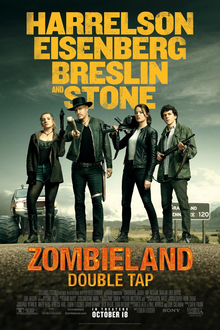
Zombieland: Double Tap

Life in the zombie apocalypse can be quite tough — yet these four know how to make the best of it. The ten-year wait for the sequel to a fan favorite has finally ended, in the too-good-to-be-true reunion of the original cast, who by now have become renowned and award-nominated household names if they weren’t already – Woody Harrelson, Jesse Eisenberg, Emma Stone, and Abigail Breslin. Sony even successfully brought the original writers and director back on board — writers Rhett Reese and Paul Wernick, who have since then found great success with another genre-breaking, beloved series with Deadpool and Deadpool 2 — and director Ruben Fleischer, who even after an awful misstep with whatever the hell Venom was supposed to be, retains the signature taste of what made Zombieland so great. Double Tap is one of those sequels that takes everything the first film does and tries to do it all but bigger, and for the most part the film hits its target quite well. From the opening narration that will already get a few laughs, to a slo-mo opening credits action scene that recalls a montage that opened the predecessor, it’s clear that the heart and unique fun from the first film is back. It’s ideal to watch the first film to thoroughly understand the characters and their relationships, as well as some call-backs, like Harrelson’s character Tallahassee’s signature catchphrases, as well as a joke about a famous celebrity’s unfortunate demise as depicted in the first film. However, Zombieland: Double Tap can still stand on its own for general audiences searching for a violent action comedy that doesn’t hold back.

While not as iconic as he was when he first played the role, Woody Harrelson is still delightful as the badass Tallahassee who since the first film has grown to love his new family but still is the unrestrained, hilarious zombie-killer who loves Elvis and his guns, and takes annoyance towards car designs and pacifism. Eisenberg is also once again solid as Columbus, even though sometimes his narration gets a bit too explanatory or excessive, and his character arc feels slightly questionable at times when it comes to his love interests, and Stone is also charming and great again, though it’s hard today not to compare to her superior performances like La La Land and The Favourite. And while Breslin is still decent, it’s slightly disappointing to see her character separated from the rest of the gang for part of the film so we don’t get to see as much chemistry from the main four. Rosario Dawson and Zoey Deutch are surprisingly terrific additions to the cast who both have plenty of energy and also have great chemistry with the leads. While the film mostly keeps that signature fun the first film had, there’s one action scene that felt poorly shot, with too many cuts and shaky cam. However, this is redeemed by a later long-take action scene that’s quite enjoyable and creative. Also, the humor does sometimes get routine and predictable, but there are still a fair share of laugh-out-loud moments. Overall, the movie doesn’t feel as fresh as the original considering how many films have tried to do similar, and the story doesn’t have the same natural flow, but there’s still plenty to commend here, including an exciting final battle. Ultimately, Zombieland: Double Tap is a worthy sequel, and although some moments are rushed and other comedic moments don’t feel top-tier, the over-the-top violence and dialogue and the ultimate execution of the film including the cast and story, that’s set in a violent apocalyptic world yet still makes you smile and think about themes like family, is what makes it feel worthy of your time and money, so follow Columbus’ list of rules and enjoy the little things by going to enjoy Zombieland: Double Tap on the big screen.

Zombieland Double Tap teaser poster.jpg

Hustlers

A group of strippers learn to cheat their way into wealth by luring greedy, wealthy Wall street clients and drugging them into spending all their money at their club, in a desperate attempt to take their lives back after the 2008 economic collapse cuts into their profits.

What could’ve easily been a laughable, terrible misfire instead shines at the hands of its two leads and an engaging screenplay boasted by a vibrant style. Jennifer Lopez sticks out as the “mentor” of the gang who I’ve never seen with this much depth on the screen. Lopez’s energy and her chemistry with Constance Wu make the film, with Wu’s turn here being grounded, layered, and far above her work in Crazy Rich Asians. The casting also brings back names that haven’t been prominent on screen before — I was afraid Julia Stiles’ career had died with her Jason Bourne character, and Keke Palmer was last notably seen ten years ago on in her True Jackson role on Nickelodeon, which not many remember either. Lili Reinhart also hasn’t really had a known big-screen role before and was only popular before for her leading role on the teen series Riverdale. One cast member, however, that I was glad we didn’t see a lot of was Cardi B, whose irritating, unbearable presence is only around for one scene, almost as if the studio forced the writers to put her in just to gain more audiences. However the rest of the cast proves you don’t need more than one or two popular names to attract audiences for this kind of concept. The script often hits the same notes as every other scam film, like The Wolf of Wall Street, Catch Me if You Can, War Dogs, Can You Ever Forgive Me?, and so on — so it’s not hard to see where the movie will end. But it’s the seemingly ridiculous/over-the-top yet true concept, and the sisterly connection between the two leads, that make Hustlers worthwhile. The flashy, fast-paced style sometimes makes for some strong energy but it also leads to some parts being rushed past or feel undermined, like some scenes that include music in the background that would’ve worked better without the background score. There’s also some inconsistencies in the style, with some distracting handheld cam that thankfully calms down as the film goes. Also, though the film is quite funny, the writers choose to play it safe in the first act with mostly sex jokes or physical humor (“character who throws up often” cliche, characters getting drugged and passing out, etc. I was glad things got especially crazed in the second half where the plot is very engaging and sticks the landing towards the end. Hustlers can be viewed both through the lens of a comedy and a drama, andwhile it soars but occasionally stumbles at both, it’s got a spark of intrigue and excitement at its core that it makes it, while not a must-watch, stand out above other big genre players out right now like Hobbs and Shaw or It Chapter Two.

Hustlers (Official Film Poster).png

Blinded by the Light

In England in 1987, a teenager from a Pakistani family named Javed aspires to be a writer but feels learns to live his life, understand his family and find his own voice through the music of American rock star Bruce Springsteen.

Blinded by the Light is an urgently needed breath of fresh air from all the big franchise films studios tend to release, so the fact that Warner Bros. picked this film out from Sundance to distribute in a wide release really means a lot. Without much exaggeration or many large Hollywood names, Blinded by the Light has a slightly familiar formula but remains a grounded, touching human story that’s inspiring in just about every way. If I had to describe it in some way, it feels like Yesterday meets Sing Street meets Bend it Like Beckham. It ‘s not only entertaining, funny, and uplifting, but also takes themes such as racial tensions and applies it to a creative and fascinating premise, elevated by a strong cast all around, that doesn’t include many known actors although I’m sure they all will be one day with the talent they deliver here — the one face some viewers may recognize is Captain America‘s Haley Atwell does have a memorable supporting role. But this movie isn’t about seeing the big stars, or the big visual effects, or Oscar worthy acting. This is a film you go to not just to enjoy but to also learn about the importance of passion, dreams, dedication and hard work, but also about family, love, and the bonds that make us who we are. While most these kinds of movies are about following your dreams even when everyone is doubting you or bringing you down, this movie emphasizes pursuing your passion but above that embracing your family and the ones closest to you even when it seems like they’re bringing you down. The great takeaway is that power of dreams, passion, and talent don’t mean the same without familial bonds and togetherness. The movie is also able to add some strong themes about the hardships especially faced by minorities, when the “American dream” seems even more out of reach for this poor immigrant family facing racism, which also connects to today’s time with Islamophobia being a prominent topic in the news. This adds a whole extra layer to the film and makes the themes about dreams and finding your voice even more meaningful. But don’t worry — there’s also lots of humor, musical numbers, and overall positive themes that allow us to have fun while also reflecting on the impact of pop culture on the individual the way Yesterday did. Although it’s currently not shining at the box office, I feel like this is the kind of film that will grow on people over the years and more people will come to watch and love it later on, even if the blockbuster-filled climate of modern cinema prevents audiences from choosing to see it on the big screen. But it’s universal themes will certainly reach out to audiences of all ages and backgrounds — whether or not you’re a fan of The Boss.

Blinded by the Light Movie Poster

Fast & Furious Presents: Hobbs & Shaw

Frenemies Luke Hobbs and Deckard Shaw must reteam two years after The Fate of the Furious in order to stop a genetically enhanced criminal mastermind from unleashing a deadly virus onto humanity.

I’m normally quite an admirer of this franchise; their storylines aren’t always amazing but they’re ridiculously fun and something that I can’t miss on the big screen. These kinds of huge action movies bring audiences together and normally put a smile on my face. So while I wasn’t expected to be moved by Hobbs & Shaw or see something particularly unique, I was at least expecting more than what I ended up getting. Fast & Furious Presents: Hobbs & Shaw lacks the energy and personality that makes this series exciting and memorable. Fast & Furious is about people using cars to pull of unbelievable stunts and going on impossible missions. Meanwhile, Hobbs & Shaw is just another action movie. Is The Fate of the Furious necessarily a great movie with masterclass choreography or some sort of strong message? No. But what makes these movies work so well for what they are is moments like Dwayne Johnson pushing a torpedo with his bare hands or Vin Diesel flying his car through different skyscrapers in Furious 7 that allow the past movies to indulge in the ridiculousness that it is and find merit through crazy popcorn action and likable characters and dialogue. Nothing about the action in this movie has any of that personality that makes the rest of the series’ action, while ridiculous, ultimately entertaining. It’s only in the climactic final battle where the movie allows itself to up the ante, get over-the-top, and actually have somewhat lively fight scenes. The cinematography and editing are also sometimes poor and either too choppy or just not consistent or interesting. The humor, despite some good moments, also falls flat many times and gets tiring. Dwayne Johnson still breathes light and liveliness into his role but after a while him and Jason Statham roasting each other gets old. Also, they made amends at the end of the last film so it’s not even clear why they still hate each other. Another thing that really bugged me is the villain, played by Idris Elba. His character is nonsensical and laughable (I mean you can expect that from this series but can we also ask for a villain that isn’t so absurd you want to laugh at it?). I mean, that’s what this movie is, absurd, and that’s what its supposed to be. But the movie tries to make Elba’s character deep and motivated but it really is hard when his evil organization feels like something out of a bad Ninja Turtles show. His purpose is questionable and his motive is nearly the same as another big villain this year from the film Avengers: Endgame. His antagonist was probably even as bad as Charlize Theron’s character in the last movie. Fortunately, the movie does make up for it with some awesome and unexpected celebrity cameos that are perfectly utilized.

I’m a fan of David Leitch’s directing for Deadpool 2, as well as some spectacular action for an otherwise mediocre debut film Atomic Blonde, and while sometimes the lighting and settings are well selected, the action feels either too quickly edited so it’s hard to take in what’s happening, or just too dull and boringly choreographed. Like I said, Hobbs & Shaw‘s action lacks personality so it feels like this could’ve been out of any standard spy action film worth passing over. The plot has a somewhat cool device involving a virus, but really nothing interesting is done with the story until Hobbs is forced to confront his past and his family in Samoa. The scenes where we see Hobbs’ family and culture being embraced are some of the best parts of the film story-wise, and every other attempt to craft a compelling story fails and there are some lines that don’t really belong. Like I said, I’m not looking for an incredible script with these movies, but at least the past movies were able to make their themes of family and friendship work. Hobbs & Shaw aims for this but it only really lands towards the end, like I said. It feels like writer Chris Morgan, who has worked on this franchise for seven films, has started to lose grip on how to make effective humor and conflict to craft a truly worthwhile blockbuster like he has several times before. When the final act utilizes a unique setting and culture, it becomes amusing, but Hobbs & Shaw unfortunately takes many of the wrong things too seriously and when it does go for comedy, it sometimes doesn’t hit the mark. There’s also a very forced hinting at a romance that thankfully never happens but the writers felt they had to push it into there just to check off a studio box. There’s also an ending that’s pretty abrupt and for some reason the movie decides to tell its entire epilogue through the credits. Believe me, Fast & Furious Presents: Hobbs & Shaw is quite ridiculous, but it doesn’t succeed in having that personality that makes everyone enjoy the hell out of this franchise, and lacks that energy that got me pumped while watching Fast 5, 6, 7, and 8. Instead this movie feels tiring and doesn’t allow the audience to indulge in the lack of believability, instead it takes the plot too seriously and the humorous banter doesn’t always succeed either. Perhaps this movie would’ve worked better if it was marketed as some sort of parody rather than a real spin-off to a franchise I’ve had better times with. I’m glad next time we’re getting a different director and writer, and some more of Dom, Roman, and Tej. If you want to watch an action comedy where Dwayne Johnson fights people, well, this movie has that. But what I was also hoping for was that spark of energy and exhilaration that has always made the absolute insanity of the Fast & Furious franchise worth it.

Fast & Furious Presents Hobbs & Shaw - theatrical poster.jpg

Once Upon a Time in Hollywood

In the golden age of Hollywood in the late 1960s, actor Rick Dalton and his stunt double Cliff Booth seek to breathe new light into their careers in an ever-changing industry, while a dangerous cult led by the infamous Charles Manson plans to strike at the heart of Hollywood.

By simply putting the name “Quentin Tarantino” on a film poster, your film is guaranteed to generate excitement and audiences. As a huge fan, I’ve seen all his filmography and wouldn’t say he’s made a bad film yet. Once Upon a Time in Hollywood is both the least like Tarantino’s other films, but also the most Tarantino-y of them all. It has less violence than his past movies but it’s also identifiable as a film of his because nobody has more of an attachment to old cinema than Tarantino. Firstly, Leonardo DiCaprio is excellent in his welcomed first role in over three years as an actor trying to revitalize his career and pushing himself to become the best. Brad Pitt is a standout as one of his best characters in years, a hilarious and skilled stuntsman who does questionable things but also takes on challenges head-on and just loves to drive. And did I mention the dialogue for his character is incredible? There’s also plenty of Tarantino frequents like Kurt Russell and Michael Madsen as well as other famous actors such as Al Pacino, Damian Lewis, and the late Luke Perry. Margot Robbie’s presence as Sharon Tate has lots of energy and is fun to watch although her character plays a rather minor part in the story.

Tarantino writes many entertaining scenes with funny dialogue as well as a great soundtrack, with outstanding production design and strong cinematography to support the film. However, there are some scenes that unfortunately drag, like an extended scene involving the filming of a fictional movie that’s only there to build up one great moment at the end, and a long scene in the desert that has some tension — until it leads nowhere. The movie is 161 minutes but it doesn’t feel like there’s much of a storyline — I don’t expect a linear narrative or formidable character development when it comes to Tarantino, but it ultimately does feel like too little stretched too thin, unlike Inglorious Basterds and Pulp Fiction where the all-over-the-place stories and long sequences actually led to more going on with something rewarding and unpredictable happening. The real reward here comes at the very end — the climax of the film is pure Tarantino. Violence, laughs, and pure insanity and entertainment make one of the best film sequences of the year — I just wish there was a little more of an interesting buildup to make the rest more rewatchable as well. Tarantino does an excellent job with world-building, and a phenomenal job directing and adding eye-catching production. However, I was surprised when the movie ended because sometimes it felt like he relied on witty dialogue and awesome world-building than plot. There are some very entertaining sequences but some of the long runtime is wasted on scenes that go on too long or weird conversations like an underage girl trying to make it work with a much older man.

Once Upon a Time in Hollywood is a love letter to the golden age of cinema. It has fascinating direction like always, with so much passion from Tarantino who takes an unorthodox approach to writing a screenplay like no other modern film, and delivers with extremely memorable characters and dialogue. However, some scenes feel a bit stretched or don’t serve much of a point to the overall idea of the film and there could’ve been a bit more to make the film feel worthy of its long runtime, though there’s an awesome and fulfilling climactic final scene that’s Tarantino at his best. It may be one of his lesser films to me but it’s still worth going to see because there’s enough originality and style to make it interesting, even though some scenes don’t have strong pacing or merit like the genius filmmakers’ other masterpieces which felt more worthy of their extended lengths.