Zootopia 2 expands on its titular setting in ways that contrary to many big sequel, feel natural to the world of its story and quite visually intriguing. Though it can’t recapture the magic of Zootopia (to be fair, almost no animated movie can), this sequel is engaging, charming, and incredibly funny, despite a rushed start. Ginnifer Goodwin and Jason Bateman contribute to the great, if rocky, dynamic duo that is Judy Hopps and Nick Wilde, now partners on the Zootopia police force and looking to do some good together. Though at first it feels like Nick has unlearned much of what he learned in the first film, we soon come to understand his motivations and where their friendship goes is very heartfelt and excellently written. Fortune Feimster, Ke Huy Quan, and Andy Samberg stand out the most as new characters in the mix, particularly Feimster as a lovable new ally of the duo.
The film may miss the thematic weight of the first film, but still has an interesting, if unsubtle, message that parents can grasp onto profoundly and discuss with their children. It does rely overly on reference and callbacks to the first film for laughs, but also is its own film when it needs to be, with engaging settings and a conflict that starts off predictable but gets more and more fun. Even if it’s a significant step down from its predecessor, it’s got fun for all ages and a ride that was worth the wait.
Wicked: For Good‘s rushed pacing feels like quite a whiplash from the slow burn of the first film that allowed its story to breathe much more, but it’s still a big, loud, and rewarding musical experience. The events are moving at such a fast pace that if you think about it too much, it starts to fall apart. The cinematography and editing don’t get that same patience that made the execution in the first movie so beautiful. The first act of For Good does feel a bit like its embracing the spectacle more than the soul, and if Part I felt more like its stage musical adaptation roots, this movie is the big fantasy action blockbuster. That said, it rises up to the challenge with truly great visual effects and breathtaking production design. The musical numbers are no less impressive, and the film’s heart is strong, and the chemistry between its two leads is electric.
Cynthia Erivo is again astounding and contributes to some of the film’s most awe-inspiring moments, while Ariana Grande is even better than she was in the first film. Glinda’s selfishness isn’t justified, but her softness and journey towards goodness make her so interesting to watch, even if it’s more thanks to Grande’s performance than where the script takes her. Jonathan Bailey also shines in one of the film’s most complex portrayals. There are some true show-stoppers in the soundtrack thanks to magnificent work from Erivo, Grande, and Jeff Goldblum. The music, vocals, and sets come together for some incredible musical moments that culminate the film’s emotion in great catharsis. It also very much enriches the story of the original Wizard of Oz in many creative and unexpected ways.
Wicked: For Good isn’t as subtle or as earth-shattering for the musical film genre as its predecessor, but the direction is still so lively and the spectacle is so, well, spectacular, that it’s an exciting and rewarding experience for film and theater fans alike. Together with the first film, it not only reignites but expands on and gives new life to a cultural moment like no other, and a trip to Oz that you have to see on a big screen.
Elio is an young boy living with his aunt, who’s obsessed with the extraterrestrial and making contact with him. One day, the lonely titular boy gets his wish and finds the fate of the galaxy in his hands.
Pixar’s newest animated film is incredibly easy for families to enjoy and even find meaningful connections to, though its far from the impactful experience we’re used to from the studio. Best of all, it focuses on acceptance, self-esteem, and finding your way through loneliness and feelings of not fitting in. Zoe Saldaña, Brad Garrett, and Jameela Jamil all give entertaining performances, and the look of many scenes are colorful and gorgeous — from diverse alien species to their suits and intricately designed spaceships.
Audiences may connect to Elio’s strive to be accepted by others, and at its core is a sweet relationship between him and his aunt that feels like the film’s true heart. However, despite some entertaining humor throughout, it takes until the third act for the story’s drive to really feel exciting at all. It’s probably not the best or most original film about its themes, but also has a whimsical charm, great visuals, and a look and feel that will definitely entertain more than just the youngsters, and give some strong material for positive discussion among families about acceptance.
Out of all the live-action remakes of animated films to be released in the last few years, How to Train Your Dragon is the one that sounded too soon, and too perfect to touch more than any of the others. However, it winds up standing out among many of the other remakes that come to mind. Director Dean DeBlois sets out to retell the story of Berk and its vikings and dragons in realistic glory, but also sticks so closely to his original film’s visual palette that there almost isn’t anything new here. Large amounts of dialogue, if not the entire script, are also beat for beat exactly the same, so if you remember the original film quite well, it’s like watching a film you’ve already seen be enhanced and remastered. Though the first film is so wonderful that it doesn’t leave much need for improvements, making a new film should be justified by making some changes and additions to the story, not to mention much from the source material that the film was based on that we haven’t yet seen.
Mason Thames manages to make the role of Hiccup his own, while Gerard Butler is a standout reprising his role as Stoick from the animated trilogy. His hard exterior and brutal attitude towards dragons that develops from his fear and desire to protect his son and tribe are prominent. The production design and CGI effects work very well to form engaging action scenes — even if it takes a lot of getting used to that Toothless looks the exact same as he did in the animated version but is now interacting with live-action settings. Nico Parker is wonderful as Astrid, and her bond with Hiccup also stands out, particularly his earning of her trust. The supporting teen characters unfortunately feel like they’re doing imitations of their previous version, though Nick Frost entertains as Gobber.
Some scenes manage to carry the beauty over into this version, including Hiccup and Toothless’ initial bonding, and the former’s romantic flight with Astrid. Still, you’re sometimes left to wonder why it wouldn’t have hurt to change some more lines or backdrops, or even some add in some new story beats when you’re making a new film, after all. The real magic here that holds it all together is John Powell’s score. His themes enrich the world and the tone when they could’ve lacked in this new iteration otherwise. The movie’s insistence on staying so close that numerous scenes are a shot-for-shot copy and paste can frustrate, but its lack of originality doesn’t fully take away from the heart and vibrance that’s still here, even if in a lower capacity. For those discovering the story for the first time, though, it will certainly deliver with its themes of empathy and teamwork.
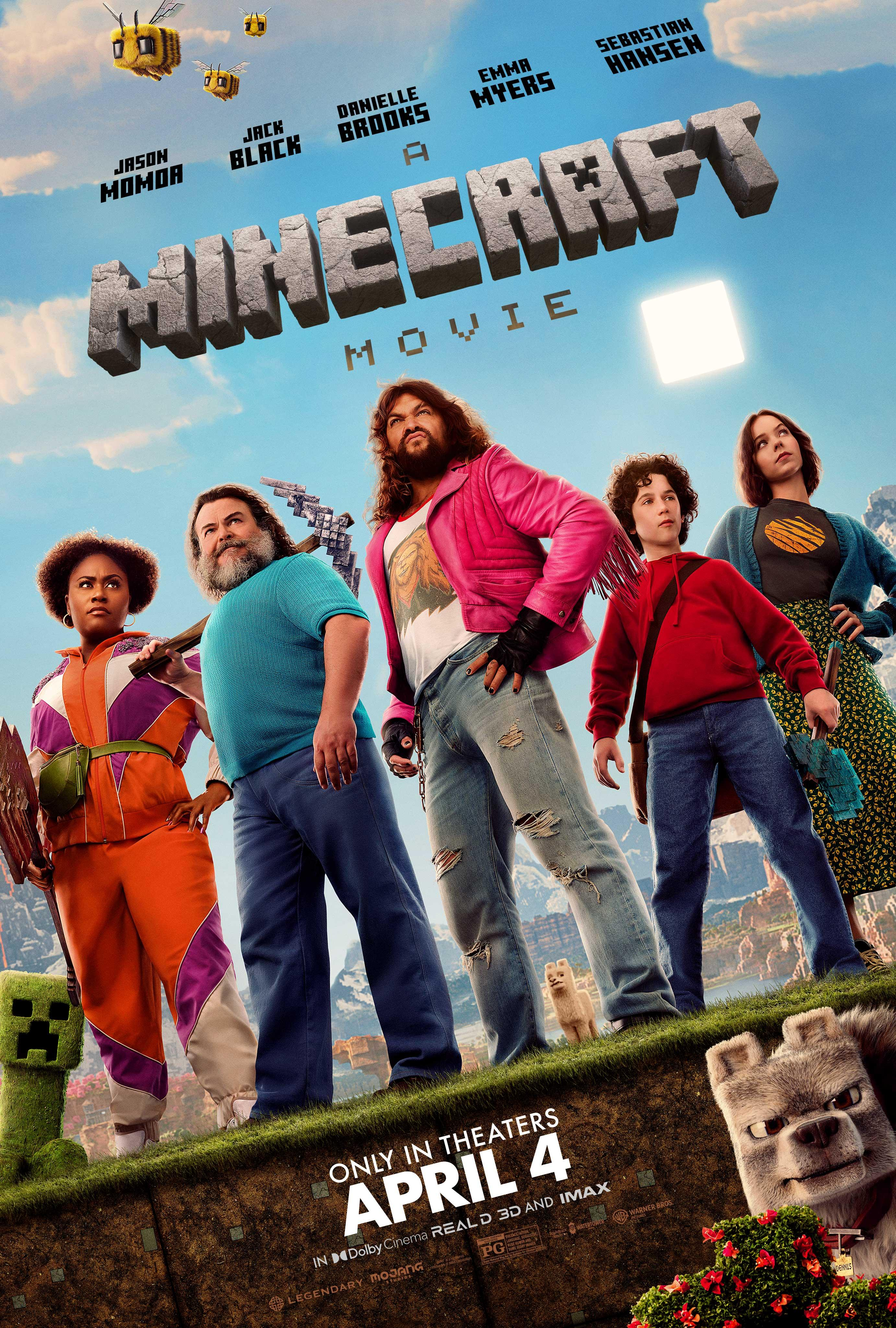
A Minecraft Movie may prove a treat for younger audiences and fans of the beloved game. It’s got charm, thanks to its main stars, particularly Jack Black. He gleefully gives his playful and extravagant energy to Steve, even throwing in his musical comedy talents. Jason Momoa entertains but his dialogue threatens to miss almost as much as it’ll make you laugh. Danielle Brooks is splendid as a very unexpected companion on this journey, and gives the runtime lots of heart. Emma Myers does a solid job playing an unlikely heroic character, whose storyline with her brother avoids some cliches while falling head first into others.
Though this is a Minecraft movie first, director Jared Hess’ love for misfits and outcasts is written all over the film. What brings the film down is the aesthetic, that fails to get you to suspend your disbelief strongly enough to overlook the unconvincing green screen and weirdly uncanny CGI of some of the Minecraft characters/species. The live-action parts carry the film well if you ignore some of the backdrops, but sometimes you’ll wish that the scenes inside the Overworld were completely animated. It also doesn’t help that the idea of an unlikely team of social outsiders from the real world trying to navigate a fantastical world they’ve been suddenly pulled into is nothing new. Even the Jumanji films, also starring Black, had much more to offer the formula.
Still, the film has just enough charm to delight children and families, embracing the essence of the game with a positive message about creativity. And Black proves that he’ll continue to entertain generations of viewers with his ability to let loose. It’s a film that embraces exactly what it is, even if when you think about the film or look too long at the visual details, the building blocks starts to fall apart.
Some remakes get a chance to breathe new life into their stories and worlds, while others, like Disney’s new Snow White, feel like a film from 90 years ago was frozen in carbonate for decades and then unnecessarily turned into a different medium. In this case, Snow White feels like 30% that, while the other 70% feels like sprinkles of modern flare that feels out of place. Oscar winners Benj Pasek and Justin Paul add songs that feel to derivative and cliche, hitting all the same “Welcome to our lovely kingdom”, “I want a better life”, “Look how evil I am”, and “Maybe we’re attracted to each other” beats that are in nearly every other musical. In some instances, the songs even sound too much like the duo’s Dear Evan Hansen soundtrack.
Rachel Zegler tries her best to entertain in a sweet but one-dimensional role elevated by her charisma and strong singing voice. However, all the other elements around her distract, including the unconvincing and at times hideous CGI of the animals, surroundings, and let’s not even talk about those dwarves, who seem almost nightmarish. But a painfully glaring weak link is the miscasting of Gal Gadot as the Evil Queen. Her line delivery feels unnatural, and the character just gets more irritating as the film goes along.
Most sadly, Snow White is inconsistent and deeply hollow as a film. It has almost no charm that feels organic, and can’t decide between elements that feel nostalgic or new, like the very modern-sounding soundtrack. Nothing of importance is ever quite explained or given meaning to, things just happen because the point that we’ve gotten in the story needs that thing to happen. For younger children, being unconditionally kind is an important message, but even Disney has delivered this theme in a way that’s so much more tangible and heartfelt; take even their live-action 2015 Cinderella remake for example. This remake doesn’t expand on or reinvigorate its source material, simply morphs it into weird images that look colorful but never have any real sense of life.
Rafiki tells Simba and Nala’s daughter Kiara the story of her grandfather Mufasa, the once king of Pride Rock, and his upbringing with his brother Scar.
Mufasa boasts a beautiful cinematic experience that’s best experienced in 3D. The visuals are transporting with their photorealism and colorful sceneries of the wild world, and get to develop new settings without behind held back by recreating scenes from another movie the way 2019’s The Lion King was. That alone warrants the theatrical experience here, and not much else. Though Mufasa isn’t remaking another beloved movie anymore, it’s still restrained by the same lack of characterization that made the photorealistic animals feel emotionally distant in its predecessor. The animals can’t quite emote like they can in other animated films, and this creates a tonal dissonance between what the original 1994 film set for the franchise and the photoreal road the filmmakers are going down now. Aaron Pierre’s gravitas gives Mufasa just the right profundity, but Kelvin Harrison Jr., who’s a wonderful actor, feels rather miscast as Scar, a character who feels inconsistent both performance and character-wise. The problem with the rest of the characters is that save for Mads Mikkelsen’s villain, who’s basically Scar from the original minus the intrigue, everyone is a younger version of a Lion King character, and are stuck doing impersonations of the actors that came before them. There feels like there is nothing to discover emotionally, and the backstory behind the characters doesn’t really enrich what came before rather than just filling in some logistical gaps, all of which form a very cliche story. Not to mention, Billy Eichner and Seth Rogen as Timon and Pumbaa’s gags have been done to death and annoy more than they charm.
Though this one isn’t following the same story of another film beat for beat the way The Lion King was, that movie at least had the advantage of inheriting phenomenal songs from the original film. Lin-Manuel Miranda’s music here is incredibly lacking, with every song feeling derivative of a song from its predecessor, or even more recent Disney films. The worst part is, despite some of the action being visually stunning, the musical sequences are weakened because of a lack of connection to the animal characters who are less animated when they’re made to look real. If this made the 2019 film feel cold to you, this one won’t feel any more energetic. The film opens with a powerful tribute to James Earl Jones, the original voice of Mufasa — the fact that that’s the most (and maybe only) emotionally touching part of the film is very telling. Despite stunning visuals, including some beautiful sequences of the animals in the snow, Mufasa doesn’t offer much originality from a thematic, character, or musical point of view, and everything underneath the breathtaking aesthetic is easy to forget after watching.
Moana and her people have now rightfully reclaimed their place in history as wayfinders who sail the ocean in search of exploration. One day, Moana receives a call from her ancestors to embark with an unexpected crew across dangerous waters, and reteam with her old friend, demigod Maui, for their most challenging and important quest yet.
The first Moana remains an unforgettable and impactful film among Disney’s recent animated films. This sequel retains everything that made that first film look so gorgeous, and builds on the dynamic colors of the ocean and its mystical findings. The transformative magic of watching the first film, though, is missing in this sequel that can’t quite justify its existence. Moana doesn’t feel like a film that has sequel potential built into it, as opposed to even other Disney sequels like Frozen II and Inside Out 2. Watching the sequel unfortunately didn’t convince me otherwise. Though its still charming and has some fun to be experienced, it’s basically retreading the same beats from the first film.
Auli’i Cravalho proves again why she’s earned the spotlight in her wonderful voice performance as the titular character, but Moana lacks any actual internal conflict this time around — there’s even an opening song all about how she’s finally become who she’s supposed to me, and the movie never ends up convincing us that she does need to change and grow, just to remember who she’s already become. Speaking of the songs, there are only two that manage to stand out at all, “Beyond” and “Can I Get a Chee Hoo?”, but even those are stuck in the shadow of the overly similar — and far more original — “How Far I’ll Go” and “You’re Welcome” from the first film. There are a few laughs and solid new characters, including Moana’s trio of new voyagers and companions, and an unexpected antagonist. However, the key piece that’s missing from Moana 2 is any sort of feeling that something is at stake here — what happens to Moana’s people, the ocean, or even her own internal journey if they fail this mission? What does Moana have to learn here, now that she’s embraced who she needs to be and discovered her destiny? The answers to these questions are unfortunately insufficient and affect the excitement levels older audiences may feel watching it.
Moana 2 is colorful and has its share of sweet moments (it certainly has way more soul than Strange World and Wish), but most of what works about it is drawn from the first film, including its beautiful depiction of the ocean, tributes to Polynesian culture, and lovely characters. Rehashing the incredible themes, numbers, and world-building doesn’t work, though, without the same spark of originality and wonder that made us never forget Moana. Whether you’re going in expecting a serviceable adventure aimed towards younger audiences or just unsure why this movie needed a sequel, Moana 2 is unlikely to change your mind.
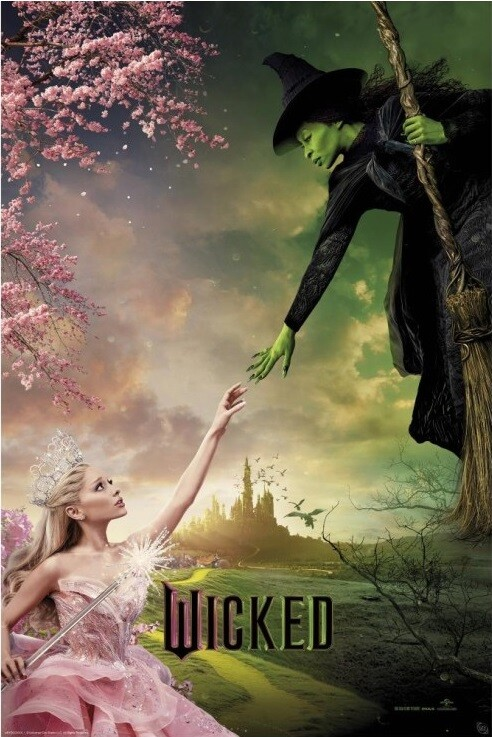
Wicked tells the story of Oz in a new light, as we meet Elphaba and Glinda in their early years of sorcery, who eventually become the Wicked Witch and the Good Witch, respectively.
Few stage-to-musical adaptations in recent memory capture the excitement of being there with the actors on a production filled with song and dance like this one. Despite its title, Wicked is one big burst of joy, led by the spectacular Cynthia Erivo, who makes the material, and the mere art of musical theater itself, feel like they were made for her. Erivo’s enchanting voice is moving and never quite lets go of the audience, rather you’ll be begging for more of her songs. Ariana Grande plays into type well as Galdina, who starts of as quite the narcissist, but the characterizations of both her and Elphaba soon become more complicated in a way that feels genuine and touching. Michelle Yeoh is also wonderful, and Jonathan Bailey and Jeff Goldblum are delightful. But it’s not one element that makes the movie works: it’s the beautiful costumes and sets, put together with the music and story, brought to life by these talents. The songs might have not worked without the incredible musical numbers and dance sequences, but Jon M. Chu steps up to the responsibility of bringing out the best of this bombastic fantasy tale. It also deeply humanizes an infamous movie villain in a way that feels natural and oddly grounded, with themes that may connect with audiences.
As this is only the first part of the two-film adaptation of the musical, the pace dives deep into unexpected subplots, and though this approach threatens to deem the split unnecessary, it ends up fleshing out its world in a rewarding way, making the runtime worth it, and leaving audiences with much anticipation for the next film. Wicked is a cinematic experience with exciting musical numbers, an incredible leading performance from Erivo, and mesmerizing execution that’s a must for both fans and non-fans. It’s hard to believe there’s so much more to come, though where you’re left here in Elphaba and Glinda’s journey is still an astounding and gratifying moment.
ROZZUM unit 7134, or “Roz” for short, is an intelligent robot who finds herself shipwrecked on an island, where she learns to coexist with the animals living there and becomes the adopted parent of an orphaned baby goose, all as the rest of robot-kind awaits her return.
The Wild Robot breathes new life into themes we’ve explored plenty in animated films. The animation is absolutely gorgeous; the storybook-esque coloring that DreamWorks also embraced with Puss in Boots: The Last Wish makes the forest Roz explores look stunning, and makes room for creative liberties with some of the coloring — overly red fires look beautiful in the night sky, and water looks absolutely magnificent. The movie isn’t overly concerned with shoving in action sequences for the sake of youngsters’ attention, nor does it feel pressed to pace itself quicker; the time jumps and lower stakes often benefit the film. Lupita Nyong’o was likely the only person who could’ve voiced Roz with such audacious surprise and innocent gentleness, capturing her eagerness to help, learn, and soon, live the way she wants with and for whom she wants. Pedro Pascal, Kit Connor, Mark Hamill, and Catherine O’Hara round out the great batch of animal voices, though Stephanie Hsu especially kills it as an antagonist.
Though there are moments earlier in The Wild Robot where the animal chase scenes may feel more child-aimed, the movie wisely strips its themes down to the core, about difference and found family, and of course, kindness, to feel fresh and fascinating even compared to many other animated films that have been about the exact same thing. It’s a film that’s sure to touch as much as it will entertain, and the visual and emotional experience of the film together will resonate with all ages. Is it DreamWorks’ best film since the How To Train Your Dragon movies? Perhaps, but it’s also sure to stand the test of time as strongly as some of their greatest classics.