Moana 2

Moana and her people have now rightfully reclaimed their place in history as wayfinders who sail the ocean in search of exploration. One day, Moana receives a call from her ancestors to embark with an unexpected crew across dangerous waters, and reteam with her old friend, demigod Maui, for their most challenging and important quest yet.

The first Moana remains an unforgettable and impactful film among Disney’s recent animated films. This sequel retains everything that made that first film look so gorgeous, and builds on the dynamic colors of the ocean and its mystical findings. The transformative magic of watching the first film, though, is missing in this sequel that can’t quite justify its existence. Moana doesn’t feel like a film that has sequel potential built into it, as opposed to even other Disney sequels like Frozen II and Inside Out 2. Watching the sequel unfortunately didn’t convince me otherwise. Though its still charming and has some fun to be experienced, it’s basically retreading the same beats from the first film.

Auli’i Cravalho proves again why she’s earned the spotlight in her wonderful voice performance as the titular character, but Moana lacks any actual internal conflict this time around — there’s even an opening song all about how she’s finally become who she’s supposed to me, and the movie never ends up convincing us that she does need to change and grow, just to remember who she’s already become. Speaking of the songs, there are only two that manage to stand out at all, “Beyond” and “Can I Get a Chee Hoo?”, but even those are stuck in the shadow of the overly similar — and far more original — “How Far I’ll Go” and “You’re Welcome” from the first film. There are a few laughs and solid new characters, including Moana’s trio of new voyagers and companions, and an unexpected antagonist. However, the key piece that’s missing from Moana 2 is any sort of feeling that something is at stake here — what happens to Moana’s people, the ocean, or even her own internal journey if they fail this mission? What does Moana have to learn here, now that she’s embraced who she needs to be and discovered her destiny? The answers to these questions are unfortunately insufficient and affect the excitement levels older audiences may feel watching it.

Moana 2 is colorful and has its share of sweet moments (it certainly has way more soul than Strange World and Wish), but most of what works about it is drawn from the first film, including its beautiful depiction of the ocean, tributes to Polynesian culture, and lovely characters. Rehashing the incredible themes, numbers, and world-building doesn’t work, though, without the same spark of originality and wonder that made us never forget Moana. Whether you’re going in expecting a serviceable adventure aimed towards younger audiences or just unsure why this movie needed a sequel, Moana 2 is unlikely to change your mind.

Wicked

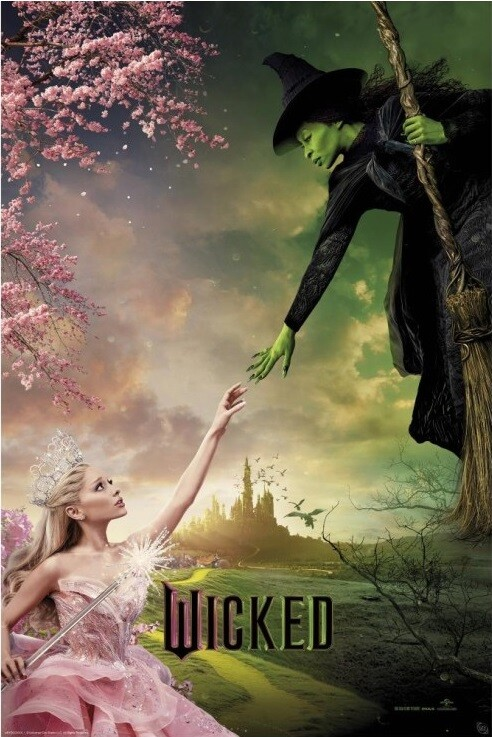
Wicked tells the story of Oz in a new light, as we meet Elphaba and Glinda in their early years of sorcery, who eventually become the Wicked Witch and the Good Witch, respectively.

Few stage-to-musical adaptations in recent memory capture the excitement of being there with the actors on a production filled with song and dance like this one. Despite its title, Wicked is one big burst of joy, led by the spectacular Cynthia Erivo, who makes the material, and the mere art of musical theater itself, feel like they were made for her. Erivo’s enchanting voice is moving and never quite lets go of the audience, rather you’ll be begging for more of her songs. Ariana Grande plays into type well as Galdina, who starts of as quite the narcissist, but the characterizations of both her and Elphaba soon become more complicated in a way that feels genuine and touching. Michelle Yeoh is also wonderful, and Jonathan Bailey and Jeff Goldblum are delightful. But it’s not one element that makes the movie works: it’s the beautiful costumes and sets, put together with the music and story, brought to life by these talents. The songs might have not worked without the incredible musical numbers and dance sequences, but Jon M. Chu steps up to the responsibility of bringing out the best of this bombastic fantasy tale. It also deeply humanizes an infamous movie villain in a way that feels natural and oddly grounded, with themes that may connect with audiences.

As this is only the first part of the two-film adaptation of the musical, the pace dives deep into unexpected subplots, and though this approach threatens to deem the split unnecessary, it ends up fleshing out its world in a rewarding way, making the runtime worth it, and leaving audiences with much anticipation for the next film. Wicked is a cinematic experience with exciting musical numbers, an incredible leading performance from Erivo, and mesmerizing execution that’s a must for both fans and non-fans. It’s hard to believe there’s so much more to come, though where you’re left here in Elphaba and Glinda’s journey is still an astounding and gratifying moment.

Megalopolis

Megalopolis is the ambitious new epic fantasy/sci-fi drama from cinema legend Francis Ford Coppola. In the city of New Rome, Julia Cicero (Nathalie Emmanuel) is torn between the ideas and loyalties of architect Cesar Catalina (Adam Driver), who sets out to reinvent the NYC-esque city entirely into a utopia of his imagining, and her father (Giancarlo Esposito), the mayor who wants to keep things as they are.

Megalopolis sets out to be the most ambitious movie meant for a large screen in ages, with outrageous ideas coming at us straight from Coppola’s mind (and pockets, too). Unfortunately, shooting for the moon doesn’t land Megalopolis among the stars, more so the dirt. It’s a canvas of messy ideas that come together without reward, prestige, or even sense. The dialogue is unintelligible, the story is impossible to follow, and the green screen and effects that try to imagine out-of-this-world visuals in line with Doctor Strange look rather hideous and more in line with Spy Kids or Speed Racer. The film poorly utilizes its stacked cast that includes Driver, Emmanuel, Esposito, Aubrey Plaza, Shia LaBeouf, Jon Voight, Laurence Fishburne, Dustin Hoffman, and more. They’re all given surface-level characters with awful dialogue and absolutely no idea what to do with them. An early scene featuring a number of the principal cast debating on the city’s feature feels more like a drunken celebrity costume party than a scripted and rehearsed scene in a film. The characters are inconsistent (and have unexplained superpowers?), and LaBeouf’s antagonist is laughable and serves no threat whatsoever. Fishburne’s narration is indulgent and unnecessary — the movie begins with Coppola conveying to the audience through Fishburne that he sees parallels between our modern metropolises and Ancient Rome, and then proceeds to spoonfeed that same message to us for 138 minutes with no further nuance.

You may be glad you chose to see Megalopolis on a huge screen… for about two minutes, and then everything goes haywire. The mess of tones and logic is the least of the audience’s worries here; it’s a sensory disaster and a meaningless, incomprehensible drag with hollow ideas and distracting visuals. Things don’t explain themselves or mean things in Megalopolis. They just happen. Yet there’s no mystery underneath to unlock and no sense of intrigue, maturity, or intellect whatsoever from the man who directed The Godfather, Apocalypse Now, and The Conversation. If, like me, you don’t manage to hop on board with this puzzling vision from a filmmaking master devoid of wonder or enjoyment, this is one city you’ll be itching to escape from.

Ghostbusters: Frozen Empire

The Ghostbusters have reestablished themselves as the heroes of New York City, but the city soon faces its greatest threat yet when an ancient artifact unlocks a destructive force.

Ghostbusters: Afterlife was a solid tribute to the heart of the original film. This sequel has all the ingredients with none of the direction. The cast still has that charming energy, particularly the Spenglers played by Carrie Coon, Finn Wolfhard, and McKenna Grace (with Paul Rudd stepping into the new stepdad role). Grace is the most interesting part of the film, but her role as the protagonist is watered down by an overabundance of characters. Dan Aykroyd, however, is very enjoyable in his role, as is Ernie Hudson, but the film tries to balance too many of these people, and the original cast ultimately was only there for fan service in a lesser way than the last film. Not to mention, Kumail Nanjiani is usually a standout in any film, but his character here is uninteresting, save for a few laughs. The action has some fun a bit of a retro vibe, with solid SFX editing as well, but the film’s runtime wanders through C-level subplots and the pacing lacks a consistent excitement. When we finally get to the villain, its yet another faceless ancient giant with apocalyptic intent, and the visual effects of the ghosts are also quite lacking. Ultimately, the film settles for a lot of the same, but its the sluggish pace that makes it a lot hollower and not as lively or meaningful as before. This may just be another instance of a beloved franchise going on for one too many films.

Godzilla x Kong: The New Empire

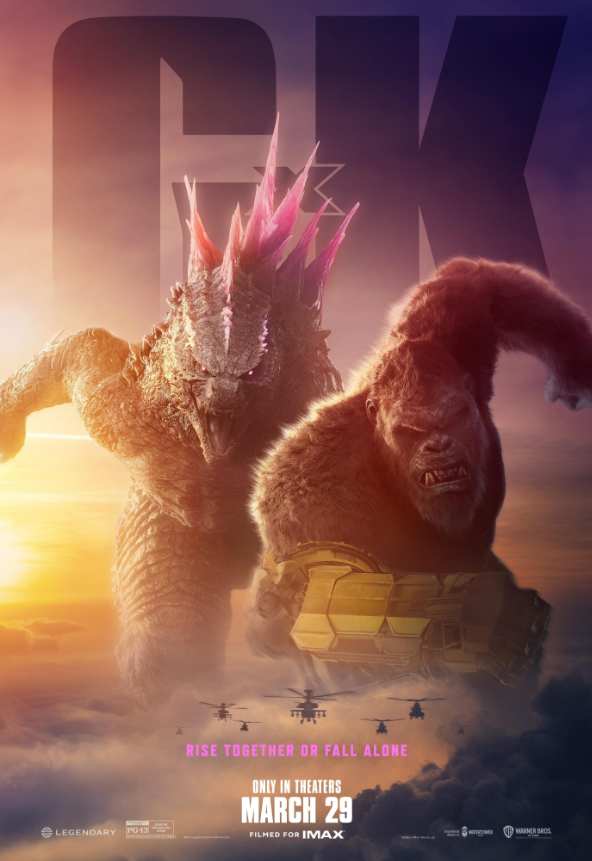
Two ancient titans, Godzilla and Kong, clash in an epic battle as humans unravel their intertwined origins and connection to Skull Island’s mysteries.

We’ve heard of way too many franchises overstaying their welcome lately, but it’s been a while since a film of this scale has failed so spectacularly to answer the question of why it was made. Godzilla vs Kong culminated the MonsterVerse in a battle between two famous characters we’d never seen on-screen before. This is the exact same movie, but without any of what made parts of that movie tolerable. Story, logic, and sense are all but myths in this movie that never quite finds the answer as to what that punch or special offering is that the last film didn’t have. Godzilla and King of the Monsters had massive visual scale, making the human damage and stakes feel wide and consequential, and as a result, the monsters felt huge. Kong: Skull Island had a fun pace and was a visually striking survival action film on an island. But now, the look feels so artificial, the stakes are unclear and boring, and the progression of the story, characters, and locations are exhausting. The visual effects are unconvincing and as a result don’t give you that large, adventurous feel, and the actors feel like they’re wandering through a Warner Bros. studio, struggling to keep this thing together. Rebecca Hall is a great actor to lead a film where the CGI extravaganza comes first, but even her character feels like she has no idea how to make sense of her dialogue. Dan Stevens delivers a fun Crocodile Dundee-esque performance as a Titan veterinarian, and Brian Tyree Henry is the only truly entertaining part of the film as a conspiracy theorist-turned-world-saver after the events of the last film. Not even Godzilla seems able to find himself a place in this film, as his progression throughout the film is probably the lamest thing that can happen to a titular character in a monster movie of this size.

Films like Godzilla x Kong: The New Empire are either made or broken by the visual and cinematic experience, and how they make use of being a grand adventure with enjoyment and spectacle, but what we’re left with is a film with neither of those things. The exposition and plot threads are bland and inconsistent with the franchise, the villains are incredibly underwhelming, and worst of all, it does nothing to differentiate itself from the previous installment. Perhaps bringing back Adam Wingard to direct was the film’s first and greatest mistake, as the stylistic approach of the last film simply wasn’t sufficient for a sequel. What worked when the MonsterVerse began was that these are gigantic events, disaster/monster movies where unbelievable Kaiju rampage the Earth, the stakes and conflicts are to be taken seriously, and the principles of the humans and their relations with the Titans guided the script and the fate of the world. Now, they’re no different than the Transformers movies, where creatures created by computers move across the screen like athletes and are treated like Marvel superheroes with devices and powers, as the structures around them go down like Legos. The worst part about a franchise like this is when it can’t excite; when it’s never been clearer that the best and coolest stuff has already come in past films, and when it’s repeating itself like the only reason it truly has to exist is every blockbuster saga’s greatest curse: studio box office ambitions.

Kung Fu Panda 4

This is a franchise that’s stood the test of time in the world of modern animation, and Jack Black has always been the core of why Po has resonated with audiences for so long — and perhaps the main reason this film manages to entertain at all. Though Kung Fu Panda 4 still has a vibrant and silly energy, it no longer manages to up the ante as each of the past installments did. Though Jack Black is always a huge delight as Po, and possibly one of the best animated franchise leads we’ve ever been graced with, the film often struggles to justify its existence because Po’s journey and growth doesn’t feel as natural and potent as it did in the other films. His struggles to embrace change and pass down the mantle of Dragon Warrior don’t feel fleshed out or as vital to his path. Awkwafina also gives one of her more memorable voice performances and is a great pairing with Black. It’s fun to see Viola Davis as menacing and cunning as she is here, but we don’t spend enough time with the Chameleon to buy her motives and for her to resonate with us. Her characteristics ultimately feel derivative of Lord Shen and Kai from the other movies.

The film embraces the faster pace and editing that worked in the third movie, but the editing decisions sometimes feel even too cartoonish and take you out of the moment. The animation is still lively, but looks a little simplistic compared to the beautifully detailed skies and characters in the last two films. There’s also a side plot that didn’t need as much time as it got, and some inconsistencies with the rules of this world of kung fu that may clash with the rules from the other films. The explanation for the Furious Five’s absence also feels tacked on and too evidently a behind-the-scenes thing. The action and looks are always fun, as is Jack Black being so committed to bringing us all joy and laughs. Is it a fun time in the Valley of Peace? Sure. But it’s clear that the franchise may be out of things to say as it feels we’ve reached the epilogue chapter here.

Dune: Part Two

In the second part of Denis Villeneuve’s adaptation of the classic sci-fi novel, Paul Atreides seeks revenge against the Harkonnens, who slaughtered most of his House Atreides, and liberate the native Fremen of the planet Arrakis while joining them and learning their ways, all while the fate of the Imperium lays in the balance.

The first Dune from 2021 may have been one of the most stunning blockbusters in recent memory, but this extraordinary sequel puts everything in its predecessor — and almost any action movie I’ve ever seen — to shame. Picking up shortly after the first film, the drama is heightened, the world-building is bombastic, and the sound and visual experience is a one-of-a-kind theater trip. Visceral is such an overused term these days that it wouldn’t do Dune: Part Two justice; you feel how wide this universe spreads and the history of the different conflicts and races that inhabit it. And once you’re brought into this fictional world, you’ll never want to leave, as the nearly 3-hour runtime flies by and every plot development is fascinating. Beyond Villeneuve’s imagination, Greig Fraser’s cinematography is the real MVP here. The beauty within the uncertainty of the desert planet is captured in such a scope that it demands in IMAX viewing, and the different planets all contribute a symbolic and gorgeous aesthetic. Timothee Chalamet takes us on the next step of Paul’s journey: his desire to adapt and fight and his fear of allowing power and faith to corrupt him. He proves that he’s always been a movie star that’s here to stay, and Rebecca Ferguson’s Lady Jessica also takes really interesting directions that make you see her role in the story, and of her son’s, in a murkier way. Zendaya also becomes a lot of the heart here as Chani, one of the franchise’s most noble characters, and Josh Brolin is always terrific as Gurney, while Javier Bardem puts his soul into the role of Stilgar, whose faith drives him towards Paul and Jessica. Austin Butler may be the standout, however, as Feyd-Rautha, whose deranged and sadistic presence create a nail-biting character and a powerful young man who has fully embraced his disturbed nature.

Though Dune: Part Two ups the ante with its visuals and performances, its the powerful script and heightened emotional stakes that make this experience what it is. The film explores questions as to how faith and hope can be exploited, and if the urge for power truly corrupts whoever gets a taste of it. Though you may find yourself trying to guess which paths these characters will take, there’s also lots of unexpectedness and the film’s most intense moments took my breath away. You understand so deeply the dynamics of this galaxy and its cultures, and how much lays in the balance. The exhilarating scale and exciting, constantly developing pace only works because of the passion behind each character and story thread: passion to lead, rule, fight, love, honor, avenge, or secure a future. These moral greys form the dark and poetic drama that’s impeccably guided by frame-worthy shots and booming sound. Never have I felt so deeply that I didn’t want a film to end, as once you’re sucked into this marvelous world by Villeneuve, you’ll never want to go home. We’ve rarely seen emotion and grandiose like this in action movies so flawlessly convert to a magnetic cinematic experience. The Empire Strikes Back comparisons are worthy but also a little humbling; this reaches the bar that The Lord of the Rings: The Return of the King set for sci-fi/fantasy epics. It’s a show-stopping galactic saga that unleashes its ambition and magnitude onto you in a way that will entrance and thrill whoever buys a ticket. It’s a spectacle that sets the bar so high for whatever else is to come in blockbuster filmmaking, and like the unreal visuals and scale of Avatar: The Way of Water, needs to be seen on a massive screen, to be transported with other people, and watch a story unfold that you’ll never forget.

Aquaman and the Lost Kingdom

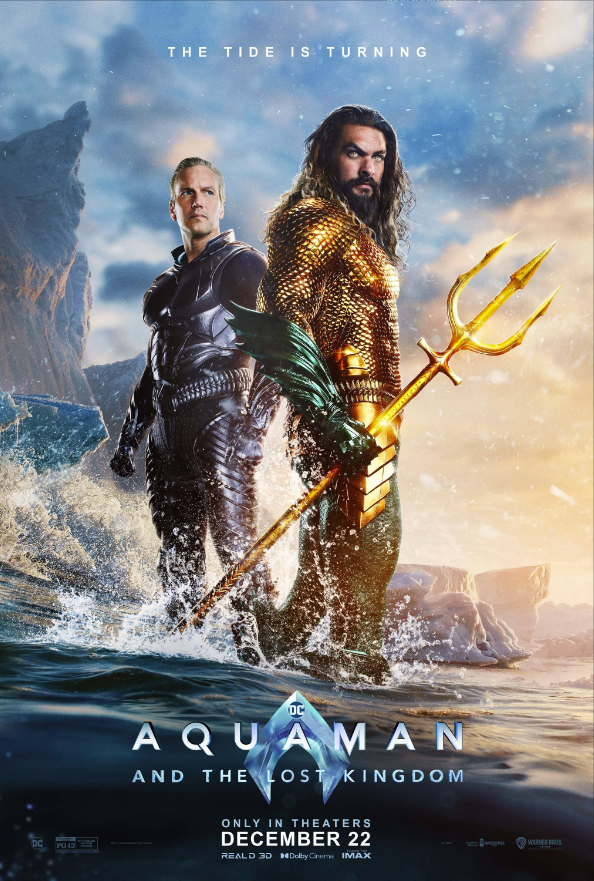
When Black Manta returns for revenge against Arthur Curry/Aquaman, who is now King of Atlantis, he must unite with his former enemy — his half-brother Orm — to prevent Manta from causing a global catastrophe.

The first Aquaman film isn’t a must watch for action or fantasy fans, but it’s a fun film that knows what it’s going for and how to build an engaging world and action set pieces on the screen. Save for a few cool effects and maybe one action scene that’s great, this soulless and uninspired sequel lacks all of that. The story is so convoluted and unengaging that it’s hard to imagine James Wan had any part in bringing it life. Jason Momoa is having a great time in the titular role, but everyone else seems like they’d rather be anywhere else, even the great Nicole Kidman. Aquaman and Orm’s brotherly dynamic isn’t as sweet as the film imagines it is, and it’s basically the same dynamic Thor and Loki had when the latter broke out from prison in Thor: The Dark World. However, Momoa gives off that endearing energy very well in his line delivery — maybe the only good thing this script has going for it. Yahya Abdul Mateen II as the main villain really excited me, but even he isn’t really used well, with his unfiltered rage being clouded by plot MacGuffins and silly side goals that the film should’ve done without, not to mention Randall Park who’s very well cast but his character isn’t executed that strongly, and Dolph Lundgren’s incredibly questionable and head-scratching performance.

The visuals of Atlantis still look cool but the corners of this fantastical world that are explored this time don’t look very interesting once you leave the kingdom of Atlantis itself, which is pretty early on. Besides one action scene that takes place in the first act in Atlantis’ big city you saw in the first film, the action’s choreography misses the mark and the attempts to raise the stakes by adding plot devices and tying them into climate change are too tacked on. There’s also plenty of dialogue and soundtrack choices that are simply irritating and generic. Through the end, Aquaman and the Lost Kingdom doesn’t seem interested in redeeming itself and settles for the less exciting decisions each time. It’s a disappointment considering how enjoyable and cheeky that first movie is, and does nothing to warrant a watch even for fans of that first movie’s energy and characters, or action movie fans in general besides some empty spectacle without the delight.

Wonka

Ever wondered about the origins of Roald Dahl’s iconic chocolate factory owner that’s been famously portrayed by Gene Wilder and Johnny Depp? Well, neither did I, but Timothee Chalamet absolutely gives a performance that lives up to those standards in an unnecessary yet whimsical family film. Though the story is as frustratingly familiar as it is cute, Paul King’s direction and a few musical numbers are the saving grace here. King brings the charm that made Paddington resonate with viewers and brings a wondrous British comedy element to the film, along with an optimistic and adventurous tone. Though only a few songs demand revisits, the musical numbers give the film a lively energy that would’ve felt contrived without them. Chalamet throws himself into the physical comedy of the character and also sings very well, and Calah Lane is a great breakout as a young orphan named Noodle who Wonka befriends. Olivia Colman is also delightfully wicked, and Jim Carter and Natasha Rothwell stand out as Wonka’s outcast friends. Keegan-Michael Key’s performance may not reach the heights of his more streamline comedic turns, and Hugh Grant’s turn as an Oompa Loompa is ruined by distracting CGI — the role was obviously there for the studio just to gloat about having the iconic race of mini-people in the film.

The film’s corrupt, mustache-twirling trio of businessmen villains are also entertaining and so unapologetically cheeky that one of them even vomits at the sound of the word “poor”, but for all its funny and charming moments and the outstanding costumes and production design, there’s also some unconvincing computer-generated set pieces and some overblown humor that may only be aimed for younger audiences. There’s also some plot elements that may feel too much like other kids’ films, even Paddington or another recent origin story Cruella bear lots of similarities in the story. As a film that’s right for the entire family and may even be good for rewatches for children in the holiday season, Wonka delivers, but it may be too silly for older audiences despite its endearing appeal and cast.

Poor Things

Bella Baxter is a young woman brought back from the dead by the brilliant and unorthodox scientist Dr. Godwin Baxter. Under Baxter’s protection, Bella is eager to learn. Hungry for the worldliness she is lacking, Bella runs off with Duncan Wedderburn, a slick and debauched lawyer, on a whirlwind adventure across the continents.

Trigger warnings are a no-brainer with Yorgos Lanthimos, as his films are often filled with sadistic, violent, and hypersexualized power games where nobody is quite a pleasant person. These tropes as well as Lanthimos’ trademark cringe humor are just the baseline to describing Poor Things, a sickening yet grandiose movie that transcends categorization. It’s hysterical but not quite a comedy; it’s poetic but not quite a drama. Emma Stone gives a performance so demanding and so audacious yet it never breaks the illusion of being acting. You completely buy her character in the context of the story and are taken aback by her character’s abnormal physicality and wonder with being alive. Mark Ruffalo is also throwing himself into this role that could’ve easily fallen into unbelievability, but he perfectly balances an exaggerated, almost theatrical edge to his role with a vile, pitiful nature to it. Willem Dafoe plays a scientist under heaps of makeup whose motives may provide an emotional anchor to Stone’s character but also unpeels itself to be uncomfortably pathetic due to his background, and Ramy Youssef also does a great job here.

Poor Things may owe some of its inspiration to classic monster movies, but really isn’t like anything audiences have seen before. The production design creates an eye-popping, fantastical version of the Victorian Era and a world with a completely fresh aesthetic, as well as dynamic cinematography with color, B&W, and even a few fish-eye lens shots to invoke Bella’s warped worldview. Bella’s curiosity is devoid of prejudice and preconceived notions on the world’s structures, and she finds herself appalled by those around her trying to control her, and fascinated by anything she gets to choose to do. The humor is ridiculously honest and ballsy, and therefore, not for everyone — not to mention the exaggeratedly comic sex scenes and the uncompromising and even disgusting violence. Its audacity will certainly find its pleasurers, especially those who already love the director’s filmography. This bold tour de force isn’t for the faint of heart and may leave you at a loss for words. The writing and execution are exhilarating in the best way; the more disturbing and out-of-this world it gets, the less you’ll feel you want to look away. You’ll simply want to witness the bizarre yet fascinating unfold in front of you when it’s through Yorgos’ eye and so irresistibly played by Stone as this woman with the literal brain of an infant in her head, eager to experience being alive for all its peculiarities..