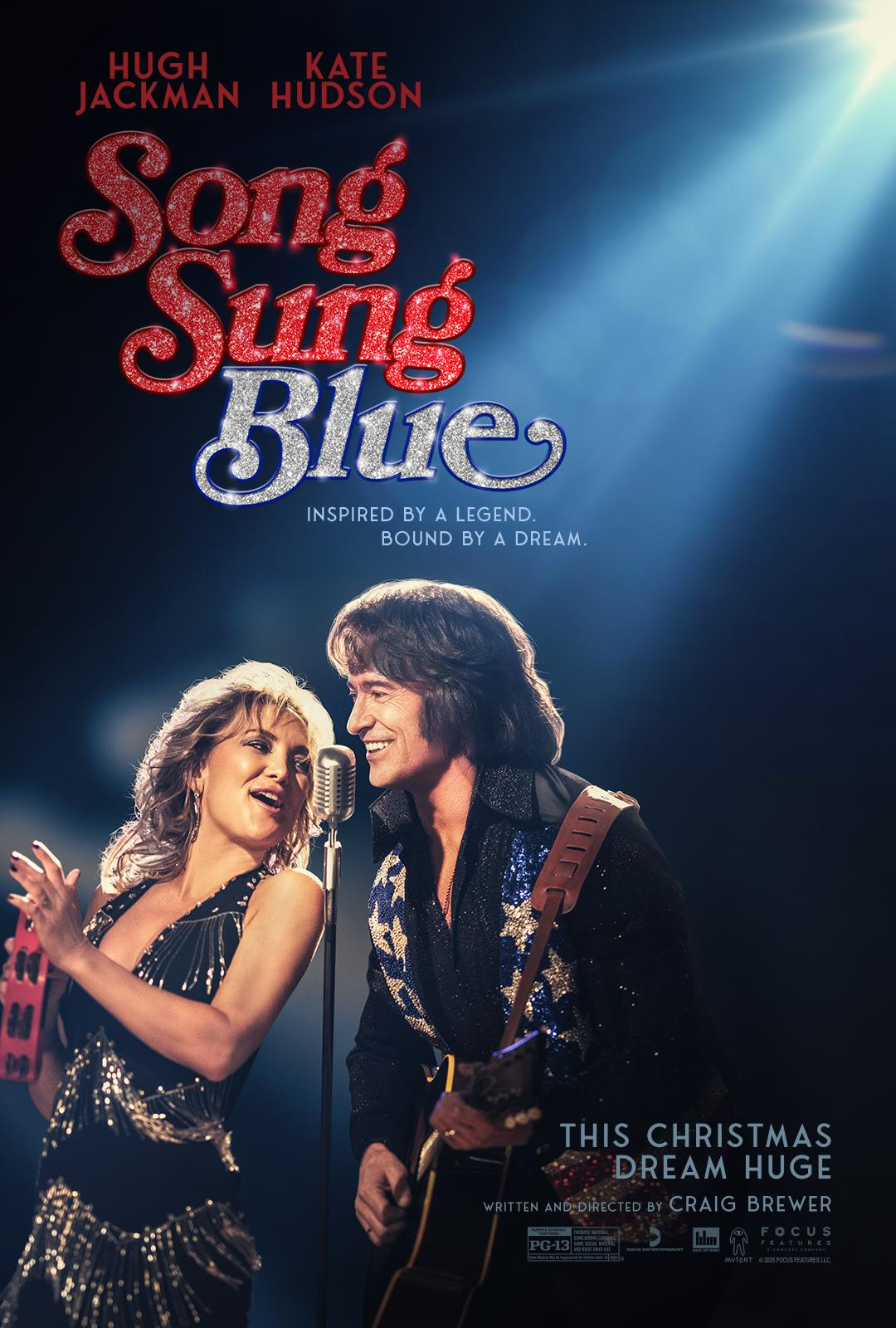
It’s hard to imagine who was asking for a film about a Neil Diamond tribute band, but this true story works due to its immense charm. Hugh Jackman shines as Mike Sardina, a misfit who dreams of bringing success to his Neil Diamond show. His charisma and excellent passion for music shine in the role. Kate Hudson gives one of her strongest performances as the band’s other half — together they’re “Lightning and Thunder”. Claire faces great tribulations but her resilience and desire to not be made small by those around her define her character’s journey.
Craig Brewer directs the music performance scenes with a power that anchors the film, and though it doesn’t set out to reinvent the biopic, it works well thanks to its underdog energy and emotion. This drama about the convergence between music, love, and the strength to carry forward, has touches of strong humor but will also tug on your heartstrings, and may also make you curious to learn even more about the true story behind the duo at the film’s center — and listen to some Neil Diamond hits — after the movie ends.
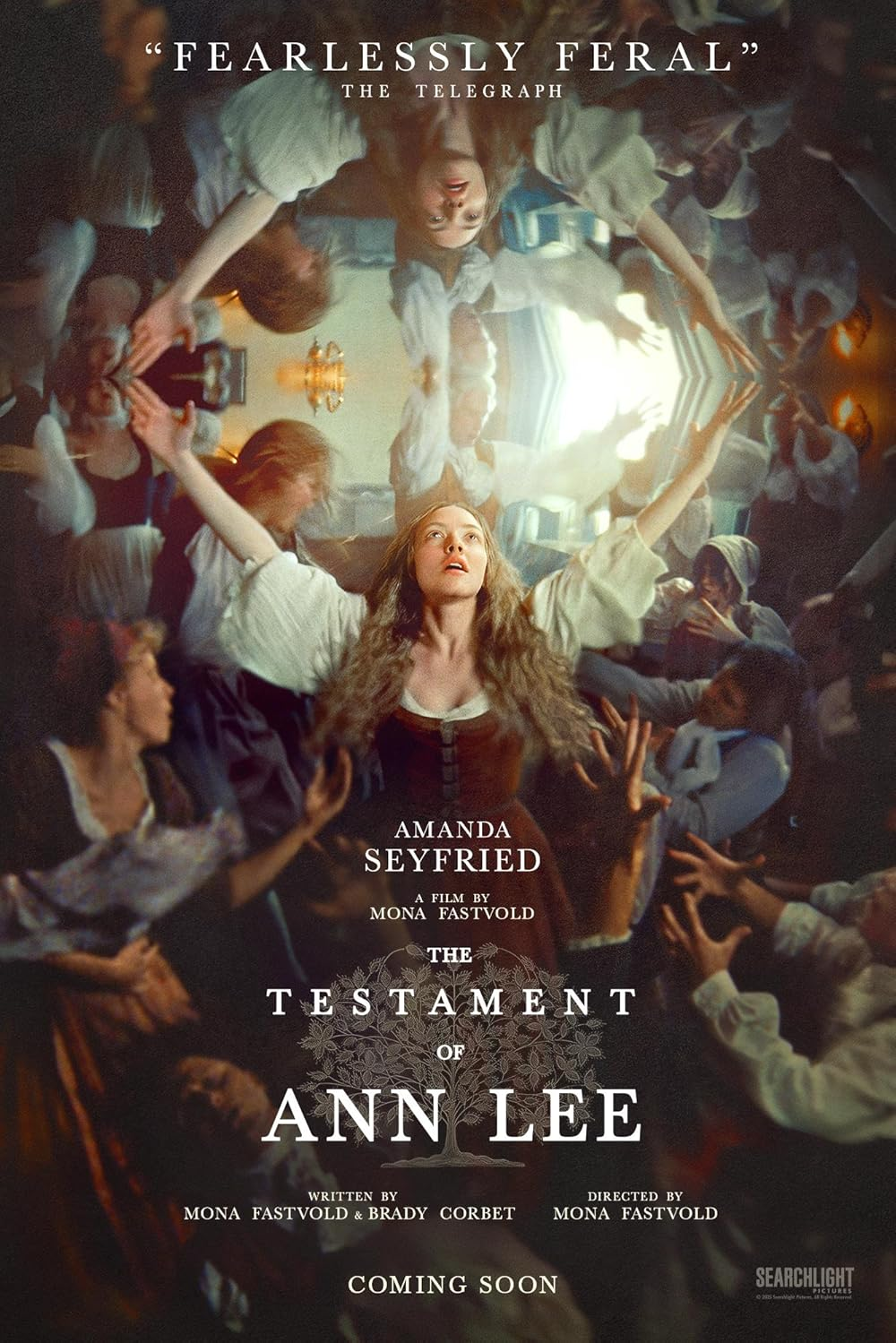
Mona Fastvold’s latest endeavor is almost impossible to describe, but will certainly cast its bizarre spell on many viewers. Amanda Seyfried gives her most potent performance yet, portraying a woman whose faith and guidance becomes relentless in the face of tragedy and hardship. The film brings to light the story of the Shakers, a religious group whose form of worship and communion were rather unique, and compliments the musical element of the film, as their worship is practically in very visceral song and dance. Lewis Pullman and Thomasin McKenzie also greatly stand out here.
The cinematography and the editing make the film almost dream-like, to evoke the state of divinity the worshippers must’ve felt, but also touches on intense and difficult imagery that tests the characters and their surroundings to the brink. Though it’s a slow burn that may lose some for various reasons, it’s also captivating and singular. It works not just as a biopic but as a fascinating experiment that boasts a tremendous leading performance from Seyfried. The film is darkly beautiful and visionary, and it’s impossible to resist its hallucinatory trance.
Wicked: For Good‘s rushed pacing feels like quite a whiplash from the slow burn of the first film that allowed its story to breathe much more, but it’s still a big, loud, and rewarding musical experience. The events are moving at such a fast pace that if you think about it too much, it starts to fall apart. The cinematography and editing don’t get that same patience that made the execution in the first movie so beautiful. The first act of For Good does feel a bit like its embracing the spectacle more than the soul, and if Part I felt more like its stage musical adaptation roots, this movie is the big fantasy action blockbuster. That said, it rises up to the challenge with truly great visual effects and breathtaking production design. The musical numbers are no less impressive, and the film’s heart is strong, and the chemistry between its two leads is electric.
Cynthia Erivo is again astounding and contributes to some of the film’s most awe-inspiring moments, while Ariana Grande is even better than she was in the first film. Glinda’s selfishness isn’t justified, but her softness and journey towards goodness make her so interesting to watch, even if it’s more thanks to Grande’s performance than where the script takes her. Jonathan Bailey also shines in one of the film’s most complex portrayals. There are some true show-stoppers in the soundtrack thanks to magnificent work from Erivo, Grande, and Jeff Goldblum. The music, vocals, and sets come together for some incredible musical moments that culminate the film’s emotion in great catharsis. It also very much enriches the story of the original Wizard of Oz in many creative and unexpected ways.
Wicked: For Good isn’t as subtle or as earth-shattering for the musical film genre as its predecessor, but the direction is still so lively and the spectacle is so, well, spectacular, that it’s an exciting and rewarding experience for film and theater fans alike. Together with the first film, it not only reignites but expands on and gives new life to a cultural moment like no other, and a trip to Oz that you have to see on a big screen.
Music biopics have found themselves a tried and true formula, and though Springsteen deviates from it, it also falls into a few of the same familiarities. Instead of focusing on the Boss’s entire life and on the creation of each and every one of his hits, it’s a quieter film about the recording of his more stripped-down, intimate album Nebraska, that lets us get up close with the man behind the legend. Jeremy Allen White is excellent as one of America’s most iconic and beloved rock stars, capturing the singer’s desire for versatility and personality in his art while struggling with depression. Jeremy Strong, however, ends up stealing the screen in almost all of his scenes. Refreshingly for the genre and the actor, music producer Jon Landau isn’t portrayed as a greedy, conniving villain, but as Bruce’s most reliable and caring friend who’s willing to stand up for his art and vision, even against his own corporate interests. Strong wonderfully captures the delicacy behind the businessman and the relationship between the two is the film’s strongest part. It’s also fascinating to see the old-fashioned ways of recording the songs, some of which have gone down in history, including “Born in the U.S.A.”.
The film does have its weak points, including a romantic subplot that touches on too many cliches, and the traumatic childhood flashbacks, which are rather tiring, though they boast a great performance from Stephen Graham as Bruce’s father. That said, it’s still a refreshingly smaller and far more personal biopic than most, focusing more on emotional journey than big musical numbers, and works thanks to White’s great turn as an American legend.
Many films have seen musical adaptations, and then had those musicals adapted into their own films. Some of these musical remake movies have worked as an update to the story, like The Producers and The Color Purple, while others such as Mean Girls and Matilda have failed to justify their existence in the theatrical medium and not offered much new to the material. Kiss of the Spider Woman may have the same main characters and overall premise, but feels completely fresh, exciting, thematically powerful all over again, and even surpasses the original in many respects. The film’s unique approach sees two political prisoners in 1983 Argentina connecting over the memory of an old Hollywood movie, which they recount as a musical, providing them escape from and drawing parallels with their harsh reality.
Tonatiuh gives a simply incredible performance as Molina, offering a completely new approach from William Hurt’s turn as the role in the 1985 film. Molina desperately wants to be a part of a world that’s rejected him, while believing in the best in others. Tonatiuh commands every single moment of his screen time, as a character telling a story, and coming to terms with his own inner weakness. Diego Luna also gives a career-best performance as revolutionary thinker Valentin, unlocking deep empathy and passion within his impatience and defensiveness. Jennifer Lopez, meanwhile, is playing a character with multiple levels of performance, in a role that may end up becoming a standout in her filmography.
As much as it is a condemnation of the dictatorship that ate away at the soul of Argentina until a few decades ago, it’s also a layered look into the development of a bond between two men who could not be more different, but learn to care about each other profoundly. The songs aren’t all memorable, but the effect the musical numbers create in contrasting between the fantasy and reality of the prison scenes elevates the film, not to mention an unforgettable ending that enriches the entire film, especially with the hindsight since the original film was released.
Some remakes get a chance to breathe new life into their stories and worlds, while others, like Disney’s new Snow White, feel like a film from 90 years ago was frozen in carbonate for decades and then unnecessarily turned into a different medium. In this case, Snow White feels like 30% that, while the other 70% feels like sprinkles of modern flare that feels out of place. Oscar winners Benj Pasek and Justin Paul add songs that feel to derivative and cliche, hitting all the same “Welcome to our lovely kingdom”, “I want a better life”, “Look how evil I am”, and “Maybe we’re attracted to each other” beats that are in nearly every other musical. In some instances, the songs even sound too much like the duo’s Dear Evan Hansen soundtrack.
Rachel Zegler tries her best to entertain in a sweet but one-dimensional role elevated by her charisma and strong singing voice. However, all the other elements around her distract, including the unconvincing and at times hideous CGI of the animals, surroundings, and let’s not even talk about those dwarves, who seem almost nightmarish. But a painfully glaring weak link is the miscasting of Gal Gadot as the Evil Queen. Her line delivery feels unnatural, and the character just gets more irritating as the film goes along.
Most sadly, Snow White is inconsistent and deeply hollow as a film. It has almost no charm that feels organic, and can’t decide between elements that feel nostalgic or new, like the very modern-sounding soundtrack. Nothing of importance is ever quite explained or given meaning to, things just happen because the point that we’ve gotten in the story needs that thing to happen. For younger children, being unconditionally kind is an important message, but even Disney has delivered this theme in a way that’s so much more tangible and heartfelt; take even their live-action 2015 Cinderella remake for example. This remake doesn’t expand on or reinvigorate its source material, simply morphs it into weird images that look colorful but never have any real sense of life.
Bob Dylan as a person has always seemed to be an enigma, as this film’s title hints. But his art has captured, moved, and inspired generations. A Complete Unknown isn’t as interested in cracking Bob’s code, rather portraying him as a complicated man searching to evolve through his music and art, while Timothee Chalamet, over the course of the film, becomes Dylan through his musical commitment and showing both his more grand and uglier sides. He channels Dylan’s layered voice beautifully, while also portraying him as a wild card, who was occasionally destructive towards others on his journey towards fully realizing himself.
Though the film will absolutely make you want to learn more about Dylan’s impact and accomplishments, it’ll definitely have you as eager to discover more about another folk singer as well: Joan Baez. Every time Monica Barbaro graces the screen in A Complete Unknown, she brings an enchantment and captivation in the role, with a singing voice so transfixing you wouldn’t believe she only first learned to sing to play Baez here. Edward Norton shines as the optimistic if fixated and unapologetic Pete Seeger, as does Elle Fanning as Dylan’s love interest Sylvie. James Mangold’s direction, including the shot-on-film look, the production value, and the musical scenes all demand a theatrical watch to experience the folk music being performed with such powerful sound design and aesthetic. Even as someone who was never quite pulled to the genre before, the film makes you feel the power of music in inspiring, changing, and moving others.
Though the first half is rather fantastic, the second half gets so caught up in the stunning musical sequences that the story does unnecessarily slow down, and though the ending is satisfying, there is a little more impact to be wished for. But it still succeeds due to its incredible look and the commitment of its actors, with Mangold yet again proving himself an expert storyteller and filmmaker. The film takes you throughout a moment in time, history, and culture, and makes a strong case for its resonance, and for the awards buzz for Chalamet’s remarkable work as the renowned musician.
Better Man chronicles the rise, fall, and resurgence of popstar Robbie Williams, with a twist: Williams himself as depicted as a CGI monkey. This odd approach threatens to distract at times, and works better conceptually than in execution. However, this musical biopic rises among the crowd of forgettable tellings of famous musician’s lives through its vivacious musical sequences and booming soul. Williams, who narrates the film himself, doesn’t let himself off the hook, inviting us into genuine introspection of his ugliest parts: his insecurities, self-destructiveness, addiction, and depression. Michael Gracey’s direction puts everything in his last grand musical film The Greatest Showman to shame within minutes — the lively numbers, dynamic camerawork and choreography make the visual style bombastic while remaining intimate with Williams’ core as a man, not just his journey as a famous singer.
The effect the main character being a CGI chimpanzee has is occasionally jarring and even laughable at worst, but at best, creates an interesting visual experience compared to films with similar plots, and brings you into Williams’ imposter syndrome and self-perception. However, one can’t help but think the gimmick would’ve worked stronger if it had only lasted for one scene. Still, the film is such a breath of fresh air in that it tackles familiar points and themes from the genre on a far more up-close manner, such as feeling trapped by fame, or being numbed by addiction. Non-fans will want to learn much more about Robbie Williams’s story and learn more about his story. Fans will greatly enjoy Williams’s songs being elevated by such beautiful sequences and appreciate a bold and eccentric yet humble, emotional, and entertaining biopic.
Rafiki tells Simba and Nala’s daughter Kiara the story of her grandfather Mufasa, the once king of Pride Rock, and his upbringing with his brother Scar.
Mufasa boasts a beautiful cinematic experience that’s best experienced in 3D. The visuals are transporting with their photorealism and colorful sceneries of the wild world, and get to develop new settings without behind held back by recreating scenes from another movie the way 2019’s The Lion King was. That alone warrants the theatrical experience here, and not much else. Though Mufasa isn’t remaking another beloved movie anymore, it’s still restrained by the same lack of characterization that made the photorealistic animals feel emotionally distant in its predecessor. The animals can’t quite emote like they can in other animated films, and this creates a tonal dissonance between what the original 1994 film set for the franchise and the photoreal road the filmmakers are going down now. Aaron Pierre’s gravitas gives Mufasa just the right profundity, but Kelvin Harrison Jr., who’s a wonderful actor, feels rather miscast as Scar, a character who feels inconsistent both performance and character-wise. The problem with the rest of the characters is that save for Mads Mikkelsen’s villain, who’s basically Scar from the original minus the intrigue, everyone is a younger version of a Lion King character, and are stuck doing impersonations of the actors that came before them. There feels like there is nothing to discover emotionally, and the backstory behind the characters doesn’t really enrich what came before rather than just filling in some logistical gaps, all of which form a very cliche story. Not to mention, Billy Eichner and Seth Rogen as Timon and Pumbaa’s gags have been done to death and annoy more than they charm.
Though this one isn’t following the same story of another film beat for beat the way The Lion King was, that movie at least had the advantage of inheriting phenomenal songs from the original film. Lin-Manuel Miranda’s music here is incredibly lacking, with every song feeling derivative of a song from its predecessor, or even more recent Disney films. The worst part is, despite some of the action being visually stunning, the musical sequences are weakened because of a lack of connection to the animal characters who are less animated when they’re made to look real. If this made the 2019 film feel cold to you, this one won’t feel any more energetic. The film opens with a powerful tribute to James Earl Jones, the original voice of Mufasa — the fact that that’s the most (and maybe only) emotionally touching part of the film is very telling. Despite stunning visuals, including some beautiful sequences of the animals in the snow, Mufasa doesn’t offer much originality from a thematic, character, or musical point of view, and everything underneath the breathtaking aesthetic is easy to forget after watching.
Moana and her people have now rightfully reclaimed their place in history as wayfinders who sail the ocean in search of exploration. One day, Moana receives a call from her ancestors to embark with an unexpected crew across dangerous waters, and reteam with her old friend, demigod Maui, for their most challenging and important quest yet.
The first Moana remains an unforgettable and impactful film among Disney’s recent animated films. This sequel retains everything that made that first film look so gorgeous, and builds on the dynamic colors of the ocean and its mystical findings. The transformative magic of watching the first film, though, is missing in this sequel that can’t quite justify its existence. Moana doesn’t feel like a film that has sequel potential built into it, as opposed to even other Disney sequels like Frozen II and Inside Out 2. Watching the sequel unfortunately didn’t convince me otherwise. Though its still charming and has some fun to be experienced, it’s basically retreading the same beats from the first film.
Auli’i Cravalho proves again why she’s earned the spotlight in her wonderful voice performance as the titular character, but Moana lacks any actual internal conflict this time around — there’s even an opening song all about how she’s finally become who she’s supposed to me, and the movie never ends up convincing us that she does need to change and grow, just to remember who she’s already become. Speaking of the songs, there are only two that manage to stand out at all, “Beyond” and “Can I Get a Chee Hoo?”, but even those are stuck in the shadow of the overly similar — and far more original — “How Far I’ll Go” and “You’re Welcome” from the first film. There are a few laughs and solid new characters, including Moana’s trio of new voyagers and companions, and an unexpected antagonist. However, the key piece that’s missing from Moana 2 is any sort of feeling that something is at stake here — what happens to Moana’s people, the ocean, or even her own internal journey if they fail this mission? What does Moana have to learn here, now that she’s embraced who she needs to be and discovered her destiny? The answers to these questions are unfortunately insufficient and affect the excitement levels older audiences may feel watching it.
Moana 2 is colorful and has its share of sweet moments (it certainly has way more soul than Strange World and Wish), but most of what works about it is drawn from the first film, including its beautiful depiction of the ocean, tributes to Polynesian culture, and lovely characters. Rehashing the incredible themes, numbers, and world-building doesn’t work, though, without the same spark of originality and wonder that made us never forget Moana. Whether you’re going in expecting a serviceable adventure aimed towards younger audiences or just unsure why this movie needed a sequel, Moana 2 is unlikely to change your mind.





 filmtoppings.com