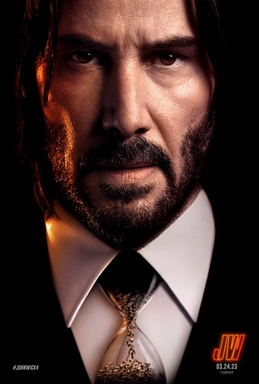
John Wick: Chapter 4

John Wick uncovers a path to defeating The High Table. But before he can earn his freedom, Wick must face off against a new enemy with powerful alliances across the globe and forces that turn old friends into foes.

Ever since John Wick offered a fresh and influential voice to the action movie landscape, the sequels have been attempting to top the scale, world-building, and insanity of the action from before. To say John Wick: Chapter 4 delivers on the promise of being the largest and most outrageous in the franchise would be an understatement. The fights are the longest, most intricately choreographed and most beautifully shot this series has been, and Keanu Reeves and the stunt team give mind-blowing work. Though for some, the movie’s obsession with topping itself may result in caricature, but it’s everything that fans of this franchise have signed up and waited for through 4 films, and then some. In addition to Reeves’ incredible commitment, Donnie Yen is one of the best characters this franchise has seen, bringing his martial-arts reputation to the series, not to mention Shamier Anderson, who’s incredibly an entertaining and likable character, as well as the excellent Hiroyuki Sanada who has great scenes with Keanu. Fans of the franchise already know to expect Ian McShane and Laurence Fishburne, not to mention this is one of the last appearances of the late Lance Reddick who was always a gem as the Continental concierge Charon. Bill Skarsgard’s character is intentionally hatable, but occasionally gets too much on the audience’s nerves to even be a fun villain.

Though these films are known way less for story beats and more for the “gun fu”, Chapter 4 culminates the titular character’s arc from the four films with more going on with him than in the last film, though the second act is 10 or so minutes too long, particularly a scene with Scott Adkins and the buildup to it. Set pieces from a Continental Hotel in Osaka to the Arc de Triomphe in Paris are nail-biting and stunning to watch, though the soundtrack is frustratingly repetitive and maybe too aggressive during the action — perhaps less dubstep would’ve been just fine — which I didn’t find to be an issue in the previous films. However, this is still a big-screen treat and an iconic action franchise coming to a grand, thrilling, and satisfying conclusion, rewarding viewers who have been tuning in through John’s creative kills and all the rules of the hitman underground world.

Shazam! Fury of the Gods

Billy Batson and his foster siblings protect Philadelphia with the powers that give them the strength of the gods, but soon the daughters of Atlas arrive seeking revenge for the stealing of their family’s magic ages ago, and declare war on the Shazam family and the human world.

Shazam! remains one of the best films in DC’s current shared movie universe, and Fury of the Gods brings forward everything that worked about the first movie, while expanding on the family dynamic. It’s very entertaining to watch as all the siblings are now superpowered and how it affects their interactions and characters moving forward, as the siblings who weren’t Billy and Freddy were much more minor characters in the first film. The movie also retains the same sweet, heartwarming energy that makes the Shazam saga irreverent, touching and harmlessly entertaining. The action is more in line with Tom Holland’s Spider-Man films than something as world-ending and grim as Justice League — though sometimes the world as still at stake. Zachary Levi’s charisma and natural sense of humor shines again, though it’s way more interesting to see him on screen than Asher Angel. However, Billy is a formidable hero who’s selfless, kind, and even clumsy. However, Jack Dylan Grazer and Adam Brody shine equally as Freddy. Grace Caroline Culley also stands out as both the normal and superpowered Mary, as well as Rachel Zegler, who continues to take the world by storm after West Side Story. Though Helen Mirren is incredibly entertaining as a villain, Lucy Liu’s performance is occasionally eyebrow-raising and questionable.

The visual effects also have some moments that could have used polishing, including the creatures or large set pieces, but overall most of the sets fit the Sunday-cartoon-like vibe that Shazam has always been aiming for. Not to mention, the humor is easily as memorable as the first, though the themes aren’t so as much as Billy and Freddy’s bonding in the first movie. There’s also a few scenes with Djimon Honsou that are funny but the least interesting parts of the movie. However, Shazam! Fury of the Gods gives viewers everything they signed up for while making them laugh and smile at the screen.

Creed III

Adonis Creed has been living out his wildest dreams, including being the reigning heavyweight boxing champion of the world, and a loving husband and father. When an old friend Dame returns from a long prison sentence, he brings back his and Adonis’ past with him, which will lead to the next big match of Creed’s career.

Though the Creed films were always follow-ups to the beloved Rocky franchise, they’ve made themselves feel fresh and modern while retaining the themes of hard work, underdogs, healthy masculinity, and family that make Rocky so iconic. Three films in, and what you’re watching still feels exciting and imbued with passion from behind the camera. Not to mention the director behind the camera is also its star, Michael B. Jordan. He delivers a strong debut as a filmmaker and brings out not only a strong visual energy to the boxing and training sequences, but the best out of the performances. Jordan and Thompson again work so well together and are two of the most charismatic, vigorous stars of this generation. The dynamic they have, now that their daughter is in the films too, brings another beautiful layer to their world that we’ve already been invested in thanks to the last two films. Jonathan Majors is a formidable screen partner to Jordan as Dame, a man ready to get back at the world for the unfortunate past he’s suffered and the life he feels he’s been robbed of. But similar to the Dragos in Creed II, Dame is empathetic and his longing for the championship Rocky and Creed have already felt isn’t as selfish as his attitude towards getting there.

Along with the excitement of seeing cool stars spar it out in the boxing ring is the complexity that the Creed films’ characters have and the scripts’ push to always have them growing and learning new things, as for every film to feel significant. Despite this, one story arc does feel slightly incomplete at the end and despite creative editing from Jordan, it does get aggressive in a few instances. Though it isn’t as wondrously directed as when Ryan Coogler was at the helm, it’s a film that gets better and better, with the dialogue just as exciting as the sports, but when the sports is there, it’s a blast thanks to the actors, direction, and always thrilling soundtrack that gives the film so much life.

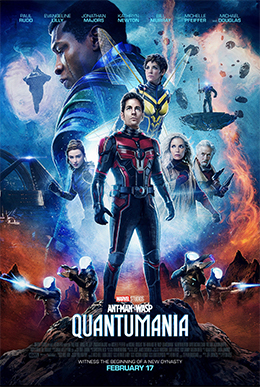
Ant-Man and the Wasp: Quantumania

Scott and Cassie Lang, Hope and Janet van Dyne, and Hank Pym are all accidentally transported to the Quantum Realm and embark on an adventure that goes beyond the limits of what they thought was possible.

Though this threequel expands on the scale of the last two Ant-Man movies to the massive possibilities of the Quantum Realm, the film lacks the charm and wit that a movie with Paul Rudd as a shrinking superhero should have. The green screen and visual effects are hit or miss in terms of blending in with the actors, and the sets feel derivative of Star Wars and Guardians of the Galaxy, almost as if the production asked James Gunn to borrow a Guardians set for a day but without following through with the weird and quirkiness of what we’re seeing. Instead, the adventure just feels like it’s going through the motions until we meet Kang, who’s played strongly by Jonathan Majors. The stakes when it comes to his character are engaging but still too vague to give his character the depth beneath Majors’ stellar presence. Whenever the actors do get the chance to quip off each other or interact with bonkers new characters they meet, it makes for funny moments, especially due to Rudd’s undeniable talent and Kathryn Newton’s performance as Cassie, but any meaningful character development is nonexistent besides the characters revealing secrets or reiterating their love to each other. The movie’s themes about heroism and “looking out for the little guy” are sweet but only take it so far because of the unoriginal execution. The action itself has some fun moments and laughs, but ends up a standard adventure that isn’t inspired or clever enough to do its titular hero justice or advance his arc besides showing him the MCU’s new big bad.

Ant-Man and the Wasp: Quantumania is a watchable movie without enough quirks to make the tone satisfying or enough complexity to make the conflict fascinating. Even for the Ant-Man trilogy, it’s simply fine and only needs to be watched to collect important puzzle pieces for the future of the MCU.

Puss in Boots: The Last Wish

Puss in Boots discovers that his passion for adventure has taken its toll: he has burnt through eight of his nine lives. With the help of old and new allies — and with some new foes in the way — Puss sets out on an epic journey to find the mythical Last Wish and restore his nine lives.

Eleven years after the first spin-off focusing on Puss in Boots was released, it wasn’t really necessary to continue or dive back into the franchise, but The Last Wish absolutely tops the first movie. Antonio Banderas is having a blast as a role that may at this point be as iconic to his name as Zorro, not to mention the characters bear plenty of similarities. Florence Pugh and John Mulaney also give the film so much with their voice performances, and Olivia Colman and Ray Winstone almost feel like they were born to voice Mama and Papa Bear, not to mention a menacing Wolf voiced by Wagner Moura. Unlike the more realistic animation of the first Puss in Boots, this blend of 3D animation with 2D coloring to create a storybook look feels reminiscent of Spider-Man: Into the Spider-Verse, The Mitchells vs the Machines, and The Bad Guys. Though the frame rate or 2D look of some shots occasionally distracts, the animation ultimately creates for a more colorful and visually impressive experience than the first movie, not to mention the well-paced and engaging action. The movie also pushes Puss to new places as a character — he’s forced to confront his pride, mortality, fears and motives and we feel like we’re watching the animated feline find some genuine growth by the end. But most importantly, its sweet, energetic, and playful intentions definitely translate to the final product, despite some overused jokes or themes that aren’t unfamiliar to animated films. It delivers a reward for families that exceeds expectations, and one of the year’s best animated films alongside films like Guillermo del Toro’s Pinocchio and Turning Red.

Avatar: The Way of Water

Set more than a decade after the events of the first film, learn the story of the Sully family (Jake, Neytiri, and their kids), the trouble that follows them, the lengths they go to keep each other safe, the battles they fight to stay alive, and the tragedies they endure.

James Cameron created a monumental landmark in visual entertainment and epic storytelling with Avatar. A sequel so many years later with so much promise to top the first would send too impossible to be real, but The Way of Water manages to deliver that same ambition felt in every shot of the first film and then some. Years were spent to create new technology to film motion-capture scenes underwater, and I’m glad Cameron spent all the time he needed to get it right because the term “out of this world” has never fit more for anything else. The plot beats in the first hour are familiar, but everything from there onwards is breathtaking, grand, and mesmerizing to the eye. The underwater scenes are some of the most visceral visual cinema I’ve ever seen, with the detail and realism allows you to completely suspend disbelief as you feel you’re actually on Pandora. Sam Worthington and Zoe Saldana are great in their roles again, and the script this time beautifully captures the depth of a parent’s love for their child. Sigourney Weaver returns not as the same character but in a different and inventive way. Jake and Neytiri’s children are as complex and poetic characters as their parents who carry across the story’s themes such as empathy, uniqueness, and selflessness.

Cameron manages to somehow expand on the scale of Pandora and this fictional universe that millions of audiences were already in love with, while finding the intimate moments beneath all the colorful CGI that often stick out and resonate. The cast ensemble may not be Lord of the Rings-level of memorable yet, but the world-building and storytelling certainly is. Not to mention, the love Cameron creates between the audience and the oceans of Pandora may hopefully bring attention to the way corporations and human actions deplete our oceans here at home, and the way of water the title refers to is the beauty of nature that our ancestors knew so purely that can give life and consume those who don’t respect it. The overall narrative has familiar beats but the emotion is heartfelt and thrilling, and the atmosphere and aesthetics are a once-in-a-lifetime experience that has to be seen on the biggest screen you can seek out and in 3D — I’d recommend IMAX 3D, which is how I saw it. Avatar: The Way of Water may have the lesser story of the two Avatar films, but it has a sensational awe and grandeur to its fusion of images, score, and weight that invites you to not only enjoy, but experience, behold, and never want to leave the forests and oceans of Pandora.

Strange World

The legendary Clades are a family of explorers whose differences threaten to topple their latest and most crucial mission.

Strange World is incredibly visually vibrant, which is never an aspect Disney misses in, not to mention director Don Hall’s outstanding track record at Disney in the past with Big Hero 6 and Raya and the Last Dragon. The imaginative color palette in the titular world the Clade family journeys through is engaging and surprising, even when the story material feels a little hollow. Jake Gyllenhaal is perfect as the lead role Searcher Clade, and it feels long overdue for him to join the Disney animation family. His voice has an incredible likability and he delivers the balance between “frustrating (but devoted) dad”, “frustrated/traumatized son” and “reluctant adventurer” really well. Dennis Quaid, Jakoubie Young-White, and Gabrielle Union are all having plenty of fun in the recording booths as well as a dysfunctional family that all want to just get along and enjoy each other’s company, though the grandpa and legendary explorer Jaegar Clade (voiced by Quaid) has other priorities and is overly consumed with his duties to his pride and explorations. Though the style is always visually inviting, the substance behind the conflict doesn’t always click until the end, and the characters’ relationships are way more interesting than the action itself. The style believes it’s being very nostalgic, presenting itself as a tribute to pulp magazines, but it actually looks and feels very modern. Though the film is quite heartfelt due to the characters it develops, the actual themes of familial expectations have been done plenty in recent animated films, most notably in Encanto and Turning Red that are still fresh in all our memories. There are instances where it tries to even become self-aware of the cliches its indulging in, which simply makes it even more awkward. On the positive side, the movie has Disney’s most prominent representation of an LGBTQ main character in one of their animated films, which is a celebratory step forward for family films on the big screen. Gyllenhaal’s voice performance is outstanding, backed by heartfelt supporting characters, and the animation gives the film lots of energy, but not enough to rank it among other adventures from the modern era of the studio like Zootopia or Wreck-It Ralph, though it’s still sweet and a decent one-time watch for families.

Black Panther: Wakanda Forever

As the Wakandans strive to embrace their next chapter in the wake of King T’Challa’s death, Queen Ramonda, Shuri, M’Baku, Okoye and the Dora Milaje must band together with Nakia, T’Challa’s former lover and a War Dog spy, and CIA agent Everett Ross to forge a new path for their beloved kingdom.

Black Panther: Wakanda Forever had to decide how to face two immense challenges — following up a cultural phenomenon and one of the most popular and resonant movies in recent years, and doing it without its magnificent lead, Chadwick Boseman. The effortless charisma and commanding dignity Boseman brought with him are absolutely missed in this sequel, yet writer-director Ryan Coogler decided to use his loss to give the film a complex gravity and message about grief, legacy and moving forward. Not only does Coogler use the sequel to expand the scale from the first film into a glove-trotting political fantastical battle, but also as a means to explore new stylistic grounds, feeling more director-focused than any Marvel movie in a while.

The visuals and action manage to even outdo the excellent and versatile fights from the first film, and the pace is much more graceful than the tighter pacing of other MCU films from this year. The music by Ludwig Goransson has a language of its own, always surprising, entertaining, and hitting you hard. Goransson uses African, Latin, and electronic bases in order to create a score that builds off the one from the first. The cinematography is more intimate than in the last film, with the camera sometimes closer to the characters or letting the visuals feel more seamless rather than showy. The movie addresses our feelings of sadness about losing Boseman and T’Challa through the characters, but doesn’t linger in it or feel stuck in the past. Speaking of the characters, Letitia Wright is great as Shuri, who is forced to mature quickly after what she’s had to cope with here, but it feels like this entire world of Wakandans, even the lovable side character of M’Baku, is growing and getting wiser with time. Angela Bassett delivers a ferocious performance as Ramonda, and honestly some of the best acting this entire Marvel franchise has seen. Dominique Thorne also shines as a cheerful, lovable presence she conveys through Riri Williams. Lupita Nyong’o also provides warmth and elegance as Nakia, though Martin Freeman’s return isn’t exactly necessary and his role in the plot could’ve been combined with Nyong’o’s character. Now, how does one follow up a villain as resonant and scene-stealing as Michael B. Jordan’s brilliant Killmonger? With Namor, Tenoch Huerta delivers a kindness we haven’t seen in many villains before, while clearly being violent and vengeful in his methods while showing warmth and empathy towards his people. He makes Namor a memorable character whose backstory’s execution isn’t the most hard-hitting but whose developments are always interesting.

This movie is the most sophisticated work Marvel’s done in a while, distancing itself from reminders of the bigger universe and allowing Coogler and crew’s creativity run free and deliver spectacle that feels consequential and really sinks in. It’s refreshing to feel like a Marvel movie isn’t constantly working to check off boxes to set up a bigger universe and pander to the widest action movie fanbase possible — after all, the first Black Panther was all about making stories about POCs no longer niche. While the messages may not be as revelatory as in its predecessor, it’s a film that rivals the first in ambition and weight. Perhaps it resonates so well because we all feel like a world with Wakanda is an infinitely better one, and a world without its late hero is one that’s infinitely worse. Black Panther: Wakanda Forever demands your eyes on the big screen and an open heart, with the performances and style creating an action adventure with gripping and soulful humanity.

Black Adam

After using his powers for vengeance, the mortal slave Teth-Adam was imprisoned by the gods and trapped for centuries, becoming Black Adam. Nearly 5,000 years later, Black Adam is freed and finds his unique form of justice challenged by the Justice Society of America (JSA).

If you’re familiar with the kind of blockbusters Dwayne Johnson is often a part of, this is no different — an action movie that tries to be as crowd pleasing as possible with as little brain energy as possible. And it’s very middle-of-the-road for his filmography — it’s not as fun as the Jumanji or Fast & Furious films but not as embarrassingly bad as Skyscraper or Baywatch, so right there in the middle with forgettable spectacle like San Andreas, Red Notice and Jungle Cruise. Johnson delivers a solid performance as Black Adam, whose humor this time around comes more from Adam’s “fish out of water” aspect. However, his character’s actual development in order to justify him turning into a more rageful anti-hero is pretty uninteresting and it says a lot that all four members of the Justice Society have no backstory or arc but are far more interesting than him. Aldis Hodge shows off his badassery as Hawkman, going toe-to-toe with Johnson and even managing to steal the show from him, along with Pierce Brosnan, who is also great as Doctor Fate, whose powers and presence are intriguing. Noah Centineo and Quintessa Swindell are also entertaining as the other two members of the JSA. Unfortunately, the movie is brought down by a bloated conflict, weak CGI and a script you’ve seen a thousand times before. The rapid editing of action scenes takes away lots of the grandiose, even when Black Adam fighting the JSA starts off fun. By the third act, it descends completely into a forced “good guy vs bad guy” CGI-fest of action that feels pulled straight out of Justice League. Though the style manages to occasionally have fun, it’s got too many elements working against it, whether it be the editing, Marwan Kenzari’s awful character, the lack of thematic clarity, or a willingness to take itself less seriously than it should.

Black Adam serves loud noise and huge action scenes — exactly what The Rock is known for — but unfortunately nothing more. The solid supporting cast and occasionally entertaining action and scale isn’t enough to save this movie from descending into generic chaos.

Ticket to Paradise

Two divorced parents, David and Georgia Cotton, travel to Bali after learning that their daughter, Lily, is planning to marry a man named Gede, whom she has just met. They decide to work together to sabotage the wedding to prevent Lily from making the same mistake they made twenty-five years ago.

Ticket to Paradise is a welcome reunion for two legendary stars, George Clooney and Julia Roberts, years after they worked on the Ocean’s films, Confessions of a Dangerous Mind, and Money Monster together. They elevate a film that occasionally threatens to fall into generic territory by breathing fun and charm into the film, even when they’re ripping each other to bits with insults. Clooney’s performance is certainly the glue here, as he embraces his comedic chops and his character often pokes fun at himself while being grumpy and over-the-top. Speaking of reunions, fans of Booksmart will love to see Kaitlyn Dever and Billie Lourd sharing the screen again — Dever is great as their daughter Lily, and Billie Lourd is a scene-stealer as her best friend Wren, a character that the plot maybe could’ve done without but when Lourd is so entertaining, the movie suddenly feels infinitely more upbeat with her in it.

The movie can sometimes fall into cheesy territory especially with some obviously scripted lines and an exaggerated ending, as well as some unclear themes about who is more right about what, but it never sinks the film’s heart and sweetness. It’s a film that means to charm and show the nature of flawed parents getting over their own immaturities while loving their daughter, and when the parents are played by two of the most charismatic people in the world, you’ve got yourself a winning film. Though it’s nothing you’ll be urged to watch more than once, or even the best comedy out right now, given how much more memorable and hysterical Bros is, Ticket to Paradise is certainly a harmless and heartfelt good time, especially for today’s rom-com standards, with laughs, vacation-y settings, and charming performances.