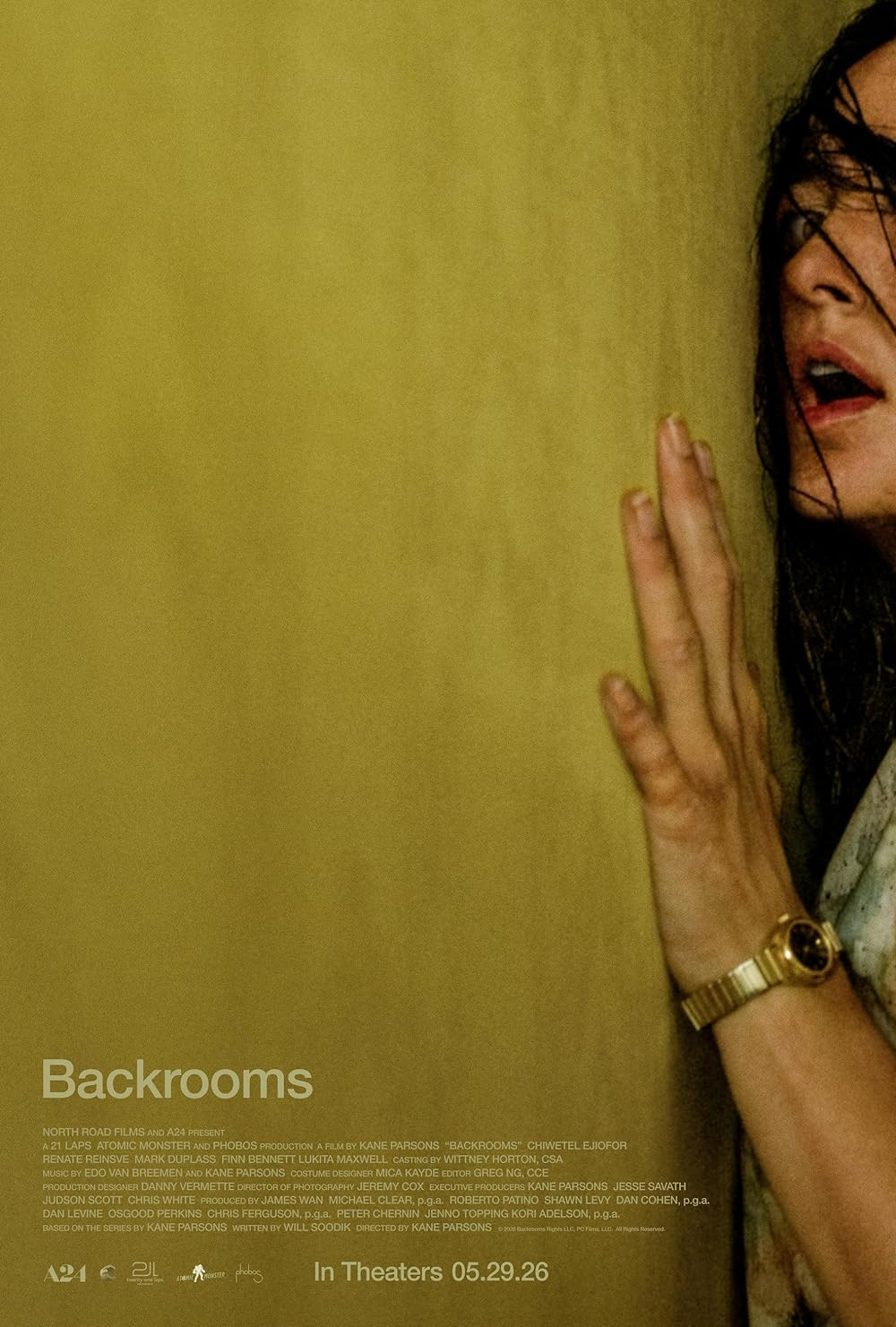
Psychologist Mary Kline must enter a mysterious dimension beyond our own in search of Clark, a furniture store owner and troubled patient of hers.
Backrooms never satisfies with easy answers and clear meaning, and that’s what resonates the most about it. It evolves throughout its runtime, from a perspective, scope, and thematic lens. Expanding on its titular concept with mystery and curiosity as it continues, the movie is always fully aware of its roots within its characters and human nature. It blends claustrophobic and sweeping spaces very well along with found footage moments that are used wisely. The threats aren’t often in frame, but when they are, one in particular reveals itself as one of the most terrifying horror villains in recent memory.
Renate Reinsve is particularly excellent, and the film thrives most when we’re experiencing its events from her character’s eyes. The production design is incredibly impressive and the weird, almost random nature of the titular dimension keeps building more and more intrigue. Setting it during the 90s was also a clever way to address its satire on capitalism and consumerism, and their isolating nature that eats away at the individual’s ambition with the facade of excess and glamour. Beyond that, there’s some dark backstories to our main characters that informs the unusual choices they make, and some images will haunt you long after the credits roll. While the first half is engaging, the second half becomes seriously captivating and subverts all expectations. It never lets you decrypt anything too easily, avoiding straightforward messages and classic three-act structure, but that’s exactly what the unknown of the backrooms are all about, too.