Next Goal Wins is the true story of American soccer coach Thomas Rongen, who travels to the American Samoa to help transform their team from the world’s worst team into stars. Taika Waititi’s irreverent flare not only gives the film plenty of laughs but an endearing underdog spirit that also highlights Samoan culture unlike lots of popular media. The casting of Michael Fassbender, an actor known primarily for dramatic roles, as a comedic lead does the film wonders. The way he portrays frustration and confusion with the incompetence around him is enjoyable, until the character begins to accept his journey into finding community around him, which becomes quite touching. Kaimana is also a standout as the character Jaiyah, an incredibly memorable and impactful character, not to mention fun supporting performances from Will Arnett and Elisabeth Moss.
The film’s comedic style is incredibly laugh-out-loud and makes you laugh in every way from situational humor to extreme physical comedy — the way Waititi does it best. Sure, underdog sports movies aren’t new to us, but the special cultural touch and loving characters make this a film that’s entertaining with every moment it has to offer. It’s short but incredibly sweet and wears its heart on its sleeve from the opening to the end credits that show you the real story the film is based on.
Ethan Hunt and his IMF (Impossible Missions Force) team must track down a dangerous weapon before it falls into the wrong hands.
Mission: Impossible is a franchise that has my utmost respect for how much it aspires to keep daring and topping what came before. Each of the last four installments have delivered unforgettable action scenes and helped redefine the franchise, so Dead Reckoning does… just that. And seven movies in, it’s still got a phenomenal amount of excitement to go along with the loud, immersive action. Tom Cruise commits to the massive action set pieces in a way that’s audacious, commendable, and likable. With the various locations, vehicles, weapons, and lighting styles, Christopher McQuarrie has proven himself to be a top-tier action director of the 21st century with this and the last two installments. Not to mention it doesn’t just look cool, but also nail-biting as I felt my body in suspense throughout a lot of the film.
Cruise also isn’t the only winning part of the cast — Simon Pegg and Ving Rhames’ lovable IMF members continue to be expanded on and serve the movie’s mood, Rebecca Ferguson proves again that she’s the best of the franchise’s female badasses (though I’d have liked to see her given more to do than she had here), and Hayley Atwell is a charming and fun addition to the cast. Vanessa Kirby, Shea Whigham, and Pom Klementieff are also giving it their all in memorable roles, and Esai Morales is a simply fantastic villain. His layered voice compliments his chilling appearance and dialogue — I only wish his motivations were expanded on a little more.
Similar to Fallout, the visual style feels gritty, like almost anything could happen, though it also effectively embraces the fun and humor even more. But like its predecessor, the writing is so complex it may take rewatches to understand every objective, alliance, motivation, and MacGuffin the script presents. However, it’s rewarding to see this franchise keep aiming for higher while never losing what’s made the last few installments into epic must-watches. I also loved the way the film modernizes the saga in that it explores technology and its dangers in a way that hopefully enough people out there take note of. There’s only a few minor narrative points I would’ve polished, like an emotional moment for Ethan that should have embraced the darkness of what Ethan was feeling more, but it’s not like the movie isn’t already 163 minutes long — but don’t worry, it flies by. Mission: Impossible – Dead Reckoning Part One isn’t just a must-watch in theaters, it made me feel lucky to have caught such a marvelous action movie on the big screen. Tom Cruise continues to show us, well, the impossible, in countless ways, but that and the stunning thrills, fun, scale, cast and directions the story and filmmaking take make it worth every second of its length, and shows the action spy genre at some of its finest ever.
Years after defeating Thanos alongside the Avengers, the Guardians embark on an uncertain adventure to save one of their own from a monumental threat, meeting old and new friends and foes along the way.
It’s been almost a decade since James Gunn’s first Guardians changed the game for superhero movies — and so many copycats or inspirations have come to the mainstream since, or attempted to. But the camaraderie of the titular team has not gotten old, even if it’s their sixth overall appearance in the MCU, and likely their last. The goofy quirks of Gunn’s humor, poking fun at the mistfit-like attitudes of the characters, or his way of giving the outcasts a traumatic backstory and a chance to grow, breathe life and soul into nearly every frame of Vol. 3. It’s not necessarily the best of the three, but it is the most visually dynamic, with engaging settings and interesting close-ups or moving shots during the actions. Chris Pratt and Dave Bautista continue to deliver in the roles that have come to define their career and help shape their A-lister status, but it’s Karen Gillan and especially Pom Klementieff who get to really grow and steal the screen from them. Rocket is also given a heavy storyline that is as tear-jerking as it is revelatory for his character. Though Chukwudi Iwuji’s villain is very over-the-top, he’s also entertaining and works for the film’s purpose. However, the inclusion of Gamora’s alternate version from an Endgame timeline feels like the storyline that didn’t add too much to the film, and her original incarnation’s death in Infinity War still feels best left untouched as it hangs weirdly over her appearance here. Here, her character is more to serve Peter Quill’s arc or simply an excuse to have the awesome Zoë Saldaña around. However, Will Poulter’s presence is Adam Warlock suffer here despite the movie’s already long (yet breezy and earned) 150-minute runtime — though he’s built up as a threat to interact with the Guardians and make his own decisions, he’s left as a very basic side character who cracks a few jokes. The character deserved an awful lot better than he got, especially due to the great work Poulter does do with what he’s given, it’s just a shame his and Ayesha’s story set up from the post-credits scene of Vol. 2 gets the bare minimum payoff. In addition, a notable standout is Oscar nominee Maria Bakalova as the voice of Cosmo the Spacedog, a very entertaining critter who gets her deserved limelight.
The soundtrack in the last two films was dominant and diverse, practically its own character within the film and a driving force for Quill’s arc. The soundtrack in this movie definitely hits less hard and may have a few too similar songs, but it’s made up for with a few amazing needle drops that set the tone and immerse you in the moment. Most of all, the character’s dynamics are all so beautiful and the building of the action is the backbone of the film, rooted in the bond of this team that has strengthened and matured over a few films. Even if the first film is a beast that’s only rivaled by a few other Marvel movies for the title of the studio’s best film, Guardians of the Galaxy Vol. 3 has undeniable charm and is also one of the most emotional MCU films across all the phases. It’s one of their better post-Endgame works and a great big-screen watch for the visuals, heart, and cast of characters.
A charming thief and a band of unlikely adventurers embark on an epic quest to retrieve a lost relic, but things go dangerously awry when they run afoul of the wrong people.
With the medieval action/fantasy epic genre being worn out to death in recent years, and a franchise with a less than notable track record, Dungeons & Dragons: Honor Among Thieves is the year’s most pleasant surprise so far. Sure, the conflict and world-building tread the line of “just enough” and the exposition isn’t that engaging, but Jonathan Goldstein and John Francis Daley imbue the film with a well-meaning, heartfelt energy that provides unexpected laughs and charm. Unlike a lot of bland fantasy action films from recent years like King Arthur: Legend of the Sword, Warcraft or the countless Hercules reboots, the characters in this movie feel like they have actual souls and empathetic reasons for the audience to root for them, not just in the quest but in their personal journeys. Chris Pine reminds the audience why his charisma works so naturally for a leading man, even though his character is occasionally greedy and a misfit. Michelle Rodriguez also delivers a more hardcore but lovable character than Letty from the Fast and Furious saga, and Justice Smith also delivers a sorcerer learning to gain his confidence well. Rege-Jean Page and Sophia Lillis both play standouts as very well-realized characters that may one day deserve a cool spinoff. Hugh Grant is also a silly yet fun villain, though his character’s presence and writing do the bare minimum for an antagonist to face off against the main team, and with an actor less capable than Grant, the role would’ve needed much more to sustain the audience’s attention.
Though some of the visual effects and green-screen are obvious, the movie isn’t trying to remind too much of the Lord of the Rings films, but rather create a jolly and comedic journey that perfectly fits the imagination, playfulness and vast possibilities of the Dungeons & Dragons brand. The action and excitement are enough to make up for conflict and rules that seem cliche, not to mention editing, direction and humor that make this not a must-watch, but better than it had any right to be, and will make the audience have a smile on their face and want to spend even more time with these characters than they ever thought they would.
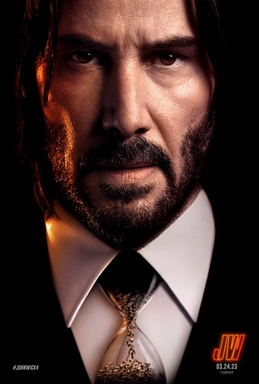
John Wick uncovers a path to defeating The High Table. But before he can earn his freedom, Wick must face off against a new enemy with powerful alliances across the globe and forces that turn old friends into foes.
Ever since John Wick offered a fresh and influential voice to the action movie landscape, the sequels have been attempting to top the scale, world-building, and insanity of the action from before. To say John Wick: Chapter 4 delivers on the promise of being the largest and most outrageous in the franchise would be an understatement. The fights are the longest, most intricately choreographed and most beautifully shot this series has been, and Keanu Reeves and the stunt team give mind-blowing work. Though for some, the movie’s obsession with topping itself may result in caricature, but it’s everything that fans of this franchise have signed up and waited for through 4 films, and then some. In addition to Reeves’ incredible commitment, Donnie Yen is one of the best characters this franchise has seen, bringing his martial-arts reputation to the series, not to mention Shamier Anderson, who’s incredibly an entertaining and likable character, as well as the excellent Hiroyuki Sanada who has great scenes with Keanu. Fans of the franchise already know to expect Ian McShane and Laurence Fishburne, not to mention this is one of the last appearances of the late Lance Reddick who was always a gem as the Continental concierge Charon. Bill Skarsgard’s character is intentionally hatable, but occasionally gets too much on the audience’s nerves to even be a fun villain.
Though these films are known way less for story beats and more for the “gun fu”, Chapter 4 culminates the titular character’s arc from the four films with more going on with him than in the last film, though the second act is 10 or so minutes too long, particularly a scene with Scott Adkins and the buildup to it. Set pieces from a Continental Hotel in Osaka to the Arc de Triomphe in Paris are nail-biting and stunning to watch, though the soundtrack is frustratingly repetitive and maybe too aggressive during the action — perhaps less dubstep would’ve been just fine — which I didn’t find to be an issue in the previous films. However, this is still a big-screen treat and an iconic action franchise coming to a grand, thrilling, and satisfying conclusion, rewarding viewers who have been tuning in through John’s creative kills and all the rules of the hitman underground world.
Billy Batson and his foster siblings protect Philadelphia with the powers that give them the strength of the gods, but soon the daughters of Atlas arrive seeking revenge for the stealing of their family’s magic ages ago, and declare war on the Shazam family and the human world.
Shazam! remains one of the best films in DC’s current shared movie universe, and Fury of the Gods brings forward everything that worked about the first movie, while expanding on the family dynamic. It’s very entertaining to watch as all the siblings are now superpowered and how it affects their interactions and characters moving forward, as the siblings who weren’t Billy and Freddy were much more minor characters in the first film. The movie also retains the same sweet, heartwarming energy that makes the Shazam saga irreverent, touching and harmlessly entertaining. The action is more in line with Tom Holland’s Spider-Man films than something as world-ending and grim as Justice League — though sometimes the world as still at stake. Zachary Levi’s charisma and natural sense of humor shines again, though it’s way more interesting to see him on screen than Asher Angel. However, Billy is a formidable hero who’s selfless, kind, and even clumsy. However, Jack Dylan Grazer and Adam Brody shine equally as Freddy. Grace Caroline Culley also stands out as both the normal and superpowered Mary, as well as Rachel Zegler, who continues to take the world by storm after West Side Story. Though Helen Mirren is incredibly entertaining as a villain, Lucy Liu’s performance is occasionally eyebrow-raising and questionable.
The visual effects also have some moments that could have used polishing, including the creatures or large set pieces, but overall most of the sets fit the Sunday-cartoon-like vibe that Shazam has always been aiming for. Not to mention, the humor is easily as memorable as the first, though the themes aren’t so as much as Billy and Freddy’s bonding in the first movie. There’s also a few scenes with Djimon Honsou that are funny but the least interesting parts of the movie. However, Shazam!Fury of the Gods gives viewers everything they signed up for while making them laugh and smile at the screen.
Adonis Creed has been living out his wildest dreams, including being the reigning heavyweight boxing champion of the world, and a loving husband and father. When an old friend Dame returns from a long prison sentence, he brings back his and Adonis’ past with him, which will lead to the next big match of Creed’s career.
Though the Creed films were always follow-ups to the beloved Rocky franchise, they’ve made themselves feel fresh and modern while retaining the themes of hard work, underdogs, healthy masculinity, and family that make Rocky so iconic. Three films in, and what you’re watching still feels exciting and imbued with passion from behind the camera. Not to mention the director behind the camera is also its star, Michael B. Jordan. He delivers a strong debut as a filmmaker and brings out not only a strong visual energy to the boxing and training sequences, but the best out of the performances. Jordan and Thompson again work so well together and are two of the most charismatic, vigorous stars of this generation. The dynamic they have, now that their daughter is in the films too, brings another beautiful layer to their world that we’ve already been invested in thanks to the last two films. Jonathan Majors is a formidable screen partner to Jordan as Dame, a man ready to get back at the world for the unfortunate past he’s suffered and the life he feels he’s been robbed of. But similar to the Dragos in Creed II, Dame is empathetic and his longing for the championship Rocky and Creed have already felt isn’t as selfish as his attitude towards getting there.
Along with the excitement of seeing cool stars spar it out in the boxing ring is the complexity that the Creed films’ characters have and the scripts’ push to always have them growing and learning new things, as for every film to feel significant. Despite this, one story arc does feel slightly incomplete at the end and despite creative editing from Jordan, it does get aggressive in a few instances. Though it isn’t as wondrously directed as when Ryan Coogler was at the helm, it’s a film that gets better and better, with the dialogue just as exciting as the sports, but when the sports is there, it’s a blast thanks to the actors, direction, and always thrilling soundtrack that gives the film so much life.
Naomi Ackie stuns in this biopic about Whitney Houston, and the movie makes a strong case for why she was the greatest singing voice of her generation. It highlights Whitney’s accomplishments, shortcomings, and struggles with glamour, empathy and care, but the editing seems to occasionally bring Ackie’s performance down and while the characters and performances are strong, the script is so cliche it almost feels like it’s checking off boxes as it goes. The music biopic tropes are almost all there, whether it be the way the movie portrays the sudden rise to fame, abusive marriage, addiction, controlling father — it’s the Aretha Franklin biopic Respect but with a different soundtrack. The way the movie goes through these cliches feels almost like the way the parodical Walk Hard: The Dewey Cox story would’ve been written, and the editing often glosses past important story points and doesn’t let the beautiful musical sequences breathe and play out without frequent montage-like editing during the songs. Cinematograper Barry Ackroyd of the Bourne movies, The Hurt Locker, Captain Phillips, and Bombshell isn’t enjoying using a tripod too much and often shifts between handheld and still shots mid-scene which occasionally distracts.
In addition to Ackie’s breathtaking work, changing Houston’s mannerisms as she takes us from her teen years to the end of her life, Stanley Tucci is excellent as her manager Clive Davis, who in a nice change of pace from most biopics, isn’t the greedy asshole who takes advantage of the star, but a kind counselor and a devoted friend to Whitney. Ashton Sanders does a strong job as her husband Bobby Brown, as well as Tamara Tunie and Clarke Peters as her parents. Seeing Whitney’s process in creating her songs is also very satisfying, as well as her struggles with drugs and her music being called “not black enough” by critics of her music. Though it’s easier to follow than this year’s Elvis and has fun sequences for fans of Whitney’s music, with a star-making work from Naomi Ackie, but the script in the latter half could’ve been much stronger, as well as the runtime which drags later on and could’ve trimmed 10-20 minutes.
Puss in Boots discovers that his passion for adventure has taken its toll: he has burnt through eight of his nine lives. With the help of old and new allies — and with some new foes in the way — Puss sets out on an epic journey to find the mythical Last Wish and restore his nine lives.
Eleven years after the first spin-off focusing on Puss in Boots was released, it wasn’t really necessary to continue or dive back into the franchise, but The Last Wish absolutely tops the first movie. Antonio Banderas is having a blast as a role that may at this point be as iconic to his name as Zorro, not to mention the characters bear plenty of similarities. Florence Pugh and John Mulaney also give the film so much with their voice performances, and Olivia Colman and Ray Winstone almost feel like they were born to voice Mama and Papa Bear, not to mention a menacing Wolf voiced by Wagner Moura. Unlike the more realistic animation of the first Puss in Boots, this blend of 3D animation with 2D coloring to create a storybook look feels reminiscent of Spider-Man: Into the Spider-Verse, The Mitchells vs the Machines, and The Bad Guys. Though the frame rate or 2D look of some shots occasionally distracts, the animation ultimately creates for a more colorful and visually impressive experience than the first movie, not to mention the well-paced and engaging action. The movie also pushes Puss to new places as a character — he’s forced to confront his pride, mortality, fears and motives and we feel like we’re watching the animated feline find some genuine growth by the end. But most importantly, its sweet, energetic, and playful intentions definitely translate to the final product, despite some overused jokes or themes that aren’t unfamiliar to animated films. It delivers a reward for families that exceeds expectations, and one of the year’s best animated films alongside films like Guillermo del Toro’s Pinocchio and Turning Red.
The legendary Clades are a family of explorers whose differences threaten to topple their latest and most crucial mission.
Strange World is incredibly visually vibrant, which is never an aspect Disney misses in, not to mention director Don Hall’s outstanding track record at Disney in the past with Big Hero 6 and Raya and the Last Dragon. The imaginative color palette in the titular world the Clade family journeys through is engaging and surprising, even when the story material feels a little hollow. Jake Gyllenhaal is perfect as the lead role Searcher Clade, and it feels long overdue for him to join the Disney animation family. His voice has an incredible likability and he delivers the balance between “frustrating (but devoted) dad”, “frustrated/traumatized son” and “reluctant adventurer” really well. Dennis Quaid, Jakoubie Young-White, and Gabrielle Union are all having plenty of fun in the recording booths as well as a dysfunctional family that all want to just get along and enjoy each other’s company, though the grandpa and legendary explorer Jaegar Clade (voiced by Quaid) has other priorities and is overly consumed with his duties to his pride and explorations. Though the style is always visually inviting, the substance behind the conflict doesn’t always click until the end, and the characters’ relationships are way more interesting than the action itself. The style believes it’s being very nostalgic, presenting itself as a tribute to pulp magazines, but it actually looks and feels very modern. Though the film is quite heartfelt due to the characters it develops, the actual themes of familial expectations have been done plenty in recent animated films, most notably in Encanto and Turning Red that are still fresh in all our memories. There are instances where it tries to even become self-aware of the cliches its indulging in, which simply makes it even more awkward. On the positive side, the movie has Disney’s most prominent representation of an LGBTQ main character in one of their animated films, which is a celebratory step forward for family films on the big screen. Gyllenhaal’s voice performance is outstanding, backed by heartfelt supporting characters, and the animation gives the film lots of energy, but not enough to rank it among other adventures from the modern era of the studio like Zootopia or Wreck-It Ralph, though it’s still sweet and a decent one-time watch for families.