Spider-Man: Across the Spider-Verse

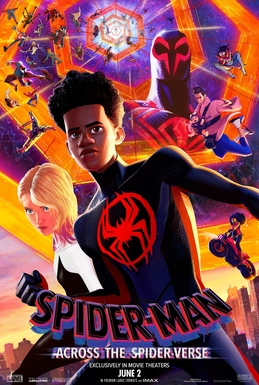
One year after defeating Kingpin alongside Spider-Men from other universes, Miles Morales is visited once again by Gwen Stacy and finds himself at odds with the Spider-Society, a multiverse-protecting organization of Spider-People led by Miguel O’Hara.

Spider-Man: Into the Spider-Verse was a film that left an impression not only an audiences but on the animation industry with its combination of 2D and 3D style. This sequel aspires to transcend the original not just through how many animation styles it blends, but through the story, tone, atmosphere and structure it builds that may just humiliate everything from that beloved first film based on ambition alone. Though the movie tries to emulate that same comic-like spirit from the first film, there’s a deeper energy and culture to the film’s feel, including the music and mood, from the first scene, which feels like a masterful piece of storytelling even on its own. Hailee Steinfeld this time is just as much the emotional core as is Miles Morales, and she delivers a great performance as the painful choices Gwen’s had to make are revealed to the audience — the entire movie is probably one of the most mature animated films thematically and tonally I’ve ever seen. It’s still “family friendly”, but the audience is treated as much more mature and patient than most animated films would. Also a standout is Daniel Kaluuya as the rebellious, anti-authority Spider-Punk whose voice performance sticks out as much as some of the animation, not to mention Karan Soni, Brian Tyree Henry, Luna Lauren Velez and Oscar Isaac. The villain of the Spot, voiced by Jason Schwarzman, is as silly as they get, but his nerdy voice and chaotic appearance make his sudden rise to being Miles’ greatest threat work due to that irony.

The movie’s experimentations with different animation styles throughout the multiverse can feel overwhelming at the speed the visuals are thrown at you, but it’s also wondrously imaginative to see this creation of what feels like a tribute to the audiences and the medium of animation. However, though the pacing does let the environment of the film breathe, it feels significantly slower than the first and takes a bit too long to the get to the multiverse-traveling action. That pacing also doesn’t feel like it pays off any more due to the cliffhanger ending, to tease the end of the trilogy coming out next year. It felt like they could’ve easily added a climax to make the movie feel more whole than the way it ended, even by shortening some of what had come before. That’s not to say that the movie ever has filler, but the pacing and structure feel like a jarring change from the first film. That said, it’s more than made up for by an unforgettable, stunning action scene involving a futuristic universe and a train, with the emotional stakes up to a high. The humor also goes really well with the film, often thrown at you with lightning speed but never failing to amuse with that same charm the first one had. Though structurally and story-wise, it’s not as good as the first, it definitely does top the first based on visuals, scale, creativity and ambition, and is worth a watch for fans of the characters as well as audiences of all ages looking for a relatable hero like Miles Morales.

Fast X

Dominic Toretto and his loved ones are targeted by Dante Reyes, a man seeking revenge for his father’s death looking to torture Toretto, while the fate of the world and Dom’s family lie in the balance.

What happens when a franchise that requires the lowest common denominator of intellect to work can’t find ways to excite? Science, physics, and logic have become myths the Fast Saga, but even the eighth and ninth installments were fun action comedies with ridiculously exciting scale. Fast X unfortunately feels like almost the same movie as F9 with a lot of the same beats, but the progression of the story threads and the globe-trotting action are no longer fun or feel like they’re actually aiming somewhere. There is an action scene in Rome that cleverly indulges in the silliness and scale that these movies are known for, but its all downhill from there. With the consequences of Dom’s past catching up to him, it felt like a great opportunity to really deconstruct Toretto as a character and focus on the recklessness of his younger self and have him reckon with and grow. As a character, the movie is still only concerned with having him protect his family and worship shiny cars, though, and Vin Diesel’s lacking of charisma or range bring him deeper into caricature as he heroically overcomes certain death by the minute. A lot of the other leads such as Michelle Rodriguez, Tyrese Gibson, and Ludacris, fall flat as well as the latter two’s humorous banter no longer feels self-aware in a funny way, while the far more talented Nathalie Emmanuel is mostly there as the “straight woman” to their goofy antics. John Cena delivers a far more charismatic and fitting performance to his talents, and is actually the standout in this film despite being overly serious and wooden in the last film, while Jason Momoa tries to defy that same “muscular man” stereotype by delivering a psychotic, Joker-like unhinged character, but his dialogue often annoys and brings the film down. The film also suffers from an overabundance of characters and storylines that simply aren’t inviting, including several characters like Sung Kang, Jason Statham, Jordana Brewster and Helen Mirren who do nothing for the story or the film’s personality and are simply there for fan service — not even Charlize Theron, a favorite of mine, feels like the writers understand where to take her character. Daniela Melchior is a great addition to the cast, and while Brie Larson and Alan Ritchson are both talented, their roles feel out of place in the movie, though that may speak to how much worse the rest of the material is compared to their acting abilities.

Though the last few films made up for formulaic storylines with a comedy and style that the audience could connect to, the editing here is irritatingly flashy and overblown, and any feeling of personality they try to give to the adventure feels artificial. Its greatest sin, though, isn’t just that it’s repeating itself yet again and losing its steam, but that it’s stuck in the past. For this saga, building new characters instead of re-emphasizing stale decades-old ones seems to not be an option unless they have connections to past movies. The movie is trying to constantly remind you that events from the last films have happened, as a way to indicate this is (allegedly) the first of a two-film finale, and instead of rewarding to fans, it’s the most headache-inducing and condescending trick the film could think of. Even when it’s still tonally goofy and claims to be aware of its ridiculousness, that warmth this time around really only shines when John Cena is present because the plot itself is so poor and doesn’t feel to be moving forward or taking any slick directions. It’s hard to imagine who these movies are still for, because while it’s still humorously using the tired formula it’s now worn out, it’s so seriously bent on having those same tropes from the saga’s past and making everything about family and nothing more. By the end, it feels like a dull caricature of what’s come before, trying to set up more dramatic stakes and dangers for its team of heroes as well as for the sequel, in a franchise where that can’t work for the audience after nothing really changes for good for several movies straight. This one simply fails at its most important job to feel bigger and most importantly, cool.

Guardians of the Galaxy Vol. 3

Years after defeating Thanos alongside the Avengers, the Guardians embark on an uncertain adventure to save one of their own from a monumental threat, meeting old and new friends and foes along the way.

It’s been almost a decade since James Gunn’s first Guardians changed the game for superhero movies — and so many copycats or inspirations have come to the mainstream since, or attempted to. But the camaraderie of the titular team has not gotten old, even if it’s their sixth overall appearance in the MCU, and likely their last. The goofy quirks of Gunn’s humor, poking fun at the mistfit-like attitudes of the characters, or his way of giving the outcasts a traumatic backstory and a chance to grow, breathe life and soul into nearly every frame of Vol. 3. It’s not necessarily the best of the three, but it is the most visually dynamic, with engaging settings and interesting close-ups or moving shots during the actions. Chris Pratt and Dave Bautista continue to deliver in the roles that have come to define their career and help shape their A-lister status, but it’s Karen Gillan and especially Pom Klementieff who get to really grow and steal the screen from them. Rocket is also given a heavy storyline that is as tear-jerking as it is revelatory for his character. Though Chukwudi Iwuji’s villain is very over-the-top, he’s also entertaining and works for the film’s purpose. However, the inclusion of Gamora’s alternate version from an Endgame timeline feels like the storyline that didn’t add too much to the film, and her original incarnation’s death in Infinity War still feels best left untouched as it hangs weirdly over her appearance here. Here, her character is more to serve Peter Quill’s arc or simply an excuse to have the awesome Zoë Saldaña around. However, Will Poulter’s presence is Adam Warlock suffer here despite the movie’s already long (yet breezy and earned) 150-minute runtime — though he’s built up as a threat to interact with the Guardians and make his own decisions, he’s left as a very basic side character who cracks a few jokes. The character deserved an awful lot better than he got, especially due to the great work Poulter does do with what he’s given, it’s just a shame his and Ayesha’s story set up from the post-credits scene of Vol. 2 gets the bare minimum payoff. In addition, a notable standout is Oscar nominee Maria Bakalova as the voice of Cosmo the Spacedog, a very entertaining critter who gets her deserved limelight.

The soundtrack in the last two films was dominant and diverse, practically its own character within the film and a driving force for Quill’s arc. The soundtrack in this movie definitely hits less hard and may have a few too similar songs, but it’s made up for with a few amazing needle drops that set the tone and immerse you in the moment. Most of all, the character’s dynamics are all so beautiful and the building of the action is the backbone of the film, rooted in the bond of this team that has strengthened and matured over a few films. Even if the first film is a beast that’s only rivaled by a few other Marvel movies for the title of the studio’s best film, Guardians of the Galaxy Vol. 3 has undeniable charm and is also one of the most emotional MCU films across all the phases. It’s one of their better post-Endgame works and a great big-screen watch for the visuals, heart, and cast of characters.

The Super Mario Bros. Movie

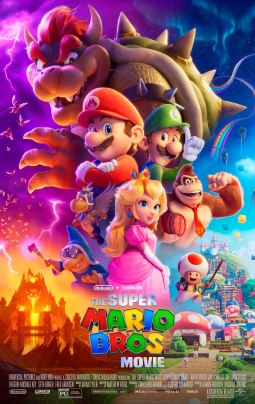
The Super Mario Bros. Movie assembles an all-star voice cast in the game-based movie in which Mario, Luigi and Princess Peach must band together to stop Bowser’s attack on the mushroom kingdom. The animation is colorful and lively, doing the vivid and imaginative world of Mario justice. Though the movie starts out with a sweet underdog charm due to its protagonist brothers, it soon trades any personality that makes the franchise stand out for the same flat characters and dynamics Illumination Entertainment has been writing for over a decade. The characters’ journeys aren’t all that intriguing besides some of the voice performances, and the plot, dialogue and even song choices have been borrowed from countless other movies. There are a few funny moments and the action is suitable for families to watch, but the movie never aims to have a heart that could impress teens or adults. Chris Pratt does an okay job as the titular character, though his turn is nowhere near as unique as what he brought to Emmett in The Lego Movie. Jack Black, Charlie Day and Seth Rogen perfectly fit their characters, so does Anya Taylor-Joy though Princess Peach’s characteristics are reduced to “brave female butt-kicker” and any character relationships or themes are brushed past, even the adventure feels incredibly rushed. Mario and Luigi’s brotherhood is the one thing that’s charming, though they aren’t together for that long.

The movie draws from and pays tribute to many corners of the Mario game franchise, but a lot of the game play references feel incredibly on the nose, when the point of a video game adaptation is to draw from the look and feel of the source material rather than strictly translate its gameplay. Though it does reward fans to see all parts of Mario’s history including Super Smash Bros and Luigi’s Mansion, it’s unfortunately not enough to warrant the price of admission. The film’s main strength is in the voice cast and colorful animation, as well as a few good jokes, but it’s really only worth going to to keep audiences 10 and under attentive, as most of the film’s story beats feel like an AI took Illumination’s past movies and wrote them into the Mario universe. Unfortunately, you’re better off rewatching similar movies like The Lego Movie or Wreck-It Ralph.

Dungeons & Dragons: Honor Among Thieves

A charming thief and a band of unlikely adventurers embark on an epic quest to retrieve a lost relic, but things go dangerously awry when they run afoul of the wrong people.

With the medieval action/fantasy epic genre being worn out to death in recent years, and a franchise with a less than notable track record, Dungeons & Dragons: Honor Among Thieves is the year’s most pleasant surprise so far. Sure, the conflict and world-building tread the line of “just enough” and the exposition isn’t that engaging, but Jonathan Goldstein and John Francis Daley imbue the film with a well-meaning, heartfelt energy that provides unexpected laughs and charm. Unlike a lot of bland fantasy action films from recent years like King Arthur: Legend of the Sword, Warcraft or the countless Hercules reboots, the characters in this movie feel like they have actual souls and empathetic reasons for the audience to root for them, not just in the quest but in their personal journeys. Chris Pine reminds the audience why his charisma works so naturally for a leading man, even though his character is occasionally greedy and a misfit. Michelle Rodriguez also delivers a more hardcore but lovable character than Letty from the Fast and Furious saga, and Justice Smith also delivers a sorcerer learning to gain his confidence well. Rege-Jean Page and Sophia Lillis both play standouts as very well-realized characters that may one day deserve a cool spinoff. Hugh Grant is also a silly yet fun villain, though his character’s presence and writing do the bare minimum for an antagonist to face off against the main team, and with an actor less capable than Grant, the role would’ve needed much more to sustain the audience’s attention.

Though some of the visual effects and green-screen are obvious, the movie isn’t trying to remind too much of the Lord of the Rings films, but rather create a jolly and comedic journey that perfectly fits the imagination, playfulness and vast possibilities of the Dungeons & Dragons brand. The action and excitement are enough to make up for conflict and rules that seem cliche, not to mention editing, direction and humor that make this not a must-watch, but better than it had any right to be, and will make the audience have a smile on their face and want to spend even more time with these characters than they ever thought they would.

John Wick: Chapter 4

John Wick uncovers a path to defeating The High Table. But before he can earn his freedom, Wick must face off against a new enemy with powerful alliances across the globe and forces that turn old friends into foes.

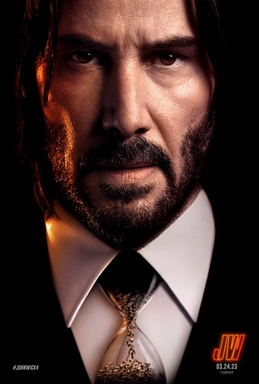
Ever since John Wick offered a fresh and influential voice to the action movie landscape, the sequels have been attempting to top the scale, world-building, and insanity of the action from before. To say John Wick: Chapter 4 delivers on the promise of being the largest and most outrageous in the franchise would be an understatement. The fights are the longest, most intricately choreographed and most beautifully shot this series has been, and Keanu Reeves and the stunt team give mind-blowing work. Though for some, the movie’s obsession with topping itself may result in caricature, but it’s everything that fans of this franchise have signed up and waited for through 4 films, and then some. In addition to Reeves’ incredible commitment, Donnie Yen is one of the best characters this franchise has seen, bringing his martial-arts reputation to the series, not to mention Shamier Anderson, who’s incredibly an entertaining and likable character, as well as the excellent Hiroyuki Sanada who has great scenes with Keanu. Fans of the franchise already know to expect Ian McShane and Laurence Fishburne, not to mention this is one of the last appearances of the late Lance Reddick who was always a gem as the Continental concierge Charon. Bill Skarsgard’s character is intentionally hatable, but occasionally gets too much on the audience’s nerves to even be a fun villain.

Though these films are known way less for story beats and more for the “gun fu”, Chapter 4 culminates the titular character’s arc from the four films with more going on with him than in the last film, though the second act is 10 or so minutes too long, particularly a scene with Scott Adkins and the buildup to it. Set pieces from a Continental Hotel in Osaka to the Arc de Triomphe in Paris are nail-biting and stunning to watch, though the soundtrack is frustratingly repetitive and maybe too aggressive during the action — perhaps less dubstep would’ve been just fine — which I didn’t find to be an issue in the previous films. However, this is still a big-screen treat and an iconic action franchise coming to a grand, thrilling, and satisfying conclusion, rewarding viewers who have been tuning in through John’s creative kills and all the rules of the hitman underground world.

Shazam! Fury of the Gods

Billy Batson and his foster siblings protect Philadelphia with the powers that give them the strength of the gods, but soon the daughters of Atlas arrive seeking revenge for the stealing of their family’s magic ages ago, and declare war on the Shazam family and the human world.

Shazam! remains one of the best films in DC’s current shared movie universe, and Fury of the Gods brings forward everything that worked about the first movie, while expanding on the family dynamic. It’s very entertaining to watch as all the siblings are now superpowered and how it affects their interactions and characters moving forward, as the siblings who weren’t Billy and Freddy were much more minor characters in the first film. The movie also retains the same sweet, heartwarming energy that makes the Shazam saga irreverent, touching and harmlessly entertaining. The action is more in line with Tom Holland’s Spider-Man films than something as world-ending and grim as Justice League — though sometimes the world as still at stake. Zachary Levi’s charisma and natural sense of humor shines again, though it’s way more interesting to see him on screen than Asher Angel. However, Billy is a formidable hero who’s selfless, kind, and even clumsy. However, Jack Dylan Grazer and Adam Brody shine equally as Freddy. Grace Caroline Culley also stands out as both the normal and superpowered Mary, as well as Rachel Zegler, who continues to take the world by storm after West Side Story. Though Helen Mirren is incredibly entertaining as a villain, Lucy Liu’s performance is occasionally eyebrow-raising and questionable.

The visual effects also have some moments that could have used polishing, including the creatures or large set pieces, but overall most of the sets fit the Sunday-cartoon-like vibe that Shazam has always been aiming for. Not to mention, the humor is easily as memorable as the first, though the themes aren’t so as much as Billy and Freddy’s bonding in the first movie. There’s also a few scenes with Djimon Honsou that are funny but the least interesting parts of the movie. However, Shazam! Fury of the Gods gives viewers everything they signed up for while making them laugh and smile at the screen.

Ant-Man and the Wasp: Quantumania

Scott and Cassie Lang, Hope and Janet van Dyne, and Hank Pym are all accidentally transported to the Quantum Realm and embark on an adventure that goes beyond the limits of what they thought was possible.

Though this threequel expands on the scale of the last two Ant-Man movies to the massive possibilities of the Quantum Realm, the film lacks the charm and wit that a movie with Paul Rudd as a shrinking superhero should have. The green screen and visual effects are hit or miss in terms of blending in with the actors, and the sets feel derivative of Star Wars and Guardians of the Galaxy, almost as if the production asked James Gunn to borrow a Guardians set for a day but without following through with the weird and quirkiness of what we’re seeing. Instead, the adventure just feels like it’s going through the motions until we meet Kang, who’s played strongly by Jonathan Majors. The stakes when it comes to his character are engaging but still too vague to give his character the depth beneath Majors’ stellar presence. Whenever the actors do get the chance to quip off each other or interact with bonkers new characters they meet, it makes for funny moments, especially due to Rudd’s undeniable talent and Kathryn Newton’s performance as Cassie, but any meaningful character development is nonexistent besides the characters revealing secrets or reiterating their love to each other. The movie’s themes about heroism and “looking out for the little guy” are sweet but only take it so far because of the unoriginal execution. The action itself has some fun moments and laughs, but ends up a standard adventure that isn’t inspired or clever enough to do its titular hero justice or advance his arc besides showing him the MCU’s new big bad.

Ant-Man and the Wasp: Quantumania is a watchable movie without enough quirks to make the tone satisfying or enough complexity to make the conflict fascinating. Even for the Ant-Man trilogy, it’s simply fine and only needs to be watched to collect important puzzle pieces for the future of the MCU.

Avatar: The Way of Water

Set more than a decade after the events of the first film, learn the story of the Sully family (Jake, Neytiri, and their kids), the trouble that follows them, the lengths they go to keep each other safe, the battles they fight to stay alive, and the tragedies they endure.

James Cameron created a monumental landmark in visual entertainment and epic storytelling with Avatar. A sequel so many years later with so much promise to top the first would send too impossible to be real, but The Way of Water manages to deliver that same ambition felt in every shot of the first film and then some. Years were spent to create new technology to film motion-capture scenes underwater, and I’m glad Cameron spent all the time he needed to get it right because the term “out of this world” has never fit more for anything else. The plot beats in the first hour are familiar, but everything from there onwards is breathtaking, grand, and mesmerizing to the eye. The underwater scenes are some of the most visceral visual cinema I’ve ever seen, with the detail and realism allows you to completely suspend disbelief as you feel you’re actually on Pandora. Sam Worthington and Zoe Saldana are great in their roles again, and the script this time beautifully captures the depth of a parent’s love for their child. Sigourney Weaver returns not as the same character but in a different and inventive way. Jake and Neytiri’s children are as complex and poetic characters as their parents who carry across the story’s themes such as empathy, uniqueness, and selflessness.

Cameron manages to somehow expand on the scale of Pandora and this fictional universe that millions of audiences were already in love with, while finding the intimate moments beneath all the colorful CGI that often stick out and resonate. The cast ensemble may not be Lord of the Rings-level of memorable yet, but the world-building and storytelling certainly is. Not to mention, the love Cameron creates between the audience and the oceans of Pandora may hopefully bring attention to the way corporations and human actions deplete our oceans here at home, and the way of water the title refers to is the beauty of nature that our ancestors knew so purely that can give life and consume those who don’t respect it. The overall narrative has familiar beats but the emotion is heartfelt and thrilling, and the atmosphere and aesthetics are a once-in-a-lifetime experience that has to be seen on the biggest screen you can seek out and in 3D — I’d recommend IMAX 3D, which is how I saw it. Avatar: The Way of Water may have the lesser story of the two Avatar films, but it has a sensational awe and grandeur to its fusion of images, score, and weight that invites you to not only enjoy, but experience, behold, and never want to leave the forests and oceans of Pandora.

Strange World

The legendary Clades are a family of explorers whose differences threaten to topple their latest and most crucial mission.

Strange World is incredibly visually vibrant, which is never an aspect Disney misses in, not to mention director Don Hall’s outstanding track record at Disney in the past with Big Hero 6 and Raya and the Last Dragon. The imaginative color palette in the titular world the Clade family journeys through is engaging and surprising, even when the story material feels a little hollow. Jake Gyllenhaal is perfect as the lead role Searcher Clade, and it feels long overdue for him to join the Disney animation family. His voice has an incredible likability and he delivers the balance between “frustrating (but devoted) dad”, “frustrated/traumatized son” and “reluctant adventurer” really well. Dennis Quaid, Jakoubie Young-White, and Gabrielle Union are all having plenty of fun in the recording booths as well as a dysfunctional family that all want to just get along and enjoy each other’s company, though the grandpa and legendary explorer Jaegar Clade (voiced by Quaid) has other priorities and is overly consumed with his duties to his pride and explorations. Though the style is always visually inviting, the substance behind the conflict doesn’t always click until the end, and the characters’ relationships are way more interesting than the action itself. The style believes it’s being very nostalgic, presenting itself as a tribute to pulp magazines, but it actually looks and feels very modern. Though the film is quite heartfelt due to the characters it develops, the actual themes of familial expectations have been done plenty in recent animated films, most notably in Encanto and Turning Red that are still fresh in all our memories. There are instances where it tries to even become self-aware of the cliches its indulging in, which simply makes it even more awkward. On the positive side, the movie has Disney’s most prominent representation of an LGBTQ main character in one of their animated films, which is a celebratory step forward for family films on the big screen. Gyllenhaal’s voice performance is outstanding, backed by heartfelt supporting characters, and the animation gives the film lots of energy, but not enough to rank it among other adventures from the modern era of the studio like Zootopia or Wreck-It Ralph, though it’s still sweet and a decent one-time watch for families.