Dune: Part Two

In the second part of Denis Villeneuve’s adaptation of the classic sci-fi novel, Paul Atreides seeks revenge against the Harkonnens, who slaughtered most of his House Atreides, and liberate the native Fremen of the planet Arrakis while joining them and learning their ways, all while the fate of the Imperium lays in the balance.

The first Dune from 2021 may have been one of the most stunning blockbusters in recent memory, but this extraordinary sequel puts everything in its predecessor — and almost any action movie I’ve ever seen — to shame. Picking up shortly after the first film, the drama is heightened, the world-building is bombastic, and the sound and visual experience is a one-of-a-kind theater trip. Visceral is such an overused term these days that it wouldn’t do Dune: Part Two justice; you feel how wide this universe spreads and the history of the different conflicts and races that inhabit it. And once you’re brought into this fictional world, you’ll never want to leave, as the nearly 3-hour runtime flies by and every plot development is fascinating. Beyond Villeneuve’s imagination, Greig Fraser’s cinematography is the real MVP here. The beauty within the uncertainty of the desert planet is captured in such a scope that it demands in IMAX viewing, and the different planets all contribute a symbolic and gorgeous aesthetic. Timothee Chalamet takes us on the next step of Paul’s journey: his desire to adapt and fight and his fear of allowing power and faith to corrupt him. He proves that he’s always been a movie star that’s here to stay, and Rebecca Ferguson’s Lady Jessica also takes really interesting directions that make you see her role in the story, and of her son’s, in a murkier way. Zendaya also becomes a lot of the heart here as Chani, one of the franchise’s most noble characters, and Josh Brolin is always terrific as Gurney, while Javier Bardem puts his soul into the role of Stilgar, whose faith drives him towards Paul and Jessica. Austin Butler may be the standout, however, as Feyd-Rautha, whose deranged and sadistic presence create a nail-biting character and a powerful young man who has fully embraced his disturbed nature.

Though Dune: Part Two ups the ante with its visuals and performances, its the powerful script and heightened emotional stakes that make this experience what it is. The film explores questions as to how faith and hope can be exploited, and if the urge for power truly corrupts whoever gets a taste of it. Though you may find yourself trying to guess which paths these characters will take, there’s also lots of unexpectedness and the film’s most intense moments took my breath away. You understand so deeply the dynamics of this galaxy and its cultures, and how much lays in the balance. The exhilarating scale and exciting, constantly developing pace only works because of the passion behind each character and story thread: passion to lead, rule, fight, love, honor, avenge, or secure a future. These moral greys form the dark and poetic drama that’s impeccably guided by frame-worthy shots and booming sound. Never have I felt so deeply that I didn’t want a film to end, as once you’re sucked into this marvelous world by Villeneuve, you’ll never want to go home. We’ve rarely seen emotion and grandiose like this in action movies so flawlessly convert to a magnetic cinematic experience. The Empire Strikes Back comparisons are worthy but also a little humbling; this reaches the bar that The Lord of the Rings: The Return of the King set for sci-fi/fantasy epics. It’s a show-stopping galactic saga that unleashes its ambition and magnitude onto you in a way that will entrance and thrill whoever buys a ticket. It’s a spectacle that sets the bar so high for whatever else is to come in blockbuster filmmaking, and like the unreal visuals and scale of Avatar: The Way of Water, needs to be seen on a massive screen, to be transported with other people, and watch a story unfold that you’ll never forget.

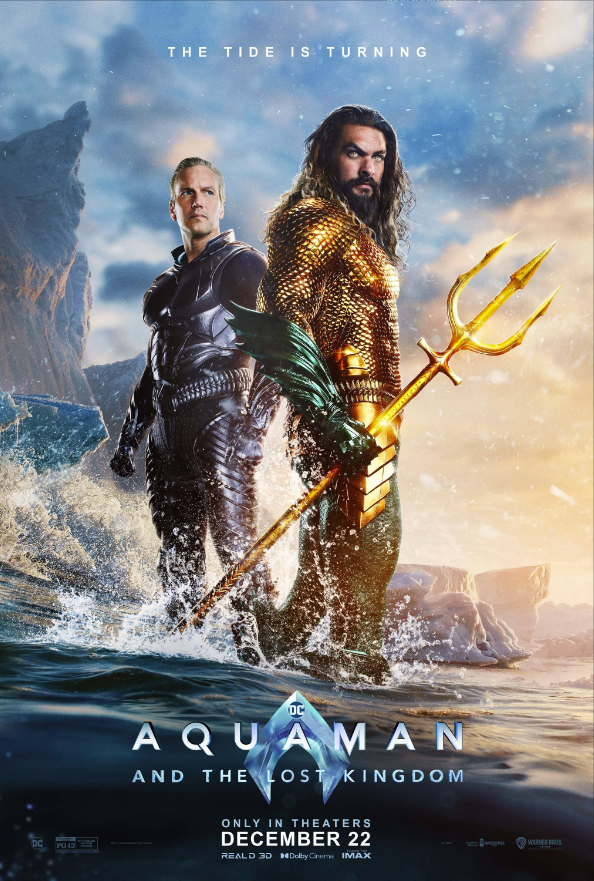
Aquaman and the Lost Kingdom

When Black Manta returns for revenge against Arthur Curry/Aquaman, who is now King of Atlantis, he must unite with his former enemy — his half-brother Orm — to prevent Manta from causing a global catastrophe.

The first Aquaman film isn’t a must watch for action or fantasy fans, but it’s a fun film that knows what it’s going for and how to build an engaging world and action set pieces on the screen. Save for a few cool effects and maybe one action scene that’s great, this soulless and uninspired sequel lacks all of that. The story is so convoluted and unengaging that it’s hard to imagine James Wan had any part in bringing it life. Jason Momoa is having a great time in the titular role, but everyone else seems like they’d rather be anywhere else, even the great Nicole Kidman. Aquaman and Orm’s brotherly dynamic isn’t as sweet as the film imagines it is, and it’s basically the same dynamic Thor and Loki had when the latter broke out from prison in Thor: The Dark World. However, Momoa gives off that endearing energy very well in his line delivery — maybe the only good thing this script has going for it. Yahya Abdul Mateen II as the main villain really excited me, but even he isn’t really used well, with his unfiltered rage being clouded by plot MacGuffins and silly side goals that the film should’ve done without, not to mention Randall Park who’s very well cast but his character isn’t executed that strongly, and Dolph Lundgren’s incredibly questionable and head-scratching performance.

The visuals of Atlantis still look cool but the corners of this fantastical world that are explored this time don’t look very interesting once you leave the kingdom of Atlantis itself, which is pretty early on. Besides one action scene that takes place in the first act in Atlantis’ big city you saw in the first film, the action’s choreography misses the mark and the attempts to raise the stakes by adding plot devices and tying them into climate change are too tacked on. There’s also plenty of dialogue and soundtrack choices that are simply irritating and generic. Through the end, Aquaman and the Lost Kingdom doesn’t seem interested in redeeming itself and settles for the less exciting decisions each time. It’s a disappointment considering how enjoyable and cheeky that first movie is, and does nothing to warrant a watch even for fans of that first movie’s energy and characters, or action movie fans in general besides some empty spectacle without the delight.

The Hunger Games: The Ballad of Songbirds and Snakes

The Hunger Games: The Ballad of Songbirds and Snakes is set 64 years before the first Hunger Games movie, around the time of the 10th Hunger Games where a young Coriolanus Snow is living in the Capitol, facing choices that will define his future and that of Panem as he mentors District 12 tribute Lucy Gray Baird to victory in the arena.

This adaptation of Suzanne Collins’ excellent prequel to her acclaimed series of novels has the best cinematography of the franchise, and stunning production design. The Hunger Games films have always boasted incredible world-building, making the intricate politics and history of Panem spread far beyond the screen, and introducing the audience to a wide world of characters within it. However, the film sometimes lacks soul when it needs it most, especially in its first act. Tom Blyth gives an interesting performance of a young man as his narcissism and consumption for power begins to consume him whole. Though Rachel Zegler’s singing voice and presence gives Lucy Gray heart, her character lacks the consistency and potency she’s meant to have, not to mention an off-putting Southern accent. The chemistry between Zegler and Blyth feels weak, though it should’ve been a key component in the film. Jason Schwartzman gives a great comedic performance as Lucky Flickerman, the announcer of the Games, and Josh Andres Rivera gives the most empathetic performance as Sejanus. Hunter Schafer also steals the screen as Snow’s cousin Tigris, but doesn’t have nearly as many scenes as she deserved. Although Viola Davis’ character is supposed to be repulsive, her voice and lines are weirdly over-the-top.

The sequences we see inside of the Hunger Games are absolutely amazing, and more visually exciting than anything we saw in the arena of the original 2012 film. The dynamic shots and lighting create a scenery that’s both grand and sadistic. The post-war dynamics between the Capitol and Districts hits hard with the viewing of the Games, the dialogue itself is lacking and character decisions seem sometimes unearned. What is well-earned is this idea of a Hunger Games prequel set at this era so soon after a civil war and its sickening aftermath, and hitting home themes about human nature, but it should likely be viewed in the context of the films that were released before it — films that may have had better characterization despite this one’s admirable ambitions and aesthetic.

The Marvels

Carol Danvers gets her powers entangled with those of Kamala Khan and Monica Rambeau, forcing them to work together to save the universe.

The best way to make a good Captain Marvel sequel is to bring in the other superpowered women in her world — her “niece” who hasn’t seen her in years, and Jersey City teen who’s Carol’s biggest fan. Right away, Nia DaCosta’s directorial energy shines in the pace and editing, but what truly strengthens the experience is the chemistry between Brie Larson, Teyonah Parris, and Iman Vellani. The three blend together naturally, particularly Larson and Vellani, with Larson’s loving presence shining through as does Vellani’s excitement over seeing her hero in the flesh. Though Carol and Monica get to have some heart-to-heart, it doesn’t feel like Rambeau’s character gets more interestingly developed than in WandaVision. The villain Dar-Benn is one of the film’s greatest faults — though Zawe Ashton is strongly cast and the character’s motives are clearly established, her actions don’t feel menacing or personal enough to warrant the audience’s hatred of her as a villain.

Despite mostly strong visuals, the action scenes (besides a great opening one) feel like more derivative versions of other action scenes in the MCU except for the “switching places” aspect, and the latter ones feel in fact messy and rushed. The film also isn’t too concerned with making its emotional themes stick, and most of the heart rests in the natural talent the three stars already bring and the love they share for each other in the story, but Kamala Khan’s family makes for great supporting characters and comedic reliefs, as well as the adorable Flerken cat Goose. The rules and devices that come into play, feel either incoherent or underdeveloped within the flow of the story, resulting in the film sometimes feeling like a less realized version of a great movie. That said, there’s heart, energy, and fun in this film, and even some delightful musical moments, although DaCosta’s passion isn’t felt as much when some other of its critical ideas feel standard and undercooked.

The Creator

In a future where humans have gone to war with artificial intelligence, Joshua, an ex-special forces agent, is recruited to hunt down and kill the “Creator”, who has developed a mysterious weapon with the power to end the war.

Seven years after the release of his last film Rogue One: A Star Wars Story, Gareth Edwards arrives with what feels like a visionary action film that feels parts Blade Runner and Avatar. The visual effects come together seamlessly to create a world that’s set in the distant future but might not be so far-fetched considering attitudes on AI in these times. The humans, robots, and hybrids all blend together in the frame and the robots’ movements look so smooth you’d believe they look exactly like that as they interact with other items in the screen. Not to mention the pitch-perfect cinematography from Greig Fraser and Oren Soffer that creates a mood that’s stunning yet violent, in-camera yet out of this world. John David Washington makes becoming one of the generation’s coolest action stars look effortless, and Allison Janney is surprisingly great, as well as the always delightful and nuanced work of Ken Watanabe. Madeline Yuna Voyles delivers a great breakout as a powerful AI child, though her relationship with Washington’s character doesn’t really click until later on, and even then feels a little derivative.

Though structurally you will occasionally encounter familiarity, the film takes a unique approach to the conflict between humans and artificial life, and visually it’s like nothing out there right now. Though the plot turns may be predictable for many viewers, it has a flare and liveliness to the action that not many other action movies this year had. More importantly, it feels even more special today as it’s one of the only theatrical action/sci-fi blockbusters of this scale without any source material/IP that’s been released in the last few years, and that’s worth commending and supporting. But whenever this had been released or viewed, Gareth Edwards’ inspired direction solidifies him as someone who’s in love with the worlds his movies imagine as much as the stories they tell on the page, and The Creator would make you want to invest in anything he puts his stamp on next.

Blue Beetle

When recent college gradaute comes across a valuable piece of military tech designed by Kord Industries, he suddenly gets attached to a sentient scarab and becomes its host. He must use his new suit to discover his identity and fight for his family.

Blue Beetle has no concern with scale or world-building like the other last few DCEU films, but feels effortless in building beautiful family dynamics among the Reyes family that give our lead character a real soul and a reason to fight. It’s lovely to see such a supportive family with no strings attached in a superhero film, and see Jaime as a college graduate going through relatable life issues. But the character could’ve easily still fallen flat in the script had the film not struck gold with its casting. Xolo Mariduena is a ray of light and as Jaime. Not a moment goes by where you don’t feel his charm and energy as a magnetic and empathetic presence, but as Jaime learns, he isn’t the same without his family. He’s surrounded by a cast of fantastic performers as the family. George Lopez in particular is absolutely hilarious as his Uncle Rudy, not to mention a scene-stealing Adriana Barazza as his grandma. Belissa Escobedo is also a breakout as Jaime’s sister Milagro who is an incredibly layered and likable character, and these actors come together to build a support system that helps Jaime understand the importance of family while cheering him on on his own journey. Bruna Marquezene is also great as Jenny Kord and adds a lot to the film, and Harvey Guillen has a small but hysterical role. Susan Sarandon is well-cast as Victoria Kord, though her lines and motives are riddled with superhero corporate baddie cliches.

Though the cast helps make the movie as soulful as it is, the visual look of the film can be underwhelming. The 80s campy feel is appreciable but the quality of the CGI and the lighting choices are uninteresting, and occasionally questionable. That being sad, the cheeky energy converts enough into smiles and emotion that the audience feels for its lead characters, making Jaime Reyes potentially one of the best DCEU protagonists, and worth a watch for fans of superhero films.

The Flash

After going back in time to try to undo his mother’s death, Barry Allen AKA The Flash finds himself in a drastically changed timeline with unexpected consequences, threats and allies.

The Flash surprises with its impressive visual and tonal energy, and feels like possibly the best Flash movie we could’ve gotten. From the beginning, the visual approach to Barry’s powers and the comedic flow of the film’s pace, carried well by Ezra Miller’s dual performance with a nervous, confused charm, is what makes the movie feel like light but very exciting fun. The character feels fleshed out and the grand action combining named heroes feels like the comic-book feel DC has been trying to nail for years. Barry’s story is also very fleshed out, and he’s a character who makes mistakes but is also sympathetic and gets much to work with from a script perspective, with the film tonally feeling like Tom Holland’s Spider-Man with the story elements of Back to the Future Part II, Men in Black 3 or The Adam Project. Michael Keaton gives the film lots of charismatic gravitas and some of the film’s best action moments with his return as Batman over thirty years later; his performance feels exactly like the mentor/deuteragonist the film needed. Sasha Calle gives the movie an edgier side as Supergirl in feature film debut and adds a lot to the film, and Maribel Verdu is excellent as Barry’s mother. However, the return of Michael Shannon’s General Zod as the villain adds almost nothing to the film, and a talented actor like Shannon is given almost nothing to work with, same with Kiersey Clemons who feels underused as Iris West.

The Flash has plenty for action and superhero fans, moving swiftly with heart and an interesting story, though the final act and resolution doesn’t hit very hard or have that same effortless wit. The visual effects in those later scenes also could’ve used improvement. Still, it overall ranks as one of the better DCEU installments and director Andy Muschietti brings a sweet, fun but cosmic eye to the Flash character and the lineup of DC heroes without ever feeling pretentious or losing sight of its audience like the insistent, indulgent approach of Zack Snyder’s films. The Flash benefits itself by never taking itself too seriously but feeling true to its titular character in the most energetic, hilarious, and rewarding way I could’ve hoped for.

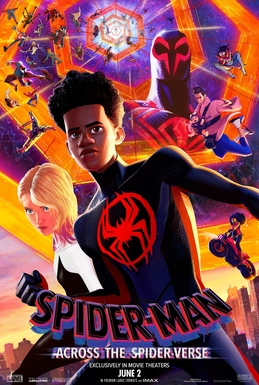
Spider-Man: Across the Spider-Verse

One year after defeating Kingpin alongside Spider-Men from other universes, Miles Morales is visited once again by Gwen Stacy and finds himself at odds with the Spider-Society, a multiverse-protecting organization of Spider-People led by Miguel O’Hara.

Spider-Man: Into the Spider-Verse was a film that left an impression not only an audiences but on the animation industry with its combination of 2D and 3D style. This sequel aspires to transcend the original not just through how many animation styles it blends, but through the story, tone, atmosphere and structure it builds that may just humiliate everything from that beloved first film based on ambition alone. Though the movie tries to emulate that same comic-like spirit from the first film, there’s a deeper energy and culture to the film’s feel, including the music and mood, from the first scene, which feels like a masterful piece of storytelling even on its own. Hailee Steinfeld this time is just as much the emotional core as is Miles Morales, and she delivers a great performance as the painful choices Gwen’s had to make are revealed to the audience — the entire movie is probably one of the most mature animated films thematically and tonally I’ve ever seen. It’s still “family friendly”, but the audience is treated as much more mature and patient than most animated films would. Also a standout is Daniel Kaluuya as the rebellious, anti-authority Spider-Punk whose voice performance sticks out as much as some of the animation, not to mention Karan Soni, Brian Tyree Henry, Luna Lauren Velez and Oscar Isaac. The villain of the Spot, voiced by Jason Schwarzman, is as silly as they get, but his nerdy voice and chaotic appearance make his sudden rise to being Miles’ greatest threat work due to that irony.

The movie’s experimentations with different animation styles throughout the multiverse can feel overwhelming at the speed the visuals are thrown at you, but it’s also wondrously imaginative to see this creation of what feels like a tribute to the audiences and the medium of animation. However, though the pacing does let the environment of the film breathe, it feels significantly slower than the first and takes a bit too long to the get to the multiverse-traveling action. That pacing also doesn’t feel like it pays off any more due to the cliffhanger ending, to tease the end of the trilogy coming out next year. It felt like they could’ve easily added a climax to make the movie feel more whole than the way it ended, even by shortening some of what had come before. That’s not to say that the movie ever has filler, but the pacing and structure feel like a jarring change from the first film. That said, it’s more than made up for by an unforgettable, stunning action scene involving a futuristic universe and a train, with the emotional stakes up to a high. The humor also goes really well with the film, often thrown at you with lightning speed but never failing to amuse with that same charm the first one had. Though structurally and story-wise, it’s not as good as the first, it definitely does top the first based on visuals, scale, creativity and ambition, and is worth a watch for fans of the characters as well as audiences of all ages looking for a relatable hero like Miles Morales.

Guardians of the Galaxy Vol. 3

Years after defeating Thanos alongside the Avengers, the Guardians embark on an uncertain adventure to save one of their own from a monumental threat, meeting old and new friends and foes along the way.

It’s been almost a decade since James Gunn’s first Guardians changed the game for superhero movies — and so many copycats or inspirations have come to the mainstream since, or attempted to. But the camaraderie of the titular team has not gotten old, even if it’s their sixth overall appearance in the MCU, and likely their last. The goofy quirks of Gunn’s humor, poking fun at the mistfit-like attitudes of the characters, or his way of giving the outcasts a traumatic backstory and a chance to grow, breathe life and soul into nearly every frame of Vol. 3. It’s not necessarily the best of the three, but it is the most visually dynamic, with engaging settings and interesting close-ups or moving shots during the actions. Chris Pratt and Dave Bautista continue to deliver in the roles that have come to define their career and help shape their A-lister status, but it’s Karen Gillan and especially Pom Klementieff who get to really grow and steal the screen from them. Rocket is also given a heavy storyline that is as tear-jerking as it is revelatory for his character. Though Chukwudi Iwuji’s villain is very over-the-top, he’s also entertaining and works for the film’s purpose. However, the inclusion of Gamora’s alternate version from an Endgame timeline feels like the storyline that didn’t add too much to the film, and her original incarnation’s death in Infinity War still feels best left untouched as it hangs weirdly over her appearance here. Here, her character is more to serve Peter Quill’s arc or simply an excuse to have the awesome Zoë Saldaña around. However, Will Poulter’s presence is Adam Warlock suffer here despite the movie’s already long (yet breezy and earned) 150-minute runtime — though he’s built up as a threat to interact with the Guardians and make his own decisions, he’s left as a very basic side character who cracks a few jokes. The character deserved an awful lot better than he got, especially due to the great work Poulter does do with what he’s given, it’s just a shame his and Ayesha’s story set up from the post-credits scene of Vol. 2 gets the bare minimum payoff. In addition, a notable standout is Oscar nominee Maria Bakalova as the voice of Cosmo the Spacedog, a very entertaining critter who gets her deserved limelight.

The soundtrack in the last two films was dominant and diverse, practically its own character within the film and a driving force for Quill’s arc. The soundtrack in this movie definitely hits less hard and may have a few too similar songs, but it’s made up for with a few amazing needle drops that set the tone and immerse you in the moment. Most of all, the character’s dynamics are all so beautiful and the building of the action is the backbone of the film, rooted in the bond of this team that has strengthened and matured over a few films. Even if the first film is a beast that’s only rivaled by a few other Marvel movies for the title of the studio’s best film, Guardians of the Galaxy Vol. 3 has undeniable charm and is also one of the most emotional MCU films across all the phases. It’s one of their better post-Endgame works and a great big-screen watch for the visuals, heart, and cast of characters.

Ant-Man and the Wasp: Quantumania

Scott and Cassie Lang, Hope and Janet van Dyne, and Hank Pym are all accidentally transported to the Quantum Realm and embark on an adventure that goes beyond the limits of what they thought was possible.

Though this threequel expands on the scale of the last two Ant-Man movies to the massive possibilities of the Quantum Realm, the film lacks the charm and wit that a movie with Paul Rudd as a shrinking superhero should have. The green screen and visual effects are hit or miss in terms of blending in with the actors, and the sets feel derivative of Star Wars and Guardians of the Galaxy, almost as if the production asked James Gunn to borrow a Guardians set for a day but without following through with the weird and quirkiness of what we’re seeing. Instead, the adventure just feels like it’s going through the motions until we meet Kang, who’s played strongly by Jonathan Majors. The stakes when it comes to his character are engaging but still too vague to give his character the depth beneath Majors’ stellar presence. Whenever the actors do get the chance to quip off each other or interact with bonkers new characters they meet, it makes for funny moments, especially due to Rudd’s undeniable talent and Kathryn Newton’s performance as Cassie, but any meaningful character development is nonexistent besides the characters revealing secrets or reiterating their love to each other. The movie’s themes about heroism and “looking out for the little guy” are sweet but only take it so far because of the unoriginal execution. The action itself has some fun moments and laughs, but ends up a standard adventure that isn’t inspired or clever enough to do its titular hero justice or advance his arc besides showing him the MCU’s new big bad.

Ant-Man and the Wasp: Quantumania is a watchable movie without enough quirks to make the tone satisfying or enough complexity to make the conflict fascinating. Even for the Ant-Man trilogy, it’s simply fine and only needs to be watched to collect important puzzle pieces for the future of the MCU.