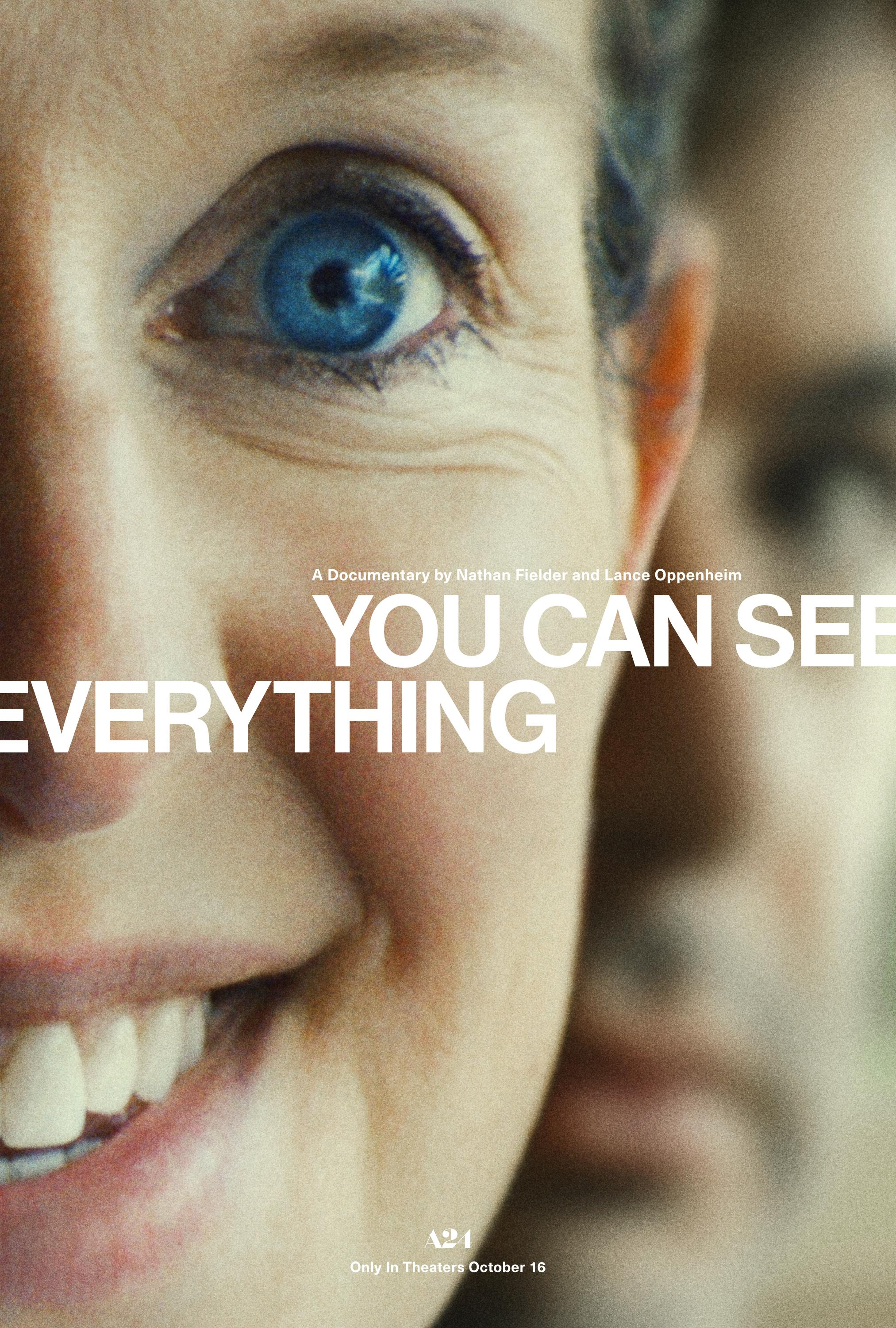
One of the most mind-blowing productions of recent cinema history, You Can See Everything blurs the lines between documentary and fiction by challenging our perceptions not just of a disgraced public figure, but of our own subjectivity as human beings. Filmmaker and actor Nathan Fielder’s stay in Elizabeth Holmes’ home with her family begins as an immersive look at a curious dynamic, then becomes something much deeper. Holmes, the former CEO of Theranos, was convicted of defrauding her investors after her technology, which she claimed could run hundreds of medical tests from a single drop of blood, failed to deliver.
Soon, we find ourselves questioning Holmes and her husband Billy Evans’ motives. Her bizarrely kind demeanor clashes with her blatant lies, yet we still deeply empathize with her because of her past traumas and the distinct ways she processes information. The shots captured of them are so intimate that it is hard to wrap your head around the fact that they were not rigorously planned. At the same time, it feels so raw and human that had I not known this was a documentary, I never would have questioned the authenticity of the story. Knowing it is real makes its cinematic quality all the more astonishing.
Amanda Seyfried and her portrayal of Holmes in the Hulu miniseries The Dropout are also a huge point in the film’s investigative journalistic identity and themes about objective reality. Her screen presence is captivating and gives viewers a whole new look into the emotional intelligence actors bring to channeling the human condition. For anyone worried that a three-hour documentary sounds grueling, the film strips away standard nonfiction tropes like talking-head interviews, archival footage, and title cards. Rather, it’s an examination of control, truth, and reality that starts as one thing and morphs into so many things you’ve never seen before and wouldn’t believe even if this were a scripted film. It’s an experience that, most importantly, never once gives you an easy answer. It reminds us that human beings are always more than a single label, leaving you reflecting, questioning, and unable to stop thinking about both what you just watched and how they pulled it off.