Argylle

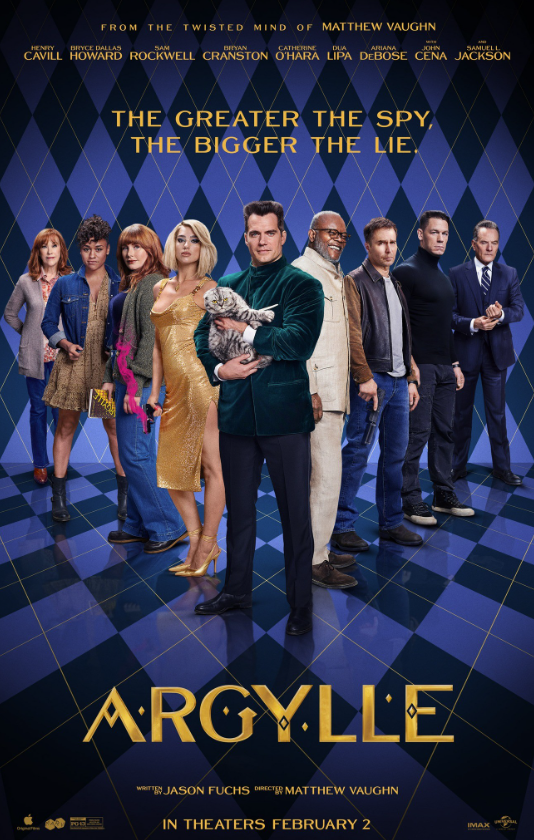
Elly Conway is the reclusive author of the Argylle spy novels . Soon, she realizes the plot of the new book she’s writing starts to mirror real-world events, as a global spy syndicate starts to come after her.

It’s always a blessing when Matthew Vaughn gives us a glimpse into his twisted mind with his witty and bombastic action scenes, and Argylle has a few of those, but it’s everything else that disappoints. Vaughn directs with a love for spy material and cartoonish entertainment mixed with modern, meta flare. The script, however, completely misses the mark and looks the commanding energy that his Kingsman had. Even Sam Rockwell, whose charm and goofiness often comes effortlessly, has to work with dialogue that falls flat and the attempts at humor don’t manage to illicit a response. Though Henry Cavill has some fun and Bryce Dallas Howard tries her best in the leading role, there’s more left to be desired in Ariana DeBose, John Cena, and Samuel L. Jackson’s screentime. Bryan Cranston’s villain may be the weakest link of the cast, as everything he’s given to do is annoyingly generic.

The movie’s downfall is also its ambition, which is often what lifts Vaughn up above the rest. The ludicrous twists are executed in a head-scratching way, and all the film’s rules or explorations of fiction vs reality are thrown to the side for more frustrating decisions that make its lead character less interesting. The pacing also suffers greatly in the film’s second half, the end of which sees us getting a few of those glorious scenes of carnage Vaughn’s known for, which still feel softened compared to what they could’ve been due to the PG-13 rating, but are delightfully exaggerated and have great soundtrack choices. By then, however, the journey to get there is simply exhausting and it may be too little, too late for many viewers.

Argylle is a massive disappointment in which a singular director brings his trademarks to the screen yet again, only this time without the laugh-out-loud glee or the clever script that usually support his vision. Its ambition unfortunately exceeds its grasp, and its inconsistent and convoluted execution make this invitation to take the world a little less seriously with Matthew Vaughn a sadly unrewarding one.

The Color Purple (2023)

The Color Purple is the second film adaptation of Alice Walker’s beloved novel, this one based on the Broadway musical adaptation as well, about a young woman named Celie who faces many hardships living in the South in the 1900s, but ultimately finds extraordinary strength and hope in the unbreakable bonds of sisterhood.

Though everyone in this new cinematic rendition The Color Purple is one of the best at what they do, the idea of making this a musical doesn’t always fit with the tone of all the rough things going on in the characters’ world, and the very clean cinematography removes the grit that Steven Spielberg’s version had that showed you the weight of the hardships and abuse Celie endured. Here, the most earned moments for Celie’s character aren’t necessarily her musical numbers but rather moments where Fantasia Barrino gets to shine just based on her interactions with other actors or set pieces that inform Celie’s character. Barrino is very strong in the role, but Taraji P. Henson runs away with the movie every time she shares a scene with her, or anyone for that matter. Henson portrays blues singer and “loose woman” Shug Avery with a power to her that commands every other character in both a loving and wise way, not to mention her show-stopping musical number in a tavern. Danielle Brooks is the other highlight as Sofia, whose characters shamelessness and courage shine through in both her songs and her incredible physical acting. Colman Domingo is simply incredible as Mister, inhabiting the character in not an inch less of meanness and disgust as Danny Glover did so brilliantly in the 1985 film, but also giving the abusive man a quietly human edge to him that Domingo finds even when the audience doesn’t want to see it. Corey Hawkins, Halle Bailey, and H.E.R. also give strong turns due to their potent screen presences and musical talents, and even Louis Gossett Jr. shows up for an excellent short appearance.

There’s no denying how amazing their singing and dancing is. However, it’s the songs themselves that don’t blend in with the material this story is telling. Save for a song or two, the lyrics aren’t quite memorable, either. This imagination of the story clearly works much better as a stage musical, where the audience can interact with the actors in real space as they sing and dance. For a film that gets cruelly serious at times, though the more uplifting song breaks don’t compliment the more hard-hitting scenes as much as the film would like to think, even though the actresses are always killing it. And although the costume design is award-worthy, the digital cinematography may have given it more of a music video edge that director Blitz Bazawule is used to, that could’ve benefitted from longer shots and a more period-like look. In short, come for the spectacular cast and a timeless story, but there’s no promising audiences won’t prefer the rougher and more dramatically coherent film that Spielberg led back in 1985 with Whoopi Goldberg and Oprah Winfrey.

Poor Things

Bella Baxter is a young woman brought back from the dead by the brilliant and unorthodox scientist Dr. Godwin Baxter. Under Baxter’s protection, Bella is eager to learn. Hungry for the worldliness she is lacking, Bella runs off with Duncan Wedderburn, a slick and debauched lawyer, on a whirlwind adventure across the continents.

Trigger warnings are a no-brainer with Yorgos Lanthimos, as his films are often filled with sadistic, violent, and hypersexualized power games where nobody is quite a pleasant person. These tropes as well as Lanthimos’ trademark cringe humor are just the baseline to describing Poor Things, a sickening yet grandiose movie that transcends categorization. It’s hysterical but not quite a comedy; it’s poetic but not quite a drama. Emma Stone gives a performance so demanding and so audacious yet it never breaks the illusion of being acting. You completely buy her character in the context of the story and are taken aback by her character’s abnormal physicality and wonder with being alive. Mark Ruffalo is also throwing himself into this role that could’ve easily fallen into unbelievability, but he perfectly balances an exaggerated, almost theatrical edge to his role with a vile, pitiful nature to it. Willem Dafoe plays a scientist under heaps of makeup whose motives may provide an emotional anchor to Stone’s character but also unpeels itself to be uncomfortably pathetic due to his background, and Ramy Youssef also does a great job here.

Poor Things may owe some of its inspiration to classic monster movies, but really isn’t like anything audiences have seen before. The production design creates an eye-popping, fantastical version of the Victorian Era and a world with a completely fresh aesthetic, as well as dynamic cinematography with color, B&W, and even a few fish-eye lens shots to invoke Bella’s warped worldview. Bella’s curiosity is devoid of prejudice and preconceived notions on the world’s structures, and she finds herself appalled by those around her trying to control her, and fascinated by anything she gets to choose to do. The humor is ridiculously honest and ballsy, and therefore, not for everyone — not to mention the exaggeratedly comic sex scenes and the uncompromising and even disgusting violence. Its audacity will certainly find its pleasurers, especially those who already love the director’s filmography. This bold tour de force isn’t for the faint of heart and may leave you at a loss for words. The writing and execution are exhilarating in the best way; the more disturbing and out-of-this world it gets, the less you’ll feel you want to look away. You’ll simply want to witness the bizarre yet fascinating unfold in front of you when it’s through Yorgos’ eye and so irresistibly played by Stone as this woman with the literal brain of an infant in her head, eager to experience being alive for all its peculiarities..

Napoleon

Two decades after receiving his first Oscar nomination for Ridley Scott’s Gladiator, Joaquin Phoenix reteams with the legendary director for another epic action film about one of history’s most famous (and infamous) generals. Scott delivers on the promise of a Napoleon epic filled with spectacle. The action sequences are clearly committed and the best of Scott’s approach. The grandiose definitely comes through particularly in two famous battles; the violence does get a laughably gratuitous in certain occasions, though. Phoenix’s central performance captures Napoleon’s larger-than-life presence without romanticizing his historical grandeur, showing his ruthlessness and narcissism having led to countless deaths through his wars and invasions. His performance makes his screentime interesting, but sometimes the political dynamics drag and other scenes fall into unintentional camp or lifelessness when the battlefield isn’t the centerpiece. His relationship with Empress Josephine (Vanessa Kirby) is an interesting but also generic storytelling catalyst as well. The music and editing feel particularly poor in the film’s execution and rather unfitting. Though it’s cool to see the 158-minute film cover Napoleon’s entire life and rise to power, it also robs the film of any intimate tension that a film like The Last Duel benefitted from. Sometimes it feels like empty spectacle, and the muted color palette may distract in the wider shots, too.

Still, Napoleon benefits from its production value and immense storytelling among a historical icon’s rise and fall, and seeing a 2.5-hour Ridley Scott Napoleon epic may be all we really needed and were asking for. With the engaging action and lead performance that carry some of the film, it delivers on those fronts. However, it isn’t a must on the big screen and may still deliver the same entertainment when you watch it at home, as the grandiose on its own may be the saving grace for those who end up liking it.

The Hunger Games: The Ballad of Songbirds and Snakes

The Hunger Games: The Ballad of Songbirds and Snakes is set 64 years before the first Hunger Games movie, around the time of the 10th Hunger Games where a young Coriolanus Snow is living in the Capitol, facing choices that will define his future and that of Panem as he mentors District 12 tribute Lucy Gray Baird to victory in the arena.

This adaptation of Suzanne Collins’ excellent prequel to her acclaimed series of novels has the best cinematography of the franchise, and stunning production design. The Hunger Games films have always boasted incredible world-building, making the intricate politics and history of Panem spread far beyond the screen, and introducing the audience to a wide world of characters within it. However, the film sometimes lacks soul when it needs it most, especially in its first act. Tom Blyth gives an interesting performance of a young man as his narcissism and consumption for power begins to consume him whole. Though Rachel Zegler’s singing voice and presence gives Lucy Gray heart, her character lacks the consistency and potency she’s meant to have, not to mention an off-putting Southern accent. The chemistry between Zegler and Blyth feels weak, though it should’ve been a key component in the film. Jason Schwartzman gives a great comedic performance as Lucky Flickerman, the announcer of the Games, and Josh Andres Rivera gives the most empathetic performance as Sejanus. Hunter Schafer also steals the screen as Snow’s cousin Tigris, but doesn’t have nearly as many scenes as she deserved. Although Viola Davis’ character is supposed to be repulsive, her voice and lines are weirdly over-the-top.

The sequences we see inside of the Hunger Games are absolutely amazing, and more visually exciting than anything we saw in the arena of the original 2012 film. The dynamic shots and lighting create a scenery that’s both grand and sadistic. The post-war dynamics between the Capitol and Districts hits hard with the viewing of the Games, the dialogue itself is lacking and character decisions seem sometimes unearned. What is well-earned is this idea of a Hunger Games prequel set at this era so soon after a civil war and its sickening aftermath, and hitting home themes about human nature, but it should likely be viewed in the context of the films that were released before it — films that may have had better characterization despite this one’s admirable ambitions and aesthetic.

Next Goal Wins

Next Goal Wins is the true story of American soccer coach Thomas Rongen, who travels to the American Samoa to help transform their team from the world’s worst team into stars. Taika Waititi’s irreverent flare not only gives the film plenty of laughs but an endearing underdog spirit that also highlights Samoan culture unlike lots of popular media. The casting of Michael Fassbender, an actor known primarily for dramatic roles, as a comedic lead does the film wonders. The way he portrays frustration and confusion with the incompetence around him is enjoyable, until the character begins to accept his journey into finding community around him, which becomes quite touching. Kaimana is also a standout as the character Jaiyah, an incredibly memorable and impactful character, not to mention fun supporting performances from Will Arnett and Elisabeth Moss.

The film’s comedic style is incredibly laugh-out-loud and makes you laugh in every way from situational humor to extreme physical comedy — the way Waititi does it best. Sure, underdog sports movies aren’t new to us, but the special cultural touch and loving characters make this a film that’s entertaining with every moment it has to offer. It’s short but incredibly sweet and wears its heart on its sleeve from the opening to the end credits that show you the real story the film is based on.

The Creator

In a future where humans have gone to war with artificial intelligence, Joshua, an ex-special forces agent, is recruited to hunt down and kill the “Creator”, who has developed a mysterious weapon with the power to end the war.

Seven years after the release of his last film Rogue One: A Star Wars Story, Gareth Edwards arrives with what feels like a visionary action film that feels parts Blade Runner and Avatar. The visual effects come together seamlessly to create a world that’s set in the distant future but might not be so far-fetched considering attitudes on AI in these times. The humans, robots, and hybrids all blend together in the frame and the robots’ movements look so smooth you’d believe they look exactly like that as they interact with other items in the screen. Not to mention the pitch-perfect cinematography from Greig Fraser and Oren Soffer that creates a mood that’s stunning yet violent, in-camera yet out of this world. John David Washington makes becoming one of the generation’s coolest action stars look effortless, and Allison Janney is surprisingly great, as well as the always delightful and nuanced work of Ken Watanabe. Madeline Yuna Voyles delivers a great breakout as a powerful AI child, though her relationship with Washington’s character doesn’t really click until later on, and even then feels a little derivative.

Though structurally you will occasionally encounter familiarity, the film takes a unique approach to the conflict between humans and artificial life, and visually it’s like nothing out there right now. Though the plot turns may be predictable for many viewers, it has a flare and liveliness to the action that not many other action movies this year had. More importantly, it feels even more special today as it’s one of the only theatrical action/sci-fi blockbusters of this scale without any source material/IP that’s been released in the last few years, and that’s worth commending and supporting. But whenever this had been released or viewed, Gareth Edwards’ inspired direction solidifies him as someone who’s in love with the worlds his movies imagine as much as the stories they tell on the page, and The Creator would make you want to invest in anything he puts his stamp on next.

Dumb Money

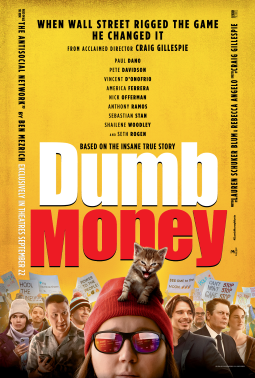
Dumb Money is the ultimate David vs. Goliath tale, based on the insane true story of everyday people who flipped the script on Wall Street and got rich by turning GameStop into the world’s hottest company.

A true story released only two years after the real events happened has the potential to be concerning, but Dumb Money takes a ridiculously fun approach to its outrageous story. In order to tell such an insane turn of events that actually happened, you need to match that with a style that doesn’t take itself too seriously, and the soundtrack and comedic tone of the film very much understand that. Similar to The Big Short, it also does a great job of making financial talk sound accessible and engaging. It also frames the Gamestop short squeeze as an underdog story, and ordinary people gathering knowledge about finance and investing as a positive incentive. Everyone is great, from Paul Dano who plays the film’s lead rebel and hero, to funnier roles like Seth Rogen and Sebastian Stan. America Ferrera gives the film a lot of spirit and Anthony Ramos, Myhal’la Herrold, Talia Ryder and Shailene Woodley are also very entertaining. However, Pete Davidson is sure to get the most audience reactions as hands-down the funniest and most memorable presence in the film. With a cast this awesome and a style this entertaining, it’s hard to find much that doesn’t work about what Dumb Money sets out to do — or a reason not to watch it in theaters.

Gran Turismo

Gran Turismo is based on the true story of racer Jann Mardenborough, who wins a series of Nissan-sponsored video game competitions through his gaming skills and becomes a real-life professional race car driver. Though the spectacle is strong with this film, the overall execution is muddled and mostly carried by David Harbour’s performance as Mardenborough’s trainer. Harbour is excellent as a hard but deeply encouraging mentor figure who develops a camaraderie of sorts with Jann, and the story of a gamer achieving the impossible and fulfilling his dreams becoming a real racer has some fun to it considering its a true story, but there’s also dragged out “sports underdog” cliches and a muddled execution. Blomkamp’s directing is fashionable but often jarring, with headache-inducing editing during the racing scenes that clearly look expensive but lack the adrenaline of Ford v Ferrari and Rush. Archie Madekwe is solid in the lead role, but the supporting cast doesn’t feel as interesting or human, with the exception of Harbour and a strong Djimon Honsou. The first two acts though are dragged out and the montage-style pacing feels frustrating and uninteresting, with weird video game-like edits that are supposed to feel meta but instead take you out of the scene.

Gran Turismo has enough references for fans of real-life racing, and racing scenes for fans of action and sports, and the third act is a fun and significant improvement over the first hour and a half of the film, but may not warrant a watch unless you’re strictly looking for sports and spectacle.

Teenage Mutant Ninja Turtles: Mutant Mayhem

For years, Raphael, Michaelangelo, Donatello and Leonardo have been trained in the ways of ninjitsu by their father Splinter, and have been told not to leave the sewers for fear of what the humans will do to them. But the turtles decide to foil a dangerous plot and become the heroes New York City needs.

After numerous iterations, the Ninja Turtles franchise finally has an installment that understands the tone this IP deserves to feel lively and memorable. The turtles are voiced by actual teens, so they really get to feel youthful and like genuine characters (as much as mutant turtles can), and perhaps animation was the best way to go all along. The live-action designs of the characters in the past always looked too silly or creepy, and the style always helps this film live up to the mayhem suggested in the title. The Spider-Verse-inspired animation style of 3D graphics and 2D coloring gives the film a teenage feel, but more than that, something imaginative, wild, and fresh that doesn’t demand to be taken too seriously like the Michael Bay-produced live-action iteration. The dynamic “camera movements” and hip-hop soundtrack gives the film a constant energy that always put a smile on my face. The packed voice cast is also great, particularly Jackie Chan as Splinter, who may secretly be the heart of the film. Chan gives the talking rat a soul that makes him unique beyond what could have been the typical strict parent in an animated movie. Ayo Edebiri is also lovely as April O’Neill, an aspiring teenage journalist who befriends the turtles instantly and is a refreshing departure from the hyper-sexualized it-girl April from past iterations. Ice Cube is a very entertaining villain whose personality and understanding motivations make it easy to enjoy his cliche evil plan. The only character I didn’t quite enjoy was Maya Rudolph’s Cynthia Utrom, not because of the voice performance but rather the generic archetype and motives that had nothing to elevate or make her feel necessary.

I’m surprised to say that I finally find the Ninja Turtles to be great, but this movie is incredibly funny and booming with imagination and heart. Though it does draw a lot tonally from the recent iterations of Spider-Man, it’s hard to complain when the animation and script are this much fun.